Gravel Bikes
Giant Revolt X vs Specialized Crux: Is Gravel Suspension Worth It?
Two gravel bikes, one with a suspension fork and one without, compared over the same seven kilometre course to see where weight wins and where suspension pays off.
Introduction
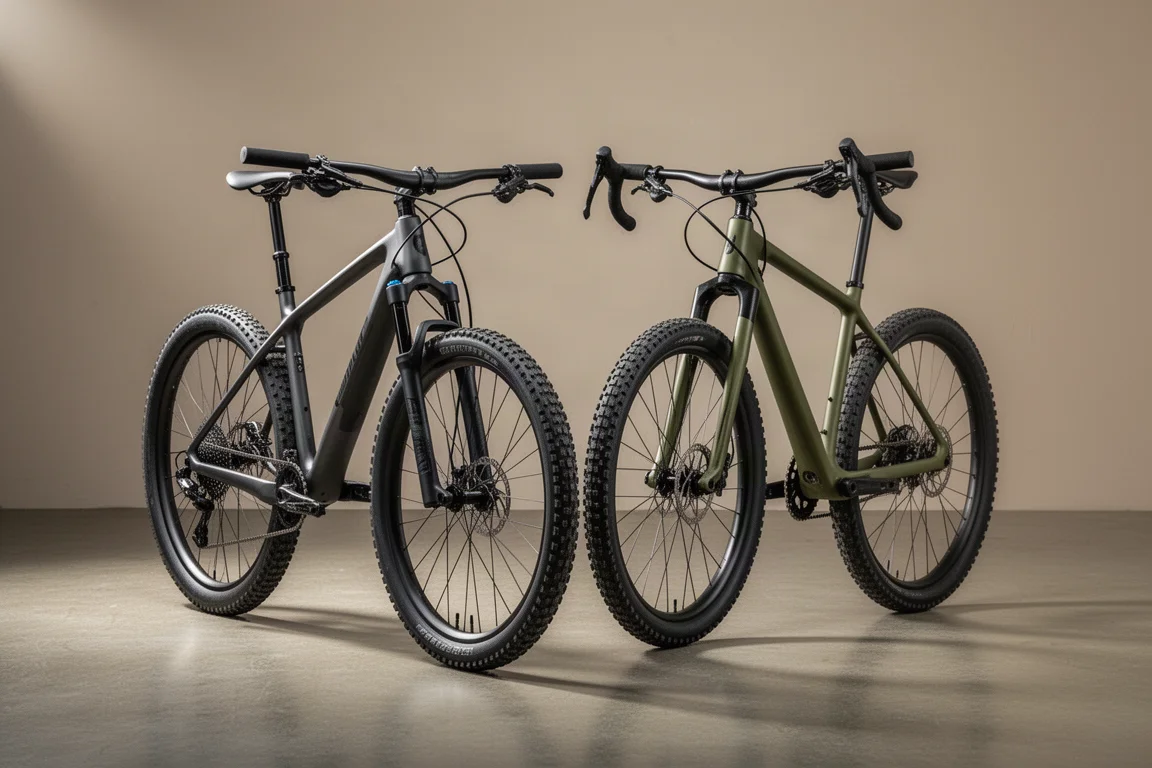
Suspension has become one of the more divisive ideas in gravel riding. One camp sees it as unnecessary weight and complexity on a bike that is meant to stay simple. The other sees it as the difference between surviving a rough descent and enjoying it. Two bikes frame that argument neatly. The Giant Revolt X is designed around a 40 millimetre suspension fork and pairs it with a combined dropper and suspension seatpost. The Specialized Crux takes the opposite approach, with no suspension at all and an extremely light frame. Both were put through the same seven kilometre course to find out which design comes out ahead, and where.
Evaluation Criteria
The comparison looked at four things. First, outright speed over a fixed course that mixed a rocky 500 metre descent, a road climb and a flat gravel sector. Second, ride quality: how much vibration and feedback reaches the rider through the handlebars, pedals and saddle. Third, handling and confidence, particularly whether the bike encourages a rider to hold a line or to hunt constantly for a smoother one. Fourth, design intent, since the two bikes were never built around the same priorities.
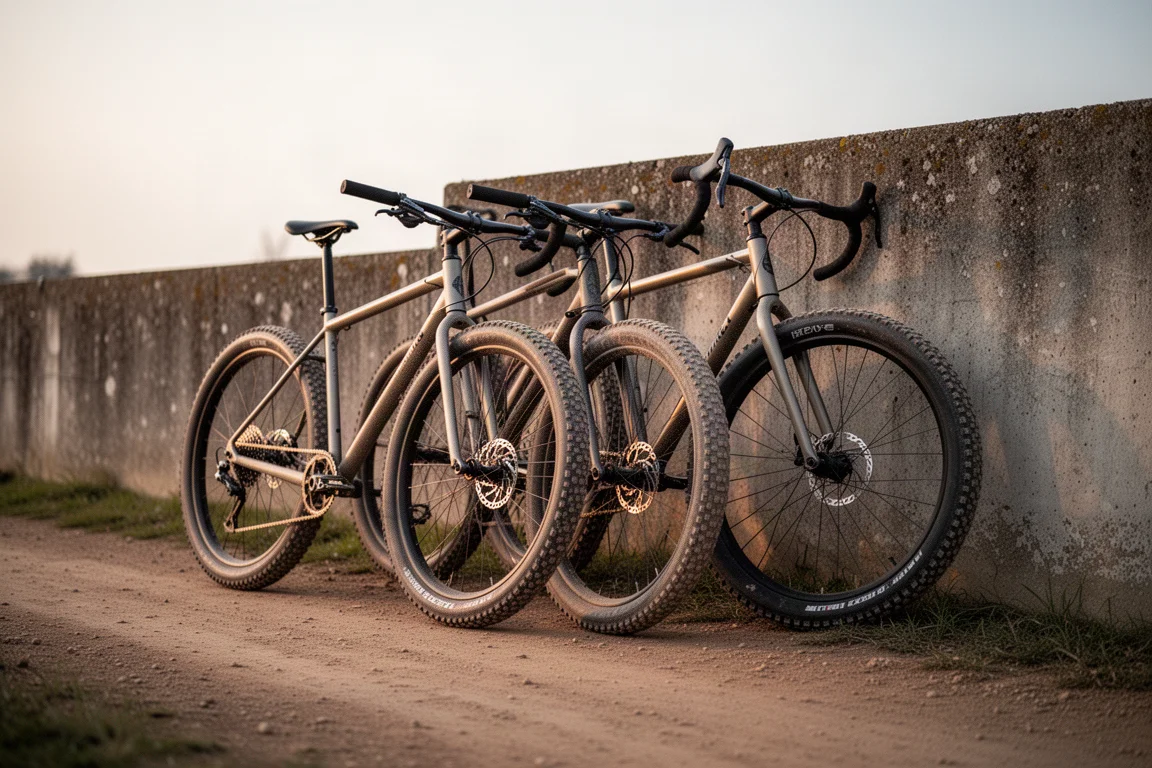
Weight matters here too, because it is the clearest dividing line between the two. The Crux is measured at 7.5 kilograms without pedals, a figure lower than many road bikes, while the Revolt X comes in at 9.7 kilograms without pedals. Both bikes are essentially the same size, though their wheels and specifications differ, so this is not a strictly like for like comparison. It is, however, a fair pairing of two genuinely different philosophies.
Giant Revolt X: Suspension Where It Counts
The Revolt X is one of a small number of gravel bikes designed around a suspension fork rather than simply adapted to accept one. That distinction matters. The head tube is shorter and the geometry has been reworked specifically to account for the fork, so the front end does not just rise and slacken the way it would if a suspension fork were bolted to a rigid frame.
Up front sits a RockShox Rudy delivering 40 millimetres of travel, with an air spring on the left side that can be adjusted for rider body weight. A handlebar-mounted lockout lever lets you firm things up for road use, though leaving it open costs little unless you are sprinting hard. At the rear there is a combined dropper and suspension seatpost, an unusual component that merges two features normally sold separately.
On rough terrain the difference is immediate. Feedback through the handlebars and pedals drops sharply, the bike feels planted and stable, and line choice stops being a source of anxiety. Even when the same deliberately rough line is taken, the Revolt X stays noticeably smoother and calmer underneath the rider.
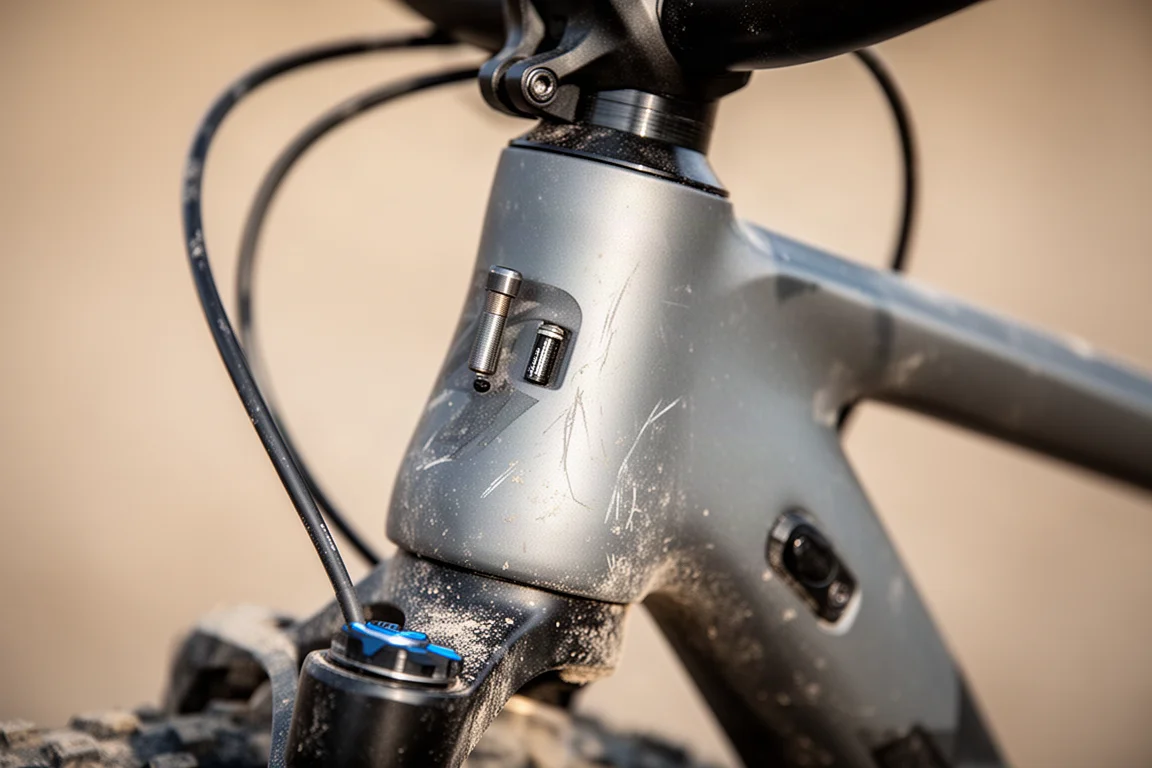
On the road the trade-off appears. The extra weight makes the bike feel a little more sluggish and less willing to accelerate, even though it still covers ground quickly for a bike of this type. Off-road, though, it feels far closer to a mountain bike in composure than a rigid gravel bike does, which is precisely what the design is aiming for.
Specialized Crux: Lightweight and Rigid
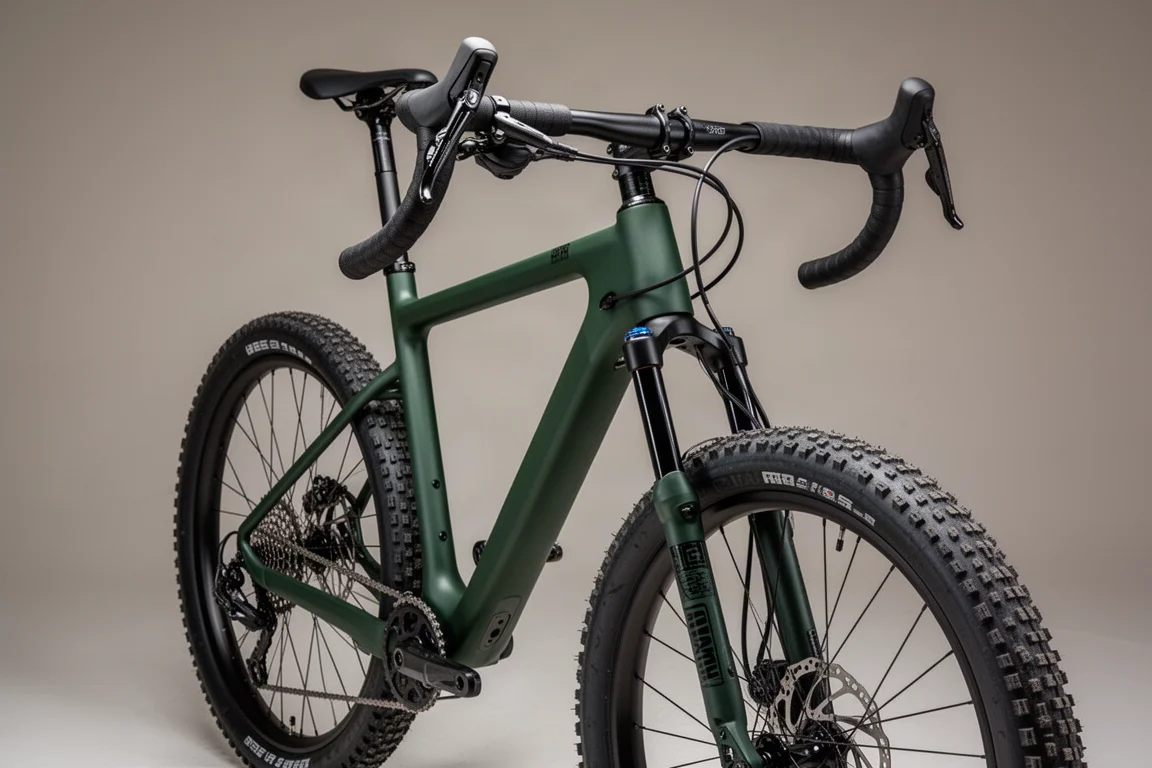
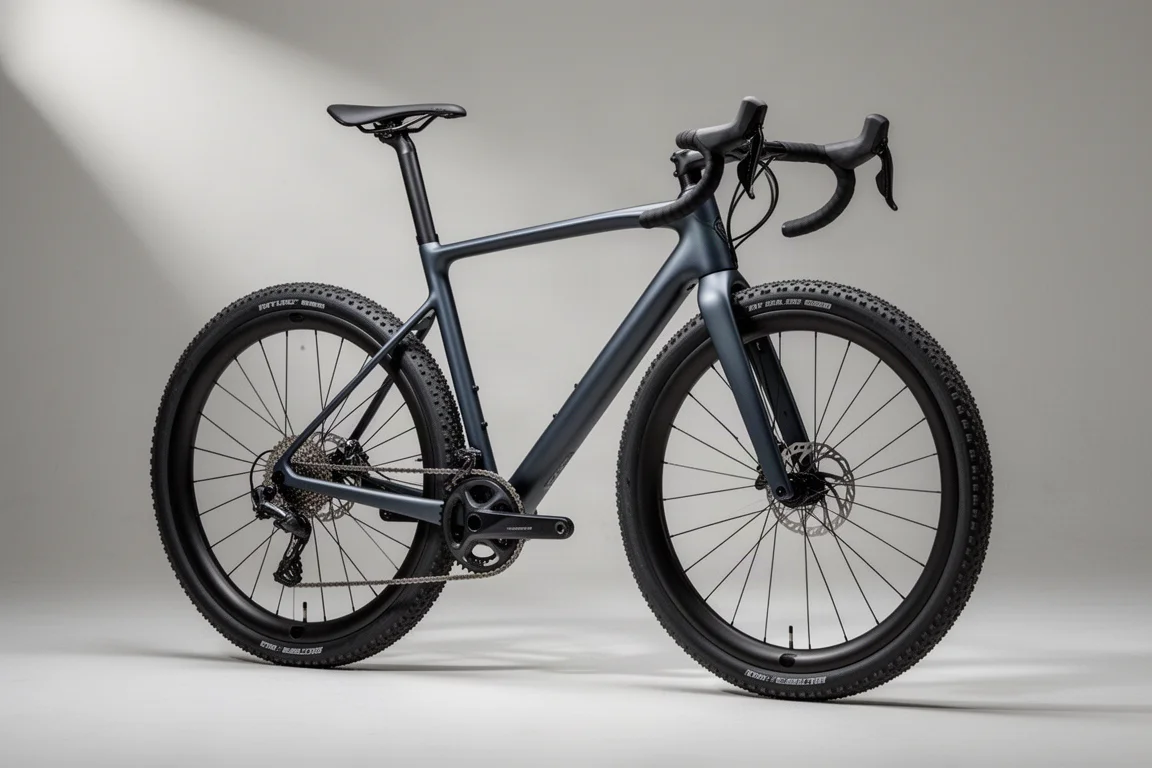
The Crux began life as a cyclocross race bike and has since been moved into gravel territory. The current version accepts tires up to 47 millimetres and uses modified geometry to suit that broader role. The frame is quoted at 725 grams, which is remarkable for any drop-bar bike and explains the 7.5 kilogram complete weight.
That low weight shows on smooth surfaces. With 40 millimetre tires fitted, the Crux feels quick and responsive on tarmac and reached 40 kilometres per hour on the road. On gravel it remains efficient, but it offers no cushioning whatsoever. Feedback through the main contact points is constant. It is not a magic carpet ride, and the rider is always aware that the surface underneath is loose and uneven.
For riders who value a direct, connected feel and low weight above all else, that is a feature rather than a flaw. It is worth being honest about what it means on rough ground, though.
Ride Quality and Confidence Off-Road
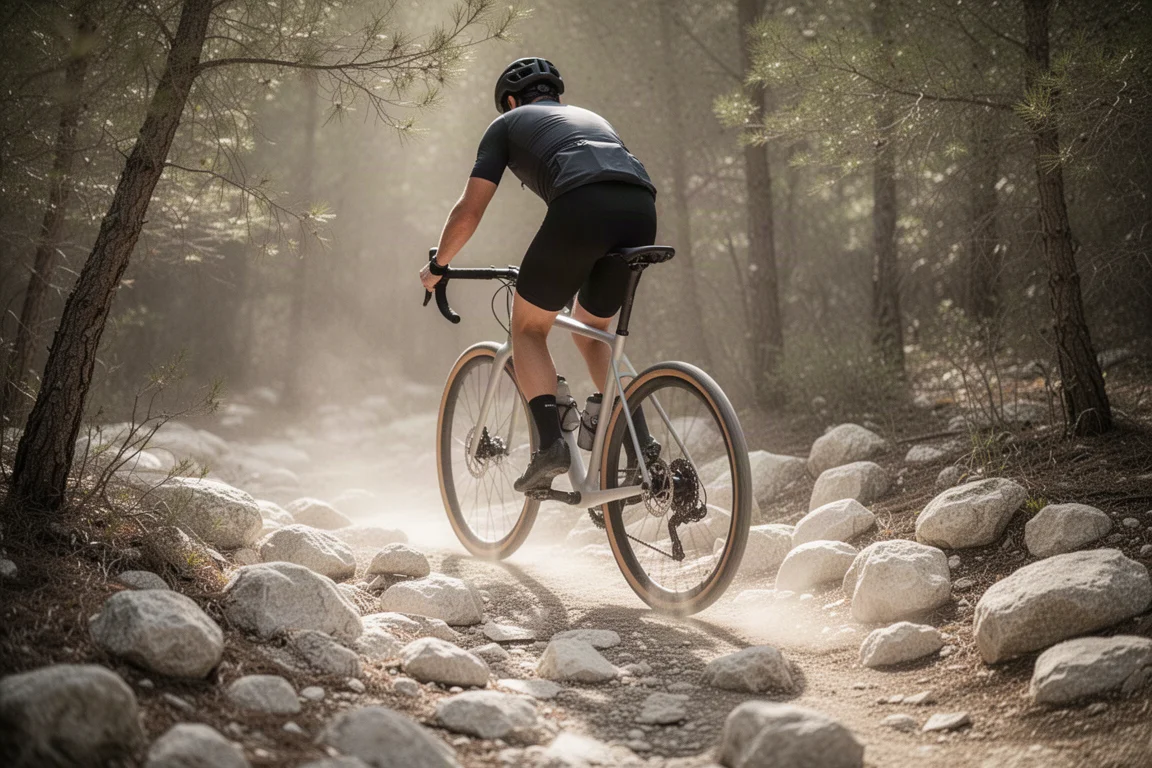
Ride quality is where the two bikes separate most clearly in subjective terms. On sustained rough sections, the Revolt X is in a different class. The suspension fork and the suspension seatpost absorb enough of the terrain that the rider can focus on pedalling hard rather than on staying upright, and the resulting comfort is the kind that would make a long rough trail rideable all day long.
The Crux, by contrast, transmits a great deal of information. On the roughest parts of the course it felt sketchy and less secure, and it demanded more careful line selection at speed. That is the price of its low weight, and it is a price plenty of riders are happy to pay.
The practical takeaway is that confidence and speed are not the same thing, and a rider’s own tolerance for feedback will decide which of these two approaches suits them better.
Timed Test Results
Against the clock over the full seven kilometre course, the Specialized Crux finished an entire minute ahead of the Giant Revolt X. The lighter, rigid bike was faster overall. The section-by-section numbers are more revealing than the headline figure, because they show exactly where each design wins.
On the opening rocky descent of roughly 500 metres, the Revolt X was eight seconds faster. It felt faster, smoother and more controlled, and the stopwatch agreed. Over a longer or rougher descent, that advantage would likely grow larger still.
On the road section and the road climb, the Crux pulled back 23 seconds, averaging 32 kilometres per hour against 30 for the Revolt X. Both bikes are quick on tarmac, but the lighter one is quicker. Then, on the final flat gravel sector, the Crux was 16 seconds faster. That was the surprise of the test, since the Revolt X felt smoother and therefore seemed quicker, yet smoothness and speed did not line up on that surface.
So the overall result favours the rigid, lightweight bike over this particular course, while the suspension bike wins the section that most riders find the most intimidating.
Buying Advice: Which Gravel Bike Suits You
The choice comes down to the terrain you actually ride. If your riding is mostly road and smooth gravel, the lighter option is the clear way to go. Less weight helps on every climb and every acceleration, and the feedback that comes with a rigid frame is manageable on surfaces that do not punish you.
If your riding regularly includes rough trails, and you want to carry speed while staying in control on descents, then suspension earns its place. The Revolt X package is convincing precisely because it was designed around the fork rather than retrofitted to one, so the handling is not compromised by the addition.
Suspension is unlikely to become universal on gravel bikes, and it does not need to be. The sensible outcome is a market that offers both: bikes with suspension for riders who want the comfort and control, and conventional lightweight bikes for riders who want maximum efficiency. Both of these models make a strong case for their own approach.
Conclusion
Over a short, mixed course, the lightweight Specialized Crux was a minute faster than the Giant Revolt X, taking the road climb and the flat gravel sector along the way. The Revolt X won the rough descent outright, and it was clearly the more comfortable and confidence-inspiring bike once the surface turned hostile. Neither result cancels out the other. The right purchase depends on the trails you ride, not on which design happens to be fashionable.
Further reading
Related Reviews
Gravel Bikes
3T Exploro Ultra Review: A Fast Gravel Bike Built for Big Tyres
A close look at the 3T Exploro Ultra, an aero carbon gravel bike designed around wide tyres, with road-like handling, a 980 g frame and genuine rough-terrain capability.
Gravel Bikes
3T Extrema Italia Review: Aero Gravel Speed With Room for 57 mm Tires
The 3T Extrema Italia pairs an aero frame with huge tire clearance, Italian-made carbon and a more comfortable ride than the RaceMax. Here is what to know before buying.
Gravel Bikes
3T Race Max 2 Italia Review: An Aero Gravel Race Bike Made in Italy
A closer look at the second-generation 3T Race Max 2 Italia, covering its aero updates, ride character, tire clearance, internal storage and who it suits.