Camping Chairs
Get Out Gear Trek Chair Review: A Clever Trekking Pole Chair With Real Trade-Offs
A trekking pole backpacking chair that delivers genuine comfort and adjustable recline, but adds no real weight saving and raises durability questions.
Introduction
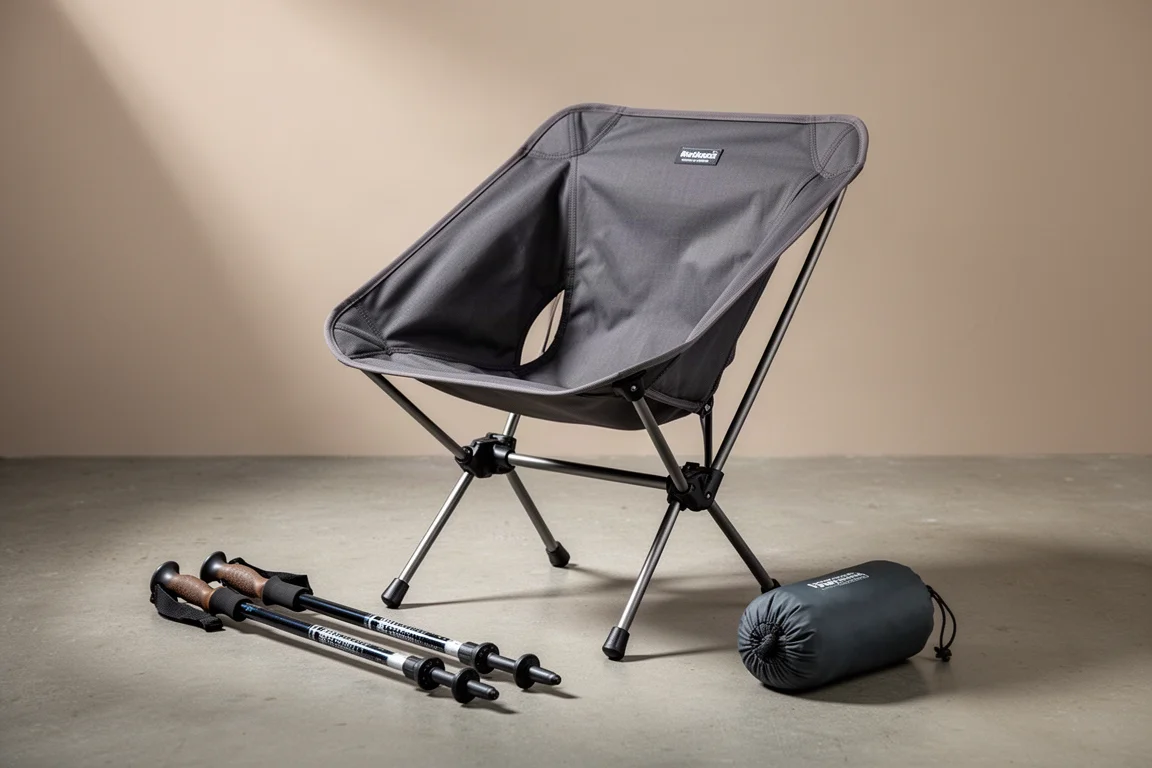
Some ideas feel overdue the moment you hear them. A backpacking chair that uses your trekking poles as its frame is one of them. If you already carry two poles on every trip, building a chair around them means leaving a dedicated frame at home, which is less packed volume and, in theory, less weight.
The Get Out Gear Trek Chair is that idea turned into a shipping product, following a crowdfunding launch. The pitch is simple and the execution is interesting, but there are a few things worth understanding before you decide whether it belongs in your pack.
Who the Get Out Gear Trek Chair Is For
The Trek Chair suits backpackers who carry trekking poles as a matter of course and whose shelter does not depend on them. If your tent is freestanding, or uses its own dedicated poles, the chair slots into your kit with no scheduling conflicts at camp.
It also appeals to hikers who want a chair with a tall back that supports the head, which many ultralight chairs cannot offer at this weight.
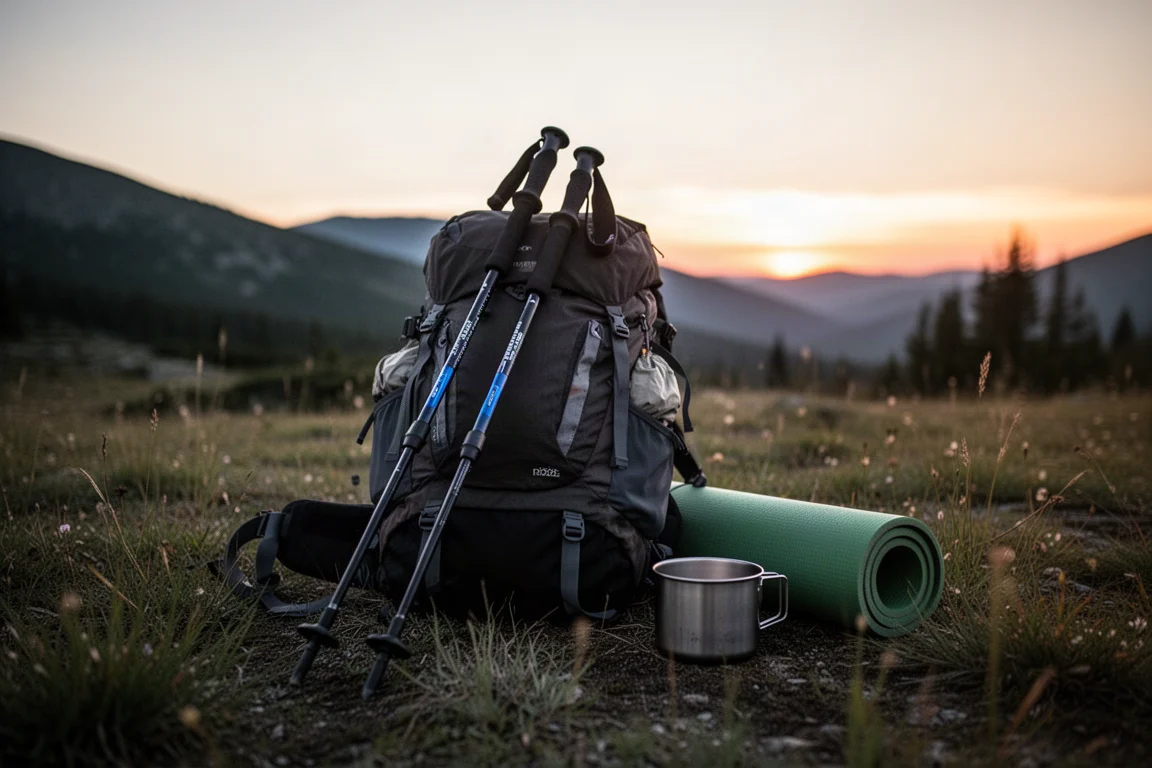
If your tent is pitched with the same trekking poles, the decision gets harder, and that trade-off is worth reading through before you buy.
Comfort and Design Strengths
Comfort is where this chair earns its place. The backrest is tall enough to rest your head against. The cross pole runs front to back rather than side to side, which opens up more room for the seat instead of dropping you into a bucket-shaped sling.
Because the trekking poles are the legs, their adjustability carries over to the chair. You can set it up reclined for lounging or more upright for eating and reading. A fixed-geometry chair gives you one posture and no say in the matter.
In a direct comparison against a high-back ultralight chair of nearly identical weight, the Trek Chair came out ahead on comfort.
The Trekking Pole Trade-Off at Camp
The concept has a built-in conflict. If your tent also relies on trekking poles, your chair and your shelter want the same two pieces of equipment at the same time.
There are workarounds. Pitch the tent completely, stake everything out, then pull the poles to use with the chair. The tent will sag while you sit, and you replace the poles afterwards. It takes only a moment, and it works in most conditions.
It stops working when you want both a standing shelter and a usable chair at once, such as a snowy camp where you want your gear off the ground and the tent still pitched. In those moments you are picking one piece of gear over the other.
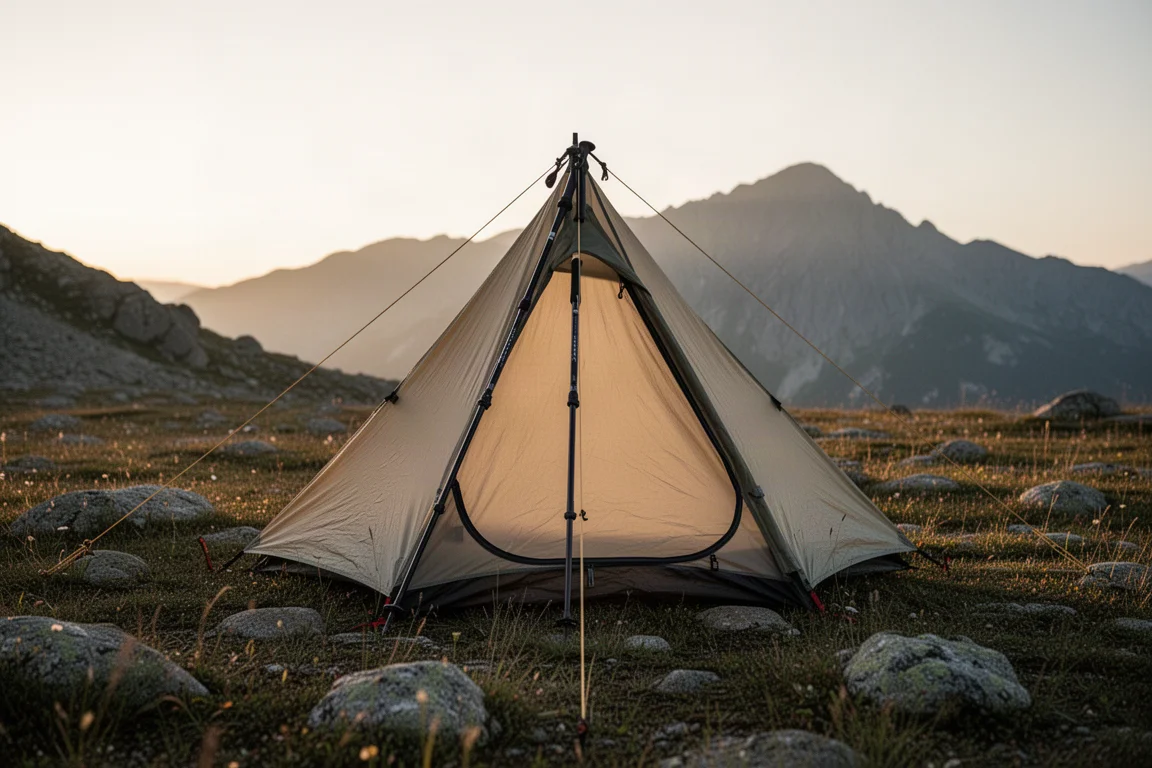
For most people, who own one chair and one tent, that is a real limitation rather than a hypothetical one.
Weight and Packability
The weight saving does not materialise the way the concept suggests. On a home scale, the chair alone, without trekking poles, came in at about 1.5 lb. The poles add roughly another pound, although you would be carrying them regardless.
Against a high-back ultralight chair that needs no trekking poles at all, the two are effectively level: 1.51 lb for the Trek Chair and 1.49 lb for the alternative. A standard-height ultralight chair lands closer to 1 lb with no poles required.
So the benefit here is packed volume and adjustability rather than grams saved. If your goal is the lightest possible chair, this design does not get you there.
Durability Concerns and Warranty Support
This is the part that deserves the most attention. After several months of use, the chair failed while leaning back on its two rear legs. The front hub broke. Similar breakages have been reported elsewhere.
Leaning back is not an unusual way to sit. On uneven ground it happens constantly, and tipping over backwards is easy to do by accident. When it happens here, a $200 piece of gear becomes unusable.
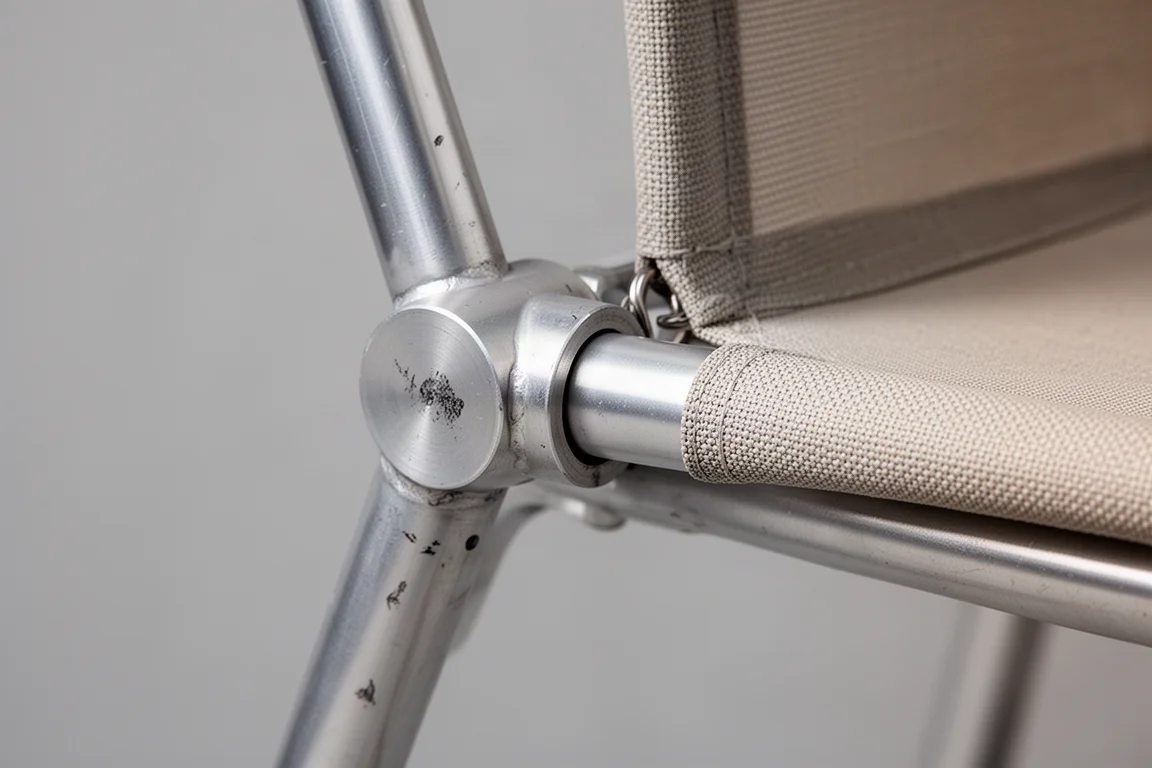
Put through the same treatment, a high-back ultralight chair of comparable weight held up to side-to-side tipping, forward and backward tipping, and being dropped into.
Get Out Gear is standing behind the chair with a 5-year hassle-free warranty. The company is investigating the failure, has asked for the broken chair back to identify the cause, and believes the issue may be limited to an early production batch rather than the roughly 1,100 chairs shipped so far. Owners who encounter the problem can expect a replacement.
Buying Advice
The Trek Chair is worth serious consideration if you carry trekking poles anyway, your shelter does not need them, and you want a lightweight chair with head support and an adjustable recline. That combination is genuinely rare, and the comfort advantage is real.
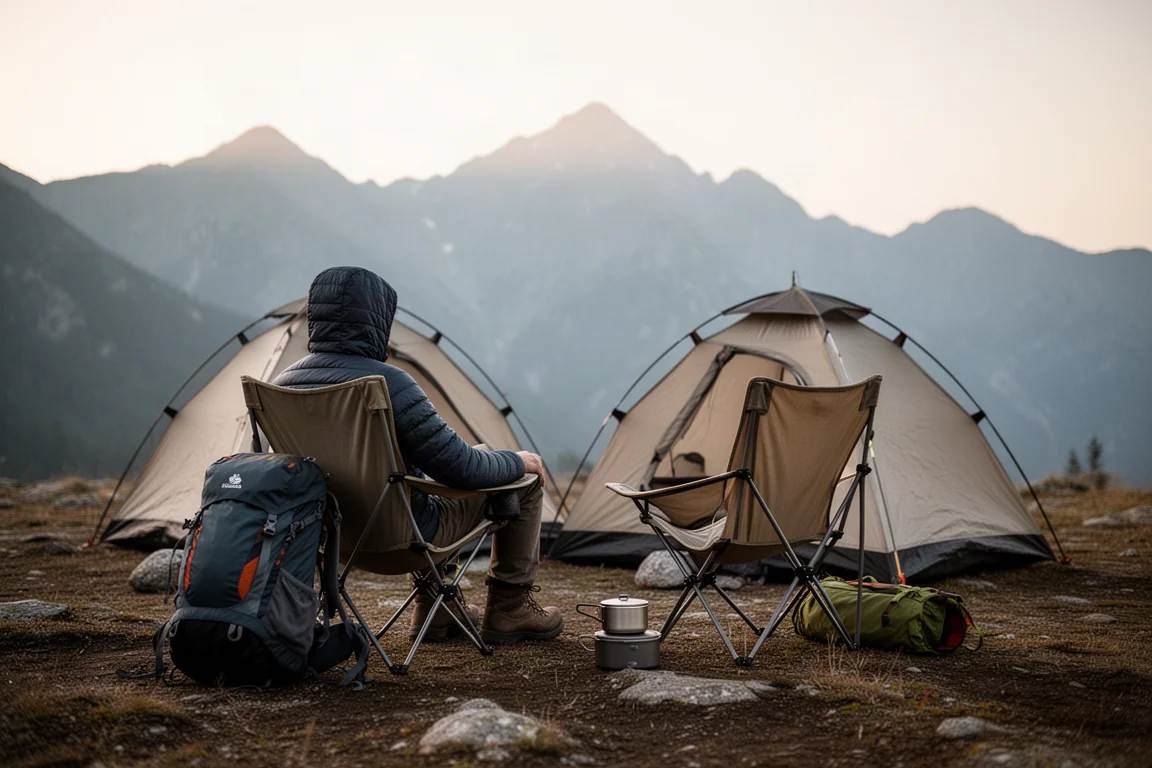
If your tent is pitched with your trekking poles, or if you want the simplest and most proven option, a conventional ultralight chair remains the safer choice. It weighs about the same or less, needs no extra components, and never forces you to choose between sitting down and keeping your shelter standing.
The 5-year warranty is a meaningful safety net and it changes the risk calculation for anyone curious about the concept. Just keep in mind that a warranty replaces a chair, not a trip.
Conclusion
The Trek Chair answers a question backpackers have been asking for a while, and it answers part of it very well. The tall back, the front-to-back cross pole, and the adjustable recline are clear advantages over a fixed ultralight chair.
Where it falls short is the weight saving it promises and the durability it has demonstrated so far. Until the frame proves itself over a longer stretch of trail, this is a design worth following closely rather than one to build a kit around.
Product link
View more details for Get Out Gear Trek Chair
This product is mentioned in the review. Check the specifications, options, and compatibility before buying.
View more details for Get Out Gear Trek ChairFurther reading
Related Reviews
Camping Chairs
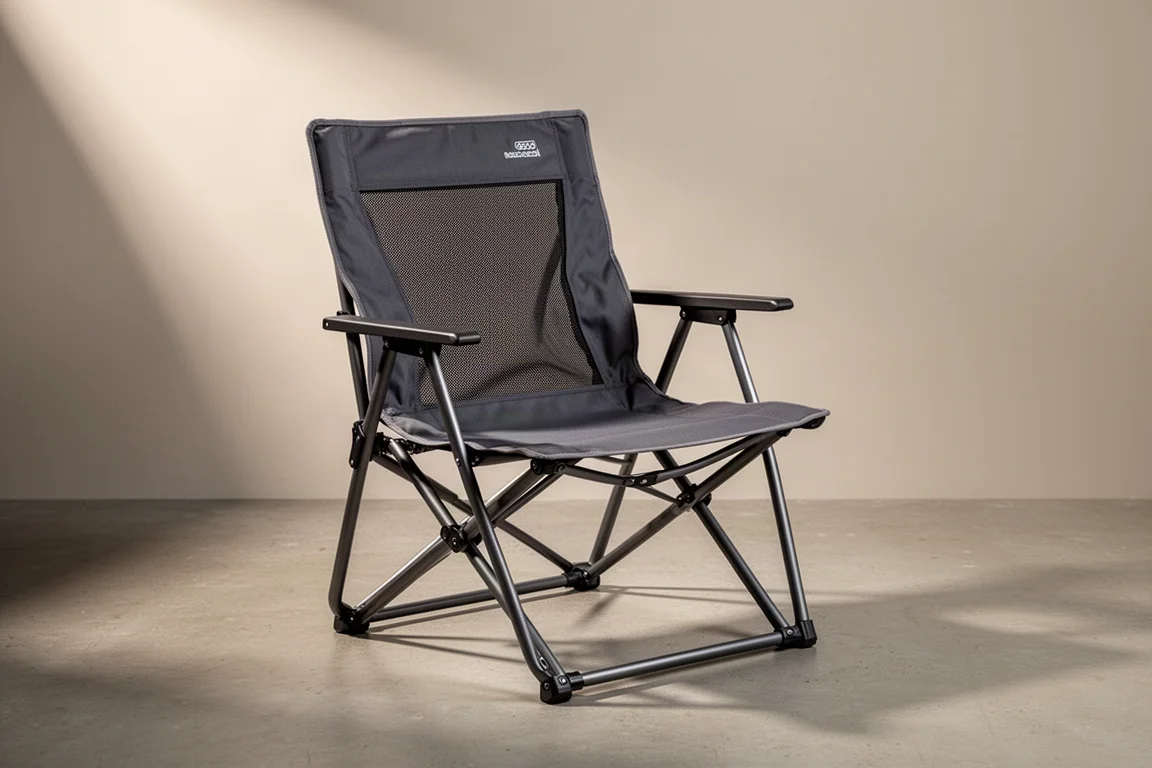
ALPS Mountaineering Rendezvous Chair Review: Fast Setup, Compact Pack, Real Trade-Offs
A practical look at the ALPS Mountaineering Rendezvous Chair: measured seat dimensions, setup and pack-away speed, materials, and who it genuinely suits.
Camping Chairs
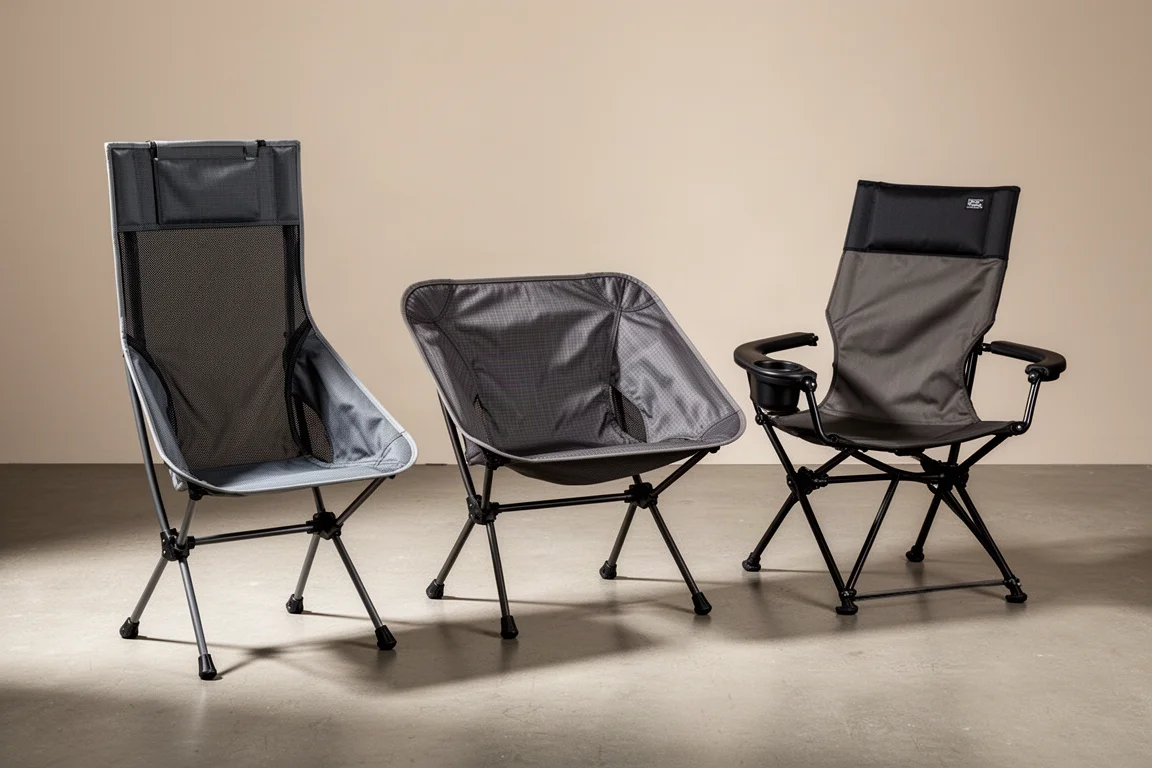
Best Lightweight High-Back Camping Chairs: Helinox Sunset vs REI Flexlite Camp Dreamer vs Big Agnes Big Six
A measured comparison of three lightweight high-back camp chairs, covering setup times, seat dimensions, breathability, storage, materials, warranty, and price positioning.
Camping Chairs
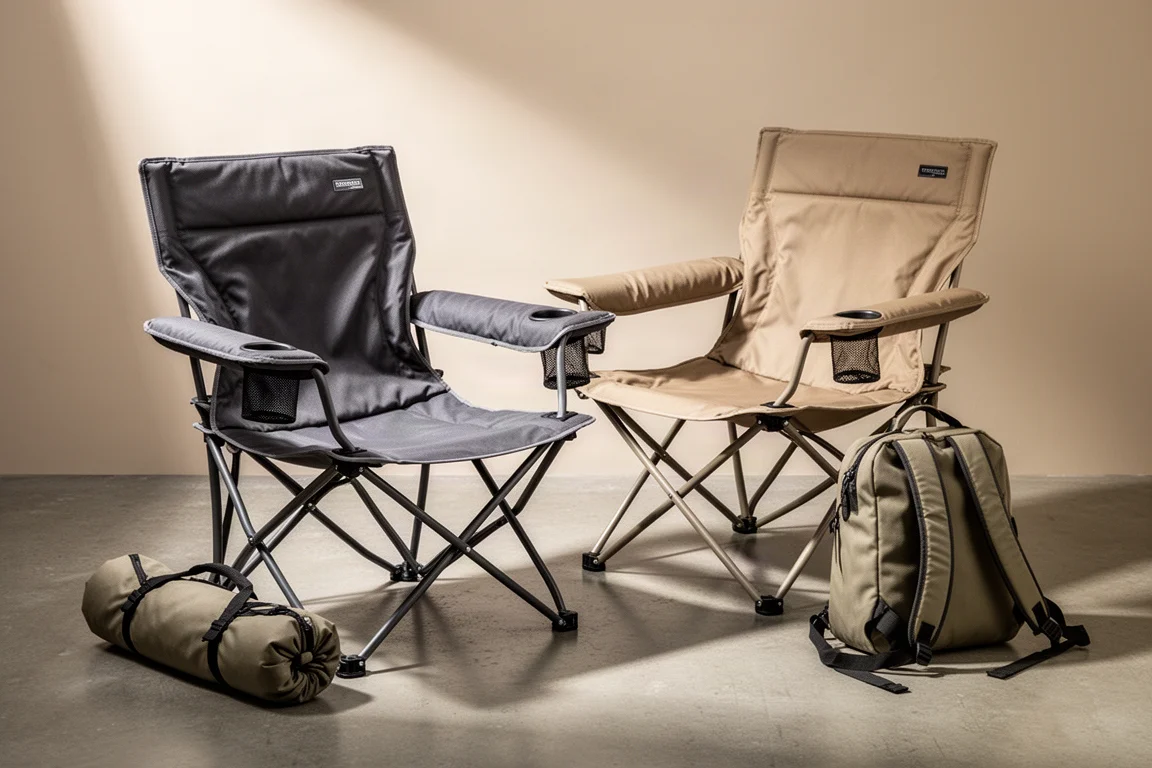
Best Oversized Camp Chairs: ALPS King Kong vs Coleman vs YETI Trailhead
Four of the largest camp chairs compared on seat size, seat support, materials, storage, portability, and price, with clear guidance on which one is worth buying.