Hair Care Tools
Gama Professional iQ vs Dyson Supersonic: Lightweight Hairdryer Showdown
A detailed comparison of two high-powered hairdryers: the ultra-lightweight Gama Professional iQ and the premium Dyson Supersonic, tested side-by-side for speed, comfort, and performance.
Introduction
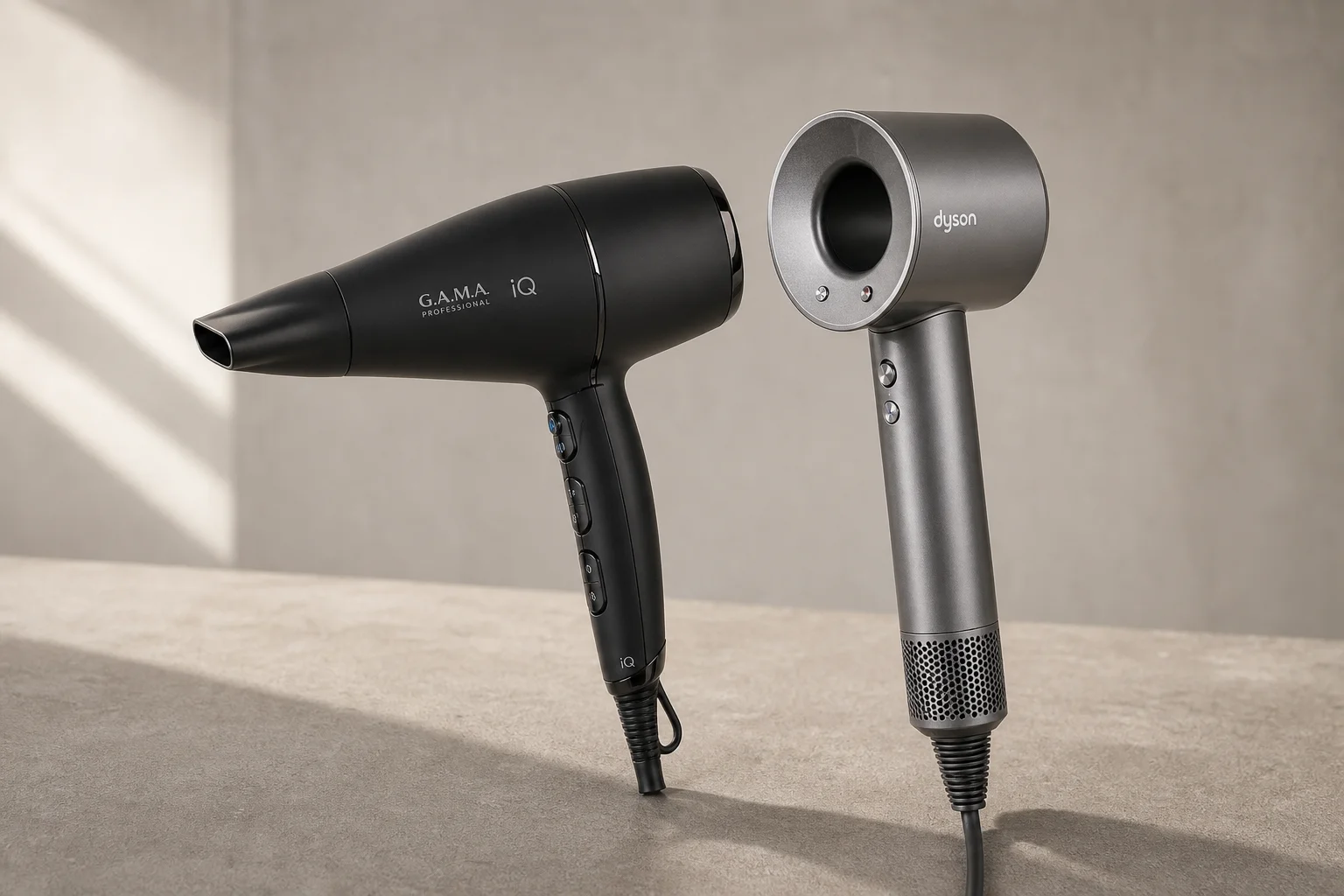
When shopping for a professional-grade hairdryer, two names frequently emerge: the ultra-lightweight Gama Professional iQ and the premium Dyson Supersonic. Both pack 110,000 RPM motors into distinctly different designs. The Gama weighs just 294 grams (10.37 ounces), making it one of the lightest options available, while the Dyson tips the scales at approximately 1.8 pounds. This comparison tests both hairdryers across comfort, speed, noise, and overall performance to help you decide which suits your needs.
Design and Comfort
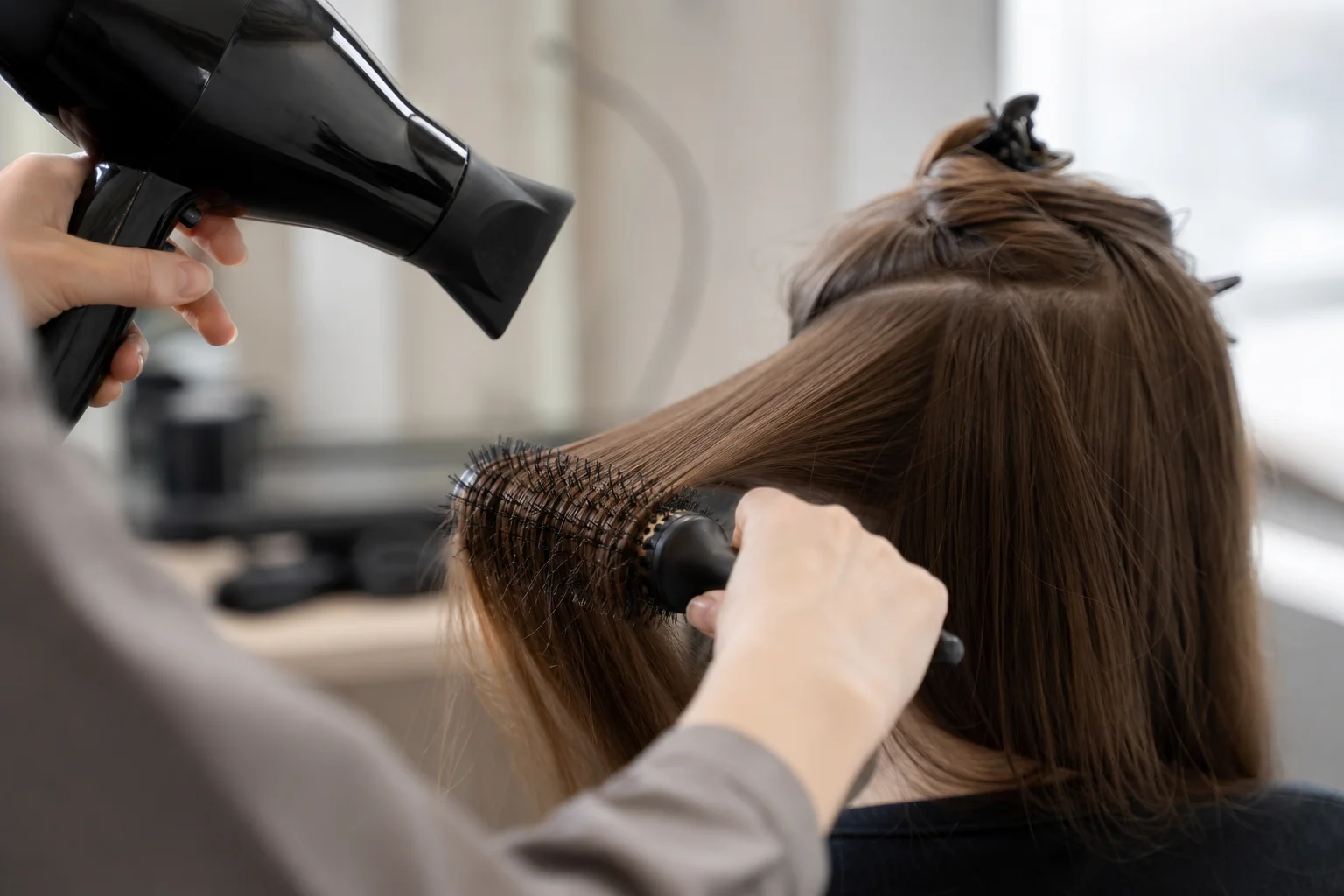
The Gama Professional iQ immediately impresses with its compact, elongated form factor. At under one pound, it feels noticeably lighter than the Dyson when you first pick it up. However, the extended length creates an unexpected trade-off: while the weight is reduced, the longer barrel requires slightly more shoulder engagement to maintain a comfortable angle during use. The lighter weight does reduce fatigue during extended styling sessions, particularly valuable for professional stylists working on multiple clients throughout the day.
Both hairdryers feature thoughtfully placed controls. The Gama includes a lock button that prevents accidental setting changes once you’ve selected your preferred heat and airflow levels. The Dyson similarly positions its controls away from your primary grip, with the cool-shot button and power switch positioned to avoid unintended adjustments. Both approaches demonstrate consideration for user experience during active styling.
The attachment system differs notably. The Gama’s concentrator nozzle slides into place but leaves a visible gap, and the fit feels less secure than desired. The Dyson uses a magnetic attachment system that feels more refined and premium, with seamless integration that inspires confidence during use.
Motor Power and Noise
Both hairdryers deliver the same 110,000 RPM motor speed, yet the Gama produces noticeably higher noise levels—nearly twice as loud as the Dyson according to direct comparison. This high-pitched whine is immediately apparent when powered on and may be a consideration if you’re sensitive to sound or work in a quiet environment.
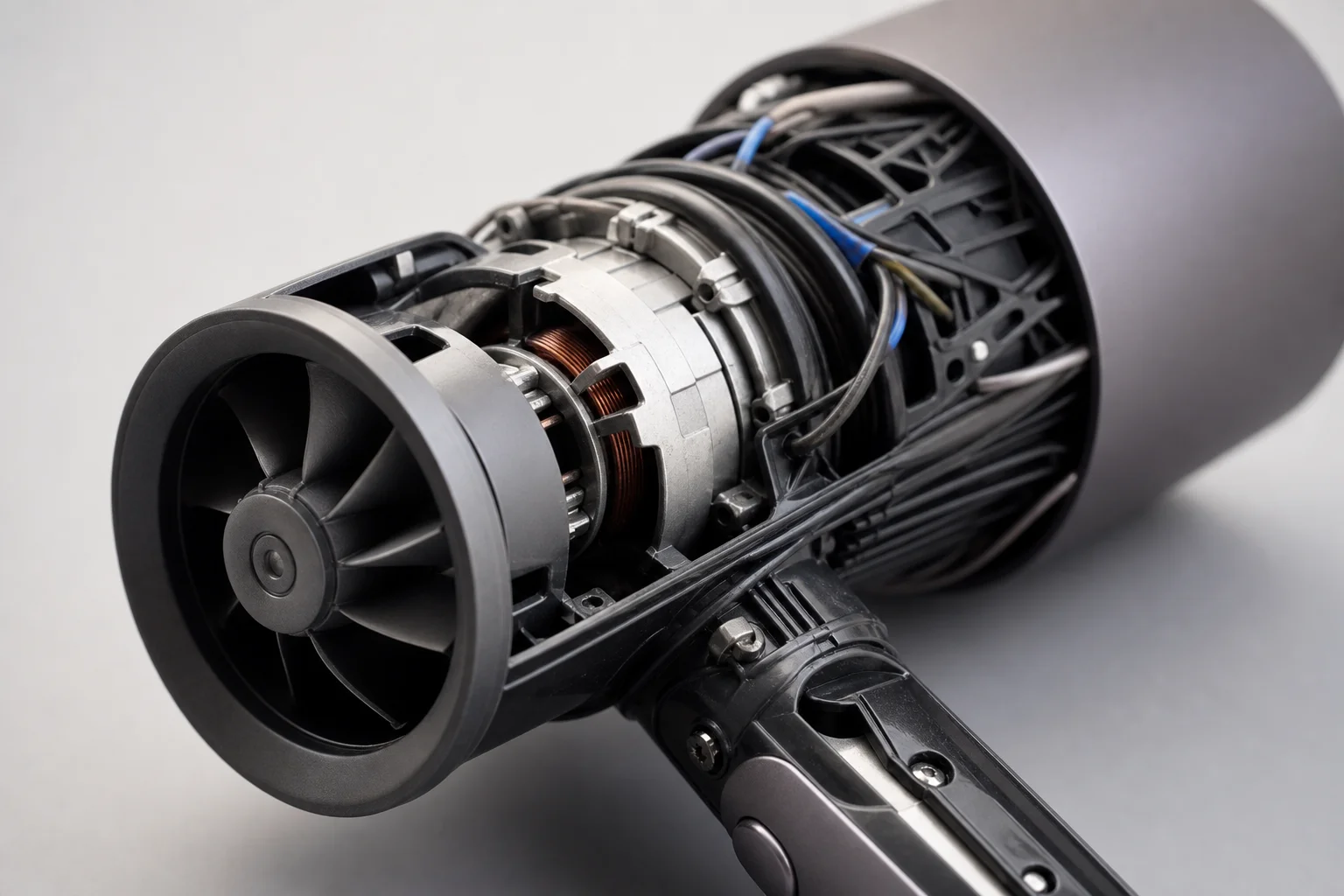
The Gama’s smaller motor housing contributes to this acoustic signature. Despite the identical RPM specification, the Dyson’s larger motor assembly operates more quietly, suggesting that motor size and design significantly influence noise output beyond raw speed alone.
Drying Speed and Airflow
In a direct side-by-side test, the Dyson completed a full rough-dry styling session in approximately 2 minutes 30 seconds, while the Gama required roughly 4 minutes for the same task. This represents a meaningful speed advantage for the Dyson, making it approximately one-third faster overall.
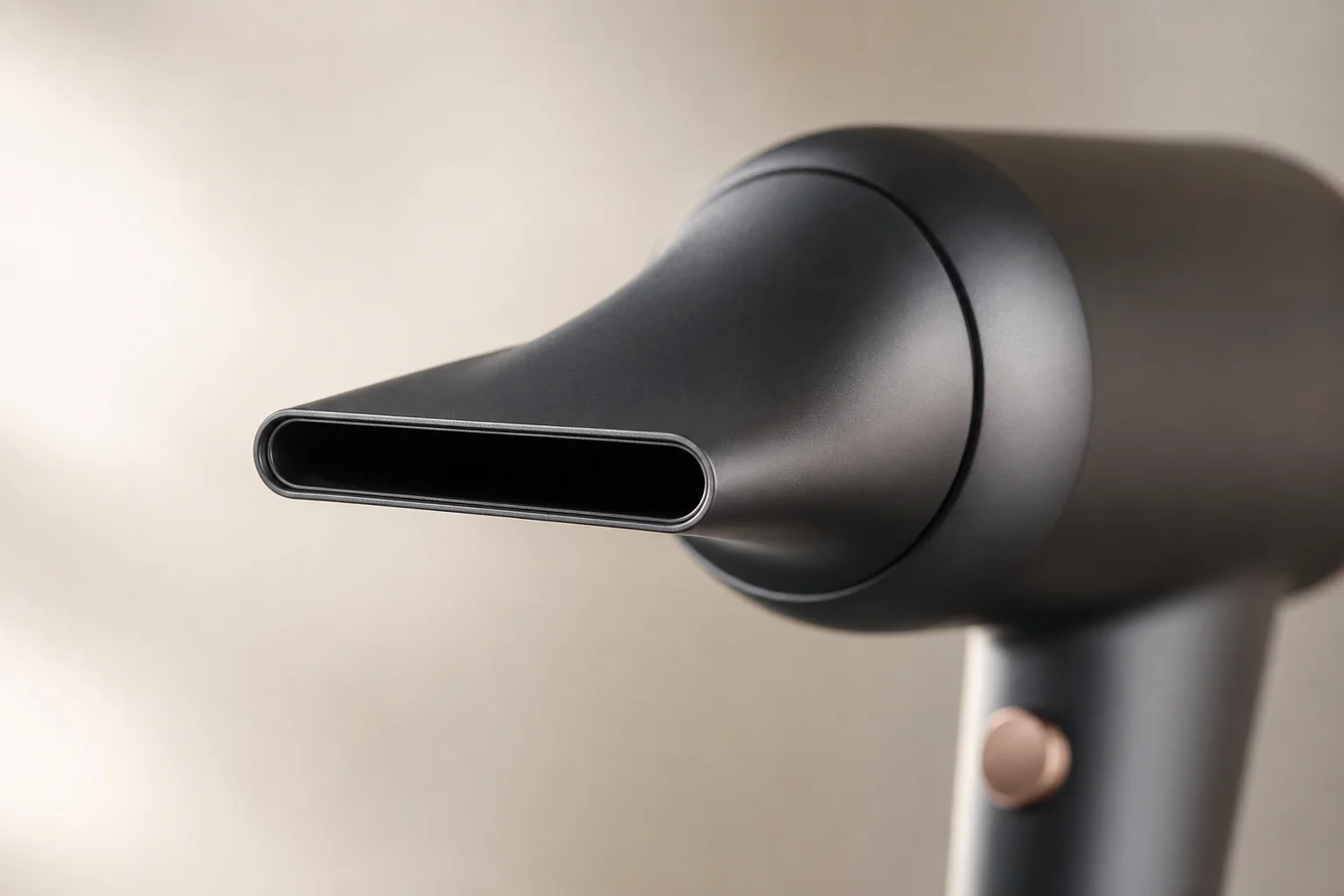
The airflow characteristics differ despite identical RPM ratings. The Dyson produces a concentrated, intense air stream that efficiently separates and dries hair with directional force. The Gama’s airflow feels more diffused, distributing air across a wider area with less concentrated intensity. This difference likely stems from the Dyson’s larger nozzle opening and motor housing, which allows for greater air volume displacement. The Dyson also delivers heat more immediately upon activation, while the Gama requires a brief warm-up period before full heat output reaches the hair.
Build Quality and Durability
The Gama’s construction reveals some compromises at its $357 price point. The finish quality feels less substantial than the Dyson, with attachments that resemble vacuum components rather than premium styling tools. The concentrator nozzle attachment doesn’t seat flush, leaving a noticeable gap that suggests an oversight in design. These details matter when comparing products at nearly identical price points.
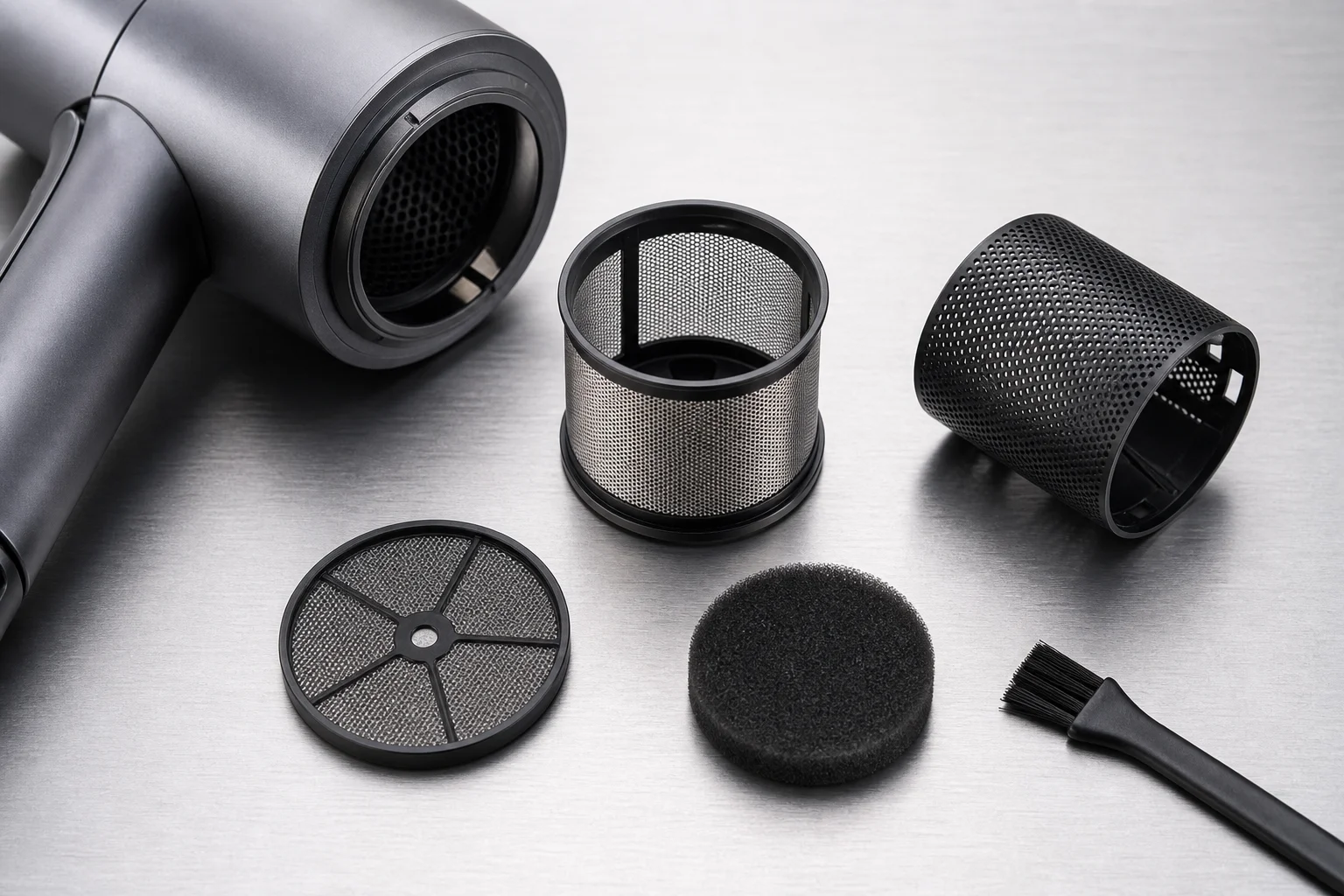
The filter systems tell a similar story. The Dyson’s filter features a fine micro-mesh design that captures smaller particles, while the Gama’s filter has larger holes, potentially allowing more debris to reach the motor. The Dyson’s magnetic filter attachment also makes cleaning more convenient and intuitive.
Long-term reliability reports from professional stylists reveal concerns with both models. Some Gama users report durability issues after extended daily use, with heat settings or power functions failing after the first month of heavy use. The Dyson has demonstrated more consistent reliability over years of professional use, though some stylists have experienced attachment fit issues over time. The Gama’s compact motor design raises questions about longevity under the demands of professional salon work, where a single stylist may dry dozens of heads per week.
Conclusion
The Gama Professional iQ succeeds as a lightweight, portable option for stylists who prioritize minimal fatigue and compact storage. Its 294-gram weight is genuinely impressive, and the control-lock feature prevents accidental adjustments. However, the Dyson Supersonic delivers superior drying speed, more refined build quality, quieter operation, and stronger airflow concentration—advantages that justify its similar price point for most users.
For professional stylists managing high client volume, the Dyson’s faster drying time translates to meaningful time savings across a full day of appointments. For occasional home use or travel, the Gama’s lightweight design offers genuine appeal. Your choice ultimately depends on whether you prioritize speed and durability or weight and portability.
Product link
View more details for Gama Professional iQ
This product is mentioned in the review. Check the specifications, options, and compatibility before buying.
View more details for Gama Professional iQFurther reading
Related Reviews
Hair Care Tools
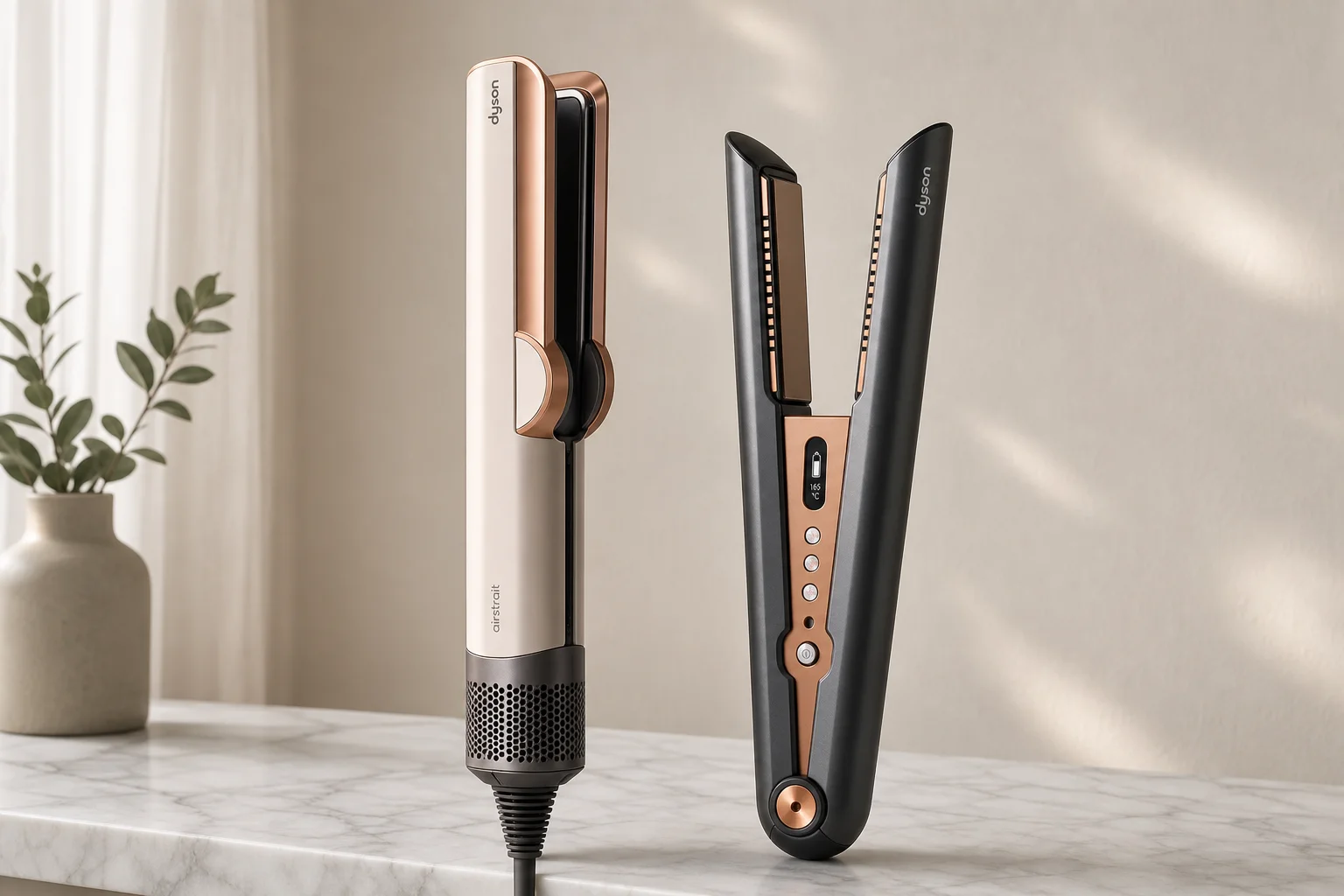
Dyson Airstrait vs Corrale Straightener: Which Hair Tool Delivers Better Results
A direct comparison of two premium Dyson hair tools on fine, wavy hair. We test styling results, versatility, and real-world durability to help you choose.
Hair Care Tools
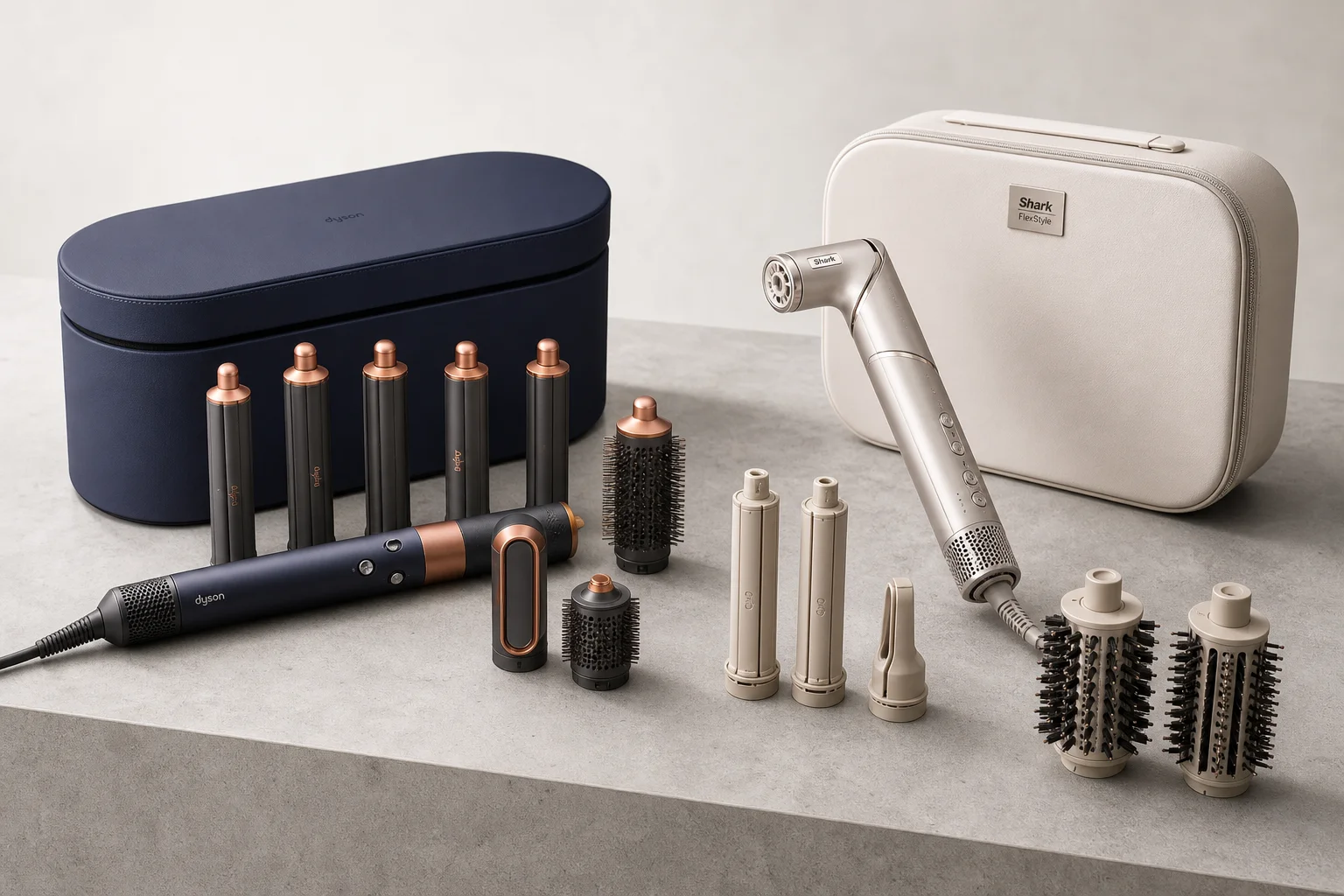
Dyson Airwrap vs Shark FlexStyle: Which Hair Styling Tool Is Right for You
A detailed comparison of two popular hair styling tools, examining price, performance, ease of use, and real-world results to help you decide which one suits your needs.
Hair Care Tools
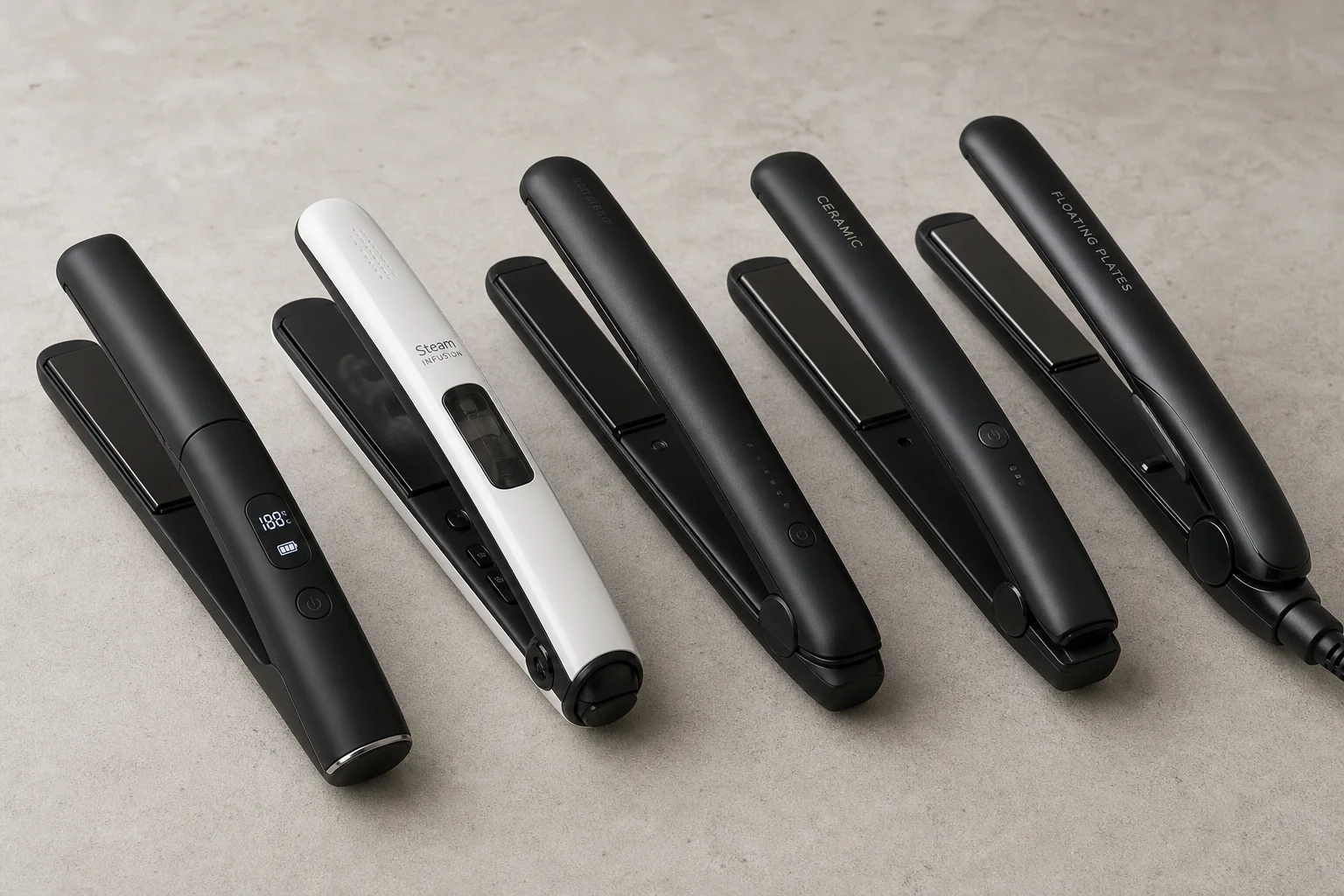
Top Five Hair Straighteners 2026: From Budget-Friendly to Premium Innovation
Five standout hair straighteners tested and ranked, from cordless innovation to salon-quality classics, with real-world performance insights.