Kitchen Knives
Fujiwara Denka vs Masutani 165mm Nakiri: A Same-Style Head-to-Head
Two 165mm nakiri knives face off on tofu, cucumber, carrot, mango, and cherry tomato. One wins on performance, the other wins on value.
Introduction
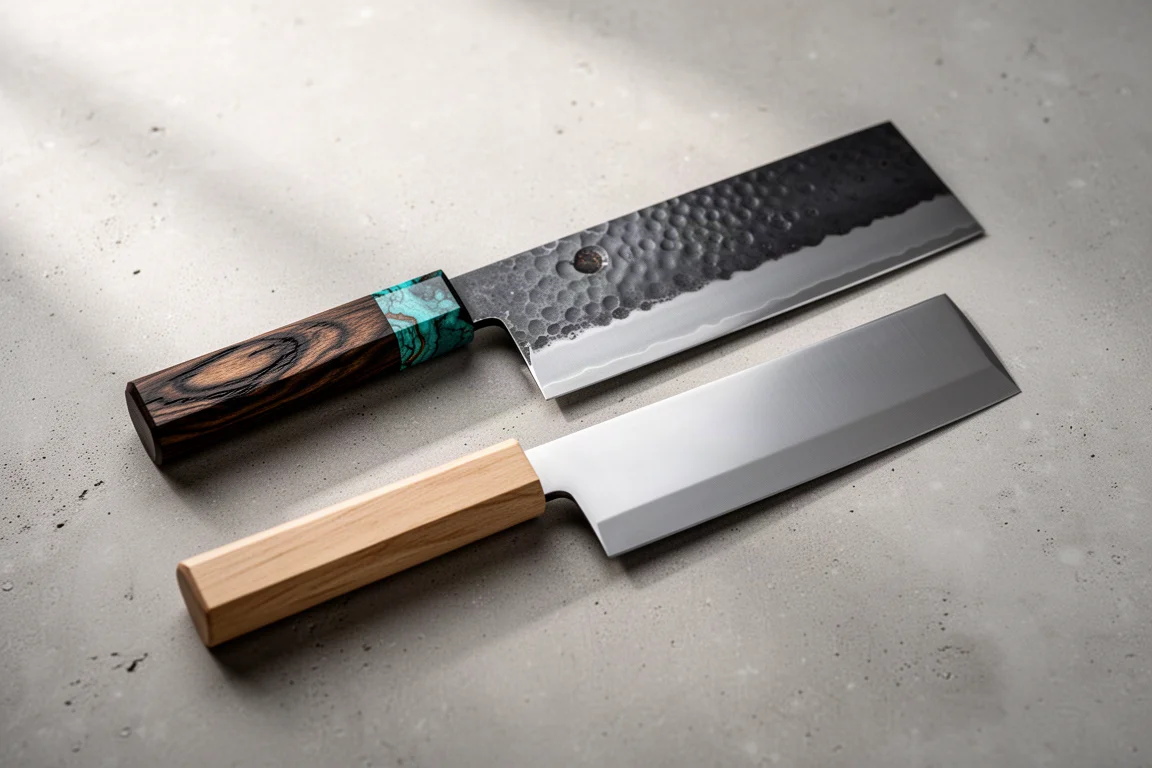
Head-to-head comparisons usually pit one knife style against another, like a petty versus a yanagiba or a gyuto against a smaller blade. This one is different: two knives of the exact same style and length, the Fujiwara Denka 165mm nakiri and the Masutani 165mm nakiri, tested on the same ingredients, one after the other. The result is more interesting than a simple winner-takes-all verdict, because each knife came out ahead in a different category.
The Two Contenders
The Masutani 165mm nakiri features a mono oak handle and VG-1 gold steel with a hardness of roughly 60 HRC. It weighs just 140g, stands 52mm tall at the heel, and is 3mm thick at the spine. Its balance point sits noticeably forward, likely because the oak handle is so light.
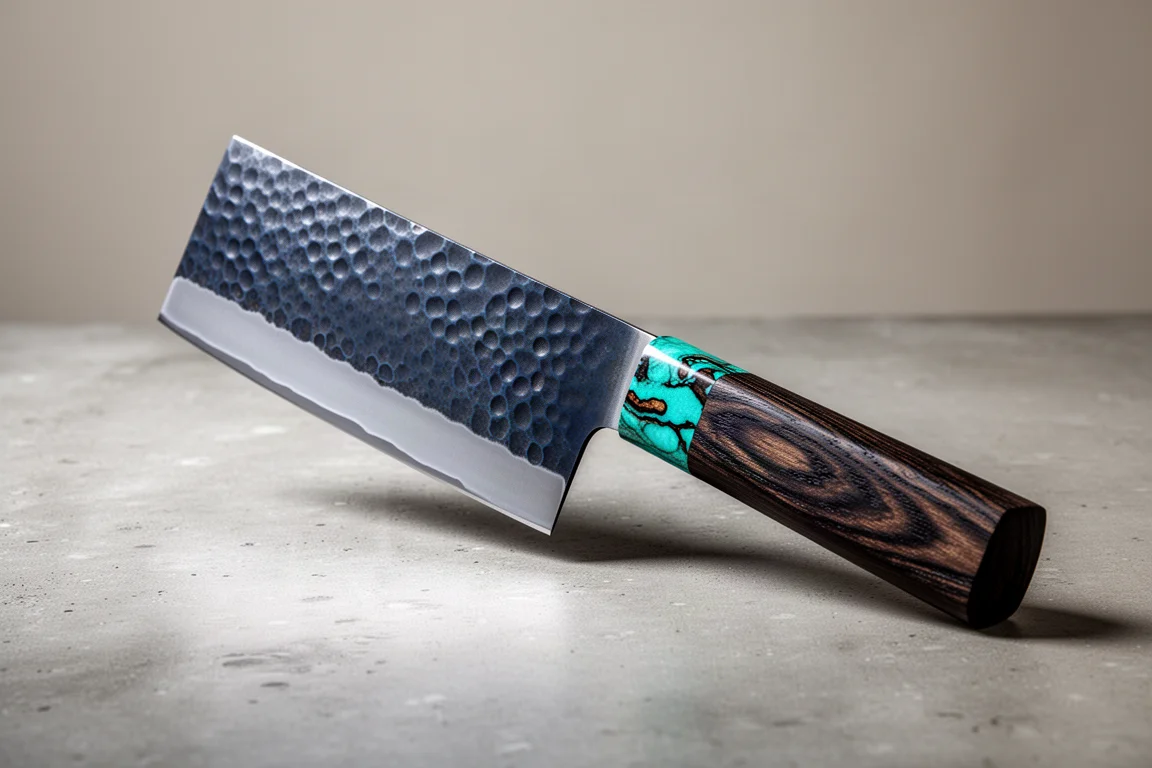
The Fujiwara Denka 165mm nakiri is a very different animal. Its handle is bog oak with a spalted turquoise bolster, and the blade is Aogami Super steel with stainless cladding at roughly 64 to 65 HRC, considerably harder than the Masutani. It measures about 55mm tall at the heel with the same 3mm spine thickness, but it weighs noticeably more at 192g. Its balance point lands right where the finger rests on the handle, which is a genuinely nice place for it to sit.
Vegetable and Fruit Testing
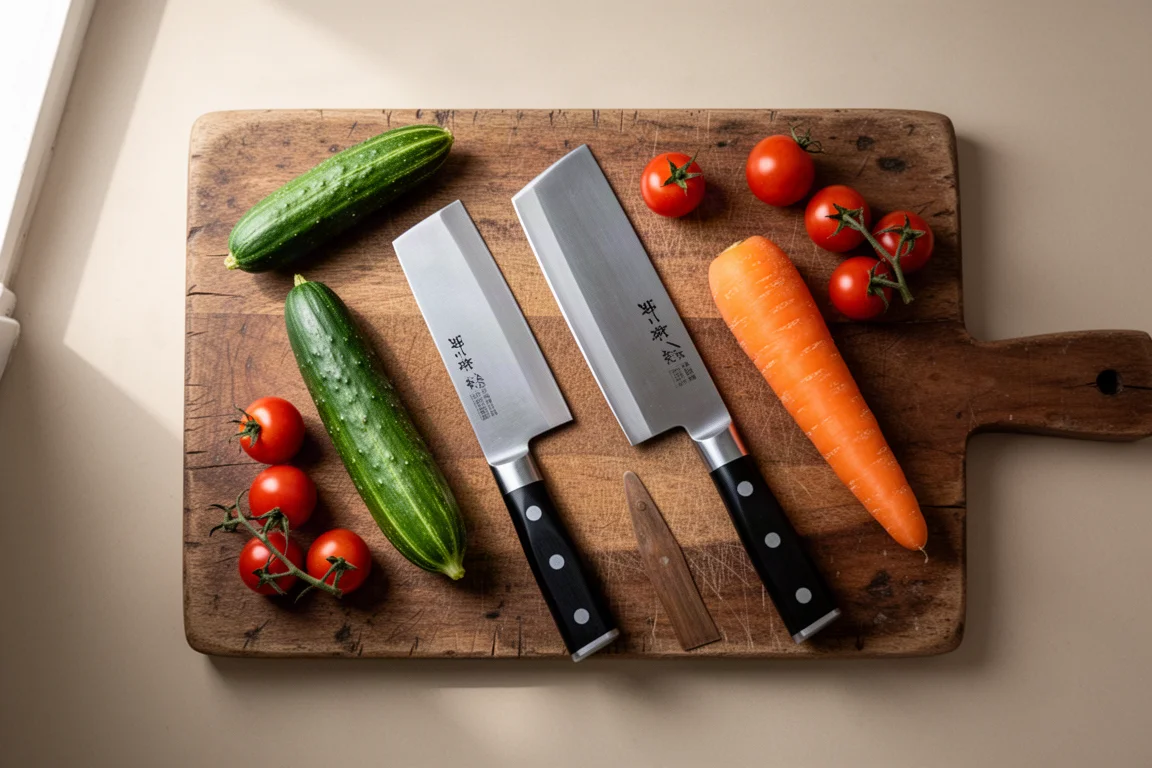
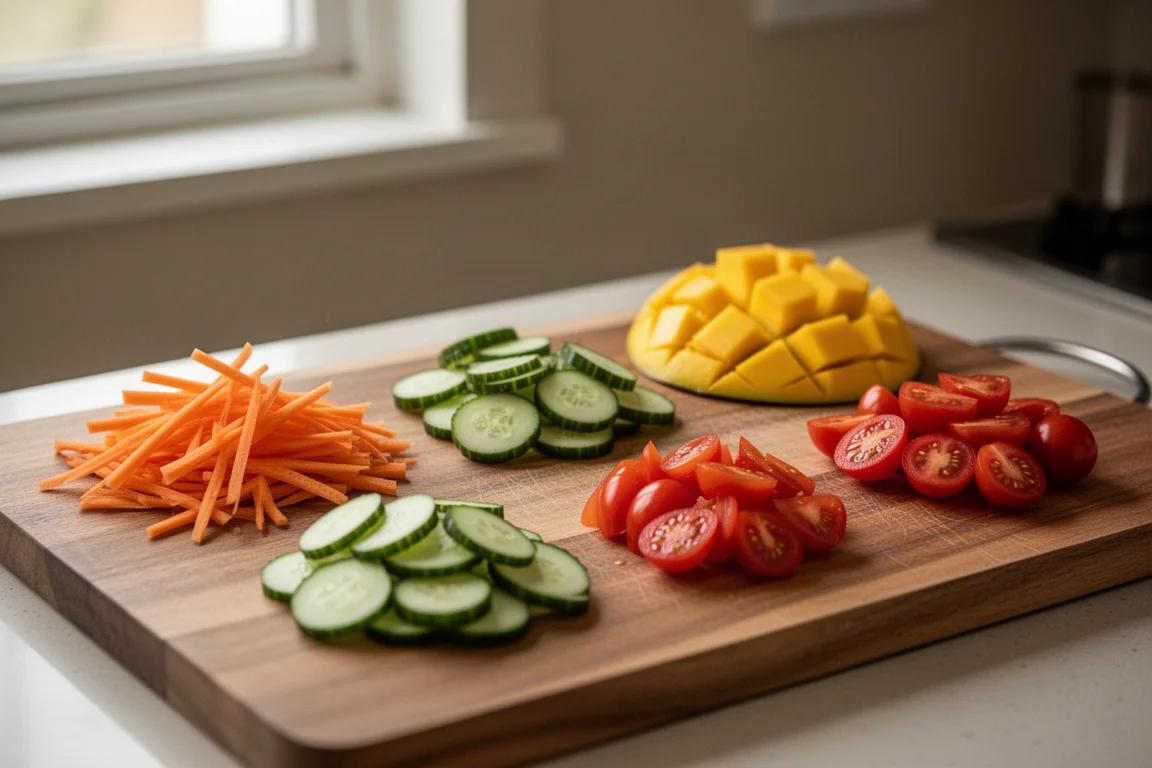
Both knives were put through the same lineup of everyday ingredients: tofu, cucumber, carrot, mango, and cherry tomato.
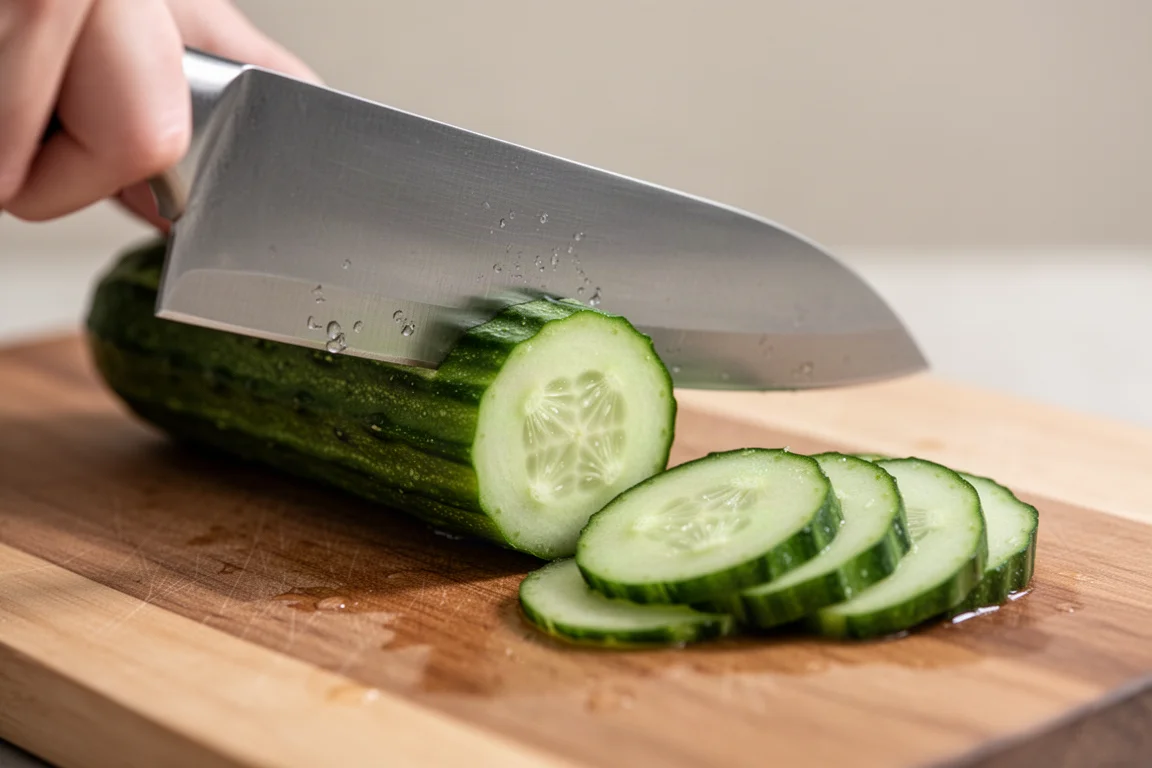
On tofu, both knives slid well through the horizontal cuts, with the Denka edging ahead slightly, but it was essentially a tie. On cucumber, the Denka did a little better, likely because its extra weight helped push through the slimy, low-friction stacked layers.
The carrot test was the most revealing. The Masutani wedged badly when halving a small carrot, cutting like a knife with a bevel that is a touch too thick, almost axe-like. Yet it performed well when making carrot planks and julienne strips. The Denka handled the initial halving without wedging, possibly helped by its weight, but then struggled to bite into the carrot during planking and julienne work, and carrot stuck to it noticeably more. Despite being hand-hammered for food release, its kuro-uchi finish seemed to make food cling more.
On mango, the Denka cut into the skin and through the flesh a little better, again possibly a weight factor. The decisive moment came with the cherry tomato test: the Denka glided through almost effortlessly, while the Masutani’s first cut required a sawing motion before it found the right spot, and even subsequent cuts were noticeably harder.
Fit, Finish, and Grind
Context matters here. The Masutani ships with its factory edge but is ground much thinner, with flat, even bevels. The Denka had just been finished on a Shapton Glass 6K with a natural stone micro bevel, yet it is much thicker both at the spine and behind the edge, and its bevels are not flat. It looks like it could use thinning, and the grind does not appear fully even side to side.
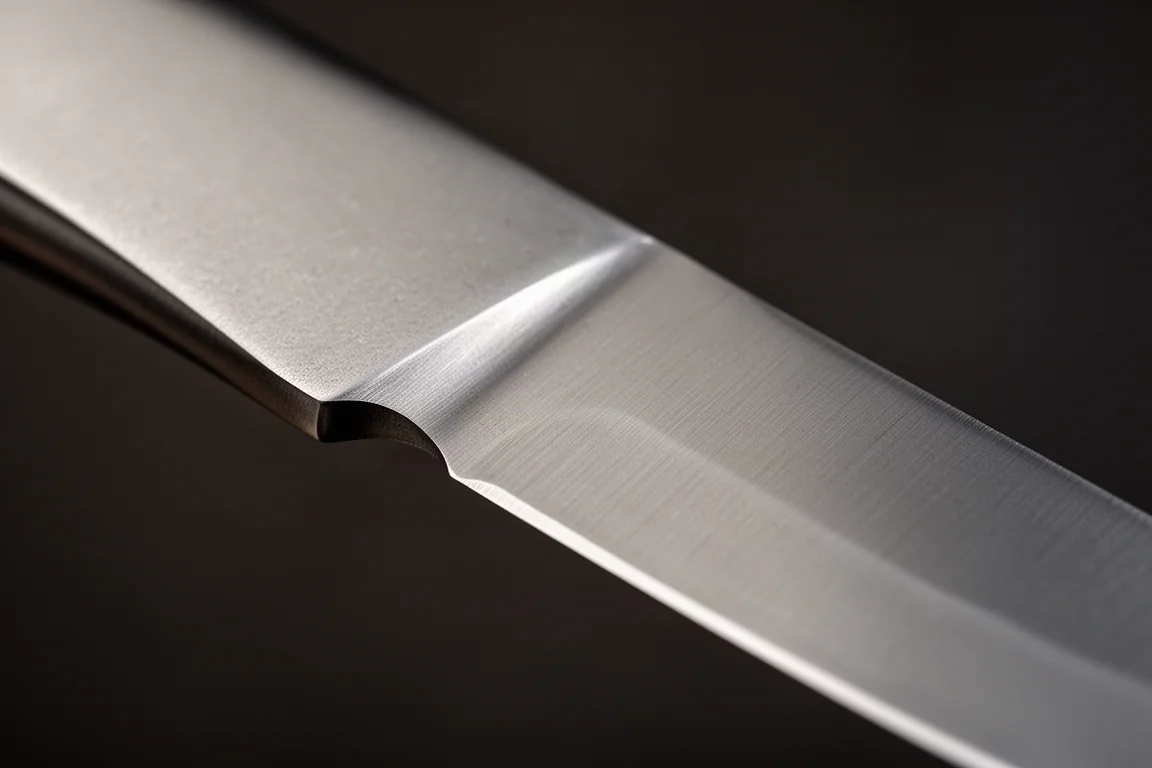
Fit and finish is where the Denka disappoints for its price. It is often described as wabi-sabi, but that term feels like putting a positive spin on it. Nobody wants to spend hundreds of dollars on a knife and feel the bevel immediately needs thinning. On grind and finish alone, the cheaper Masutani is simply the better-executed knife. The Denka’s performance advantage seems to come from its weight, its harder and finer Aogami Super steel, and its refinement, not from its grind.
Performance Winner vs Value Winner
On raw performance across most of the ingredients, the Denka takes it. It cut better through cucumber layers, mango, and decisively through the cherry tomato, and its balance point sits right at the finger position on the handle.
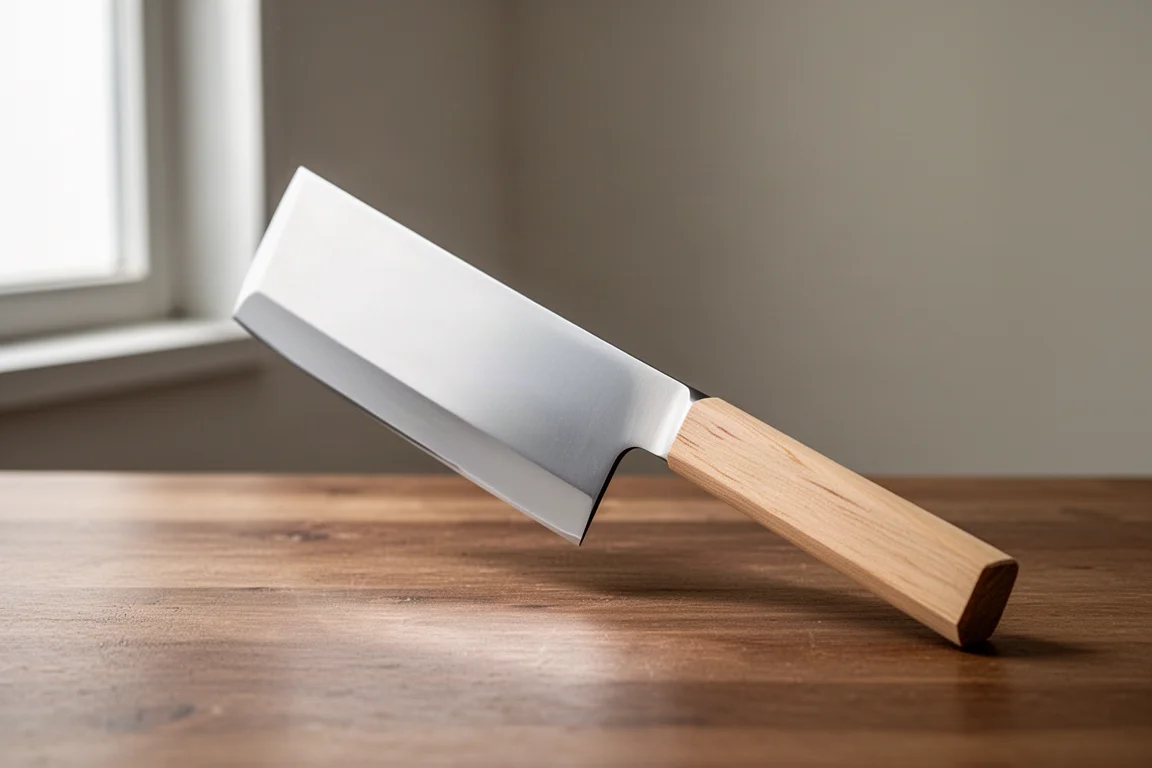
But the Masutani is the other winner, and in some ways the bigger surprise. It costs roughly 25% of the price of the Denka, feels very light in the hand, has a thinner and flatter grind, and performed admirably throughout, even outperforming the Denka in some of the food demos. As a pure value proposition, it is a pleasure to use and very hard to argue against.
Which Nakiri Should You Buy?
If you want the best-performing nakiri of these two and are happy to spend hundreds of dollars, the Denka is the pick. Its harder steel, extra heft, and cutting feel carried it through most tests.
If you want a nakiri that performs remarkably well, sometimes even matching or beating the Denka, at a small fraction of the cost, the Masutani is the obvious choice. Worth means different things to different people, and this comparison shows why: performance and value do not always live in the same knife.
Conclusion
This head-to-head produced two winners in two categories. The Fujiwara Denka 165mm nakiri wins on performance, helped by weight, steel hardness, and refinement, even if its grind and finish leave room for improvement. The Masutani 165mm nakiri wins on value, delivering a thinner grind and surprising cutting ability at a fraction of the price. Choose based on which category matters more to you.
Further reading
Related Reviews

Kitchen Knives
Best Chef's Knives 2026: 27 Popular Options Tested and Ranked
A comprehensive review of 27 chef's knives ranging from $18 to $380, with honest assessments of handle comfort, blade balance, and real-world performance.

Kitchen Knives
Best Chef's Knives Under $75: Two Tested Recommendations
Two practical 8-inch chef's knives that balance sharpness, comfort, and durability without premium pricing.

Kitchen Knives
Best Chef's Knives 2026: 27 Options Tested and Ranked
A comprehensive review of 27 chef's knives ranging from $18 to $380, with honest assessments of handle design, balance, blade profile, and real-world performance.