Kitchen Knives
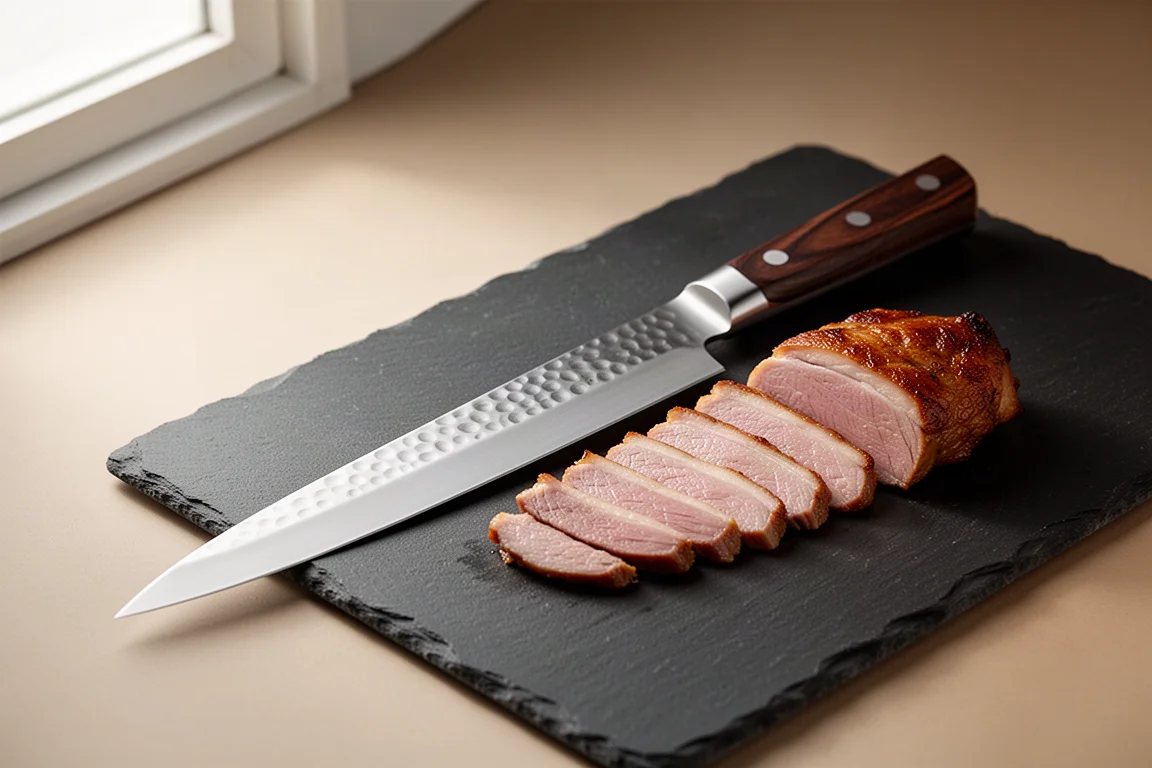
Fujimoto Hammer Tone Tsujihiki Review: A Purpose-Built Slicing Knife
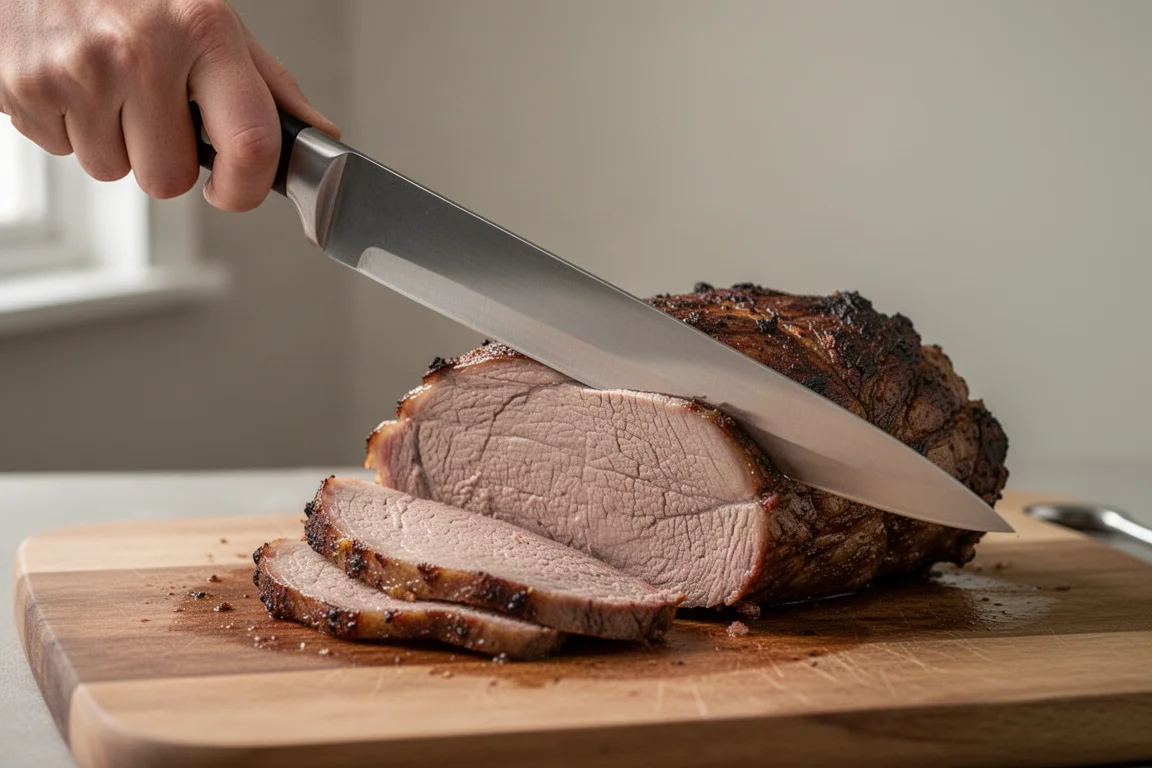
A long, thin Japanese slicer put to work carving a whole duck, showing why a proper tsujihiki beats shortcuts when slicing roast meat.
Introduction
Carving a roast is one of those jobs where the wrong knife makes itself obvious immediately. A serrated electric carver will always cut something, but it rarely does a great job, and most people simply do not need a knife that plugs into the wall. What you need for properly sliced roast meat is a tsujihiki, a Japanese knife designed specifically for slicing flesh.
That is exactly what the Fujimoto Hammer Tone Tsujihiki sets out to do. Like the Japanese knives we appreciate most, it uses really hard steel, which means it gets sharper and stays sharper longer than softer knives. We put it to work on a whole duck, pretending it was holiday dinner, and it turned in exactly the kind of performance you would hope for from a dedicated slicer.
Who This Knife Is For
If you regularly cook roasts, host Sunday dinners, or have family over for the holidays, this is the knife built for you. Anyone who has spent good money on a nice piece of meat, taken the time to learn how to cook it well, and then served it to guests may as well finish the job with the right tool.
It is also a useful knife before the meat ever hits the heat. A long, thin blade like this handles large cuts nicely, for example portioning a big strip loin into steaks.
Main Strengths
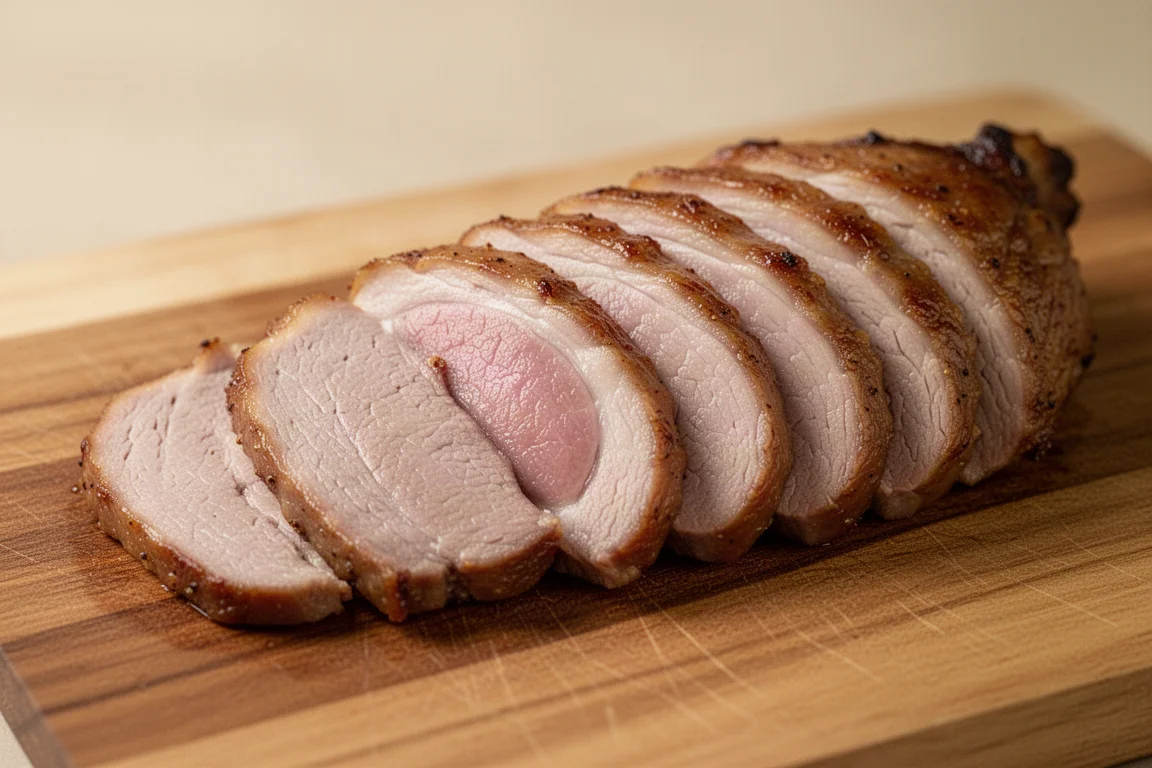
The tsujihiki really shines when it comes time to carve the breast meat thin. Starting with the heel of the knife and pulling straight through in one smooth swipe, the blade glides through in a single pass. The difference in the finished slice is dramatic: one clean pass leaves the cut face smooth, while a sawing motion leaves it jagged.
That smooth cut matters more than it might seem. Meat that has been sawed through feels in the mouth like it has already been chewed, and all that sawing forces juice out of the meat. Long, smooth slices preserve the texture and keep the meat moist. Thin, even slices of duck with a clean cut face genuinely change the eating experience.
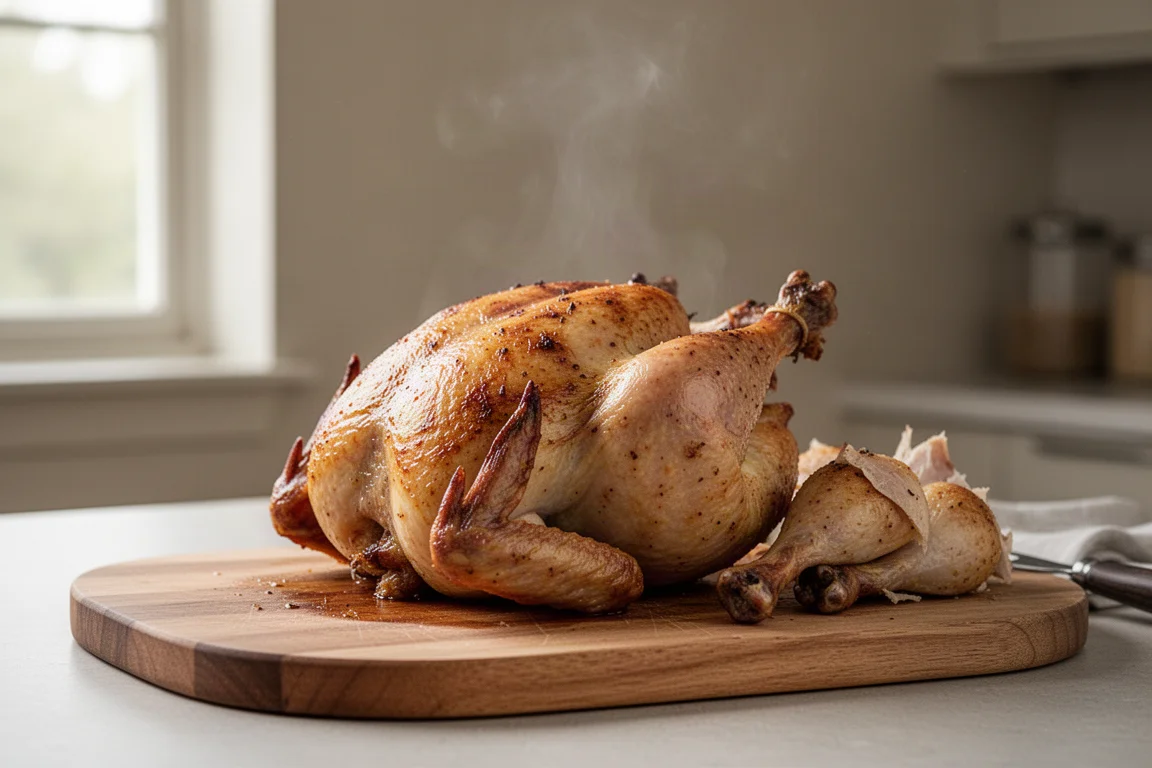
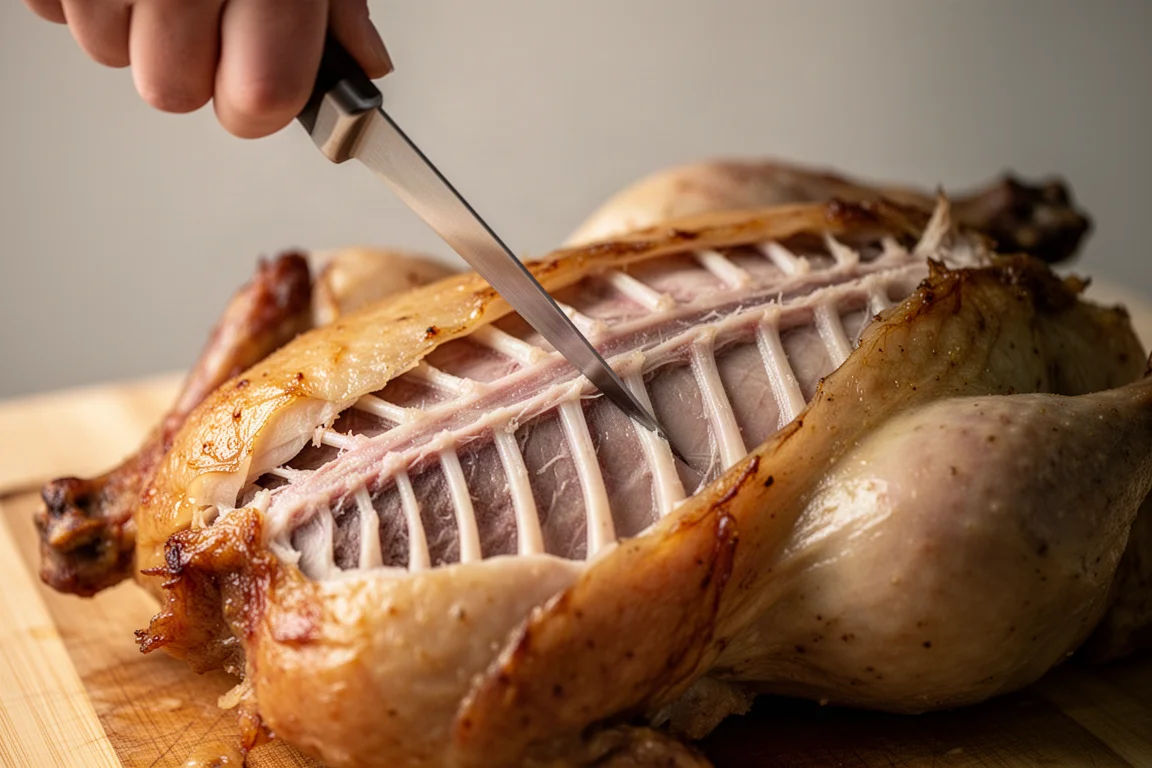
Beyond the final slices, the knife proved capable through the whole breakdown of the bird. Removing the legs, wings, and breast meat all went well, with the tip of the knife doing most of the detailed work following the bones like a road map. Working with the tip and taking small cuts, following the principle that you can always cut more off but you cannot put it back on, yielded more meat and better control than trying to carve the bird in one grand theatrical gesture.
Things to Consider Before Buying
This is a hard, thin Japanese blade, and that construction comes with one important rule of use: do not force it. If a cut is not going the way you expected, back off instead of pushing through. Finding a bone in the path and driving through it anyway is how knives get chipped, and everyone who uses these knives learns that lesson eventually. When a joint resists, back off and find your way around it.
It is also worth knowing that hard steel rewards good habits. This is a specialised slicer, not a general-purpose workhorse, so think of it as one tool in the drawer rather than a replacement for everything else.
Buying Advice
If you cook a ton of roasts and need a good carving knife, the tsujihiki is the right call. It handled the whole duck with smooth, thin, beautiful slices, and a long, thin blade does not hurt when you want to show off a bit at the table. You did the hard work on the roast; using the right tool to finish it is the natural conclusion.
If you want to check one out in person, it is worth taking the time to handle it before buying. A dedicated slicing knife is a considered purchase, but for anyone serving roast meat regularly, it earns its place quickly.
Conclusion
The Fujimoto Hammer Tone Tsujihiki did a great job with a whole duck, producing nice smooth thin slices that preserve texture and juice. For anyone carving a lot of roasts, it is the right tool for the job, and a clear upgrade over improvised solutions.
Product link
View more details for Fujimoto Hammer Tone Tsujihiki
This product is mentioned in the review. Check the specifications, options, and compatibility before buying.
View more details for Fujimoto Hammer Tone TsujihikiFurther reading
Related Reviews

Kitchen Knives
Best Chef's Knives 2026: 27 Popular Options Tested and Ranked
A comprehensive review of 27 chef's knives ranging from $18 to $380, with honest assessments of handle comfort, blade balance, and real-world performance.

Kitchen Knives
Best Chef's Knives Under $75: Two Tested Recommendations
Two practical 8-inch chef's knives that balance sharpness, comfort, and durability without premium pricing.

Kitchen Knives
Best Chef's Knives 2026: 27 Options Tested and Ranked
A comprehensive review of 27 chef's knives ranging from $18 to $380, with honest assessments of handle design, balance, blade profile, and real-world performance.