Everyday Carry
FourSevens Mini Mark III vs Mini Turbo Mark III: Tiny EDC Flashlights with Big Outputs
Two pocket-sized FourSevens flashlights, one built for maximum output and one for maximum throw. Here is how they differ and which one suits your everyday carry.
Introduction
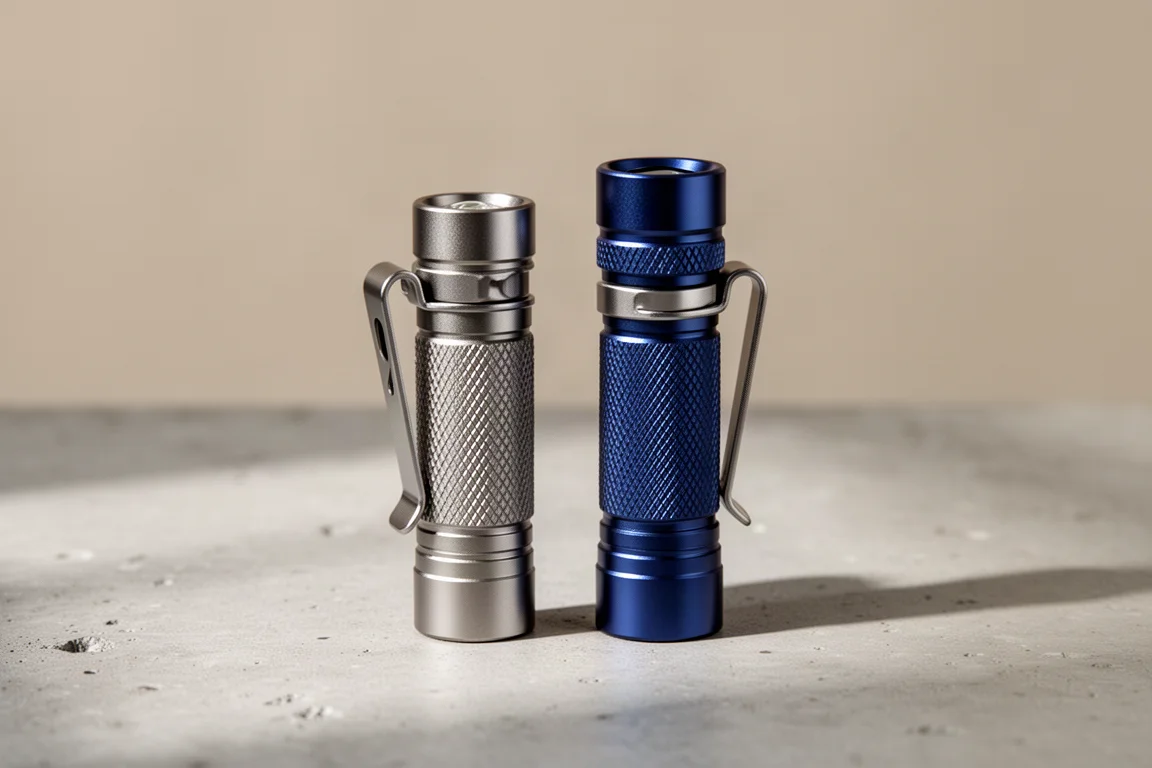
FourSevens has released two new everyday carry flashlights that take the word “mini” seriously: the Mini Mark III and the Mini Turbo Mark III. Both are barely longer than two inches, yet one pushes 800 lumens and the other throws light up to 200 meters. They share the same battery, the same twist-to-operate interface, and the same programmable mode system, so the real choice comes down to whether you want more raw output or more distance.
FourSevens Mini Mark III: The Compact Powerhouse
FourSevens calls the Mini Mark III its compact powerhouse, with the highest power-to-size ratio in its lineup. It peaks at 800 lumens in Burst Mode and reaches a maximum throw of 120 meters. The light is driven by a Nichia 319A LED with a 4,000 Kelvin color temperature and 90+ CRI, which delivers that neutral white tint many enthusiasts prefer in an everyday carry light.
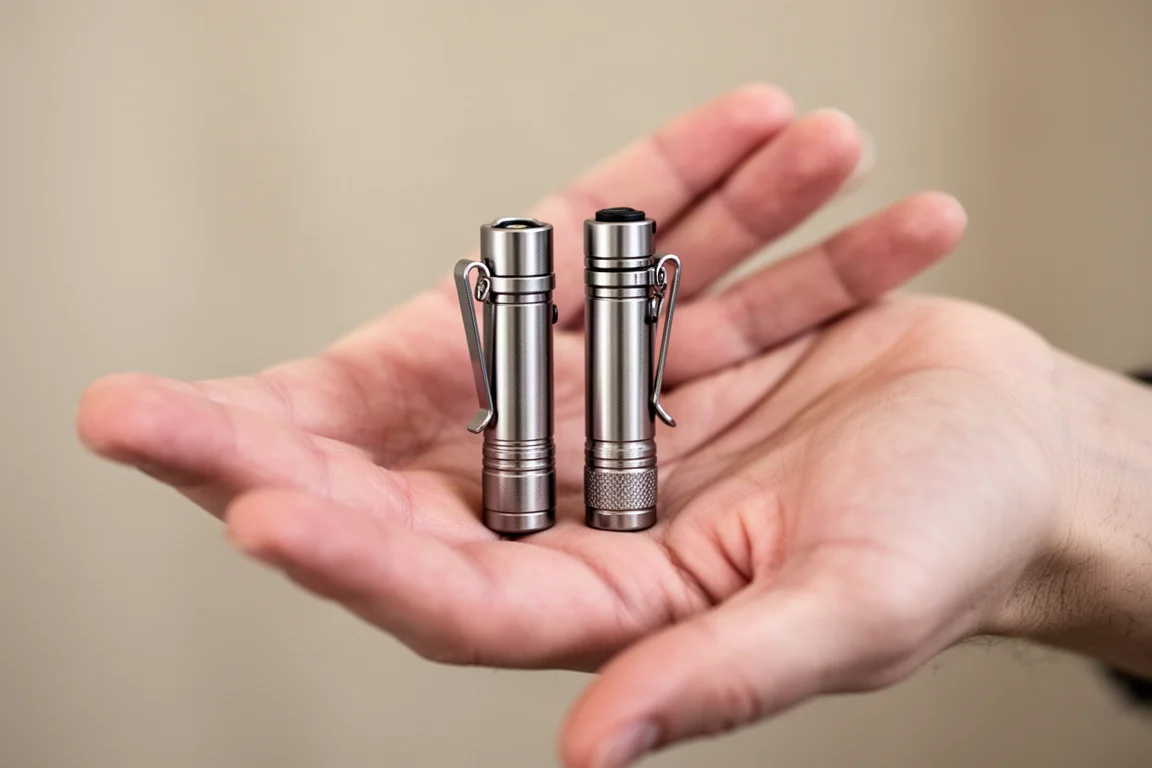
It measures 2.2 inches long, 0.8 inches in body diameter, and weighs just 1.6 ounces. It is available in titanium or in midnight blue Type 3 anodized 6061 aluminum, and ships with a single RCR 123 high-discharge battery that delivers up to 85 hours of runtime on low.
FourSevens Mini Turbo Mark III: The Compact Thrower
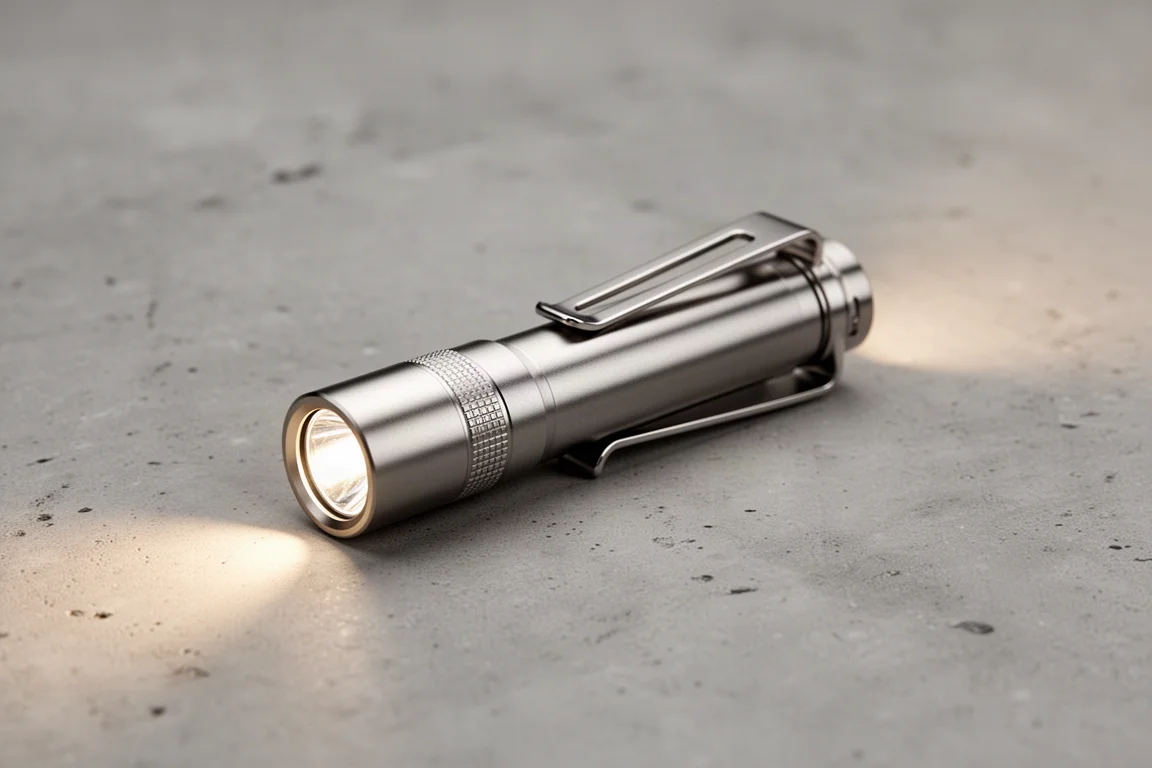
The Mini Turbo Mark III trades 100 lumens for distance. Its maximum output is 700 lumens, but its throw extends to 200 meters, the highest distance-to-size ratio in the FourSevens lineup. It uses the same RCR 123 high-discharge battery with a slightly longer 90-hour low-mode runtime, the same AR-coated optical grade glass lens, and the same IPX8 waterproof rating, which means it is submersible in up to six feet of water.
Dimensions are 2.4 inches long, 0.8 inches in body diameter, and 1.8 ounces. It is also offered in titanium and 6061 aluminum, with the titanium version featuring a midnight blue anodized aluminum collar that gives it a distinct look.
Shared Features: Clips, Magnetic Tails and Build Quality
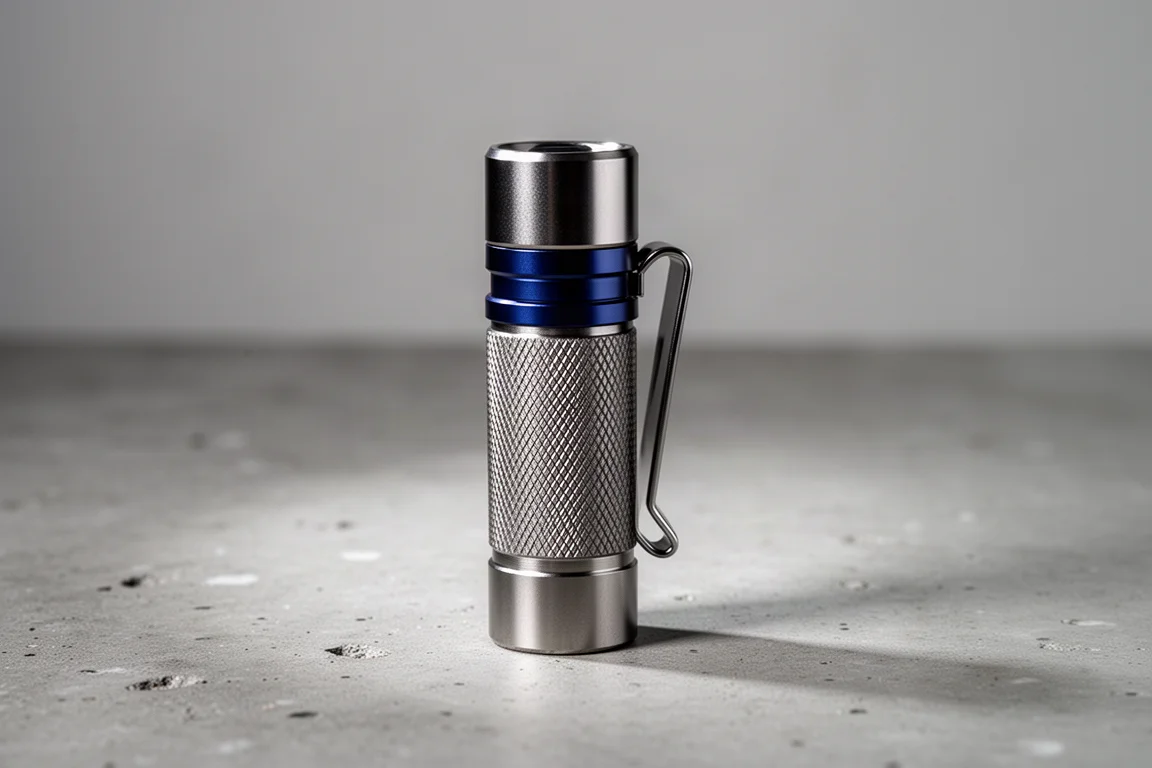
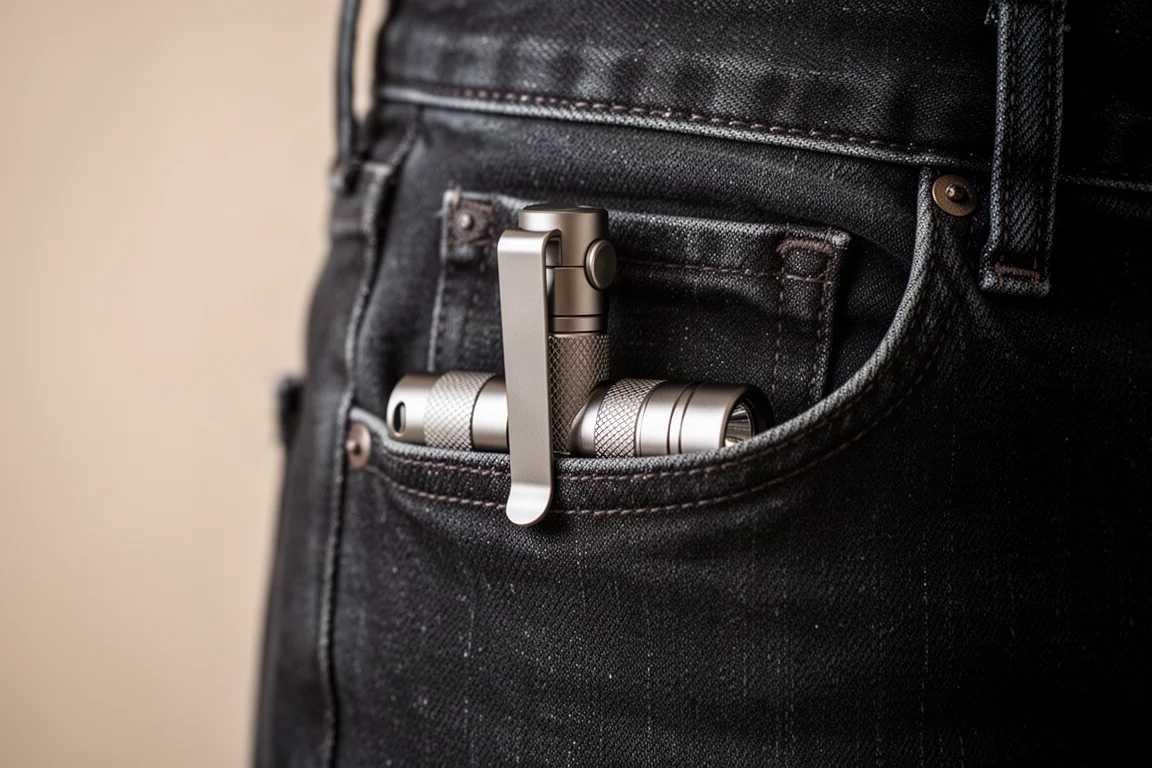
Both lights come with deep carry pocket clips that are easily removable via split rings. In everyday use, nothing on the light catches on pocket fabric, which makes carrying and retrieving them effortless. The tails are magnetic and strong enough to support the full weight of either light on a metal surface.
Build quality is a consistent FourSevens strength, with fit and finish that holds up alongside anything else in the brand’s range. Both lights use a single-spring battery system in the body, and both share the same six programmable lighting modes, so habits learned on one carry over to the other.
Output and Runtime Compared
The Mini Mark III runs 1.5 lumens for 85 hours on low, 45 lumens for 5 hours on medium, 350 lumens for 50 minutes on high, and 800 lumens for 30 seconds in Burst Mode before stepping down to high. The Mini Turbo runs 1.5 lumens for 90 hours, 35 lumens for 9 hours, 300 lumens for a full hour on high, and 700 lumens in Burst Mode with the same 30-second step-down.
The mode spacing is sensible, and starting at a genuinely useful 1.5-lumen low with 85 to 90 hours of runtime is a strong point for both. Note that output may differ if you substitute a standard CR123 battery instead of the supplied high-discharge RCR 123.
Beam Profiles: Flood Versus Throw
This is where the two lights genuinely diverge. The Mini Mark III produces a large, wide hotspot with a softer, less defined perimeter, which suits close-range tasks. The Mini Turbo has a much tighter hotspot with a crisp, well-defined outer perimeter, which is what enables its 200-meter throw and makes distant objects clearly visible at night.
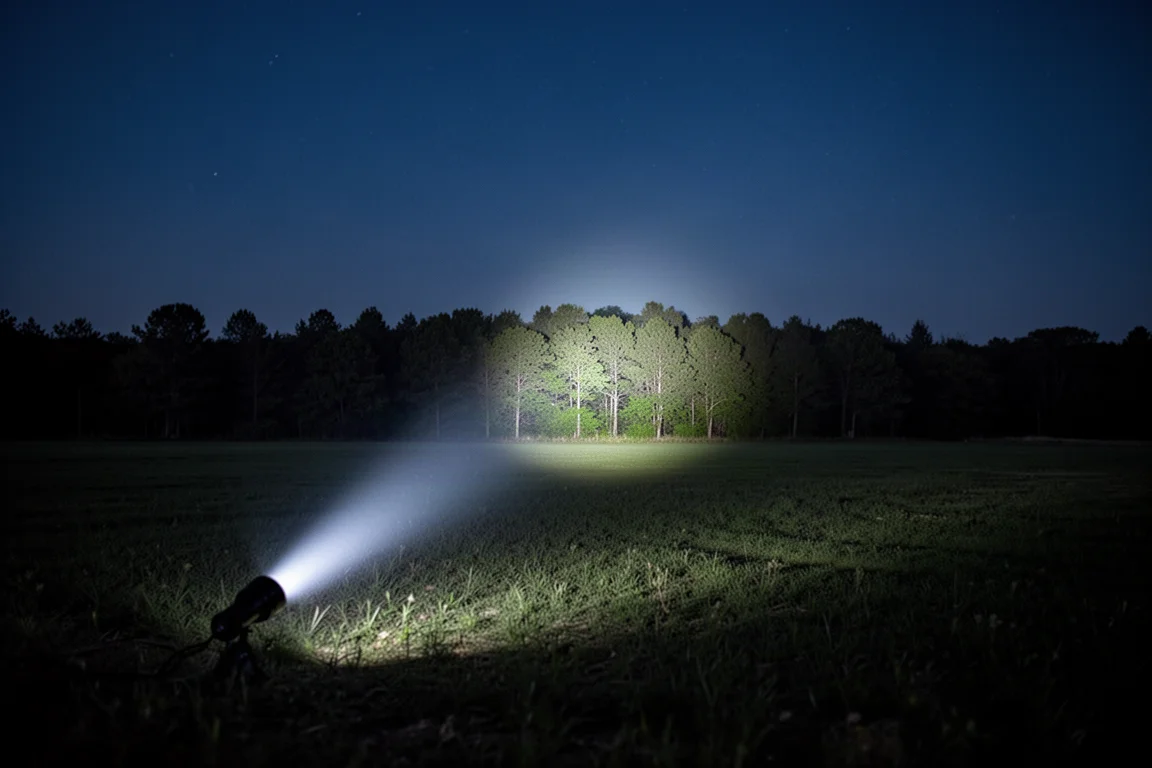
Neither beam is extremely wide, but of the two, the Mini Turbo’s tighter, more defined beam is the more compelling profile, especially paired with its neutral white output. The Mini Turbo uses an 80+ CRI LED, so color rendering is slightly less accurate than the Mini Mark III’s 90+ CRI, but the throw advantage is significant for a light this small.
Twist Operation and the Interface
Both lights are twist-to-operate, with no tail switch or side switch. A single twist turns the light on or off, and twisting off and back on quickly cycles through low, medium, and high. A quick double twist activates Burst Mode, which is the one action that is noticeably harder to perform one-handed.
The lights also feature mode memory, so they return to the last output used. One practical tip: the lights ship in mode configuration three, and many users will want configuration four, which orders the modes as low, medium, high, then burst.
Everyday Use and Programming
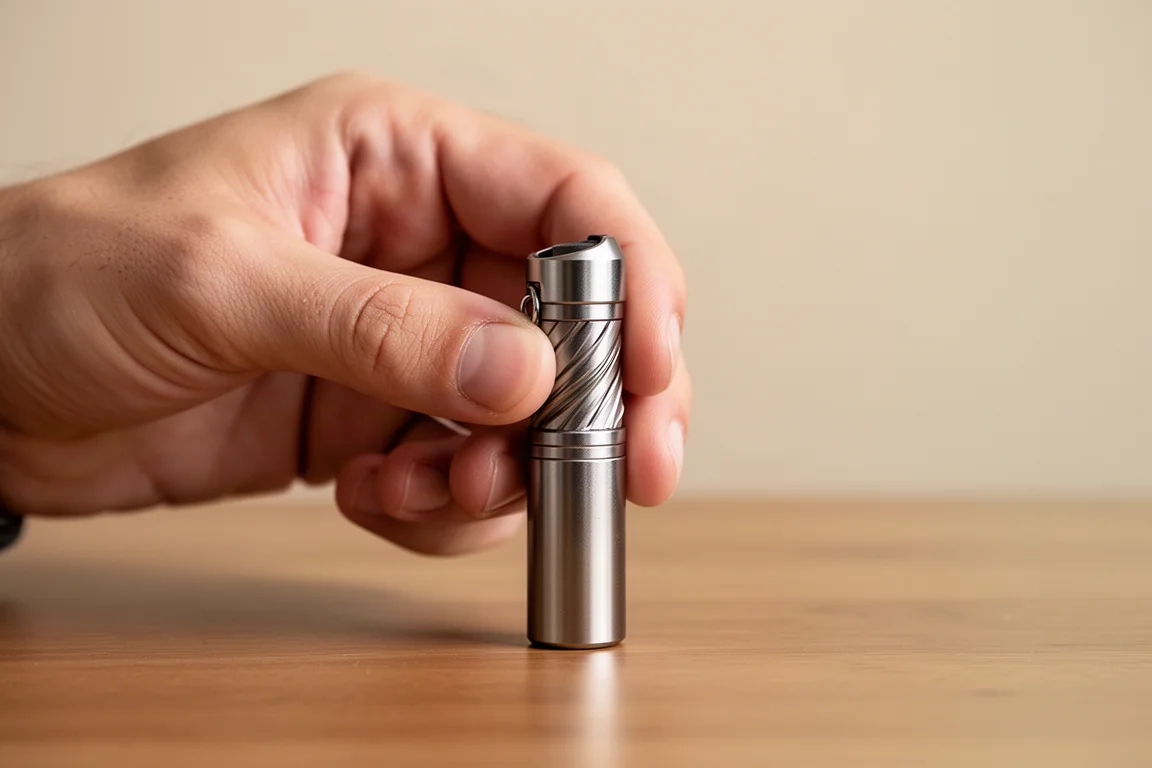
Programming six modes on a light with no switch sounds awkward, since it normally requires ten twists within three seconds. There is a simpler approach, though: turn the light on, then squeeze the head slightly while twisting to register the presses, which makes entering programming mode much easier than it sounds. Once flashing, releasing and pressing again quickly steps through the mode configurations.
The six configurations include a low, medium, high, burst setup; a high-first setup for those who always want maximum output; and a strobe, SOS, and beacon configuration among others. Thermal handling is solid, with a solid copper PCB inside: after a one-minute run on Burst Mode, the Mini Mark III measured 106 degrees Fahrenheit at the head and 88 at the body, while the Mini Turbo stayed cooler at 92 and 84 degrees.
Which One Should You Buy?
At $70 for aluminum and $110 for titanium, the Mini Mark III is the more affordable of the pair, while the Mini Turbo costs $75 and $115 respectively, a five-dollar difference between the two. Given how close the pricing is, the decision really comes down to beam preference: more lumens and a wider hotspot, or less output but dramatically more throw in a package that is barely bigger. For most users who want one small light that can also reach across a field, the Mini Turbo’s extra 80 meters of throw and tighter beam make it the more versatile pick.
Conclusion
The FourSevens Mini Mark III and Mini Turbo Mark III prove that genuinely tiny flashlights no longer require meaningful compromises. Both offer excellent build quality, useful programmable modes, magnetic tails, and long low-mode runtimes. Choose the Mini Mark III if maximum output and color accuracy matter most, or the Mini Turbo if you want surprising throw from a pocket-sized light.
Further reading
Related Reviews

Everyday Carry
Everyday Gear That Deserved a Second Look
A roundup of solid everyday carry items: watches, pens, a pencil, a knife, and a smart ring that each earned a place on the table.

Everyday Carry
KORE Tactical Bifold Wallet Review: A Durable Everyday Carry Option
A close look at the KORE Tactical Bifold Wallet, a reinforced nylon wallet with magnetic closure and room for cards, cash, and IDs.

Everyday Carry
Krabby Wallet Review: A Slim, Simple Carry That Has Stood the Test of Time
A closer look at the Krabby Wallet, a slim canvas and elastic design with a loyal following and a simple, functional approach to everyday carry.