Swimming Tech
FORM Smart Swim 2 Goggles Review: Heart Rate, Swim Straight, and a Display You Forget Is There
The second-generation FORM smart goggles add an optical heart rate sensor and an open-water compass heading, while keeping the best in-goggles display in swimming.
Introduction
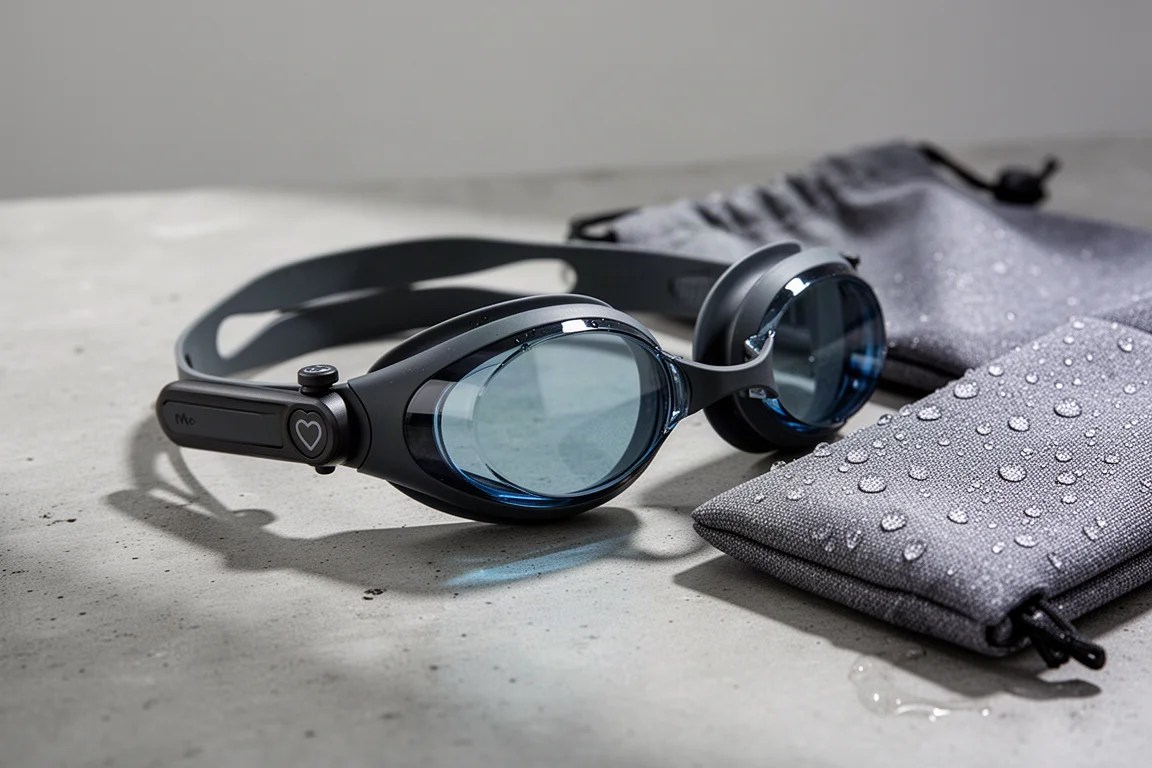
The FORM Smart Swim 2 is the second version of FORM’s smart swim goggles, and the formula remains the same: all of your lap and split information appears directly on a see-through display inside the goggle itself, so you never glance at a watch mid-lap. The new generation adds optical heart rate and open-water directional details, and it has been put through long-term use in both the pool and open water, including cold water testing in 8°C (46°F) conditions.
There is also a more affordable first-generation model that remains on sale, with the optical heart rate sensor and the updated fit being the main hardware differences. This review focuses on how the Smart Swim 2 performs in real swimming, and where the subscription model gets in the way.
Design, Fit, and Battery
At first glance the Smart Swim 2 looks very similar to the original, but the tech unit on the side is about 15% smaller. More importantly, a small piece now extends toward the temple of your head: that is the new optical heart rate sensor, and it needs firm contact against your temple to work. The straps also extend a bit further than before, allowing a slightly tighter and more secure fit.
The lens design itself has not changed, and it remains virtually identical to the first version. The included carrying case is more practical than the old slim case, and the box includes several additional nose bridges for dialling in fit.
Battery life is rated at 14 hours. In a pinch, 10 minutes of charging gets you roughly two hours of swim time, which is a genuinely useful fast-charge claim. Charging uses a simple side-attaching cable.
Pricing sits at $179 for the first-generation goggles and $249 for the Smart Swim 2 going forward.
Fit and Setup
Powering on is simple: press the front power button, watch for the green light, and use the rear button to change menu options. Once on, the goggles are placed on your face as normal, and the straps are tightened.
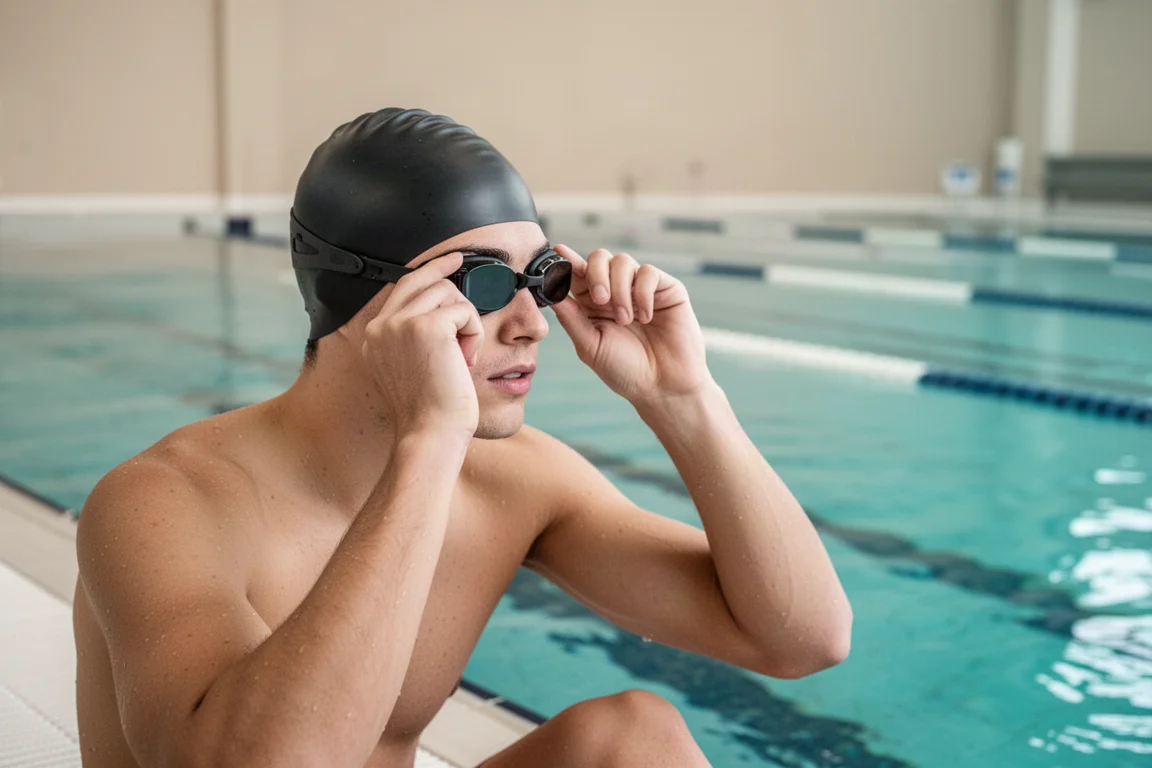
The fit step matters more than you might expect, because the optical heart rate sensor must press against your temple. Early swims without the right positioning simply would not register heart rate at all. Two changes fixed it completely: wearing the swim cap outside the strap, and tightening the goggles slightly. From that point on, heart rate readings were accurate across the board, and you can confirm your heart rate is being detected before you even start the swim.
In-Pool Experience and Data Fields
In the pool, you choose pool or open water mode, then pick from your saved workouts, your training plan, or free swim. From there you simply swim. Laps are tracked automatically, and at the end of each length your splits appear on the display, along with interval stats and total averages. Everything is customizable through the FORM smartphone app, and there is essentially every data field you could want.
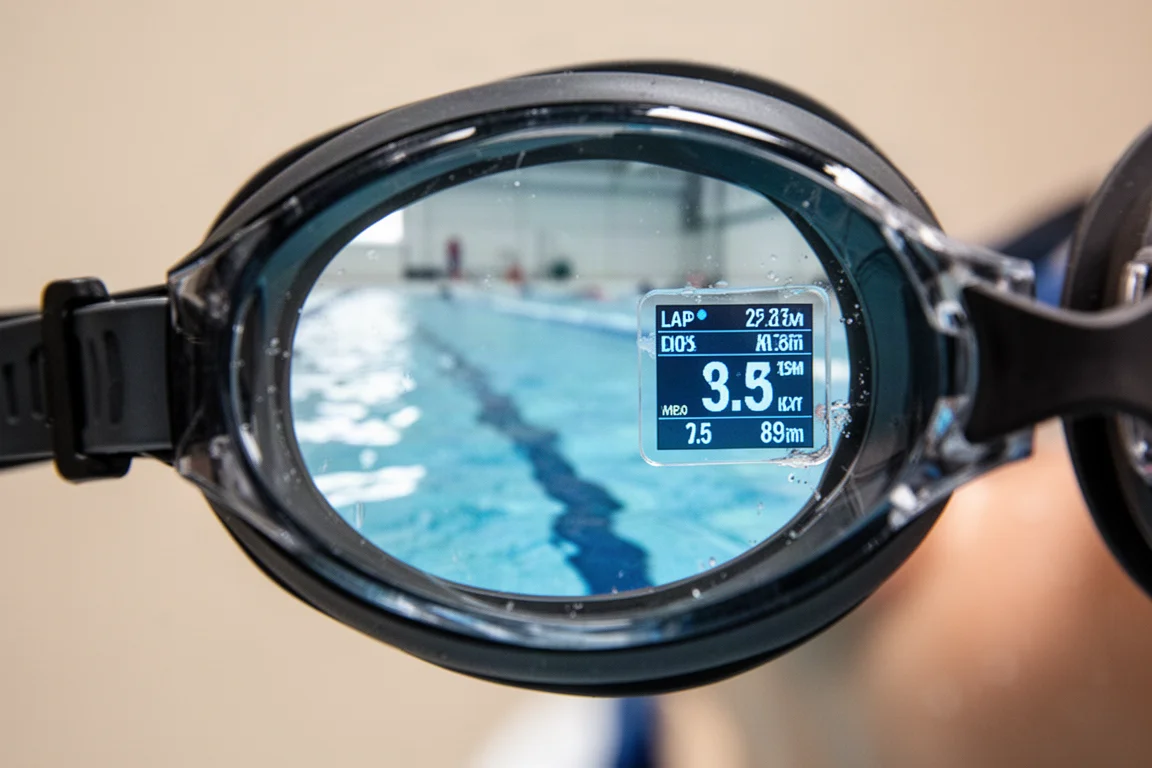
The display itself is phenomenal. It looks crystal clear, with no visible pixelation or unlit pixels, and that has been a strength of these goggles for years. The real convenience shows up at the flip turn: normally you push off the wall and try to glance at your watch at exactly the right moment. With these goggles the stats are simply there in front of you. Between sets, you get previous set times and a countdown timer for interval or structured workout timers.
The one meaningful criticism, shared with the first version, is side visibility. The lens offers solid forward vision but limited peripheral visibility, which matters if you like seeing who is passing you in a busy lane, or taking in your surroundings on a scenic open-water swim. If you swim an hour or two at a time, this is a genuine quality-of-life consideration.
Accuracy of lap and distance tracking is excellent. After the first session, there was never a single issue with captured metrics. One minor quirk: the first length of an interval occasionally reads a couple of seconds fast, as if the initial second or two is not being captured. After that first length, everything is fine. Note also that this testing only covers freestyle, which the goggles correctly identify automatically.
Structured Workouts and the Subscription
This is where things get messy. FORM requires a subscription for several features beyond plain swimming: $15 per month or $99 per year, with the first two months free after purchase. The subscription covers the FORM Score, the Swim Straight open-water feature, access to around 1,500 workouts and 45 training plans (including triathlon swim-only plans for Sprint, Olympic, and Ironman distances), the head coaching content, and TrainingPeaks push integration from TrainingPeaks down to the goggles.
To be fair, the library is enormous and pushing a chosen workout to the goggles takes seconds: pick a workout, review the warm-up, preset, and main sets, tap save to goggles, and you are done. During the swim, the goggles guide you through each set, intensity level, and remaining distance, making structured workouts genuinely easy to follow.
Two sticking points remain. Custom manual workouts require the subscription, which feels like it should be free with a $249 pair of goggles. And the triathlon plans are swim-only, which duplicates what most triathletes already get from a full swim-bike-run plan. A middle-ground tier for swimmers who only want custom structured workouts would be welcome.
Open Water: Swim Straight and Watch Pairing
For open water there are two options: the goggles on their own, or paired with a Garmin or Apple Watch for GPS-based distance and pace. The goggles themselves have no GPS; instead they carry a range of other sensors that detect what you are doing without knowing exactly where you are.
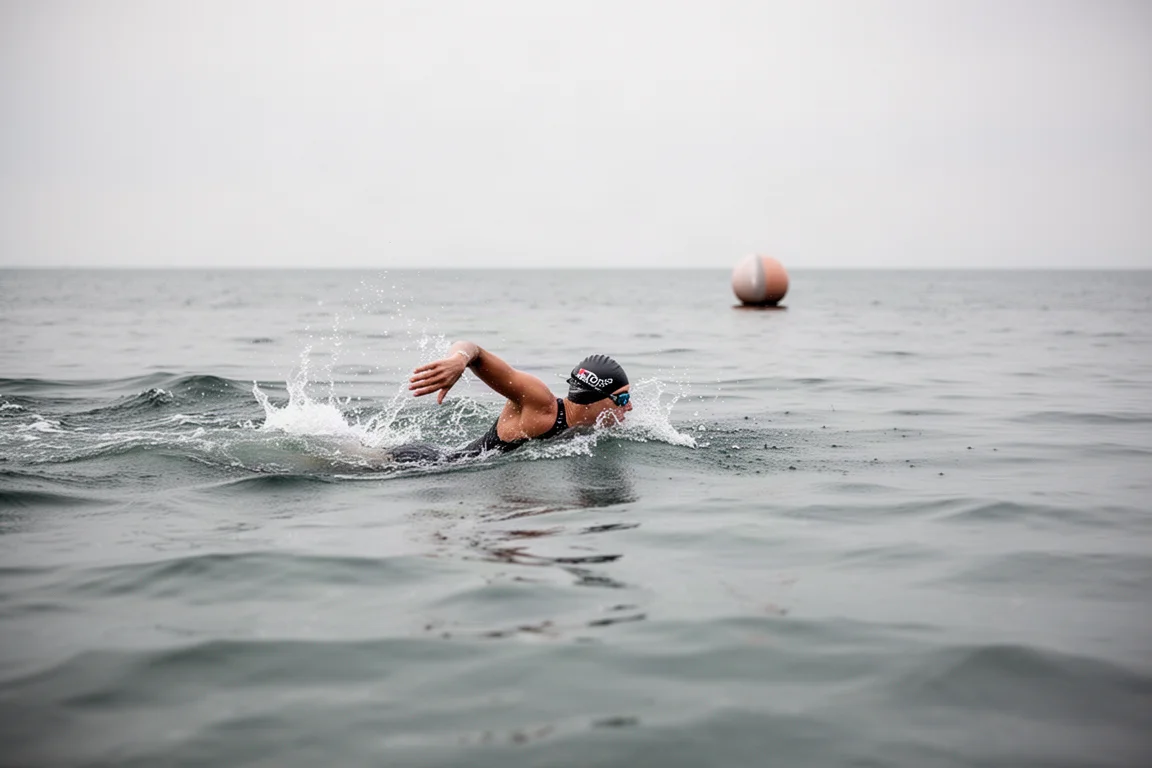
The headline new feature is Swim Straight, which is also coming via firmware update to the first-generation goggles. It provides a literal compass heading. Before each swim you run a quick calibration that takes only a couple of seconds: turn your head down to the right, to the left, then spin around. Once swimming, you sight normally, and the compass at the top of the display tells you your heading, for example 175 degrees. If you drift toward 160, you know to correct back toward 175. If you do not sight within 20 seconds, the goggles remind you to.
This is genuinely valuable in choppy water where the horizon and your sighting landmarks keep disappearing. Rather than losing sight of a tower or buoy in the waves, you simply hold your compass heading and keep going. FORM has also secured certifications from several organizations allowing use of the feature during races, which is an important practical advantage for competitive swimmers and triathletes.
Optical Heart Rate Accuracy
The optical heart rate sensor is the main hardware upgrade over the first version, so is it worth the roughly $70 difference? Chest straps are the traditional gold standard, but as FORM itself points out, chest straps tend to slide down to the waist within a few wall pushes for male swimmers without a swim top, which matches real-world experience here regardless of strap tightness or placement.
Validation was therefore done against two watches with optical heart rate. One watch produced readings that were simply off, but the Garmin comparison was very close to the FORM data across most sets. Crucially, the pattern was consistent: during interval sets with a climbing heart rate, the Garmin would periodically drop out while FORM nailed the rising curve. As long as connectivity was maintained, values were solid and generally very accurate throughout.
With the caveat that triple-validation is difficult without a reliable chest strap in the pool, this is one of the best options available today for accurate optical heart rate during swimming.
Buying Advice
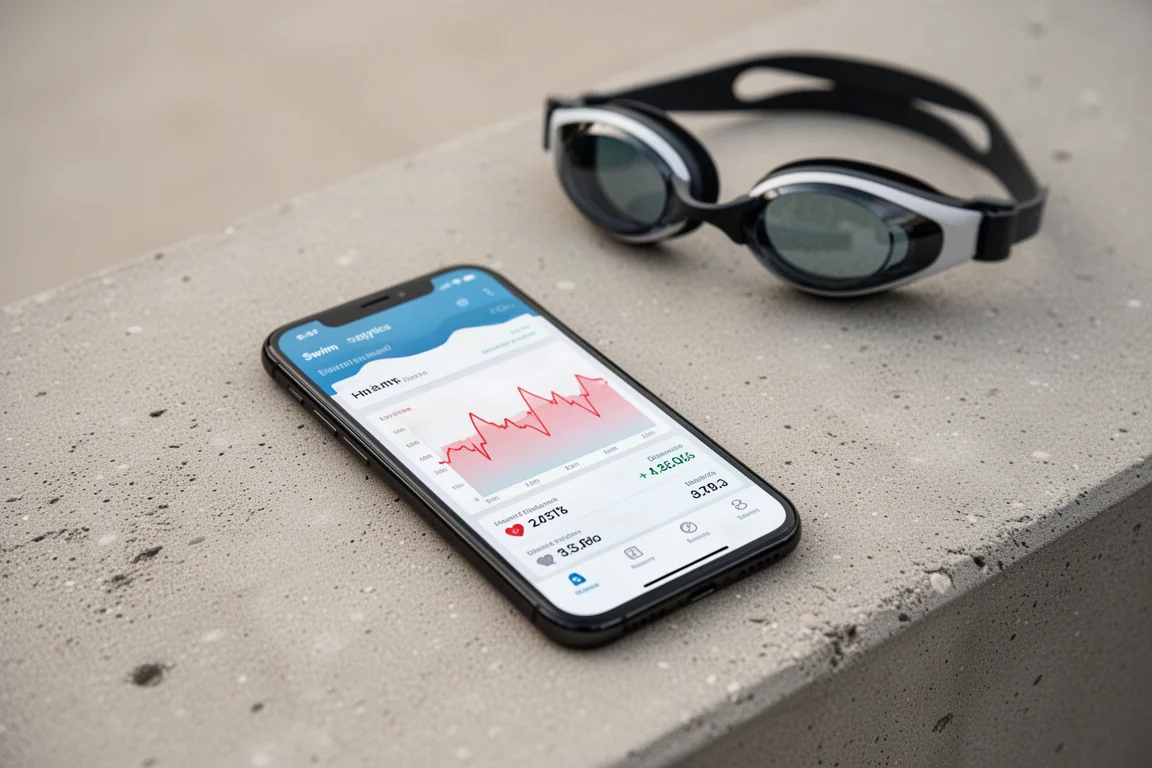
If you swim a lot, these goggles are excellent, whether you choose the Smart Swim 2 or the first-generation model. Having all your lap, split, and interval data in your line of sight without fiddling with a watch is a genuinely better way to swim, and syncing to the app and onward to platforms like Strava works seamlessly. The app also records heart rate across the session, distance, swim metrics like head pitch, heart rate zones, and per-set and per-length analytics.
Choose the Smart Swim 2 at $249 if optical heart rate and the improved fit matter to you, or the first-generation version at $179 if you mainly want the core in-goggle display experience and will get Swim Straight via firmware. The main reservation, shared by many long-time users, is the subscription structure: FORM has tried every pricing model over roughly five years, and the subscription is what keeps the company going, but a cheaper tier for swimmers who only want custom structured workouts would make this an easier recommendation.
Conclusion
The FORM Smart Swim 2 keeps the best in-goggles display in swimming and adds two features that genuinely matter: reliable optical heart rate and a compass heading for open water. Fit has improved, battery life is solid, and lap tracking is effectively flawless. The subscription paywall around structured workouts remains the main friction point, but for swimmers who spend serious time in the pool or open water, these are among the most capable smart goggles available.
Product link
View more details for FORM Smart Swim 2 Goggles
This product is mentioned in the review. Check the specifications, options, and compatibility before buying.
View more details for FORM Smart Swim 2 GogglesFurther reading
Related Reviews
Wearables
Apple Watch vs Garmin for Running: A Year of Training Compared
After a year training for marathons with both devices, here's what actually matters when choosing a running watch.
Smartwatches
Best Budget Smartwatches 2026: Five Affordable Options That Actually Work
Five budget smartwatches tested for real daily use. From entry-level options to premium features at fraction of the cost, here's what actually delivers.
Smartwatches
Best Smartwatches on AliExpress 2026: Five Practical Options for Different Needs
Five smartwatches with strong customer feedback and competitive pricing, each suited to different priorities: premium design, battery life, outdoor durability, advanced health tracking, and sports versatility.