Kitchen Knives
Forester Knives Tall Bunka Review: A Rainbow Damascus Kitchen Knife That Cuts Like a Laser
A mystery-box tall bunka from Ukrainian-born maker Forester Knives, with a triple C grind, fossilized-wood sculpted handle, and some of the sharpest performance we have tested.
Introduction
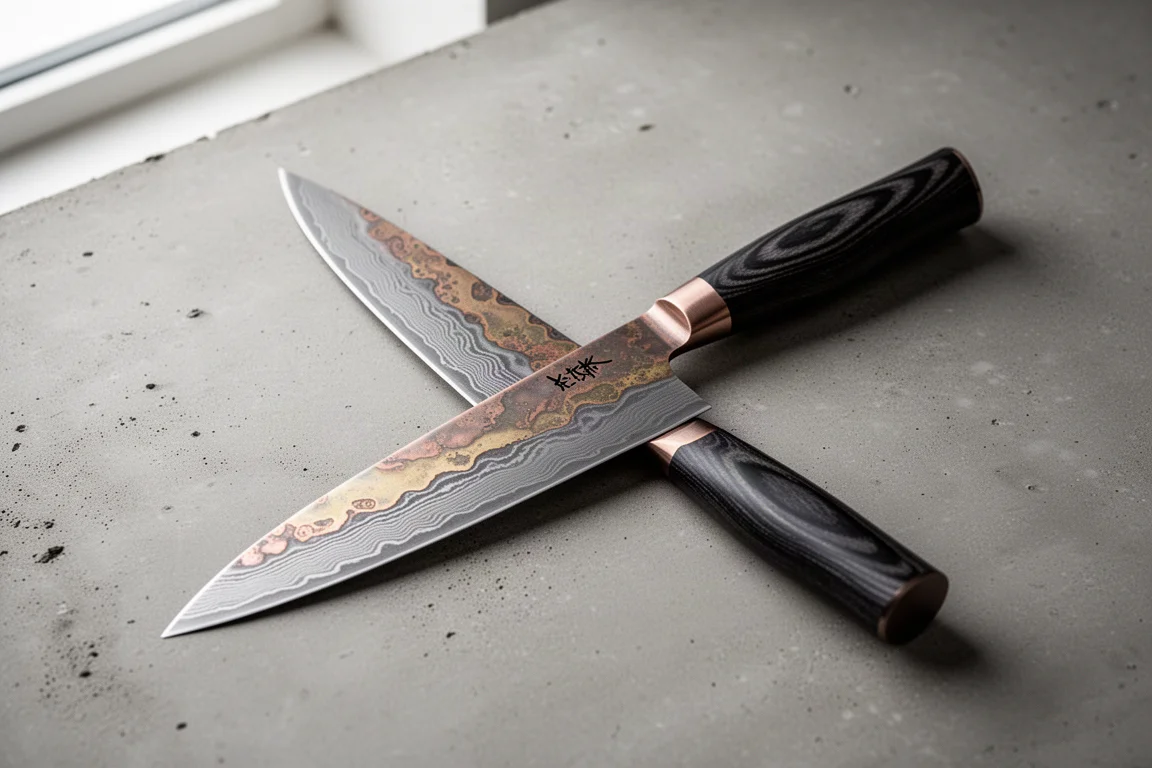
Some knives arrive with a spec sheet. This one arrived as a mystery. Forester Knives sent over a kitchen knife with no prior disclosure of what it was, and the unboxing quickly revealed one of the more striking builds we have handled recently: a tall bunka with a rainbow Damascus cladding, a triple C grind, and a sculpted handle that borders on sculpture. After a full round of cutting tests, the short version is this: it is not just pretty, it performs at a level few Western-made knives reach.
The Maker Behind Forester Knives
Forester Knives is the work of Bowden Falhuk, a knife maker who started in 2015 in Chasy, Ukraine. What began as a hobby and a creative outlet grew into a full-time business. After moving to Denmark in 2020, he returned to knifemaking part-time, this time focusing on kitchen knives built with top quality steel and advanced grinds. That shift in focus shows in this knife, which feels like the work of someone who has thought carefully about both geometry and finish.
First Impressions and Build
The knife ships in a box-in-a-box arrangement, starting with a handsome light-wood Kiribox with darkened edges, a clean logo, and a clever slot detail for opening. Inside, well-thought-out packaging with thick cardboard paper fills every gap. A business card with a QR code links directly to the maker’s website and social channels.
The knife itself is a tall bunka with copper and brass visible in the cladding, a Forester etch on what appears to be the carbon steel core, and a rainbow Damascus pattern. The blade is super thin, with a hand-hammered tsuchime finish, a beautifully rounded spine, and a textured handle surface. One curious detail: there is no maker mark at all. Whether that is a deliberate choice to let the knife speak for itself or simply an omission, it is as discreet as it gets. A minor note for collectors who like a discreet stamp, but hardly a dealbreaker on a blade this striking.
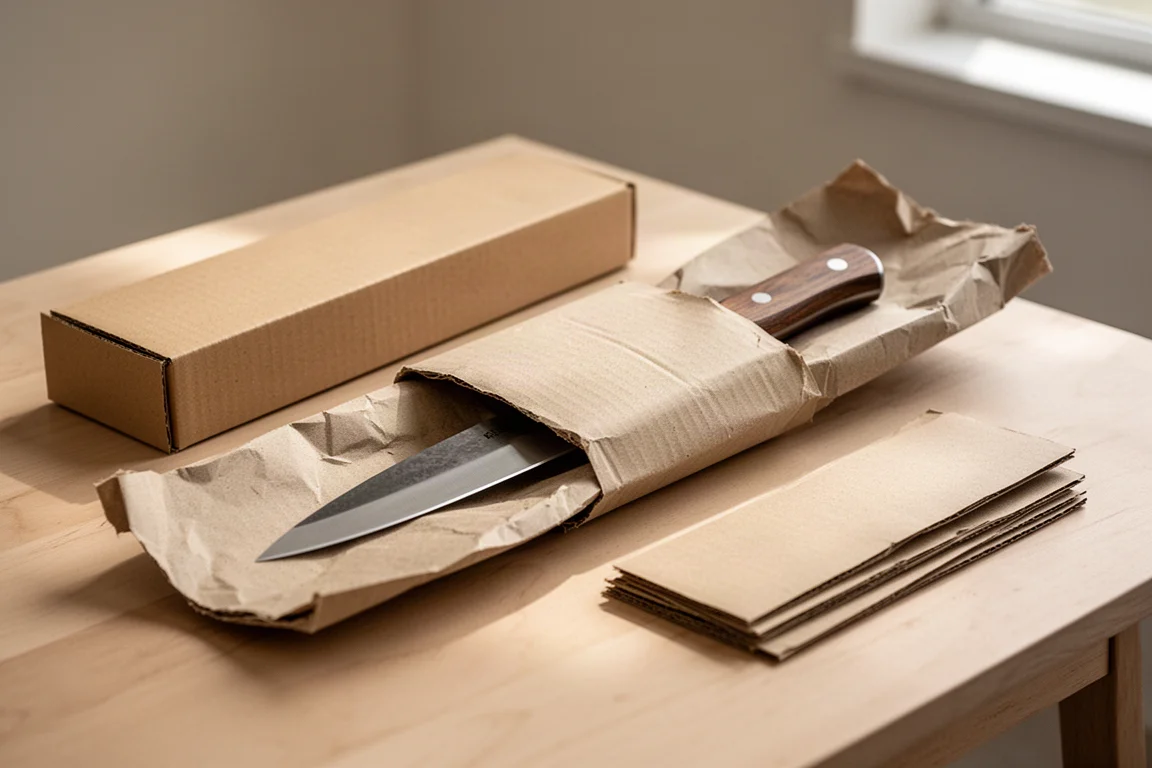
The overall impression is of a stunning work of art that does not sacrifice function for looks. The venation of the rainbow Damascus flows smoothly into the handle’s pattern, a detail that makes the whole knife feel considered from tip to butt.
Blade Geometry: Tall Bunka or Santoku?
Because this was a mystery unboxing, identifying the knife was part of the exercise. The slight curvature from spine to tip initially raised doubts about calling it a tall bunka. Comparing it against traditional Santoku and bunka profiles settles the question. A Santoku carries a pronounced sheep’s-foot style curve, with the belly steepening in the last 20 to 30 percent toward the tip for more rockability. That steep curvature is absent here. The bunka profile, with its flatter face and straight line leading to the K-tip, is clearly present. The tall bunka designation stands, even with that ever-so-slight spine curvature near the tip.
Cutting Performance
The carrot test is a good measure of edge thinness and blade geometry, and this knife delivered one of the smoothest carrot cuts we have experienced. You can genuinely feel the C grind working: as you push down, parts of the carrot stop resisting the blade, then engage again as you pass each grind cavity. Slicing straight down, the blade goes through with ease, cracking only at the very end of the cut, and only barely.
With green onion, the knife glided through with barely any pressure applied, almost just the weight of the blade itself. The profile is fairly flat with a slight belly and a hint of rock toward the back. Quartering bok choy, typically a dense vegetable that makes sticky knives feel worse, was effortless. Lateral cuts through a large red onion went smoothly, and working close to the tip on garlic was surprisingly easy thanks to how thin the blade is behind the edge.
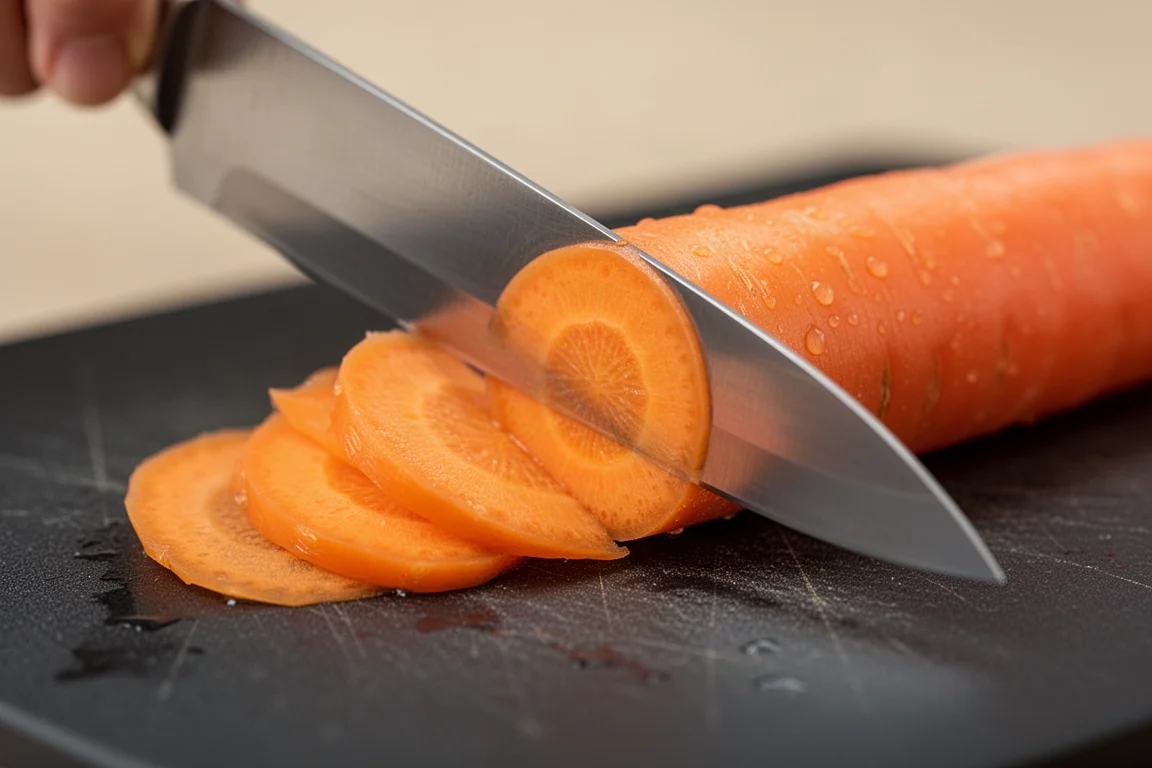
Two more points worth emphasizing. First, the blade is sharp from heel to tip, which is rarer than it should be; many knives lose sharpness along parts of the edge. Second, the tomato test showed the edge piercing the skin and letting the blade fall straight through a cherry tomato. On the carrot wedge test, this was easily the smoothest tall knife tested to date. The maker’s statement that this may be the thinnest knife reviewed from a Western maker holds up in use: it cuts like a thin laser-style Japanese kitchen knife.
Food Release and the Triple C Grind
The onion lateral cut deserves its own discussion, because it is the one task where this knife showed a bit of struggle. That is not about sharpness. On a lateral cut, the more steel behind the edge, the more drag you get, and the more blade weight, the more gravity forces the knife down into the onion. A highly polished bevel adds drag too. Moving the full mass of this knife, with its 65mm of belly height, through an onion takes effort regardless of how keen the edge is. The C grind cavities help reduce that drag, but they cannot eliminate it entirely. Thinner, shallower knives with reduced-drag finishes will always have the advantage on this specific cut. Cutting closer to the tip, where there is less surface area, helps a smidgen.
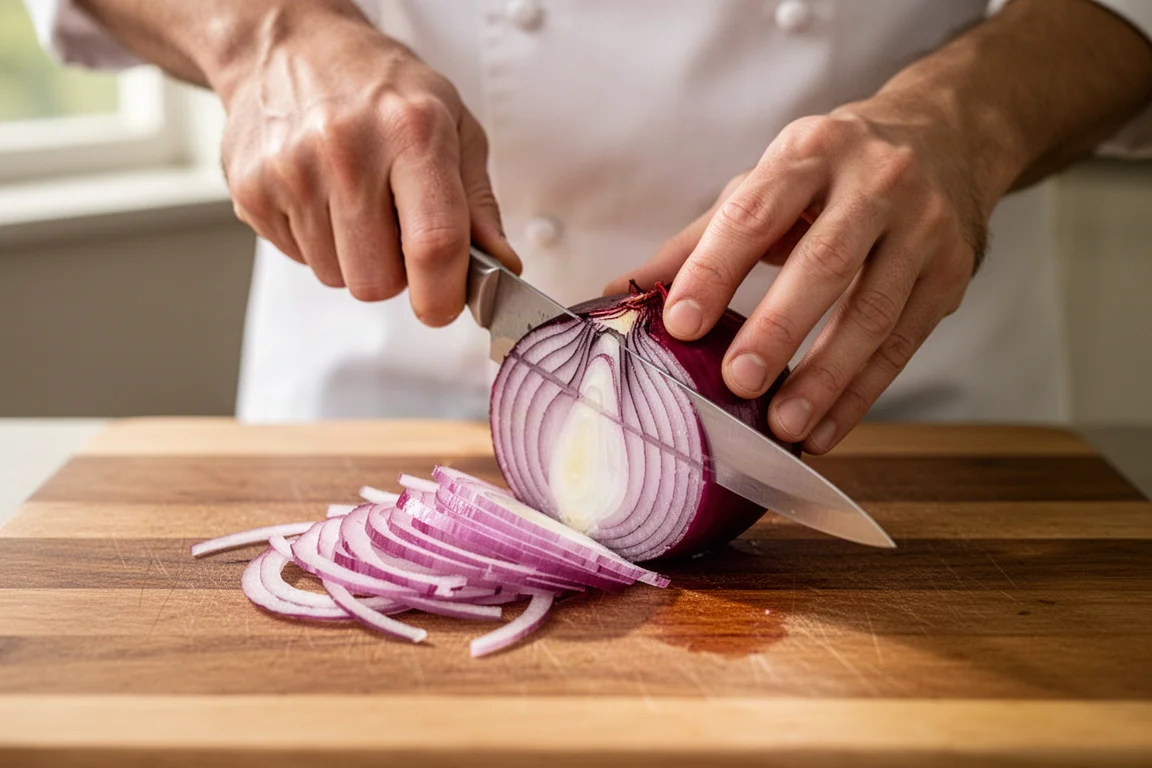
As for whether the triple C grind earns its keep: yes. Food does seem to move more freely off the blade, and a wide eggplant, a vegetable notorious for sticking to most knives thanks to its moisture content, released noticeably well. That said, C grind and S grind knives are not for general-purpose users. If you do not know what food release means, or the difference between a flat and convex grind, these grinds will not mean much to you. Technique matters enormously: cutting too short so food never reaches the cavities, or cutting straight down without a pull motion, will negate the benefit. For the niche audience that understands these grinds, this one has clear merit, including in tip-down pull cuts where food moves off the blade more freely than on comparable knives.
Handle, Balance, and Everyday Feel
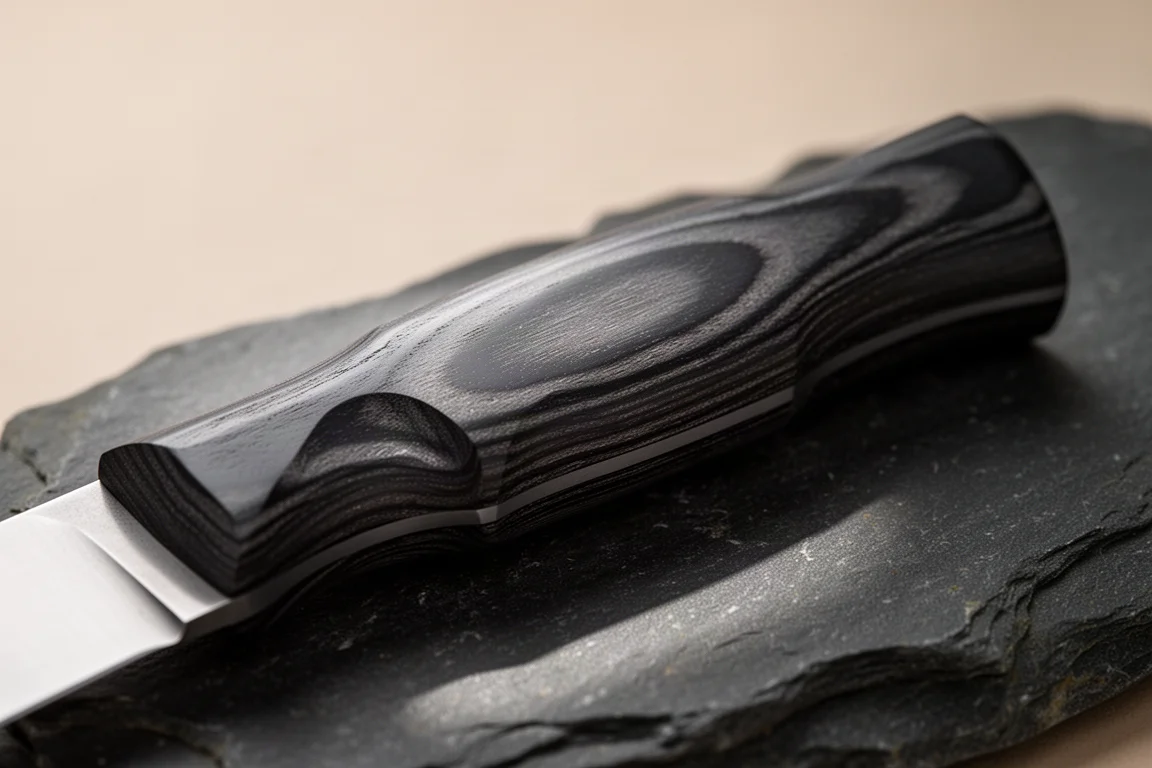
The sculpted handle deserves its own section. It is one of the nicest handles we have seen, built from a sculpted composite material with a mesmerizing pattern whose grain flows seamlessly into the blade’s Damascus venation. The comfort is such that the handle becomes invisible in use. The balance point sits right at the pinch grip, and in hand there is no noticeable weight or pressure, just a knife that feels like an extension of your arm. The sculpted notches land exactly where your fingers expect them.
Buying Advice
This is a knife for a specific buyer: someone who appreciates advanced grinds, understands that technique and blade finish drive food release, and wants a handmade kitchen knife that doubles as a display piece. If you want a do-everything general-purpose knife and do not care about grind theory, a simpler profile will serve you better and likely cost less. If you are already deep into Japanese-style kitchen knives and want a Western maker who can compete on thinness and grind sophistication, this tall bunka makes a compelling case. Bowden also exhibits at knife shows, including an upcoming appearance at Austria’s knife show, which is a good way to see his work in person.
Conclusion
The Forester Knives tall bunka is one of the most complete packages we have handled from a Western maker: an exceptionally thin behind-the-edge grind, a triple C grind that genuinely aids food release when used correctly, sharpness from heel to tip, and a handle and finish that would justify the purchase on looks alone. The lack of a maker mark and the slight effort on heavy lateral onion cuts are the only critiques worth naming. For knife enthusiasts who understand what an advanced grind offers, this is an easy recommendation.
Product link
View more details for Forester Knives Tall Bunka
This product is mentioned in the review. Check the specifications, options, and compatibility before buying.
View more details for Forester Knives Tall BunkaFurther reading
Related Reviews

Kitchen Knives
Best Chef's Knives 2026: 27 Popular Options Tested and Ranked
A comprehensive review of 27 chef's knives ranging from $18 to $380, with honest assessments of handle comfort, blade balance, and real-world performance.

Kitchen Knives
Best Chef's Knives Under $75: Two Tested Recommendations
Two practical 8-inch chef's knives that balance sharpness, comfort, and durability without premium pricing.

Kitchen Knives
Best Chef's Knives 2026: 27 Options Tested and Ranked
A comprehensive review of 27 chef's knives ranging from $18 to $380, with honest assessments of handle design, balance, blade profile, and real-world performance.