Skis
Forefront Switch Review: A Playful All-Mountain Twin Tip Built for the Park
The Forefront Switch is a light, soft-flexing 99mm twin tip with a park-first personality, a damp neoprene tip and tail, and clear limits for aggressive directional skiers.
Introduction
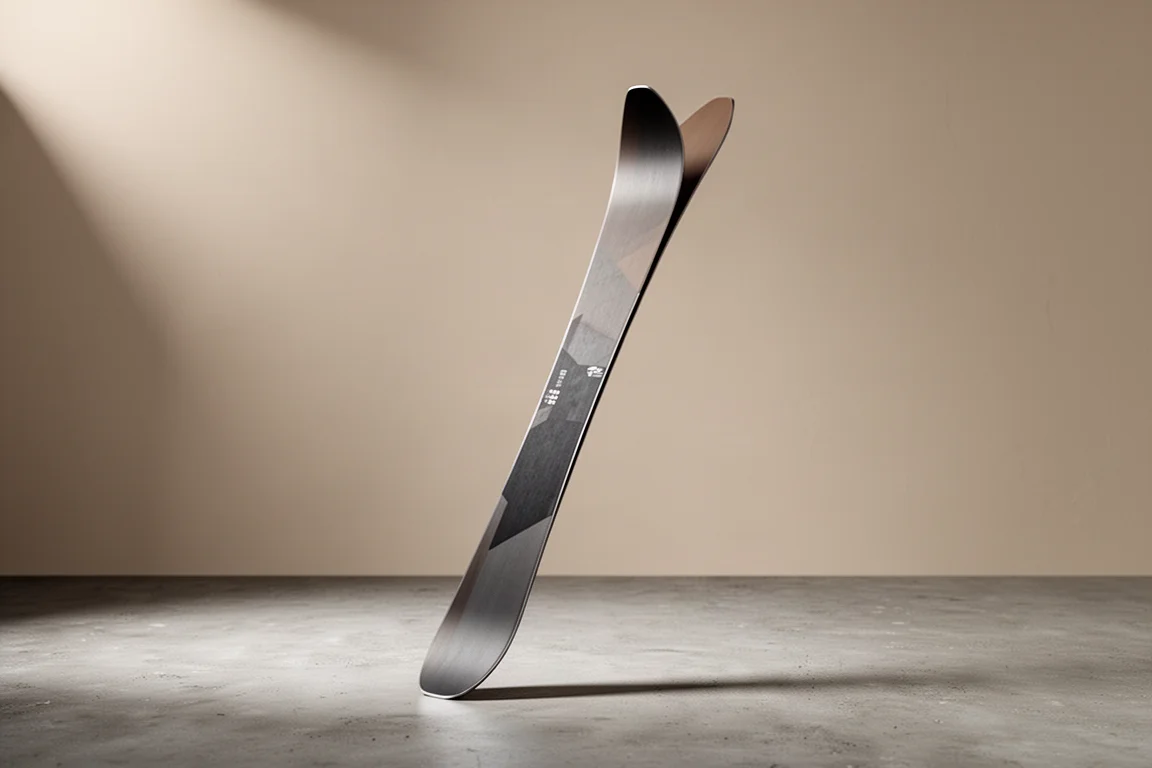
The Forefront Switch is a 99mm-waisted all-mountain twin tip that leans toward the park end of the freestyle spectrum rather than the charge-first end. Forefront is based in the Burlington, Vermont area, and the Switch reads as the brand’s answer to a simple question: what if a ski could lap the terrain park all morning and still be enjoyable across the rest of the mountain in the afternoon?
The recipe is straightforward but considered. There is an aspen and maple wood core, a sandwich construction with vertical sidewalls, and carbon stringers running through the ski to add pop and energy. Forefront also builds in a neoprene layer at the tip and tail under the name Neotip, which acts as an absorption and vibration-damping element. The finished ski is light, softly flexing, and shaped with a relatively centered mount point.
Who the Forefront Switch Is For
This ski makes the most sense for someone who spends a considerable amount of time in the terrain park and treats the rest of the mountain as a playground. Think of the kind of skiing where you nose butter a roller on the way to the lift, spin off a natural hit on a groomer, then head into the park for a switch trick on a rail or a jump. That is the Switch’s natural habitat.
It also rewards a balanced, centered skier. Riders who stay over the middle of the ski and drive it with a neutral stance can push the Switch fairly hard and aggressively. The trade-off is that a strongly directional skier who wants to stand on the front of the ski and charge will find less to work with here.
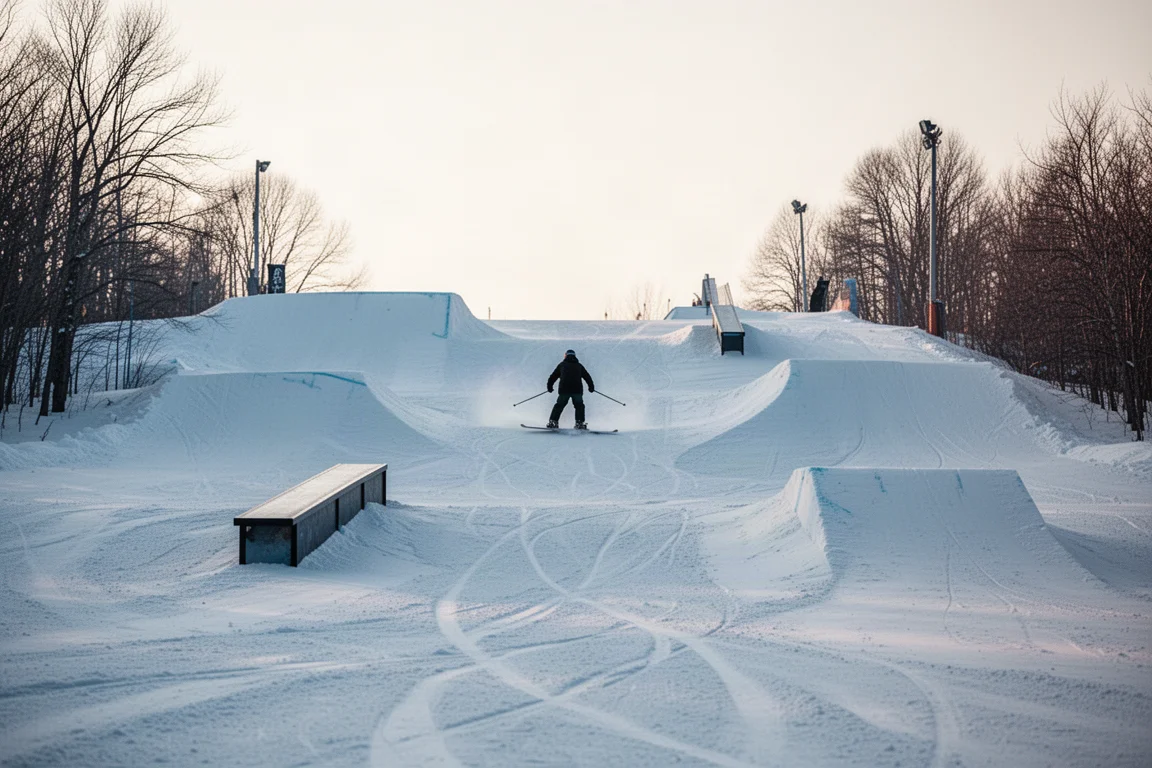
If your season is built around park laps, natural features, and playful all-mountain cruising, the Switch lines up well. If your priority is high-speed carving or directional fall-line skiing, a different shape and flex will serve you better.
Construction and Shape
The core is a blend of aspen and maple, paired with a sandwich build and vertical sidewalls. Carbon stringers add energy and rebound, and the Neotip neoprene inserts in the tip and tail act as a damping layer. Neoprene is an unusual choice in a ski, and it shows up in how smooth the ski feels underfoot, particularly on landings.
The Switch is light for its class. In the 177cm length it comes in at just over 1,600 grams, with a demo binding adding some extra heft to the setup. All of that construction adds up to a reasonably soft flex pattern. There are softer skis on the market, but this is not a stiff ski by any measure, and that softness is clearly part of the design intent.
Shaping follows the same philosophy. The waist is 99mm underfoot, with roughly 5mm of camber listed underfoot and close to even tip and tail rocker, slightly longer in the tip than in the tail. That is not an extreme amount of rocker for a twin tip of this width, either in length or in how far the tip and tail rise. The turn radius sits at 19 meters, and the tip carries a light early taper with a pointed, javelin-like finish rather than the blunt shape seen on many current skis. The 2023 graphic covered here carries over to the 2024 model, which uses a new topsheet but keeps the same construction, shape, and performance.
Main Strengths
The Switch is playful, bouncy, and very easy to load energy into. Whether you are ollieing off a groomer roller or popping off a natural hit, the ski gives back what you put in without demanding much effort. That responsiveness is the core of its appeal.
Weight is another clear advantage. A light ski keeps swing weight low, which matters in the park when you are spinning and when you are setting up for a landing. Despite that lightness, the Switch stays composed on landings. The combination of a soft flex and the neoprene damping layer produces a smooth, absorbed feel rather than a jarring one, and that smoothness is a big part of why the ski works well for repeated airtime.
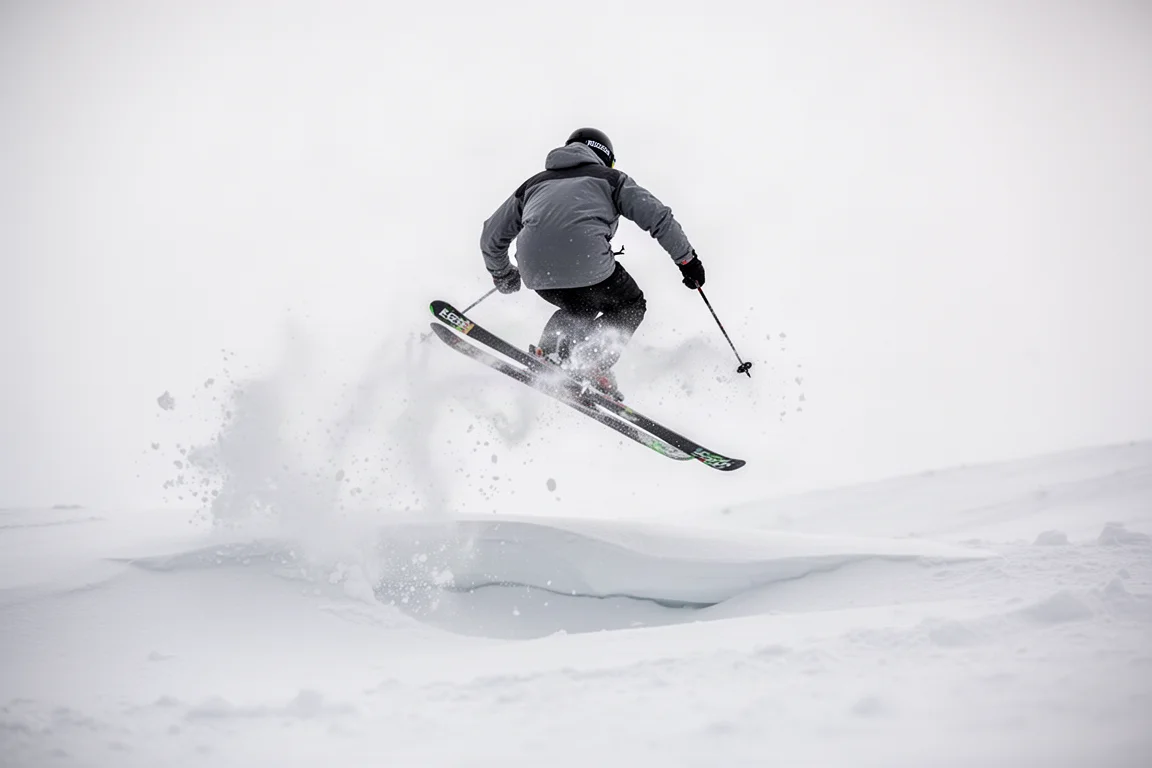
Edge release is easy as well, helped by the forward mount point and the twin tip shape. There is more ski behind you than on a directional all-mountain model, but the tail still releases cleanly when you want to break the edge loose. Width is generous enough that softer snow does not bog the ski down or make it feel catchy.
How It Skis Across Terrain
On groomers, the Switch is not a carving machine, and it does not pretend to be. With soft tips and tails, a 19 meter radius, taper, and rocker, turn entry is not aggressive. The ski has to be bent into a turn rather than pulled into one, and in softer snow there can almost be too little resistance to push against. There is some torsional stiffness, so it will carve when asked, but the groomer experience is really about getting from point A to point B so you can do something interesting at each end.
Trees are a genuinely good fit for the right skier. The loose feel and the easy tail release are exactly what you want when threading between trunks. It is not the ideal tree ski for a directional skier, but for someone who skis centered and comes from a freestyle background, the Switch handles tight terrain comfortably. The width also gives it enough float to stay calm in softer snow.
In the park, the Switch is in its element. The light build keeps swing weight low, the soft flex makes pressing and buttering intuitive, and the damped feel pays off on landings. It is a ski built around that mix of tricks, natural features, and turning the mountain into a playground.
Things to Consider Before Buying
The main consideration is where the Switch sits relative to stronger freestyle all-mountain skis. In similar waist widths and shapes, models such as the Nordica Unleash 98 and the Rossignol Black Ops 98 feel noticeably stronger, both in longitudinal flex and in torsional stiffness, and they can be skied harder and more aggressively as a result. The Switch is the softer, lighter, more playful option rather than the stiff, charging one.
That difference matters if you are a heavier or more powerful skier, or if you like to drive the front of the ski hard in variable conditions. The Switch asks for a balanced, centered stance to give its best, and it will feel less supportive to anyone who skis over the front. The forward mount point also changes how the ski balances, so it is worth thinking about before you commit.
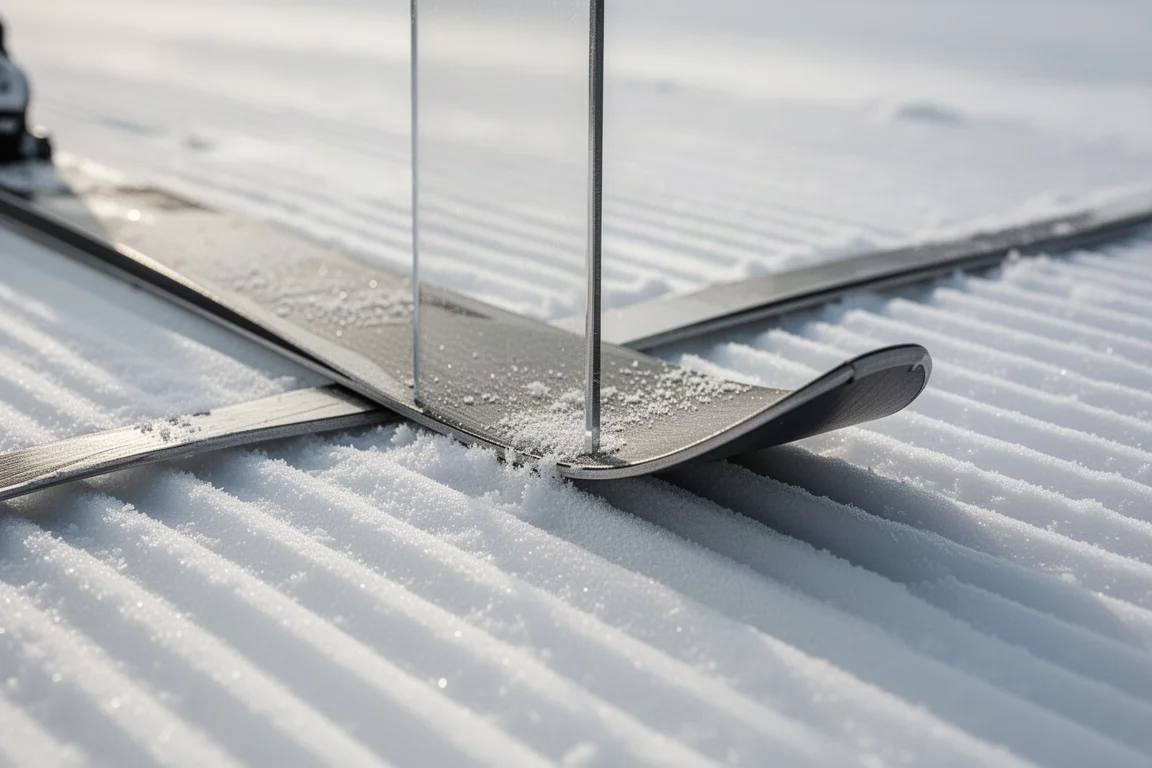
It is also worth separating marketing language from reality. A ski described as one you can rip on can still sit in a different category than a true charger, and the Switch belongs closer to the light, soft-flexing, playful side of the spectrum. Buy it for park time and playful all-mountain days, not for maximum stiffness and edge grip.
Where It Fits Among Similar Skis
The closest comparison in this segment is the Armada ARV 100, which follows almost the same conversation about flex, weight, and intent. The Atomic Bent 100 is another relevant reference point, and while the two skis are not identical, they share more similarities than differences. Both sit nearer the playful end of the all-mountain twin tip category than the Unleash 98 or the Black Ops 98 do.
That framing is useful when you are shopping. If you already know you want a light, soft-flexing twin tip that prioritizes park performance, low swing weight, and a smooth landing feel, the Switch is in exactly the right group. If you want something that feels stronger underfoot and rewards a more aggressive, forward-driving style, the stiffer options in the same waist width are the better match.
Buying Advice
The decision comes down to how much of your season happens in the park and around natural features. If that is the majority of your skiing, the Switch’s light weight, low swing weight, easy energy loading, and damped landings are exactly the traits you want. If it is a smaller slice of your season and you mostly ski fast on groomers, look at a stiffer, more directional option instead.
The 177cm length comes in at just over 1,600 grams before you add a binding, so keep your mounting hardware in mind when thinking about the total feel of the setup. It is also worth knowing that the 2024 model year keeps the same construction, shape, and performance as the earlier graphic, with only a new topsheet, so the review applies either way and availability of the older graphic is limited.
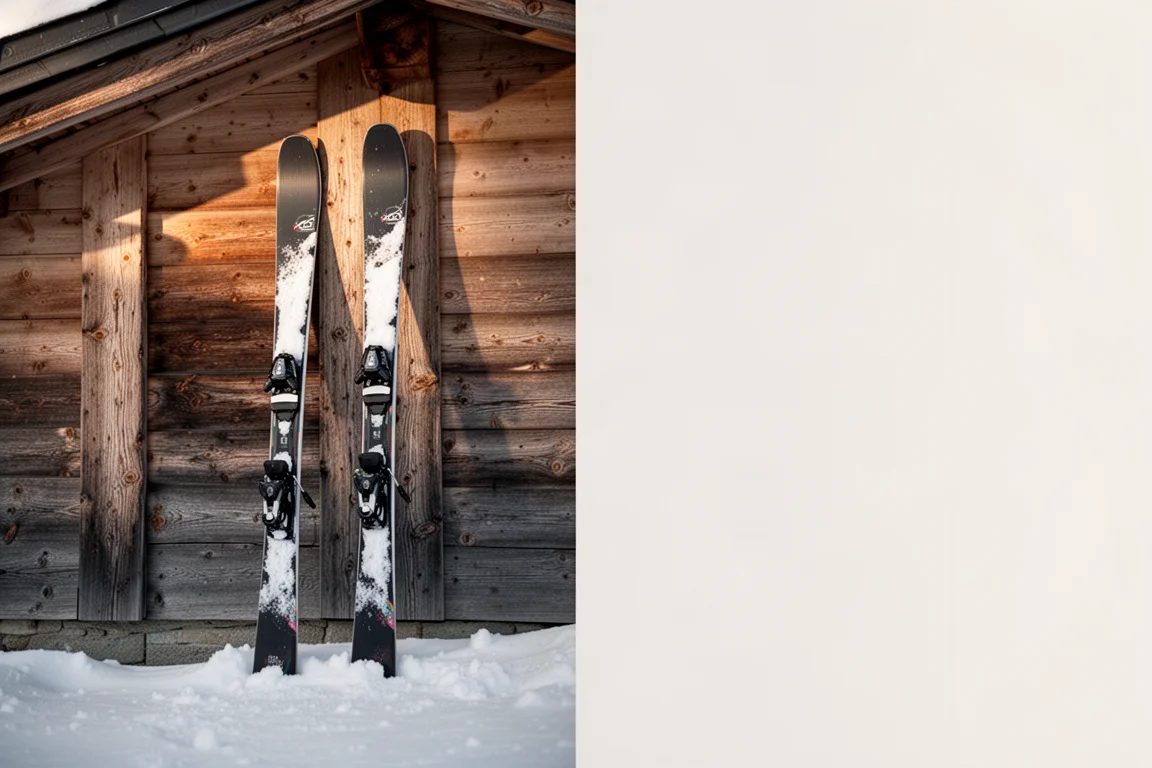
As with any freestyle-oriented ski, be honest about your stance and style. The Switch rewards a centered, balanced skier who wants to play with the mountain. Match it to that style and it will feel intuitive from the first run.
Conclusion
The Forefront Switch is a well-executed all-mountain twin tip with a clear identity. Its aspen and maple core, carbon stringers, and neoprene Neotip damping give it a light, smooth, and lively feel, while the 99mm waist, 19 meter radius, and near-even rocker keep it versatile enough for soft snow and trees. It is not the strongest ski in its class, and it is not built for aggressive directional charging, but for park-focused skiers who want a playful companion across the whole mountain, it makes a lot of sense.
Product link
View more details for Forefront Switch
This product is mentioned in the review. Check the specifications, options, and compatibility before buying.
View more details for Forefront SwitchFurther reading
Related Reviews
Skis
Armada Anti Matter 82 W Review: A Light, Approachable All-Mountain Carver
Armada's Anti Matter 82 W pairs a lightweight Karuba and carbon build with an easygoing all-mountain shape, aimed at intermediates through lighter-footed advanced skiers.
Skis
Armada Anti Matter 88W Review: A Light, Playful 88mm All-Mountain Ski Plus Two Alternatives
The Armada Anti Matter 88W returns unchanged in spirit from its Reliance 88C days, and it remains one of the most versatile 88mm skis around. We also look at the Nordica Santa Ana 87 and Anti Matter 92 W as alternatives.
Skis
Armada ARV 100 vs Atomic Bent 100: Which 100mm Freestyle Ski Should You Buy?
Two of the best all-mountain freestyle skis of the season compared: one leans playful and park-ready, the other holds up better everywhere else.