Power Tools
Flex 12-Inch Double Bevel Sliding Miter Saw Review: A Feature-Rich Jobsite Workhorse
A thoughtfully designed cordless 12-inch double bevel sliding miter saw with hybrid AC power, an unusually flat machined table, and accurate cuts out of the box.
Introduction
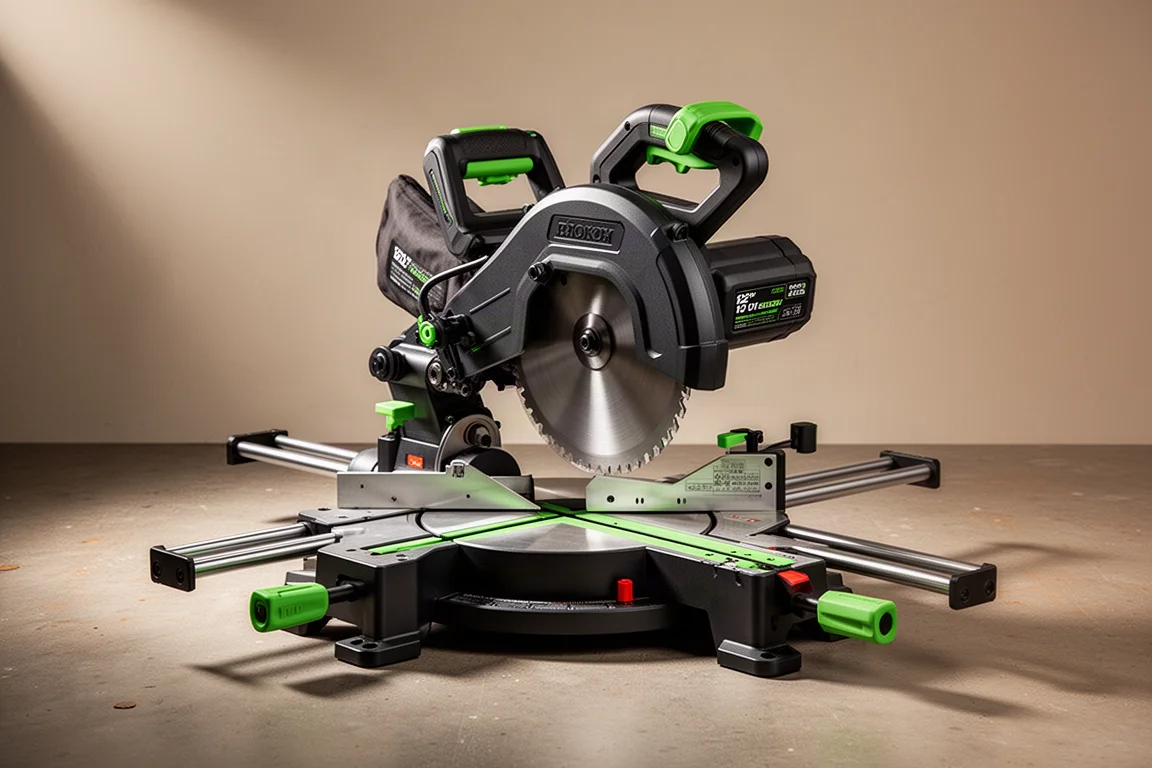
Double bevel sliding miter saws in the 12-inch class have been around for a long time, so it is fair to ask what a new entrant can actually add. The Flex 12-Inch Double Bevel Sliding Miter Saw answers that question less with a list of brand-new categories and more with unusually thoughtful implementation of features most carpenters already know how to use. The result is a feature-rich, heavy-duty saw that feels built from the ground up for serious jobsite and workshop use.
Flex’s saw lineage runs deep: the brand’s parent company also owns Skilsaw, and a lot of that robustness appears to have carried over into this machine. It is aimed not only at finish carpenters but also at framing and form carpenters, and it is described, accurately, as being built like a tank.
Who This Product Is For
This saw suits finish carpenters doing precise molding and trim work, but it is also clearly designed with framing and form carpenters in mind. Cutting tests through large framing members showed a beautiful cut finish and impressive speed with no blade stall, even when the operator deliberately tried to force the cut faster.
That said, 2x material for framing and form carpentry is not the ideal use case for any saw of this type, since blade chatter and stalling matter most in harder finish woods. Where this saw really earns its keep is in pre-finish woods and hard materials like oak and hickory. A carpenter cutting hickory on site was able to make cuts rapidly without forcing the saw through them, and loved the tool.
Thoughtful Controls: Miter and Bevel Locking
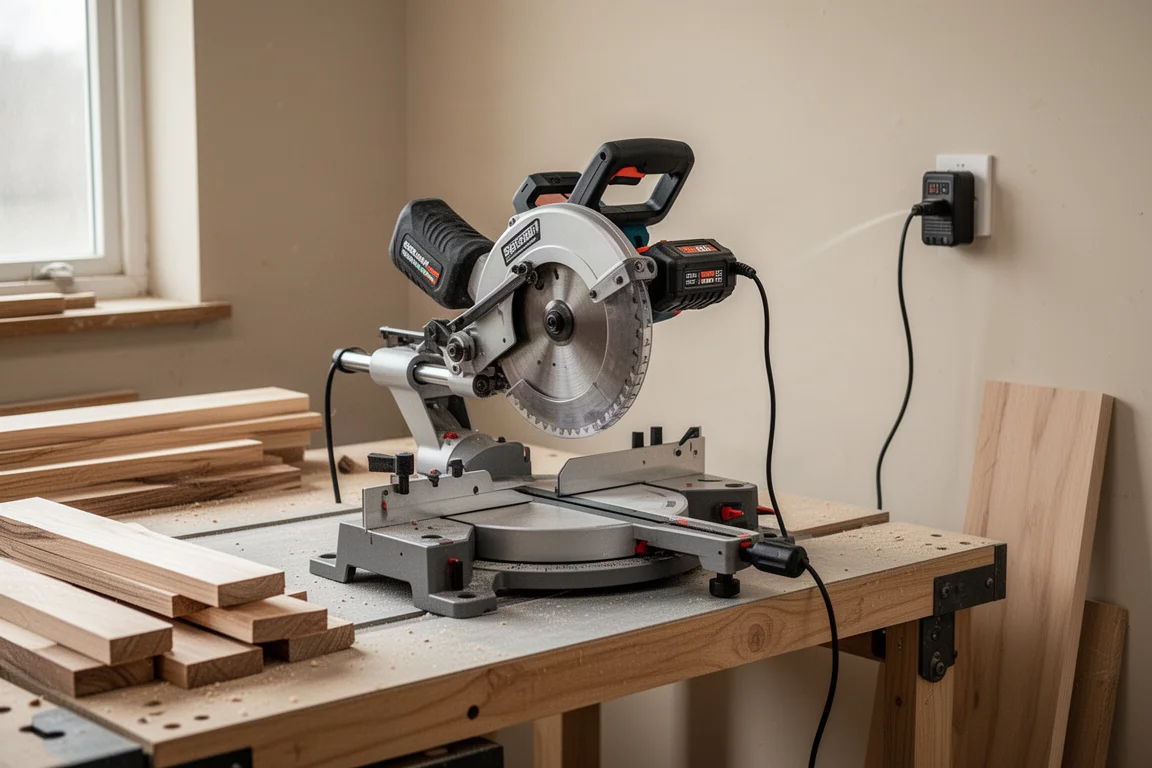
The first thing that stands out is the miter mechanism. Instead of a screw-style handle, Flex uses a push-down handle at the miter scale, and the detent override is genuinely smart. Push at the front of the release to slide past stops, or push down at the back and the lock engages so you can slide anywhere you need without holding a button. If you need 44 or 46 degrees instead of 45, you slide there and lock down. On traditional saws, you typically have to hold a button and then lock the saw separately. It is a small innovation that can genuinely shave time off a workday.
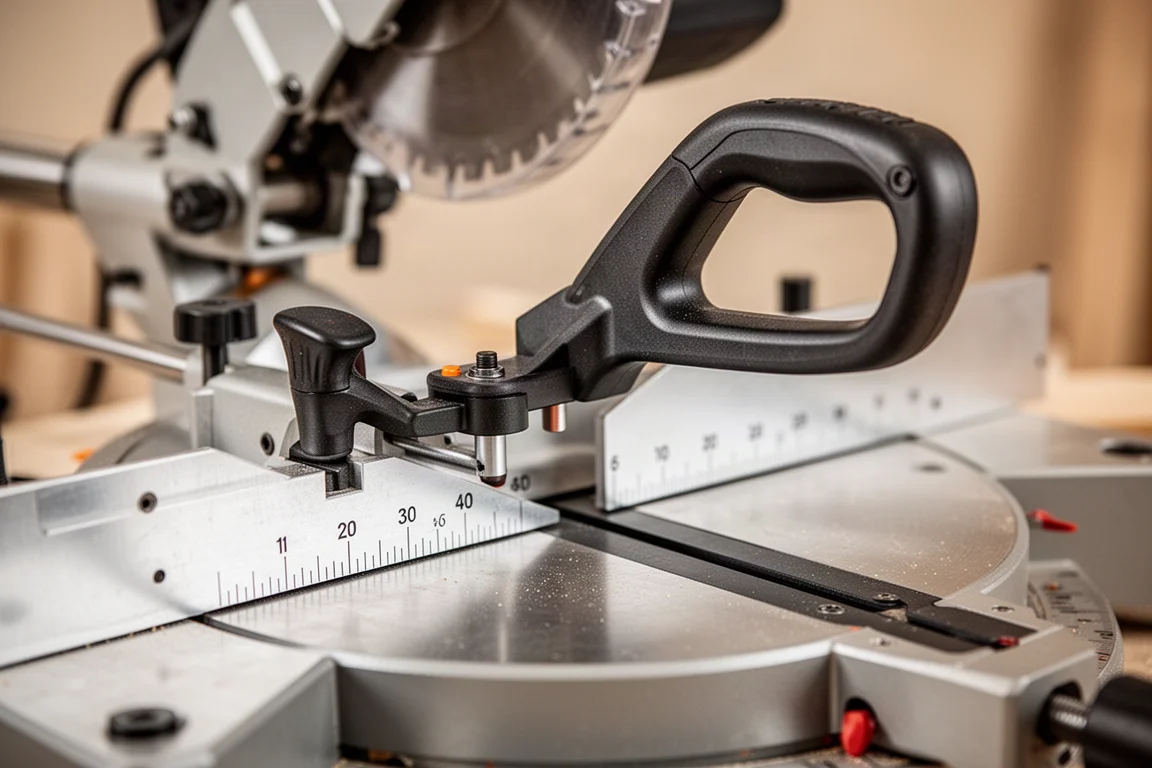
The saw includes detents at zero, 15, 22.5, 31.6, and 45 degrees, and the lock-down handle is huge and easy to grab. The bevel system follows the same philosophy: rather than a rear locking handle or push buttons, there is a large lever that locks and unlocks the bevel scale, with thoughtful stops at 45, 33.9, and 25.5 degrees, the most commonly used settings when cutting crown molding flat. The bevel handle is large and accessible from the front of the saw, with high-visibility green degree readings, and locks down easily once you are on your mark.
Machining Quality and Accuracy
If you want to judge how a tool is built, look at the machining. The table on this saw is described as unbelievably flat from left to right, and the two extension wings are no exception. Flip open the oversized levers and the table expands on both sides, adding roughly 13 additional inches of table space overall, around 6 to 6.5 inches on each side of the blade. Full 14- to 16-inch molding will still want longer support, but in a pinch, this helps a lot with larger material.
Accuracy checks out of the box were equally strong. With a framing square against the fence and the blade lowered at the rear, the carbide teeth met the square front and back at the same time, confirming the saw was zeroed precisely at 90 degrees. Looking down the blade with the extension out, contact with the square was 100 percent from top to bottom, reflecting combined bevel and table accuracy. That matters because as material gets thicker, any small misalignment magnifies the error, and precise work like pre-finish moldings and filler panels leaves no room for gaps or fillers.
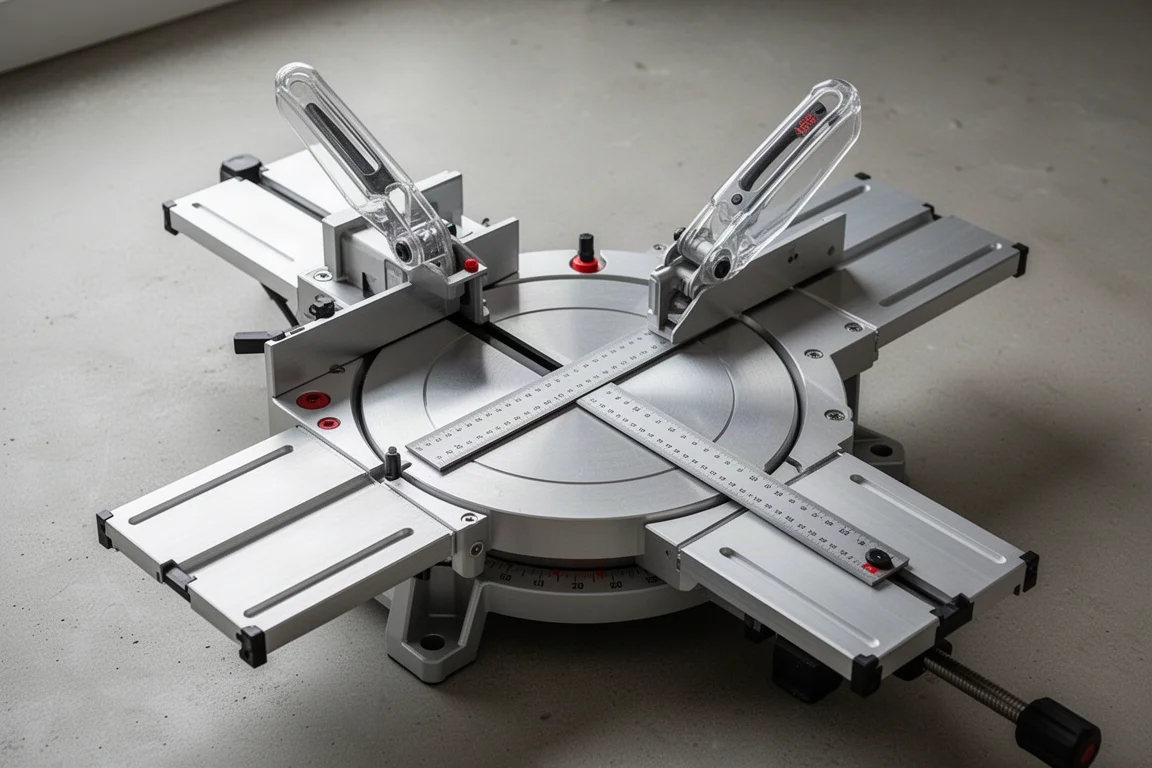
The rail system is smooth, robust, and cut accuracy does not degrade as the saw slides along the rails. Maintenance is minimal: a little vacuuming or wiping and a bit of silicone spray brings the rails back to glass-smooth. If you do not need the full sliding capacity, you can lock the slide at the rear with a wing nut, and a spring-loaded depth screw lets you cut mortises at a preset depth, then zero back out for full-depth cuts.
Shadow Cut Line System and Everyday Details
Flex includes a shadow cut line positioning system. Because the light inside the saw’s housing casts a shadow of the blade onto the workpiece, there is no laser to calibrate: wherever the shadow falls is exactly where the blade will cut. It is simple and effective.
Blade changes are straightforward thanks to an included spindle stop and a dedicated onboard tool holder, so the wrench is always exactly where you need it on site. The same tool handles adjustments to the miter and bevel scales. A dust bag is included, and the dust port is sized for most common dust extractors.
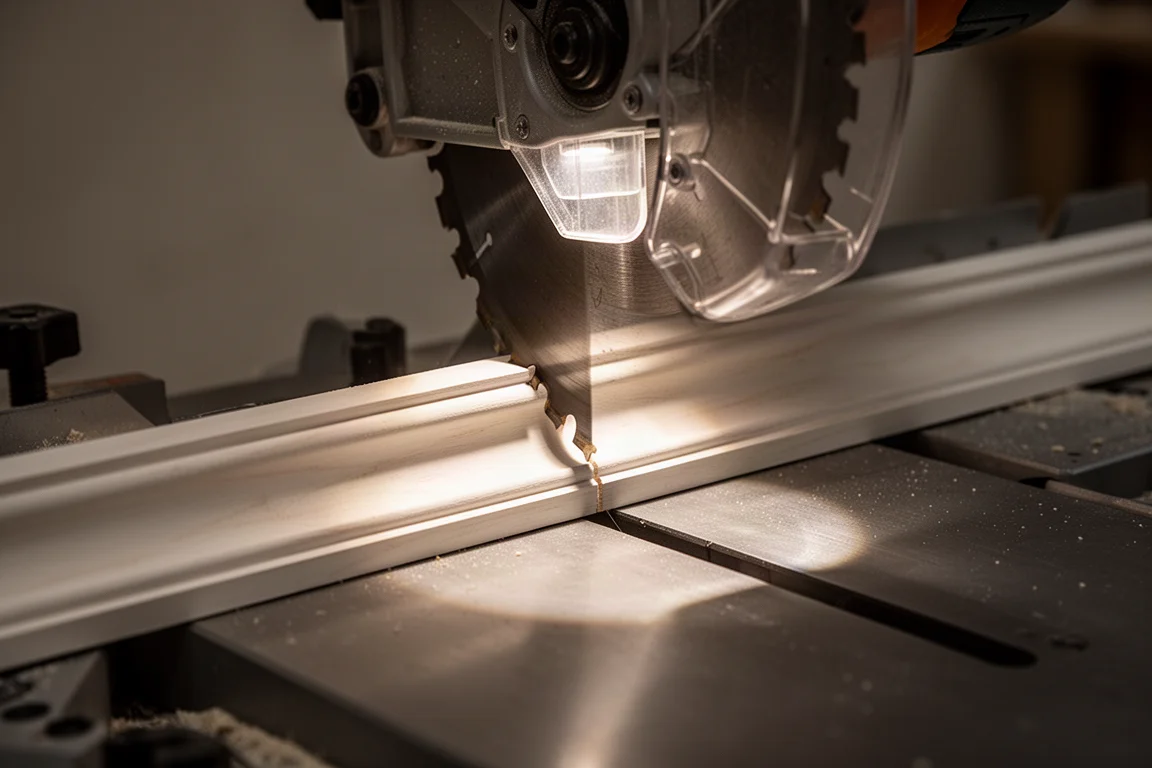
When cutting molding too tall to sit against the fence, you can use the bevel function and cut the material flat instead. Latches lock the fence in place on both sides, and test cuts flat at 45 degrees came out just as tight as upright cuts against the fence. The included blade left a finish clean enough to go straight into finish carpentry work.
Battery Performance and the Hybrid Power Trick
The battery behind the cutting speed is a 10 amp hour stacked lithium pack generating 2,520 watts. Large-diameter blades demand tremendous wattage and pack capacity for runtime; without it, blades stall as the battery depletes, which causes blade flex and chatter through the material. During testing, the pack barely registered the workload, and the platform’s robust connectors reduce resistance at the battery, meaning less heat, more battery cycles, and longer life for both the pack and the motor.
The standout feature, though, is the AC adapter. Flex lets you plug this high-demand tool straight into wall power, with the adapter fitting just like a battery pack. For anyone buying their first or only miter saw, a corded setup at a fixed cut station makes long-term sense: batteries are expensive, and even a pack delivering 300 to 400 percent more charge cycles will eventually need replacing. Extending battery life by running the saw on wall power is a genuinely useful option, though note that the adapter does not run every Flex tool on AC power.
Things to Consider Before Buying
The rear-mounted rails mean the saw needs clearance behind it, unlike some designs where the saw sits flat against a wall. If you have the space, Flex suggests this could even serve as your workshop saw. Battery packs are a real cost consideration for day-in, day-out use, which is exactly why the corded adapter option is worth factoring in.
Buying Advice
If you are setting up a dedicated cut station with power on site, consider running this saw primarily on the AC adapter and saving the battery pack for portability. If you rely on the battery alone, the 10 amp hour stacked lithium pack has demonstrated it can handle hard woods like hickory without stalling. Either way, the saw’s flat machined table, accurate factory calibration, and robust rails make it a credible choice for both finish and structural work.
Conclusion
The Flex 12-Inch Double Bevel Sliding Miter Saw stands out not by reinventing the category, but by refining it: smart detent override and locking levers, an exceptionally flat machined table with generous extensions, accurate cuts right out of the box, and a hybrid corded/cordless power option that extends battery life. For finish carpenters, framing crews, and workshop users alike, it is a feature-rich workhorse worth serious consideration.
Product link
View more details for Flex 12-Inch Double Bevel Sliding Miter Saw
This product is mentioned in the review. Check the specifications, options, and compatibility before buying.
View more details for Flex 12-Inch Double Bevel Sliding Miter SawFurther reading
Related Reviews
Power Tools
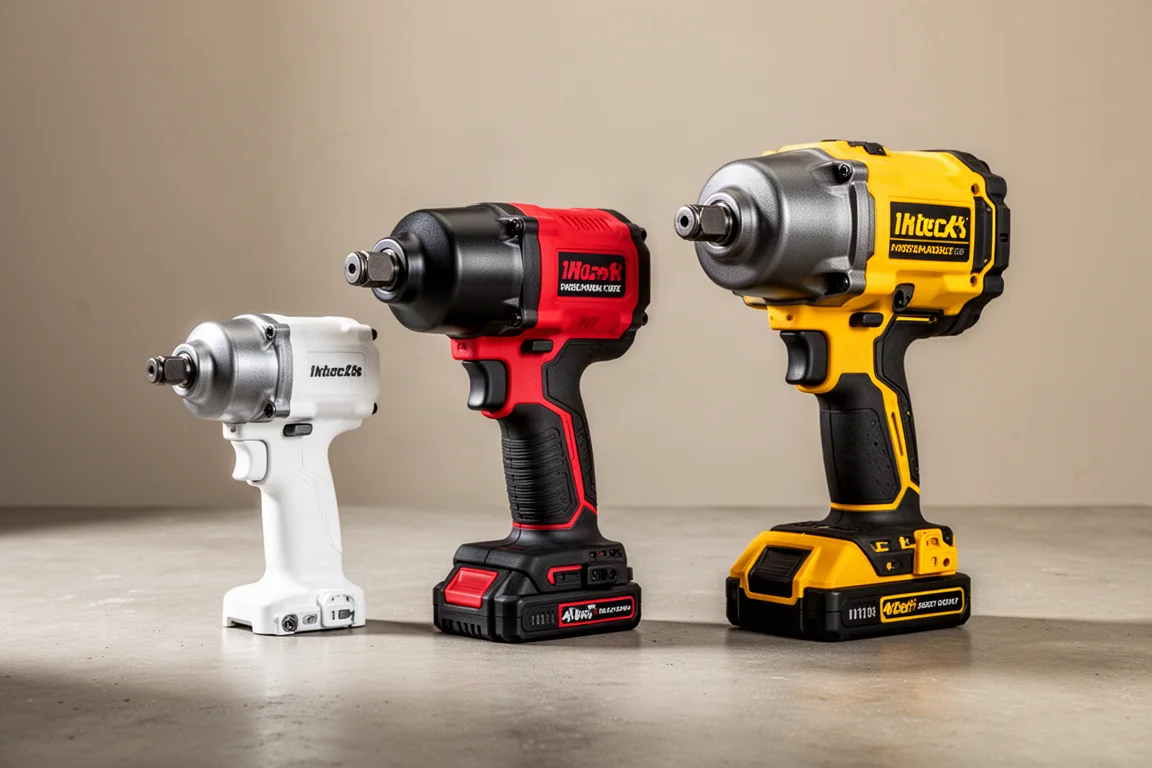
Best 1-Inch Pistol Impact Wrenches: Three Heavy-Duty Options Compared
We compare three 1-inch pistol impact wrenches, from a budget-friendly Harbor Freight model to a premium Caterpillar unit, to help you choose the right one.
Power Tools
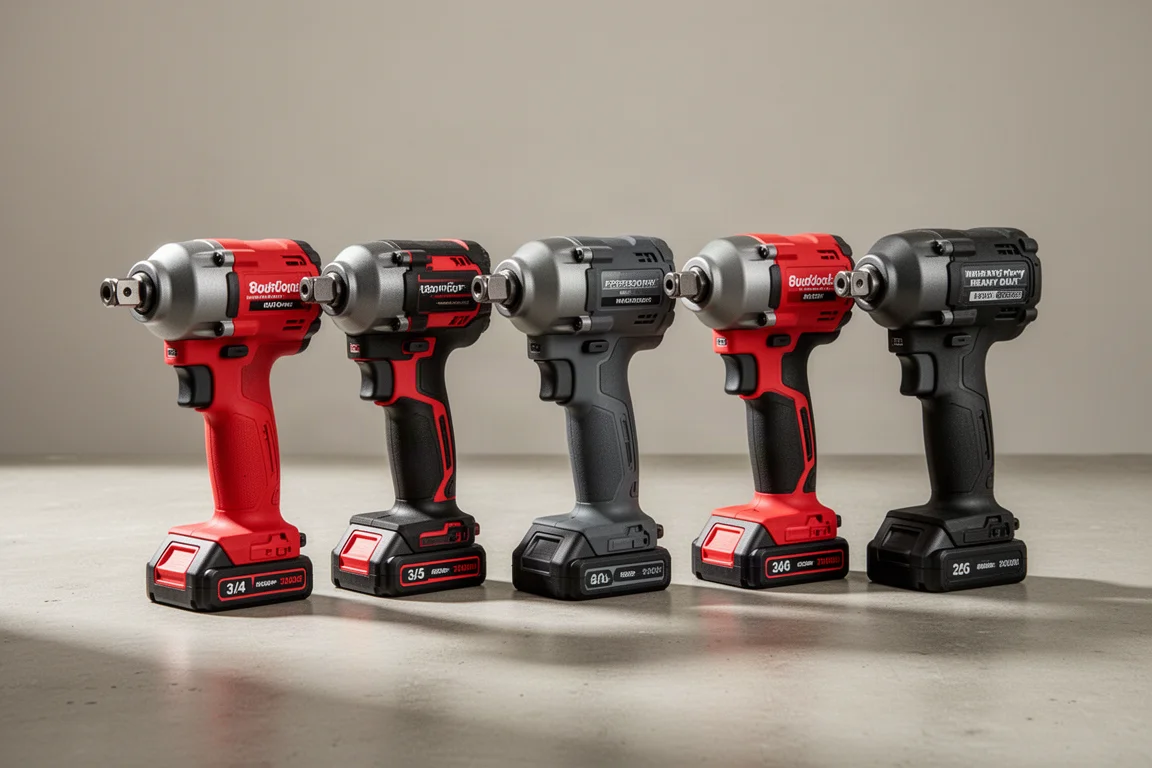
Best 3/4-Inch Impact Wrenches 2026: Five Contenders Compared
We compare five 3/4-inch impact wrenches across price and performance, from a budget Amazon option to Snap-on's most powerful model yet.
Power Tools
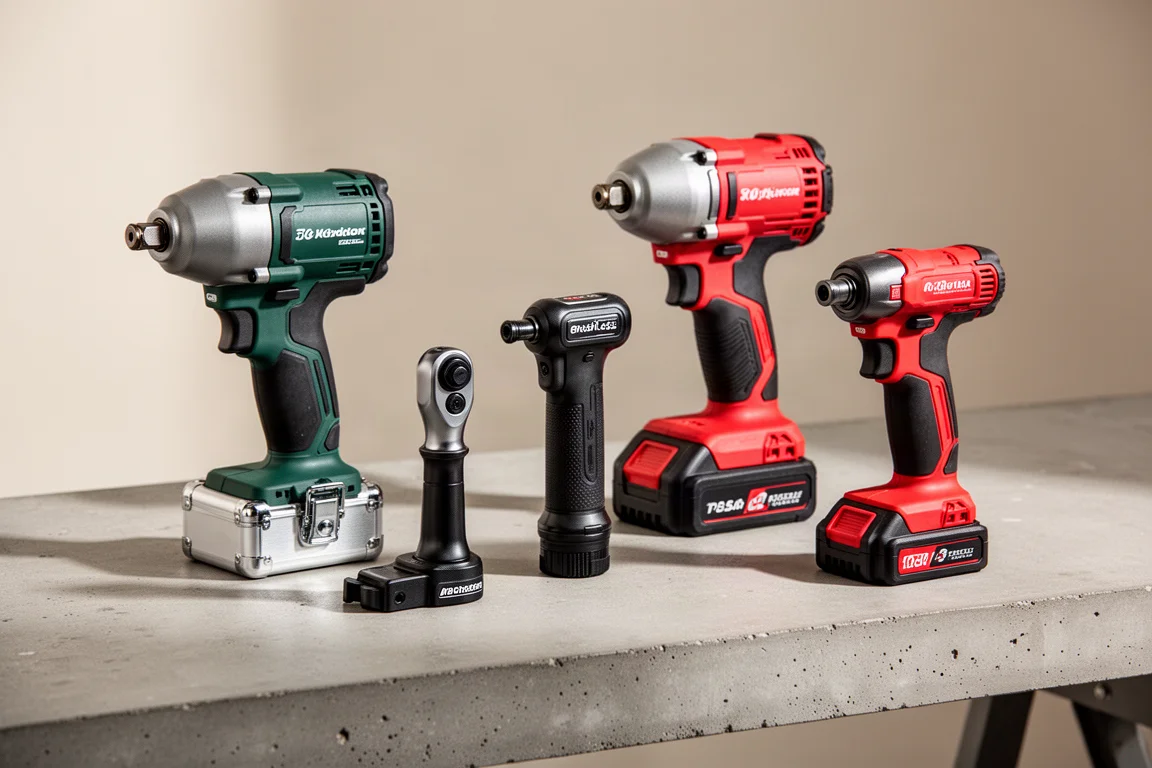
Best Budget Cordless Tools 2026: Walmart Finds That Punch Above Their Price
We tested five cordless tools from Walmart, including a high-torque impact wrench that trades blows with Milwaukee and a $35 duster that outperforms its price class.