Fitness Accessories
Fitbit Air Armband Review: A Stretchy Nylon Alternative to the Stock Band
A comfortably stretchy nylon armband for the Fitbit Air that costs a bit over $20 and delivered impressively accurate heart rate, sleep, and workout data in testing.
Introduction
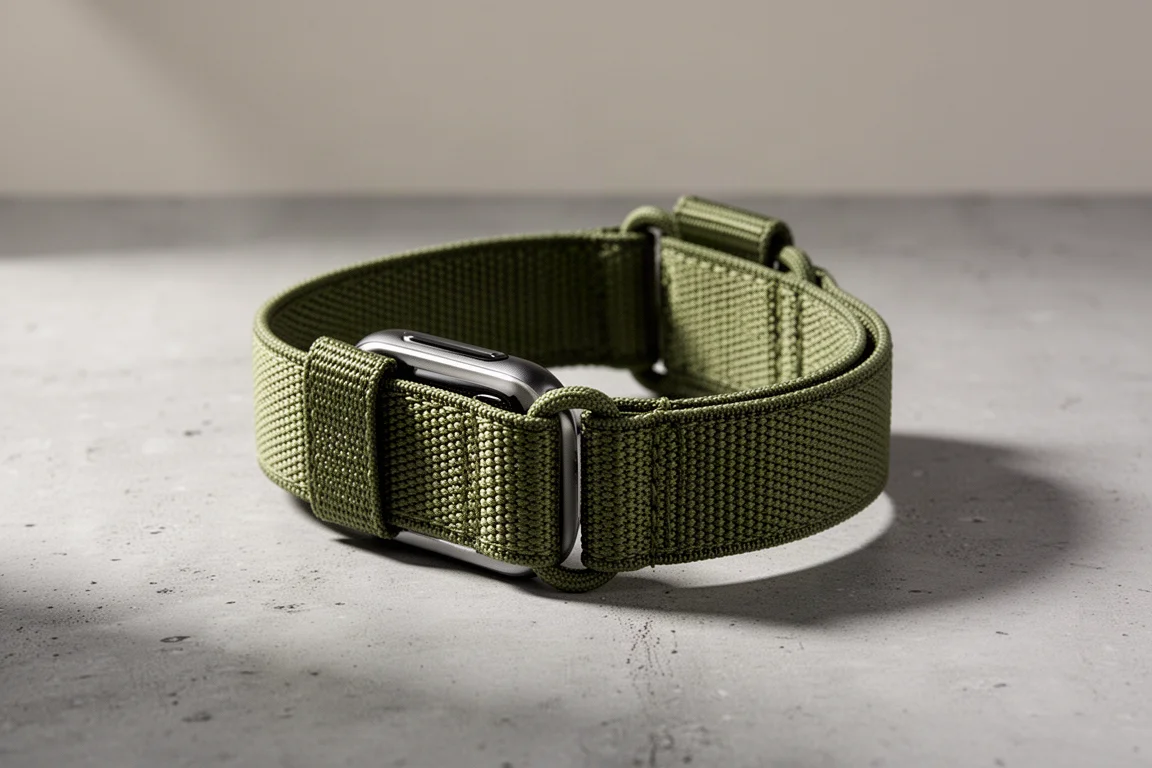
Google launched the Fitbit Air without any armband options, which was a genuine letdown for anyone who prefers to wear a tracker somewhere other than the wrist. The company did publish the specs for the little pebble itself, which opened the door for third-party solutions, and now several armband options have appeared. The nylon band covered here cost a bit over $20 on Amazon, making it cheaper than Google’s stock wristbands, and after real testing it turned out to be surprisingly good.
Who This Armband Is For
Wearing a tracker on the arm instead of the wrist makes sense for a few reasons. Some people simply don’t want anything on their wrist. More interestingly, optical heart rate sensors often work better when there is more flesh for the sensor to read. The wrist is full of bone and tendons that can throw these sensors off, while the arm tends to be a friendlier placement.
Notably, the Fitbit Air on the wrist was already decently accurate when worn properly, snug and positioned a little higher up the wrist. But the arm results were even better, and with this band attached the armband data tracked extremely close to chest strap reference readings during workouts.
Main Strengths
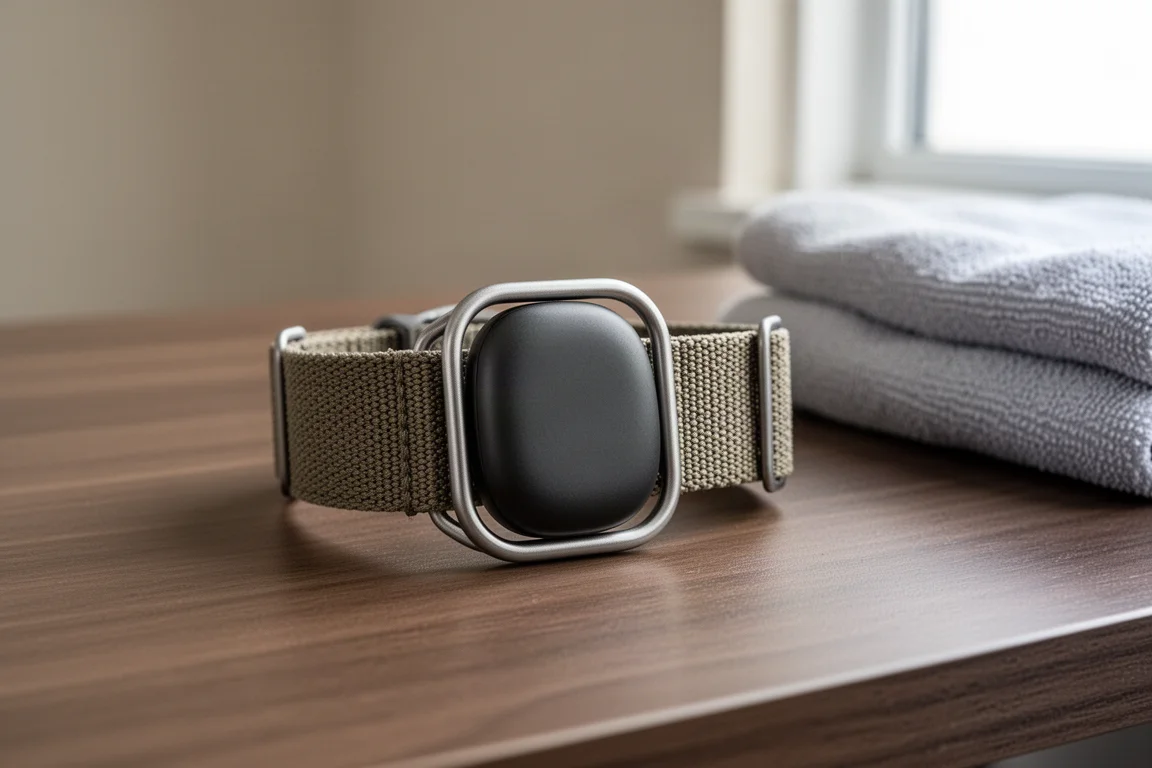
The band is made of a stretchy nylon fabric, available in green, blue, and black. At first the amount of stretch might seem like too much, but it stayed secure through everything tested, and that stretch is exactly what makes it comfortable. Stock bands have very little give, so a flexed arm felt pinched and the band felt too narrow. This band is only slightly wider than the stock option, yet the extra elasticity means it never constricts in any position.
It is a one-size-fits-most design, adjusting to arms from 8.7 inches to 14.2 inches in circumference, and it has not come loose or needed retightening during testing. For a tester around 5 ft 8 in and 160 lb, the fit was described as very good, even though the product photos make it look larger than it really is.
Build quality is the most pleasant surprise. The part that holds the pebble in place is metal, feels stiff and well made, and includes pivot points on each side that help it fit a wider range of arm sizes. The pebble sits in securely, though it lacks the satisfying snap of the stock band. There is also a small cutout for the LED indicator so battery status stays visible.
Things to Consider Before Buying
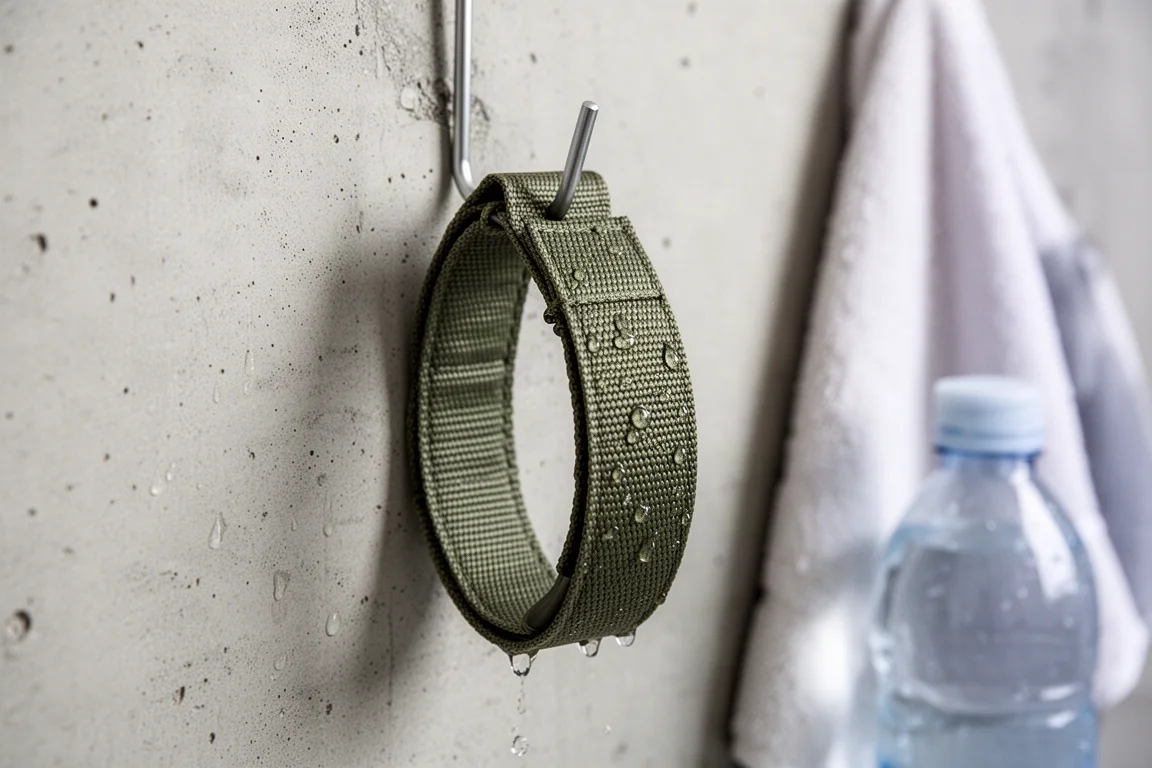
A few caveats are worth knowing. Because it is fabric, the band holds water or sweat after a shower or workout, much like other nylon bands, and took around 20 minutes to dry whether worn or hung up. Long-term durability, how well the stretch holds up over time, and how it handles sweat odor over months are still open questions. During sleep it never flipped around and was essentially imperceptible when worn on the sleeping side.
Accuracy: Sleep and Daily Data
Sleep results between the armband and a wrist-worn Fitbit Air were nearly identical across the board: sleep duration, sleep stages, and even the sleep score lined up almost exactly. Vitals matched as well, with a similar morning readiness score. Heart rate charts from the day prior also aligned almost perfectly between the two placements. Step counts were similar too, though the wrist-worn unit registered a few more steps, likely because the wrist simply moves more than the arm.
Workout Accuracy: Strength Training and HIIT
For an automatically tracked ride, both placements logged durations very close to a manually tracked time, and the armband’s heart rate sat so close to the chest sensor that it was nearly invisible on the chart. Apart from a tiny offset right at the start, the rest of the ride was nearly identical to the reference sensors. The wrist unit was decent too, though it had a few more blips.
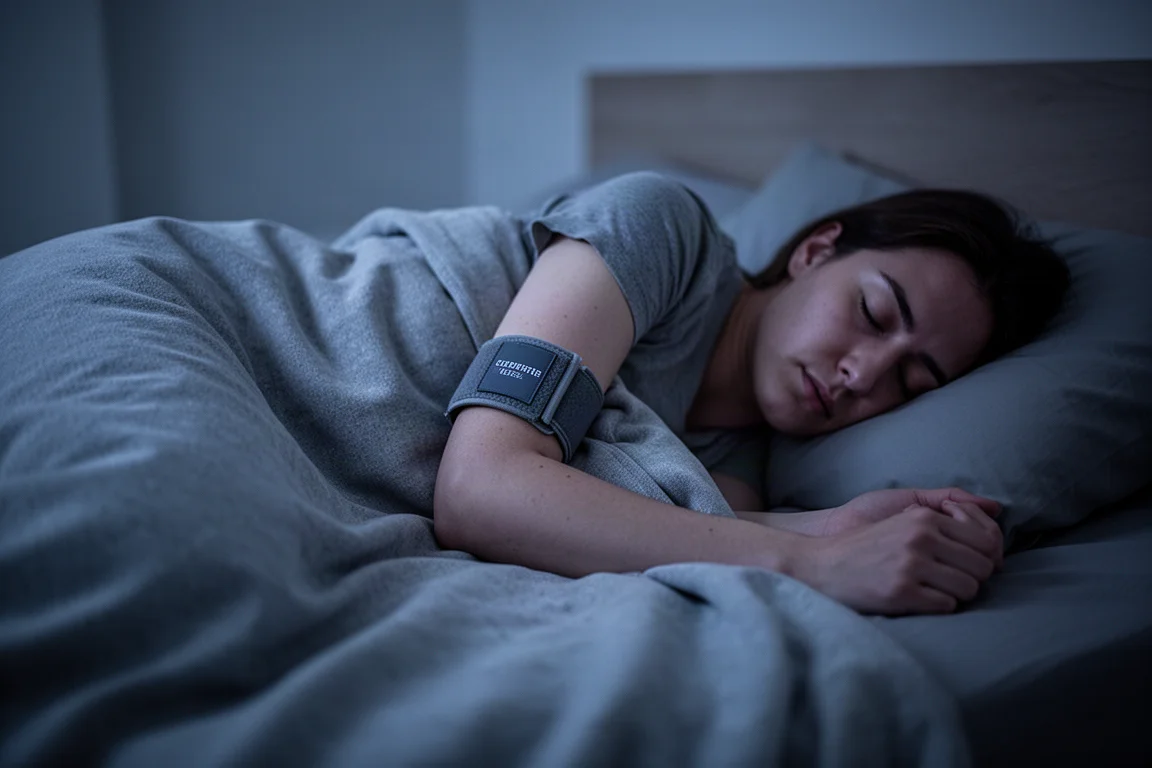
Strength training and HIIT are harder for optical sensors, especially with gripping movements. Both units handled bench presses reasonably well, but on arm curls the wrist unit read low for nearly every set while the armband dipped only briefly. During lateral flies the wrist reading got a little wild. On SkiErg intervals, the armband took a moment to catch the first heart rate rise, but the wrist unit and another watch spiked on nearly every set. SkiErg is one of the hardest activities for wrist-based sensors in general. Overall, the armband produced more accurate workout results.
Buying Advice
At a little over $20, this band undercuts the stock Google wristbands while solving their biggest weaknesses: limited stretch, narrow feel, and wrist placement compromises. If heart rate accuracy during strength training matters, arm placement with this band is the stronger option. Anyone waiting on an official armband can reasonably start here.
Conclusion
This stretchy nylon armband is comfortable, surprisingly well built, and delivers accuracy that matches or beats the Fitbit Air on the wrist across sleep, daily data, and workouts. With more armband options finally arriving for the Fitbit Air, this one is an easy recommendation for anyone who prefers arm-based tracking.
Product link
View more details for Nylon Stretch Armband for Fitbit Air
This product is mentioned in the review. Check the specifications, options, and compatibility before buying.
View more details for Nylon Stretch Armband for Fitbit Air