Flashlights
Fenix WF26R Review: A Wall-Charging Work Light With Real Power
The Fenix WF26R pairs 3,000 lumens and a 450-meter throw with a magnetic wall charging cradle, making it a strong workshop and garage flashlight with a few trade-offs.
Introduction
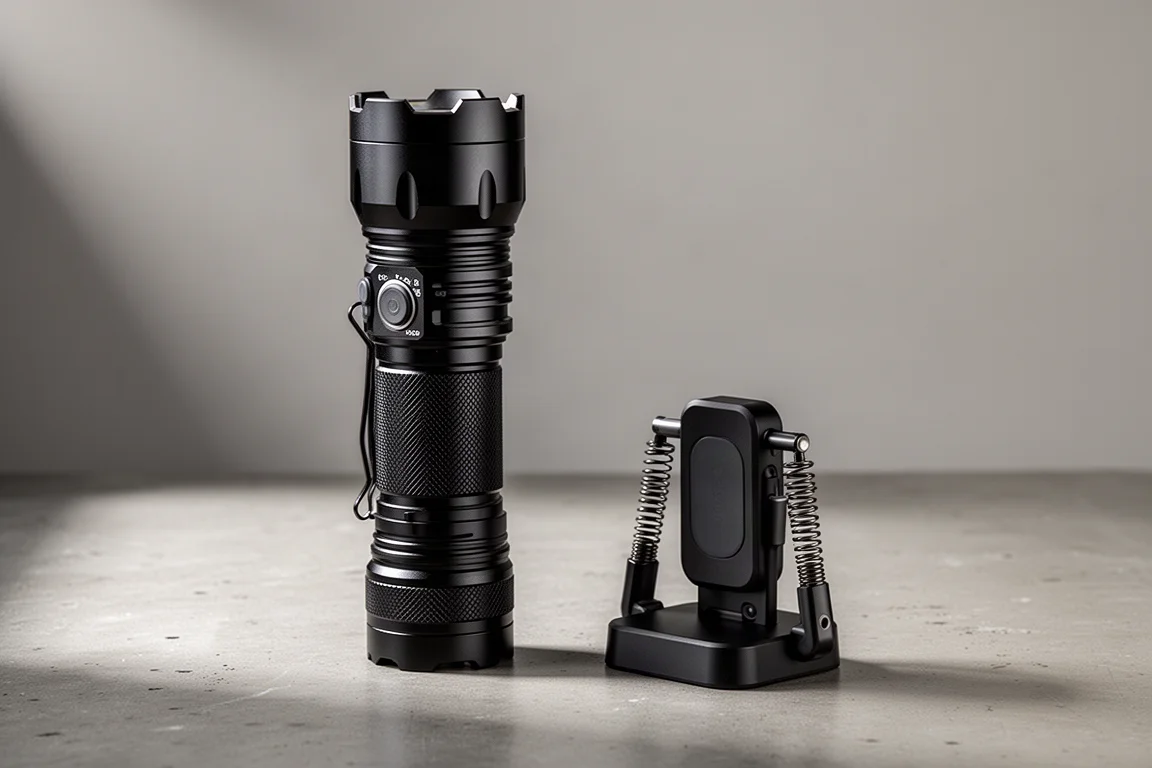
The Fenix WF26R is the newest flashlight in Fenix’s WF Workforce series and the upgrade to the RC20. Like its predecessor, it is a well-rounded all-around light, but what really sets it apart is the magnetic charging port on the back of the body that pairs with a wall-mountable charging cradle. That single design choice defines what this flashlight is: less of a pocket companion and more of a workshop tool that is always ready when you need it.
Specs are competitive for the category. You get a maximum of 3,000 lumens, a maximum throw of 450 meters, and a maximum run time of 44 hours on the lowest Eco mode. The body is impact resistant up to one meter and carries an IP68 rating, which means it is completely dust proof and submersible up to six feet of water.
Who This Flashlight Is For
This is, first and foremost, a work light. The included charging cradle is meant to be screwed into a stud in a garage or workshop: take the light out when you need it, use it, then pop it back in to charge. That workflow makes far more sense for this flashlight than carrying it every day, and it is honestly the most natural way to think about the WF26R.
It is too large to make a convincing everyday carry light, and it does not come with a holster, only a lens-down pocket clip. If you happen to like larger clip-carry flashlights, the pocket clip does allow it, but the cradle is the better fit. For the same reason, it falls short as a tactical or duty light, something we will come back to when discussing the user interface.
The Magnetic Charging Cradle Is the Main Event
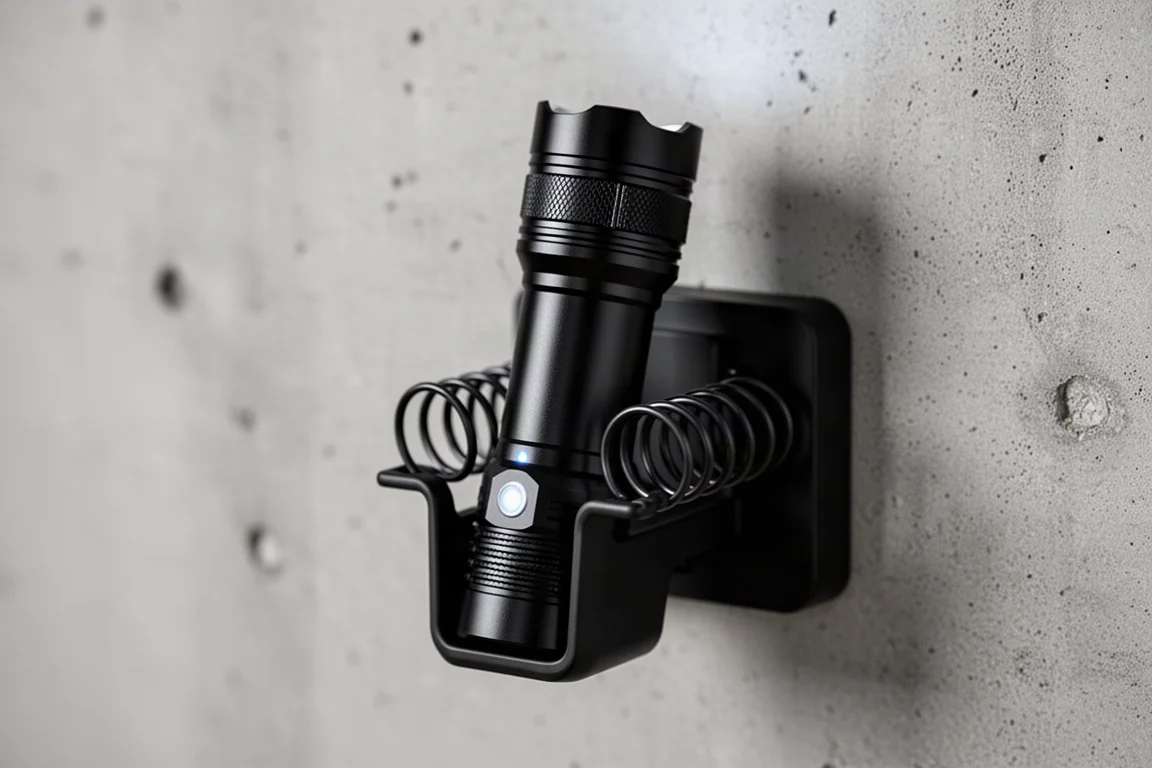
The charging system works well once you get used to it. Line up the magnetic port on the back of the flashlight with the cradle and the magnets pull it into place. A red light shows charging, and a steady green LED signals a full charge. That same LED also acts as a boot-up battery life indicator, a genuinely useful touch.
The cradle has two spring-loaded arms and holds the light decently, though in practice it rarely seats perfectly on the first try; you usually have to search around a bit for the magnet alignment. One more frustration: even though the WF26R upgrades the RC20, the cradles are not compatible between the two models.
The bigger issue is that the charging system is proprietary. The battery is a 5,000 mAh 3.6V 21700 lithium-ion cell that can be externally slot charged, but without a slot charger, the only way to charge is through the cradle or the removable magnetic cable, which is USB Type-A to a proprietary magnetic tip. A USB-C port on the light itself would have solved this entirely. As a partial consolation, the magnetic cable pops out of the cradle easily, and reinserting it is just a matter of sliding it back into the slot.
Build, Dimensions, and Switching
Build quality is typical Fenix: 6061-T6 aluminum with knurling that is present but not aggressive, and a size that feels substantial in the hand even if it is too big for pocket carry. There are no anti-roll spots, so the removable split-ring pocket clip is the only thing keeping it from rolling off a table. A lightly crenellated bezel sits up front, though it is not particularly sharp, and there are two tail attachment points with a lanyard included in the box.
Dimensions come in at 6.14 inches long, with a 1.59-inch head diameter and a 1.05-inch body diameter. Measured weight with the battery installed is 7.82 ounces.
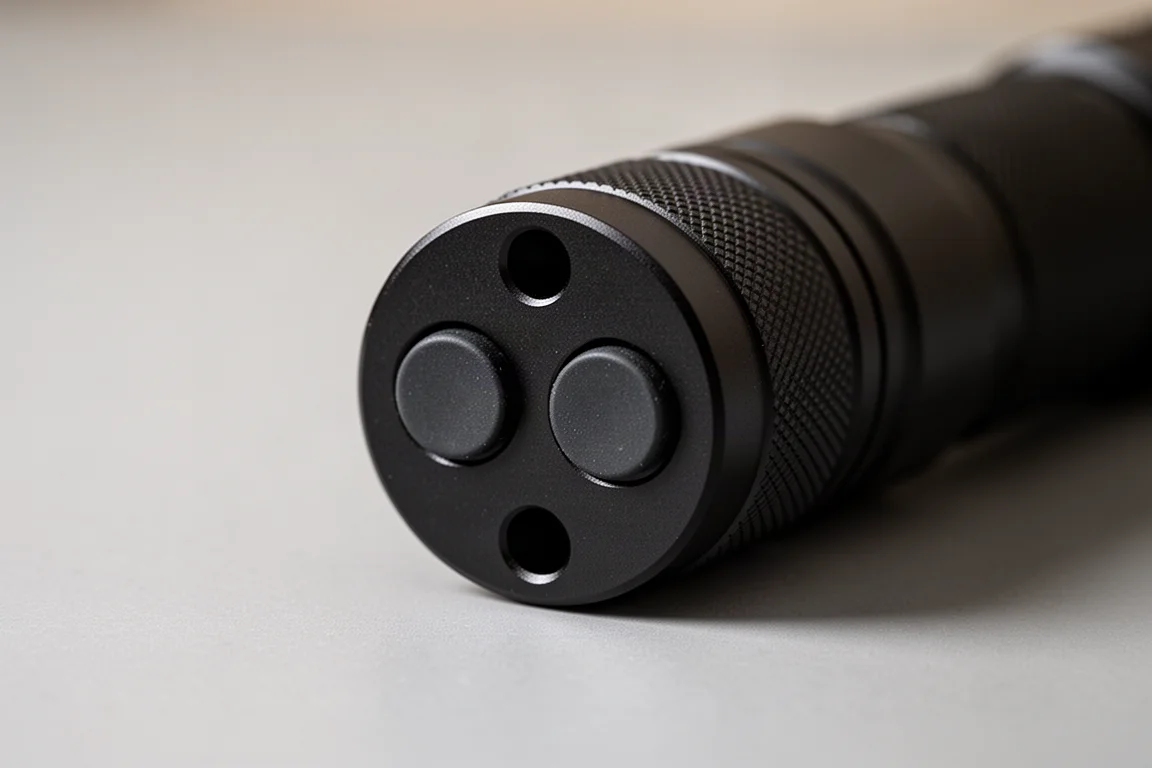
The dual tail switches are a highlight. One button handles on/off, the other cycles modes, and both have a nice, positive click with no sponginess. The one downside of the flat two-button tail is that the light cannot tail stand, which rules out using it as a ceiling bounce room light.
Output, Modes, and Runtime
The WF26R offers six modes total: four lighting modes plus SOS and strobe, driven by a Luminus SST70 cool white LED rated for about 50,000 hours. The cool white output sits around 6,000 to 6,500K, which is where the throw and lumen numbers come from, with the LED seated deep in a smooth reflector.
| Mode | Output | Runtime |
|---|---|---|
| Eco | 30 lumens | 44 hours 8 minutes |
| Medium | 350 lumens | 8 hours 56 minutes |
| High | 1,000 lumens | 2 hours 47 minutes |
| Turbo | 3,000 lumens | 2 hours 41 minutes |
Note that Turbo’s runtime includes gradual step-downs until the battery is empty, not sustained 3,000 lumens. Turbo also delivers the 450-meter maximum throw with 52,888 candela. High is arguably the mode that matters most here: 1,000 lumens, 2 hours 47 minutes of runtime, 264 meters of throw, and 17,483 candela. That is plenty for everyday use, saving Turbo for moments when you truly need to see the full distance. The two special modes run 3,000 lumens on strobe and a strangely dim 100 lumens on SOS, which seems like an odd choice for an emergency signal.
Heat is manageable but real. In a two-minute Turbo test, the head climbed to about 137 degrees Fahrenheit and the body to around 116 to 117 degrees. The body stays handleable with bare hands, but the head becomes too hot to touch during extended Turbo runs, and a gradual step-down kicks in within the first two minutes.
User Interface
The UI is very simple. A half press gives momentary on, a full click gives constant on, and the mode button cycles through Eco, Medium, High, and Turbo. The light has mode memory, so turning it off in Turbo and back on returns you straight to Turbo.
There is one genuinely tactical feature: instant access to strobe from any state by holding the mode button, whether the light is on or off. Pressing the mode button again while on activates SOS, and pressing again returns to strobe. What is missing is instant access to Turbo. Beyond relying on mode memory, you have to cycle through the modes to reach it, and in our view a true tactical light should offer a double-click or similar direct path to Turbo. There is also no electronic lockout; the only way to lock the light out is a quarter turn of the tailcap.
Beam Profile and Outdoor Performance
Indoors, the beam shows a pretty well-defined outer perimeter and a large, somewhat soft hotspot. The spill is sharp and the profile is wide, and while the hotspot is not razor-edged, the overall beam profile is genuinely likable. Even fans of warmer light will admit that the cool white SST70 is what buys the lumens and distance.
Outside, the story holds. Eco reaches faintly into the distance, Medium illuminates nearby trees without effort, and High sweeps across a yard with authority at its 264 meters of throw. Turbo is dramatically brighter still, hitting anything within its 450-meter reach with a wide, powerful swath of light.
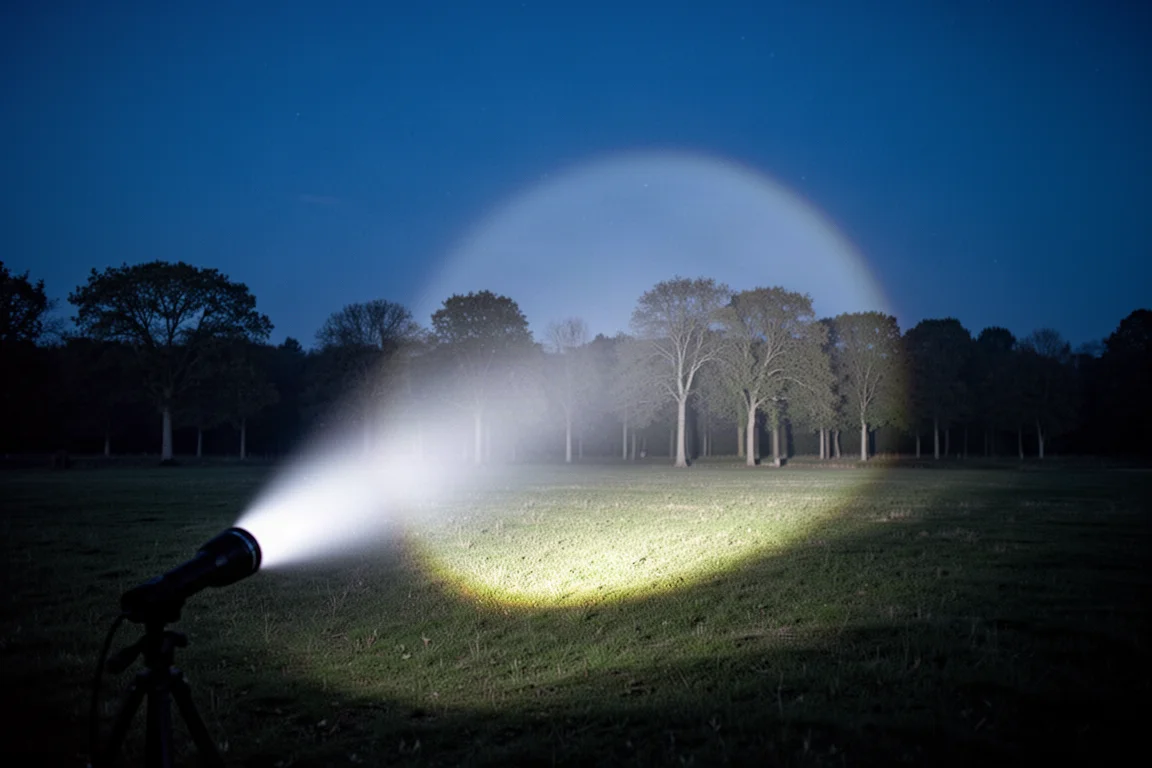
For a work light, that combination of wide spill and serious throw makes the WF26R easy to recommend on optical grounds alone.
Buying Advice
At $129.95, the WF26R makes the most sense as a utility, workshop, or garage light. Screw the cradle into a stud, leave the light there until you need it, and enjoy the fact that it is always charged and always ready. The Eco mode is well matched to that kind of utility use, and the dual tail switches plus the wide beam profile round out a convincing package.
If you are shopping for an everyday carry light or a tactical light for patrol or law enforcement duty, this is not the right tool. The size, the lack of a holster, the missing instant Turbo access, and the proprietary charging system all work against those uses. But if your need is a powerful, always-docked workshop light, the WF26R delivers exactly that.
Things to Consider Before Buying
The proprietary magnetic charging system is the biggest negative. Without an external slot charger, you must carry the special USB Type-A to magnetic cable everywhere, instead of the common USB-C cable you already own. The removable 21700 battery softens this, but only if you own a slot charger.
Also weigh the small annoyances: the cradle rarely aligns on the first attempt, cradles are not compatible with the older RC20, the light cannot tail stand, the SOS mode is oddly faint at 100 lumens, and there is no instant access to Turbo outside of mode memory. None of these are dealbreakers for garage use, but they matter if you were hoping for a do-everything light.
Conclusion
The Fenix WF26R knows what it is. Plenty of light with 3,000 lumens, plenty of throw with 450 meters, a wide and well-shaped beam, dependable Fenix build quality, and a magnetic wall cradle that turns any garage wall into a charging dock. It is not an everyday carry light and it is not a tactical light, but as a workshop flashlight that is always ready on the wall, it is an easy recommendation at $129.95.
Product link
View more details for Fenix WF26R
This product is mentioned in the review. Check the specifications, options, and compatibility before buying.
View more details for Fenix WF26RFurther reading
Related Reviews
Flashlights
Best Flashlights 2026: Brightness, Battery, and Value Compared
We tested 18 flashlights across a wide price range to find the best performers in brightness, battery life, and durability.
Flashlights
Nitecore LA10 Review: A Tiny 2-in-1 Lantern That Nails the Basics
The Nitecore LA10 pairs a pocket-sized lantern with a single AA battery, a magnetic tail cap and a five-year warranty. Here is where it shines and where it struggles.
Flashlights
Wuben G5 Review: A Compact Everyday Carry Flashlight
The Wuben G5 is a small, rechargeable flashlight with a pivoting head, magnetic base, and color modes. Here is how it performs as an everyday carry light.