Flashlights
Fenix TK20R V2 Review: The Best Tactical Flashlight Just Got Better
On-body USB-C charging, longer beam reach, and better runtimes make the TK20R V2 an easy upgrade over its predecessor.
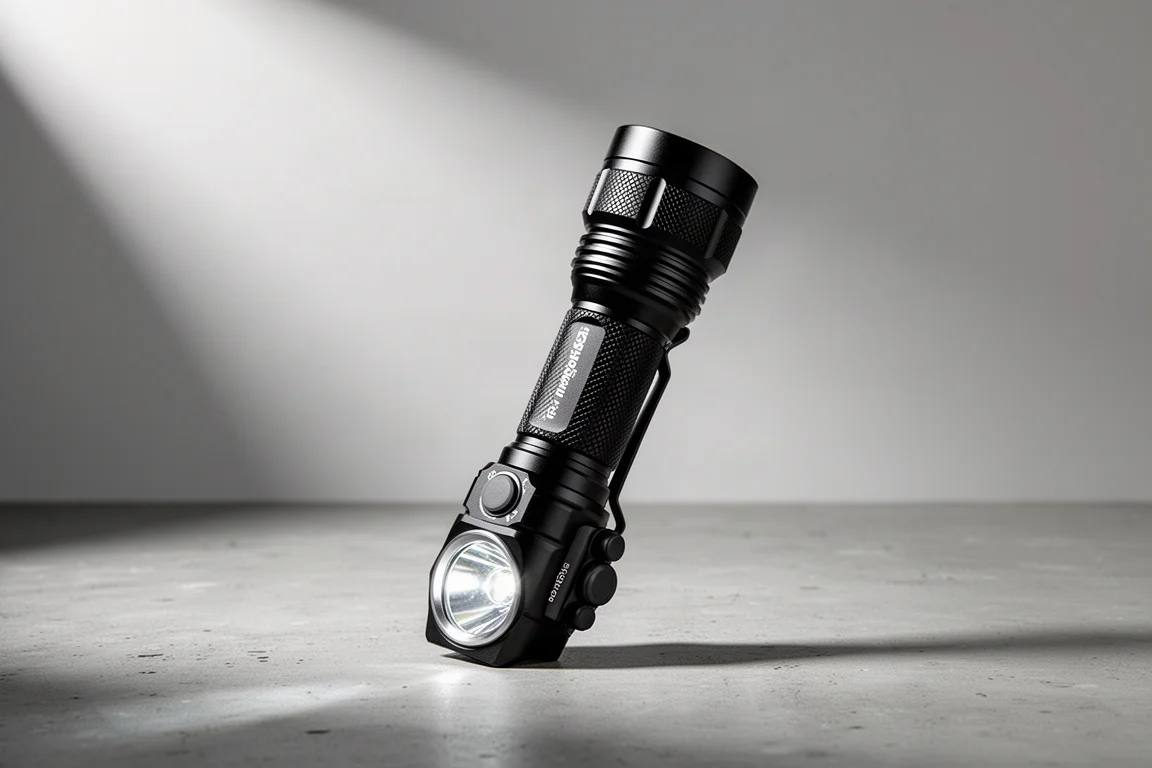
Introduction
Every so often an already excellent product gets a successor that quietly fixes the things people actually complained about. That is exactly the story with the Fenix TK20R V2. Its predecessor, the TK16 V2, was a previous pick as the best tactical flashlight of its year, and this new model is essentially that same flashlight with a handful of meaningful upgrades: on-body charging, improved battery life on most settings, and a noticeably longer beam reach.
If you want the short version: the best just got better, and this is now an even easier recommendation for anyone in the market for a serious compact tactical light.
Who This Product Is For
The tactical designation here is not just marketing. This flashlight is aimed primarily at professional users such as fire and rescue, law enforcement, and military personnel, and its feature set reflects that. It needs to be tough, and it is: the body carries a type III hard-anodized finish, the lens sits under a thick layer of anti-reflective glass, and the light is drop tested to one meter onto a hard surface.
It is also IPX8 waterproof, meaning it can be submerged to a depth of two meters, and the switch gear is built to be reliable and easy to operate with gloves. Inside, a double spring arrangement in both the tail cap and the body maintains electrical contact under shock, whether that is a drop or weapon-mounted recoil, so the light will not cut out unexpectedly.
At the same time, this remains a compact, handheld light at a claimed 205 grams, about 7.23 ounces, so it is comfortable to carry and use for extended periods. Anyone who values durability, simplicity, and straightforward output will feel at home here, professional or not.
What You Get in the Box
Along with the flashlight itself, the package includes a USB-C charging cable, a well-put-together holster, and a wrist strap with an adjustable tensioner so the light cinches tightly to your wrist and cannot be lost when attached.
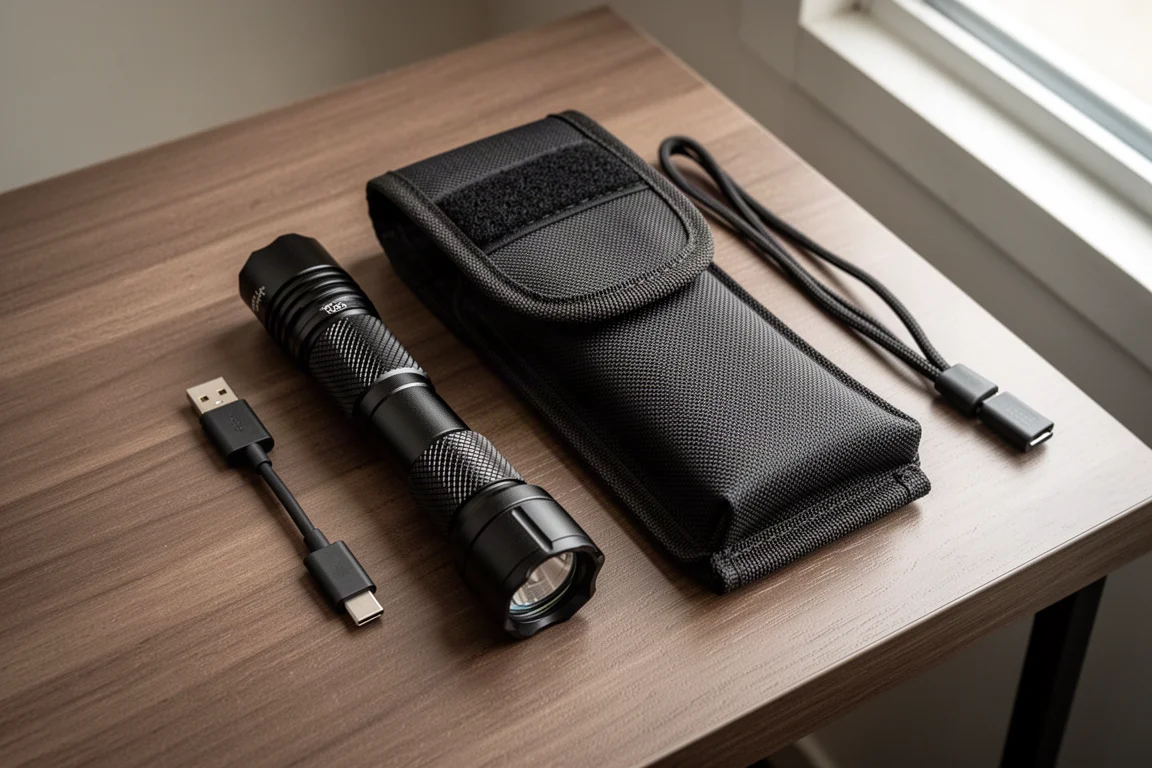
Small touches like the adjustable strap show that the details have been thought through rather than included as afterthoughts.
Main Strengths
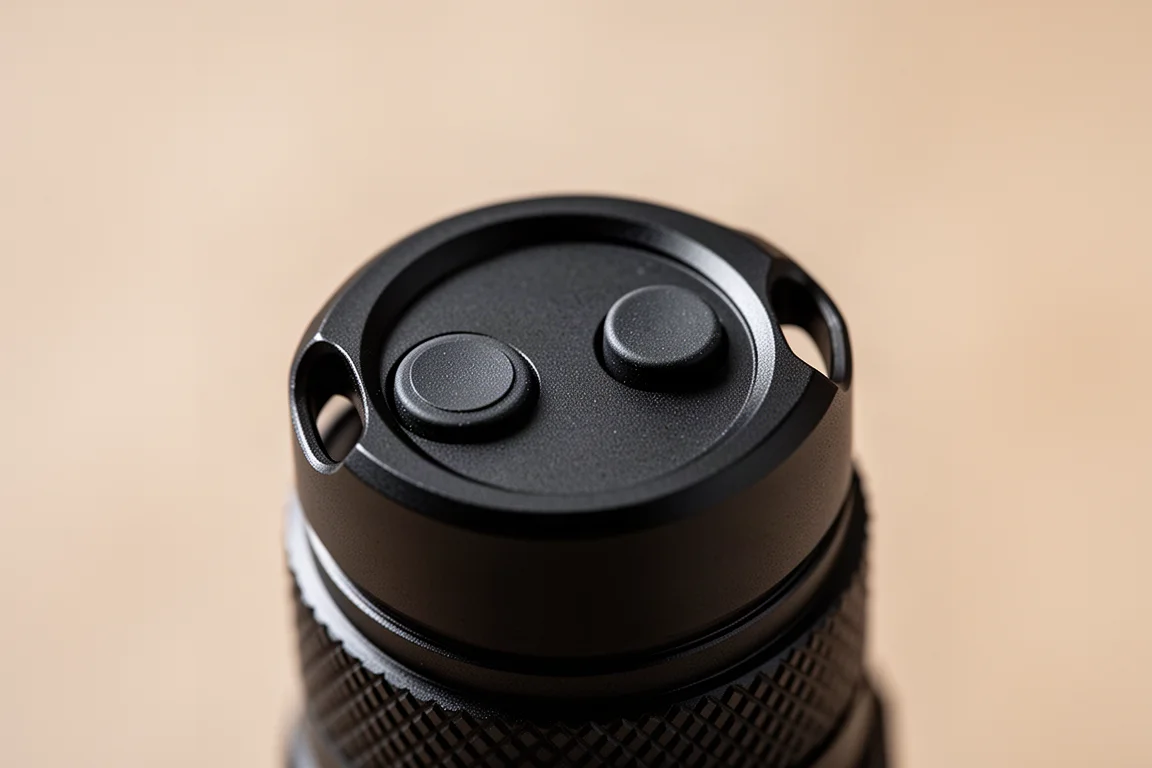
The design will look familiar to anyone who has handled the TK16 V2, and that is a good thing. The pocket clip is the same and works really well, and the tail cap switch gear carries over unchanged because it did not need changing. It is very clicky in use, easy to operate with gloves, and there is deliberately no side switch on the body. Side switches can be hard to find in the dark, leaving you spinning the light around looking for them. With the TK20R V2 you can always find the switch on the end, and the two switches there differ in size and shape so they are easy to distinguish by feel alone.
Operation is simple and intuitive from the first moment you pick it up. The large switch turns the light on at the last used setting, and the smaller button steps through five brightness levels: eco at 30 lumens, low at 150, medium at 350, high at 1,000, and turbo at 3,000. Strobe is quick to reach as well. With the light off, press and hold the small button to enter strobe directly. With the light on, a half-second press locks strobe on, and pressing again returns to normal operation.
Turbo mode steps down to 1,000 lumens after roughly a minute to prevent overheating, so the practical advice is to run a level below turbo for sustained use and save turbo for short bursts when you genuinely need the extra illumination. Even eco mode, at a very respectable 30 lumens, can run for 48 hours continuously.
There is no complicated lockout sequence to remember either. If you want to prevent accidental activation, you simply unscrew the tail cap a quarter turn. That mechanical simplicity is genuinely welcome on a light that might live in luggage or a gear bag.
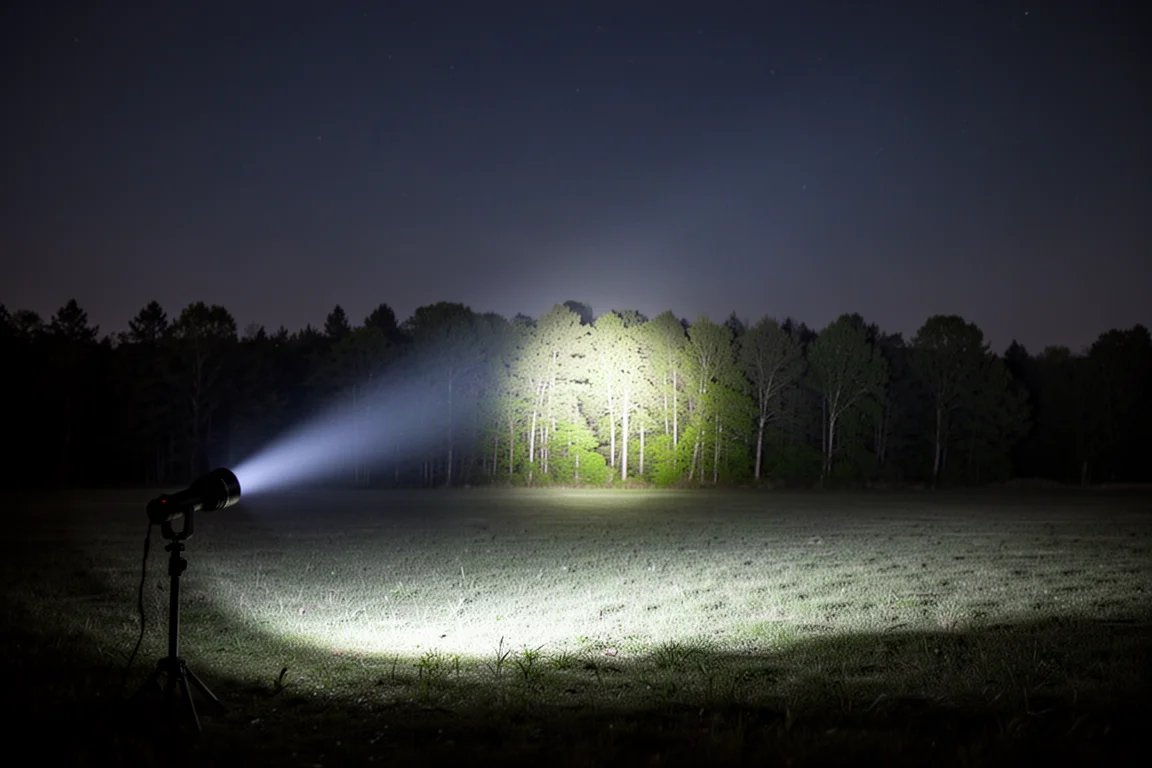
The headline numbers have shifted slightly in interesting ways. Maximum output has actually dropped marginally, from 3,100 lumens to 3,000, which will not be noticeable in practice. What you gain instead is a tighter beam pattern and a substantial increase in range, from 380 meters to 475 meters at maximum output, achieved with a more efficient new LED and without a larger reflector. Against trees at around 100 meters, the difference in reach over the predecessor is clearly visible. Build quality throughout is fantastic, and Fenix backs it with a lifetime warranty against defects.
Things to Consider Before Buying
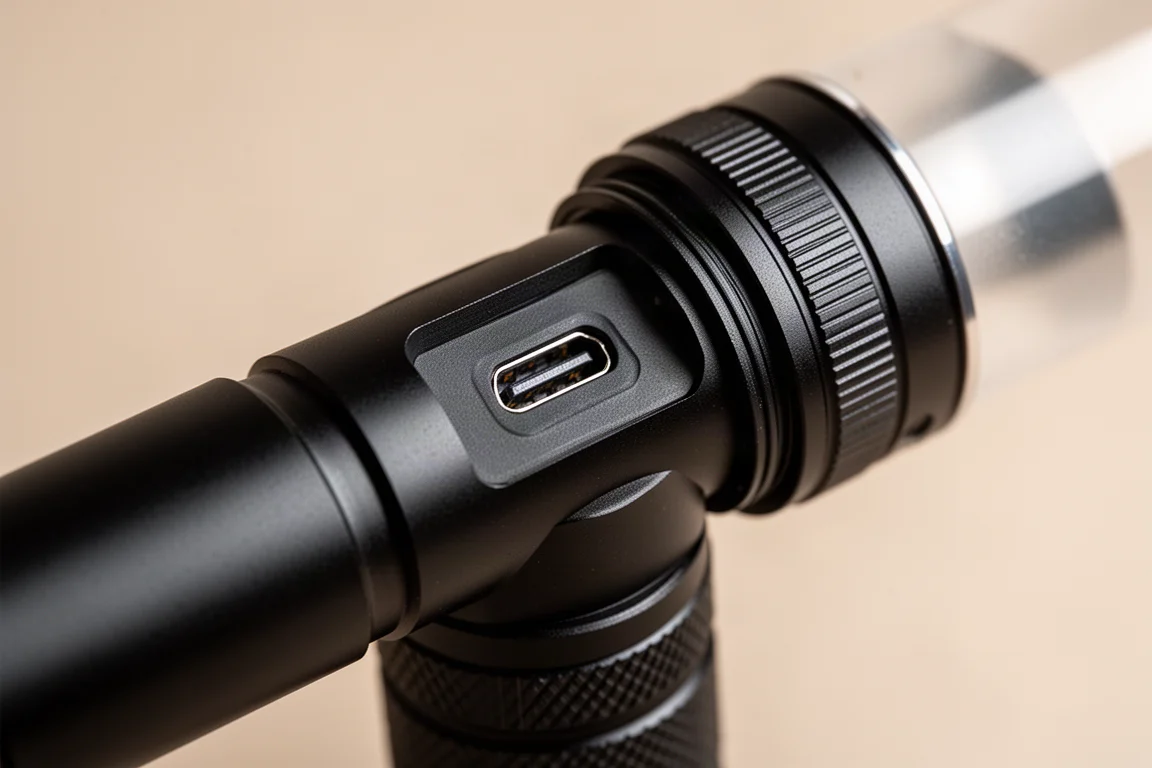
The most significant change is a small bulge in the body, which also makes the TK20R V2 about 10 millimeters, or three-eighths of an inch, longer than its predecessor. This exists for a good reason: the earlier light had no charging socket on the body, so the battery had to be removed and charged through a USB-C port on the battery itself. Avoiding a body-mounted socket covered by a rubber flap is not a bad idea in principle, since those flaps are often fiddly, hard to reseal, or can break off and get lost.
The bulge solves this elegantly. Unscrew the collar and you find a USB-C socket underneath, protected by an O-ring and a rubber seal when the collar is back in place. You get the convenience of on-body charging without the reliability concerns of an exposed rubber-flapped port. Charging runs at two amps, so a full charge takes around three and a half hours, and an indicator LED shifts from red to green when charging completes.
That same LED doubles as a battery status indicator during use, which the predecessor lacked entirely. Solid green means above 85 percent, flashing green means 50 to 85, solid red means 25 to 50, and flashing red means 1 to 25. The drawback is that the LED is hidden when the collar is screwed back in, so you need to loosen it to check. Without it, your only clues are that higher modes become unavailable as the battery depletes and, when very low, the light blinks three times every five minutes to warn of imminent failure. The LED is clearly the more informative option.
A couple of smaller trade-offs are worth knowing. The strike bezel design differs from the earlier model, dropping three tungsten tips, but testing showed those tips made little difference for glass breaking compared with the new black bezel, which also happens to look better than the older silver-and-black version. There is also no super-low firefly mode around a single lumen, which is uncommon on tactical lights but would have been nice, and no direct turbo access. Finally, the body is nine millimeters longer and 20 grams heavier than its predecessor. None of these are deal breakers.
Buying Advice
Summed up, the TK20R V2 gives you on-body charging, longer runtimes on most settings, a much longer beam reach, and a visual battery level indicator. What you give up is the tungsten bezel tips, a little compactness, and 20 grams of weight, all in exchange for a price about $30 higher than the TK16 V2. For what you get, that premium is very easy to justify.
If you want a compact, rugged tactical flashlight with a simple interface, quick strobe access, genuine waterproofing, and real reach, this is the one to buy. If you are deeply attached to the absolute lightest and shortest possible body, the earlier model remains an option, but for nearly everyone else the upgrade is worth it.
Conclusion
The Fenix TK20R V2 takes an already excellent tactical flashlight and improves it in the places that matter most: charging convenience, runtime, and beam distance. The compromises are minor and well explained, and the result is a flashlight that is easier to live with day to day while performing better when it counts. For anyone seeking a compact tactical light in this class, it is an easy recommendation.
Product link
View more details for Fenix TK20R V2
This product is mentioned in the review. Check the specifications, options, and compatibility before buying.
View more details for Fenix TK20R V2Further reading
Related Reviews
Flashlights
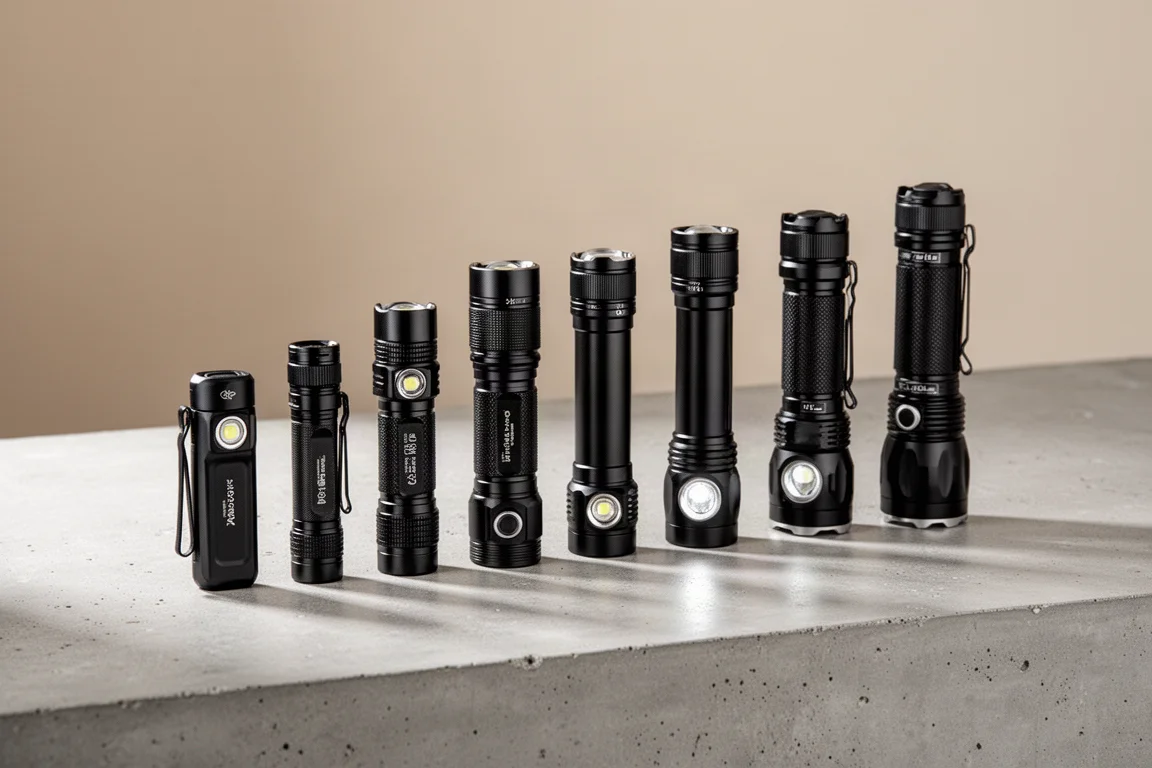
Best Flashlights 2026: Brightness, Battery, and Value Compared
We tested 18 flashlights across a wide price range to find the best performers in brightness, battery life, and durability.
Flashlights
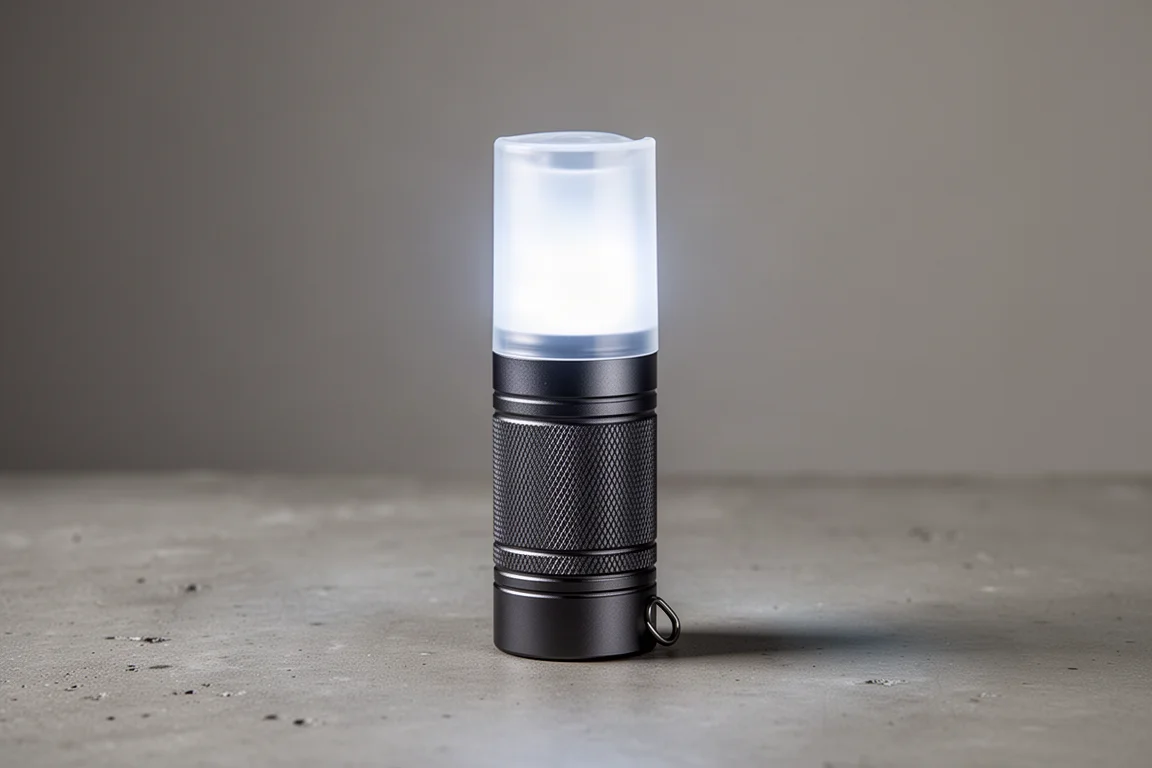
Nitecore LA10 Review: A Tiny 2-in-1 Lantern That Nails the Basics
The Nitecore LA10 pairs a pocket-sized lantern with a single AA battery, a magnetic tail cap and a five-year warranty. Here is where it shines and where it struggles.
Flashlights
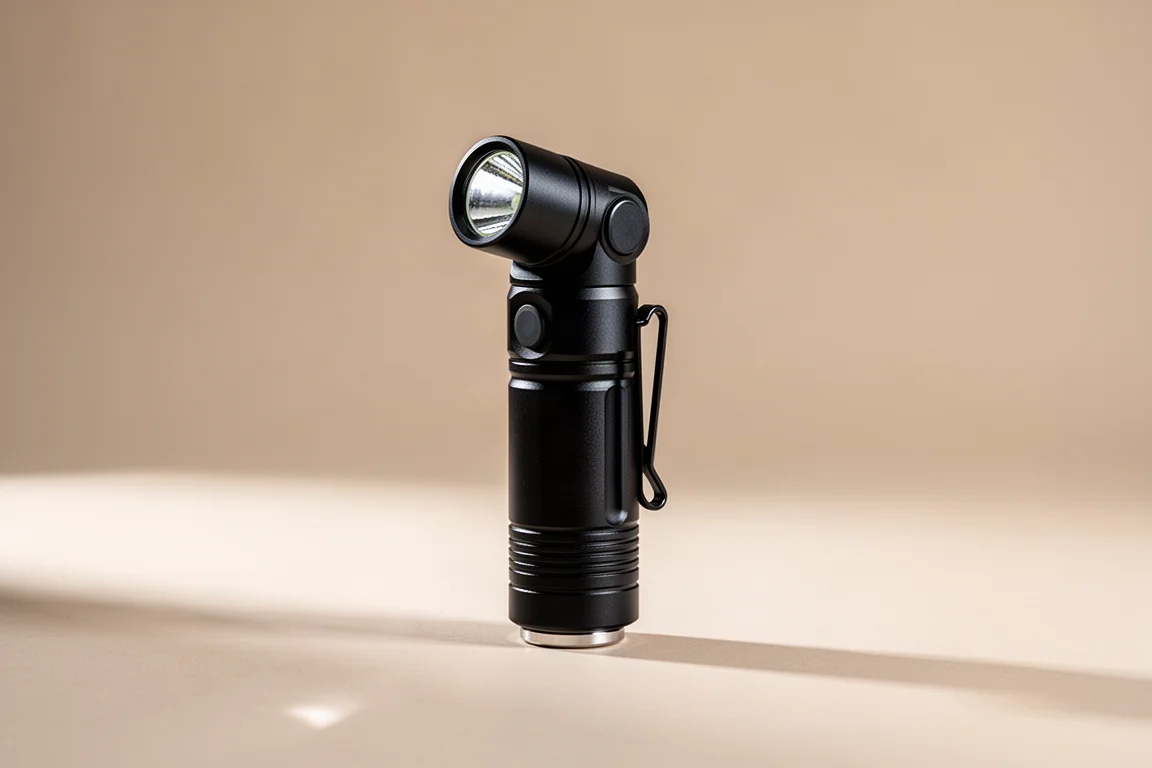
Wuben G5 Review: A Compact Everyday Carry Flashlight
The Wuben G5 is a small, rechargeable flashlight with a pivoting head, magnetic base, and color modes. Here is how it performs as an everyday carry light.