Flashlights
Fenix LR50R vs Nitecore P30i: Power or Precision for Long-Range Search Lighting
Two search and rescue flashlights that both reach around one kilometer, one with massive flood output and one with a surgical long-range beam.
Introduction
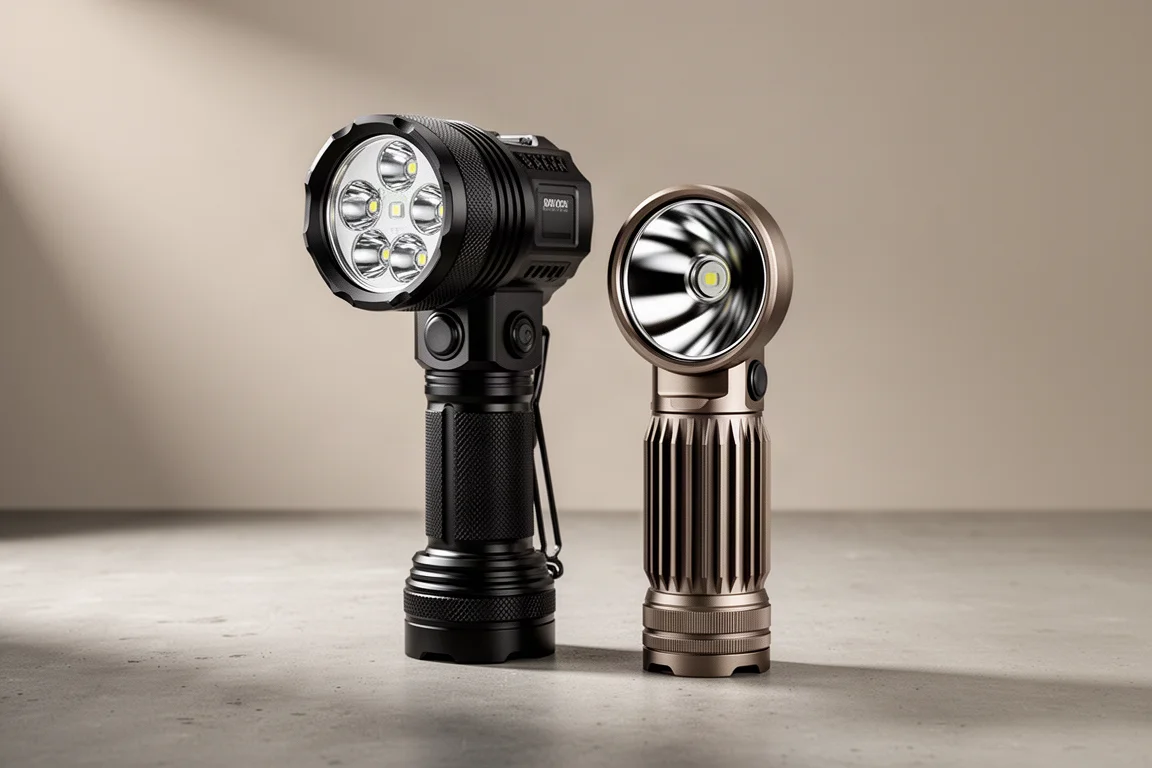
This is a genuine David and Goliath matchup: two search and rescue flashlights, both offering around one kilometer of range, but achieving it in completely different ways. The Fenix LR50R is all about power, while the Nitecore P30i is all about precision. Which one is best depends entirely on how you plan to use it.
Fenix LR50R: The Power Option
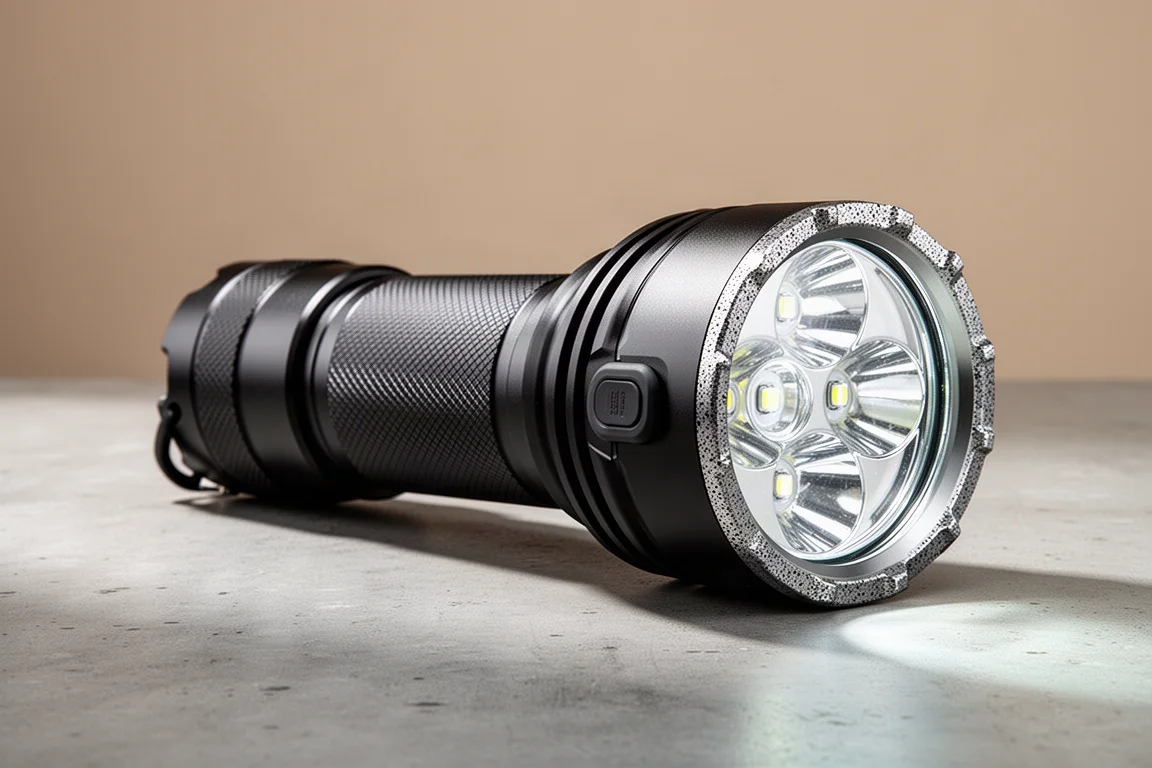
The Fenix LR50R is classed as a search and rescue flashlight, and it is big and heavy at 986 grams or 35 ounces. It delivers a significant 12,000 lumens of maximum light output, a maximum range of 950 meters, and a beam intensity just short of 226,000 candela.
Construction feels as well put together as you might expect: T6 aluminium with a hard anodized coating, a steel granulated bezel, a glass lens, and an IPX8 rating, meaning it can be submerged to 2 meters for up to 30 minutes. It is also tested to withstand a 1.2-meter drop onto a hard surface.
The box includes a substantial and well-made holster for belt or carabiner carry, a wrist lanyard, a USB-A to USB-C charging cable, and a shoulder strap that attaches to a loop on the body, which is a clear indication of how heavy this light is. There is also a tripod fixing point, plus four LEDs showing battery and charging status.
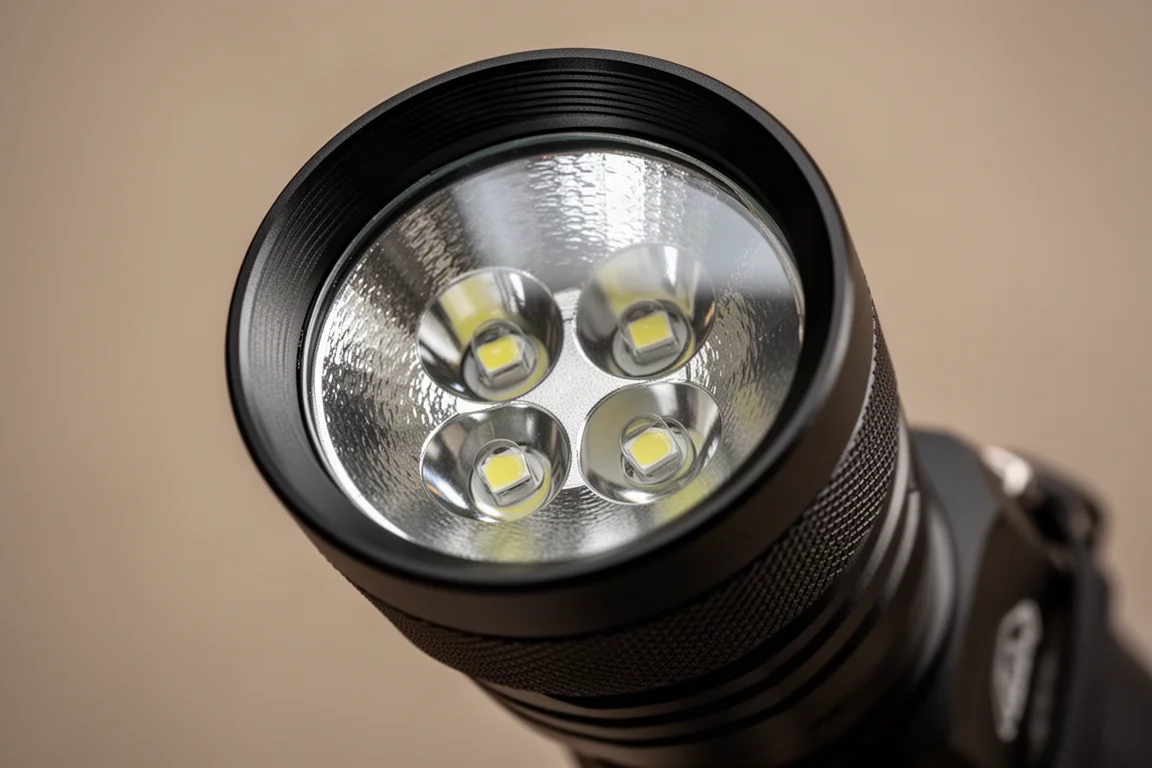
The light uses four Luminus SST70 LEDs arranged in a quad array, effectively like strapping four smaller flashlights together. That means you do not get a single beam; you get overlapping beams from each source, mixing flood and beam with a 75-degree flood angle and an 8-degree beam angle.
It is powered by an included 16,000 milliamp hour high power delivery battery pack, though it can also run on four standard 21700 batteries at reduced output, with maximum light dropping from 12,000 to 6,000 lumens. The included pack fast-charges at up to 4 amps for a full charge in four hours. One great feature: the USB-C port is bi-directional, so the whole light works as a 16,000 milliamp hour power bank, enough to charge an iPhone 13 Pro roughly four times.
Operation uses two switches. Pressing and holding the right-hand button turns the light on at the last used setting, and pressing it again cycles through six modes from 50-lumen eco up to 12,000 lumens. The left-hand switch is a special mode switch: one press goes straight to turbo, then strobe, then morse code SOS. A press-and-hold on both buttons for about three seconds locks the light out. A built-in proximity sensor also drops the power automatically when something comes close to the lens at full power, reducing overheating and fire risk.
On the runtime chart, the 12,000-lumen turbo holds for only about 20 seconds before heat forces a drop, reaching around 8,000 lumens after a further minute and 3,000 lumens after about 10 minutes. Turbo is for quick blasts, not sustained use. At 1,000 lumens the light runs non-stop for around eight hours, and at 50-lumen eco it manages 58 hours, which is a week of nights at eight hours a night.
Nitecore P30i: The Precision Option
The Nitecore P30i is also billed as a long-distance search and rescue light, but it does things very differently. It is far more compact and about a quarter of the weight at 255 grams or 9 ounces, with a much lower maximum output of 2,000 lumens, and yet it has a longer range: 1,000 meters versus the Fenix’s 950. Its candela rating of 250,000 also beats the Fenix’s 226,000. Less power, but more intensity and more range, thanks to a narrower but more focused beam.
Build quality is equally solid: aluminium construction with a matte hard anodized finish, plenty of cooling fins, knurling for grip, an IPX8 rating for submersion to 2 meters for 30 minutes, and drop resistance tested to 1 meter.
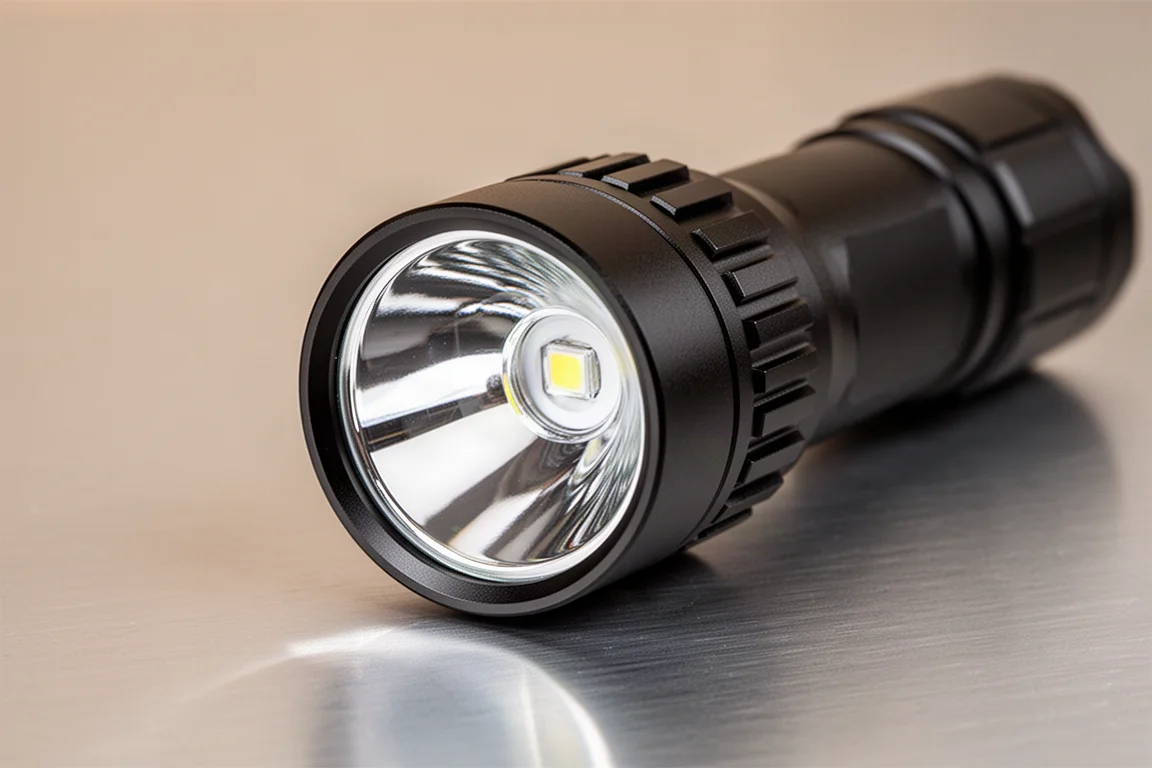
The package includes O-rings, a belt clip, a well-fitting holster with belt loop and carabiner attachment, a USB-A to USB-C charging cable, a CR123 battery carrier as a backup power option, and a remote control. The remote attaches to the USB-C port with a clip that fastens into an indentation on the body, making a genuinely solid connection, and it is generally intended for use when the light is mounted on a firearm.
Inside the deep, polished reflector sits a CREE XHP35 LED with what Nitecore calls Precision Digital Optics Technology, or PDOT, delivering a tight, powerful beam. The light runs on a custom 21700i battery with positive and negative connections at each end, which means it will not accept a standard 21700 cell. That proprietary requirement may put some buyers off. Charging is at up to 2 amps for a full charge in four hours.
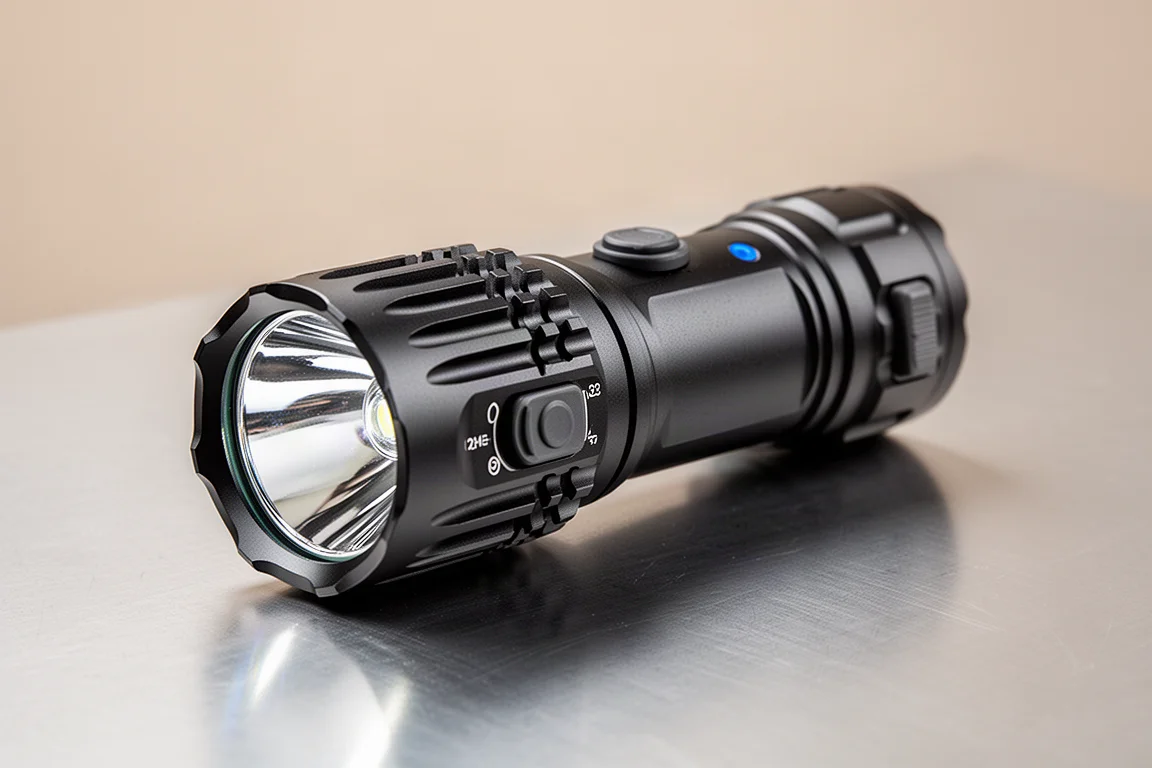
The mechanical tail switch offers momentary on with a half press and latching on with a full click, always at the last used level. The mode switch then cycles through five levels from ultra-low up to the 2,000-lumen turbo. A particularly useful feature: press and hold the mode switch while the light is on and it immediately jumps to turbo, then returns to your previous level when released. It even works this way when the light is switched off at the tail. Triple-pressing the mode switch from off brings up a slow beacon mode, and holding it longer gives morse code SOS.
There is no lockout mode, and because the mode switch works independently of the tail switch, and the double-ended battery means loosening the tail cap does not disconnect the power, the light could accidentally switch on in a bag. If you want to be cautious, remove the battery entirely before packing it in luggage.
Turbo is again for short blasts only: expect output to start dropping within the first minute as temperature regulation kicks in. The lower levels should hold close to their rated runtimes, and even 6 lumens in this tight beam pattern is enough to light your way in the dark. Note that turbo is not available when using the CR123 backup batteries.
How They Compare in the Dark
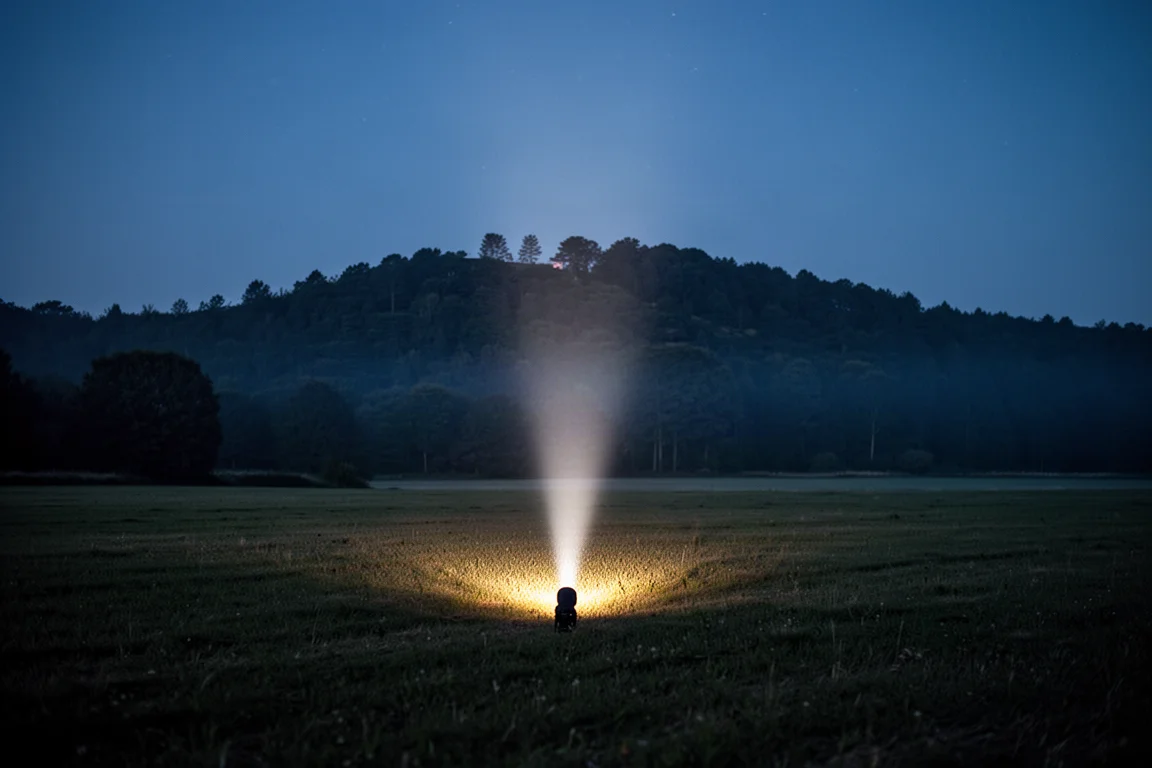
Field testing makes the difference clear. At the same tree line roughly 200 meters away, both lights illuminate it at a similar intensity, but the Nitecore produces a much tighter beam pattern while the Fenix covers a much broader area. At closer distances, zooming in makes it even more apparent: if you know where you are pointing it, the Nitecore delivers the same intensity as a light six times more powerful, with all that extra light spread into a wider beam instead.
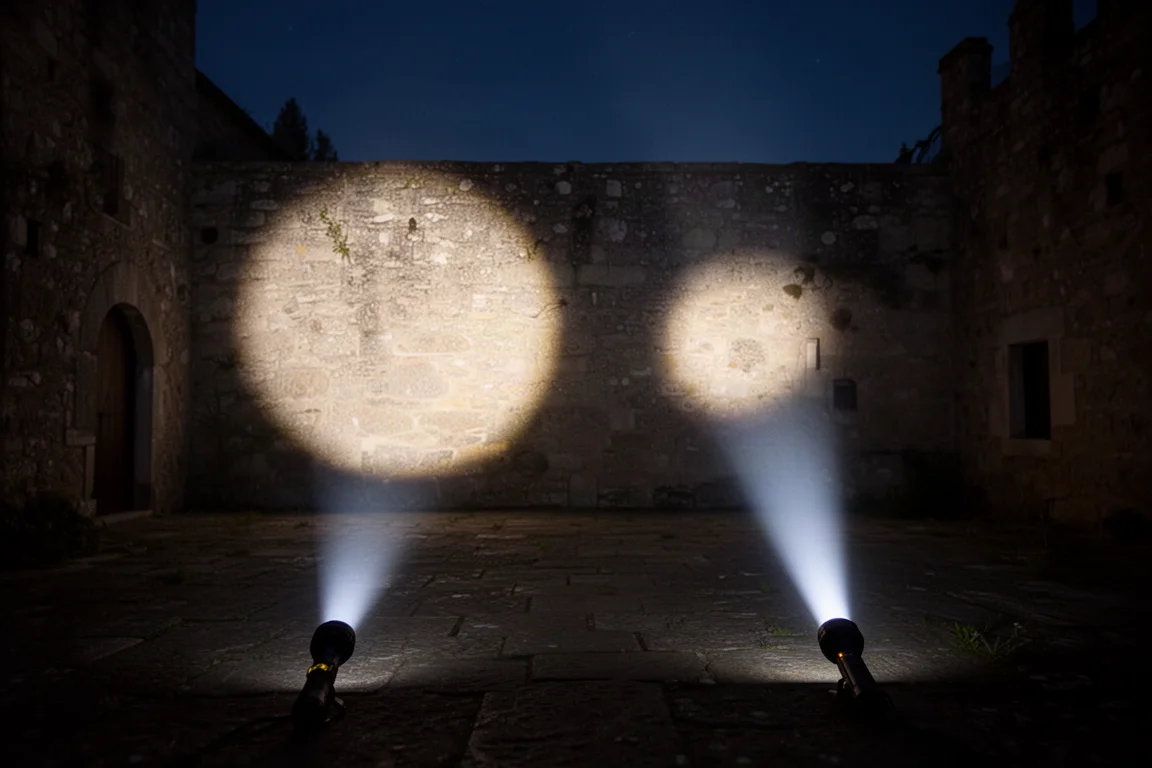
In an urban courtyard test, the same pattern holds. The Fenix throws a broad spread of light with a broader hotspot in the middle, while the Nitecore puts a concentrated punch of light exactly where it is aimed.
So which is best? It comes down completely to the application. At sustainable power levels, the Fenix can run consistently at 3,000 lumens for about 2 hours and 40 minutes with a quoted 480-meter range and a wide spread of light. The Nitecore can maintain closer to 1,000 lumens for about 1 hour and 30 minutes, with a longer quoted 722-meter range in a narrower beam. Note that quoted ranges follow the ANSI FL1 standard, and practical real-world range is likely closer to a quarter of the quoted figure. Also worth knowing: 3,000 lumens does not look a quarter as bright as 12,000 lumens, because light perception is non-linear; it appears roughly half as bright.
If you were floating in the sea at night, you would want rescuers carrying the Fenix, since it covers more area with more light. But if you are on foot, moving fast and covering distance, as in mountain rescue, the Fenix is four times heavier and much larger, while the Nitecore would be no issue at all to carry. In a boat or vehicle, where weight matters less, the Fenix may well be the better option.
Conclusion
Both flashlights have their place depending on your use, and both are winners in their own category. The Fenix LR50R is the choice for maximum area coverage and flood power, especially where weight is not a concern. The Nitecore P30i is the choice for long-range precision from a light you can easily carry on foot. It is also worth noting the price gap: the Fenix sits around $300 plus tax, roughly £300 in the UK, while the Nitecore is around $140 plus tax, roughly £140 in the UK. Choose power or precision based on your mission.
Further reading
Related Reviews
Flashlights
Best Flashlights 2026: Brightness, Battery, and Value Compared
We tested 18 flashlights across a wide price range to find the best performers in brightness, battery life, and durability.
Flashlights
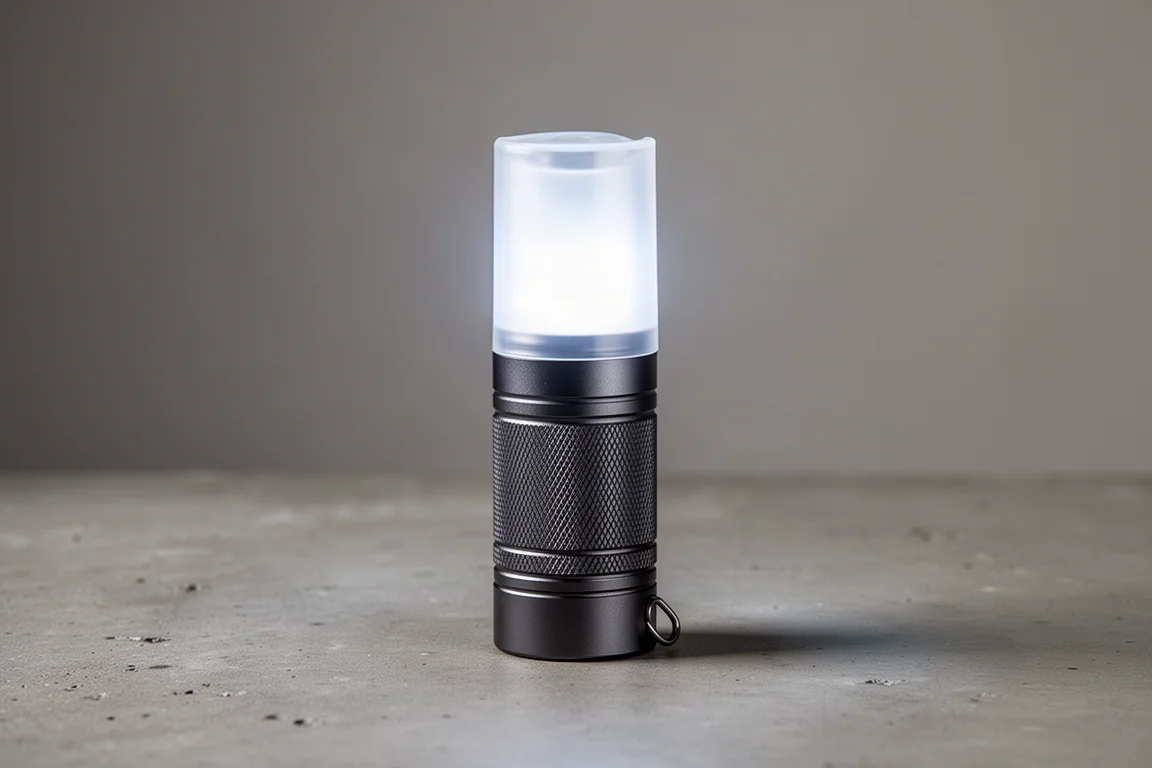
Nitecore LA10 Review: A Tiny 2-in-1 Lantern That Nails the Basics
The Nitecore LA10 pairs a pocket-sized lantern with a single AA battery, a magnetic tail cap and a five-year warranty. Here is where it shines and where it struggles.
Flashlights
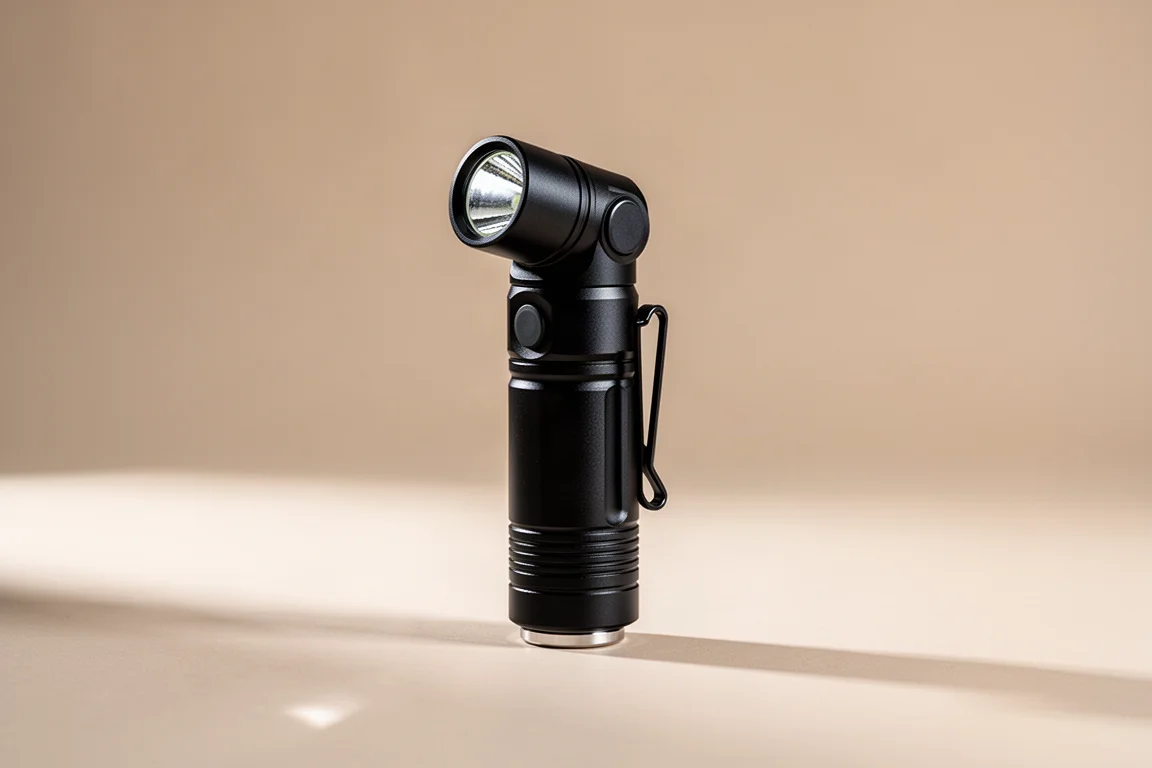
Wuben G5 Review: A Compact Everyday Carry Flashlight
The Wuben G5 is a small, rechargeable flashlight with a pivoting head, magnetic base, and color modes. Here is how it performs as an everyday carry light.