Flashlights
Fenix LD30 vs Olight Warrior Mini 2: Two Solid EDC Flashlights, One Clear Preference
A head-to-head look at two similarly sized rechargeable 18650 flashlights, covering build, charging, user interface, low-light behavior, and safety features.
Introduction
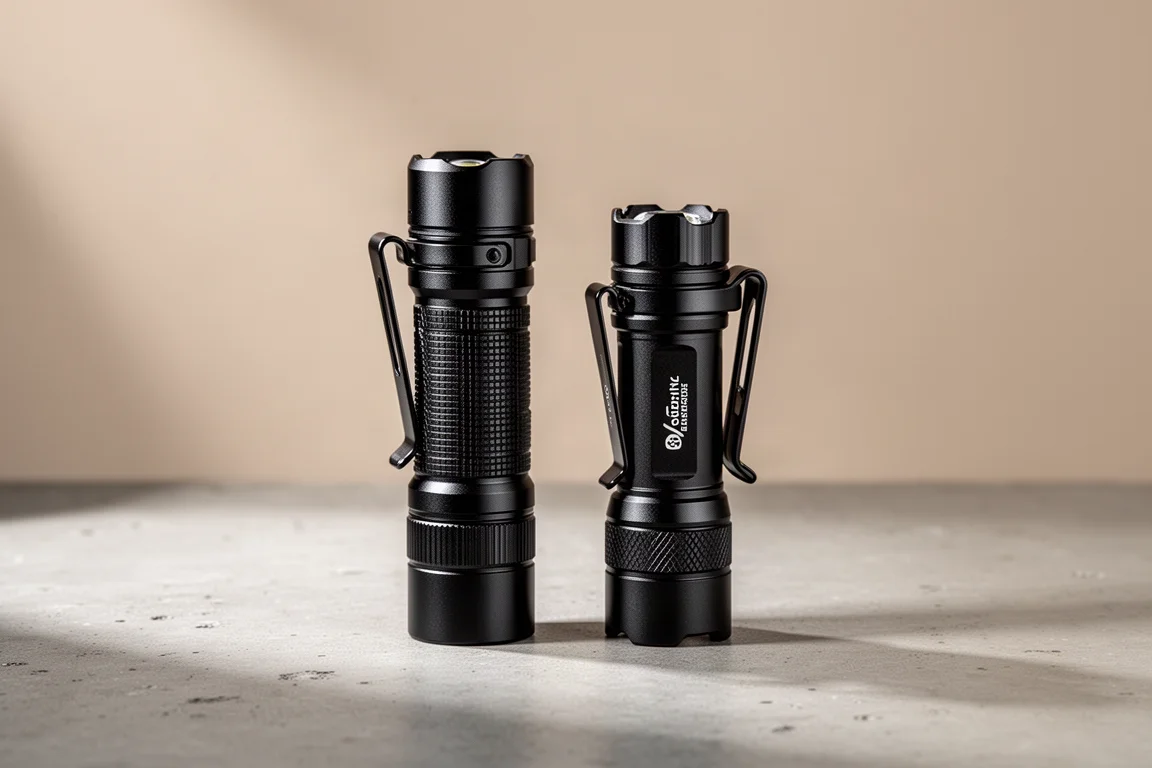
Some comparisons only become useful when you carry both products for a few days. That is exactly the case with the Fenix LD30 and the Olight Warrior Mini 2. These two rechargeable flashlights are similar in size, form factor, and general capability, but small differences in design choices add up to a noticeably different experience in daily use.
The Fenix LD30 lists around $48, though examples can often be found for considerably less. The Olight Warrior Mini 2 sits in a similar price range, which makes this one of the more interesting head-to-head matchups in the compact EDC flashlight category.
Build and Design: Very Close Twins
On the surface, these lights are almost interchangeable. Both have dual-position pocket or belt clips, so you can clip them to a pocket brim-up or attach them to the brim of a hat for hands-free use. Both clips rotate, which lets you index the side button so it always sits where your thumb expects it.
The bezel diameters are about the same, and the overall tail lengths are close, with the Olight just a hair longer. The bodies have a similar matte finish and a similar feel in the hand. If you handed both to a friend, most people would struggle to describe a meaningful difference in build quality.
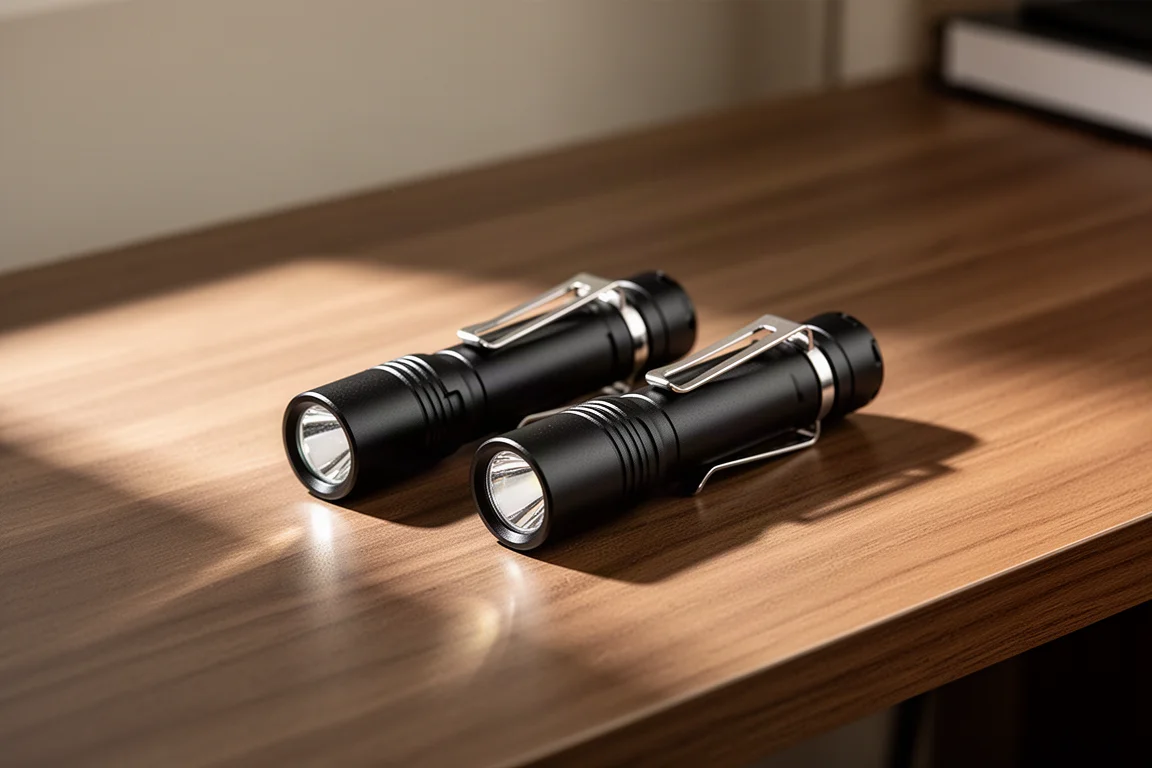
One subtle but practical difference sits at the tail end. The Olight has granulations around the tail, which means when the light is switched on and set down on a flat table, a small amount of light peeks out. You can tell at a glance whether it is still running. Set the Fenix down on a flush surface while it is on and there is no visible glow, so it is easy to leave it burning without realizing it.
Controls and Battery Indicators
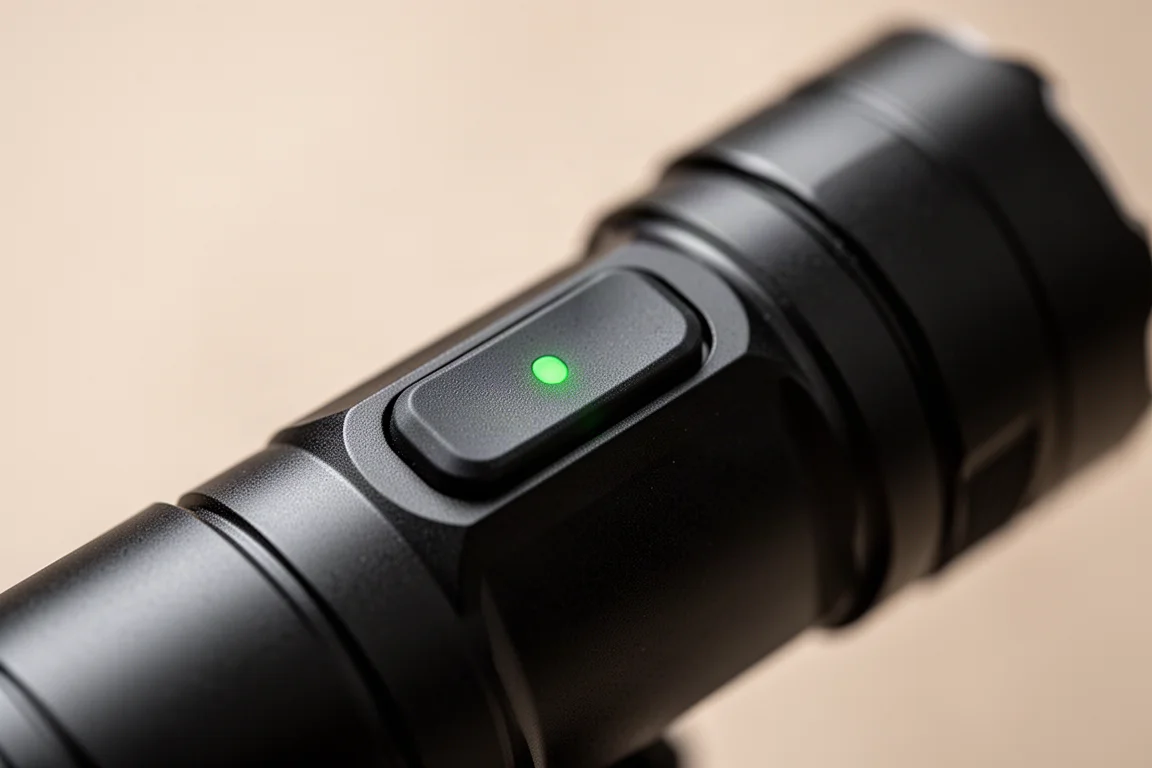
Both lights use a side-mounted switch rather than only a tail switch, and both integrate a battery indicator into that button. The Olight shows a small green dot when the battery has charge, giving you a quick status check without turning the light on.
The Fenix uses a rubberized tail cap. That rubber back means the light does not tail-stand, so you cannot set it on a nightstand or desk and bounce light off the ceiling. Some buyers will not care; others use that mode constantly. The trade-off is that the rubberized tail can be used to activate the light by striking it against a surface, and the flat rubber edge can also help press the switch in an emergency. The Olight, with its granulated hard tail, tail-stands happily but cannot be fired off the same way.
Batteries and Charging
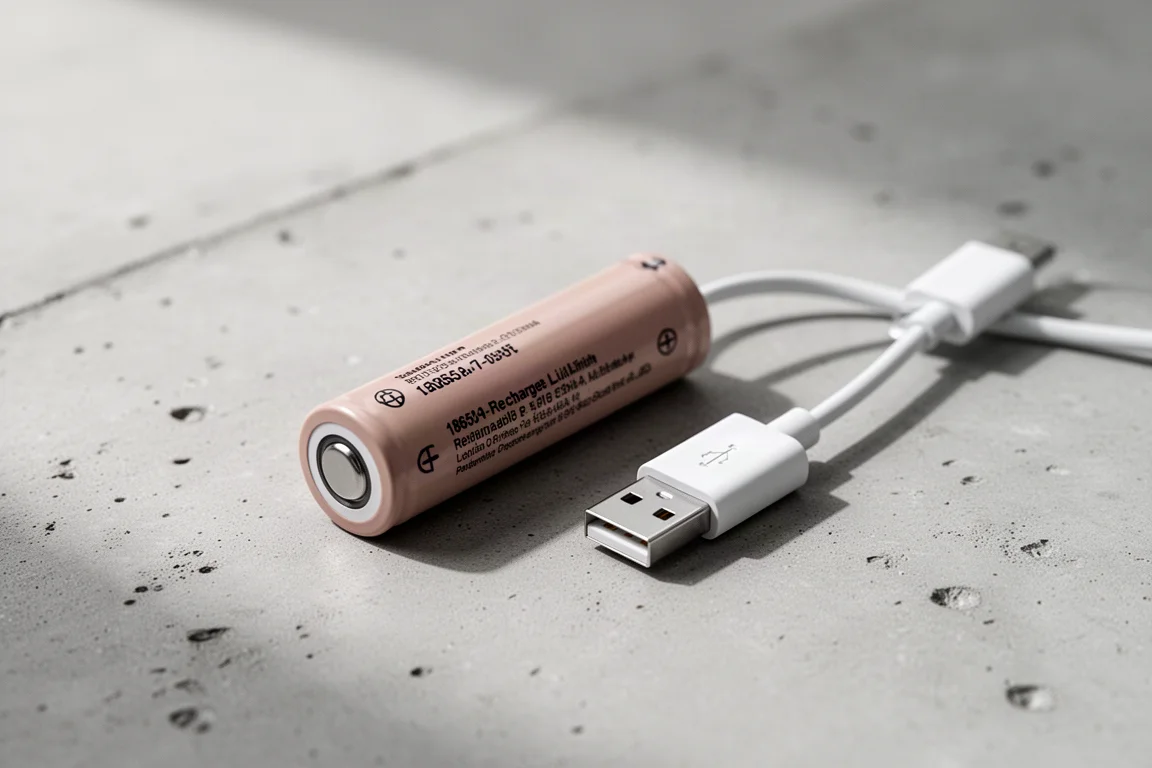
Both lights run on 18650 batteries with 3,500 mAh capacity at 3.6 volts, and both can also accept two CR123 batteries in a pinch, which is genuinely useful if your 18650 is flat and no charger is handy.
Charging is where the philosophy differs. The Fenix charges the battery itself: you remove the cell and plug a cord directly into the battery. The advantage is fewer openings in the light body, which helps keep the flashlight more watertight and dust-proof, with one less potential failure point. You can also charge that 18650 in any conventional battery charger.
The Olight solves the same problem with a magnetic charging connection that snaps onto the outside of the light. No port to open, no exposure to the elements, but you need Olight’s specific magnetic cable. Alternatively, you can pull the 18650 and charge it conventionally, just like the Fenix.
User Interface: Where the Difference Shows
This is the section that decides the matchup. The Olight lets you hold the side button to start in its lowest mode, which is dim enough not to destroy your night vision in a truly dark room. You can also hold the button to cycle modes before committing. When you switch the light off, the next press can bring it back at full blast instantly, or holding the button starts you again at the lowest setting. That guaranteed-low start matters more than it sounds: checking something in a small dark space without blinding yourself is a real everyday scenario.
The Fenix turns on and then requires cycling through brightness levels. If you switch it off, the next activation comes back in a high mode, and you have to hurry to step it down. Its lowest “eco” mode is rated at 30 lumens, which is still bright enough to be jarring in the dark. There is simply no way to guarantee a low start.
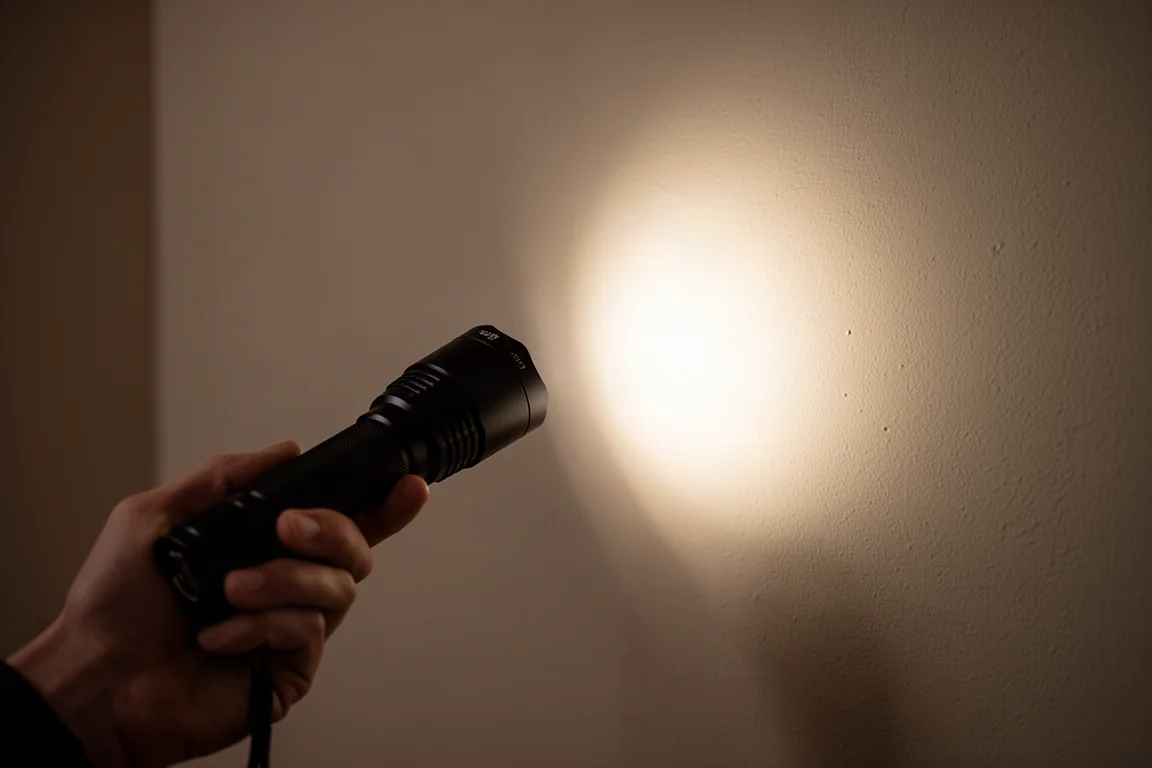
The Olight also includes a proximity sensor. At its brightest setting, if you bring the light close to a reflective surface, it throttles down automatically. That prevents the flashlight from sitting at full output inches from your hand or face, where the heat becomes uncomfortable and the glare dangerous. The Fenix runs at full brightness regardless of what is in front of it, and getting out of its strobe mode requires extra cycling that can be a nuisance.
For defensive use, the Olight’s tail press gives instant maximum output, held momentarily or clicked to lock it on. The Fenix can leave you fumbling: ready to fire, it wakes in eco, and by the time you have cycled to turbo, the moment has passed.
Overall Buying Advice
Both lights are solid, similarly priced, similarly built tools, and the Fenix LD30’s battery-level charging and CR123 compatibility are genuine strengths. But the Olight Warrior Mini 2 represents generations of iteration, and it shows in the details that matter daily: guaranteed low-light starts, instant full-power access, a proximity sensor that protects your eyes and hands, a tail that stands up for ceiling bounce, and a visible on-state glow when set down. For most buyers choosing between the two, the Olight is the one that earns a permanent pocket spot.
Conclusion
The Fenix LD30 is a dependable, well-built light with flexible charging options, and at a discount it is easy to recommend. The Olight Warrior Mini 2, however, simply thinks through the daily-use scenarios more completely, and that is why it comes out ahead in this comparison.
Product link
View more details for Fenix LD30
This product is mentioned in the review. Check the specifications, options, and compatibility before buying.
View more details for Fenix LD30Further reading
Related Reviews
Flashlights
Best Flashlights 2026: Brightness, Battery, and Value Compared
We tested 18 flashlights across a wide price range to find the best performers in brightness, battery life, and durability.
Flashlights
Nitecore LA10 Review: A Tiny 2-in-1 Lantern That Nails the Basics
The Nitecore LA10 pairs a pocket-sized lantern with a single AA battery, a magnetic tail cap and a five-year warranty. Here is where it shines and where it struggles.
Flashlights
Wuben G5 Review: A Compact Everyday Carry Flashlight
The Wuben G5 is a small, rechargeable flashlight with a pivoting head, magnetic base, and color modes. Here is how it performs as an everyday carry light.