Power Tools
Evolution Steel Cutting Circular Saws Reviewed: Which One Fits Your Workshop
A hands-on look at the Evolution Monster and the 185mm industrial steel cutting circular saws, including track cutting, chip control, and who each model actually suits.
Introduction
Cutting steel with a circular saw still surprises people. The idea usually comes from a moment at a steel supplier, where someone plugs in a saw, picks up flat bar or angle iron, and zips straight through it as if it were soft timber. That moment is exactly what pushed this purchase: after using a steel cutting blade in an ordinary saw for a while, the upgrade to a purpose-built Evolution steel cutting saw felt like the natural next step.
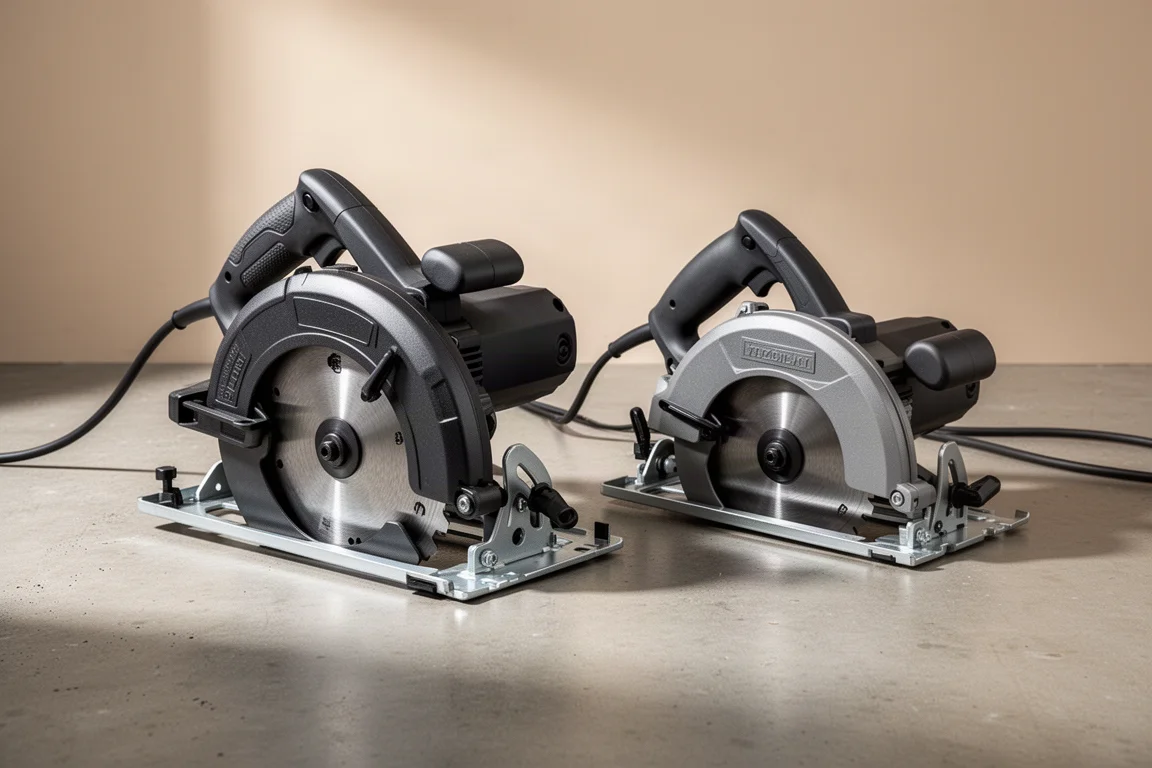
Evolution sells two corded circular saws that cut steel. This article covers both, with a clear view on which one makes sense for different kinds of metalwork.
Why a Dedicated Steel Cutting Saw Beats a Steel Blade
If you only cut a few bits of steel a year, a steel cutting blade fitted to a decent circular saw is more than adequate. It gets you through the occasional job without spending much. But that approach has real drawbacks.
First, it needs a powerful saw to drive the blade through steel. Second, the setup can overheat on longer cuts. Third, and most noticeable, the chips fly out in all directions at high speed. They embed themselves in a work jacket and generally make the job messy and uncomfortable, which means full protection is essential every time.
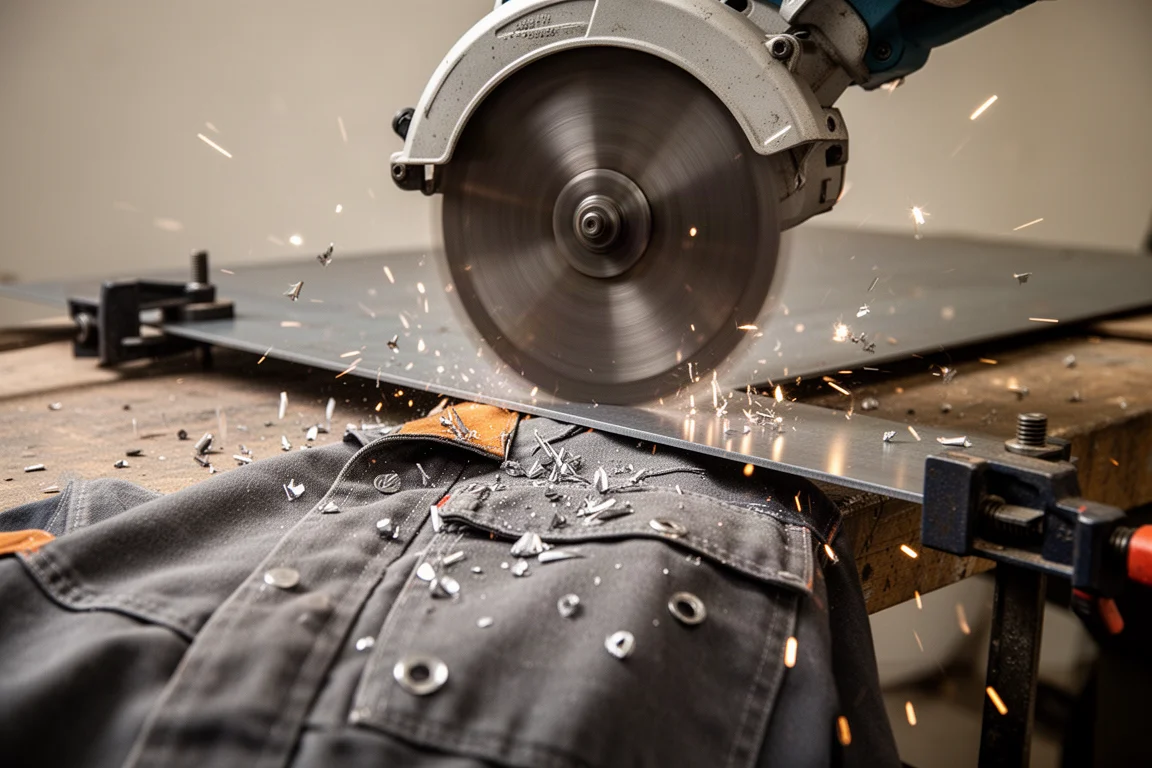
A purpose-built saw addresses those problems directly, which is where the two Evolution models come in.
Evolution Monster: The Bigger Steel Cutting Saw
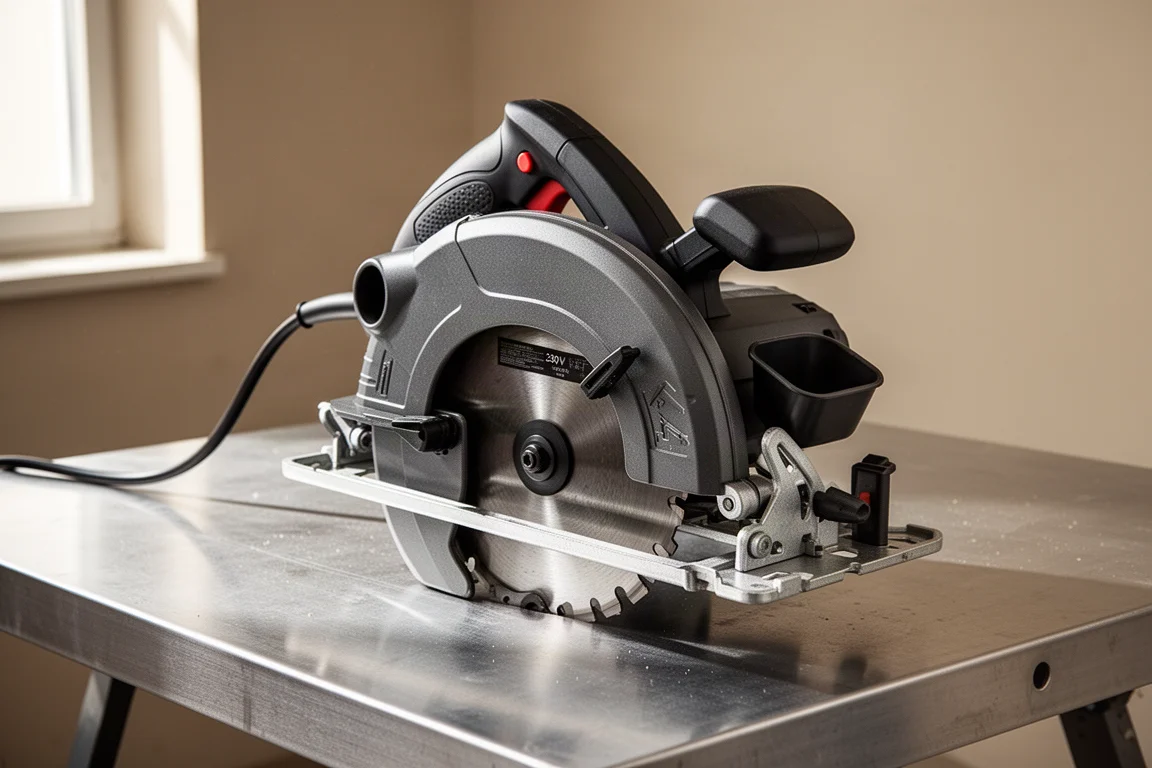
The Monster is the larger of the two. It weighs 8 kg, so it earns the name, and it runs on a 1,800 watt motor on 230 volts. It is not brushless, so there are brushes to maintain eventually, but the stronger motor gives it real headroom for plate and box section.
Depth of cut is set by adjusting the base plate, and the saw will cut up to roughly 11 mm of steel. With the plate fully back, it can handle a 70 mm box section. There is a safety switch that must be pushed in before pulling the trigger, accessible from either side, plus an on-board Allen key for blade changes and a full-length fence that slides onto the base plate.
Track Cutting: The Standout Feature of the Monster
The one thing the Monster can do that the smaller saw cannot is take an optional base plate, available for around £10, that clips onto the base and accepts a standard Evolution, Makita, or Parkside rail. That turns this into something close to a plunge saw for steel.
With the rail clamped down, cuts come out dead straight, accurate to the rail itself. The cams on the plate lock the saw to the track with no movement. Fine cuts work too: trimming one or two millimetres off a steel sheet is possible as long as the track is positioned well and clamped firmly.
The discipline required is real. Everything must be tied down, both the material being cut and the track to the material. Laying the track loosely on top and hoping nothing shifts will not work. Set the depth just slightly thicker than the sheet, rest the steel on plywood or overhang it from the bench edge, and the saw will follow the rail wherever it is clamped.
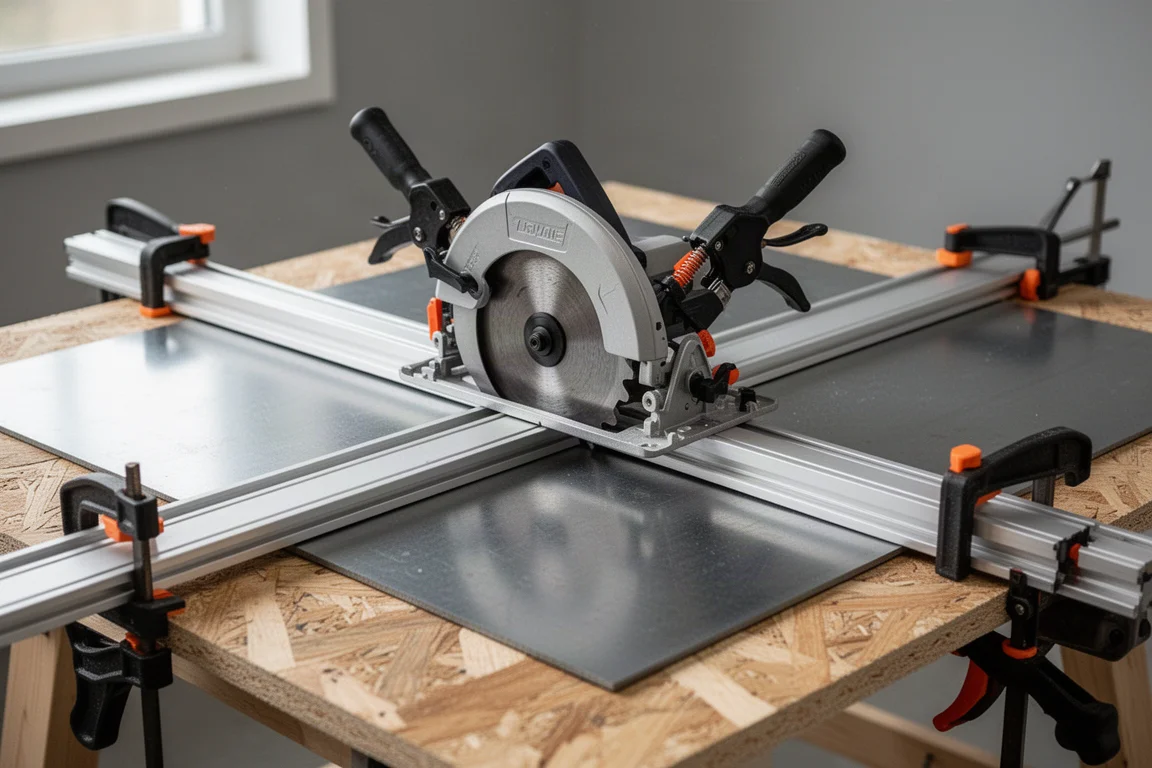
For anyone cutting sheet steel with repeatable accuracy, this track capability alone justifies the larger saw.
Chip Control and Built-In Chip Collector
Compared with running a steel blade in a regular saw, the chips from the Monster are dramatically better behaved. Far fewer chips come out, and the ones that do are not fired out fast and furious in every direction.
Two design features explain this. First, a chip deflector keeps chips within the saw instead of letting them fly randomly. Second, there is a removable chip collector with a small release button. Chips are thrown up into a pocket and gather in the cup, which pops off for emptying. It does a genuinely good job of capturing the swarf, which makes the whole cutting experience far more manageable and less punishing on clothing and skin.
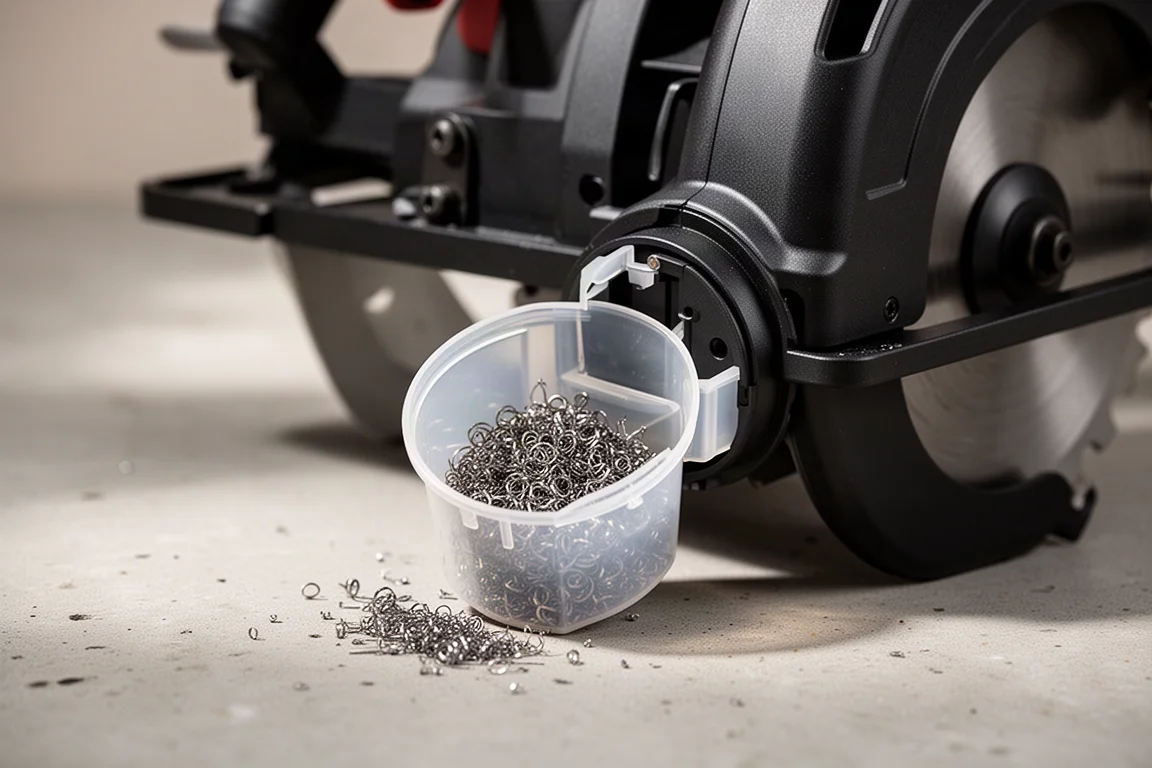
Full face eye protection is still non-negotiable when cutting steel, but the difference in debris is easy to appreciate after one session.
What the Monster Cannot Do
The Monster has two limitations worth knowing before buying. First, it cannot bevel. The blade stays vertical, so only 90-degree cuts are possible. For thin sheet steel work this rarely matters, but if you need 30 or 45-degree angle cuts, it is a genuine restriction. Ironically, the smaller saw does bevel.
Second, the included full-length fence has a gap between the base plate and the top of the fence. On steel thinner than about 4 or 5 mm, the sheet can slip into that gap, which makes the fence effectively unusable for thin sheet work. For thin material, the track setup is the better answer.
The Smaller 185mm Industrial Saw
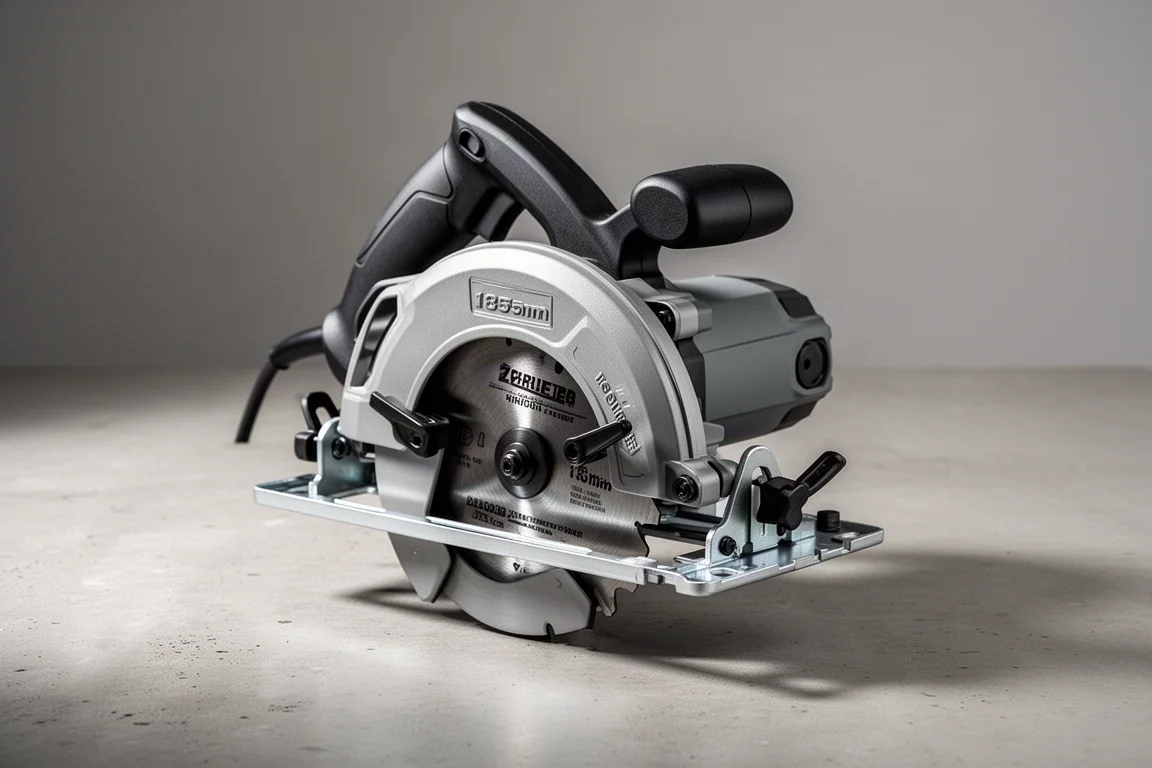
The 185mm industrial model is the lighter option at 5 kg, and Evolution claims it can cut through 8 mm of steel. At just over £100, it costs roughly half what the Monster does, and it can even bevel, which the Monster cannot.
Its main limitation is that it cannot be fitted to a track. That forces you back to running against a clamped batten, which is workable but nowhere near as accurate or repeatable as a rail-guided cut. If your steelwork is mostly occasional, lighter, or involves angle cuts, it is a sensible choice. If you want dead straight cuts in sheet steel, the Monster is the better tool.
Cut Quality and What This Saw Can Handle
In practice, the Monster cut a 2 mm plate more smoothly than a 1 mm plate. In theory, it can handle up to 13 mm thick steel, plus box sections and circular sections with walls of roughly 3 to 5 mm. Real-world use in this case topped out at 2 mm plate, and the cuts were clean and consistent.
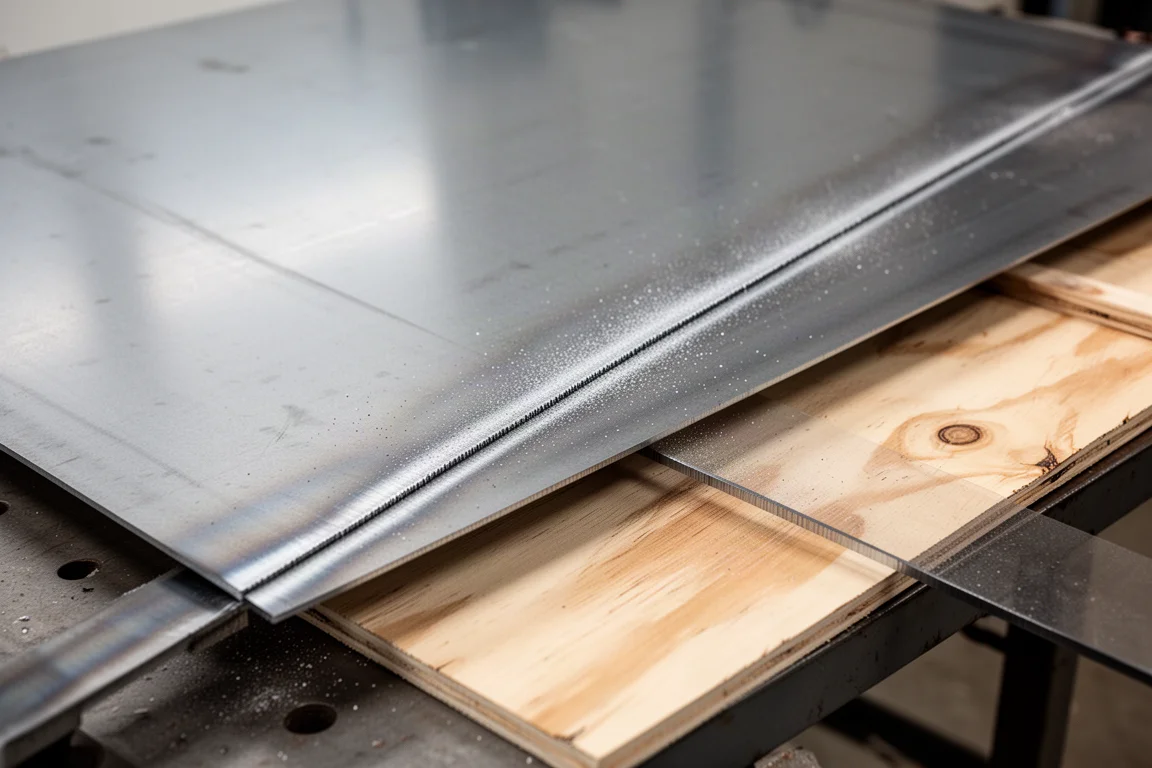
Because everything rides on a clamped rail, accuracy comes down to how precisely you mark and set the track. Mark carefully, clamp securely, and the saw will cut a perfect line every time, just like a plunge saw trimming plywood. Specialised blades for aluminium and stainless steel are also available from Evolution for both saws, which extends their usefulness beyond plain mild steel.
Buying Advice: Monster, 185mm, or Just a Blade?
Price is the clearest divider. The Monster cost £200, and the smaller 185mm sits just over £100. A steel cutting blade for an existing saw runs around £25 to £30 and will get you out of trouble for occasional jobs.
The logic is straightforward. If you only cut steel a couple of times a year, buy a blade for your existing saw and skip the dedicated machine. If you do regular steelwork but mostly angle, flat bar, and tube with mitres, be aware that a dedicated Evolution mitre saw, though more expensive, handles accurate mitered cuts in box, tube, and angle far better than either circular saw. But if you cut a lot of plate and want dead straight, repeatable lines in sheet steel, the Monster with the track plate is the one to buy.
Conclusion
The Evolution Monster earns its place for anyone moving into serious steelwork, mainly because of track compatibility and genuinely effective chip control. The 185mm industrial saw covers lighter use at half the price and adds bevel capability, but gives up the track. And for the occasional steel cut, a simple steel cutting blade in a powerful existing saw remains the budget answer. Match the tool to how often you cut, and none of these options will disappoint.
Further reading
Related Reviews
Power Tools
Best 1-Inch Pistol Impact Wrenches: Three Heavy-Duty Options Compared
We compare three 1-inch pistol impact wrenches, from a budget-friendly Harbor Freight model to a premium Caterpillar unit, to help you choose the right one.
Power Tools
Best 3/4-Inch Impact Wrenches 2026: Five Contenders Compared
We compare five 3/4-inch impact wrenches across price and performance, from a budget Amazon option to Snap-on's most powerful model yet.
Power Tools
Best Budget Cordless Tools 2026: Walmart Finds That Punch Above Their Price
We tested five cordless tools from Walmart, including a high-torque impact wrench that trades blows with Milwaukee and a $35 duster that outperforms its price class.