Power Tools
Evolution Dual Bevel Multi-Material Miter Saw Review: One Blade, Wood to Metal
A hands-on look at Evolution's dual bevel multi-material miter saw, covering how it cuts wood, metal, and everything in between, plus what to check before buying.
Introduction
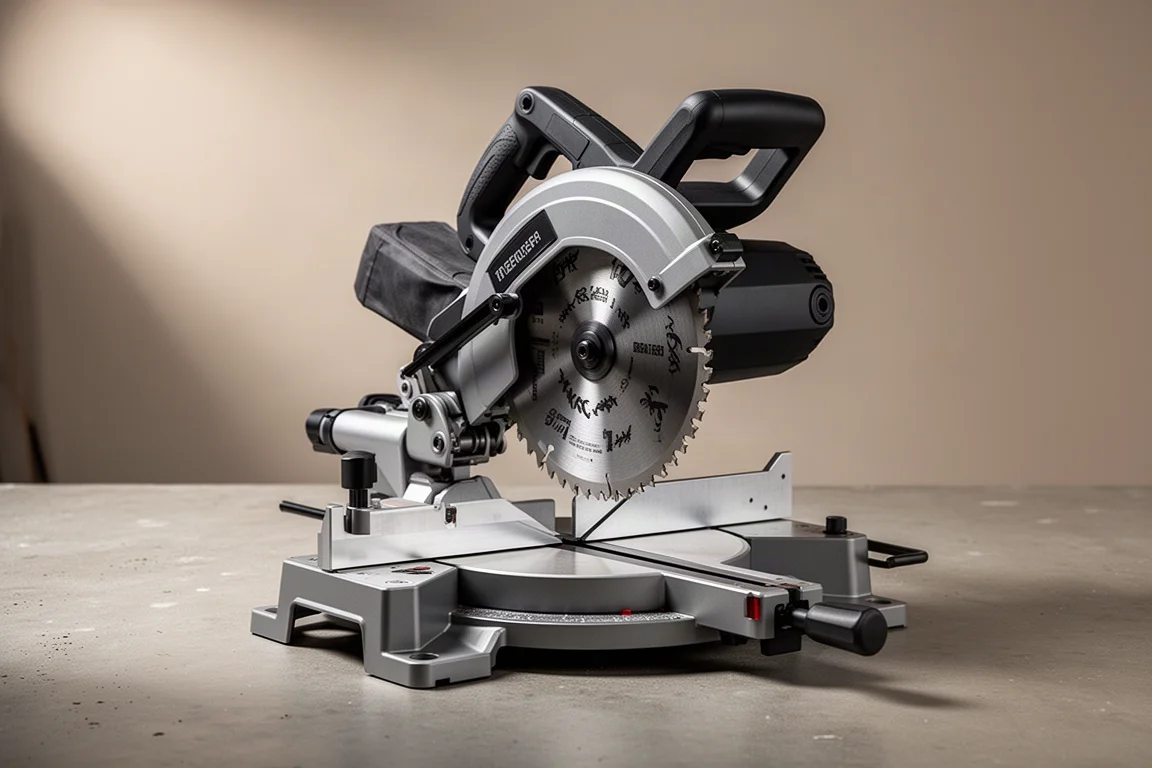
Evolution Power Tools has built its reputation on multi-material saws, and this dual bevel miter saw is the latest expression of that idea. Its unique blade and motor are designed to cut wood, metal, wood with embedded metal, and PVC, with packaging that even shows a paver being cut. That combination raises an obvious question: is this a saw that does everything well, or one that does a lot of things adequately? After cutting lumber, steel tubing, and welds with it, the honest answer is somewhere in between, and where you land depends heavily on what you plan to cut most often.
This review covers what the saw does well, where it compromises, and who should genuinely consider it over a conventional wood miter saw.
Design and Key Features
On the bench, this is a familiar form. It is a 10-inch dual bevel miter saw, and most of its controls behave like any other saw in the category: miter detents, a bevel lock, and a head that locks down for transport and storage. The bevel range runs roughly 50 degrees to the left and about 50 degrees to the right, and the saw locks into place just as you would expect.
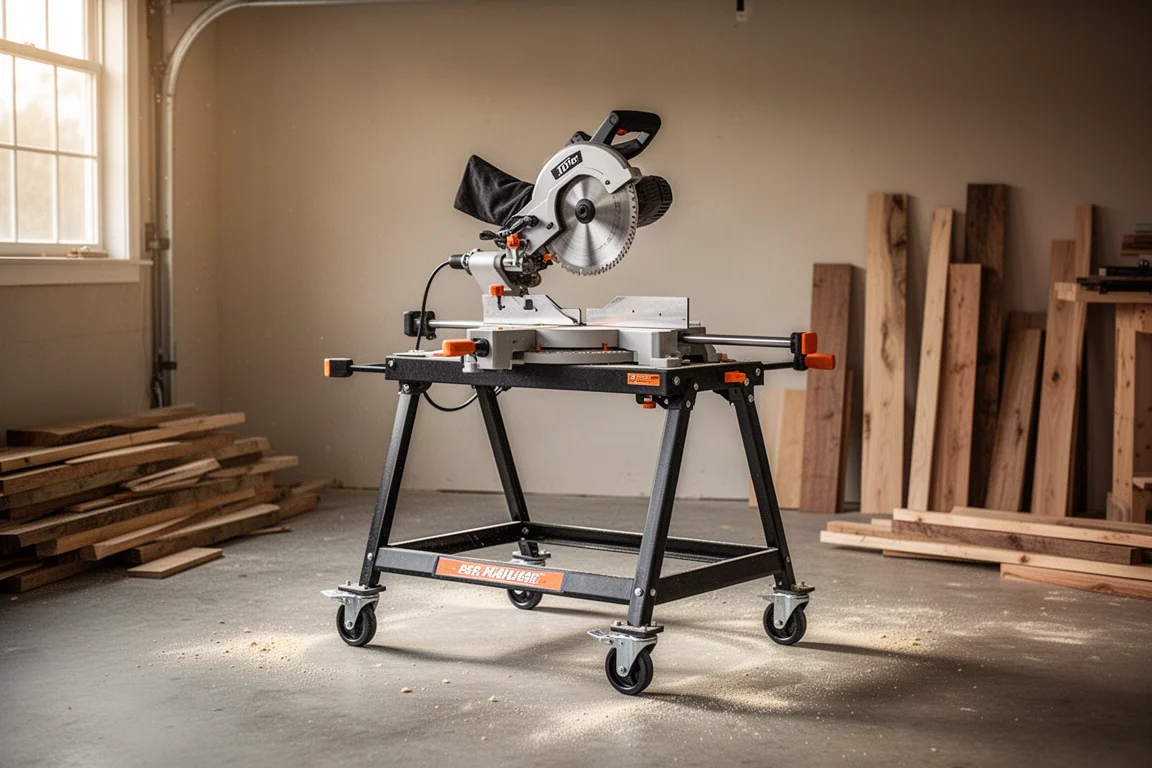
A few details set it apart. There is a forward-pushed laser for lining up cuts in either wood or metal, and a depth stop tab that limits downward travel, useful for partial cuts and consistent repeat pieces in both materials. Notably, there is no blade safety brake switch of the type you would find on a battery-powered saw, and the motor uses a soft start with a brake. The soft start makes the initial spin-up a little slower than many woodworkers are used to, but it also contributes to a very smooth cutting feel.
One practical note for taller users: when paired with Evolution’s own miter saw stand, the working height runs low. Even average-height users may wish the stand added another foot of elevation to avoid bending over during long sessions. The saw itself is not the problem; the stand is simply a bit short for comfortable all-day work.
Wood Cutting Performance
In straight crosscuts through standard framing lumber, the saw performs well. With a fresh blade, cuts come out clean and square, and even pushing through knots does not cause bogging. A warped board full of knots still produced surprisingly good cut faces, and repeat cuts at 45 degrees stayed consistent.
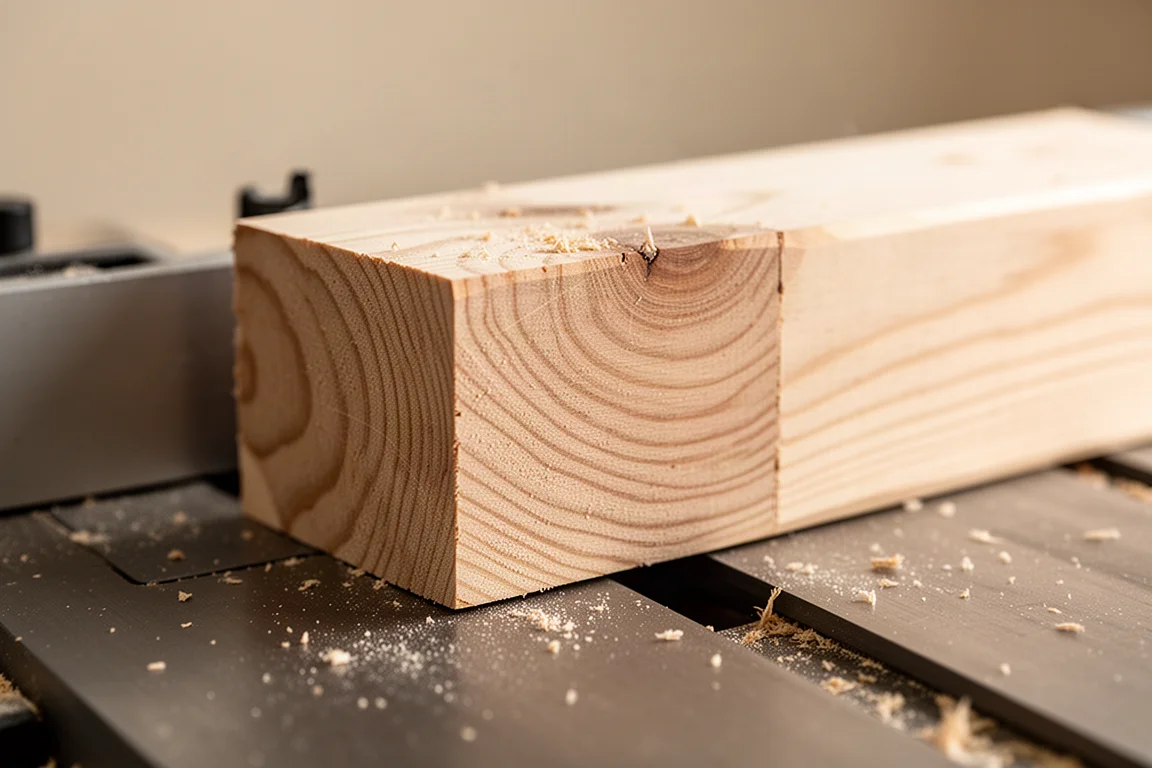
There are two compromises worth knowing about. First, the soft start motor is slow to reach speed, so very fast feed rates can leave you short of a full cut. Second, bevel capacity is physically limited: at a 45-degree bevel there is limited clearance under the guard near the laser, so 2x lumber is about the maximum stock you can bevel through. On framing material, minor chipping appeared on some cuts, which matters if you were hoping to use this as a trim saw. For framing and general construction work, though, the wood results are solid.
Metal Cutting Performance
This is where the saw earns its keep. Cutting steel tubing, including pieces with existing welds, went through cleanly and, remarkably, cold. The blade produces a cool cut rather than a shower of hot sparks, which makes metal work dramatically more pleasant and safer around a workshop. Square cuts, 45-degree mitered cuts in metal, and bevels are all on the table, letting a metal fabricator do work that would normally require a grinder with an abrasive wheel, and with a fence you can trust for accuracy.
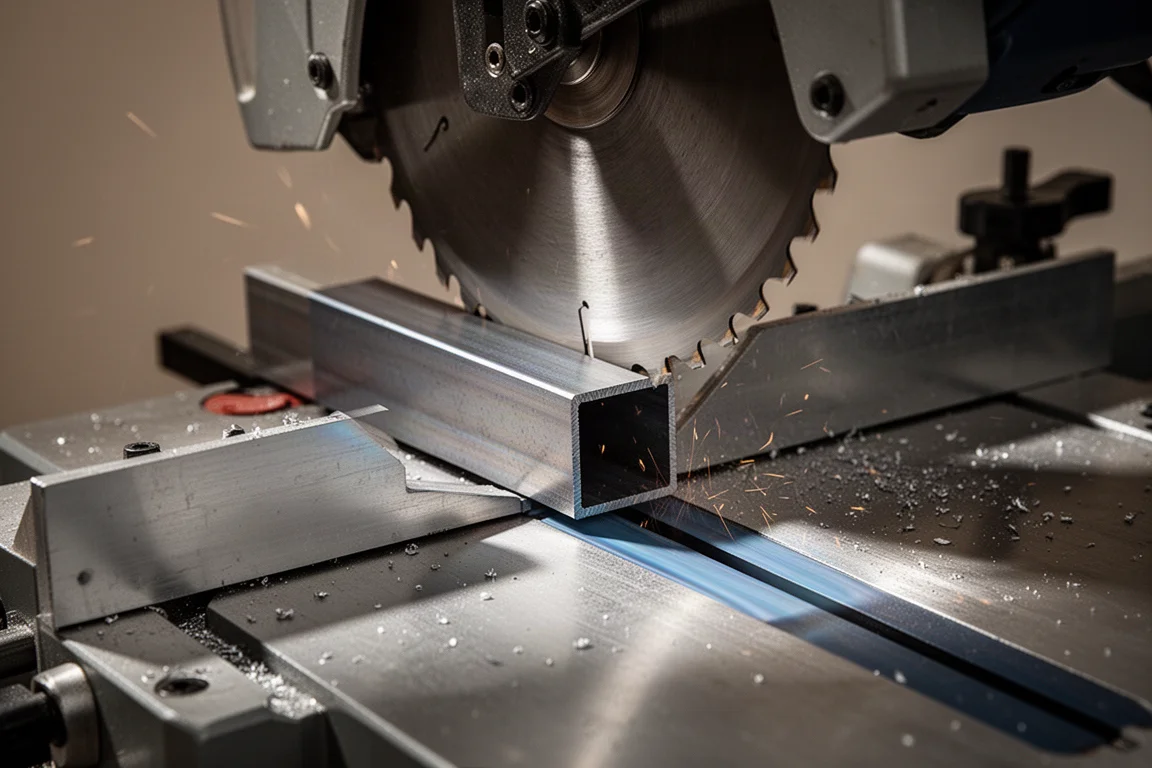
The blade’s unique tooth surface limits how fast it cuts in metal, which also appears to keep blade wear minimal. The surprise for mixed-material users: after cutting thick metal, returning to the same blade for a 2x cut still produced a fairly good result, with only minor chipping on framing-grade material. Going back and forth between wood and metal without changing blades is the core appeal here, and it holds up.
Maintenance and Long-Term Care
Metal work does leave its mark. The aluminum base will accumulate scratches and gouges faster than a wood-only saw, especially if you slide rusty or rough stock around. That is cosmetic and does not affect function. What does matter is metal swarf: fine chips collect around the pivot and adjustment areas, and if left to accumulate deeply, the head can bind slightly when turning. The fix is simple, blow the saw off after metal sessions and keep the swarf from digging in.
Dust collection works through the included bag, and it handles the unusual situation of mixed debris. Wood dust and a modest amount of metal pieces end up together in the bag without issue, settling to the bottom where they can be panned out. It is not a trim-shop dust solution, but for a jobsite multi-material saw it does its job.

Buying Advice
This saw fits a specific buyer best. If you want a dedicated wood miter saw for fine trim work, buy a wood miter saw; you will get better finish results and features tuned for lumber. If you work with metal regularly, this saw is genuinely compelling, since getting accurate angled cuts in steel without swapping to a grinder is rare at this level. If you split your time between framing lumber and metal projects, the multi-material blade makes that workflow nearly seamless.
The saw ships largely assembled, so plan for straightforward setup, and check fence and guard positions as you learn where to move them for different bevel combinations. Overall it is reasonably priced for what it replaces, but only buy it if multi-material cutting is actually part of your work.
Conclusion
Evolution’s dual bevel multi-material miter saw is a jack of several trades: excellent for metal cutting with cool, clean, spark-free results, very good for framing wood, and only adequate for fine trim work. The soft start and short stand are minor annoyances, while the cold-cut metal capability and blade durability are the standout strengths. For fabricators and mixed-material makers, it is an easy recommendation; for wood-only buyers, a conventional miter saw remains the better tool.
Product link
View more details for Evolution Dual Bevel Multi-Material Miter Saw
This product is mentioned in the review. Check the specifications, options, and compatibility before buying.
View more details for Evolution Dual Bevel Multi-Material Miter SawFurther reading
Related Reviews
Power Tools
Best 1-Inch Pistol Impact Wrenches: Three Heavy-Duty Options Compared
We compare three 1-inch pistol impact wrenches, from a budget-friendly Harbor Freight model to a premium Caterpillar unit, to help you choose the right one.
Power Tools
Best 3/4-Inch Impact Wrenches 2026: Five Contenders Compared
We compare five 3/4-inch impact wrenches across price and performance, from a budget Amazon option to Snap-on's most powerful model yet.
Power Tools
Best Budget Cordless Tools 2026: Walmart Finds That Punch Above Their Price
We tested five cordless tools from Walmart, including a high-torque impact wrench that trades blows with Milwaukee and a $35 duster that outperforms its price class.