Everyday Carry
Everyday Carry Roundup: 23 Pocket Essentials Worth Knowing About
From keychain lights and titanium flashlights to metal wallets, watches, and premium pocket knives, here is a full everyday carry lineup with honest strengths and trade-offs.
Introduction
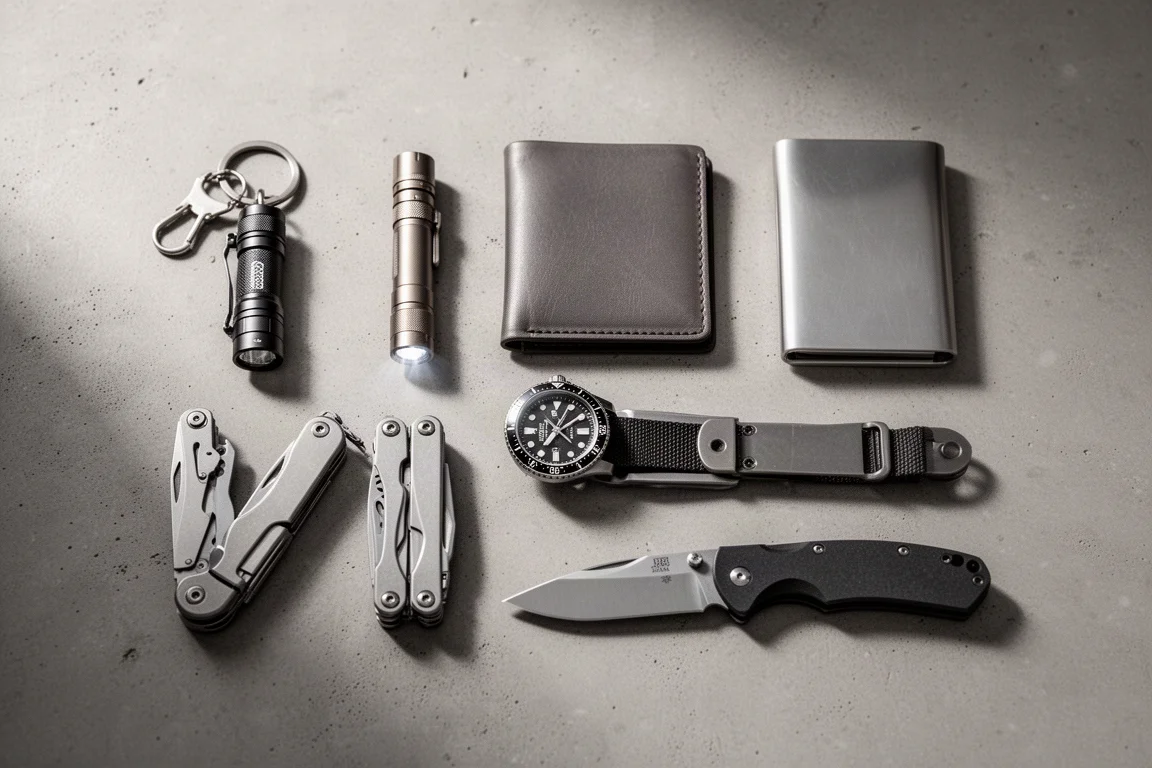
A good everyday carry setup does not happen overnight. It is the result of swapping pieces in and out until everything left in the pockets earns its place. This roundup walks through a full current carry: keys, keychain tools, flashlights, wallets, a phone, watches, multitools, a pen, and a rotation of knives, plus a lightweight pouch that ties it all together. Some items are cheap and cheerful, others are serious investments, and a few are genuinely hard to buy because they are made in small batches. Every pick below comes with its real trade-offs, so you can decide what fits your own pockets.
Keys and Keychain Tools
Keys are the one part of a carry that rarely changes, and this setup has stayed put all year. It is built around a few simple pieces that each do one job well.
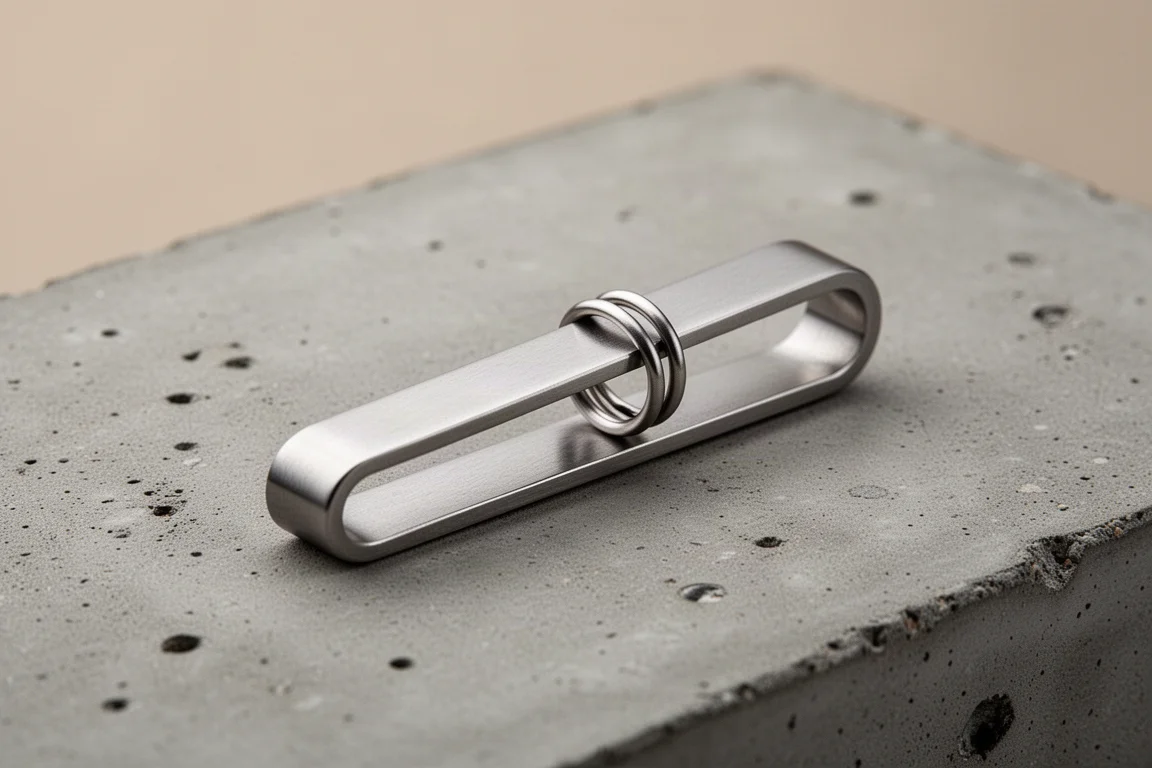
JRW Tough Clip
The JRW Tough Clip takes design cues from a mundane everyday object and turns it into both a functional tool and a small piece of functional art. It secures keys to a pocket or bag with a confidence that regular clips rarely match, and special carry commission editions with two-tone topographic lasering make it feel even more personal. It is a small upgrade that makes a daily annoyance noticeably better.
Olight i1r2 EOS
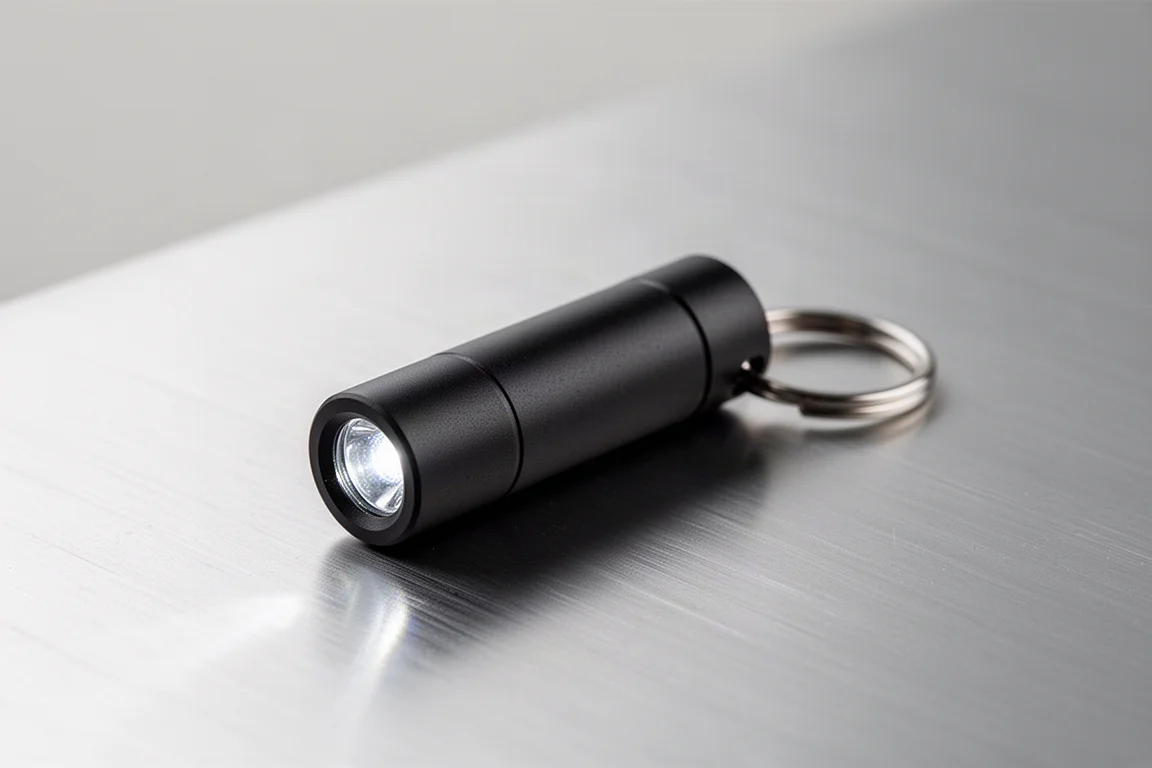
A keychain flashlight exists for one reason: finding key slots in the dark. The Olight i1r2 EOS does exactly that in a tiny body. A newer i1r2 Pro version adds USB-C charging as the main upgrade, though the original remains a touch brighter in some cases. Either way, the concept is the same, and it is hard to argue with having a light always on your keys.
A small tritium glow marker rounds out the key setup, offering constant low-light visibility with no charging at all. It is the kind of detail you stop noticing until the moment you need it, and then it earns its spot permanently.
Flashlights
Flashlight rotation here is slow. A light goes in the pocket and often stays for a week or two, sometimes longer. Four lights cover nearly everything.
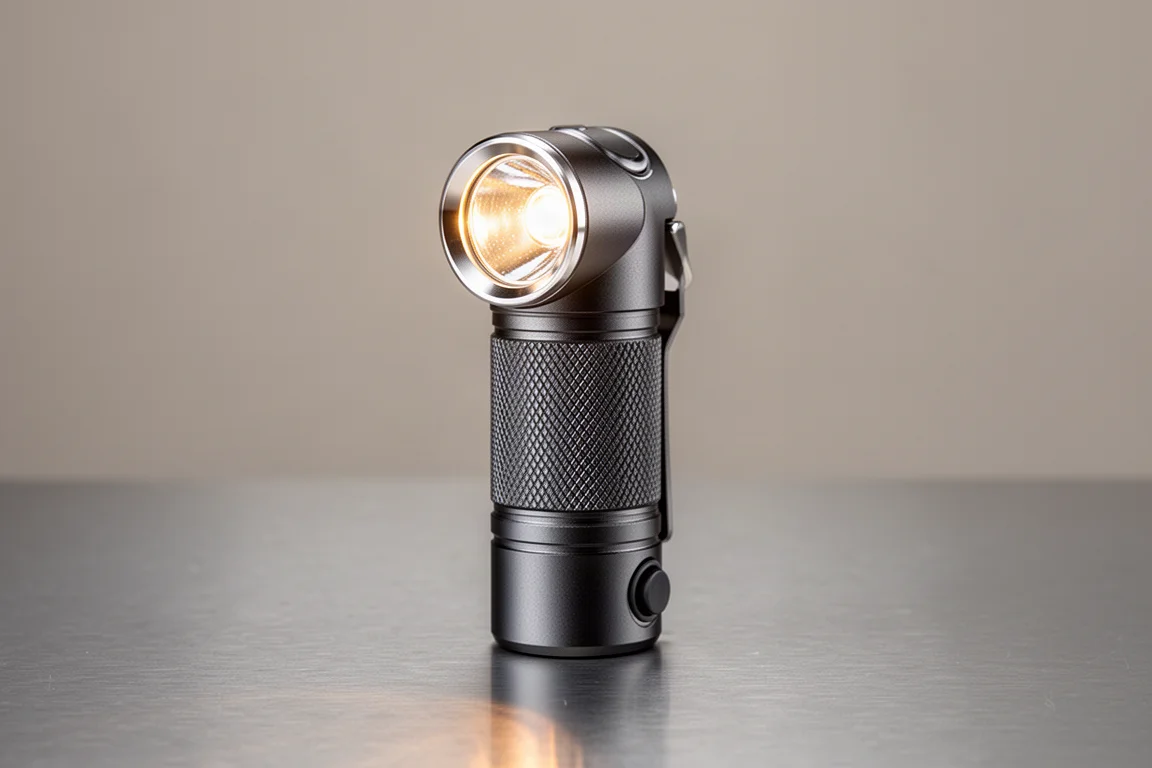
Laulima Ion
The Laulima Ion is the most feature-packed of the group and arguably the coolest, with a red secondary light that is genuinely useful in pitch-black rooms. The catch is size: at a one-inch diameter, it feels a little too big for comfortable pocket carry, so it typically only lasts a few days in rotation before coming out.
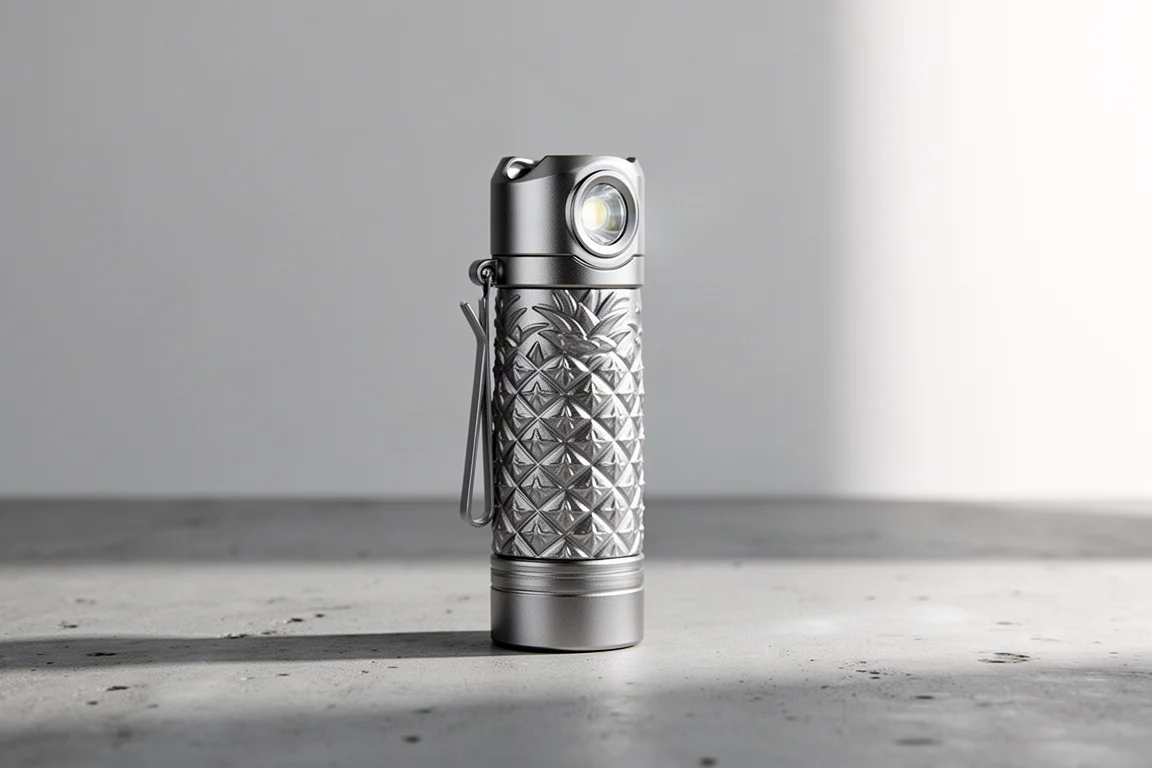
ReyLight Pineapple Mini
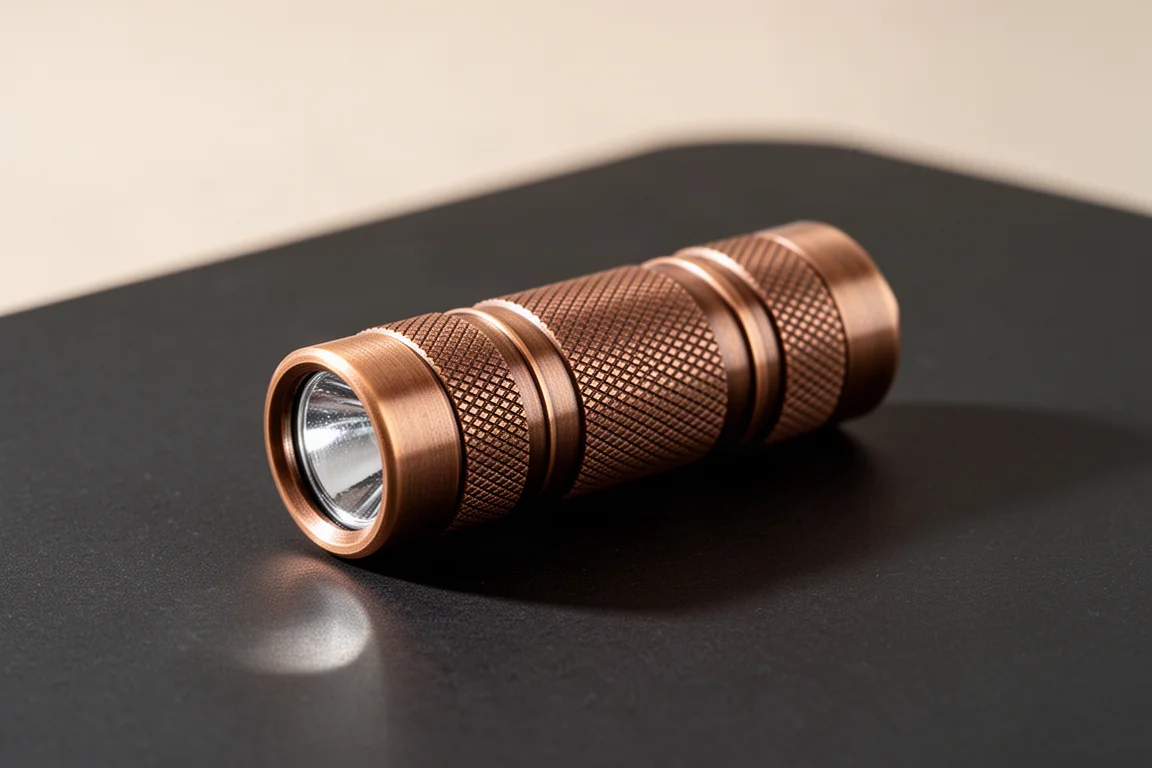
The ReyLight Pineapple Mini in titanium is one of the three lights that gets carried the most. It is also the easiest of the bunch to actually buy, though titanium versions sell faster than copper or brass. For anyone who wants a genuinely small, well-built light without stepping into the most expensive tier, this is the practical starting point.
Okluma DC0
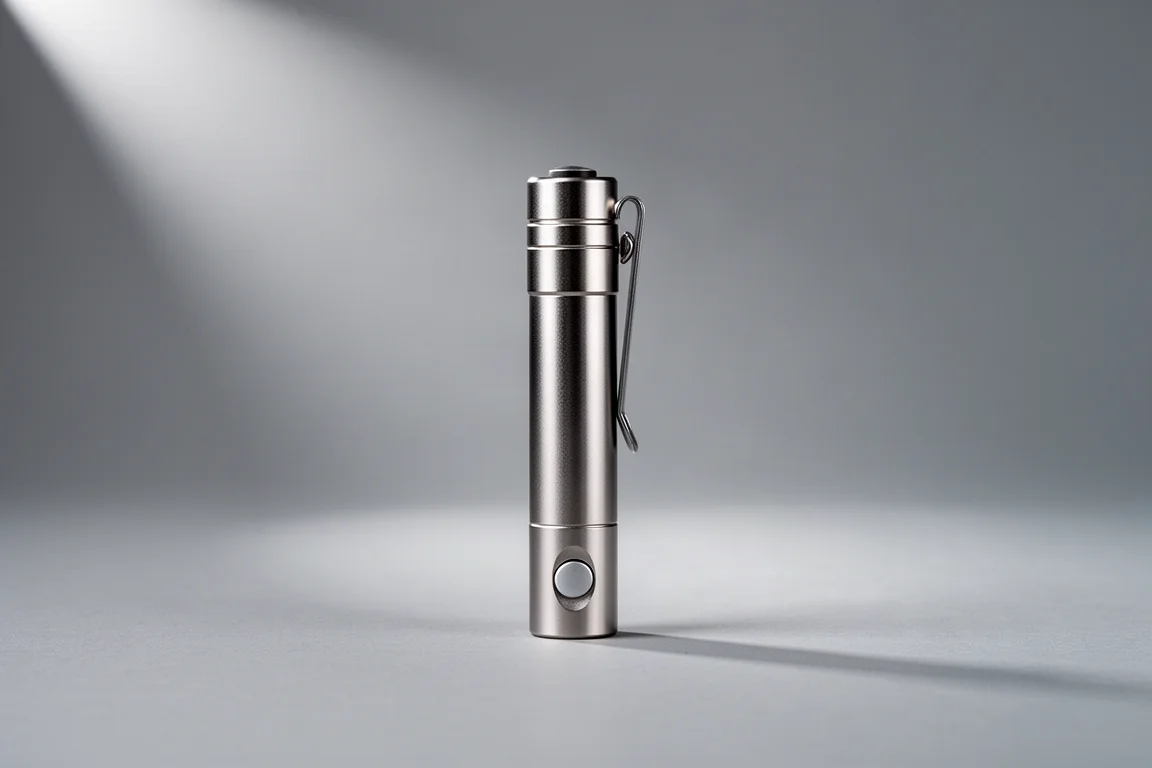
The Okluma DC0 in titanium is a little bulkier than the Arcadian but brings more power and one of the best warranties in the category: a no-questions-asked lifetime policy. Throw it off a cliff, send in the remains, and it gets replaced. It uses a reverse clicky, which means selecting a mode requires cycling before locking the light on, but it is a phenomenal light all the same.
CWF Micro Arcadian
The Charles Wiggins Flashlights Micro Arcadian clicky in titanium is the closest thing to a favorite here. It is small enough to forget it is in a pocket and works well in front-pocket carry. The forward clicky design lets you select modes while the light is already on, which is the deciding factor over the DC0. Like the others, availability is the downside: small batches, random drops, and sellouts are the norm, and the secondary market is often the easier route.
Wallets
Wallets have settled into a comfortable groove, with two brand-new Open Sea minis and one long-standing metal favorite.
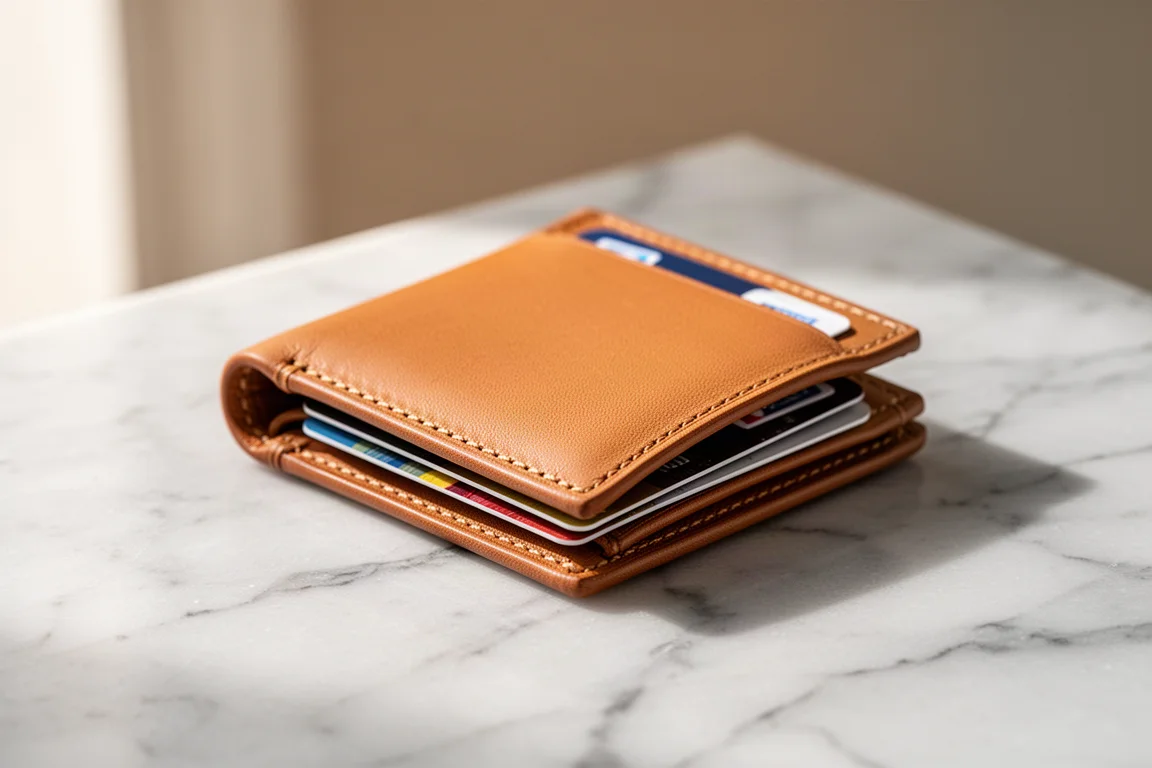
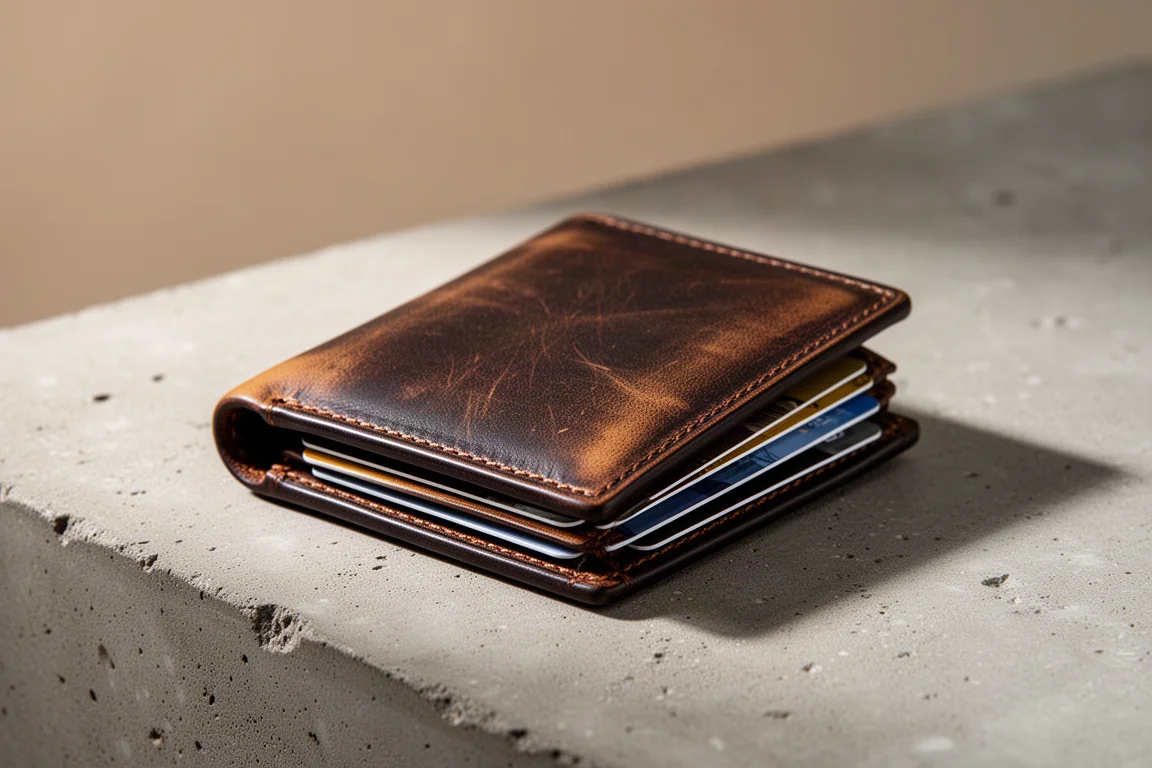
Open Sea Topsider Mini
The Topsider Mini is genuinely mini: five cards required stretching the wallet to fit. The caveat is width, since it cannot take full unfolded bills the way the full-size Topsider can, and that unfolded-cash feature is exactly what makes the full-size version special. As an ultra-compact card carrier, though, it does the job and costs about five dollars less than the full-size version at around 60 dollars.
Open Sea Gun Deck Mini
When it comes to the minis, the Gun Deck is the preferred pick. The patina development is the real show here: after just one week of carry, the surface already tells a story that few materials can match. Compact, well-made, and slightly cheaper than the full-size Open Sea wallets, it is an easy recommendation for anyone who values a wallet that ages beautifully.
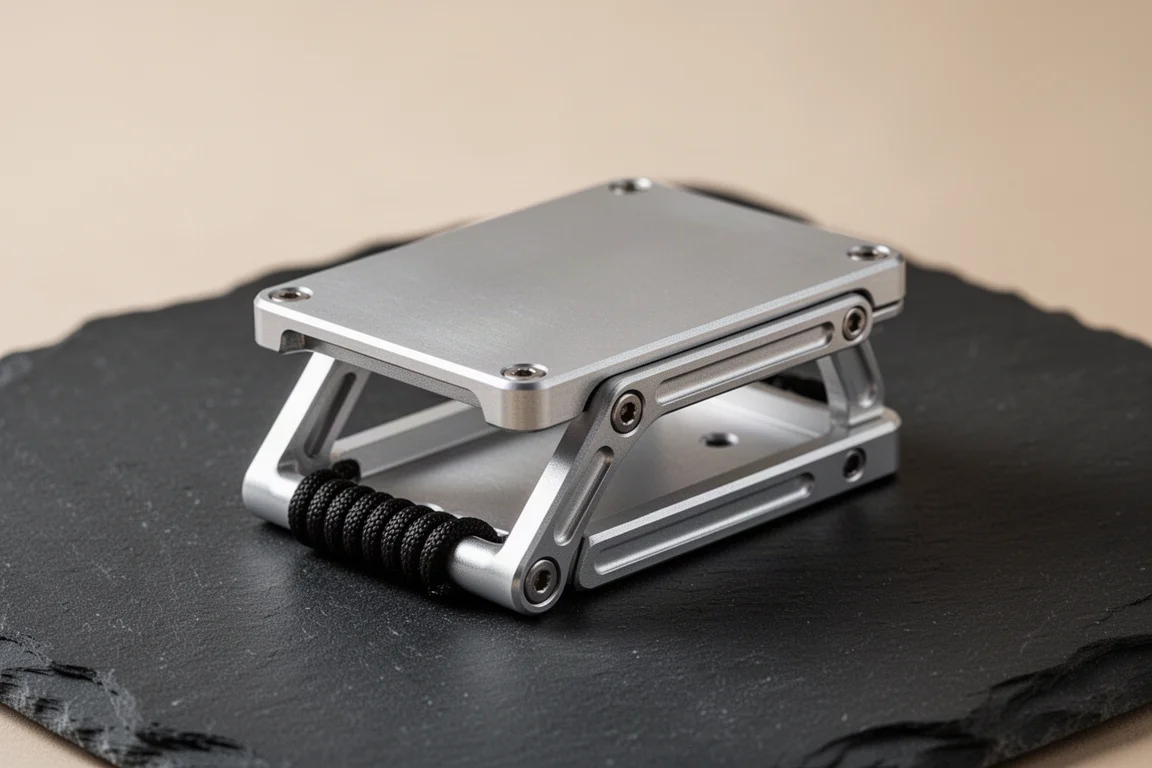
Vice Hardware F1
For an all-metal wallet with genuine design cleverness, the Vice Hardware F1 stands out. Two arms create a pivot point, a single elastic band at the bottom provides tension, and the whole thing sandwiches your cards while auto-adjusting to accommodate more. A titanium money clip on the back handles cash. Interestingly, the aluminum version wins here over titanium purely because it is significantly lighter, which is not the outcome most people would predict. At 100 dollars plus the money clip sold separately, it is the answer to the question of a favorite metal wallet.
Everyday Tools
A few small tools stay in the pocket through everything, simply because they solve the most common daily problems.
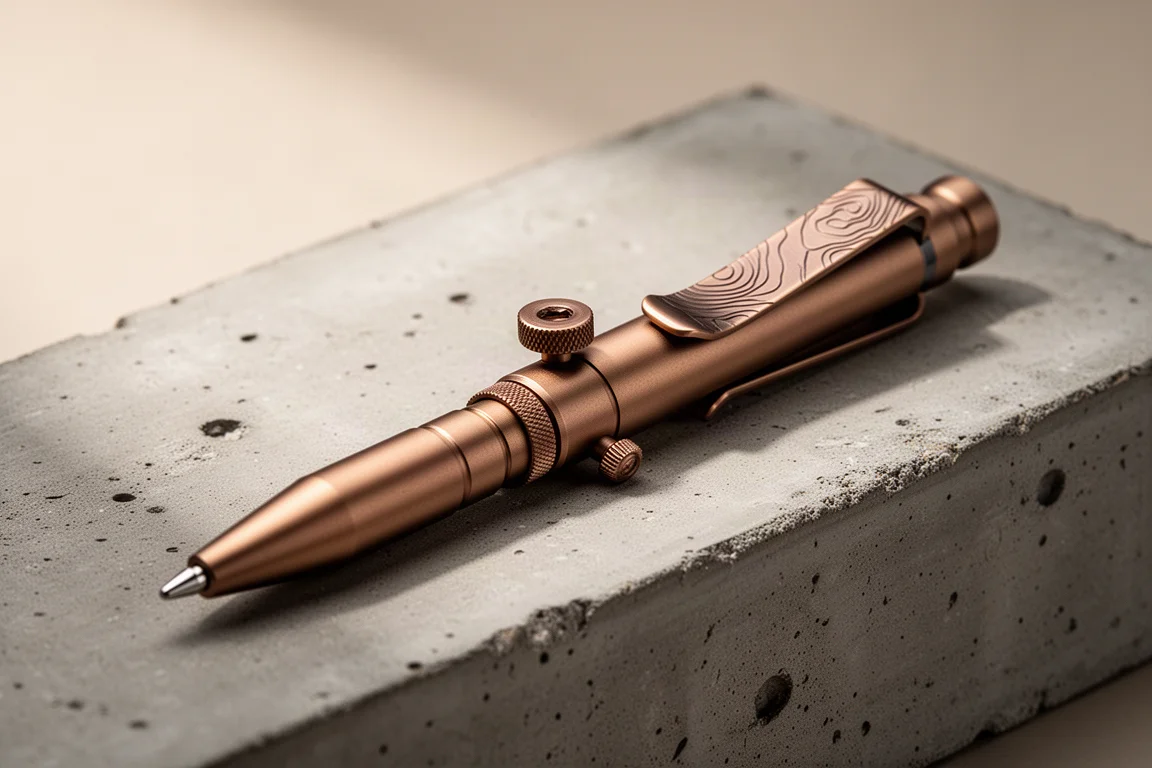
Tactile Turn Bolt Action Slim
The pin of the moment is the Tactile Turn Bolt Action Slim in the short variant, bronzed and anodized with a topo clip and blue bolt, part of a three-way collaboration between Tactile Turn, Zero Feud, and Carry Commission. Full-size, short, and slim variants were planned to drop together at around 150 dollars, alongside the final few of the original Blade Show edition. Follow the makers for drop timing, because these will not linger.
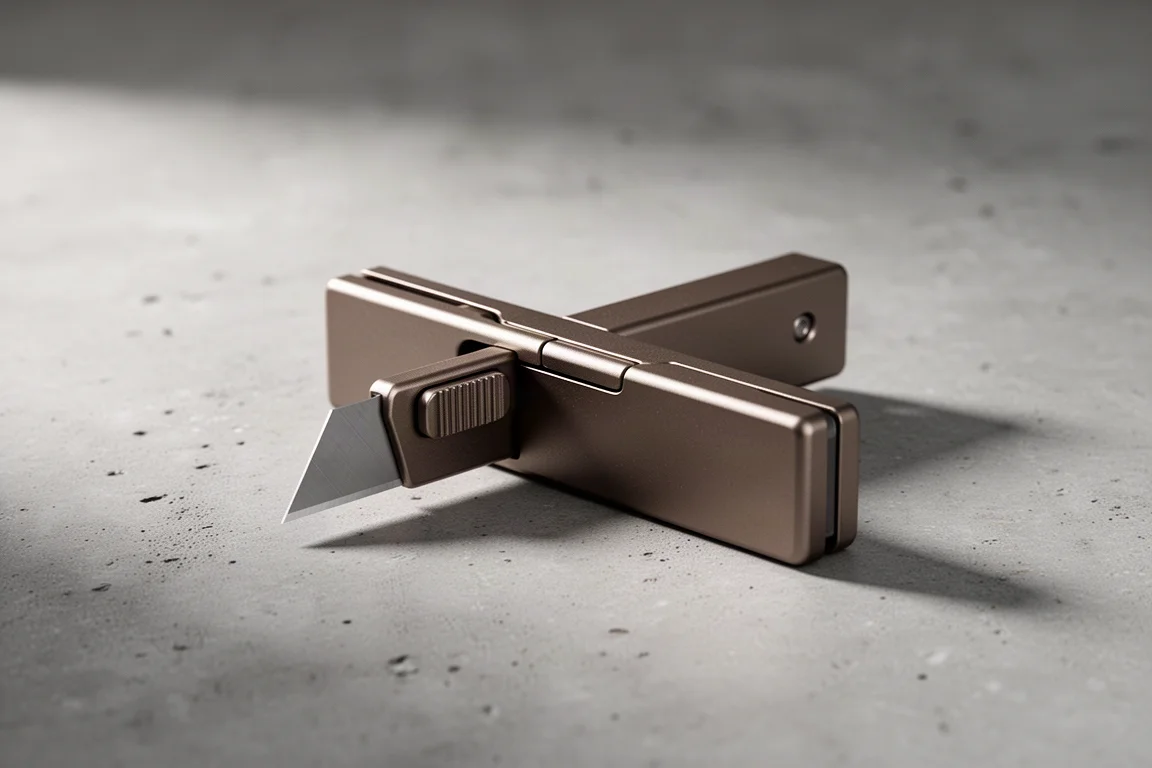
Big Idea Design TPT Slide
The TPT Slide has been a permanent pocket fixture for the better part of two years, now in its own Topo collaboration edition. It is simple, it works, and it earns its keep on the endless stream of boxes that arrive needing to be broken down. It lives in the fifth pocket, forgotten until needed, which is the highest compliment for this category.
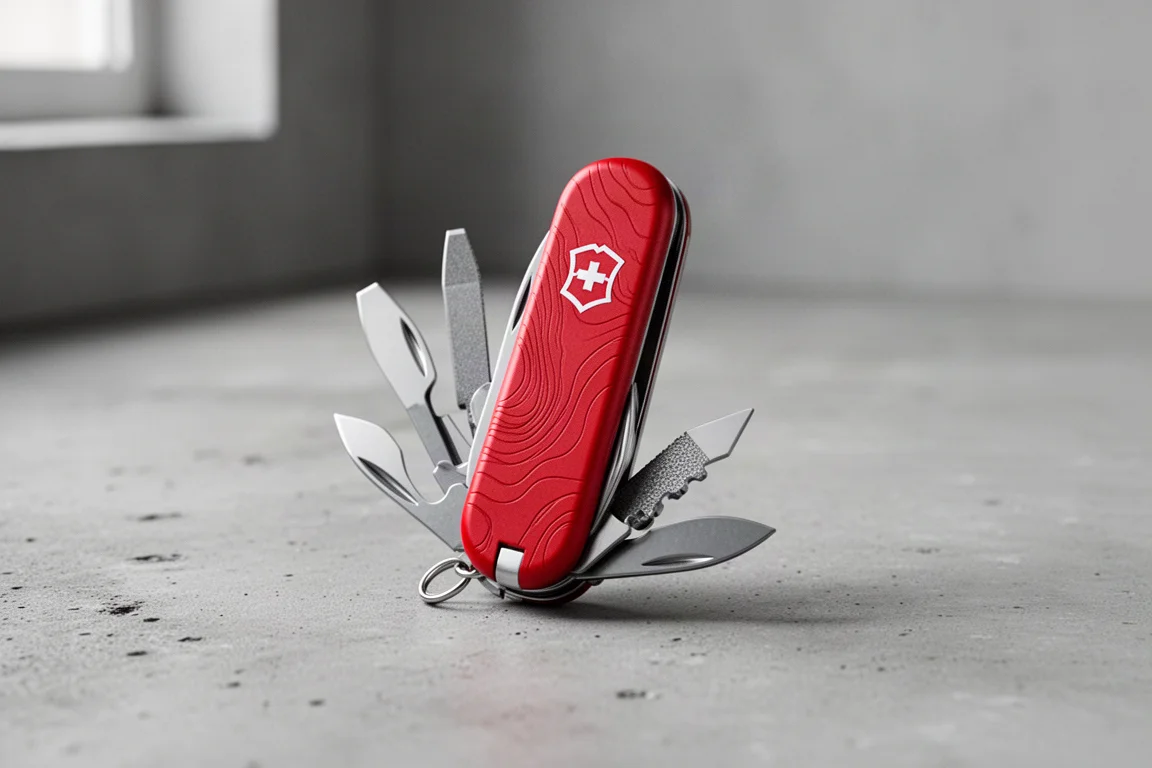
Victorinox Mini Champ (Topo Edition)
A custom Victorinox Mini Champ with Topo scales packs a surprising number of tools into a very small package. Like the TPT Slide, it disappears into a pocket until the moment a small task appears. It is the classic argument for a Swiss Army knife: you cannot predict which tiny tool you will need, so you might as well carry a drawer full of them.
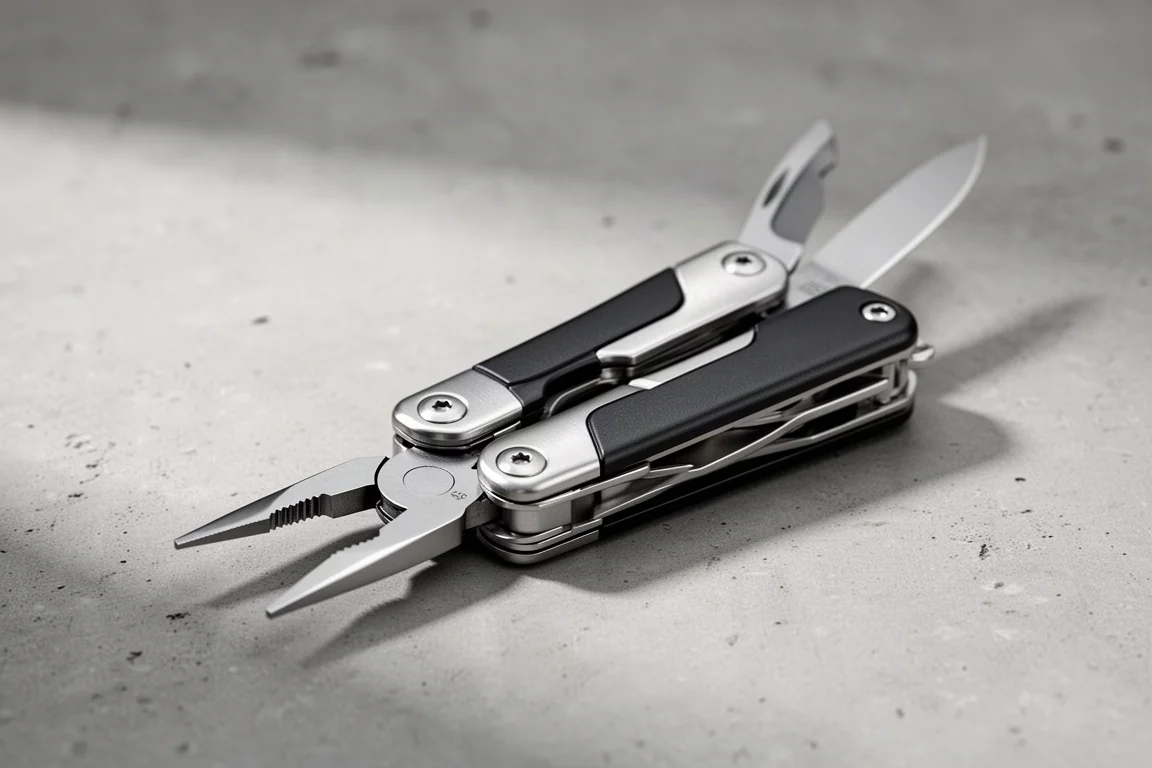
SOG PowerPint
At 50 dollars, the SOG PowerPint became one of the favorite tools picked up this year, and for good reason. Pliers this small usually lose all leverage, but the PowerPint is big enough to actually get a grip and do real work, outclassing the tiny multi-tools that hover just below this size. The clever bit driver in the end is a smart design touch. The main flaw is a missing wide flathead driver; the flathead included is closer to eyeglasses size, which limits camera-gear style tasks. Even so, it may be the best pocket-sized multi-tool available.
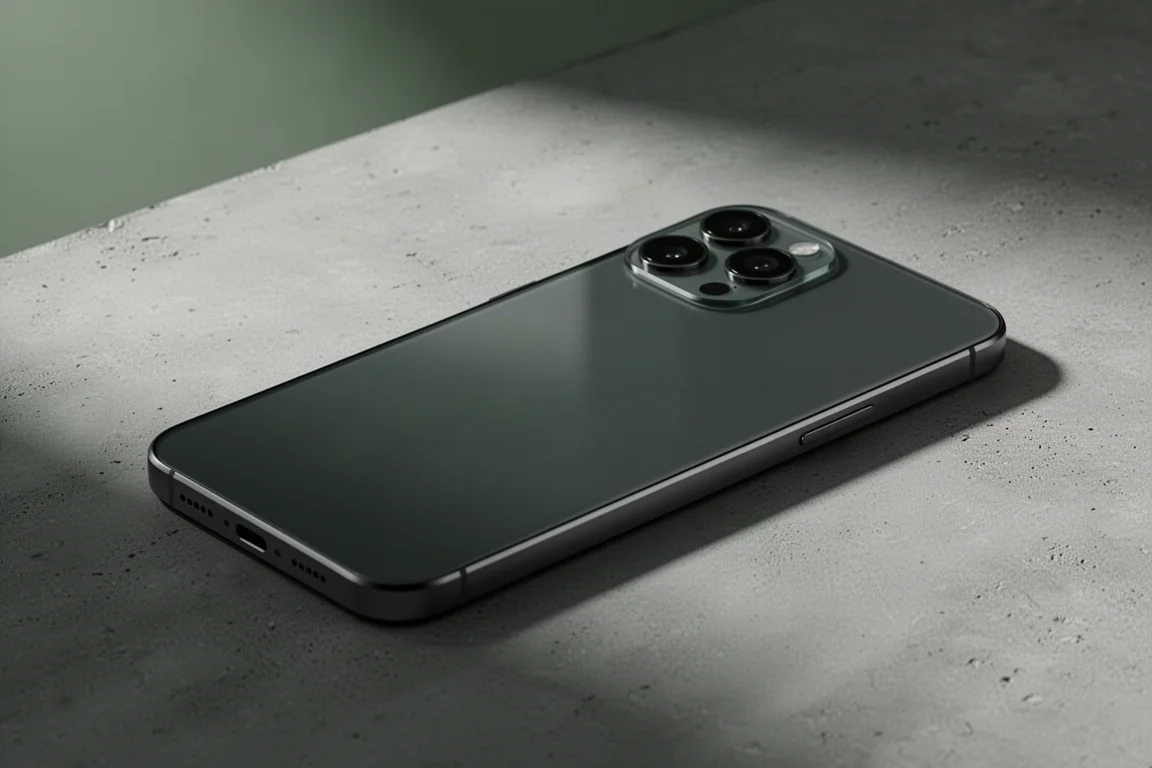
Phone
iPhone 11 Pro Max
Sometimes the honest answer about EDC is the boring one. The iPhone 11 Pro Max has stayed in this carry for years, still liked but with a growing itch for something new. Family group chats and the green-bubble problem keep the ecosystem lock firmly in place. Carrying two phones, one iPhone and one Android, was done for six years and will not be repeated, so the upgrade path remains within one ecosystem or nothing.
Watches
Watches have been the most turbulent category this year, flip-flopping between an analog beater and a solar smartwatch for months. The resolution ended up simple: fitness watch for workouts and hikes, analog for everything else.
Garmin Fenix 6 Pro Solar
For workouts and multi-day hikes, the Garmin Fenix 6 Pro Solar is the tool of choice. On a recent three-day backpacking trip it tracked hikes all day and still had around ten days of battery left coming out of the woods. Compared to the daily-charging reality of an Apple Watch, that is transformative. One honest note: the solar version charges meaningfully slower than the non-solar Instinct, so unless you are outside all day every day, the solar premium may not be worth it, and skipping it could save roughly 200 dollars.
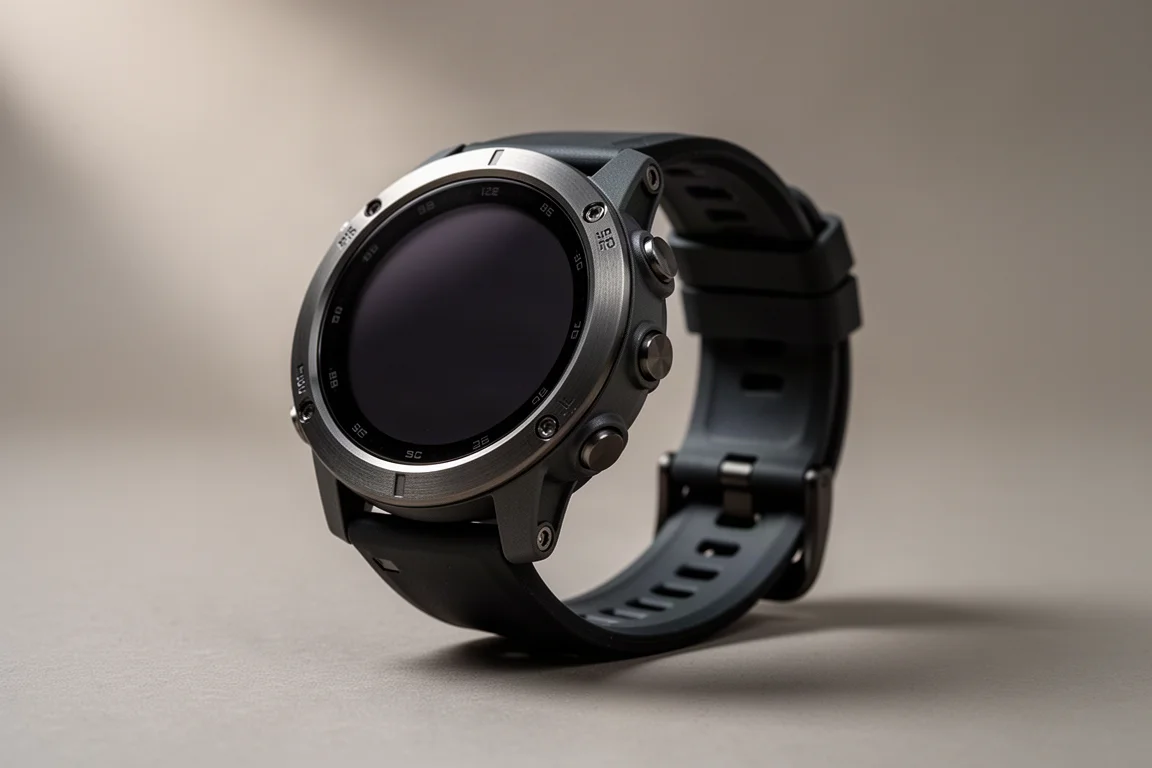
Garmin Instinct Solar
The Garmin Instinct Solar was picked up on a trip to an outdoor retailer, and a week or two later the non-solar Fenix was bought and returned after developing an audible rattle on every vibration. The Instinct’s headline number is its battery life, listed around 30-some days, which dwarfs everything else here. It remains the more efficient solar option of the two Garmins, even if the Fenix is preferred overall for features.
Marathon TSAR
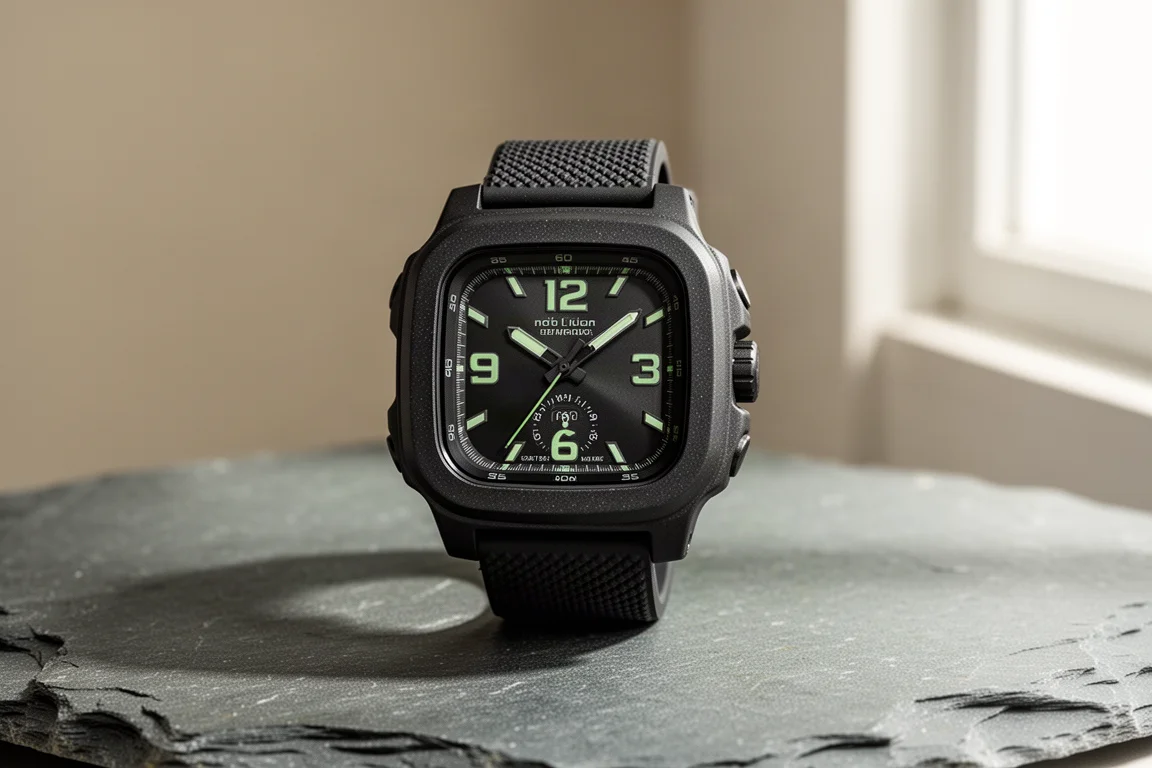
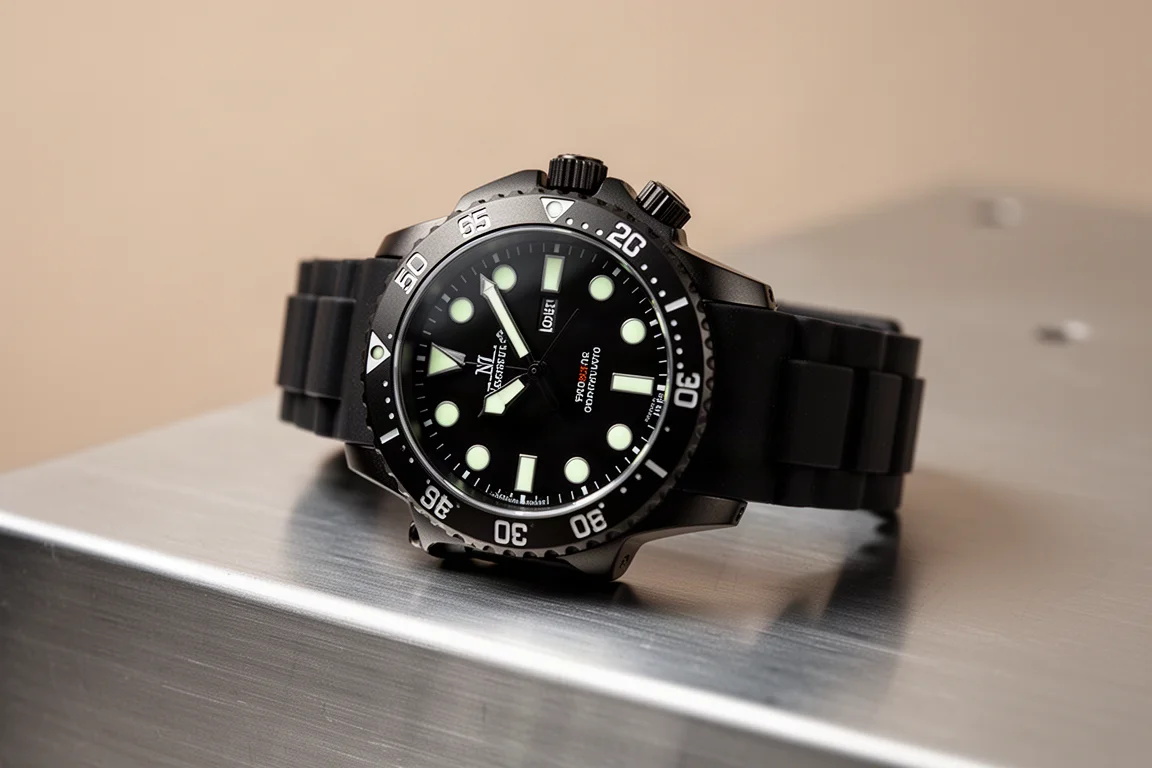
The watch worn the most, period, is the Marathon TSAR. It is a quartz beater built like an absolute tank, and after selling the first one and immediately regretting it, a replacement was purchased and has not left the wrist since. At around 700 dollars, it is not cheap, but for anyone who wants a rugged analog watch that shrugs off abuse, it is hard to beat.
Knives
The knife collection has diversified significantly in materials and colors, and a clear rotation has emerged over the past two months of carry.
Quiet Carry Drift
The Quiet Carry Drift earns consistent pocket time and real affection. This version is the thumb-hole design, which some people dislike but is preferred here, though thumb-flicking it is genuinely difficult. It is a top-class knife in fit and finish, with no meaningful complaints beyond that quirk. Expect roughly 285 dollars, with stock coming and going.
Tactile Knife Rockwall
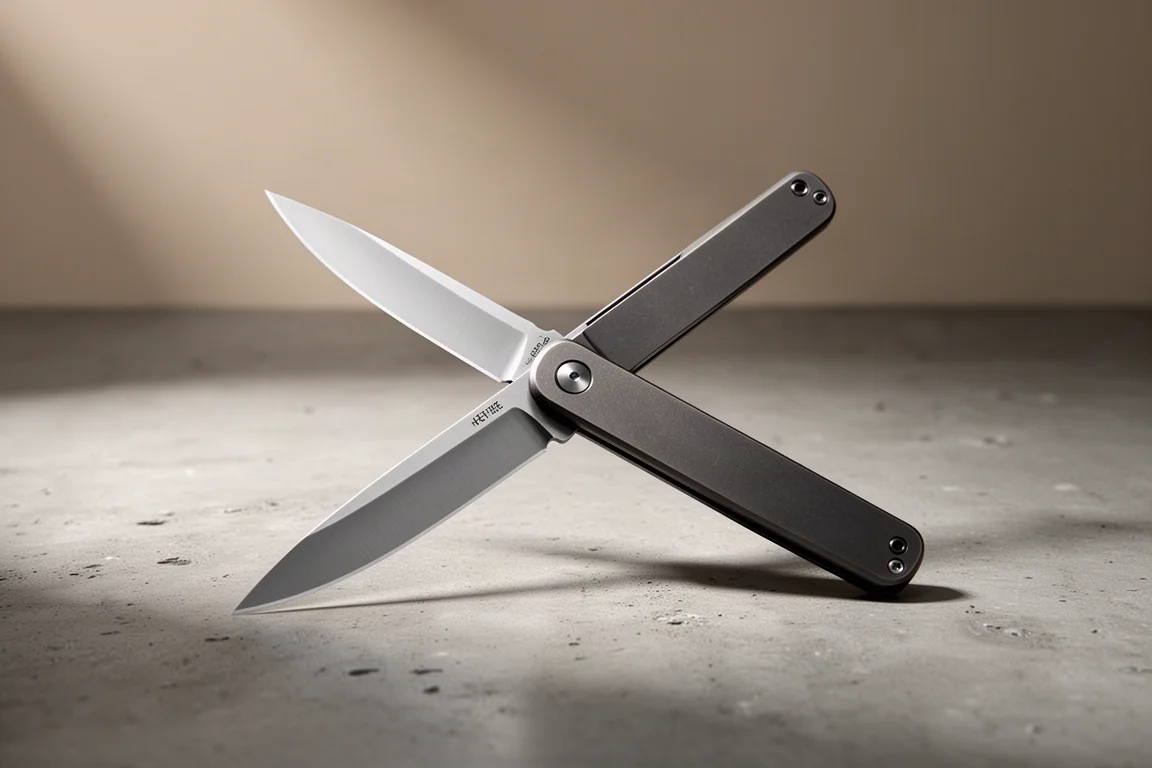
The Tactile Knife Rockwall in 20CV with a thumb stud has one flaw worth knowing about: lock bar access. There is not a lot of space there, and getting a confident thumb grip on the jimping took some adjustment. Beyond that, it is an excellent knife, now dropping regularly every Tuesday or so, which means the wait lists of the past are largely gone. Expect a price right around 300 dollars.
Chris Reeve Inkosi
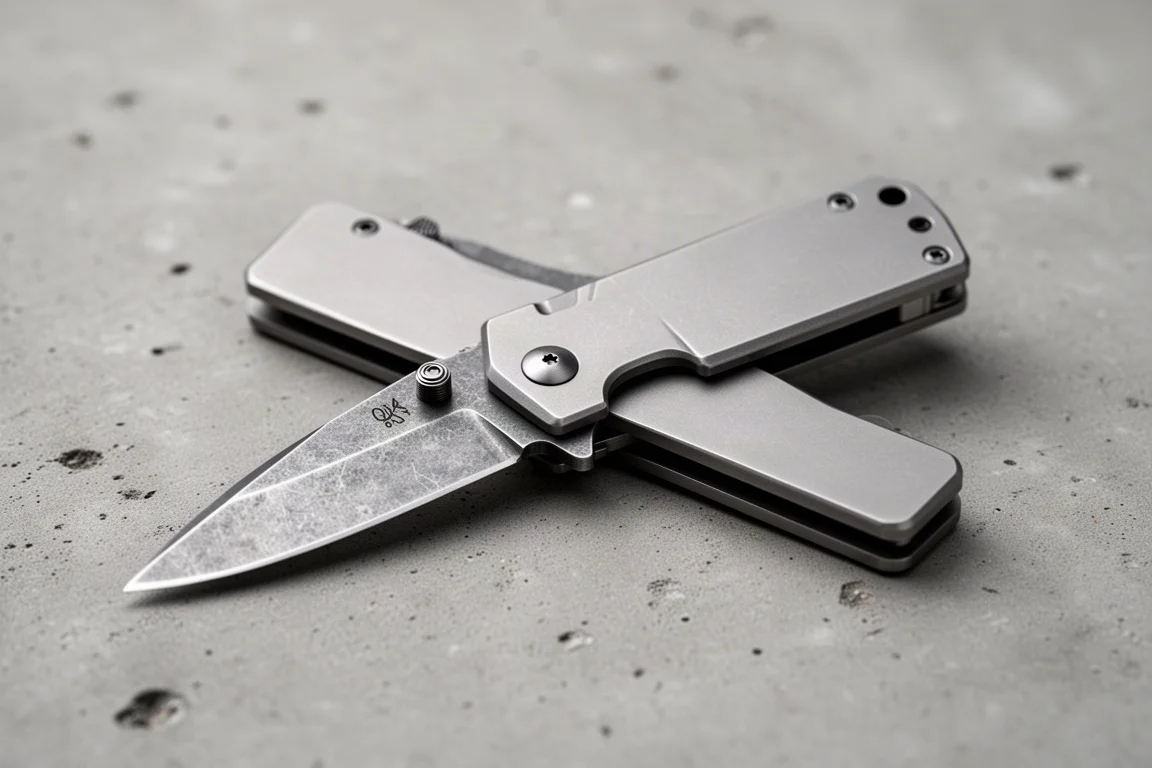
The Chris Reeve Inkosi in a custom glass bead-blasted finish was acquired in a trade and is simply stunning. In the standard Cruwear configuration, expect to pay somewhere around the 450 dollar mark. Fit and finish are exactly what the brand’s reputation suggests: flawless, with nothing to complain about at all. This is the tier where a knife becomes a long-term companion rather than a purchase.
Shirogorov NeOn
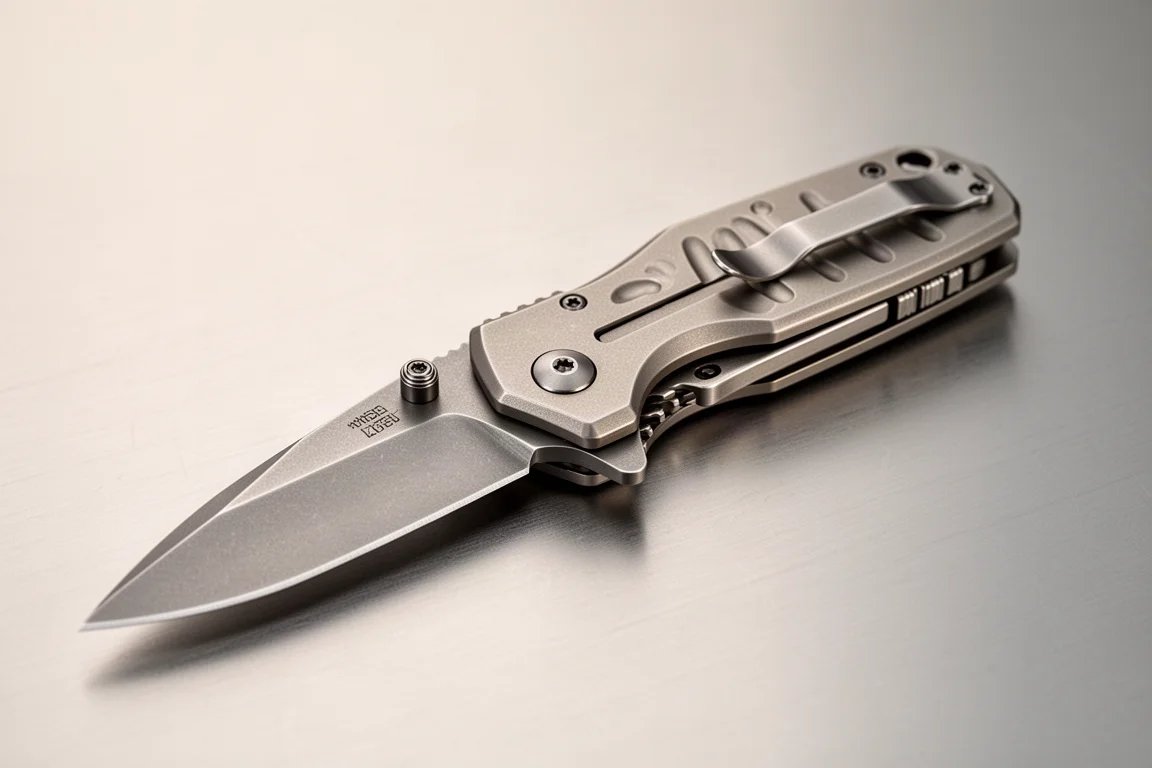
If there were a single perfect EDC knife, this would be the pick: the Shirogorov NeOn Zero with Vanax steel. This one was bought used, then sharpened at the wrong angle early on, which dulled it and marred the finish, and it took real time to bring the edge back. It is now ridiculously sharp and easily one of the absolute favorites in the collection. Vanax steel is the standout, and the NeOn line in general is worth chasing.
Bradford Guardian 3
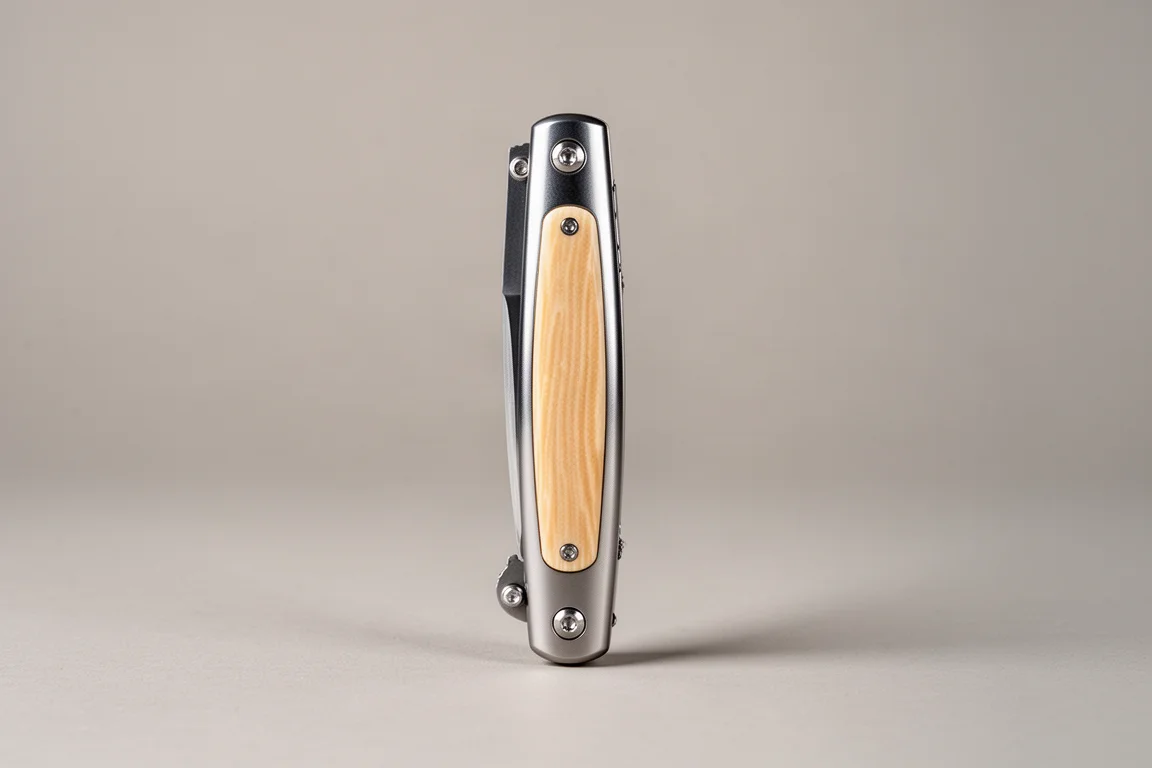
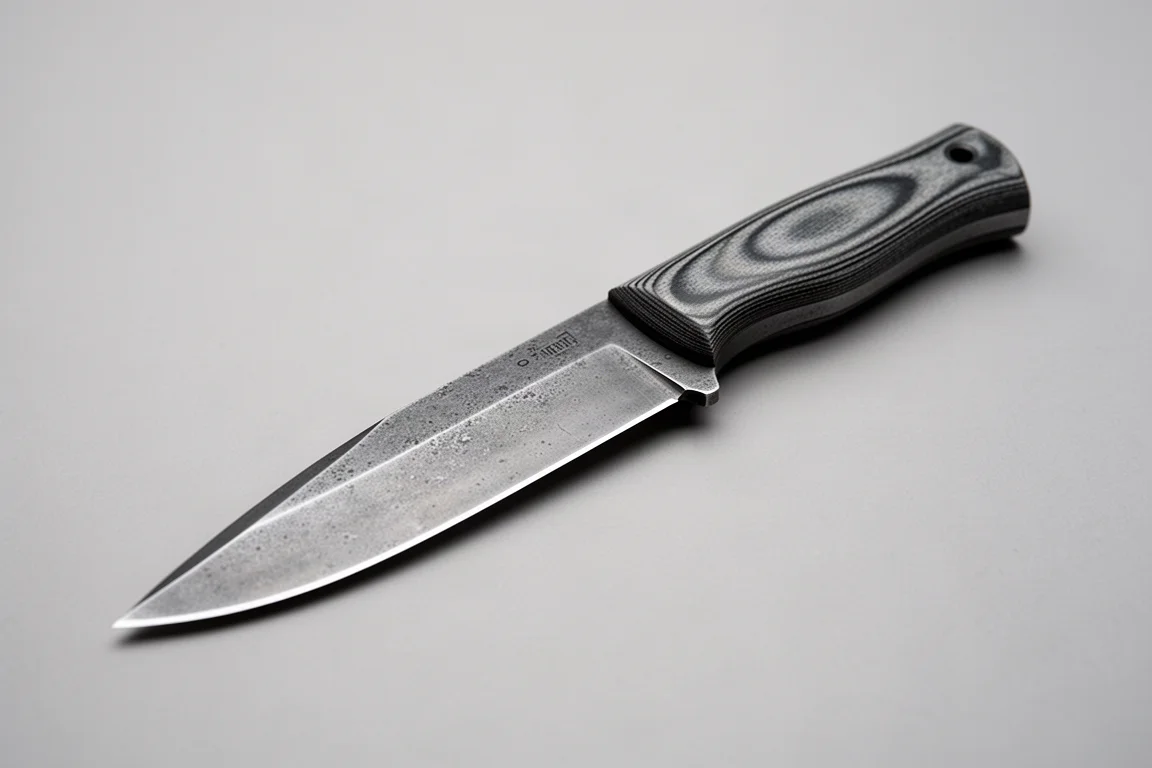
Lately a fixed blade has joined the rotation, and the Bradford Guardian 3 in drop point M390 is the reason it sticks. What makes it a genuine daily carry is the pocket-clip sheath: it clips inside the back pocket and carries beautifully, to the point that without that sheath, no fixed blade would be carried at all. In colder months with jacket pockets, it slides in naturally and gets reached for constantly.
Carry Organization
Yellow Birch Outfitters Pocket Pro
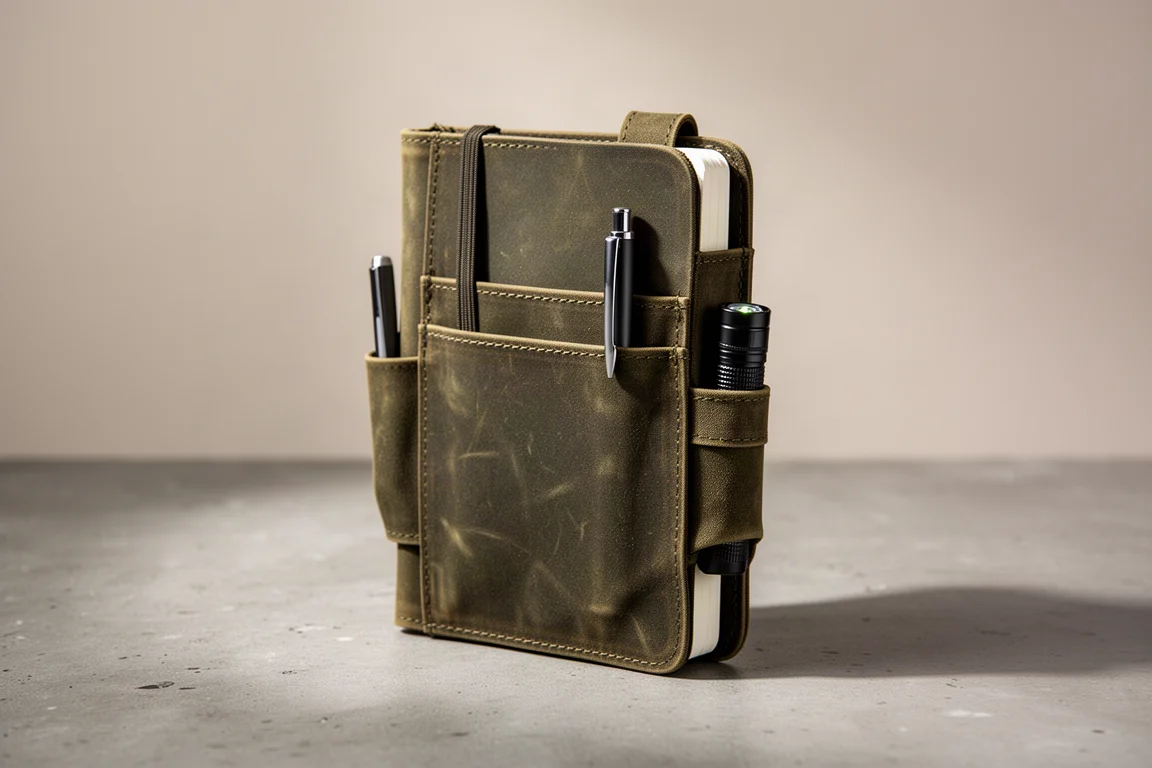
For mixing things up, the Yellow Birch Outfitters Pocket Pro is a well-thought-out organizer. A zip pocket on the back swallows smaller items, and as long as you keep it lightweight and thin, it never feels like it is weighing the carry down. The real benefit is flexibility: everything can shed into it, go into a bag, or travel on-person as one grab-and-go unit. This camo version appears to have been a one-off, so treat any colorway as a bonus rather than a given.
Overall Buying Advice
The clearest lesson from this lineup is that the best carry is built slowly, around items you actually use. If you are starting out, the highest-value entries here are the Olight i1r2 EOS for keys and the SOG PowerPint at 50 dollars, both of which deliver far beyond their cost. The Open Sea minis and the Vice Hardware F1 cover wallets at sensible prices for well-made gear. The flashlights and premium knives sit at the expensive, small-batch end of the hobby, where availability matters as much as performance, so patience or the secondary market is part of the plan. On the watch front, pick based on your week: a solar Garmin for training and hiking, a tank-like quartz analog for everything else.
Conclusion
None of this needs to be bought as a set. One good keychain light, one wallet that fits your card count, one tool you actually reach for, and one knife you trust will cover most of what a day throws at you. The rest is taste, and taste is what makes everyday carry fun. Start with what solves a real problem, and let the collection grow from there.
Further reading
Related Reviews

Everyday Carry
Everyday Gear That Deserved a Second Look
A roundup of solid everyday carry items: watches, pens, a pencil, a knife, and a smart ring that each earned a place on the table.

Everyday Carry
KORE Tactical Bifold Wallet Review: A Durable Everyday Carry Option
A close look at the KORE Tactical Bifold Wallet, a reinforced nylon wallet with magnetic closure and room for cards, cash, and IDs.

Everyday Carry
Krabby Wallet Review: A Slim, Simple Carry That Has Stood the Test of Time
A closer look at the Krabby Wallet, a slim canvas and elastic design with a loyal following and a simple, functional approach to everyday carry.