Cycling Tools
Ergon TF1 Review: A Repeatable Reference Point for Saddle Setup
A small tool that gives any saddle the same measuring datum, so a saddle position you trust can be measured and repeated to the millimeter.
Introduction
Saddle position is one of the few setup details that can quietly ruin a ride. There is a narrow comfort margin. Set the saddle a millimeter or two too high and you add pressure and friction. Set it a few millimeters too low and you add pressure and discomfort, lose power, and raise the risk of injury. None of this is obvious from the saddle itself, because a saddle position exists in three dimensions: height, fore and aft placement, and tilt. Get any one of them wrong and the whole position feels wrong.
Finding a good position is only half the problem. Reproducing it later is the part that catches riders out, and it is exactly the problem the Ergon TF1 bike fit saddle tool was designed to address.
Why Saddle Position Is So Hard to Get Right
The three adjustments do not behave independently. Slide the saddle forward and you effectively lower it, so seat height needs to go back up. Slide it back and you effectively raise it. Tip the nose down and you effectively lower the saddle again, which means height has to be corrected once more. Change the cockpit and fore and aft may need to change with it, which is why the saddle should be right first and the front end second.
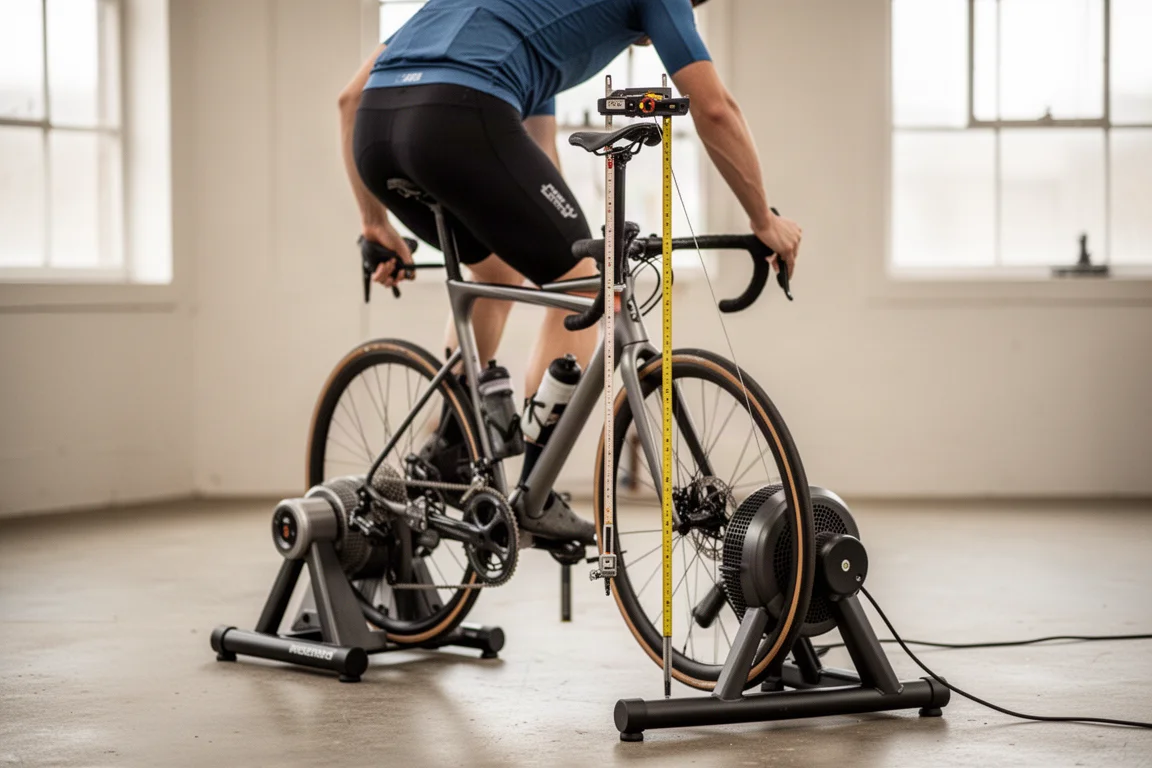
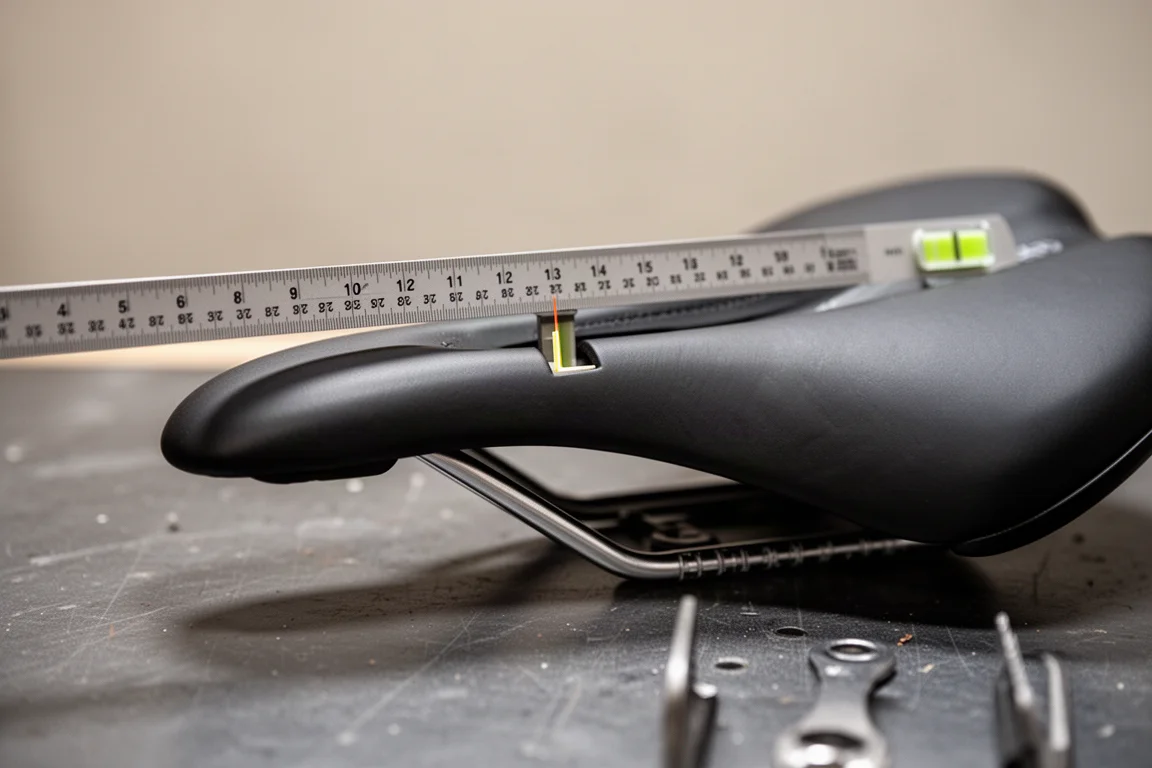
Saddle design adds another layer. Put a spirit level across one saddle and you will get a very different reading on another with a flared rear section. Padding in the nose changes the effective angle. Some saddles add a few millimeters at the front for comfort, which throws out any plumb line measurement or reach figure you had recorded. Seat height itself is not as simple as it sounds. Measuring from the bottom bracket up the seat post to the middle of the saddle does not work with an aero seat post, so riders measure to the sit point instead, and the sit point shifts depending on where the tape measure is placed. Even which edge of the tape you read from changes the number.
The result is a habit most experienced riders recognize. Once a position finally feels right, it gets protected. Saddles are kept for years past their useful life, and the idea of a new bike can be weighed against the risk of losing a position that took months to find.
What the Ergon TF1 Does
Ergon first addressed this on its own saddles with the BMR line, a biomechanical reference point imprinted on the saddle so that height, angle, and position measurements always start from the same place. The limitation was obvious: it only existed on Ergon saddles.
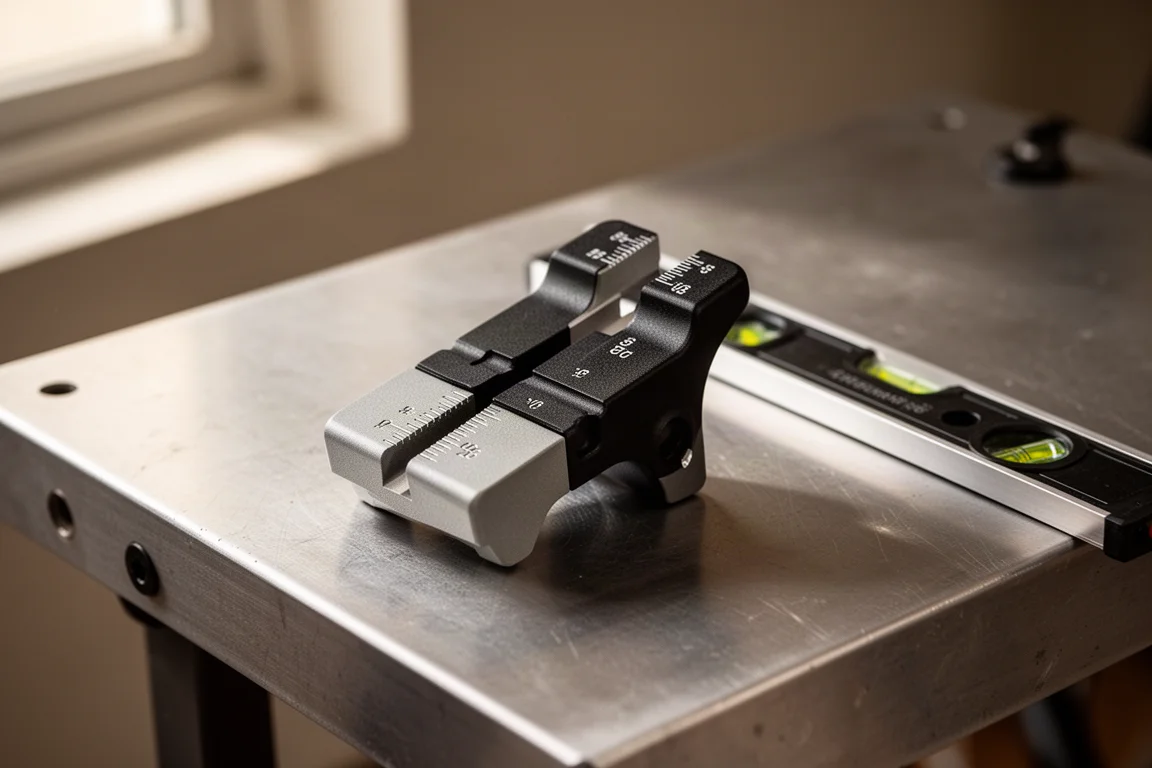
The TF1 removes that limitation. It is a separate tool that fits onto any saddle and sits in the same position every time, so the reference point it creates is identical from one saddle to the next. It provides a fixed datum for saddle height, a reference point at the nose of the saddle, and a notch for the plumb line so saddle position can be related to the bottom bracket. It also gives you a level surface for a spirit level, plus a notch at the back for aligning the plumb line to set saddle rotation accurately on a round seat post, which is not something you need on a time trial bike.
Who This Tool Is For
The TF1 makes the most sense for riders who already know roughly where they want to sit. It is a measuring and repetition aid rather than a fitting service, so it rewards riders who have a position they like and want to keep it. Triathletes are a natural fit, since nose angle and fore and aft placement get fine tuned regularly and small changes are normal. Riders with more than one bike benefit because the same position can be reproduced across all of them.
Anyone who replaces saddles periodically, or who is weighing up a new frame without wanting to restart the search from scratch, gets the same advantage. Riders who have never measured anything and have no intention of starting will find less to like, because the tool is only as useful as the numbers you record with it.
Main Strengths
The core strength is repeatability. With a consistent reference point, adjustments become measurable rather than approximate, and single millimeter and single degree changes become practical. That matters because the gap between a position that works and one that does not is often that small.
A second strength is that the tool is not tied to one brand of saddle. Because it fits any saddle and lands in the same place, a position found on one saddle can be transferred to the next one, to a new bike, or across an entire stable of bikes. It also takes some of the guesswork out of rechecking a position after a bike has been travelled with, rebuilt, or serviced.
How It Fits Into a Real Bike Fit
The tool does not hand you a position. You still work through the same sequence: start from a neutral, flat saddle angle on a bike that is standing level, then adjust from there. Many triathletes gain comfort by dropping the nose slightly from neutral, though going too far invites sliding off the front and loading the forearms and lower back.
Height comes next, and it is the adjustment most riders make over and over. A useful starting point is to sit in your normal riding position, unclip one leg, and place the heel on the pedal: you should just reach it. If you have to rock to get there, the saddle is probably too high, and if the knee stays bent, it is probably too low. A more precise starting figure comes from multiplying your inseam, measured without shoes, by 0.883 to get saddle height from the bottom bracket to the sit position in millimeters. For triathletes, the target is roughly 25 to 35 degrees of knee angle at the bottom of the stroke while the hips stay stable.
Fore and aft is where things get more involved, and where a professional bike fitter is often worth the cost. As a home starting point, keep the saddle nose at least in line with the bottom bracket, and aim for the sit position to be at least 50 mm behind it. Triathlon allows more freedom here than the UCI rules that govern road racing, and a seat angle of 78 to 80 degrees suits most riders, with some pushing as far forward as 83 to 84 degrees.
Whatever you change, change it in small steps. Adjust by no more than a couple of millimeters at a time and ride before adjusting again. Large jumps in saddle height rarely help, and they make it hard to tell which change actually improved things.
Things to Consider Before Buying
This is a measurement tool, not a fit system, and it will not tell you where your saddle should be. If your position is uncomfortable or you are dealing with persistent pain, a professional bike fit is the better first step, and the TF1 becomes useful afterwards for preserving whatever that fit establishes.
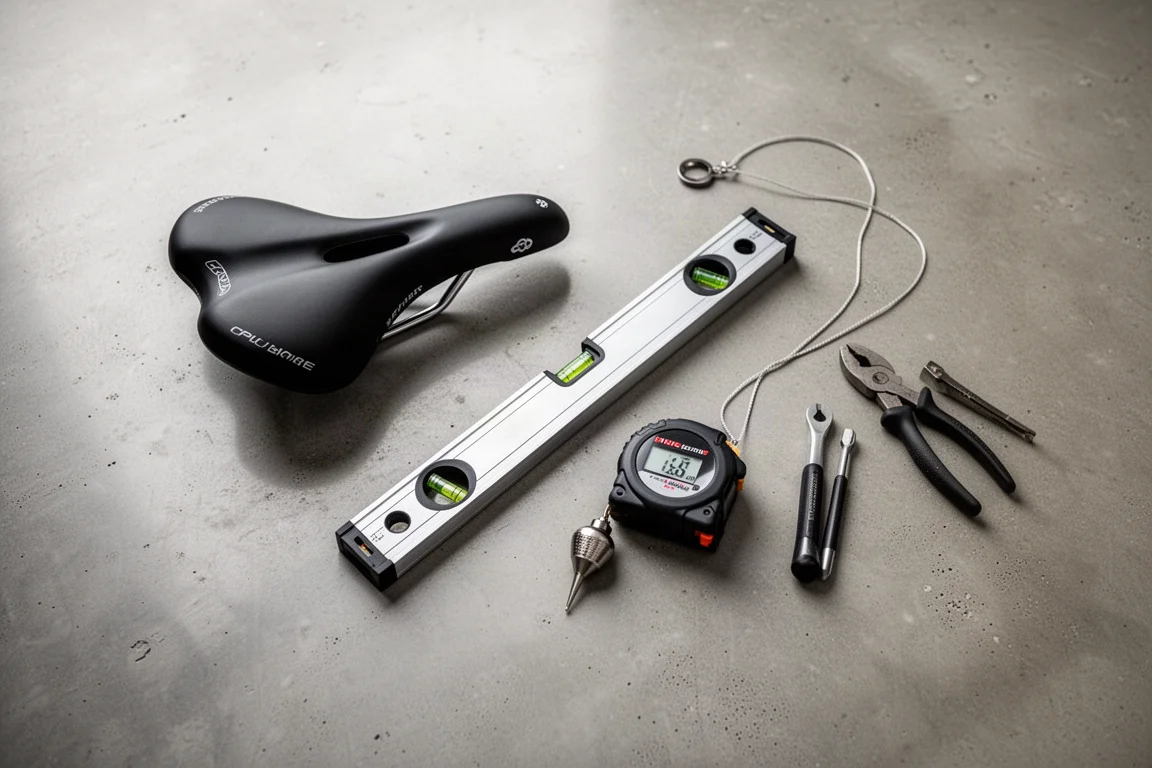
It also only pays off if you record your numbers. The reference point is what makes those numbers comparable, so the value comes from writing down height, nose position, tilt, and fore and aft, then checking them from the same reference point every time. Riders who never intend to measure anything will not get much from it.
One practical note: the rear notch for aligning saddle rotation is designed for round seat posts, so it is not relevant on a time trial bike.
Buying Advice
The TF1 is worth considering if you have a saddle position you trust and you want to keep it, whether that is across two bikes, a replacement saddle, or a new frame. It is also a sensible addition for triathletes who adjust nose angle and fore and aft placement as part of normal setup work, and for anyone who does their own fitting at home and wants changes to be measurable rather than a matter of feel.
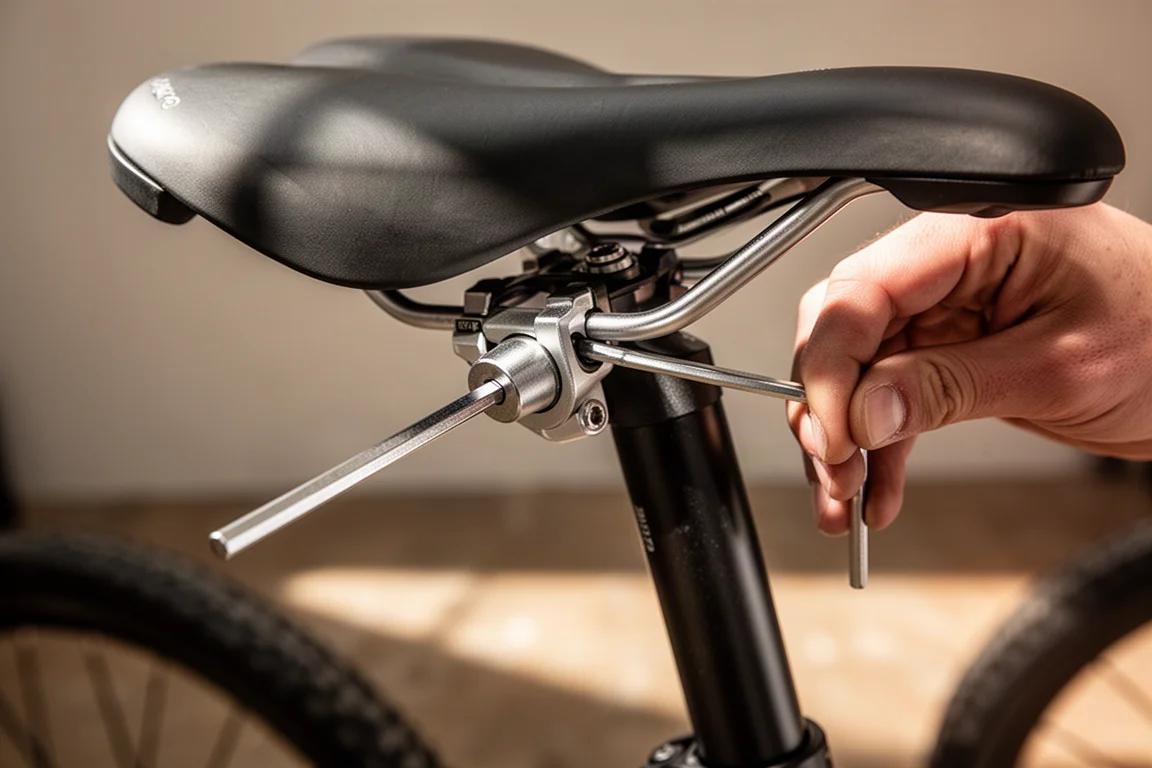
If you are still searching for a comfortable position, start with a fitter and treat this as the tool that locks in the result. Either way, the goal is the same: stop drifting between a bit too high and now too low, and stop guarding a position that cannot be measured.
Conclusion
Saddle discomfort is usually a matter of millimeters, and the reason it is so hard to solve is that saddles offer no consistent place to measure from. The Ergon TF1 supplies that place on any saddle, which turns saddle setup from a cycle of trial and error into a set of numbers you can record, repeat, and carry to your next bike. It will not find your position for you, but once you have one, it is the difference between hoping you can recreate it and knowing you can.
Product link
View more details for Ergon TF1 Bike Fit Saddle Tool
This product is mentioned in the review. Check the specifications, options, and compatibility before buying.
View more details for Ergon TF1 Bike Fit Saddle ToolFurther reading
Related Reviews
Cycling Tools
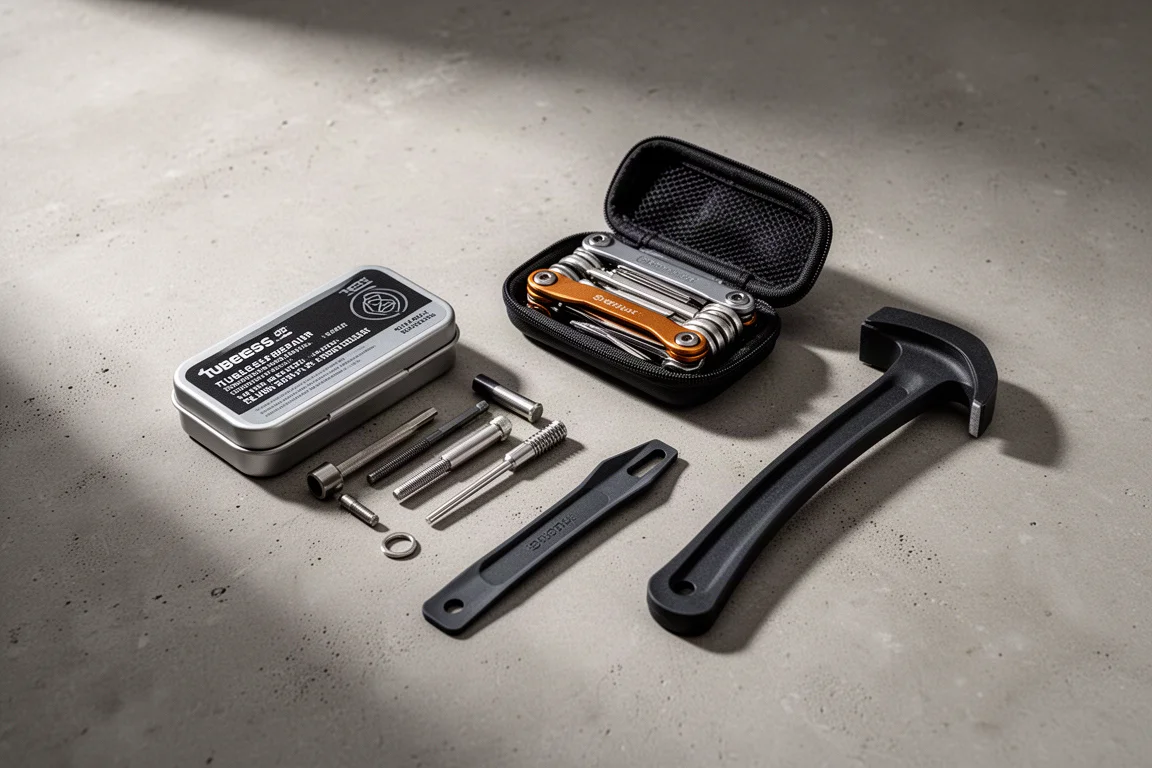
Best Cheap Bike Maintenance Tools: Four Budget Cycling Essentials Worth Buying
Four affordable bike maintenance tools that cover tubeless puncture repair, routine home servicing, and getting stubborn tyres on and off the rim.
Cycling Tools
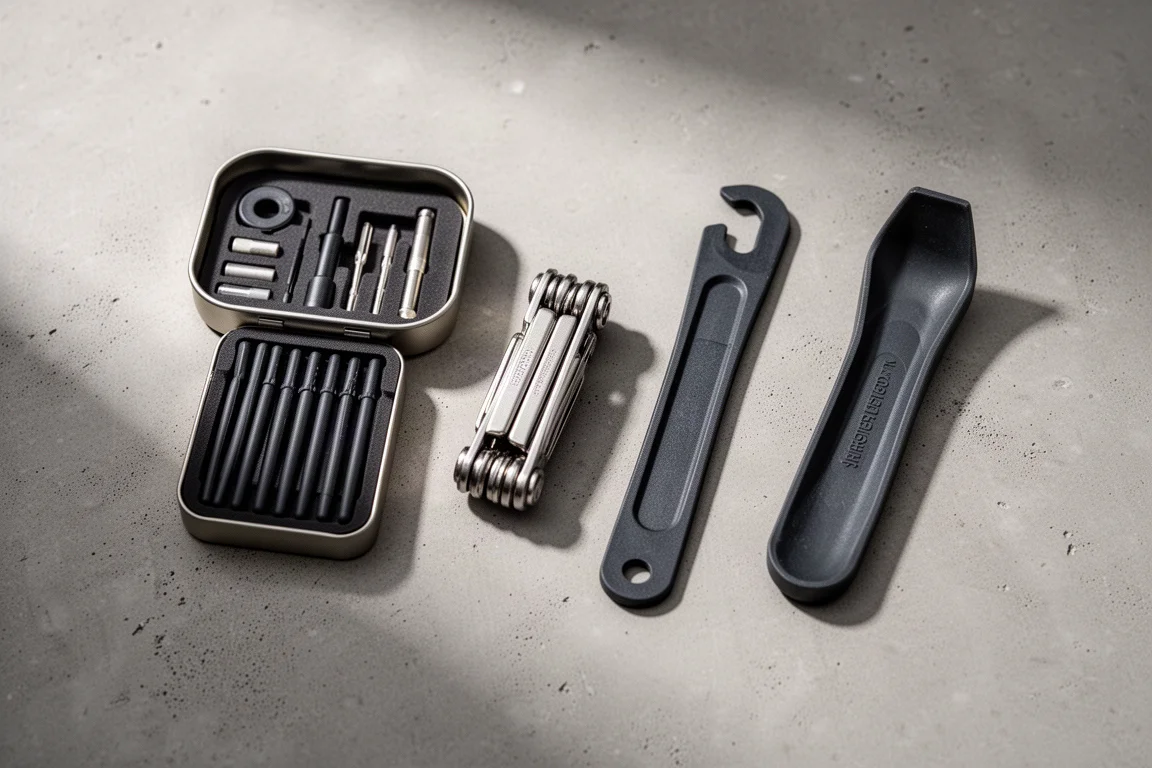
Best Cheap Cycling Tools on Amazon: Four Budget Maintenance Picks Worth Buying
Four inexpensive cycling tools that cover tubeless puncture repair, home maintenance and stubborn tyre changes, plus the trade-offs to weigh before buying.
Cycling Tools
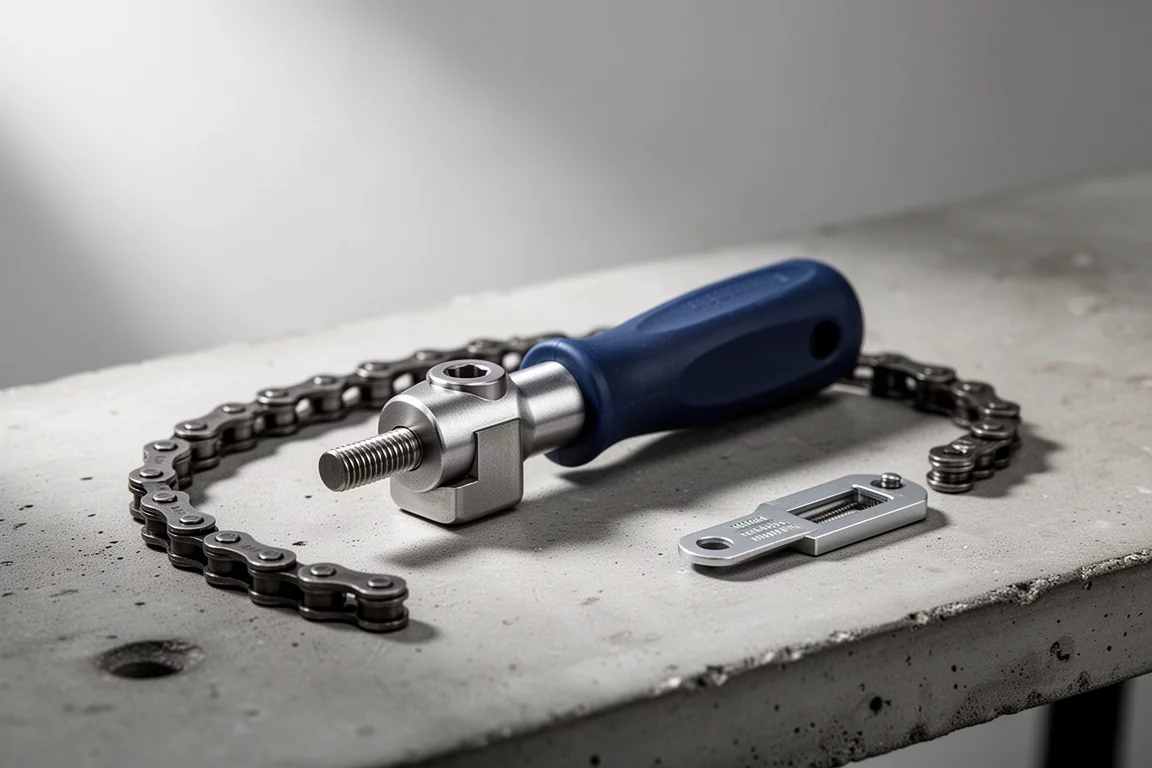
Park Tool CT-3 Review: A Chain Tool Built to Stay in the Drawer for Years
A practical look at the Park Tool CT-3 chain tool, including what it does well, how it handles modern drivetrains, and what to check before buying.