Board Games
Enchanted Ivy Review: A Cozy Solo Puzzle Campaign
A solo-only campaign game about restoring a mystical inn, Enchanted Ivy blends cozy puzzle play with a light story and plenty of replay value.
Introduction
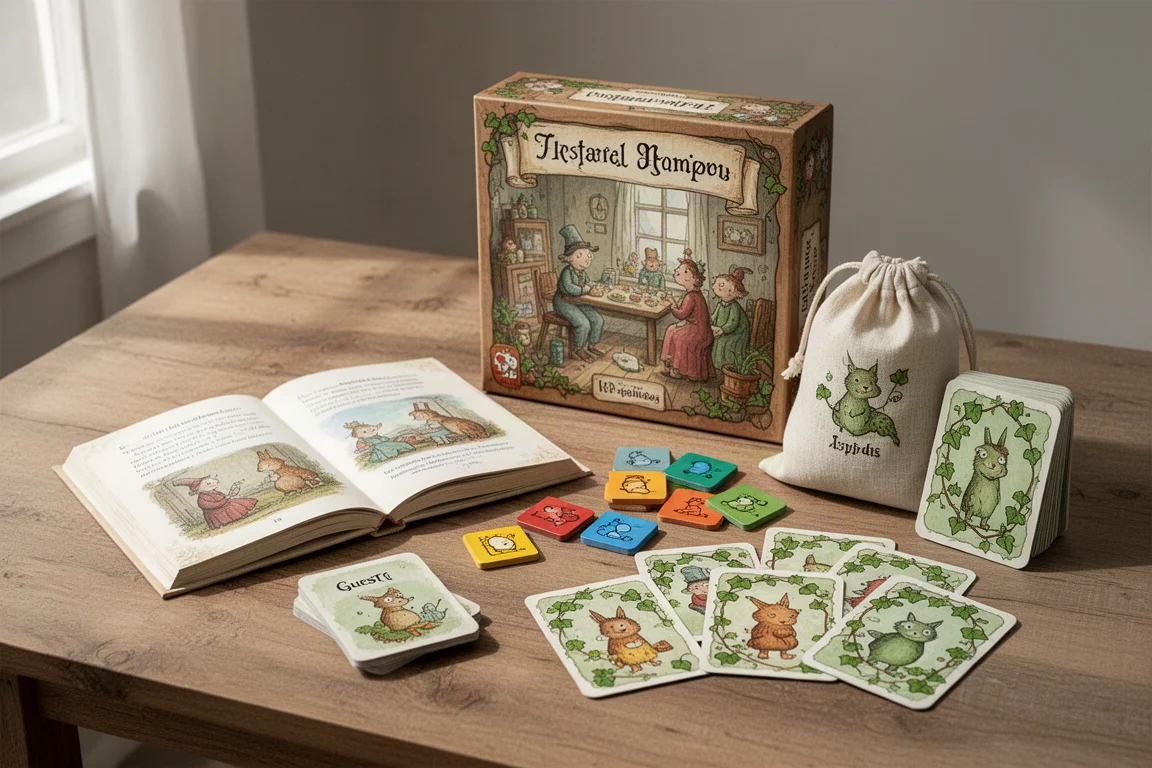
Enchanted Ivy is a solo-only campaign game where you inherit a run-down mystical inn and work to restore it by welcoming a series of quirky guests. The game is built around a simple but satisfying puzzle: each turn you draw two ivy cards and place them into a growing tableau, trying to connect ivy patterns while positioning guests to score points in different ways.
The game consists of nine scenarios plus a prologue and an epilogue, all connected by a light story. It also includes an endless mode for one-off play once you have finished the campaign. Setup is quick, the rules are easy to relearn, and the whole experience has a cozy, approachable feel that makes it easy to return to again and again.
What Is Enchanted Ivy?
At its core, Enchanted Ivy is a spatial puzzle game wrapped in a charming theme. You play as an innkeeper preparing to open a mystical inn, and each scenario presents a new layout challenge. The storybook sets the scene for each scenario, and after you finish playing, a short conclusion adds a little character to the experience.
The game is designed for solo play, though it works fine as a shared experience if you want to talk through decisions with a friend or partner. The puzzle itself is the main draw, and the story serves as a gentle frame rather than an interruption. The artwork has a whimsical, slightly goofy style that captures the theme well without taking itself too seriously.
How the Game Plays
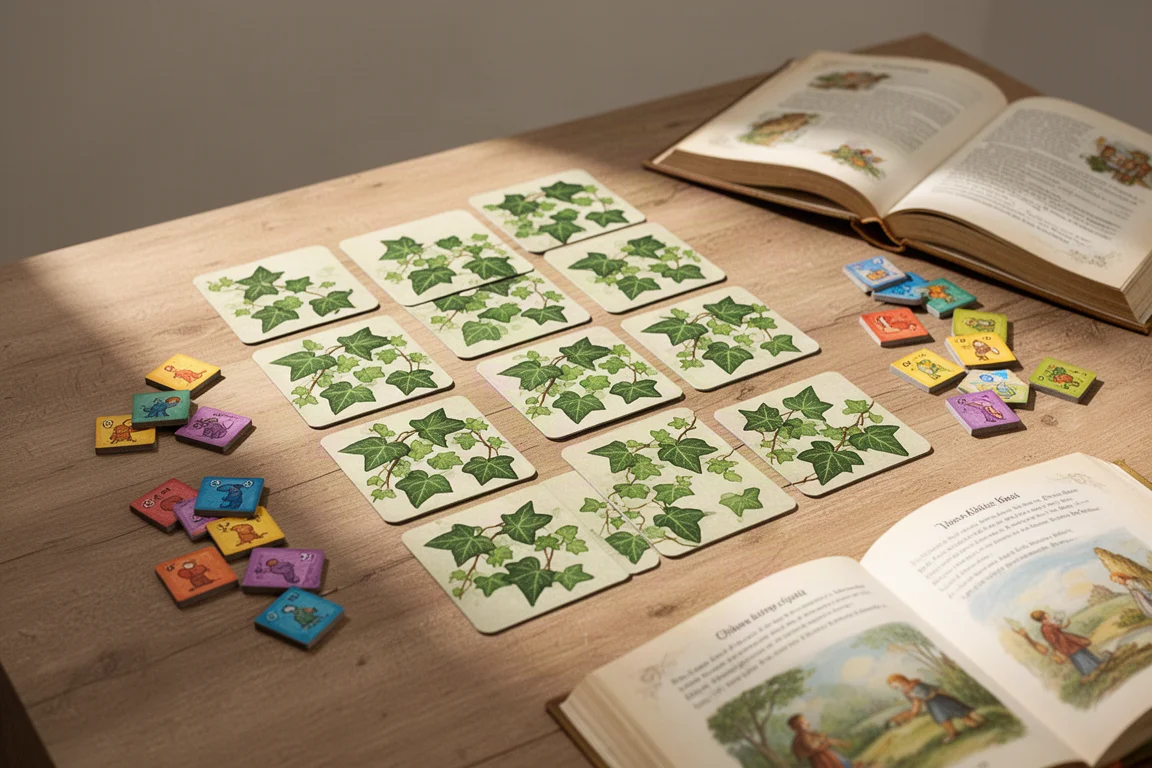
Each turn you draw two ivy cards and play them into the tableau. One card is played face up, and the other is turned over to become a window card where you place a guest tile. You then draw another guest tile and two more ivy cards to continue the pattern until the tableau is complete.
The key scoring mechanic is the ivy pattern. If all the ivy connects across the entire tableau, it is worth 20 points. If it splits into two patches, it drops to 16 points, and so on. Windows allow ivy to connect through them, so you need to plan carefully as you build. Later scenarios introduce flowers and colors that add more depth to the placement decisions.
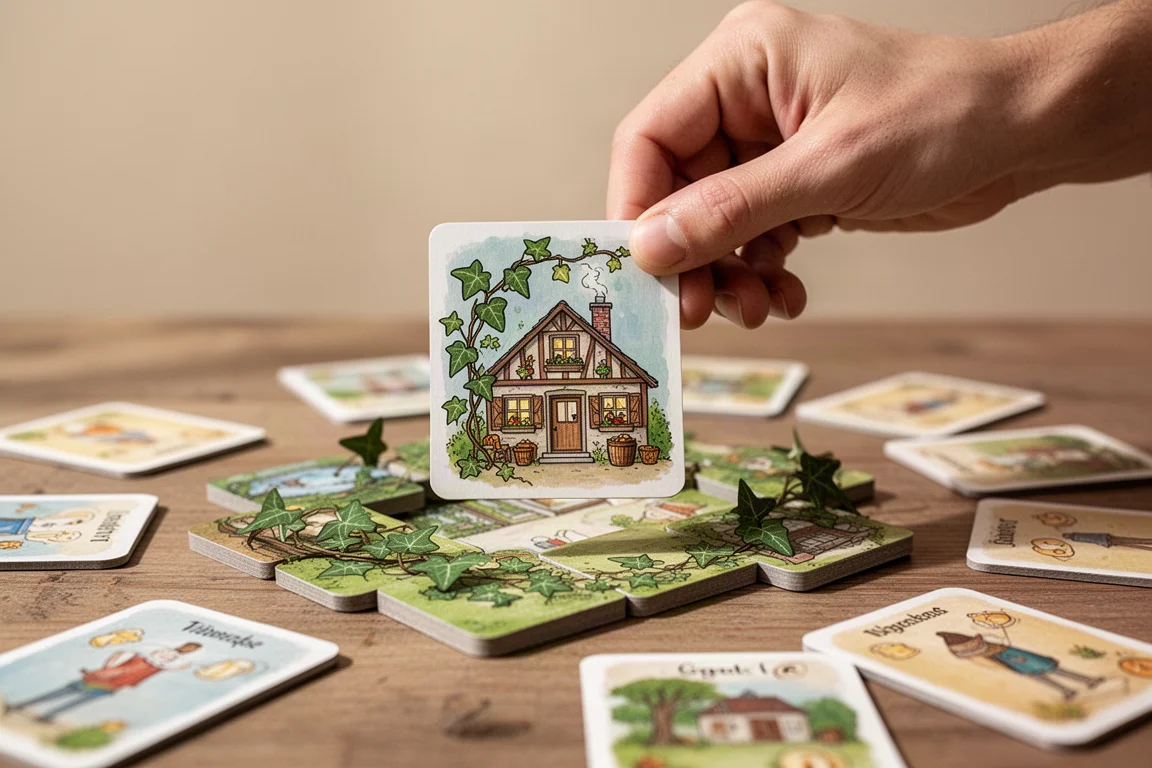
Guests each have their own scoring rules. For example, the Mystery Knight scores four points if there are no guests or doors in the row to either side of him. Scarecrows do not score at all but act as extra guests to help other characters score, such as the Painter, who scores points based on how many spaces away other guests are placed. This variety keeps each scenario feeling fresh.
The Puzzle at the Heart of the Game
The puzzle is the strongest part of Enchanted Ivy. It is rewarding to solve, and the random order in which guests and cards appear keeps every playthrough interesting. Sometimes the draw works in your favor and everything clicks into place; other times you have to adapt and make the best of a tricky situation. That unpredictability is part of the appeal.
One small hurdle is the visual clarity of the ivy pattern. Even after multiple plays, it can be easy to lose track of whether the ivy is actually connected, especially when doors and windows break up the visual flow. Some players find it helpful to flip cards over to check the ivy pattern without the door artwork. It is a minor issue that does not stop the game from being enjoyable, but it is worth knowing before you buy.
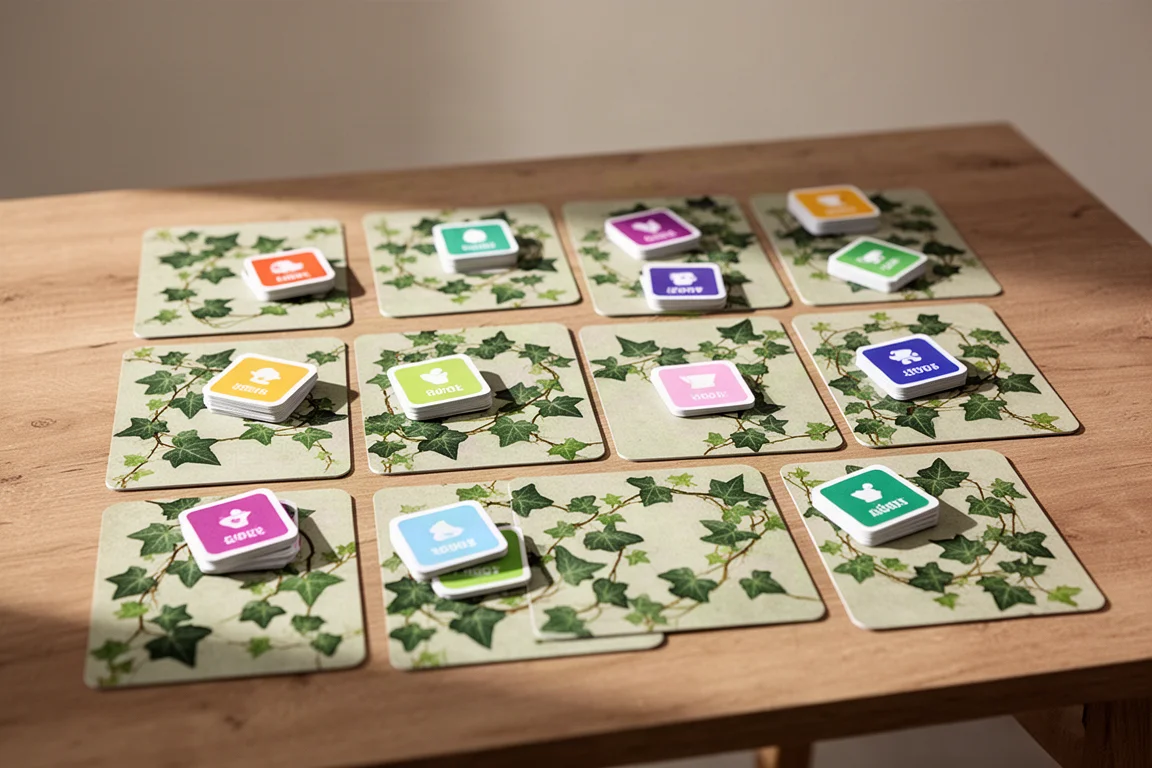
Each scenario includes a target score and a higher achievement score, which gives you a clear reason to replay scenarios and try to improve. The optional sticker rewards are light and completely ignorable, but they add a small motivational nudge for players who enjoy chasing goals.
Who Should Buy Enchanted Ivy?
Enchanted Ivy is ideal for solo players who enjoy spatial puzzles and want a game that is quick to set up and easy to get back to. It is also a good fit for anyone who likes a light story wrapped around a solid puzzle, as the narrative is well written and adds mood without slowing down the gameplay.
If you prefer a book of standalone puzzles over a connected campaign, you can still revisit individual scenarios after finishing the campaign. The endless mode also gives you the option to play one-off games whenever you like. The game is not a legacy game in the traditional sense; the campaign can be replayed, and the sticker elements are entirely optional.

Buying Advice
Enchanted Ivy is a strong solo game that delivers a satisfying puzzle experience with a cozy, charming theme. It is easy to learn, quick to play, and offers plenty of replay value through its campaign structure, achievement scores, and endless mode. The main thing to consider is whether you enjoy spatial puzzles and are comfortable with a game that is designed primarily for solo play.
If you are looking for a game that you can set up and play in under five minutes, with minimal components and rules that are easy to remember, Enchanted Ivy is a great choice. The artwork is delightful, the puzzle is engaging, and the overall experience feels comfortable without being overly demanding.
Conclusion
Enchanted Ivy is a charming and rewarding solo puzzle game that stands out for its cozy atmosphere and clever scoring mechanics. The story adds character without getting in the way, and the variety of guests and scenarios keeps the puzzle fresh across multiple plays. While the ivy pattern can be slightly tricky to read visually, it is a minor issue in an otherwise excellent game. For solo players who enjoy a good spatial challenge, Enchanted Ivy is well worth considering.
Product link
View more details for Enchanted Ivy
This product is mentioned in the review. Check the specifications, options, and compatibility before buying.
View more details for Enchanted IvyFurther reading
Related Reviews

Board Games
Best Board Games 2026: Standout Titles From a Busy Week of Gaming
A roundup of the most notable board games from a packed week of play, from solo adventures to family favorites.

Board Games
Computer Junkyard Board Game Review: A Nostalgic Build-Your-Own-PC Experience
Computer Junkyard turns the joy of building homebrew computers into a tabletop game with market scarcity, debugging, and a satisfying economic puzzle.
Board Games
Crossfire Board Game Review: A Fast, Family-Friendly Classic Returns
The classic Crossfire tabletop game is back in a smaller, faster package. We break down how it plays, who it suits, and what to consider before buying.