Skis
Elan Wingman 82 Ti Review: A Wider Frontside Ski Built for Confident Carving
An 82 mm ski with metal underfoot, a laminated wood core, and Amphibio shaping that leans toward groomer performance without becoming demanding.
Introduction
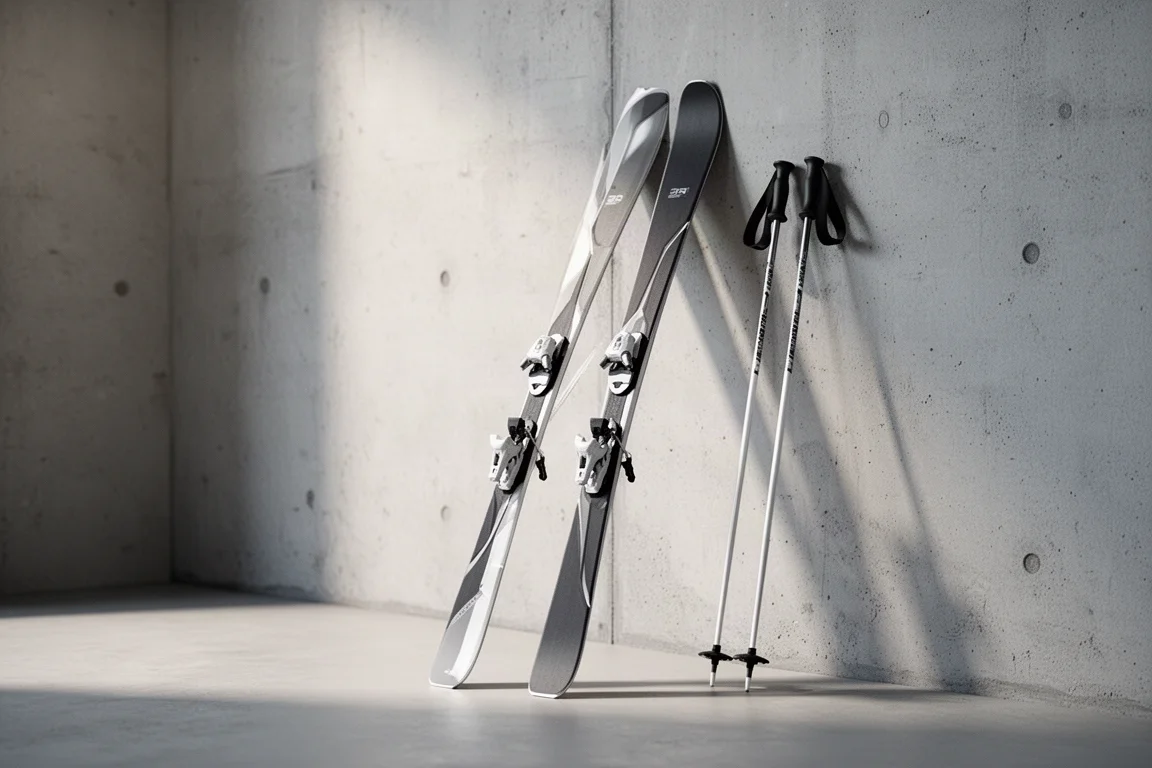
An 82 mm waist paired with a metal layer is a familiar recipe, but the Elan Wingman 82 Ti leans deliberately toward the frontside end of the all-mountain spectrum. It is shaped for the skier whose day is mostly spent on groomers, who wants a wider footprint than a dedicated carving ski without stepping all the way into a dedicated off-piste design.
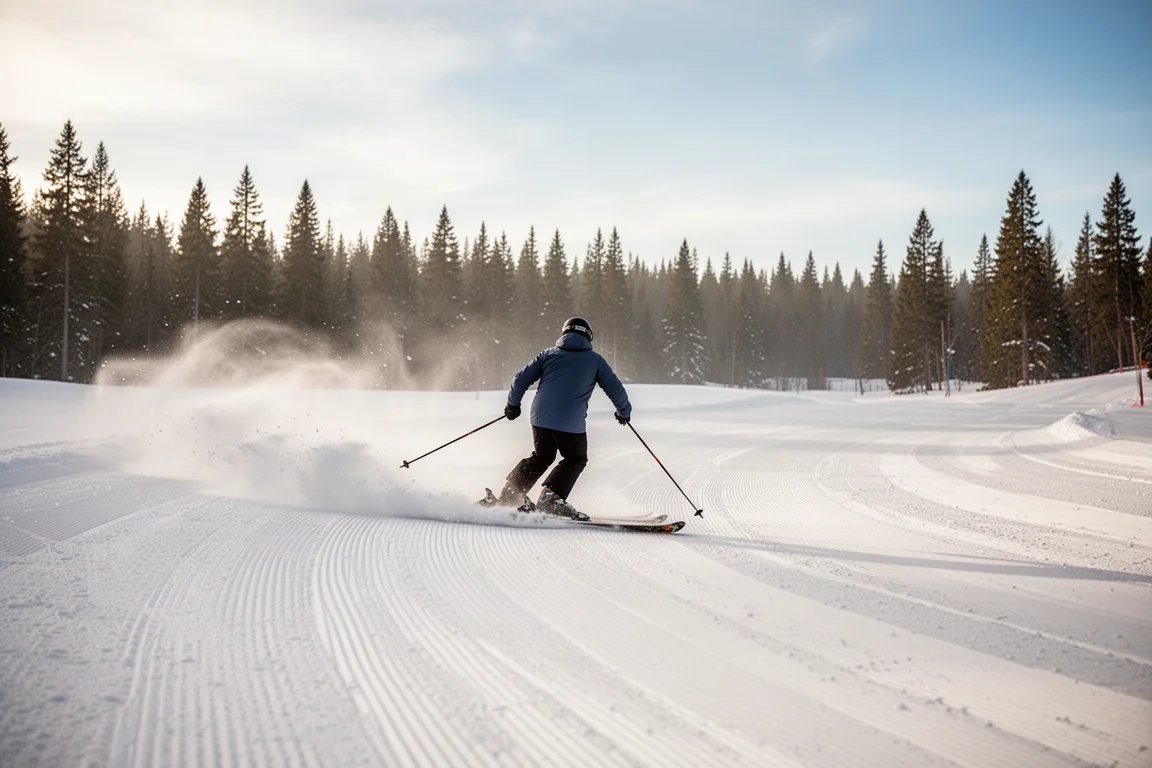
The construction choices explain the personality. Elan builds this ski around a laminated wood core with a metal layer underfoot, and the core is denser than the one used in the carbon-rod version of the same ski. What it does not have is carbon reinforcement, which keeps the flex friendlier and the ride less reactive than its lighter sibling.
The other defining element is the Amphibio layout. More material sits over the inside edge and less over the outside edge, so the two edges of the same ski behave differently once the ski is tipped over. Elan calls the combination Amphibio True Line Tech, and it gives the engineers room to vary how much material and how much rocker each edge receives.
Who the Elan Wingman 82 Ti Is For
This ski fits the progressing intermediate through the lower end of the expert range. It is also a sensible match for the skier who stays on trail, wants a wider body for a bit of versatility, and still wants the grip and power of a metal ski without the stiffness that usually comes with it.
That combination is why it lands in the wider frontside category rather than in a narrower all-mountain slot. The shape and footprint point toward on-trail all-mountain skiing rather than all-mountain skiing that spends real time off trail.
If your days are built around carving turns, or around working on carving turns, this is the kind of ski that rewards that focus. The metal underfoot supplies a high-performance foundation, while the lighter weight and easier turning shape keep it accessible for skiers who are still building their technique.
Main Strengths: Laminated Core and Amphibio Tech
Start with the core and the metal. A denser laminated wood core paired with metal underfoot gives the ski a planted, damp feel, and the absence of carbon rods means the flex stays smooth instead of snappy. The result is a ski that is a touch heavier than the carbon version but noticeably less stiff and less reactive, which is exactly what makes it approachable.
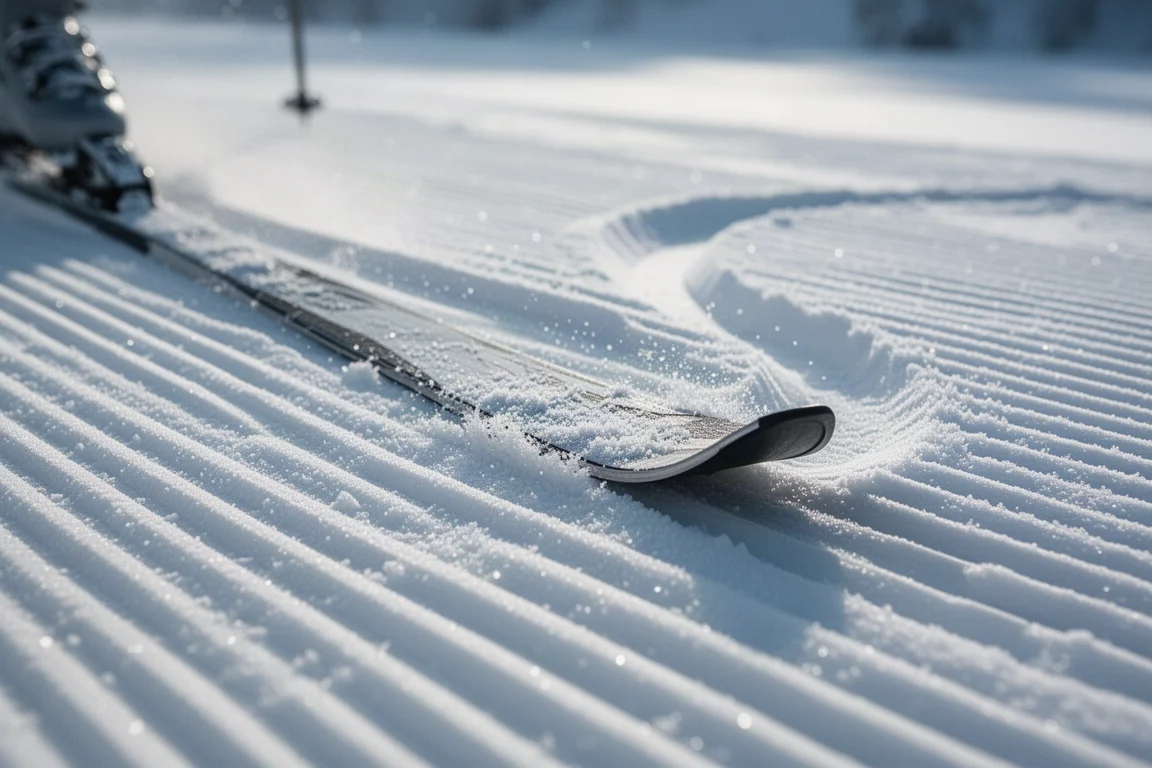
Then comes the asymmetric build. Material runs full width underfoot, which is where the metal sits, and tapers toward the inside of the downhill edge. More material over the inside edge and less over the outside edge means the downhill edge delivers stronger torsional stiffness and better damping underfoot, while the uphill edge stays smoother and more flexible.
The rocker profile follows the same logic. The Amphibio rocker places more rocker on the inside edge than the outside, with camber underfoot. Where the extra material sits, the camber runs longer, and where it does not, the rocker runs longer. That arrangement is what gives the ski its cohesive, smooth tip-to-tail character.
Taper is deliberately minimal, close to zero, with a rounder tip shape flowing straight into a long effective edge. There is a slight taper in the tail beginning where the sidewall transitions into the tail, but the tail stays squared off. Along with the limited traditional rocker, that squared profile is the clearest signal that this is a frontside-oriented design.
On-Snow Feel and Turn Radius
In an 82 mm waist with a 178 cm length, the ski comes in at roughly 1,800 grams with the metal layer included. That is a useful balance of stability, damping, and power without tipping into heavy or overly burly territory.
The 15.5 meter turn radius makes it a crisp carver at this width. There is enough edge grip to lean into a turn with confidence, and enough shape and lightness to make the ski turn easily when you are not pushing hard. The uphill edge tracks along smoothly and does not fight back, which is where the low level of demand really shows up.
Because the effective edge is long and the taper is minimal, the ski runs smoothly through the length of the turn rather than washing out early. The overall feel is composed rather than twitchy, and it stays consistent from tip to tail.
Things to Consider Before Buying
The most important trade-off is weight against flex. Choosing the denser core and skipping the carbon rods makes this ski heavier than the carbon-reinforced version of the same model, and it is also less stiff and less reactive. Skiers who want the sharpest possible response should weigh that difference before committing.
The second consideration is where you actually ski. Minimal taper, a long effective edge, a squared-off tail, and limited traditional rocker all push this ski toward groomer and frontside use. It is a wider frontside ski rather than a narrow all-mountain ski, so anyone planning to spend most of their time off trail is looking at the wrong end of the category.
Finally, think about your own technique level. The ski is designed to be forgiving enough for progressing skiers, but it is still a metal ski with a high-performance foundation. If you want the softest, most relaxed ride available, a metal laminate is not the place to look.
Buying Advice
Decide first whether your skiing is genuinely on-trail. If most of your runs are groomed, and your goal is either carved turns or better carved turns, the 82 Ti matches that brief closely, and the extra width over a pure carving ski adds a small amount of versatility without changing the ski’s character.
Consider your length choice in relation to your ability and how much of the ski’s 15.5 meter turn radius you want to use. Shorter lengths will feel quicker and easier to steer, longer lengths will hold a longer arc and feel more stable, and the right answer depends on how much of the ski’s edge grip you can already use.
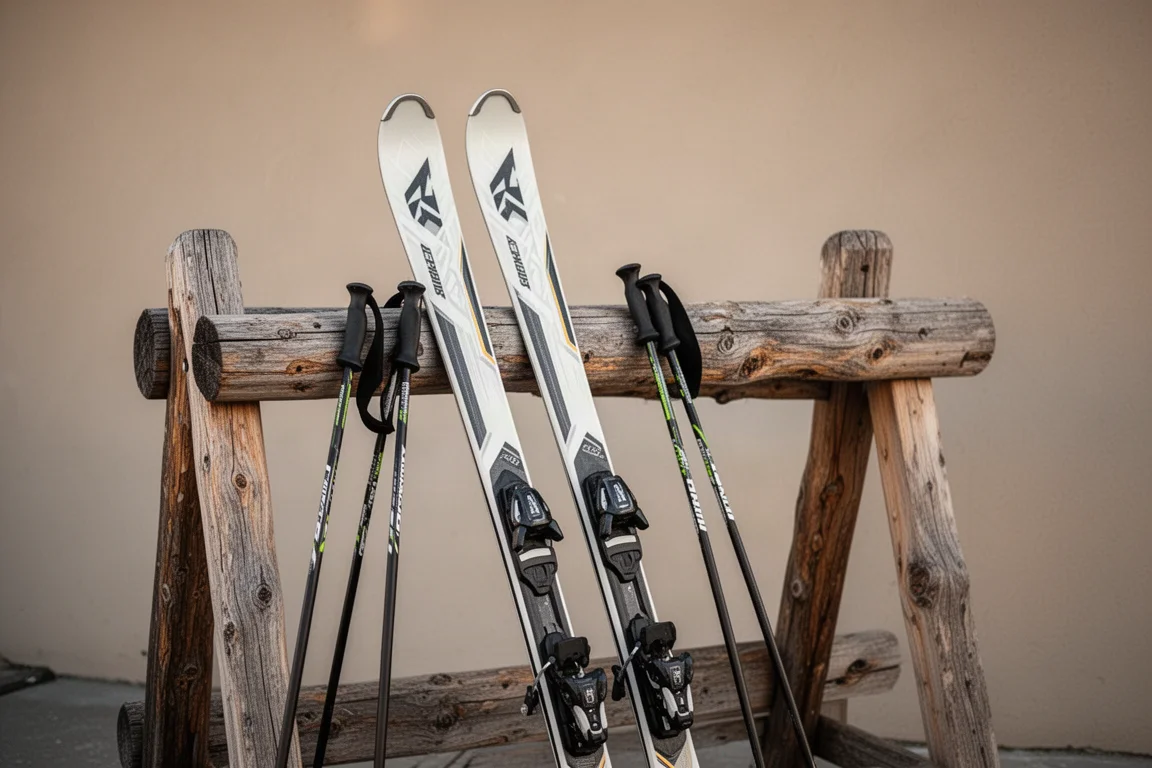
If you are comparing this with the carbon version, treat the decision as a straight trade. The carbon model is lighter and more reactive, while the 82 Ti is a little heavier with a denser wood core and a smoother, less demanding flex. Neither is better in the abstract; the calmer one suits the skier who wants control without being punished by it.
Also weigh how often you truly leave the groomers. This ski can handle all-mountain terrain, but it is built with an on-trail bias, so a rider who splits time more evenly between piste and off-piste may want to look at a different category entirely.
Conclusion
The Elan Wingman 82 Ti makes a clear, well-reasoned case for itself. It takes an 82 mm footprint, adds metal underfoot and a denser laminated wood core, then uses Amphibio shaping to soften the uphill edge and reinforce the downhill edge. The result is a wider frontside ski that carves with confidence, runs smoothly from tip to tail, and stays accessible for progressing intermediate and lower-end expert skiers who spend most of their time on trail.
If that describes your skiing, this is a straightforward and coherent choice. If you want maximum reactivity or genuine off-trail float, look elsewhere in the range.
Product link
View more details for Elan Wingman 82 Ti
This product is mentioned in the review. Check the specifications, options, and compatibility before buying.
View more details for Elan Wingman 82 TiFurther reading
Related Reviews
Skis
Armada Anti Matter 82 W Review: A Light, Approachable All-Mountain Carver
Armada's Anti Matter 82 W pairs a lightweight Karuba and carbon build with an easygoing all-mountain shape, aimed at intermediates through lighter-footed advanced skiers.
Skis
Armada Anti Matter 88W Review: A Light, Playful 88mm All-Mountain Ski Plus Two Alternatives
The Armada Anti Matter 88W returns unchanged in spirit from its Reliance 88C days, and it remains one of the most versatile 88mm skis around. We also look at the Nordica Santa Ana 87 and Anti Matter 92 W as alternatives.
Skis
Armada ARV 100 vs Atomic Bent 100: Which 100mm Freestyle Ski Should You Buy?
Two of the best all-mountain freestyle skis of the season compared: one leans playful and park-ready, the other holds up better everywhere else.