Skis
Dynastar M3 94 Review: A Soft, Centered Freestyle Twin for 2027
The Dynastar M3 94 is a new, softer, more centered freestyle twin. Here is how it rides on trail, in bumps and trees, and in the park.
Introduction
The Dynastar M3 94 is a completely new ski for 2027, and it fills the narrowest slot in the brand’s freestyle-leaning M3 collection. It sits below the M3 100 and shares the same overall construction recipe, but with a thinner profile, a softer flex, and a noticeably more centered recommended mount point.
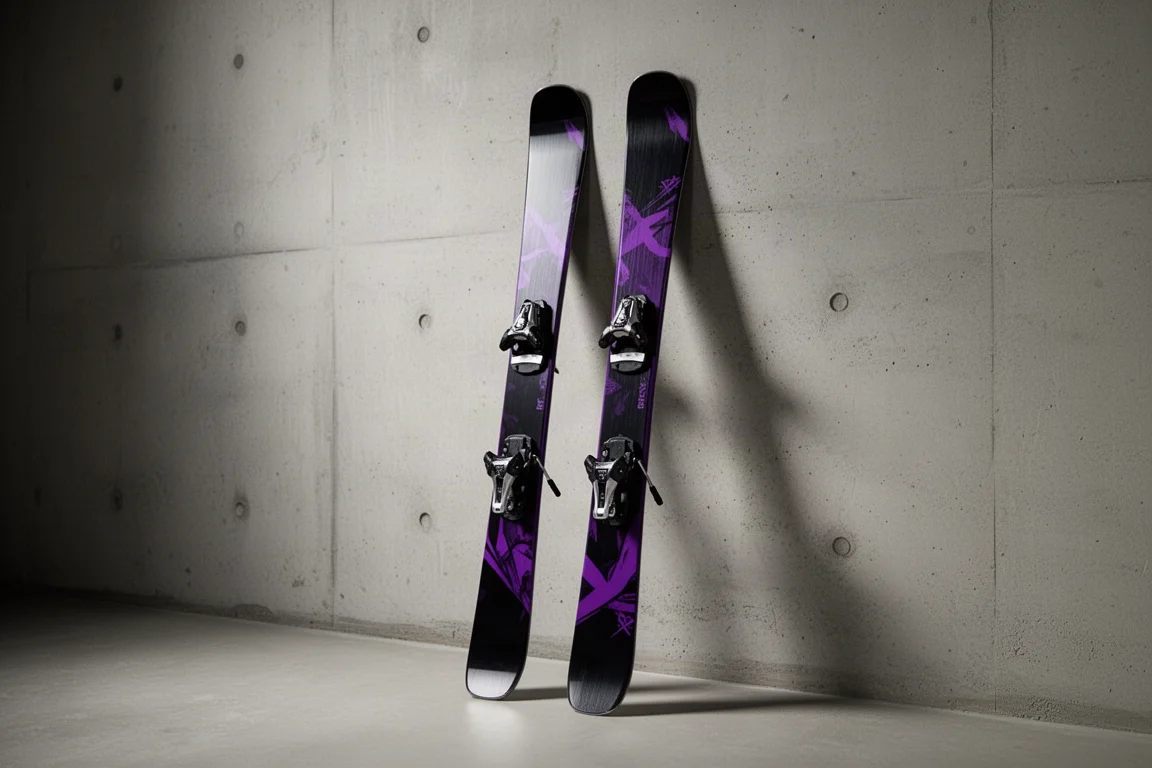
It is also, by any reasonable measure, a very good-looking ski. The black and purple graphic is bold without being loud, and it gives the M3 line a visual identity that should help these skis get noticed on a shop wall.
The short version: this is a freestyle twin with real all-mountain manners, and it rewards a balanced, centered skier far more than it rewards a heavy-footed one.
Who the Dynastar M3 94 Is For
The M3 94 makes the most sense for skiers who already spend time in the park, or who at least want a ski that behaves like a park ski everywhere else on the mountain. The shape, the weight, and the flex pattern all point in that direction. If park is completely off the table, this is a harder ski to justify, largely because of how centered the mount point is.
It also suits lighter and more balanced skiers particularly well. The softer flex makes the ski easy to bend, easy to pivot, and easy to throw sideways, which is exactly what you want when you are skiing switch, playing on rollers, or working through a tight tree line.
Heavier and more aggressive skiers can absolutely ride it, but they will find less support underfoot than they would on the M3 100.
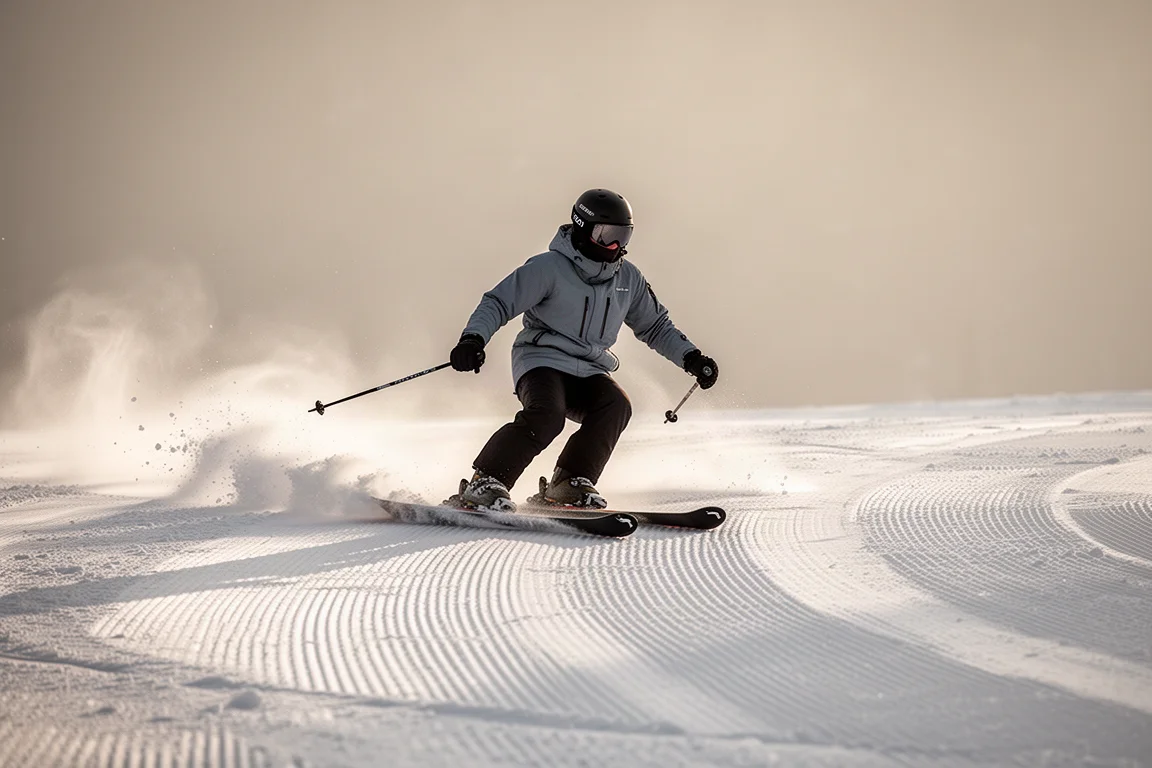
In practice, the dividing line is intent. If you want a ski that holds up when you lay into it with everything you have, look at the stiffer options in this category. If you want a ski that bends readily, feels smooth underfoot, and lets you manipulate it with very little effort, the M3 94 is the more interesting choice.
Construction and Ride Character
Dynastar builds the M3 94 around its Hybrid Core 2.0, and the method is worth understanding because it explains a lot of how the ski feels. The core uses three layers of poplar wood: one at the bottom, and two milled and joined layers above it. Those top two layers are pressed together without adhesive, and the friction between them is what adds energy to the finished ski.
The core is flanked by polyurethane strips that run through the sidewalls. Polyurethane is, functionally, a plastic, and it accounts for a meaningful share of the ski’s construction. The payoff is a smoothness and fluidity that is hard to find in skis built without it, along with strong vibration damping.
Underfoot there is a metal plate rather than a full metal layer. It runs edge to edge in the mounting zone directly beneath the binding, which helps edge grip and adds structural integrity through the middle of the ski without making the whole ski stiff.
Compared with the M3 100, the M3 94 is thinner overall even though it uses slightly more sidewall material. That thinner profile produces a softer flex, and the difference is easy to feel by hand: the M3 94 can be decambered with one hand, while the M3 100 takes two.
Dynastar lists the weight at 1,700 g per ski in the 179 cm length. The 179 cm model measures 125 mm at the tip, 93 mm underfoot, and 118 mm at the tail, with a 15 m turn radius. For reference, the M3 100 in a 185 cm length has an 18 m turn radius.
Main Strengths
The first thing that stands out on snow is smoothness. The M3 94 has excellent vibration damping and a fluid, connected feel, and it stays composed in inconsistent snow. It does not have the poppy, snappy energy of the M3 100 or the M3 108, but that is a deliberate trade. What you give up in rebound, you gain in a ride that is easy to live with.
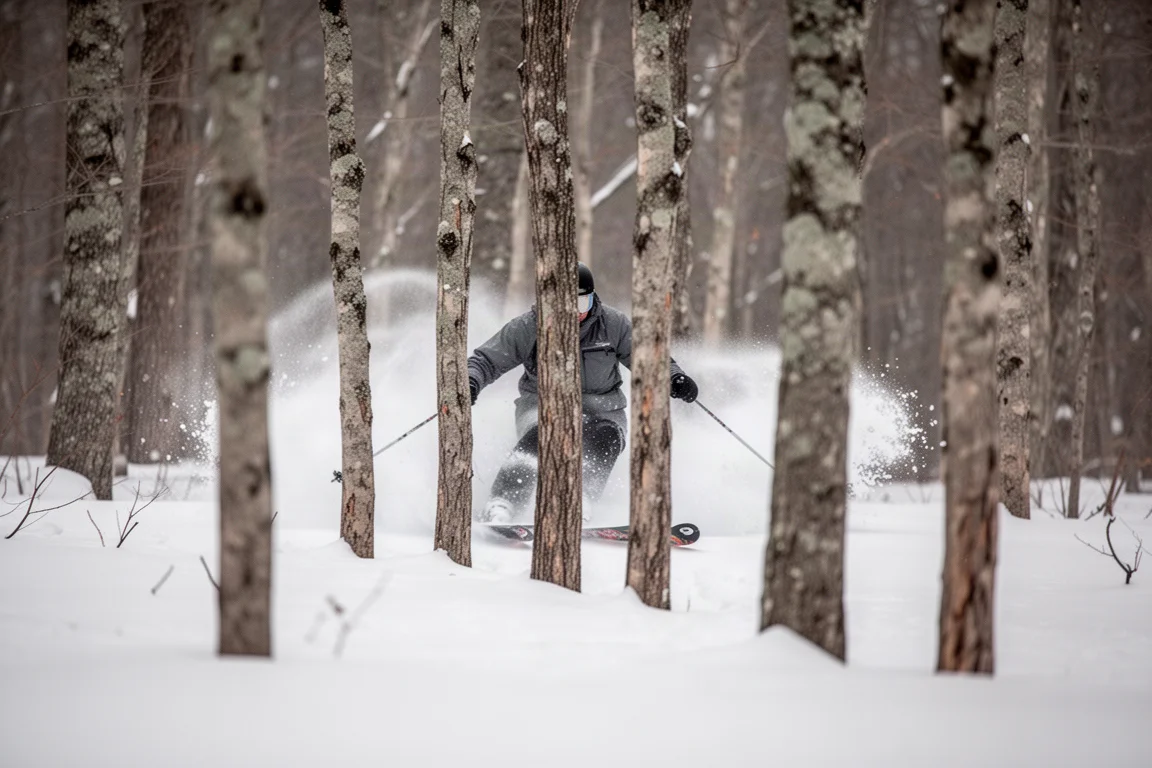
The second strength is maneuverability. Off trail, in bumps, in trees, and in other technical terrain, this ski is exceptionally good. It is easy to get it to move around behind you, and the combination of shape and flex means it never feels like it is fighting you. On a simple maneuverability scale, it sits near the top of its category.
It is also an unusually good bump ski for the right rider. The soft flex makes it forgiving and easy to work with, and the centered mount keeps the ski balanced when you are moving your feet quickly underneath you. Skis that pair a softer flex with more tip rise tend to punish a particular style, and the M3 94 avoids that trap for lighter and more balanced skiers.
On trail, the ski bends easily and can be driven into a turn apex, which makes it fun on groomers when you are skiing from a centered, planted position. It is not built to be skied off your heels or loaded up at the shovel, but a skier who stays over the middle of the ski will find it responsive and predictable.
Park and Freestyle Performance
Within the Dynastar range, the M3 94 is the most park-oriented ski in the M3 line. It is not a dedicated park twin tip in the purest sense, but it is close, and the shape, weight, and flex pattern all make sense for freestyle riding.
The short turn radius is interesting in this context, because it does not feel like a short-radius ski on snow. A softer flex and a relatively straight sidecut profile tend to blur the turn radius conversation entirely. You can see the sidecut when you look down the ski, but the ski reads straighter than its 15 m figure suggests.
The single recommended mount point is notably more centered than the M3 100’s. That matters for park riding, where symmetry and mount position do most of the work in how a ski slides rails and handles switch. It is also the main reason this ski is hard to recommend to a skier who has no interest in park at all.
For anyone who does spend time hitting rollers, spinning 180s, or just skiing the whole mountain in a freestyle frame of mind, the M3 94 is a strong and genuinely fun option.
How It Compares to Similar Skis
The closest comparison is the Armada ARV 94. Both skis accomplish very similar things, but the ARV 94 feels a little stiffer, and the M3 94 feels noticeably more bendy in the tips and tails. If you like a slightly more planted freestyle ski, the ARV is worth a look. If you want more give, the M3 94 wins.
The Oblivion 94 is another excellent comparison, and an interesting one because it reaches a similar result through different engineering. It has very little early taper and not much rocker, but it is extremely soft, so it interacts with the snow more at the extremities while still feeling forgiving. The M3 94 gets there through shape and flex rather than through an absence of taper.
The Liberty Scope 94 is lighter and more maneuverable, and it does not damp vibration as well. It is remarkably easy to throw around, while the M3 94 feels smoother and a little more stout.
The Line Chronic 94 is stiffer overall, especially underfoot. It can be skied harder through the middle of the ski, and it offers more all-mountain composure than its park heritage would suggest. The M3 94, by contrast, feels more focused on freestyle and asks you to stay balanced rather than to drive the front of the ski.
Things to Consider Before Buying
The main thing to understand is that the softer flex is a genuine trade-off, not a free upgrade. Because the ski bends so easily, a strong skier can push straight through the shovel. It will still carve and it can still apex a turn, but you need to stay planted over the middle of the ski rather than expecting the front of the ski to support you.
The centered mount point is the second consideration. If you are not used to skiing a more centered ski, the amount of ski behind you can feel awkward in bumps at first. The shape and flex soften that transition considerably, but it is still a real adjustment.
Length options are limited. The M3 94 comes in a 179 cm and, according to the catalog, a 188 cm. If you normally ski something longer or shorter than those two options, this may not be the ski for you.
Finally, be honest about whether park or freestyle riding is part of your skiing. This ski is built with that world in mind, and a pure all-mountain skier would likely be happier on the M3 100.
Buying Advice
The M3 94 is an easy ski to recommend to a specific skier and a harder one to recommend broadly. If you want a freestyle twin that is smooth, forgiving, easy to pivot, and happy in bumps and trees, it is one of the better options in its category. If you want a ski that holds up when you ski it hard and aggressively, the M3 100 is the safer pick because it works across a wider range of styles and skiers.
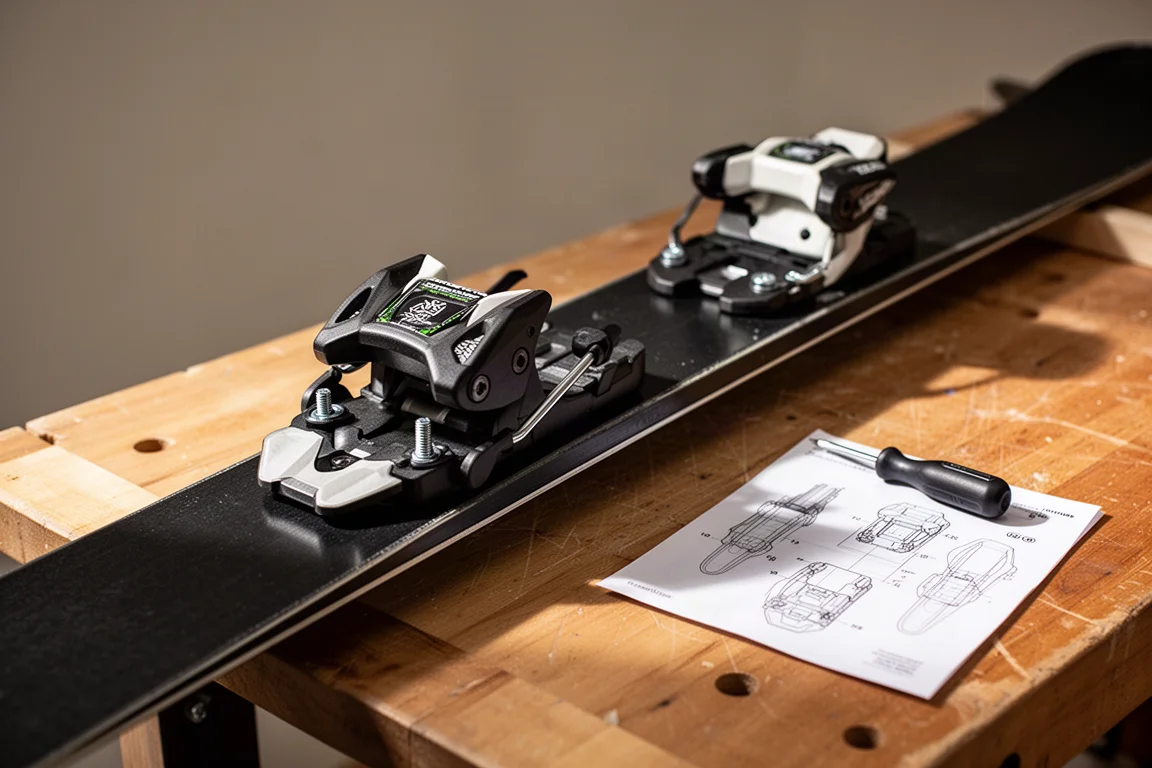
Think about your mount point before you drill. The ski ships with a single recommended position, which sits closer to center than the M3 100’s, but there is room to move it forward if you want a more freestyle-focused setup. If you are between sizes, the 179 cm is a versatile choice for most riders, while the 188 cm will suit taller or heavier skiers who want more ski underfoot.
There is no published price to work from here, so compare against other mid-90s freestyle twins in the same class before you commit. As with any ski, the flex and mount point matter more than the spec sheet, and both of those are things you can evaluate in person.
Conclusion
The Dynastar M3 94 is a successful new addition to the M3 family. It rounds out the collection as the narrowest freestyle-oriented option, and it does so with a construction that delivers real smoothness and damping. The softer flex and centered mount make it forgiving, maneuverable, and genuinely fun in bumps, trees, and the park.
It is not a ski for everyone, and Dynastar would probably be the first to say so. But for the rider it is built for, it is a confident buy, and it looks excellent while doing it.
Product link
View more details for Dynastar M3 94
This product is mentioned in the review. Check the specifications, options, and compatibility before buying.
View more details for Dynastar M3 94Further reading
Related Reviews
Skis
Armada Anti Matter 82 W Review: A Light, Approachable All-Mountain Carver
Armada's Anti Matter 82 W pairs a lightweight Karuba and carbon build with an easygoing all-mountain shape, aimed at intermediates through lighter-footed advanced skiers.
Skis
Armada Anti Matter 88W Review: A Light, Playful 88mm All-Mountain Ski Plus Two Alternatives
The Armada Anti Matter 88W returns unchanged in spirit from its Reliance 88C days, and it remains one of the most versatile 88mm skis around. We also look at the Nordica Santa Ana 87 and Anti Matter 92 W as alternatives.
Skis
Armada ARV 100 vs Atomic Bent 100: Which 100mm Freestyle Ski Should You Buy?
Two of the best all-mountain freestyle skis of the season compared: one leans playful and park-ready, the other holds up better everywhere else.