Kitchen Knives
Dream Kitchen Knife Kit: The Knives Chefs Would Actually Pack
A practical dream knife kit built by former line cooks and chefs: stainless workhorses, a serious sujihiki, and the small tools that keep service running.
Introduction
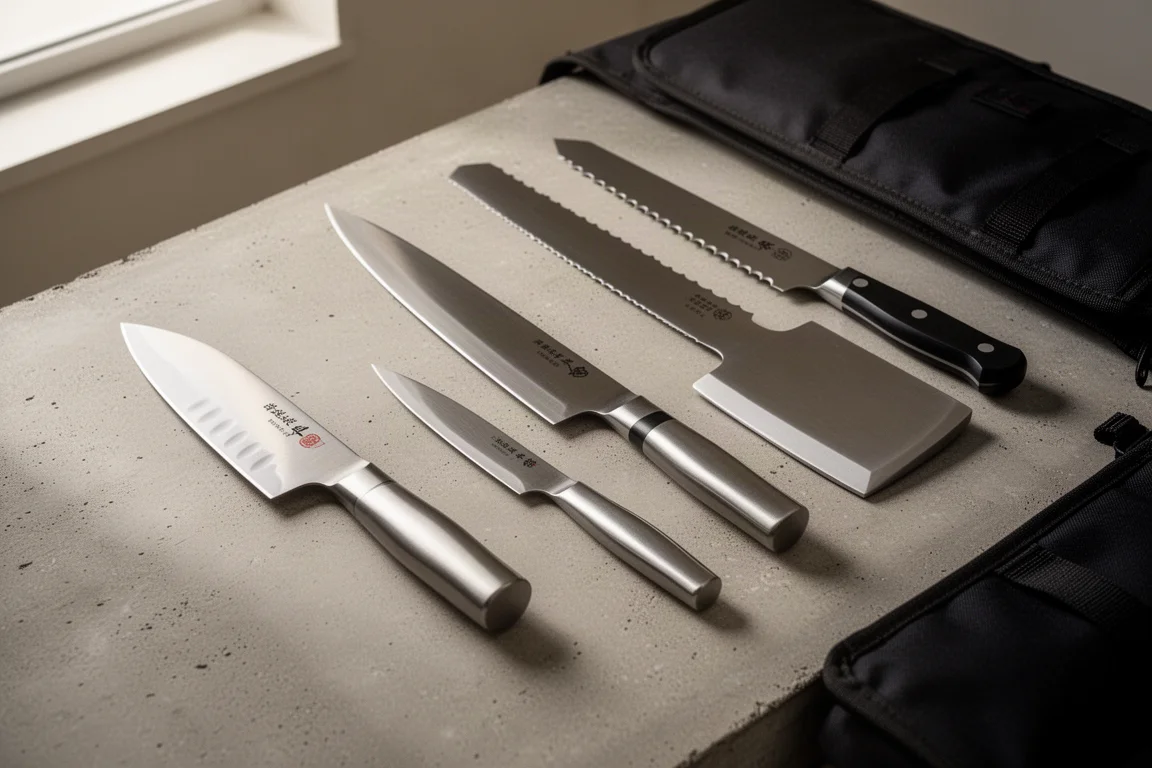
We asked three people with serious restaurant hours behind them, former line cooks and chefs with a decade or more each on the line, to build their dream knife kit from scratch. The results are telling: nobody picked a flashy blade for the sake of it. Every knife here earned its place through a specific job, whether that was breaking down a stack of chickens before lunch service or slicing smoked salmon without tearing it.
What follows is a practical, service-tested shortlist. If you are building your own kit, or upgrading one piece at a time, these are the knives and accessories worth considering first.
What Makes a Good Knife Bag
Before the blades, the carry. The kit starts with a rugged nylon knife bag in the mould of a Crumpler roll, chosen for its outdoor-inspired build, easy-clean fabric, and thoughtful extras. It swallows nine knives without complaint, has dedicated pockets for small tools and a notebook, includes space for the bandages every cook inevitably needs, and uses hard plastic sheets between layers so blades tuck away safely and stay protected in transit.
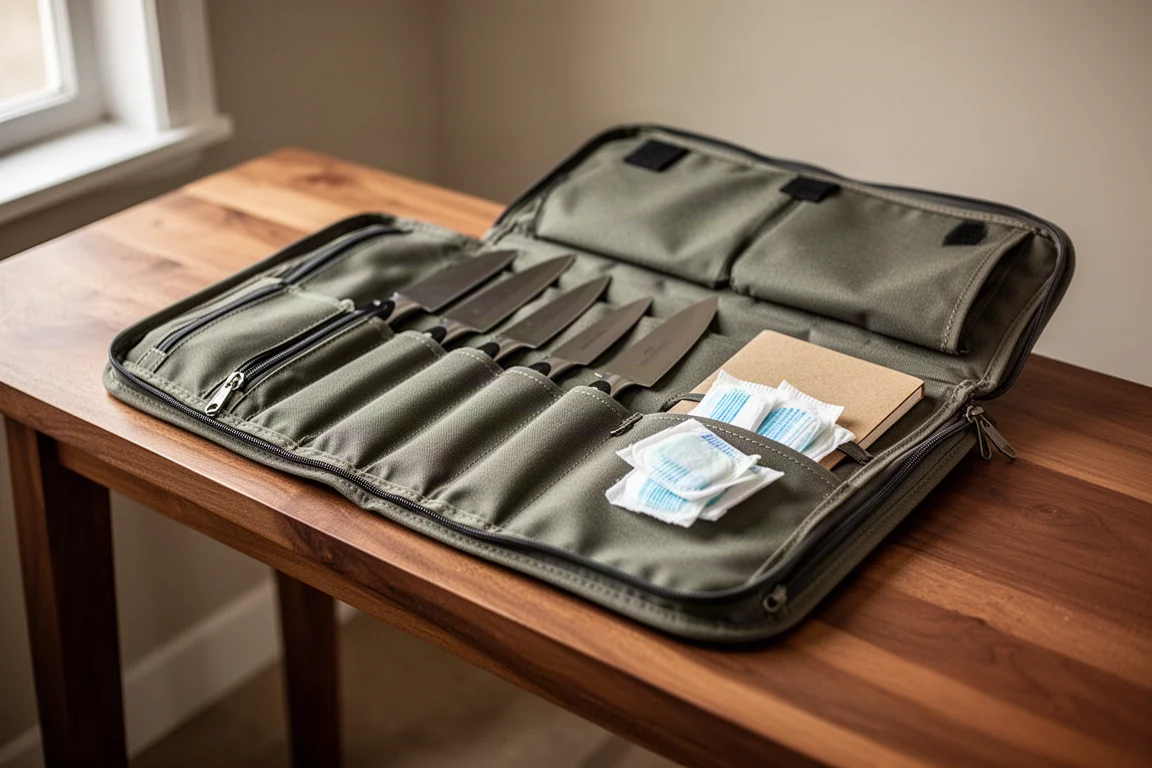
For anyone commuting with a full kit, that combination of capacity and protection matters more than looks.
The Everyday Line Cook Picks
Yukigudo 210
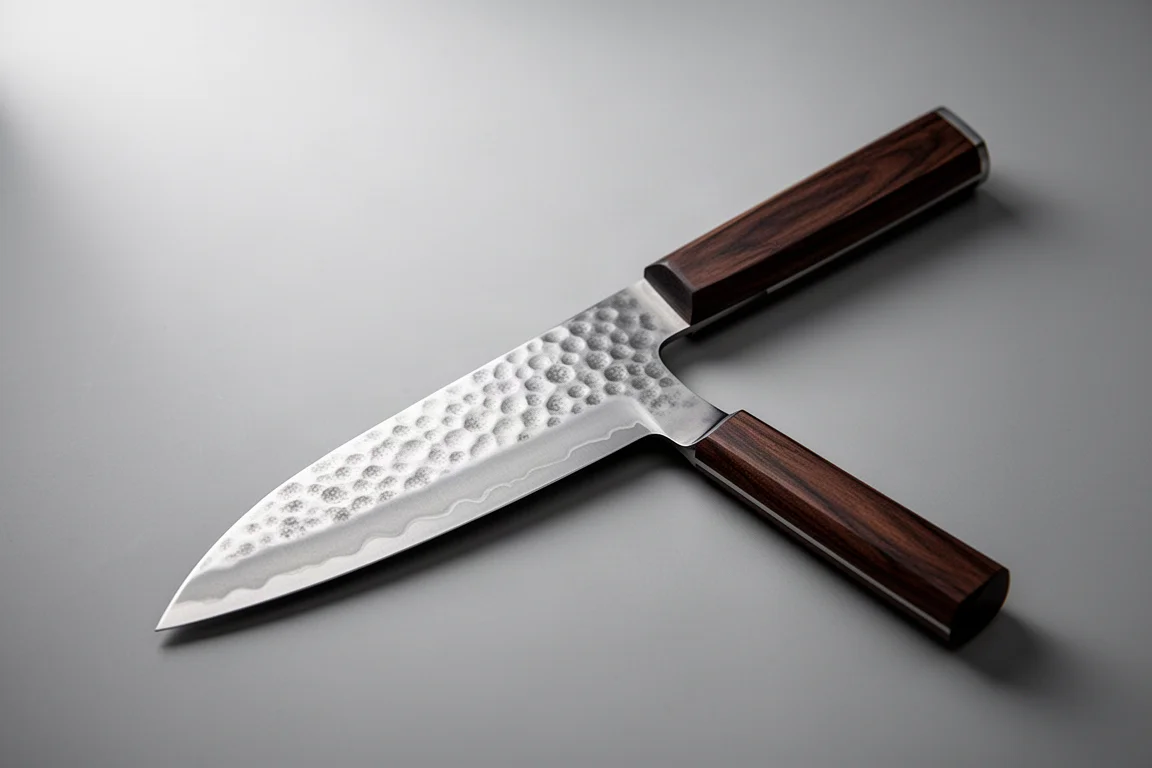
A shorter chef knife with a beautiful nashiji finish, picked for everyday chopping and slicing through veggie prep. The finish is described as near perfect, and the shorter length suits smaller hands and tighter stations. It is a knife that keeps everything in good shape for lunch service without asking for much in return.
Tojiro Classic Bread Knife
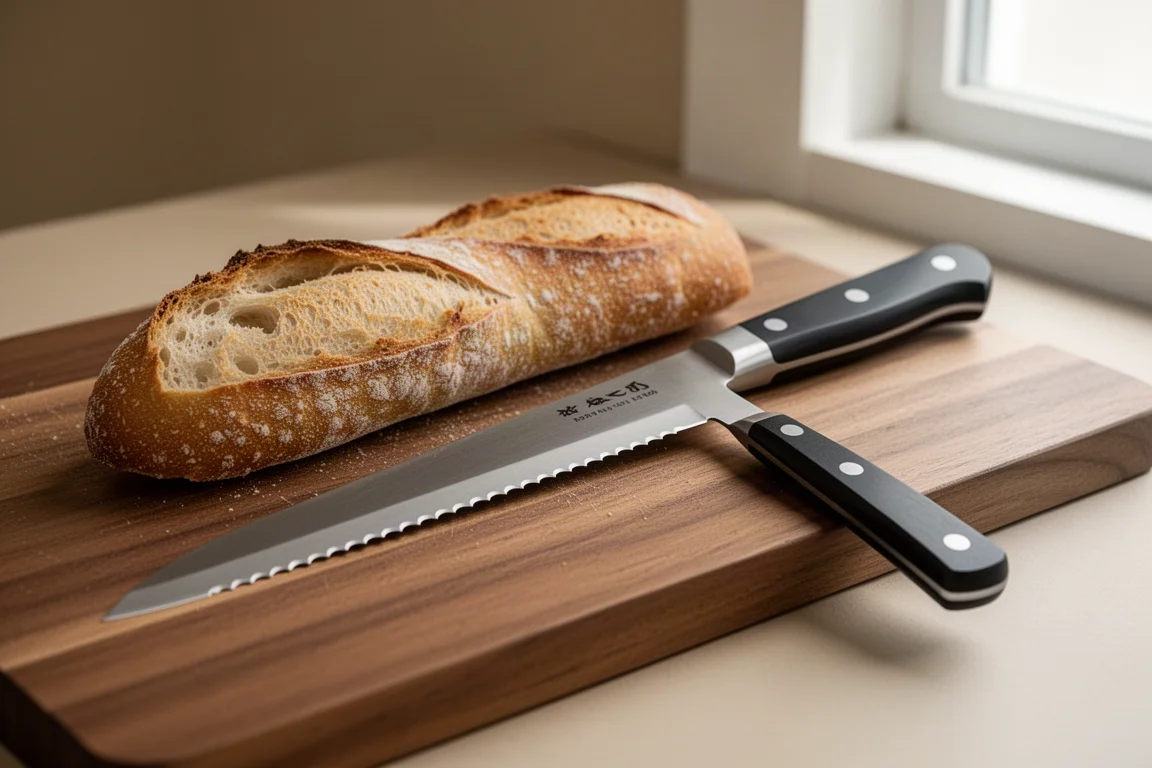
Restaurant bread service is brutal on blades: crusty loaves, soft sandwich bread, baguettes by the dozen. This classic bread knife with fine teeth cuts through a baguette like it has a zipper on it, and it does not break the bank. Previous jobs saw similar knives used for everything from bread to portioning slabs of pork belly.
Slicing and Carving Knives
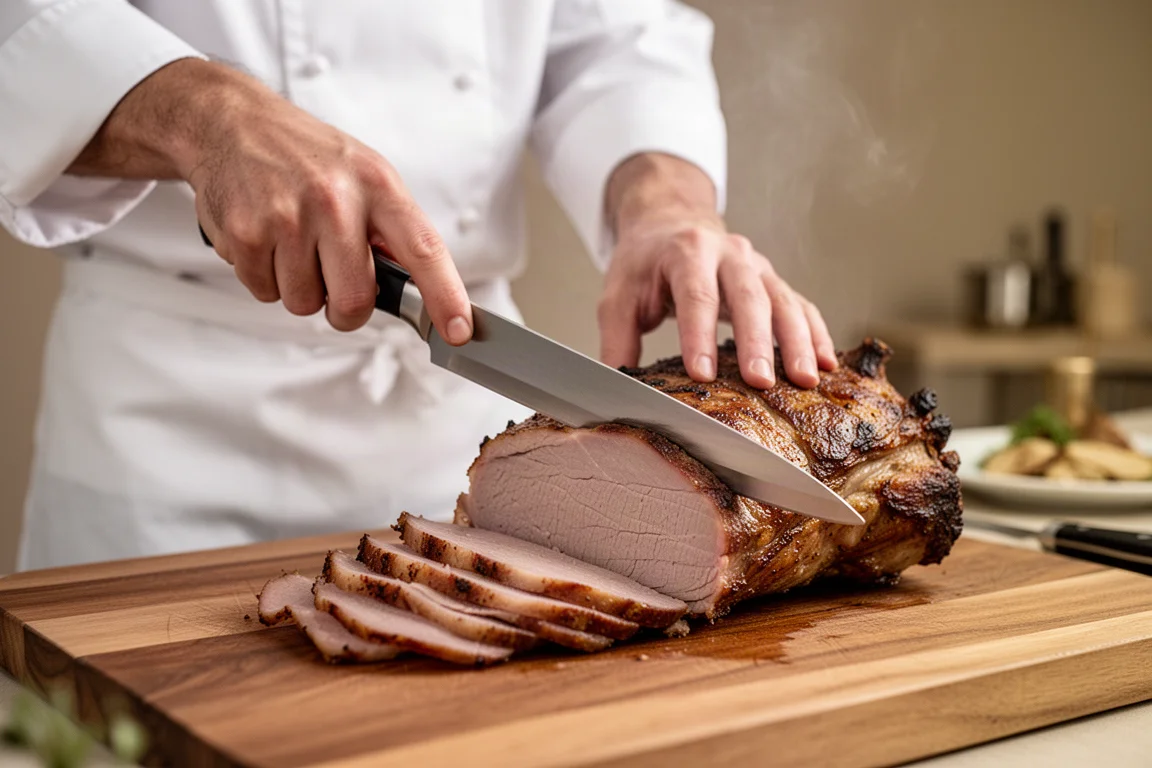
A long sujihiki is the knife you want at a carving station, portioning roasts into steaks, or working through a series of smoked salmon slices cleanly and precisely. A bad first attempt at slicing smoked salmon, complete with an angry chef and wasted product, is exactly why a proper slicing knife earns its slot. Long, thin blades make fast, smooth cuts and feel great doing it.
Working Around Fish
For anyone with fish restaurant history, filleting and skinning is a daily morning prep task. A flexible salmon knife with real length lets you work close to the board on fish of all sizes, and a fluted blade keeps slices from sticking, so you get clean cuts without tearing or pulling. It is also a friendlier choice for left-handed cooks than traditional single-bevel Japanese fish knives, which usually favour right-handed users.
The Stainless Steel Workhorses
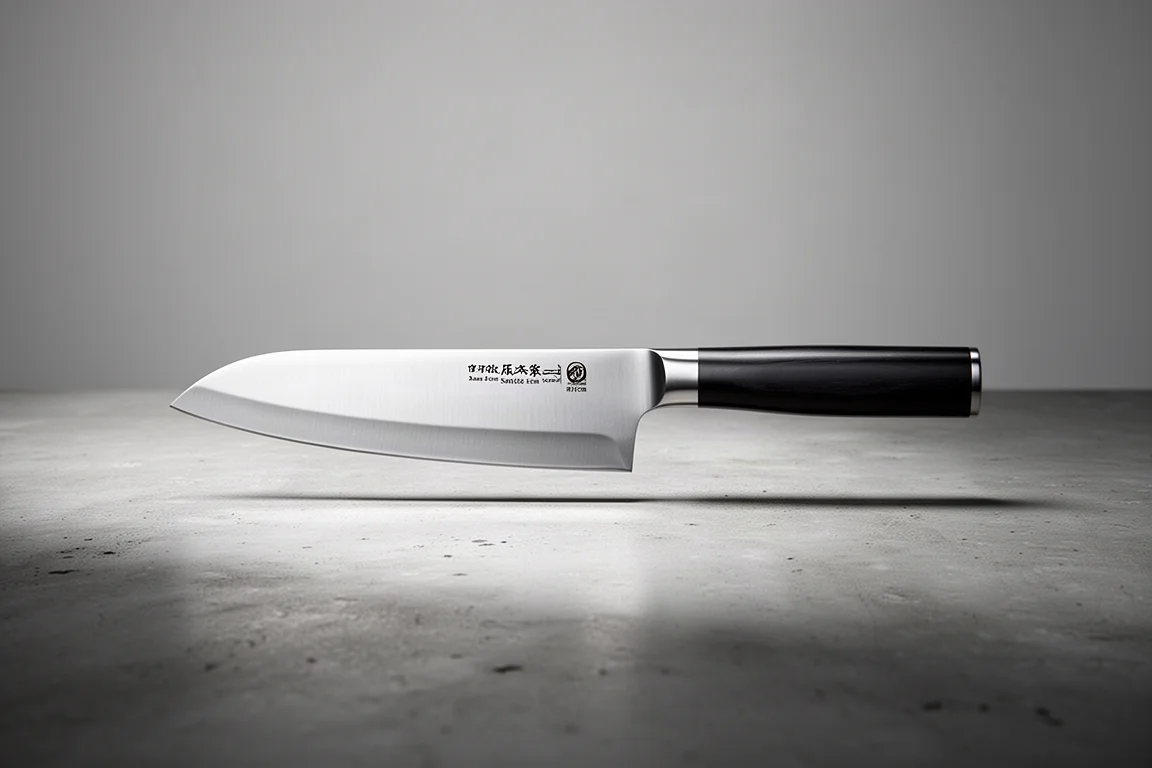
Had Ginsan Santoku 210mm
A stainless clad santoku that does almost everything without a moment of worry about rust. The craftsmanship at every step is praised as phenomenal, and the clean look holds up too. It performs far above what its understated appearance suggests.
Takamura SG2 210mm Gyuto
Nothing fancy to look at, and that is the point. This powdered stainless steel gyuto is the dependable stalwart many working chefs keep in their kit because it simply does the job, and does it well. In smaller kitchens or tight cutting stations, the 210mm length is also far easier to manage than anything longer.
Fujimoto NSS Gyuto
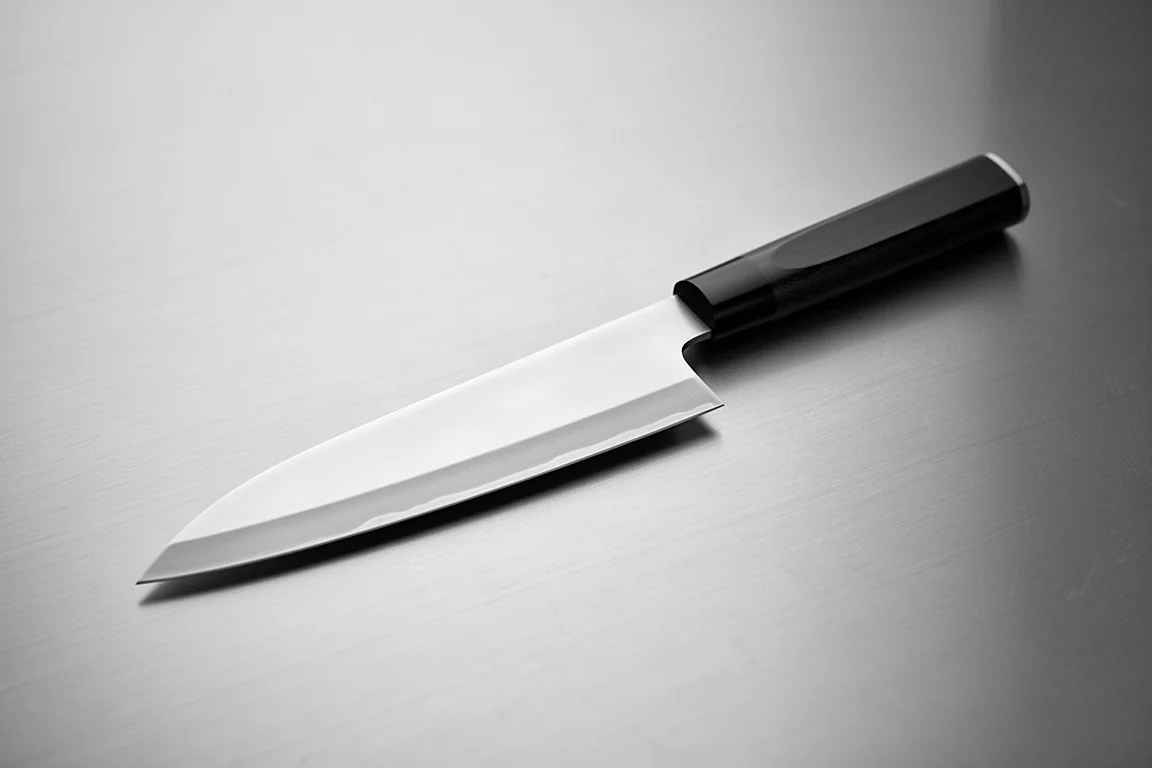
A carbon steel edge for wicked sharpness, wrapped in a stainless cladding so there is far less to manage day to day. It is called out as genuinely good value, which is rare territory for a knife with this kind of edge performance.
One Bit of Bling
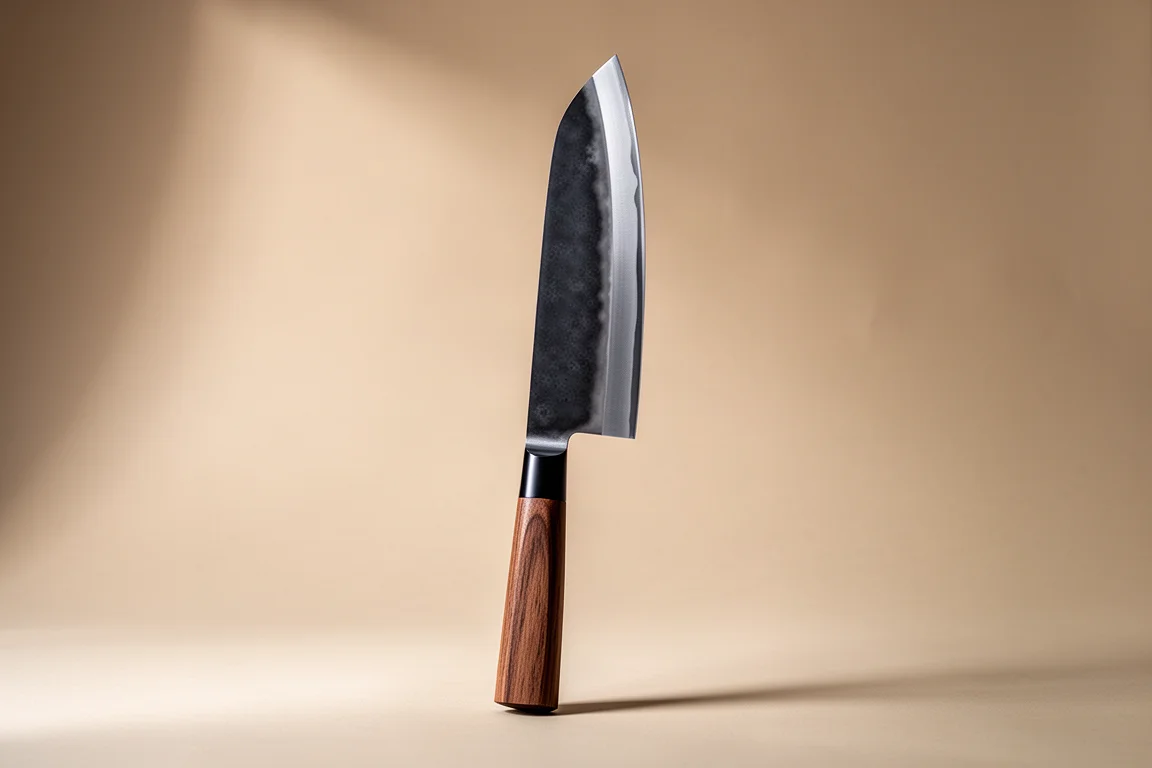
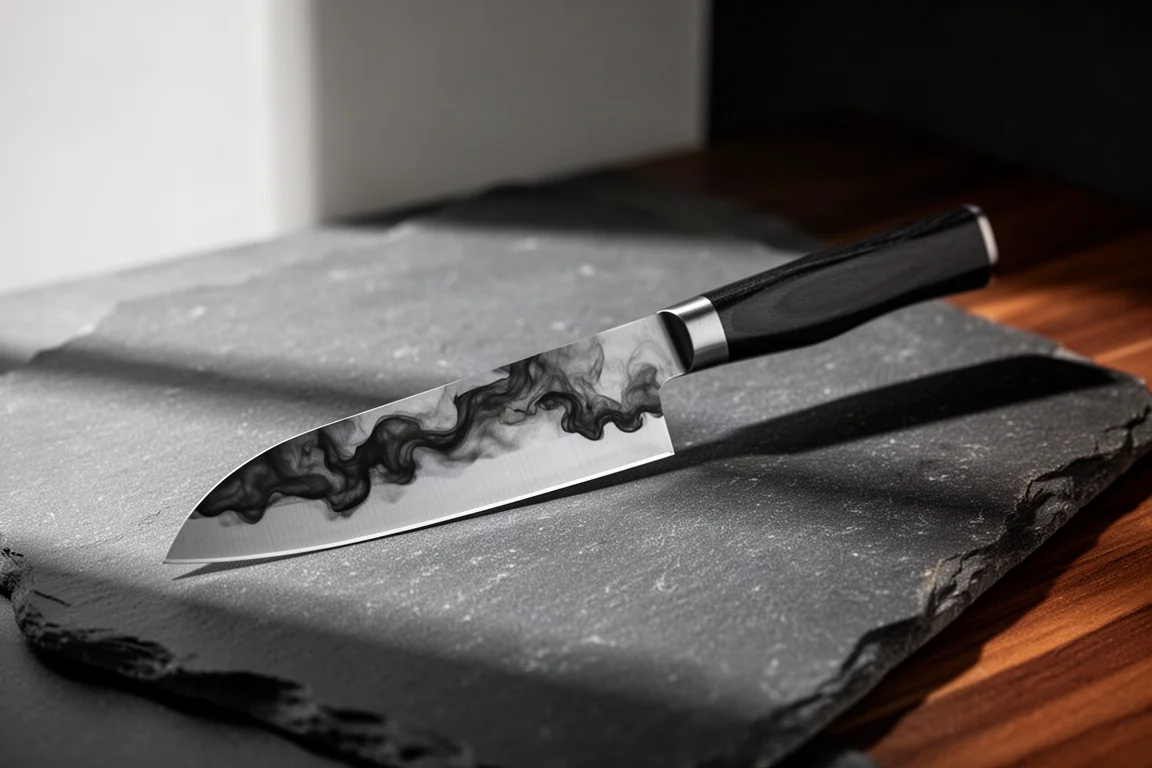
Masashi Kokuen 165 Santoku
Not every knife needs to be a workhorse. This santoku is the pick for manageable size, satisfying chopping of small items, and a touch of occasion: off-site catering, a morning TV segment, or lending a spare blade to a forgetful colleague. Masashi’s reputation as a blacksmith is a big part of the appeal, and the smoky dark finish makes it a piece you are proud to pull out of the bag.
When You Need to Be Rough
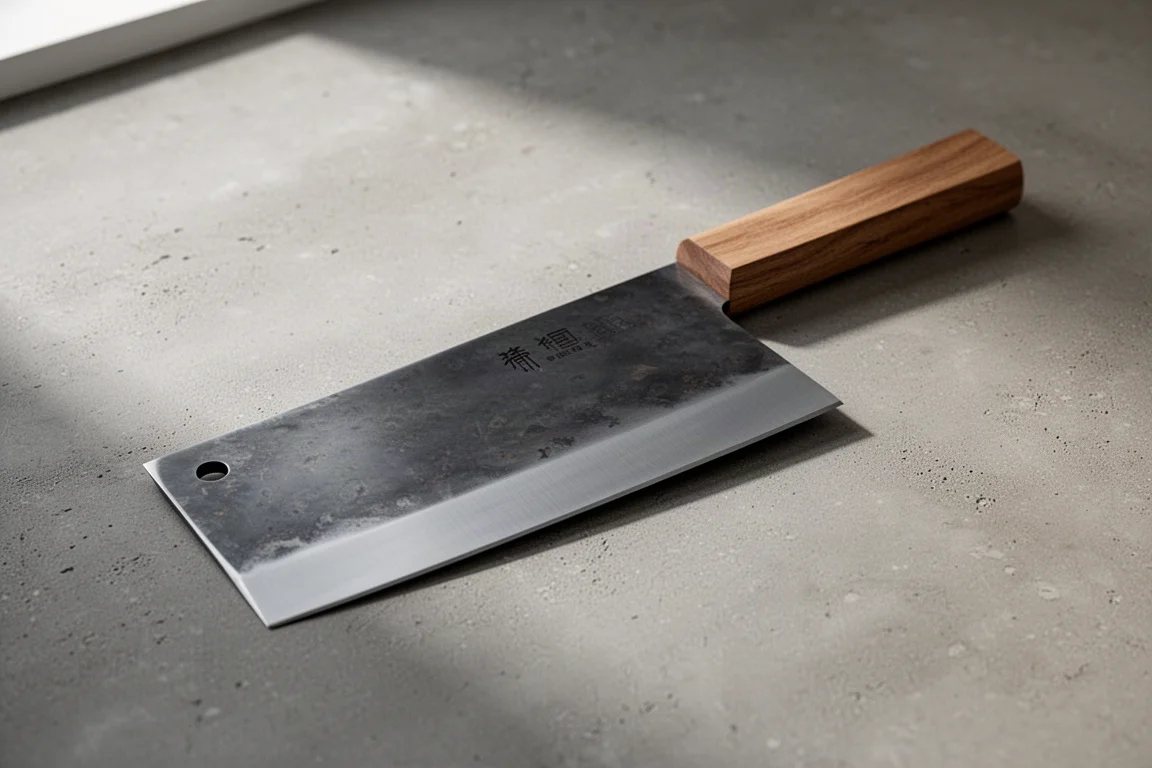
CCK Vegetable Cleaver
Sometimes you need a knife you do not have to baby. This stainless Chinese cleaver, known as their vegetable chopper, has a slightly thicker spine, handles small bones, crushes garlic on the board, and helps separate stock bones without complaint. It is not oversized or overly heavy, and it cuts better than you would expect from a beater-grade tool.
Honorable Mentions Worth Knowing
A few more knives came up that did not make the featured list but deserve a mention. The Nigara Hamono honesuki is a fancy, heavy poultry knife with a turquoise handle that makes the grind of deboning chickens feel a little less grim, and it glides around the curves of the bone. The Fujimoto Kochi Forge 270mm sujihiki brings a toothy blue carbon edge for portioning steaks, fish, and chops, with a long thin blade for smooth slender cuts. The Masashi Kokuen 240 sujihiki is the premium slicing pick from a favourite blacksmith, while the Yukisaki Gecko petty offers an offset profile for knuckle clearance, and the Ryusen Blazen nakiri pairs powdered stainless steel with a tapered, palm-filling handle. The Sakai Takayuki SK4 series is a sleeper: easy to put an edge on with just a ceramic rod when there is no time for stones.
Buying Advice
If you are starting from zero, the pattern here is clear. First, buy stainless steel for anything that lives through a busy service, because you will not always have time to wipe a blade dry. Second, match each knife to a job you actually do: a bread knife if you bake or serve bread, a honesuki if you break down poultry, a flexible salmon knife if fish prep is routine. Third, do not overlook length; a 210mm gyuto is often more useful on a cramped station than a 270mm.
Buy one good knife at a time, use it for a month, and let the gaps in your prep work tell you what to buy next.
The Small Tools That Matter
The knives are only half the kit. The accessories list is refreshingly practical: a pan scraper that makes cleanup faster, a weighted plating spoon nobody will steal, a slotted spoon for pulling things out of jars and draining pans, a silicone spoonula, and a pair of King tongs that do everything from turning proteins to adjusting charcoal. A good stainless peeler with a curved blade wastes less motion than a paring knife ever will, and separable kitchen scissors with a built-in nutcracker and tin opener are easier to clean and sharpen.
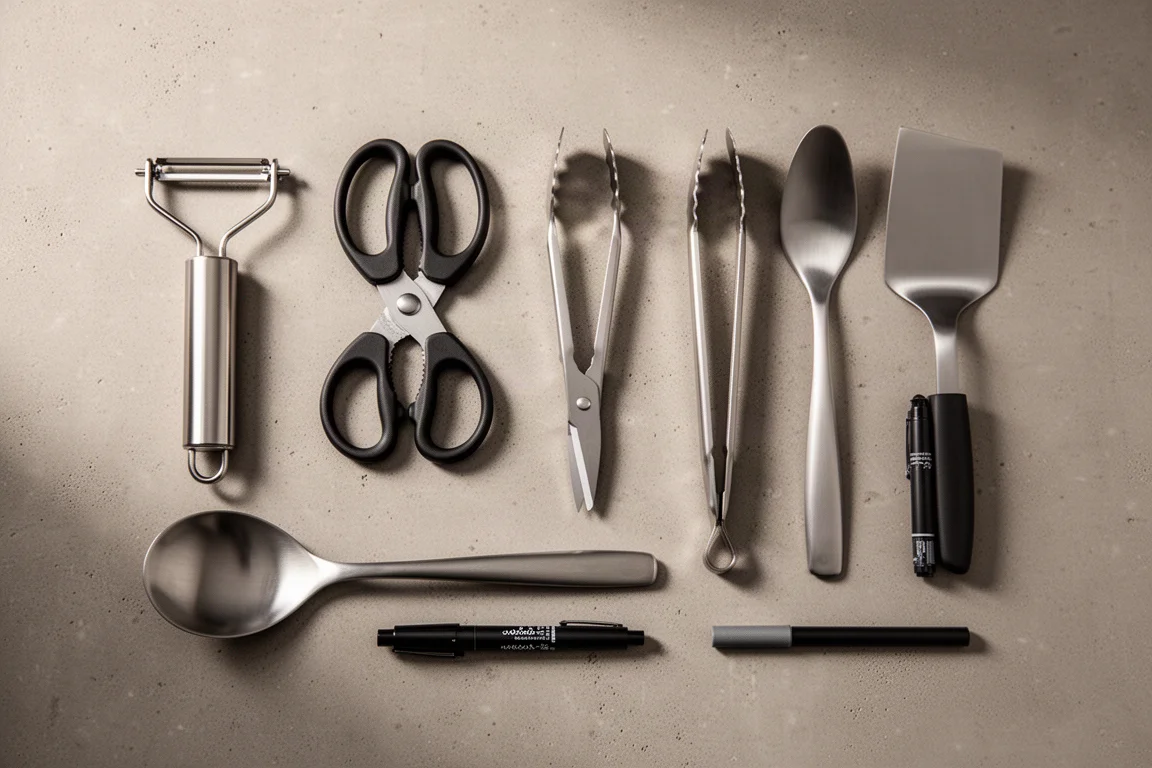
Rounding it out: an R Murphy oyster shucker with a sturdy point and nonslip handle for cold-bar shifts, a fish scaler that will not shred the fish, a combo 1000/3000 stone for refreshing an edge in a pinch, a white honing rod for daily touch-ups, a microplane for making it snow parmesan, an offset spatula, and, above all, a Sharpie. Unlabeled containers in a professional kitchen are a fast route to trouble.
Conclusion
A dream knife kit is not about owning the most expensive blade in the case. It is about a short list of tools that each solve a real problem: a stainless santoku that shrugs off neglect, a bread knife that zips through baguettes, a cleaver you can be rough with, and one slightly flashy piece for the days you deserve it. Build yours the same way, one job at a time.
Further reading
Related Reviews

Kitchen Knives
Best Chef's Knives 2026: 27 Popular Options Tested and Ranked
A comprehensive review of 27 chef's knives ranging from $18 to $380, with honest assessments of handle comfort, blade balance, and real-world performance.

Kitchen Knives
Best Chef's Knives Under $75: Two Tested Recommendations
Two practical 8-inch chef's knives that balance sharpness, comfort, and durability without premium pricing.

Kitchen Knives
Best Chef's Knives 2026: 27 Options Tested and Ranked
A comprehensive review of 27 chef's knives ranging from $18 to $380, with honest assessments of handle design, balance, blade profile, and real-world performance.