Camping Stoves
Docha Booty Cassette Stove Review: A Folding Stove With Genuine Character
A clamshell camping stove that folds like a cassette player, runs on butane or isobutane, and trades speed for one of the most distinctive designs in outdoor cooking.
Introduction
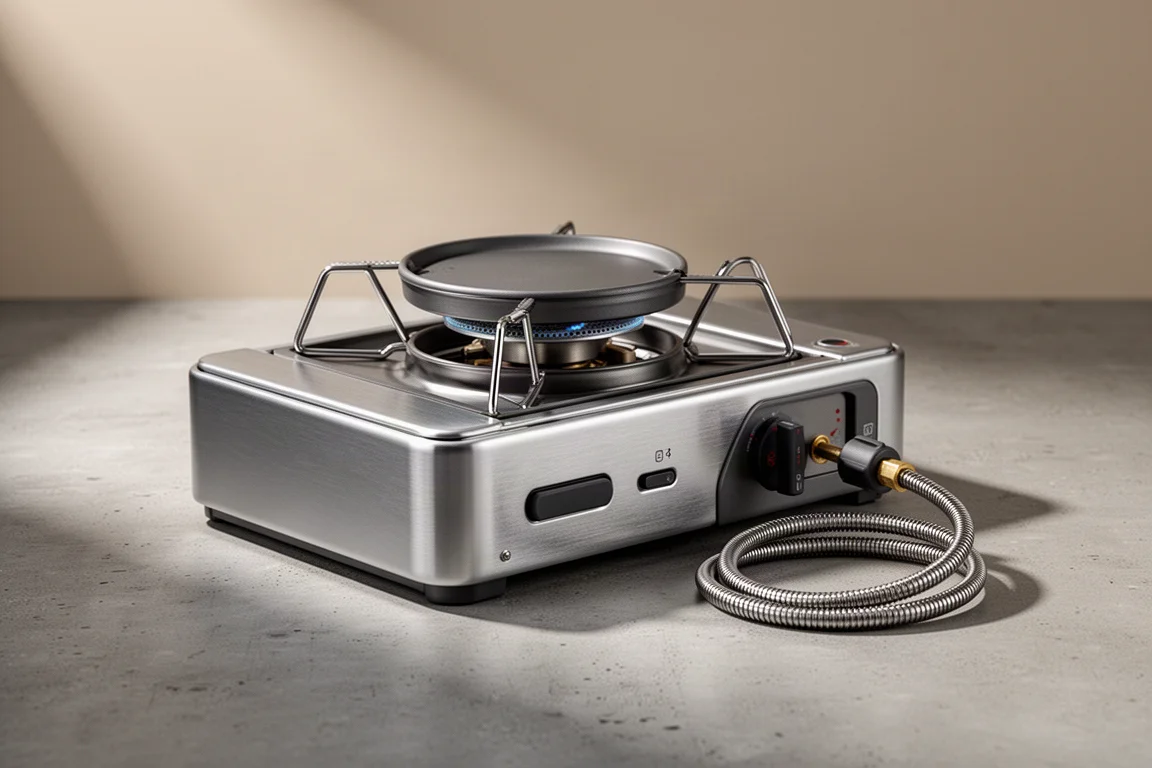
Cassette-style camping stoves are a rare format, and the Docha Booty Cassette Stove is one of the more unusual examples of the idea. Rather than folding flat like a typical canister stove, this one hides its burner head inside a clamshell case that opens and closes much like a portable cassette player. The pot supports flip outward, the fuel hose feeds through the side, and the whole assembly snaps shut into a tidy block when cooking is finished.
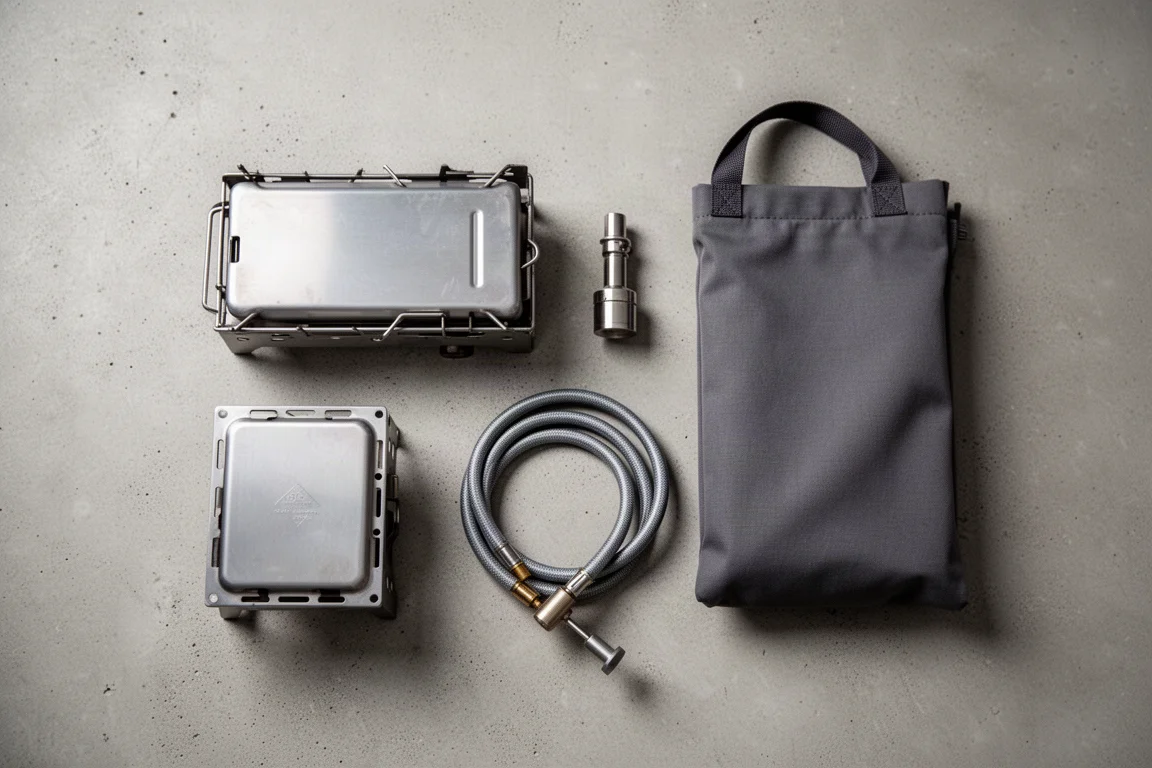
The kit is listed at around $50 on Amazon, weighs 1.64 lb in total, and the stove alone comes in at 1.1 lb. Output is rated at 8,190 BTUs. Those numbers set expectations accurately: this is a characterful, well-made stove built around an idea rather than around minimum weight.
Who This Stove Is For
This stove suits campers who enjoy gear with a point of view. If you already like the ritual of setting up a clever piece of equipment, unfolding panels, flipping out supports and watching a mechanism do its job, the design here is genuinely rewarding. Car campers, weekend travellers and anyone who cooks at a table rather than on a mountain ledge will get the most from it.
It is a harder sell for ultralight backpackers and winter campers. The stove is not designed for very cold conditions, and its weight and folded size are both well above what a solo traveller on foot would normally carry. Riders, hikers and climbers who count grams should look elsewhere.
Design, Setup, and What Comes in the Box
The kit arrives with a padded storage case that is genuinely good. There is a grab handle at the top, dual zippers with pulls that run smoothly, and enough internal structure to protect the stove in transit. Inside, the burner head sits within the folded body, the fuel hose exits at the side, and the connection port is on the outer face.
Opening it is a two-handed operation. The easiest method is to grip the two points at the top of the case and pull outward. Any other approach feels awkward. Closing it is the reverse: push the burner assembly inward, then fold the case shut. The pot supports flip out for use and rotate back into the body afterwards, and the electronic igniter sits on one side with the on and off valve on the other. The igniter can only be pressed once the stove is unfolded, which is a sensible piece of sequencing.
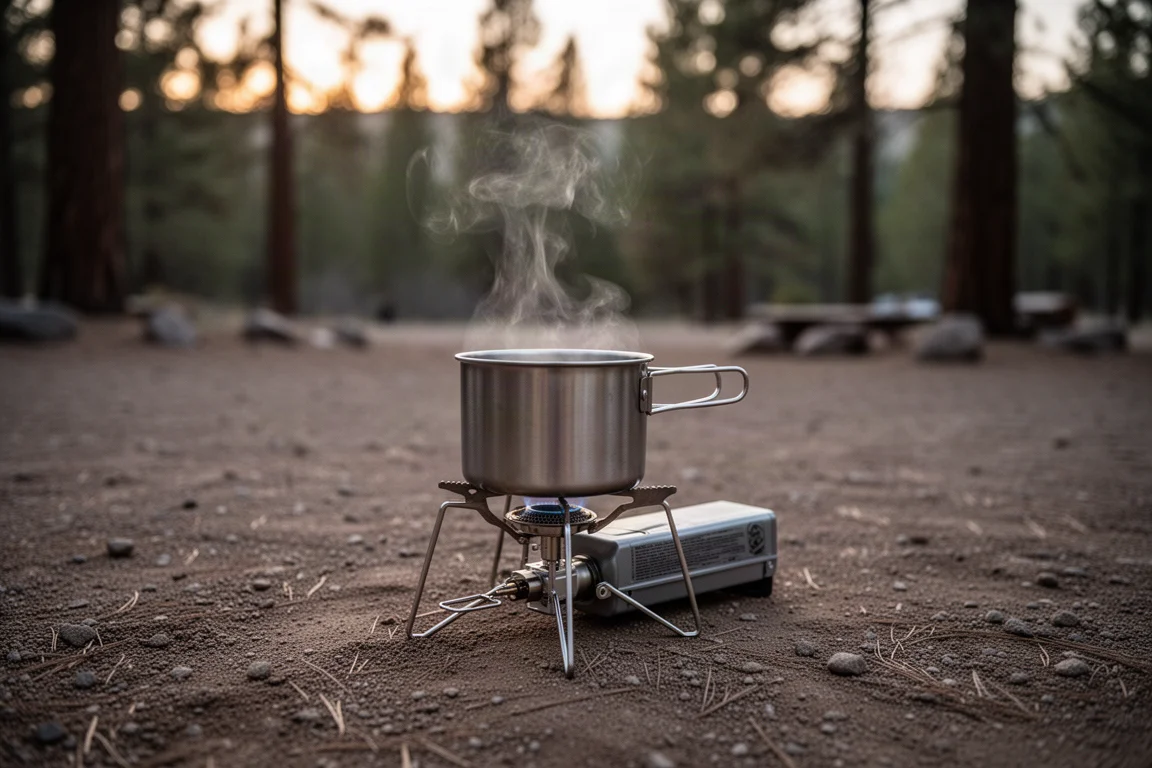
Fully set up, the stove measures roughly 10 inches wide, 3.5 inches tall and about 5 inches thick. Folded, it shrinks to 7 inches wide, 3.5 inches tall and 2 inches thick, which is compact for what it does but still substantial. The construction is primarily aluminium with some stainless steel, and the fit and finish are clean, with no sharp edges anywhere on the body.
Fuel Options: Butane, Isobutane, and the Propane Claim
The stove is built to run on butane and isobutane, and an 18.5 inch extension hose with an isobutane adapter is included. Connecting a butane canister takes a small amount of technique: push the hardware forward before seating the canister, and it locks firmly in place. To release it, push the components together and it separates cleanly. Done correctly, there are no issues at all. Done incorrectly, the canister or hose can pop off, so it is worth practising once at home.
The manufacturer also states that the stove can run on propane with an additional adapter. That claim is worth treating with caution. Running propane requires an adapter stacked onto another adapter, which is an arrangement many experienced campers would rather avoid, and the product description focuses almost entirely on butane and isobutane. The stove performs well on both of those fuels. Isobutane handles colder weather better, while butane is inexpensive when temperatures are mild.
Performance in Real Use
Boiling two cups of water took 5 minutes 41 seconds on isobutane, in breezy conditions that required repositioning the stove to shelter it. Set against that wind, the result is reasonable rather than impressive. Cassette stoves have never been sold on speed, and this one is no exception: it will boil water and handle real cooking, just not quickly.
One useful side effect of the design is that the burner head sits down inside the case, so the surrounding walls act as a partial windscreen. It is nowhere near windproof, but it does take the edge off a gust. The flame adjuster is excellent, with a smooth range from a full crank down to a gentle simmer, and it is neither too stiff nor too loose.
Main Strengths
The design is the headline. Outdoor gear is full of near-identical products, and a stove that folds like this stands apart immediately. The build quality matches the ambition: the machining is clean, the materials are good, and the igniter has fired on every attempt.
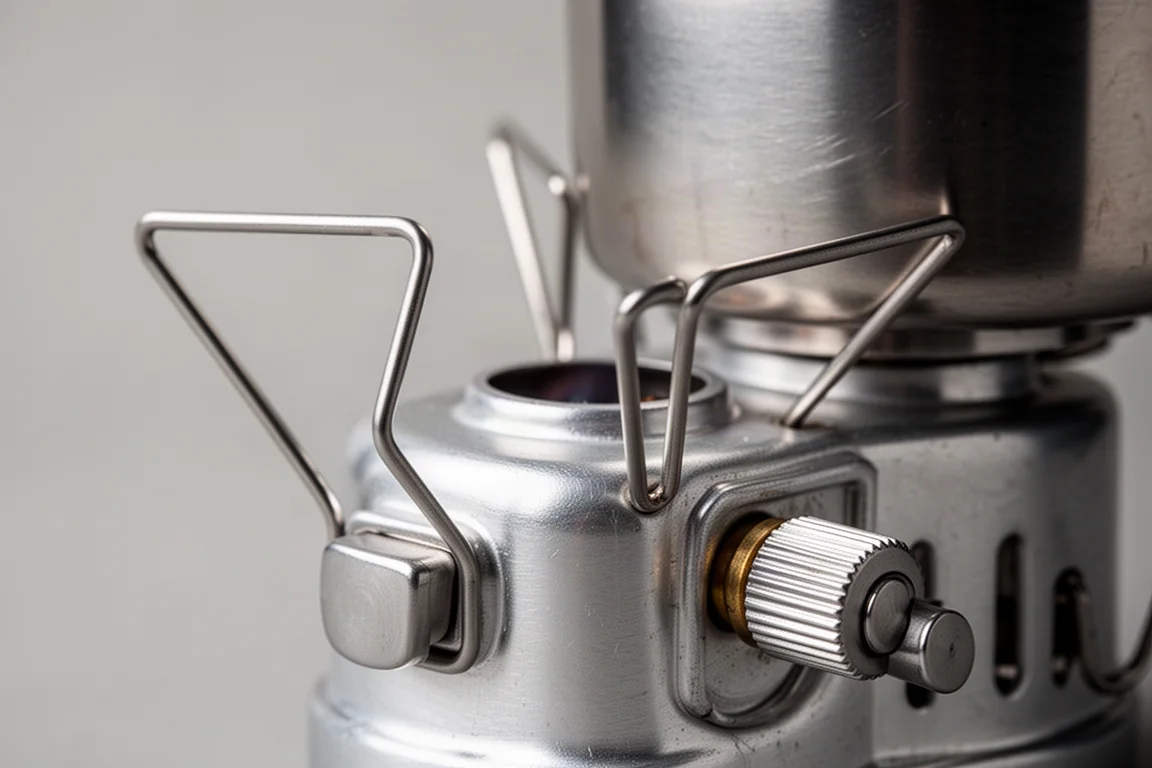
Fuel flexibility is a real advantage. Running butane or isobutane from the same stove, with the hose and adapter included in the box, means you can buy whatever is cheap and available locally. The pot supports are excellent as well, easy to deploy and easy to stow, and wide enough to take any size of pot, cup or pan you are likely to bring. The storage case deserves a mention of its own, since it protects the mechanism properly and has no obvious weaknesses. Finally, at roughly $50, the price is fair for everything included.
Things to Consider Before Buying
Speed is the first trade-off. This is not a powerful stove, and anyone expecting fast boils will be disappointed. It also has no preheat tube, which means it is tuned for warmer conditions and is not the right choice for cold-weather trips.
Size and weight are the second consideration. Folded, it is compact for a cassette design but still larger than a typical canister stove, and at 1.1 lb for the stove and 1.64 lb for the full kit it is noticeably heavier than far more powerful alternatives. If weight matters, another stove will serve you better.
The third point is materials. The aluminium panels are thin, and the body has a slightly soft feel that encourages care. It does not feel fragile in normal use, but it does reward slow, deliberate handling when opening and closing.
The fourth is complexity. This is one of the most intricate stoves around, with springs and moving parts throughout the opening sequence: the burner head rotates, the hose extends and the igniter protrudes all at once. Nothing has gone wrong in use, but the sheer number of mechanisms is worth factoring into a long-term decision.
Buying Advice
Buy this stove for the design and for the flexibility of running butane or isobutane from a single kit. If you cook at a campsite table, enjoy gear that feels engineered rather than assembled, and are happy to trade a few minutes of boil time for something you will actually enjoy using, the value here is strong. The included case, hose and adapter make it a complete package rather than an accessory project.
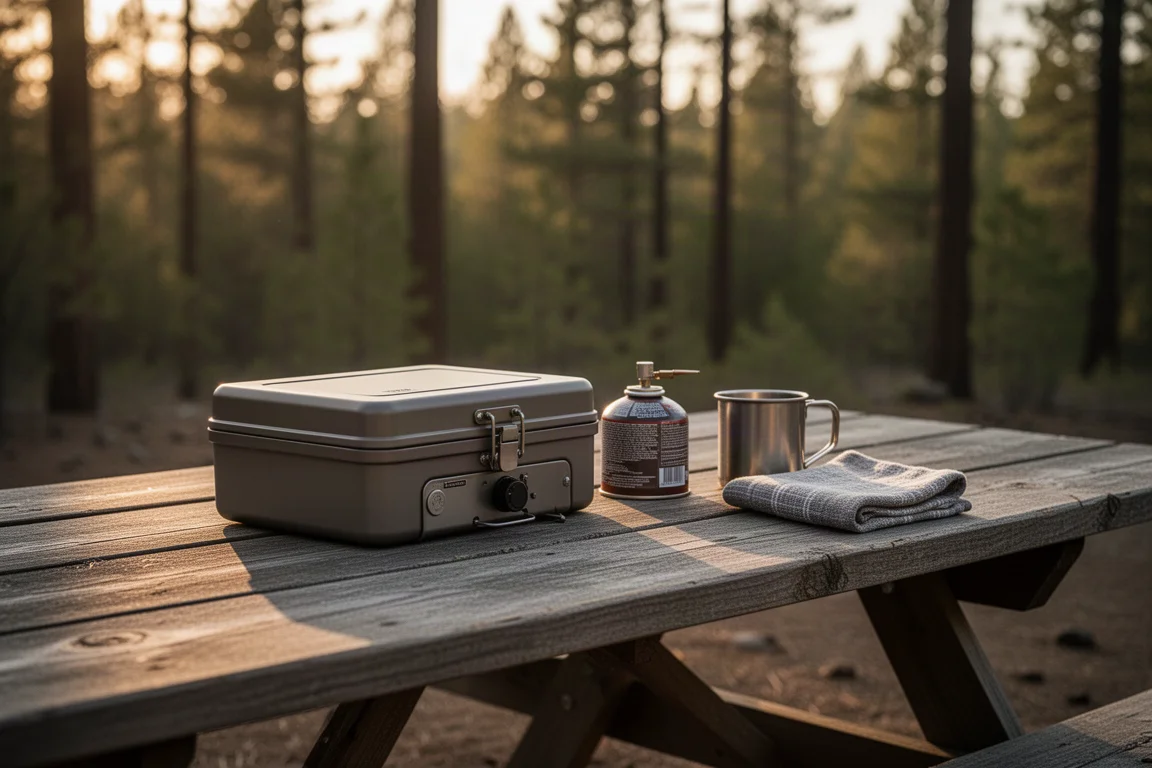
Skip it if speed, low weight or cold-weather reliability sit at the top of your list, because those are exactly the areas where this stove gives ground. It is also worth handling it gently and learning the opening sequence properly, since the mechanism rewards a little patience. Treated with care and kept to mild conditions, it is a stove that will keep doing something no ordinary canister stove can.
Conclusion
The Docha Booty Cassette Stove is strange, and that is precisely the appeal. It folds like a cassette player, runs on two fuel types, ships with a genuinely good case, and offers a smooth, controllable flame. It is slower, heavier and more complex than the mainstream alternative, and it is not built for the cold. For campers who want an interesting piece of kit and know what they are buying, it is an easy recommendation.
Product link
View more details for Docha Booty Cassette Stove
This product is mentioned in the review. Check the specifications, options, and compatibility before buying.
View more details for Docha Booty Cassette StoveFurther reading
Related Reviews
Camping Stoves
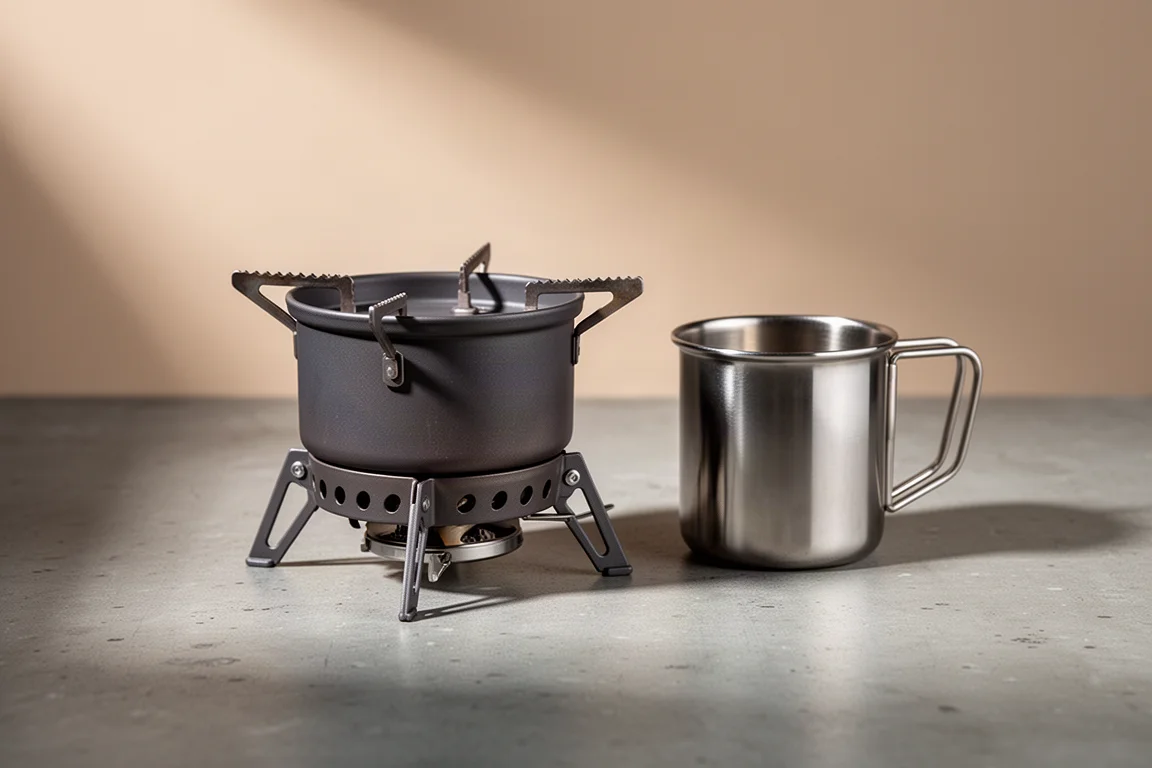
BCB Fire Dragon Mini Cooker Review: A Tiny Folding Stove With Real Trade-Offs
A palm-sized, fuel-flexible folding stove that heats water well enough, but brings flame control, stability, and fuel cost questions worth understanding first.
Camping Stoves
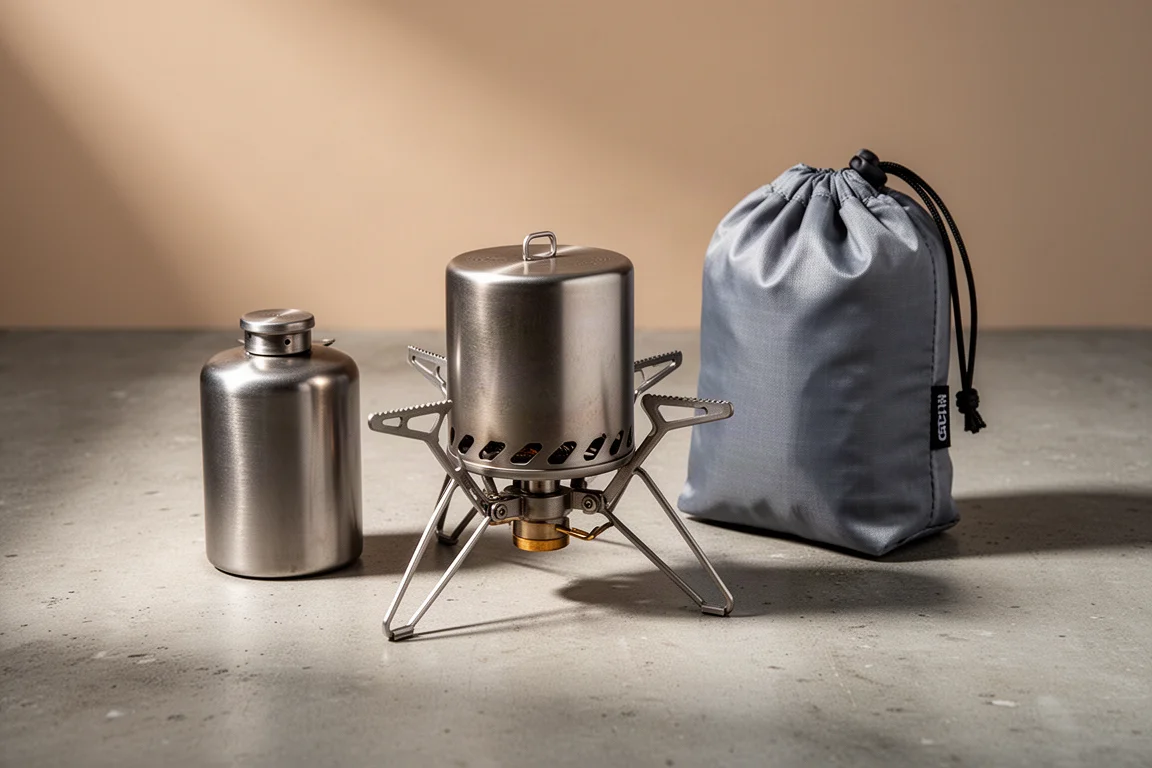
Boundless Voyage Titanium Alcohol and Wood Stove Review: Ultralight Cooking, Two Ways
A titanium alcohol and wood burning stove kit that weighs 4.5 oz complete, boils two cups of water in about 10 minutes, and costs $36.
Camping Stoves
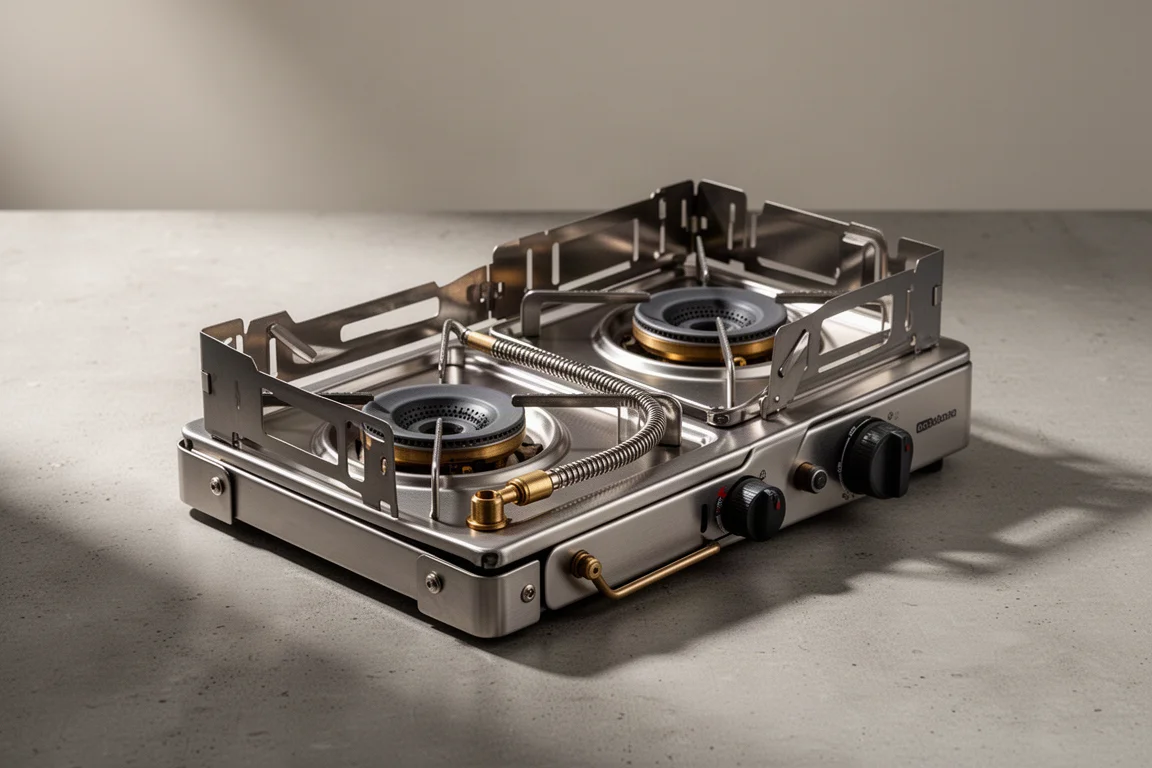
BRS 32 Dual Burner Stove Review: A Folding Two-Burner That Packs Down Flat
A detailed look at the BRS 32, a slim folding dual burner camping stove that expands into a stable cooking platform for around $60.