Drones
DJI Neo Review: A Pocket-Sized Follow Drone That Survives the Woods
A hands-on look at how the DJI Neo tracks cyclists and runners through trees, its real speed limits, and whether its durability holds up after dozens of crashes.
Introduction
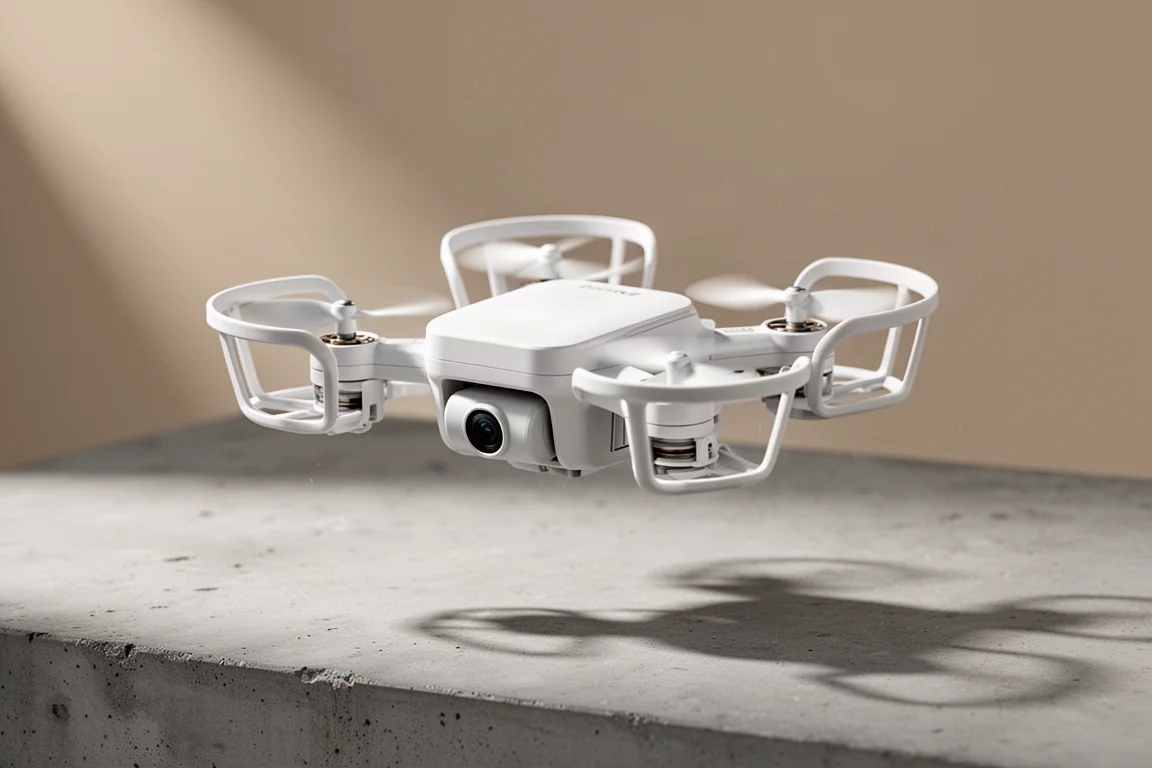
The DJI Neo is a palm-sized follow drone that needs no phone, no controller, and no complex setup to start tracking you. You pick a mode, hold a button for a couple of seconds, and it launches straight off your hand. After years of testing follow drones across cycling and running routes, this one proved to be a genuinely fun, stubborn, and surprisingly crash-tolerant little machine, with some clear limits you should know about before buying.
How It Tracks You
The Neo does not require any phone to track or control you. A phone is only useful for monitoring what the drone sees and for making small adjustments, such as raising the camera elevation so the framing is not always pointed low. Without a phone, you get three basic elevation levels: low, medium, and high. You can also pair it with a dedicated remote controller, which is where the more serious tracking control happens.
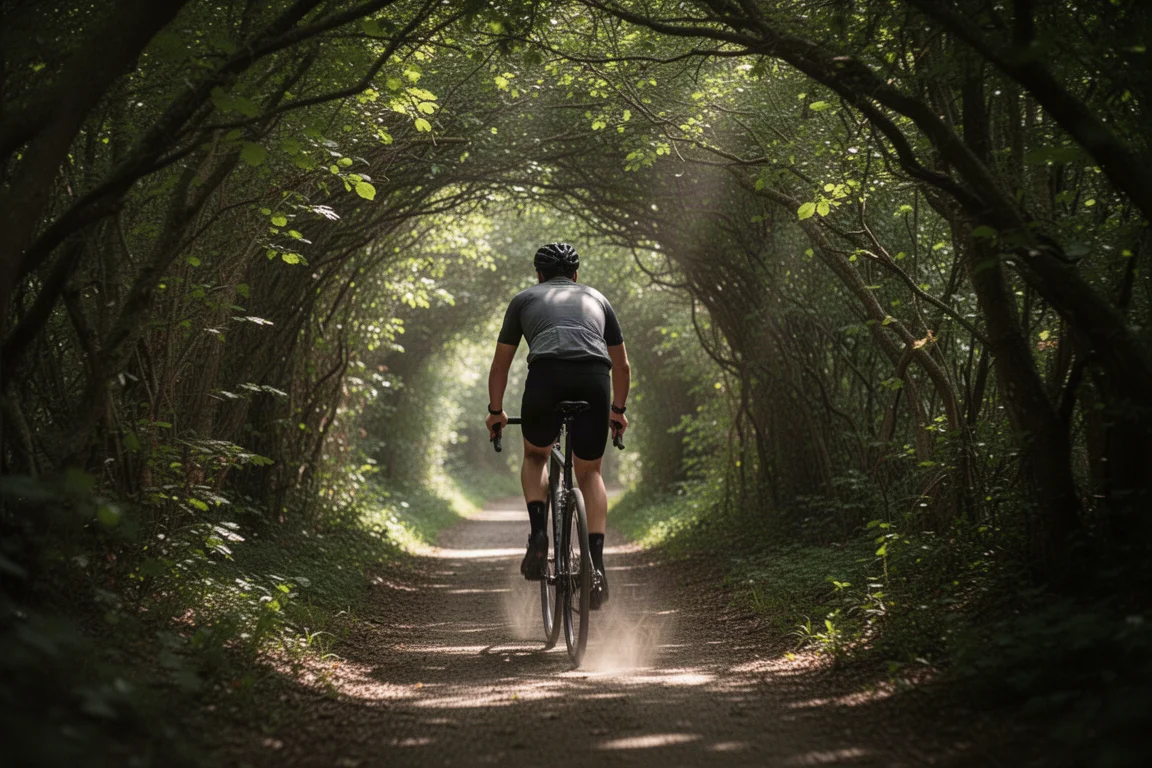
Tracking modes include Follow, Drone Circle, Rocket, Spotlight, and Direction Track. The drone identifies you as a person and draws a tracking box around you, then follows behind. In practice, the follow behaviour is best described as persistent. It loses you on a regular basis, especially once you exceed roughly 20 to 21 km/h, but its reacquisition behaviour is what sets it apart. When it finds you again after losing you, it actually looks around, scanning for you before locking back on. No previous DJI drone has done that, and it means you often do not have to stop and re-launch. You simply slow down or ride back toward it and it re-acquires you like a small eager companion.
Speed Limits: Where It Falls Behind
There are three listed top speeds on the Neo: one at 6 m/s (about 21 km/h), one at 8 m/s in sport mode, and one at 16 m/s in manual FPV mode. That last figure is for FPV flying with goggles, not for tracking. In real follow testing on a bike, the drone consistently gave up around 21 km/h in normal mode. Switching to sport mode through a connected controller helped a little, reaching roughly 26 to 28 km/h before the connection faltered, but the practical ceiling for cycling stays around 20 km/h.
That is slower than the Hover X1 base unit, which holds on to about 25 km/h, and well behind the newer Pro and Max units. For casual-paced riding it is fine. For anything approaching a real pace, it simply falls off behind you.
Direction Track: Great for Walking, Weak at Speed
Direction Track places the drone in front of you, or wherever you choose, and follows you from that direction. At a walking or hiking pace it holds its position well and stays exactly where it should. Once you add any real speed, it drifts off to the side within about 7 to 8 seconds. On the bike, it wobbles at low speed and falls behind as soon as you push on, so for cycling it is not the right tool. Running at any pace faster than a light jog also proved too much for it.
One honest caveat: because the Neo has no obstacle avoidance sensors at all and relies purely on its camera to track you, front placement means it cannot see or react to trees. It frequently ended up in branches. And because Direction Track cannot be corrected side to side from the phone, you have little recourse when it wanders.
Running and Trail Performance
Trail running is where the Neo genuinely impressed. In follow mode at a flat camera profile, it handled winding singletrack, tight corners, and low branches better than expected. It only slightly cuts corners, which keeps it on your line through turns, and it followed through final turns and wooded stretches that looked impossible.
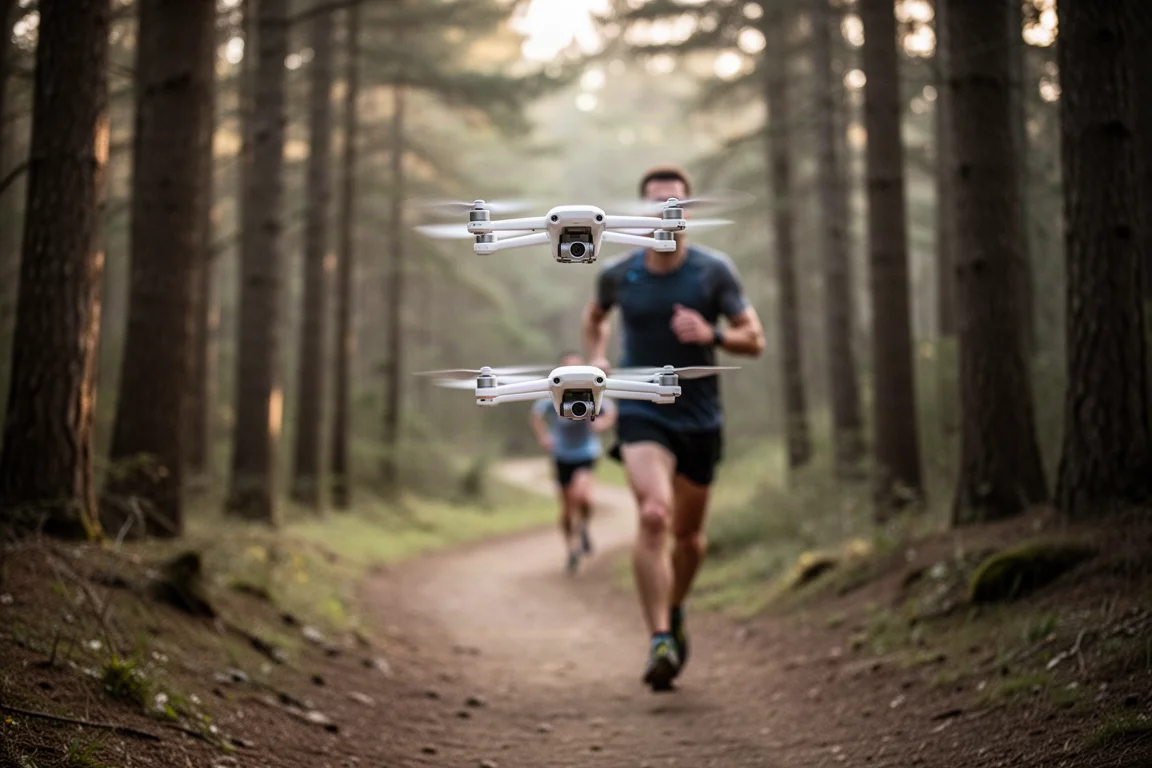
Direction Track while running was a different story: at even a light jog it drifted and eventually landed in or near trees, occasionally just short of being stepped on mid-stride. It is clearly best reserved for slow hiking in front-facing mode. Out of curiosity, the drone also occasionally refuses to take off and asks to connect to the app; a quick battery pull resolved it every time.
Durability After Dozens of Crashes
The headline durability story: the Neo was crashed 15 to 20 times in a single day of testing and kept flying. Tree strikes, brush falls, landings in thickets, all of it, and the drone came away with scuff marks but no functional damage. The full propeller guard means prop strikes against branches or even your own head are survivable and largely harmless.
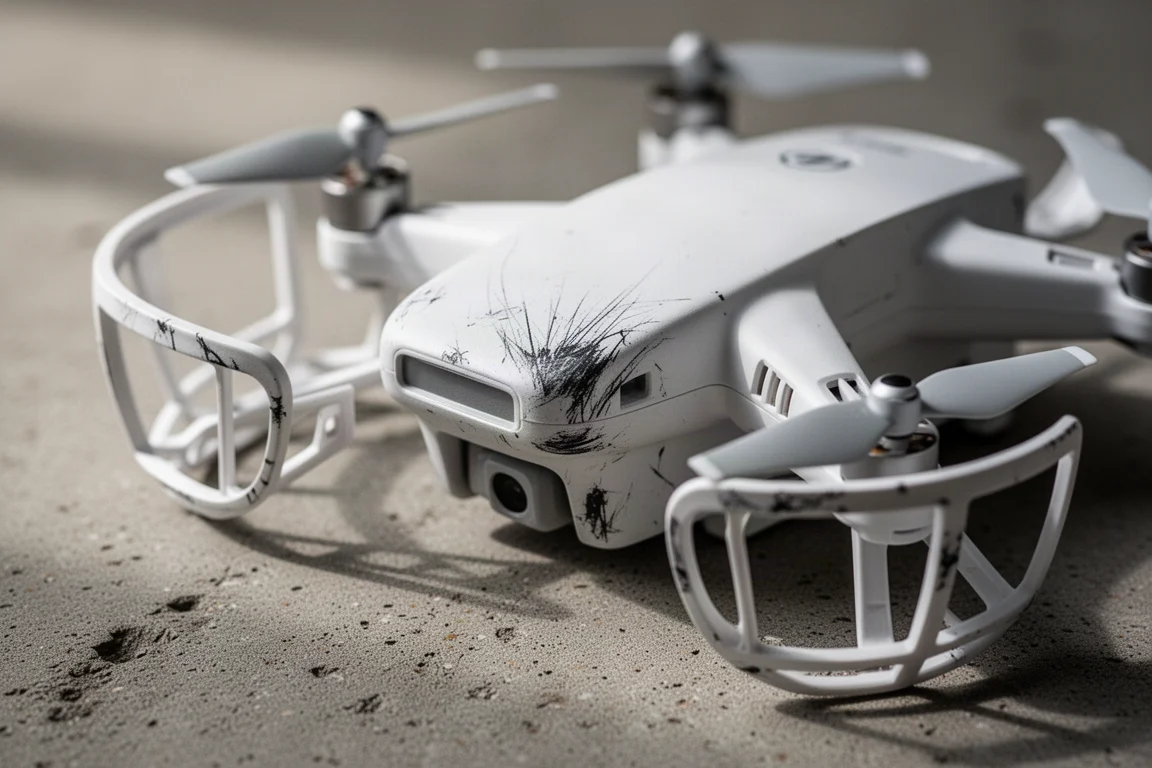
For comparison, the Hover X1 has roughly 250 to 300 flights with around 100 to 150 crashes and is still totally fine, so small guarded follow drones in general are proving remarkably durable. It is still early to judge how the Neo holds up over the long term, but the early evidence is strong. DJI Care Refresh is available and worth considering if you plan to push it hard.
Buying Advice
The Neo suits a specific buyer: someone who wants effortless hands-free follow footage at casual cycling paces, walking, hiking, and trail running, and who values a drone that fits in a jacket or shorts pocket and shrugs off crashes. Trail running is arguably its best use case. Casual riding under 20 km/h works well. Faster road cycling and front-facing Direction Track at speed do not.
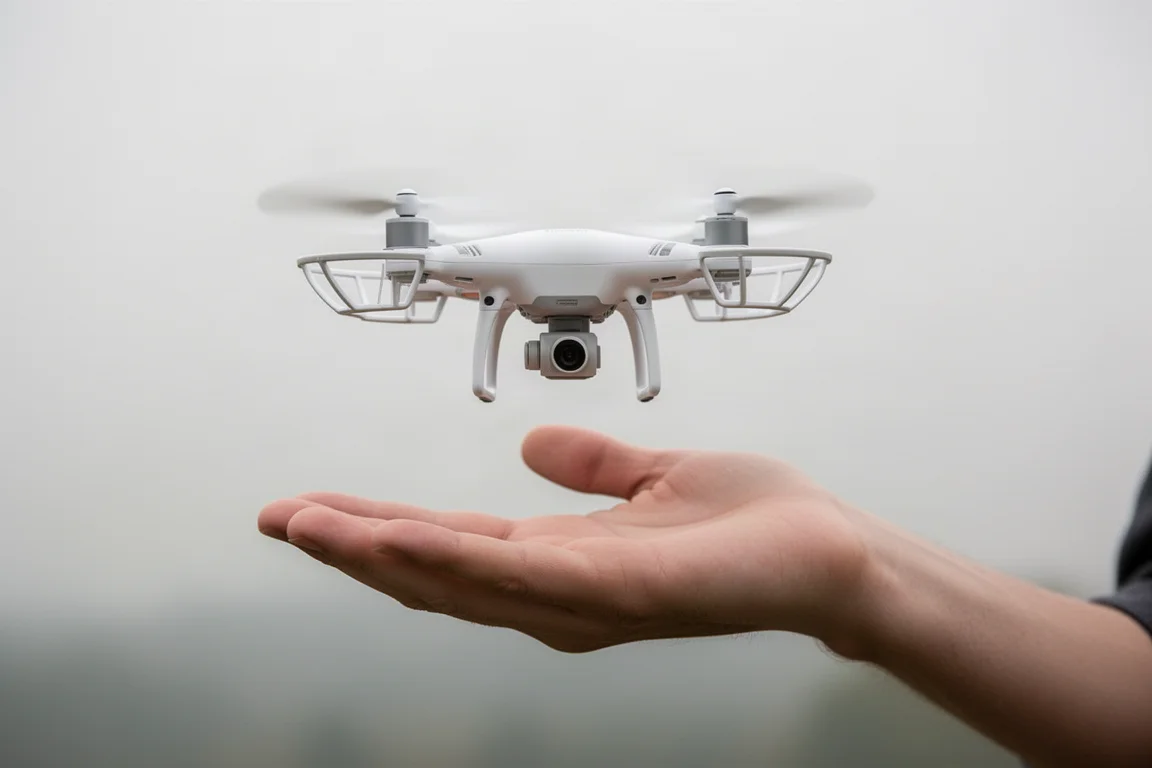
If mature front-facing tracking and slightly higher follow speeds matter more, the Hover X1 family currently does those things a bit better in this small form factor. If you want the more general-purpose drone with impressive re-acquisition behaviour and excellent durability, the Neo is the one to pick. Landing is delightfully simple either way: hold out your hand and it descends onto your palm.
Conclusion
The DJI Neo is not the fastest or smartest follow drone, but it is one of the most charming and durable. Its look-around re-acquisition behaviour is genuinely new for DJI, its trail running performance is impressive, and it survives crashes that would end most drones. Buy it for slow-paced adventures in the woods, not for chasing speed records, and it will reward you with footage you simply could not get otherwise.
Product link
View more details for DJI Neo
This product is mentioned in the review. Check the specifications, options, and compatibility before buying.
View more details for DJI NeoFurther reading
Related Reviews
Drones
Best Budget Camera Drones Under 3000: Five Practical Options for Video and Photography
Five affordable camera drones with HD video capability and stable flight performance, each suited to different needs and budgets.
Drones
Best Budget Drones Under $200: Five Practical Options for 2026
Five budget-friendly drones with GPS, 4K cameras, and FPV capabilities. Real strengths and trade-offs to consider before buying.
Drones
Best Drone Cameras Under $500: Five Options for Different Needs
A practical guide to five drones under $500, covering portability, flight time, camera quality, and key features to help you choose.