Drones
DJI Neo 2 Review: A Palm-Sized Follow Drone That Handles Trails, Cliffs and Crashes
We pushed the DJI Neo 2 through a full cycling tracking gauntlet, from easy coastal paths to tight forest trails and a derelict resort run to the sea.
Introduction
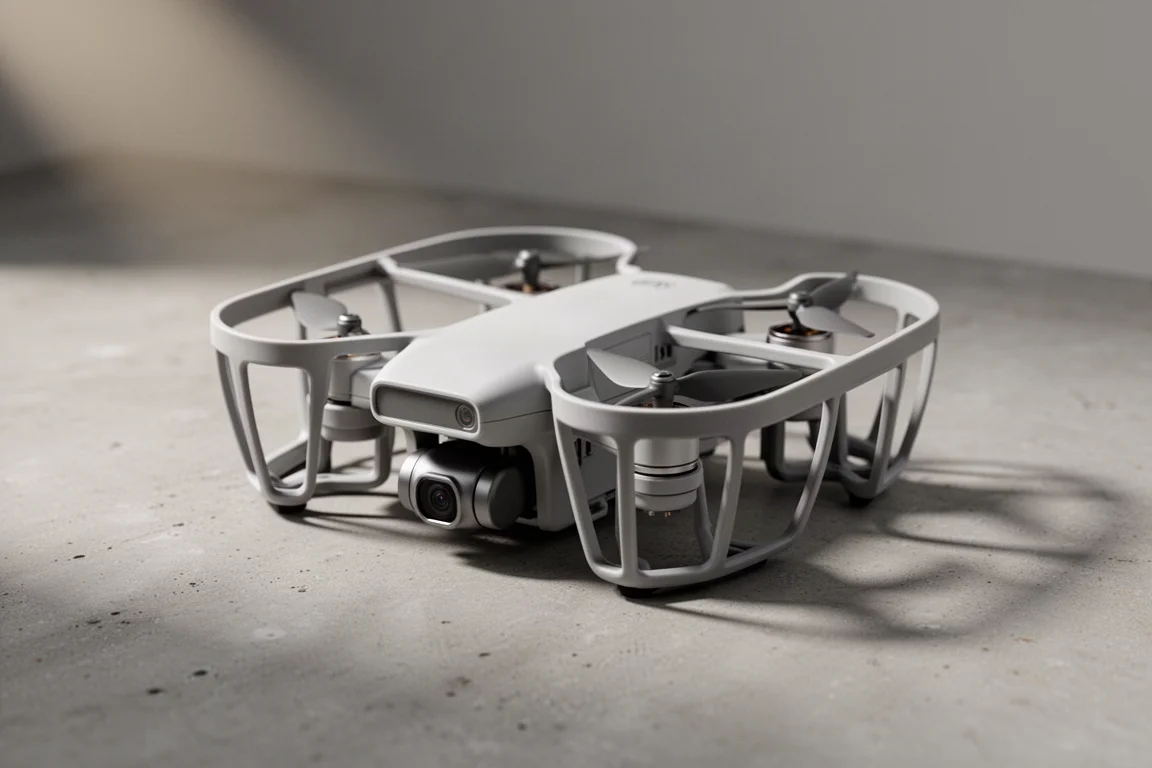
Most follow drones promise effortless tracking and then fall apart the moment the trail gets tight, the trees get low, or the pace picks up. The DJI Neo 2 is pitched differently: a small, caged, palm-sized drone designed to survive contact with the real world. To find out whether that promise holds up, we ran it through a multi-stage gauntlet: an easy downhill cruise toward the ocean, tight forest trails, cliffside riding, a high-speed road descent, and finally a chaotic abandoned resort run down to the sea.
The short version: it is impressively capable, occasionally stubborn, and refreshingly hard to kill.
How the Follow Modes Work
The Neo 2 can be flown with a phone, with one of many DJI controllers, or simply left to follow you as a person, which is how this test was run. Mode changes happen via buttons on the side of the unit, and the phone can act as a preview screen if you want it, though the drone works fine with nothing else at all.
Getting airborne is genuinely simple: press a lower button, confirm cycling follow mode, and it launches. If it does not position itself where you want, you can redirect it with gestures. Raise a hand to grab its attention, guide it up or across, and make a fist when you are done. That gesture control is one of the most charming parts of the experience, and it makes repositioning for a better shot effortless.
It also fits into a riding kit surprisingly well. It slips into a back jersey pocket in about two seconds, fits cargo bib pockets without fuss, and even disappears into plain generic running shorts. The small antenna pod pops off with a couple of screws; you only need it when flying with a controller. Weight-wise, it is lighter than a GoPro, so carrying it is a non-issue whether you ride or run.
Easy Terrain: Coastal Paths and Gesture Control
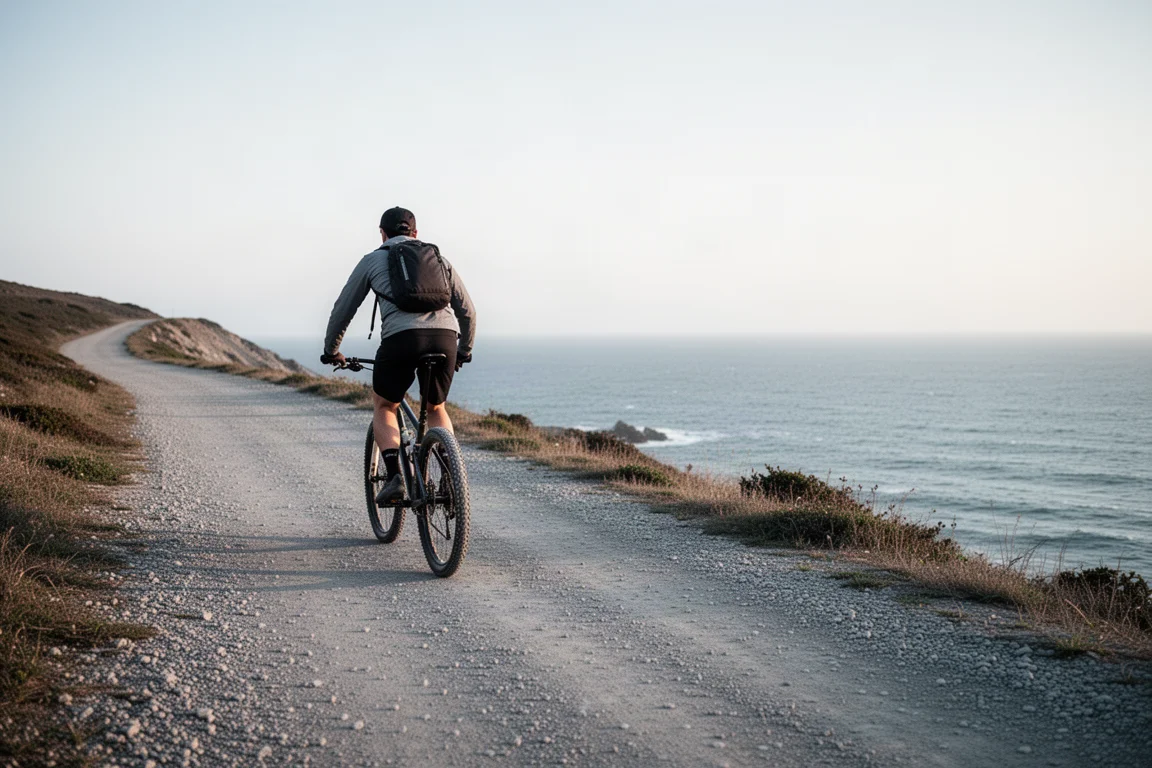
The first stage of the gauntlet was a slightly downhill section toward the ocean, in cycling follow mode from behind at a medium-high distance. At around 20 km/h (about 13 mph) it had no trouble keeping pace, and with obstacle avoidance enabled it threaded past trees without drama.
Even when deliberately tested, it held up well. Riding directly under a low branch resulted in a brief touch of the cage, and it kept flying. Switching it to follow from the front worked too, and when front or side tracking failed, it did what DJI drones typically do: fell back into a behind position and kept tracking.
That said, front repositioning is not always automatic. On one tree-lined stretch it refused to move back to the front until stopped, then eventually found its way there. It also briefly bumped into the rider once, losing position before recovering. These are minor hiccups in an otherwise confident performance.
Tight Trails and Obstacle Avoidance
The second stage stepped things up: tighter trails, freshly downed trees from a windstorm, and plenty of thin-trunked bush to squeeze through. The Neo 2 spent most of this stage dipping under low branches, weaving between trunks, and staying audible just behind the rider.
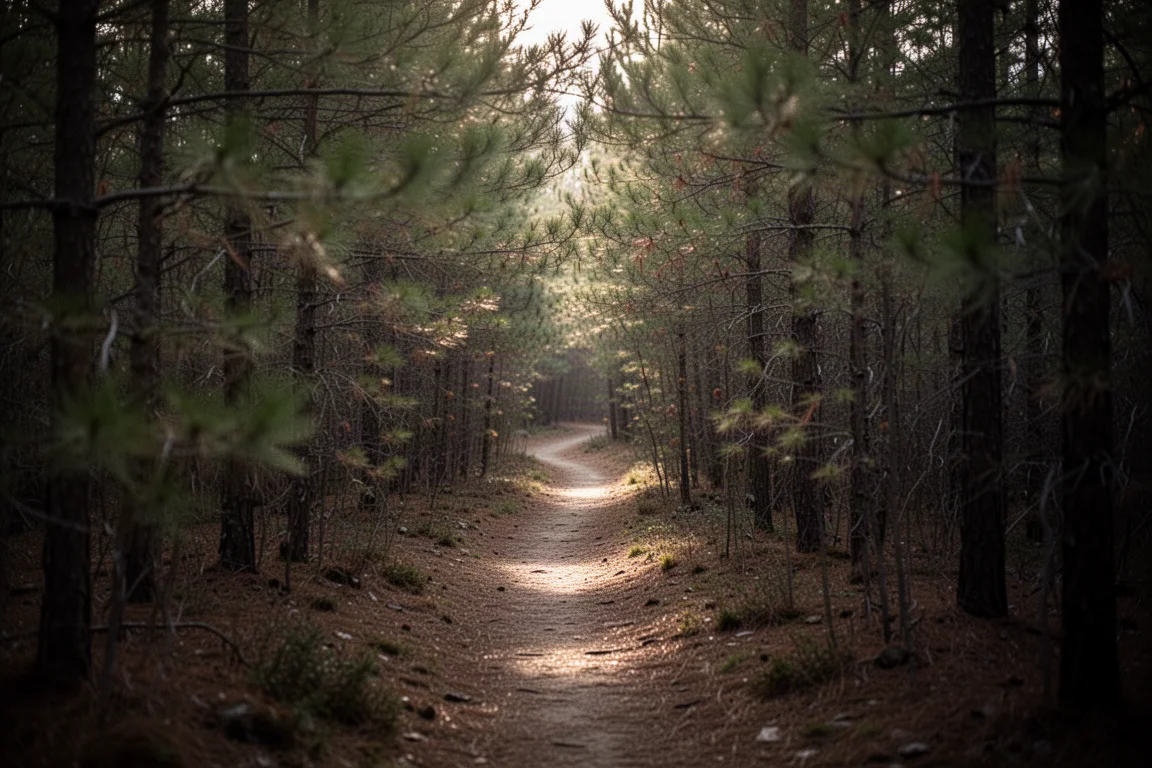
A few moments stood out. It negotiated a hiked-a-bike obstacle by routing around it, something not expected from a follow drone. It handled tunnels of overhanging branches, threaded narrow gaps, and generally avoided the thin vegetation well. The trade-off is worth understanding: unlike caged drones that simply follow your exact track and trust that if you fit, they fit, the Neo 2 actively performs obstacle avoidance. That is both a strength and a source of occasional confusion in dense terrain.
It is also worth being clear about what this drone is built for. Unlike larger models such as a Mini 5 or a Mavic, this thing is designed to crash. It is designed to be thrown into the air, hit trees, bounce off concrete, and keep going. Across this entire gauntlet it collided with trees, concrete, and bushes repeatedly and flew on without problems.
Orbit Mode: A Disappointment
On the cliffside, orbit mode was tested, and this is where a real limitation surfaced. A moving orbit while the subject keeps riding is not possible with the Neo 2 on its own. You can do it with a controller, but not with the phone or the unit itself. Otherwise you get a single, painfully slow circle, which does not help for the kind of dynamic cliffside shot most people want from follow mode.
High-Speed Follow Test
DJI claims 43 km/h in follow mode, and the road test largely confirmed it. In cycling follow from behind at a close, medium-high setting, the drone tracked cleanly at 25, 30, 35 km/h and held position through corners at just under 40 km/h with no major complaints.
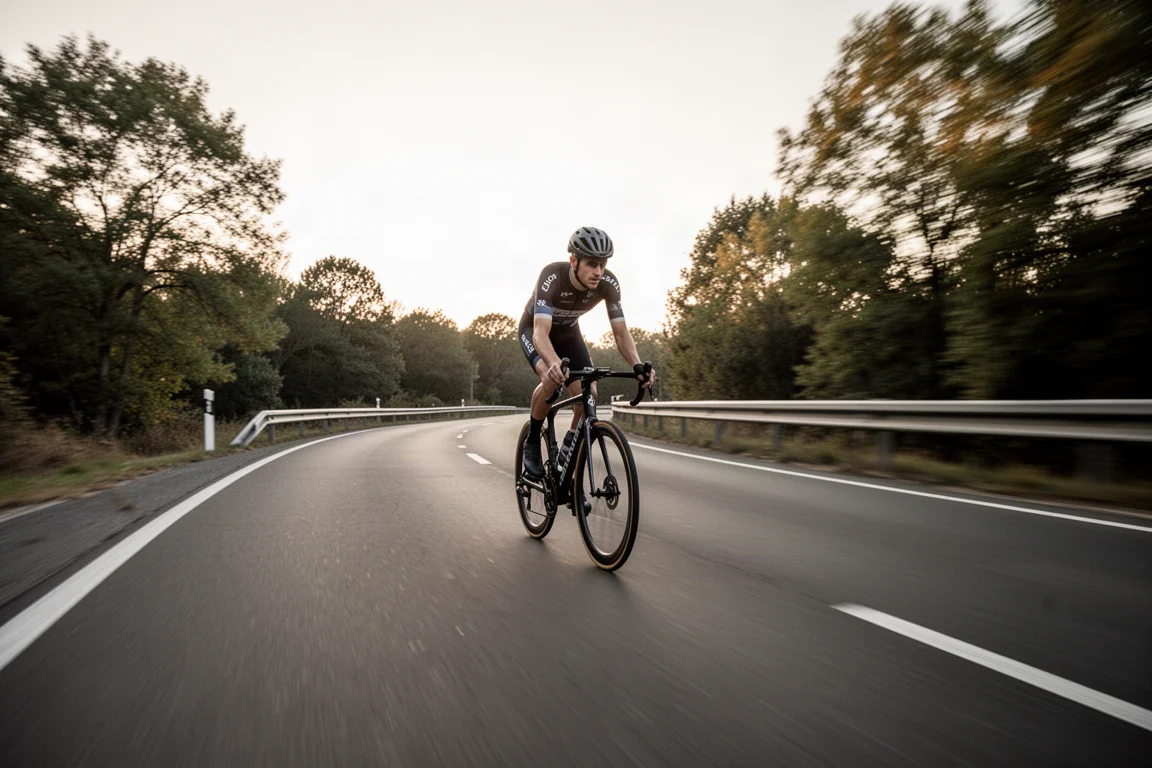
Past 43 km/h the story changes. As the speed climbed to 45, 47, 48, the drone fell behind and eventually lost the rider entirely. It did catch back up impressively when the pace eased, but it ended up facing the trees instead of the rider, forcing a rescue via the phone app to land or reposition. The practical takeaway: it tracks well up to its claimed ceiling and struggles meaningfully beyond it.
The Abandoned Resort Run
The final stage was the trickiest: a derelict resort descending toward the ocean, full of overgrown bushes, concrete, doorways, and stairs. The Neo 2 threaded overgrown paths, followed under low twigs and branches, and navigated terrain that has ended most other drones’ runs.
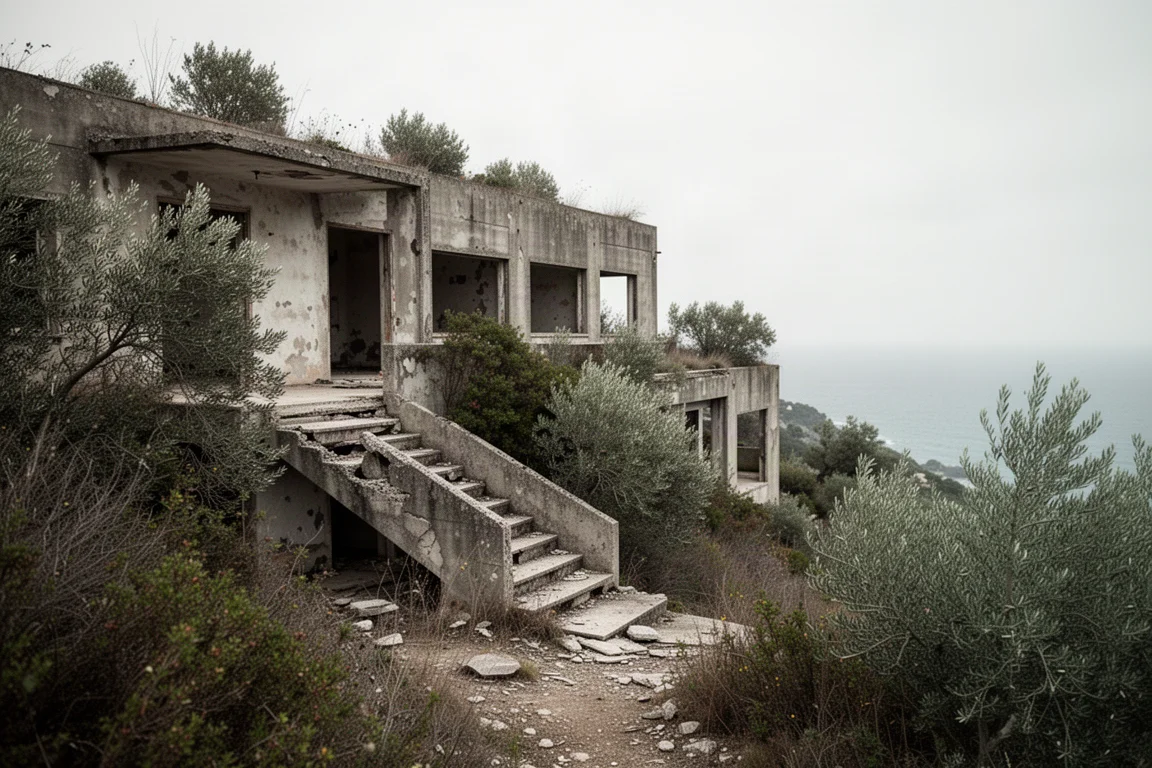
It was not flawless. It got briefly stuck in a bush with a red collision light, and after being nudged along it declared a collision detected and landed automatically. It could not fit through a doorway, simply too big for the gap, and clipped concrete on the way down, leaving visible marks but continuing to fly. A second collision detection ended another attempt at the steepest descent. Even so, the depth of terrain it did manage to follow through was genuinely impressive, and the ability to simply wave it into a better position with a hand remains a standout feature.
Things to Consider Before Buying
The Neo 2 is not a replacement for a cinema drone. The orbit limitation, the 43 km/h follow ceiling, and occasional confusion in dense bush are real constraints. It relies on obstacle avoidance rather than track-following, which means it can make different decisions than you would in tight spots. And with multiple batteries burned through a full gauntlet day, spare batteries are worth planning for.
Buying Advice
If you ride or run and want a follow drone you can stuff in a jersey pocket, crash repeatedly, and still come home with usable footage, the Neo 2 makes a strong case. Gesture-based repositioning, effortless portability, and crash-tolerant design set it apart from both larger DJI drones and caged pocket rivals. If your priority is high-speed road tracking well beyond 43 km/h or true moving orbits, look elsewhere.
Conclusion
The DJI Neo 2 survived an entire multi-stage gauntlet of coastal paths, tight trails, cliffside orbits, high-speed descents, and an abandoned resort run, crashing dozens of times without breaking a sweat. Its follow tracking is confident up to its claimed speed, its gesture control is genuinely useful, and its portability is best in class. It has limitations, but for athletes who want a nearly indestructible pocket camera drone, it is an easy recommendation.
Product link
View more details for DJI Neo 2
This product is mentioned in the review. Check the specifications, options, and compatibility before buying.
View more details for DJI Neo 2Further reading
Related Reviews
Drones
Best Budget Camera Drones Under 3000: Five Practical Options for Video and Photography
Five affordable camera drones with HD video capability and stable flight performance, each suited to different needs and budgets.
Drones
Best Budget Drones Under $200: Five Practical Options for 2026
Five budget-friendly drones with GPS, 4K cameras, and FPV capabilities. Real strengths and trade-offs to consider before buying.
Drones
Best Drone Cameras Under $500: Five Options for Different Needs
A practical guide to five drones under $500, covering portability, flight time, camera quality, and key features to help you choose.