Drones
DJI Mini 3 Pro vs Skydio 2 Plus: Which Drone Tracks You Better?
A real-world autonomous tracking comparison between the DJI Mini 3 Pro and Skydio 2 Plus, tested on tree tunnels, tight trails, and open stretches.
Introduction
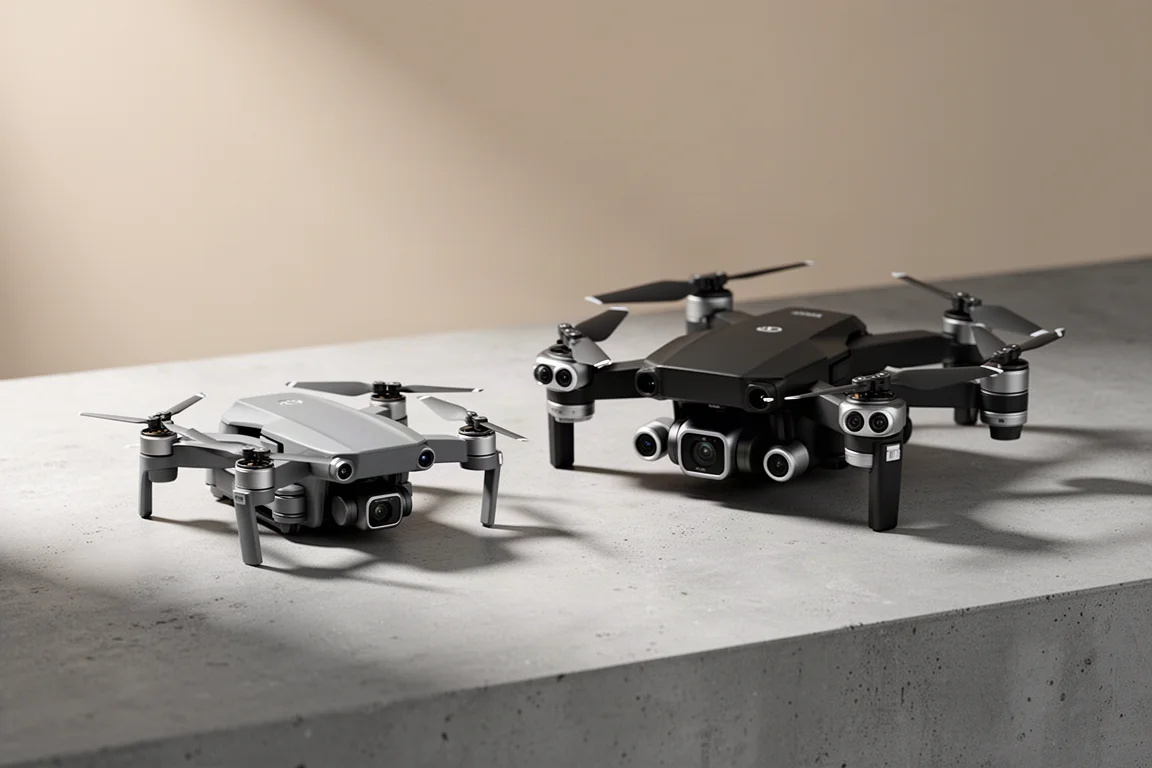
Autonomous tracking is one of the most compelling features a modern camera drone can offer, and it is also the feature that separates two very different philosophies. The DJI Mini 3 Pro is largely built around cinematography and photography, while the Skydio 2 Plus is built almost entirely around sports tracking. To see how that difference plays out, both drones were flown back-to-back on the same route, in the same conditions, through a course designed to push obstacle avoidance and tracking to their limits: a tree tunnel, a forested section with obstacles above and below the flight path, and faster open stretches.
How the Two Drones Track You
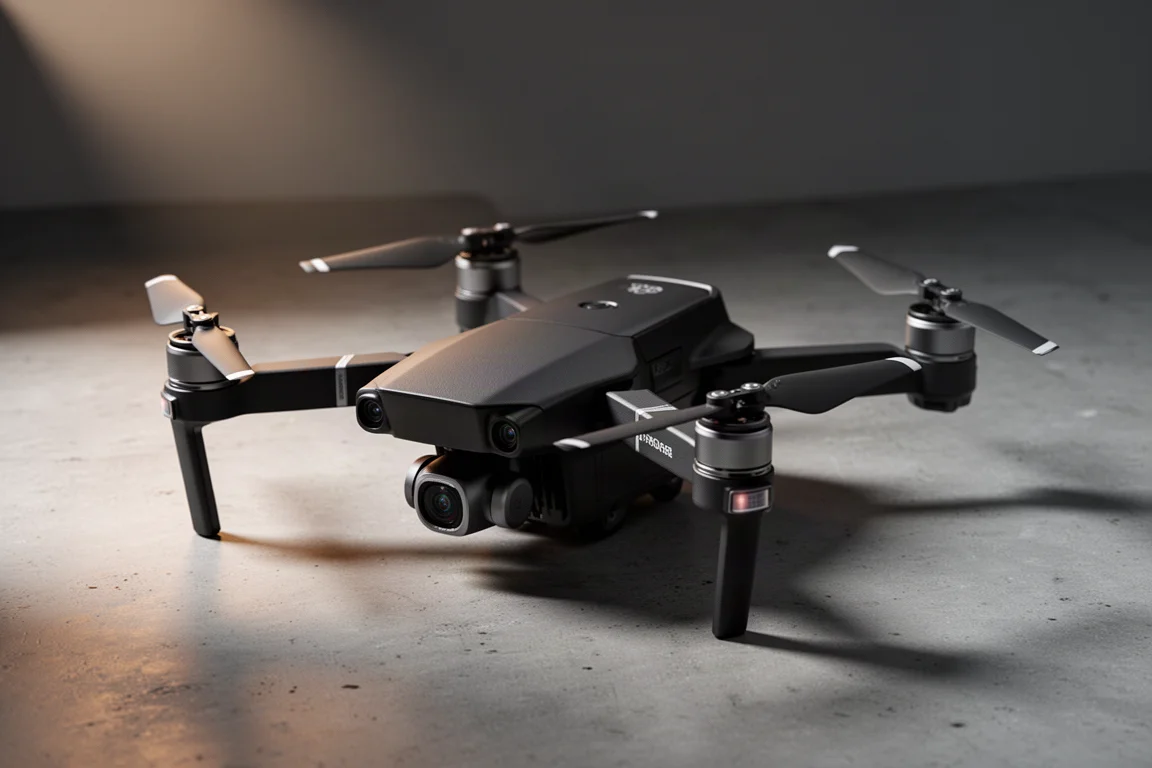
Both drones track you as an object rather than following a controller, but they use very different sensor setups. The DJI Mini 3 Pro relies on three sets of sensors: front, downward, and rearward. The front and downward sensors have overlapping horizontal and vertical fields of view, which gives a broader picture of obstacles ahead and below. The rear sensors are wide but not as wide as the front ones. The key gap is on the sides: there are no side obstacle avoidance sensors at all.
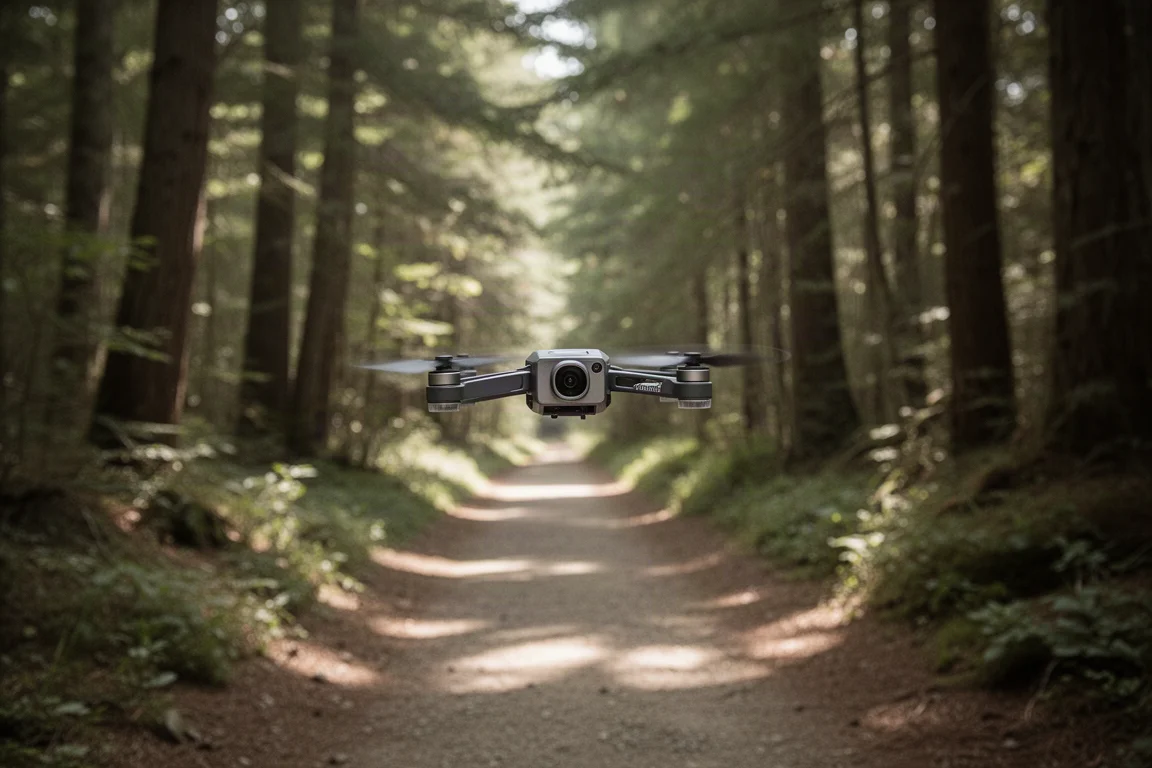
The Skydio 2 Plus takes a different approach with six navigation cameras plus its main camera, giving it full 360-degree obstacle avoidance. It should, in theory, avoid obstacles in any direction of flight, sideways, forward, or backward. Both drones use their main camera for the actual tracking; the extra sensors exist purely for obstacle avoidance.
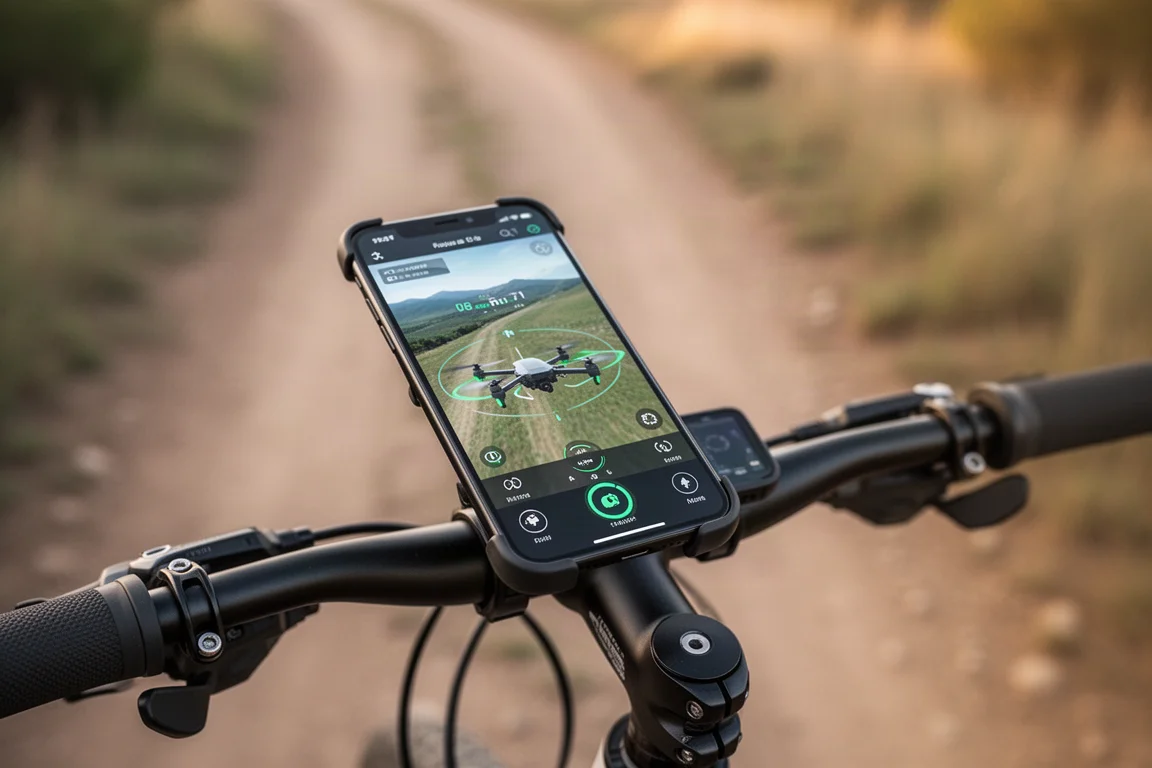
One practical difference matters before you even launch. With the DJI Mini 3 Pro you still need to carry a controller, or have someone else hold it. A simple bike mount for the standard remote, which costs around 20 dollars, works well even on rough trails. The Skydio 2 Plus can track natively without a separate beacon, which makes it easier to ride with.
Real-World Tracking Test: DJI Mini 3 Pro
A few settings matter before taking off. Obstacle avoidance is only available in normal mode, not sport mode, and the obstacle avoidance action should be set to bypass so the drone flies around obstacles rather than stopping. ActiveTrack is capped at 4K 30 and only works in landscape orientation; portrait mode simply does not support it. Trace follows from behind, while Parallel flies off to the side.
On the trail, the Mini 3 Pro tracked well from behind but slowed noticeably whenever it got within about three meters of an obstacle. At around 20 km/h through the trees it started falling behind, and on tighter sections it lost the subject entirely. In open clear stretches, it had no trouble keeping up at around 40 km/h, about 25 mph, both from behind and in parallel mode. Speed is not the problem; clearance is.
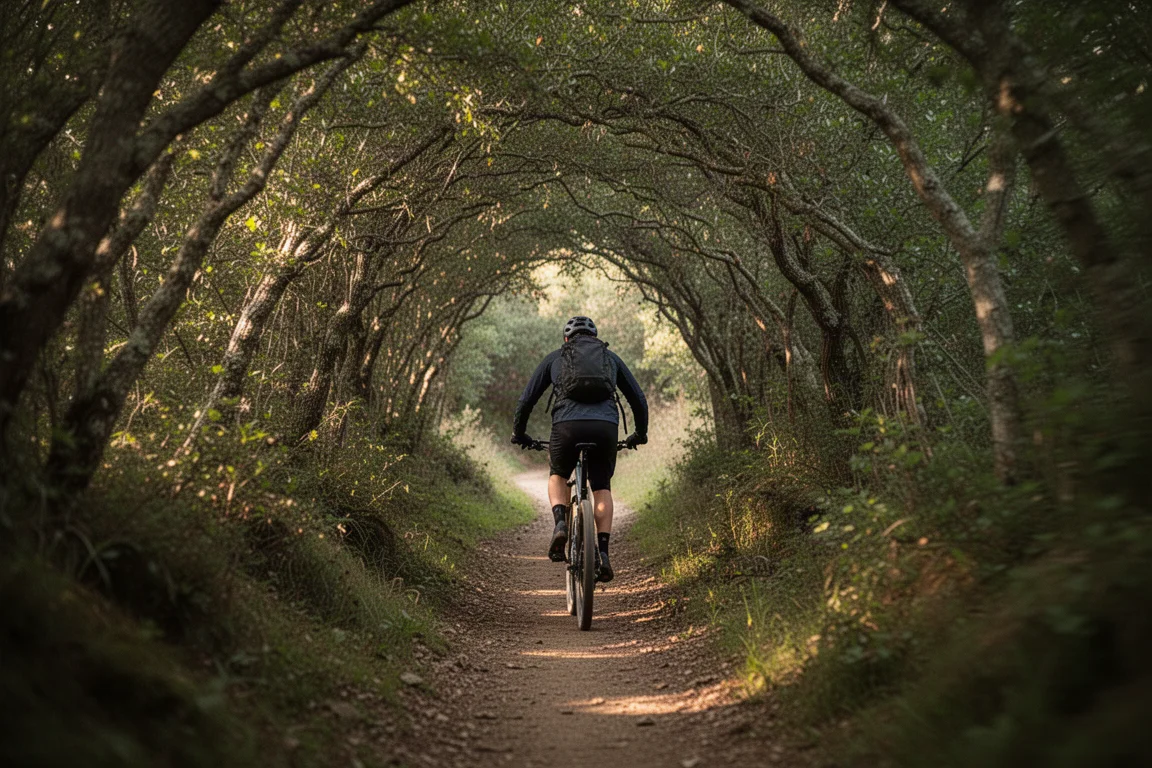
The impressive part came in the tree tunnel. Despite having no side sensors, it swung over and around branches, handled an under-and-over sequence, and even survived a risky parallel-mode run through close trees. That is a notable improvement over recent DJI drones, which have a habit of flying straight into trunks and limbs. Overall, it stayed behind the rider cleanly and smoothly, only losing the subject when significantly outsped deep in the trees.
Real-World Tracking Test: Skydio 2 Plus
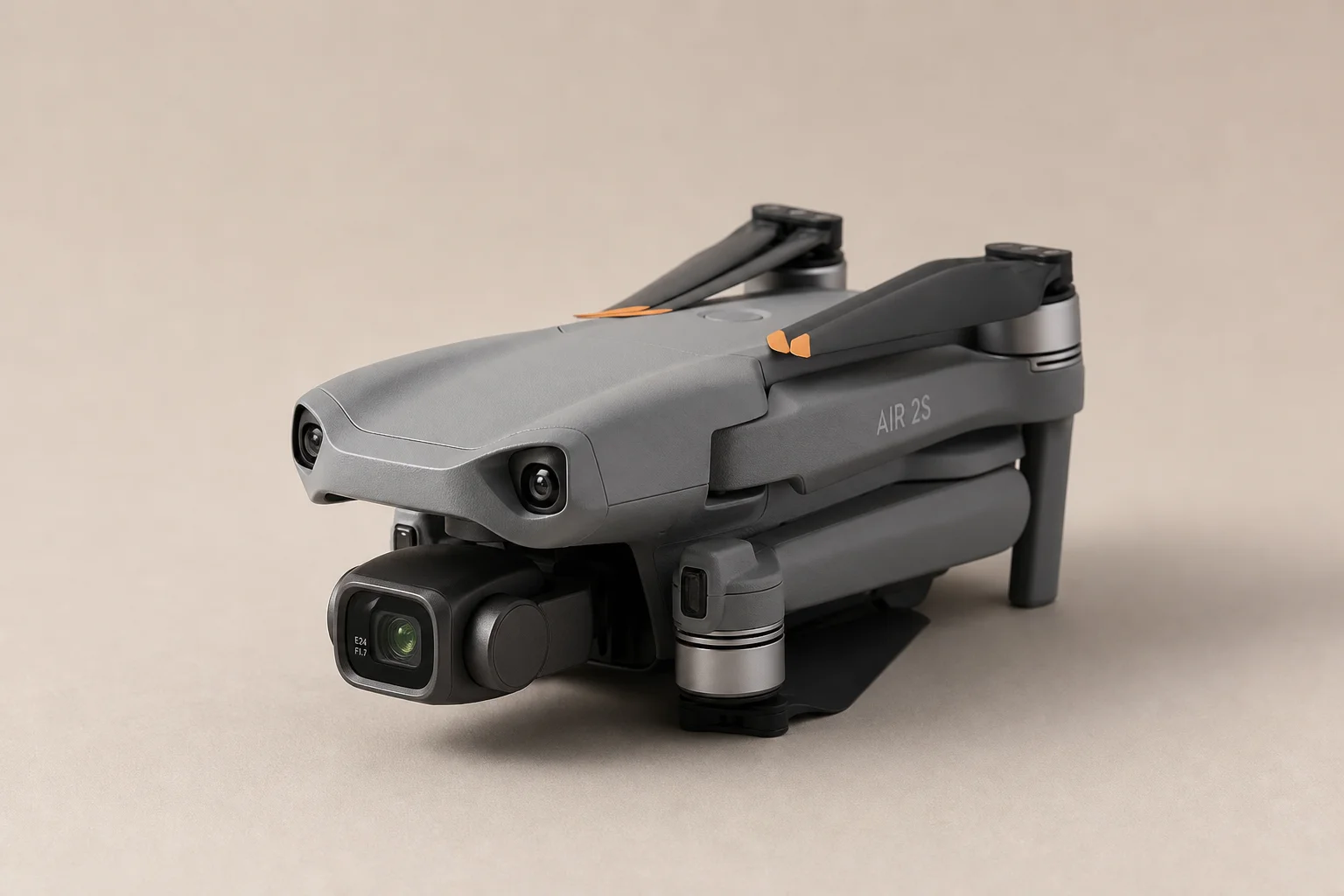
With height limits disabled so it could fly as low as needed, the Skydio 2 Plus followed from behind at the same speeds, and crucially, it never lost the subject at any point during the entire test. It also never crashed. It handled the same tree tunnel and forested sections at full speed, dodging and weaving around branches without slowing down.
The trade-off is smoothness. The Skydio’s flight path is noticeably wobbly compared to the Mini 3 Pro, especially in tight terrain, where it whips in and out of gaps like it is running a ski race course. It avoids things better, but it does so in a way that looks less polished on camera. At one point it even chose to hang back and wait rather than force its way through a tight gap, rejoining in front once the trail opened up.
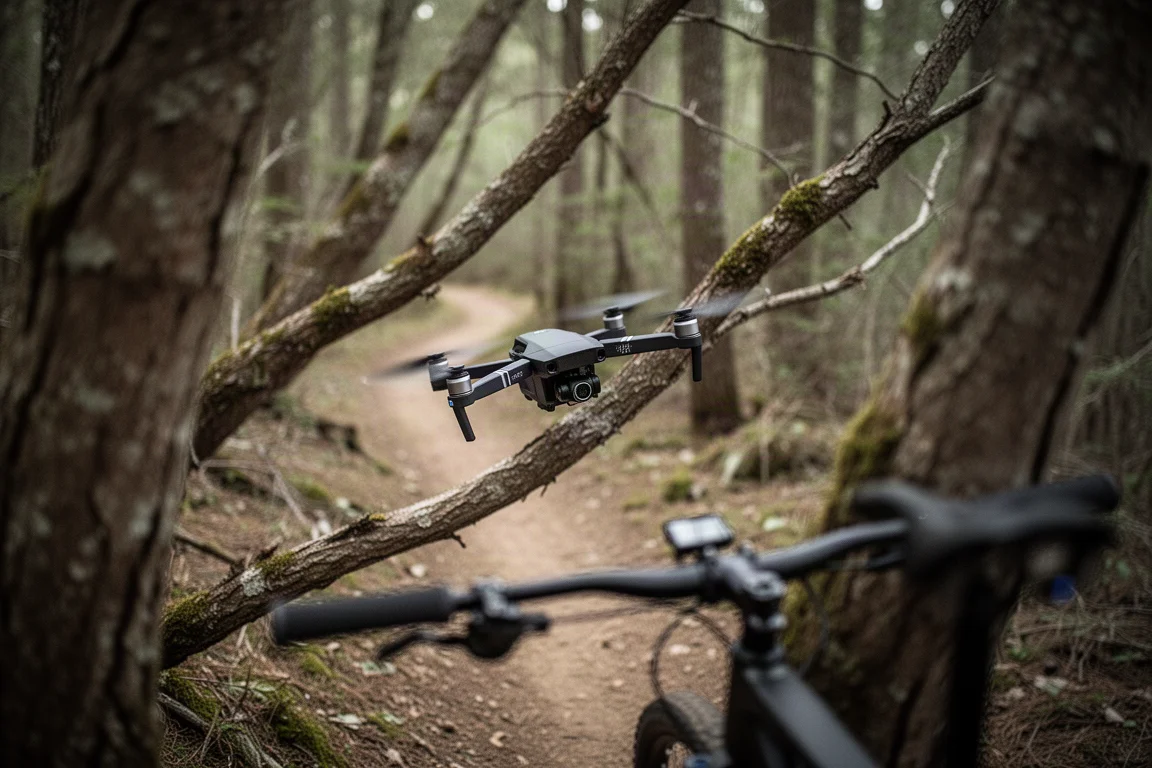
Where it genuinely excels is positioning. You can place it behind, beside, or even in front of you, and it will hold that position safely. The front-facing tracking shot in particular is something only Skydio does this well. That said, it is not infallible; there are documented cases of it ending up in canals on other tests, so some risk always remains with autonomous flight.
Head-to-Head Summary
Both drones tracked reliably as long as the subject stayed within range. The differences come down to environment and priorities:
- Obstacle avoidance: The Skydio 2 Plus wins decisively in tight, tree-heavy terrain thanks to full 360-degree sensing.
- Video quality and stability: The Mini 3 Pro produces a much cleaner, steadier shot with a more predictable flight path.
- Side positioning: The Mini 3 Pro cannot safely track from the side in obstacles; the Skydio can.
- Portability: The Mini 3 Pro, even with its controller, fits in a jersey pocket. The Skydio 2 Plus generally needs a secondary bag.
Which One Should You Buy?
The decision is simpler than it looks. If most of your flying is sports tracking, mountain biking, running, and fast movement through complex terrain, the Skydio 2 Plus is the better tool. If you spend most of your time on cinematography and photography, with occasional tracking on more open routes, the DJI Mini 3 Pro is the stronger all-rounder, and its light weight makes it far easier to bring along.
Whichever you choose, keep expectations realistic. Both drones performed well on this course, but autonomous tracking still has bad days, and obstacles like trees and water remain genuine hazards. Fly in normal mode with obstacle avoidance enabled, keep speed reasonable in tight terrain, and treat every tracking run as a test rather than a guarantee.
Conclusion
In a back-to-back real-world test, the Skydio 2 Plus proved to be the superior tracker, holding on at full speed through trees and never losing its subject, while the DJI Mini 3 Pro delivered smoother, better-looking footage but slowed down near obstacles and could not track from the side. Pick the Skydio for tracking-first flying and the Mini 3 Pro for everything else.
Further reading
Related Reviews
Drones
Best Budget Camera Drones Under 3000: Five Practical Options for Video and Photography
Five affordable camera drones with HD video capability and stable flight performance, each suited to different needs and budgets.
Drones
Best Budget Drones Under $200: Five Practical Options for 2026
Five budget-friendly drones with GPS, 4K cameras, and FPV capabilities. Real strengths and trade-offs to consider before buying.
Drones
Best Drone Cameras Under $500: Five Options for Different Needs
A practical guide to five drones under $500, covering portability, flight time, camera quality, and key features to help you choose.