Drones
DJI Mavic 4 Pro ActiveTrack Tested: Can It Survive Real Obstacle Tracking?
A self-purchased DJI Mavic 4 Pro put through a four-stage obstacle tracking test, from tree tunnels to dense woods, to see where its ActiveTrack shines and where it hesitates.
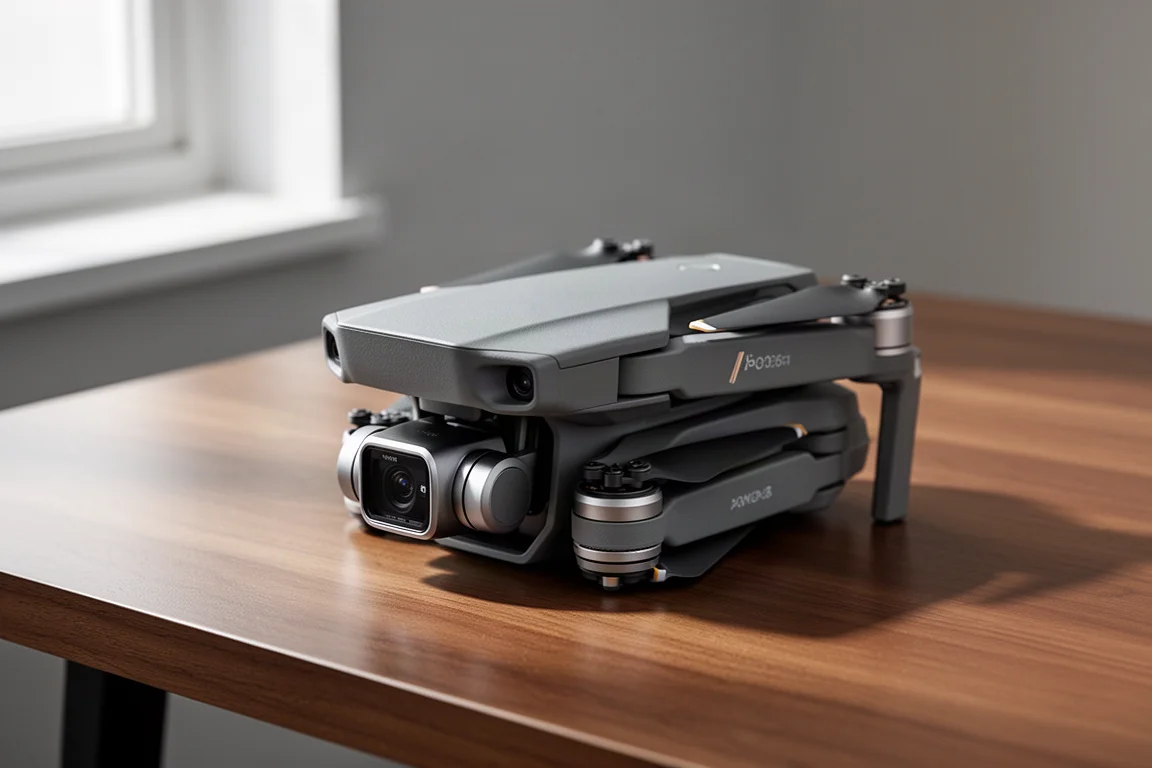
Introduction
The DJI Mavic 4 Pro has one claim that matters more than any other for subject-tracking fans: DJI positions its obstacle avoidance as the most advanced yet, capable of detecting even tiny branches in cluttered environments. That is a big promise, and it deserves a real-world test rather than a spec-sheet read.
This article walks through a demanding four-stage tracking course, run on a self-purchased Mavic 4 Pro with a DJI Care Refresh plan added for peace of mind. The course includes a tree tunnel, a transition section, a high-speed open area with orbit attempts, and finally a stretch of deep, dense woods where larger drones have historically struggled.
How the Tracking Test Was Set Up
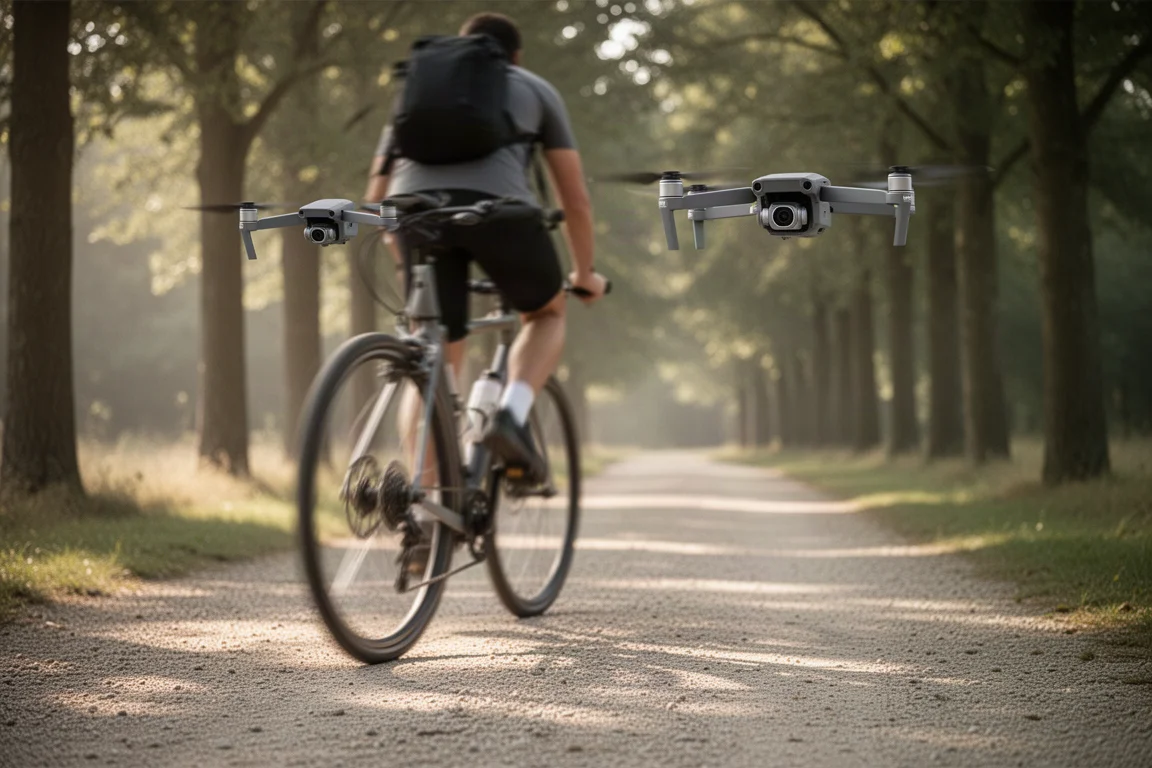
A few configuration choices shaped the results. ActiveTrack was set to Bypass rather than Brake, and the near-ground flight option stayed disabled, which normally prevents the drone from descending below 2 metres. That matters because anything the pilot can pass through is at least 2 metres tall, so gaps below that floor are a genuine test of the avoidance system’s flexibility.
The DJI RC2 controller was used instead of the RC Pro 2, simply because it is easier to handle while riding a bike. ActiveTrack was started in follow-from-behind mode, the standard starting point for this kind of course.
One early observation: compared with smaller tracking drones, the Mavic 4 Pro keeps noticeably more distance behind the subject. Smaller drones tend to sit much closer, giving that tight chase-camera feel. The Mavic hangs back and adds more movement than strictly necessary in slow sections, which can look busy in footage.
Stage One: The Tree Tunnel
The tree tunnel is the first real test of whether the drone can stay inside a narrow corridor of branches. Here the Mavic 4 Pro showed caution. It hesitated on tighter sections, occasionally refusing gaps that smaller drones pass through without issue, and it needed more room than expected to stay on course.
It also had moments of promise. Given extra range flexibility, set to a 20 metre limit, it occasionally found its way around obstacles, and there were glimpses of confident weaving around trunks. But the overall impression in tight, low-speed environments is a drone that would rather go around than risk going through.
Stage Two and the Transition Sections
The transition phase looks deceptively easy but has ended many drone runs over the years. The Mavic 4 Pro handled most of it, though not without wandering. At one point it climbed unexpectedly and had to be pulled back behind the subject, the kind of behaviour that can put a drone into branches if nobody is watching.
On the positive side, tracking through more open stretches was reliable. At a steady 20 km/h, keeping the subject in frame was not a challenge for a drone this fast. The issue was not speed; it was the drone’s own decisions about where to fly.
Tracking and Orbit Performance in Open Space
In open fields the Mavic 4 Pro tracked smoothly with no interference issues. There was light wind but nothing significant, and straight-line following was solid even as speed rose. The drone is far faster than the 20 to 30 km/h subject speeds used here, so raw pace was never the problem.
Orbit mode told a different story. At moderate speeds the orbit simply would not hold. As the subject pushed toward 35 to 40 km/h, even with a headwind, the drone dropped out of orbit and fell in behind instead. The orbit only resumed once speeds returned to around 20 km/h. For comparison, the same tracking system has handled much faster subjects such as speedboats in basic ActiveTrack, but the orbiting behaviour proved far more hesitant.
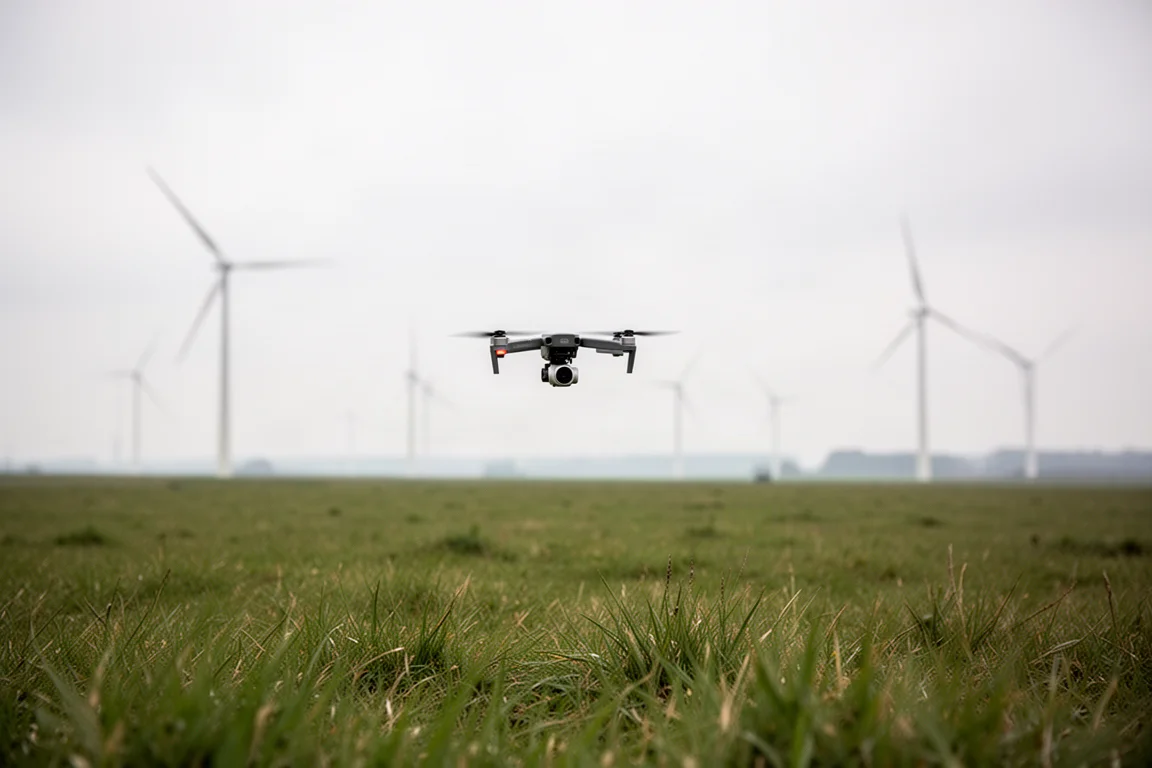
There were also moments where the drone tracked fine but ignored specific commands, such as rotating around the subject, which was disappointing given how easy that should have been at those speeds. When it did commit to a line, though, the results were exactly what you pay for: smooth, cinematic arcs with the main lens.
Speed Tracking and Tree Weaving
A dedicated high-speed section, moved to an open road to avoid nearby construction, pushed the drone harder. With a bit of a headwind, the Mavic held a fast tracking line, and at one point delivered a genuinely impressive shot: a low, fast pass that is precisely the kind of footage that justifies a drone in this class.
Tree weaving was mixed. Asked to simply track from the side down a tree-lined section, it initially lagged and lost the plot, then improved noticeably once repositioned slightly further forward. At 35 to 39 km/h with a light side wind, the tracking itself was good and the footage was exactly the sort of shot that makes ActiveTrack worthwhile.
Zoom Lenses and ActiveTrack: What Works
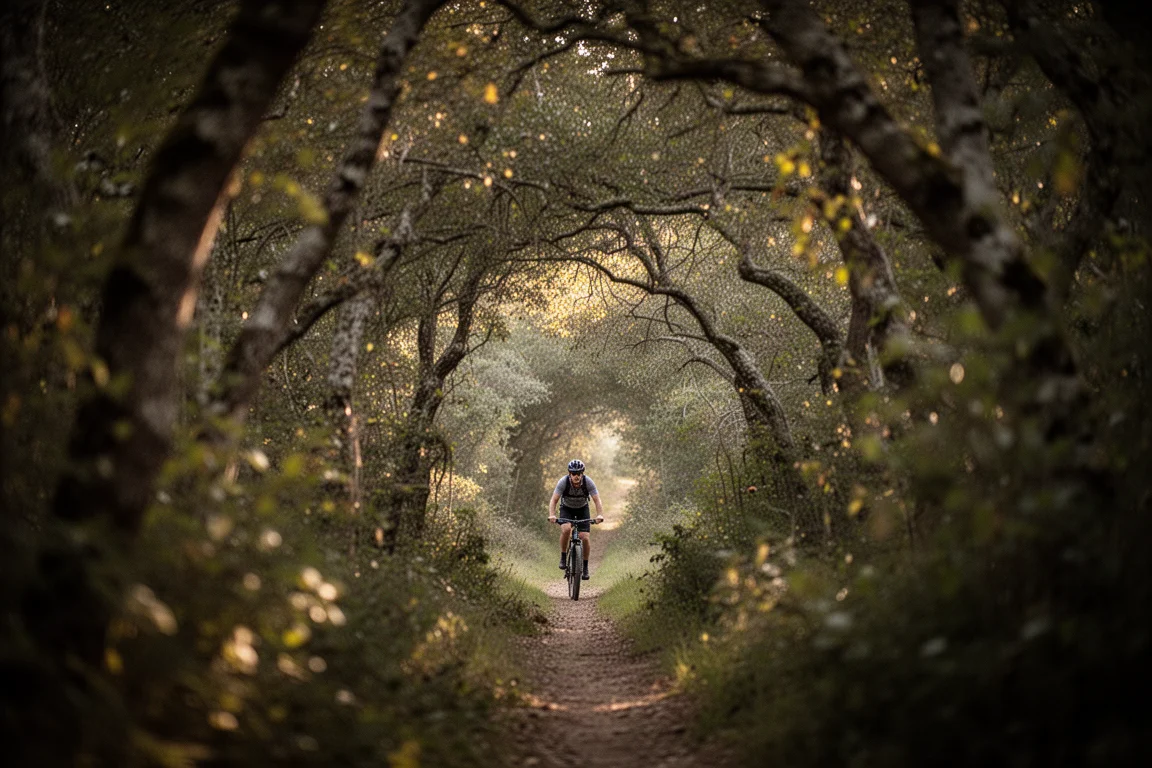
Zoom adds real value to tracking work. A 2.5x lens can be used in ActiveTrack mode, which is useful when you want to stay higher above the action, keep distance from people, or film from the far side of trees entirely. The compressed, distant tracking shots through foliage were among the most impressive results of the whole test, especially as speed picked up.
The 6x lens, however, does not work with ActiveTrack at all, regardless of resolution or frame rate. Tapping it in ActiveTrack simply does nothing. It does work in Spotlight mode, where you manually fly the drone to a position while the camera keeps the subject framed. Spotlight is genuinely useful, letting you hand-fly the drone while it holds the shot, but it is not the same as hands-off ActiveTrack.
The Deep Dark Woods
The final stage is the section that has claimed many drones, including the DJI Flip, which famously climbed skyward for no obvious reason in the same spot. This is where DJI’s claim about detecting tiny branches even in poor conditions gets put to the test.
The biggest challenge for larger drones here is stopping distance. The avoidance system may see every twig, but momentum is the real enemy. Starting slowly, the Mavic 4 Pro performed better than expected. It descended below its 2 metre floor to slip through a low gap, threaded some tricky passages, and stayed alive through sections that have destroyed other drones.
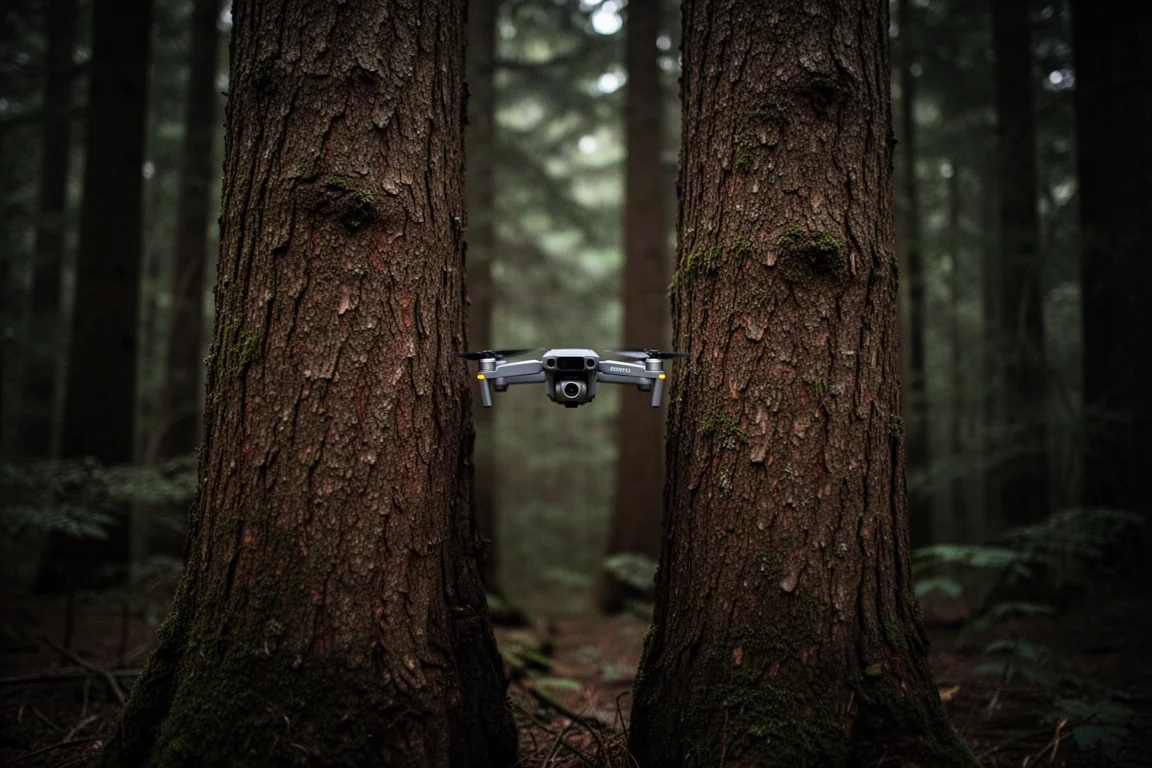
The truly tight spots, where a single tree leaves barely 30 centimetres of clearance on each side, were beyond it. The drone refused to enter the darkest, densest hole on its own, and manual flying was needed to attempt the tightest gap. Notably, it chose routes the pilot would not have picked, but it survived them. Compared with an older Mavic 3, which would have simply sped into a gap and hoped, this drone is far more cautious. In one tight passage, obstacle avoidance had to be turned off entirely to slide through, then switched straight back on, a risky game that smaller obstacle-blind drones never have to play.
That highlights the fundamental difference in design philosophy. Small tracking drones like the Hover Air Pro and DJI Neo have little or no obstacle avoidance. They are palm-sized, mimic the subject’s exact path, and rely on the logic that if you can get through, they can get through. The reigning champion of this course remains the Hover Air Pro, closely followed by the DJI Neo. The Mavic 4 Pro is bigger, more cautious, and far more aware of its surroundings, which makes it brilliant in open and moderately cluttered spaces and hesitant in tight ones.
Buying Advice
If your tracking work lives in open fields, bike paths, coastlines, and moderately wooded trails, the Mavic 4 Pro’s ActiveTrack is genuinely impressive, with excellent footage quality, a useful 2.5x zoom option, and an avoidance system that kept it alive through a course that has destroyed plenty of drones.
If your priority is tight, close-following shots through dense woods at speed, smaller drones remain the better tool. The Mavic’s extra size and caution mean more distance, more hesitation, and occasional refusals in exactly the spots small drones fly through casually. Also budget for DJI Care Refresh; it is a sensible purchase for anyone planning aggressive tracking work.
Conclusion
The DJI Mavic 4 Pro survived the full obstacle course, which is no small achievement given its history in this spot. Its avoidance system is genuinely cautious and capable, its zoom-assisted tracking shots are excellent, and its open-space tracking is reliable. Its weaknesses are specific: orbits that will not hold at speed, a 6x lens locked out of ActiveTrack, and hesitation in tight terrain where smaller rivals excel. For most buyers wanting a premium do-everything tracking drone, it is an easy recommendation; for tight-woods specialists, look at the smaller options.
Product link
View more details for DJI Mavic 4 Pro
This product is mentioned in the review. Check the specifications, options, and compatibility before buying.
View more details for DJI Mavic 4 ProFurther reading
Related Reviews
Drones
Best Budget Camera Drones Under 3000: Five Practical Options for Video and Photography
Five affordable camera drones with HD video capability and stable flight performance, each suited to different needs and budgets.
Drones
Best Budget Drones Under $200: Five Practical Options for 2026
Five budget-friendly drones with GPS, 4K cameras, and FPV capabilities. Real strengths and trade-offs to consider before buying.
Drones
Best Drone Cameras Under $500: Five Options for Different Needs
A practical guide to five drones under $500, covering portability, flight time, camera quality, and key features to help you choose.