Drones
DJI Air 3 Review: 19 Changes Worth Knowing Before You Buy
A full in-depth look at the DJI Air 3, covering the dual-lens camera system, flight time, obstacle avoidance, new controllers, and everything that has changed versus the Air 2S.
Introduction
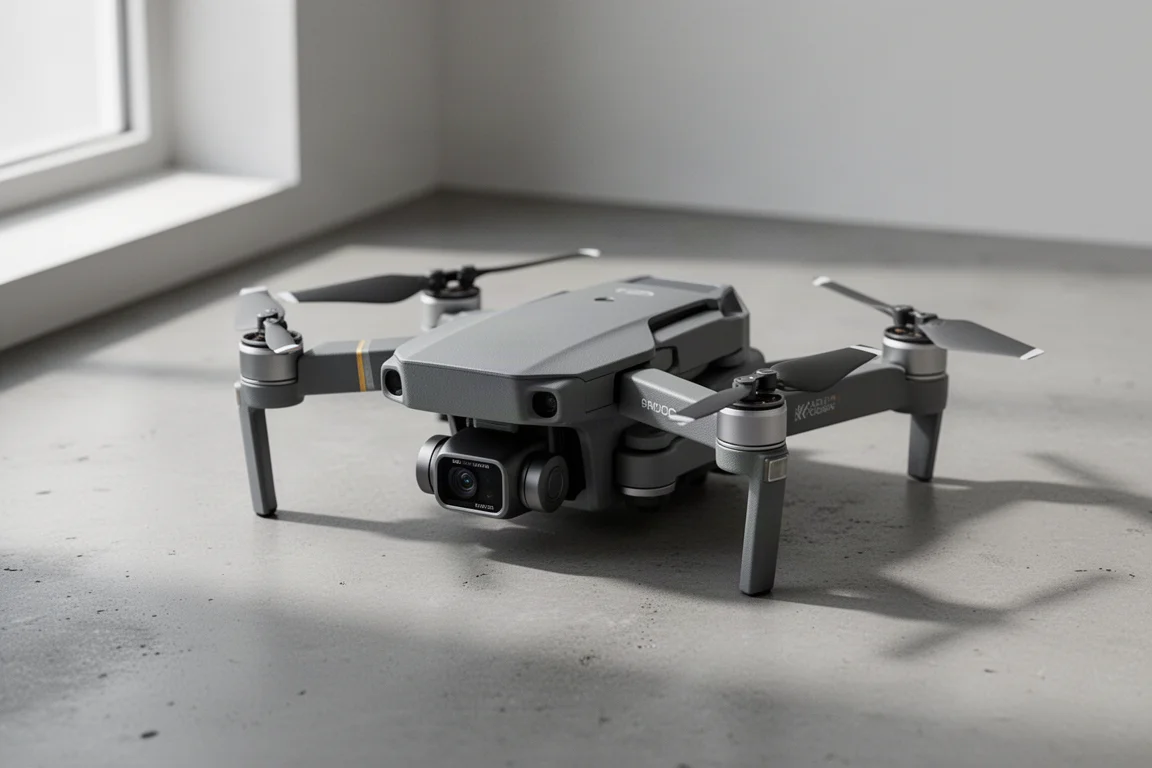
The DJI Air 3 lands as a very solid, very safe option in DJI’s lineup. It does not undercut the Mavic 3 or Mavic 3 Pro at the higher end, but it delivers a practical spec boost in almost every category that matters day to day. Yes, the main camera resolution drops compared to the Air 2S, and we will be honest about that. But the added telephoto lens, full omnidirectional obstacle avoidance, longer flight time, and equal feature sets across both lenses make a compelling case for a very small price increase relative to everything else on the market. Here is everything worth knowing.
Price, Bundles and Controllers
The price has increased slightly, from $999 up to $1,099 including the base remote. There are two remote options: the base DJI RC-N2, a non-screen controller that uses your phone, and the DJI RC 2 with a built-in screen. The Fly More combo kit includes three total batteries, one in the aircraft plus two more, along with a charging hub, extra props, a bag, and one of the two controllers.
At launch there is no option to buy just the aircraft alone, nor the aircraft bundled only with the screen-equipped RC. If you want the RC, buy the whole bundle, because it is only $80 more to get two extra batteries, extra props, and the bag. It is simply the obvious choice.
Dual Lenses: The Biggest New Feature
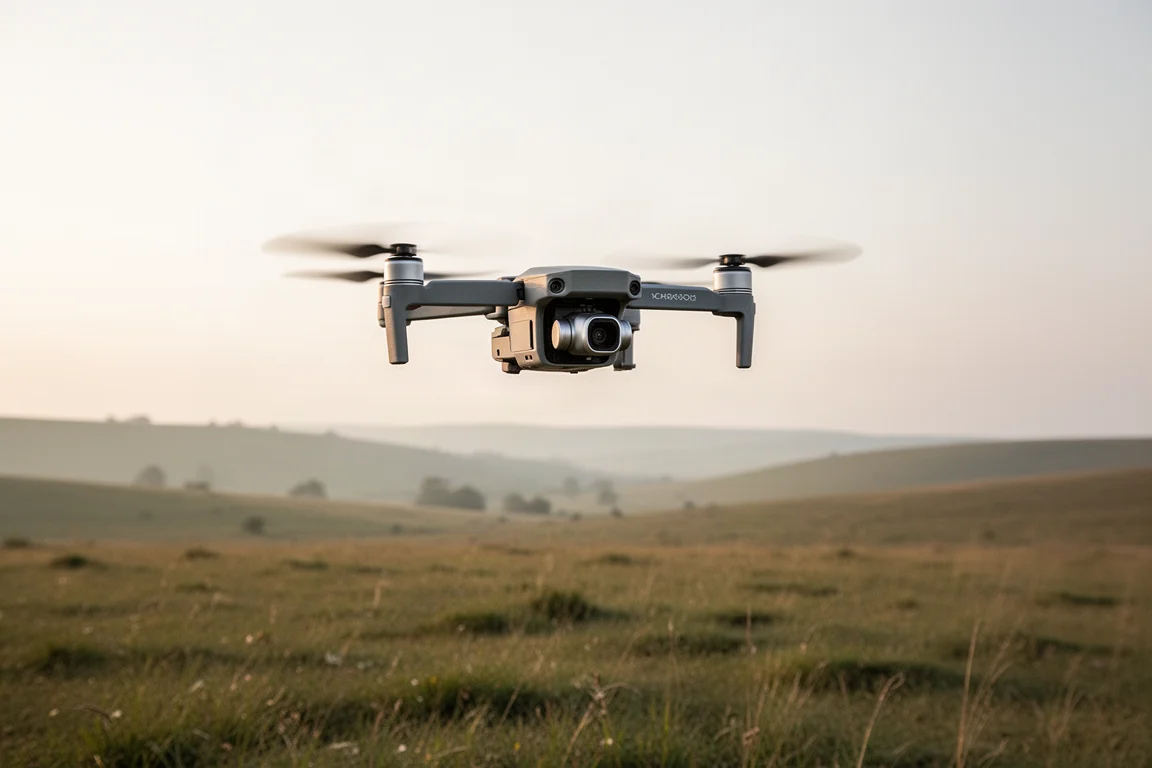
By far the biggest new feature is the second camera system: a 3x telephoto lens giving an equivalent focal length of 70mm, alongside the main camera’s 24mm equivalent. This gives you a true optical zoom on the aircraft itself, similar in spirit to the Mavic 3 series.
The main camera also gets a significant spec bump, moving from f/2.8 to f/1.7 for better low-light performance, while the telephoto sits at f/2.8. The main sensor drops from a 1-inch sensor to a 1/1.3-inch type sensor. Some people have historically been hesitant about DJI zoom lenses, fearing lesser quality, and in the past that was sometimes true. Here, image quality on the telephoto lens is spot on, and footage from it looks spectacular.
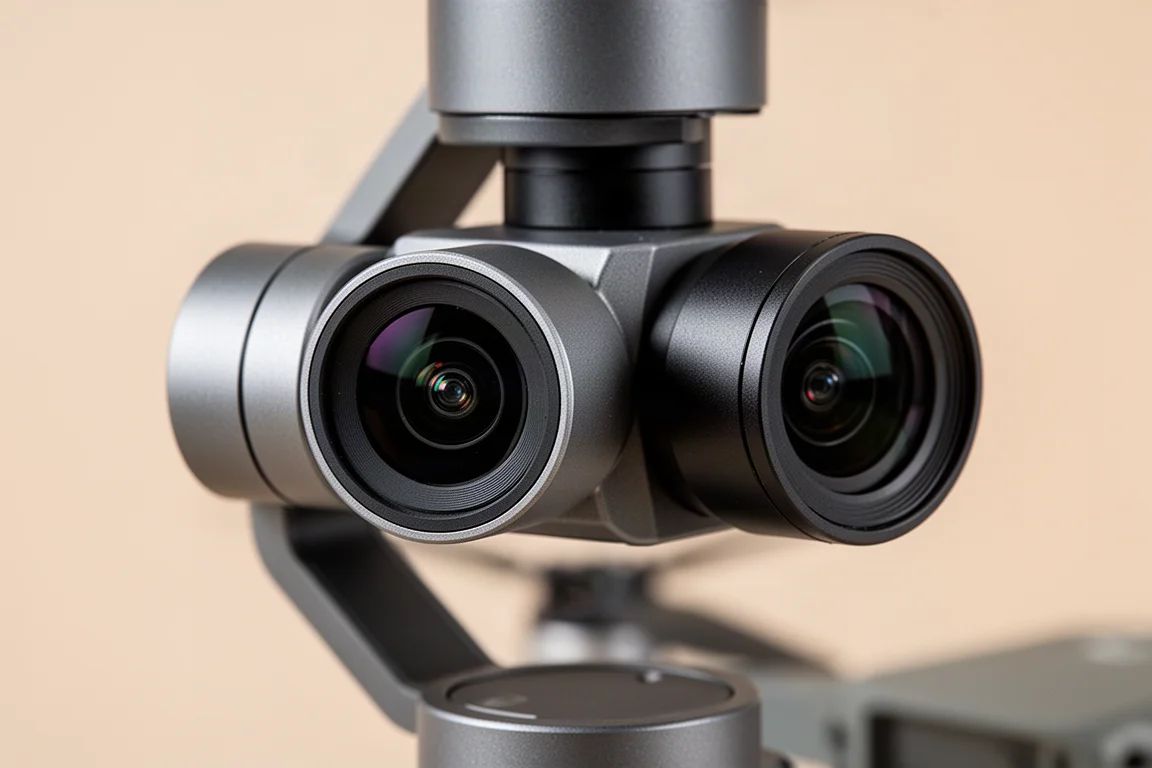
The real benefit of the zoom lens is being further away from your subject. That helps from a safety standpoint and gives you a blurrier background look with better parallax in your shots. There are far more benefits to an optical zoom than simply cropping in.
That said, there is one clear downgrade: main camera video resolution drops from 5.4K on the Air 2S to 4K. DJI will argue overall image quality is better, and that may be the case, but the resolution reduction is what it is. On the flip side, most people used that extra resolution to crop in and zoom anyway, which you can now do natively and optically with the 4K telephoto. For most people this is a better scenario, but if you specifically wanted 5.4K, it is a downgrade.
Slow motion gets a huge boost as well: 4K now runs at 100fps versus 60 before, and 1080p goes up to 200fps versus 120. This also feels like a deliberate play to keep Mavic 3 Pro sales intact rather than fully cannibalize them, since that model carries three lenses. For most people, the resolution difference would not justify spending nearly a thousand dollars more.
One especially welcome detail: virtually everything is equal on both lenses. You can shoot 10-bit and D-Log on both, use ActiveTrack on both, and access virtually every photo and video mode on both. Anyone who has been around DJI drones knows second lenses always came with catches. There are no catches here, with the exception of the aperture difference.
Photo and Video Upgrades
Photos jump from 20MP to 48MP, a huge increase, and panoramic photo capability gets a massive jump as well. The 48MP photo modes and larger panoramas work on both cameras, in RAW and JPEG, across all modes as you see fit. The main camera remains the better low-light option.
On the negative side, the 8K Hyperlapse export option from the Air 2S is gone. Almost no one actually exported 8K, but you could, and that mattered. Hyperlapse is now capped at 4K. There is also a vertical shooting mode, but not the way Mini 3 Pro owners might hope: rather than a rotating gimbal, it is a vertical crop taken down the middle of the image, with a maximum of 2.7K video. Honestly, shooting wide and cropping in post gives you more flexibility, but the option exists if you want it natively.
Flight Time, Speed and Charging
The claimed flight time increases from 31 minutes to 46 minutes. In real-world testing, the closest achieved was just over 30 minutes of actual flight time, in heavy winds and at 8,000 feet in the mountains, both of which drain batteries faster. Keep in mind that the 46-minute figure is mostly hovering and photo flying; recording video reduces battery time considerably faster.
Other practical bumps: top speed increases from 19m/s to 21m/s, roughly 75.6 km/h. Official wind resistance rises from 10.5 to 12 m/s, and real-world testing held up well above what most conditions demand. Charging is faster too: with a 90W USB-C charger, the kind you likely have with your laptop, a battery charges in one hour. The combo’s charging hub does not charge concurrently, one battery at a time, but you can load all three and have them ready in about three hours.
Omnidirectional Obstacle Avoidance and ActiveTrack 5.0
This is a big one for sports shooters and beginners alike: full omnidirectional obstacle avoidance. The Air 2S had front, rear, up, and down optical avoidance but nothing side to side, meaning you could plow the drone into something sideways. The Air 3 repositions its sensors, tilted off the edges of the body, to create a full bubble of vision around the aircraft. In aggressive testing, nothing has been crashed into yet.
All Focus Track support, including Spotlight, POI, and ActiveTrack modes, now works on both lenses, and at full 4K 60 rather than the previous 4K 30 limit. That is hugely notable: you can now ActiveTrack on the telephoto from far away, staying above or clear of trees, with a much better chance of the drone surviving. One caveat: obstacle avoidance struggles in winter months with low light and bare branches, whereas in lush green conditions it is very easy for the drone to miss everything.
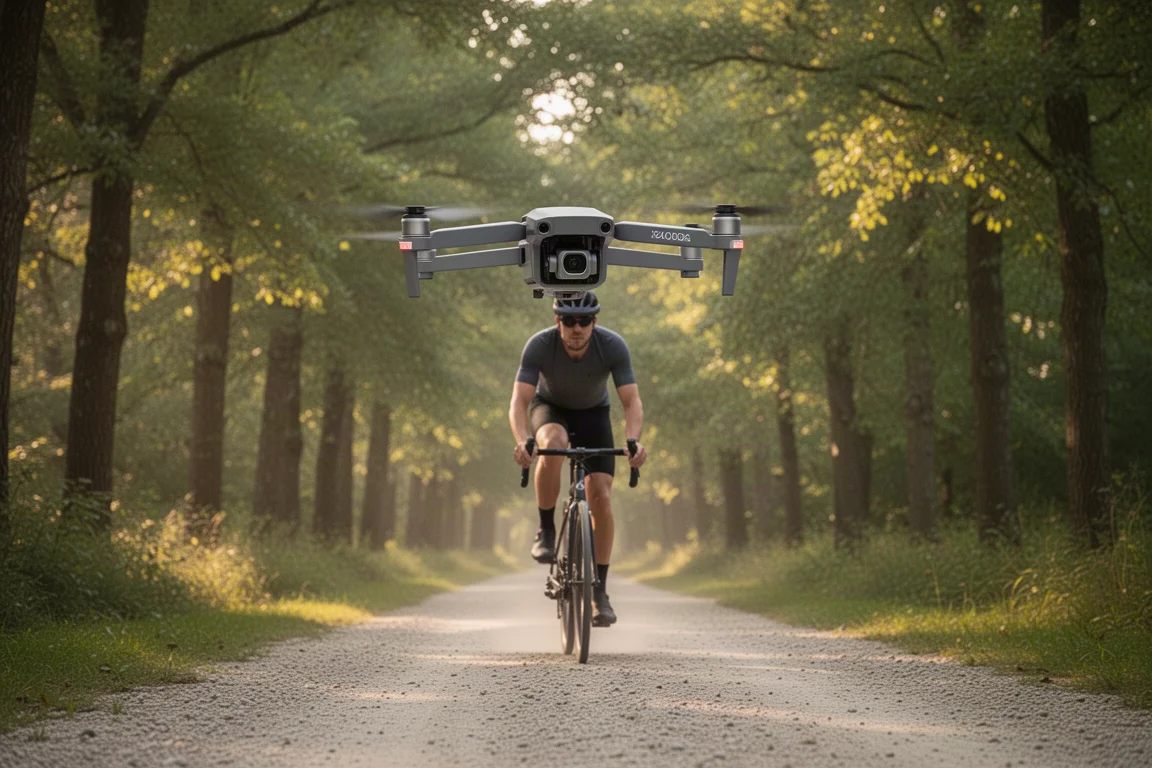
ActiveTrack 5.0 brings better object recognition and faster reacquisition when it loses a subject behind a tree. The more interesting addition is choosing exactly which tracking angle the drone holds in relation to you, selectable on screen, and it stays there for the entire track. Testing across cycling, following people, motorboats, and yachts has produced no problems so far.
Waypoint support arrives too: fly a route once, save it, and repeat the exact same camera movements and altitudes flight after flight, adjusting speed between runs. You can fly the same mission day after day, month after month, even year after year, which suits progress documentation like construction sites. The gimbal range also increases, with both the mechanical range for handling gusts and the controllable range extended: it can now tilt up 60 degrees above horizontal while keeping the same 90 degrees straight down, useful for revealing subjects like trees or skyscrapers.
Two New Controllers, One Big Compatibility Problem
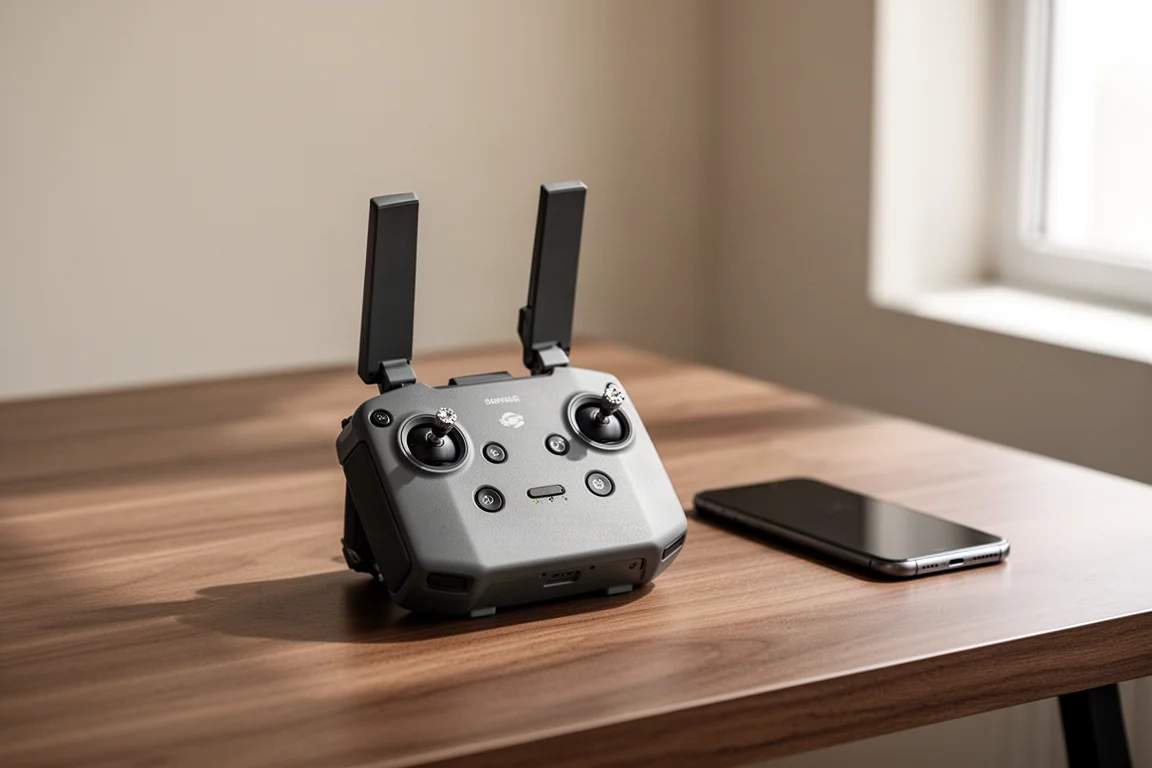
The DJI RC 2 succeeds the DJI RC, with the most obvious change being flip-up antennas that stow when not in use, improving range. One USB-C port was removed, the microSD slot remains on the back, and the mounting screw positions changed, so older mounts using the top screws are no longer compatible, though the bottom screws are the same.
The DJI RC-N2 is the non-screen version: attach your phone and fly. The screen-equipped controller remains the recommendation for convenience and speed, avoiding phone hassles entirely.
Here is the big bummer: the Air 3 is not compatible at all with the original DJI RC, and inversely, the DJI RC 2 is not compatible with any other DJI aircraft currently available. A controller released just a year ago is already effectively dead, and there is no excuse for that. The whole point of these screen controllers was to add aircraft over time and reduce waste from redundant bundles. DJI not introducing backwards compatibility in either direction is genuinely disappointing, even if the RC 2 is still the better controller for this system.
The good news is the range improvement thanks to DJI’s O4 transmission system. On spec it is better, but real-world improvements matter more, especially in Europe, where the older controllers suffered reception challenges. With the RC 2, there have been zero reception problems, with flights well over double the range previously achievable. Where the older setup typically topped out around 900 to 1,000 meters in CE mode, the new system goes far beyond. Note that transmission power adapts dynamically between FCC mode, used in North America and other countries, and CE mode, used in Europe, to stay within legal compliance.
Weight and Final Verdict
The weight increases from 595g to 720g. For most people this does not really matter; this drone was already in no-man’s-land from a regulatory standpoint, so it is not a meaningful change for most scenarios.
The Air 3 is a very solid and safe option. The main camera resolution drop is real, but omnidirectional obstacle avoidance and the telephoto lens are worth far more than 5.4K, and the fully equal feature set across both lenses solves a frustration that has plagued DJI’s multi-lens drones for years. For a very small price increase compared to everything else, this is an easy recommendation for most drone buyers.
Conclusion
The DJI Air 3 is the sensible pick in DJI’s current lineup: dual lenses with no feature compromises between them, longer flight time, better obstacle sensing, improved range, and faster charging. If you can live with 4K instead of 5.4K and the controller compatibility split, it is one of the most complete mid-range camera drones available right now.
Product link
View more details for DJI Air 3
This product is mentioned in the review. Check the specifications, options, and compatibility before buying.
View more details for DJI Air 3Further reading
Related Reviews
Drones
Best Budget Camera Drones Under 3000: Five Practical Options for Video and Photography
Five affordable camera drones with HD video capability and stable flight performance, each suited to different needs and budgets.
Drones
Best Budget Drones Under $200: Five Practical Options for 2026
Five budget-friendly drones with GPS, 4K cameras, and FPV capabilities. Real strengths and trade-offs to consider before buying.
Drones
Best Drone Cameras Under $500: Five Options for Different Needs
A practical guide to five drones under $500, covering portability, flight time, camera quality, and key features to help you choose.