Hand Tools
Dixon Carpentry Pencils Review: The Flat Pencil Every Toolbox Deserves
Flat carpentry pencils are cheap, nearly indestructible, and everywhere. Here is what to know about sizing quirks, sharpening, and why the orange Dixon ones earn a permanent spot in a kit.
Introduction
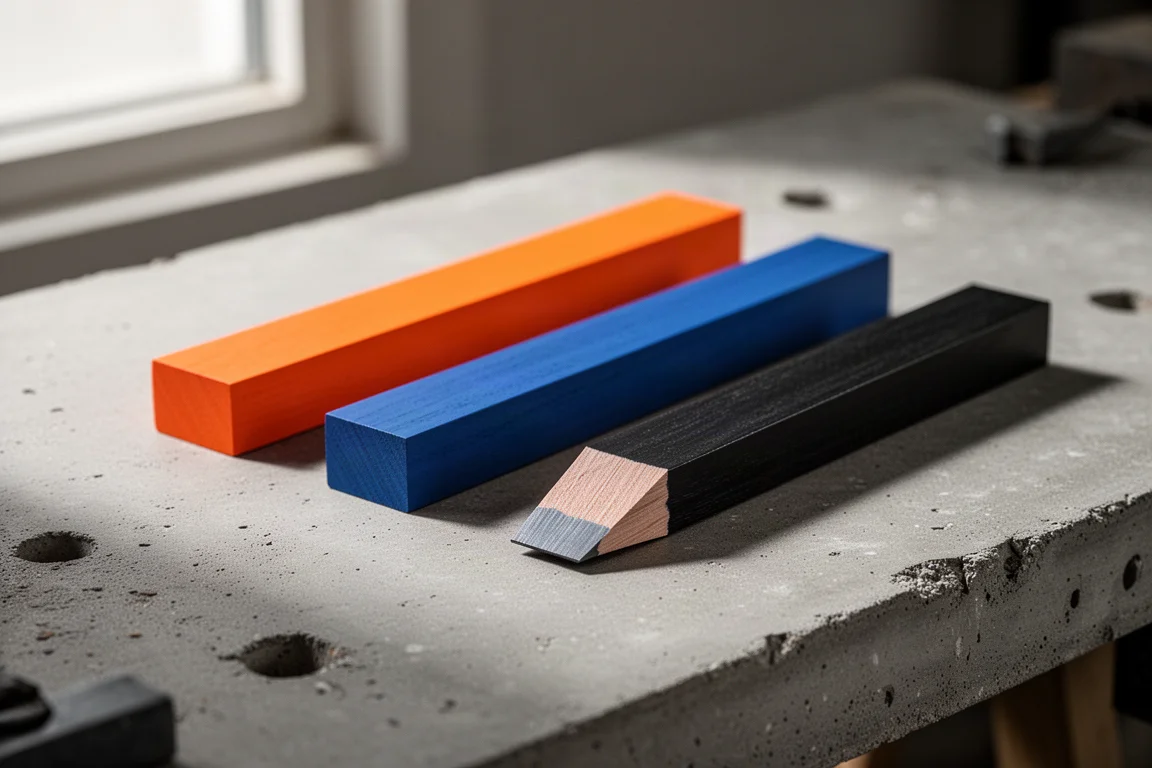
Some tools earn their place through precision, and some earn it through sheer usefulness. The flat carpentry pencil belongs firmly in the second camp. It is inexpensive, difficult to break, works upside down, on rough lumber, and in the rain, and it is often handed out for free at building supply stores. If you have ever needed a mark that survives a job site, this is the tool.
This review looks at two widely available options: the Dixon carpentry pencils, including the bright orange ones that keep ending up in survival kits, and the Home Depot carpenter pencils that many contractors accumulate by the dozen.
What a Carpentry Pencil Actually Is
A carpentry pencil is supposed to be seven inches long, a quarter inch thick, and half an inch wide. In practice, almost none of them hit those numbers. Measured examples came up short at six inches and change, and the thickness readings were off on both the quarter-inch and half-inch dimensions. Home Depot’s pencils tend to be worse, measuring around 5/16 inch where a quarter inch is expected and roughly 9/16 inch on the wide side.
The practical takeaway: never use one for serious measurement. Treat it as a marking tool and nothing else. The flattened body is a deliberate design choice that keeps the pencil from rolling off boards and surfaces, though round versions have started appearing on shelves.
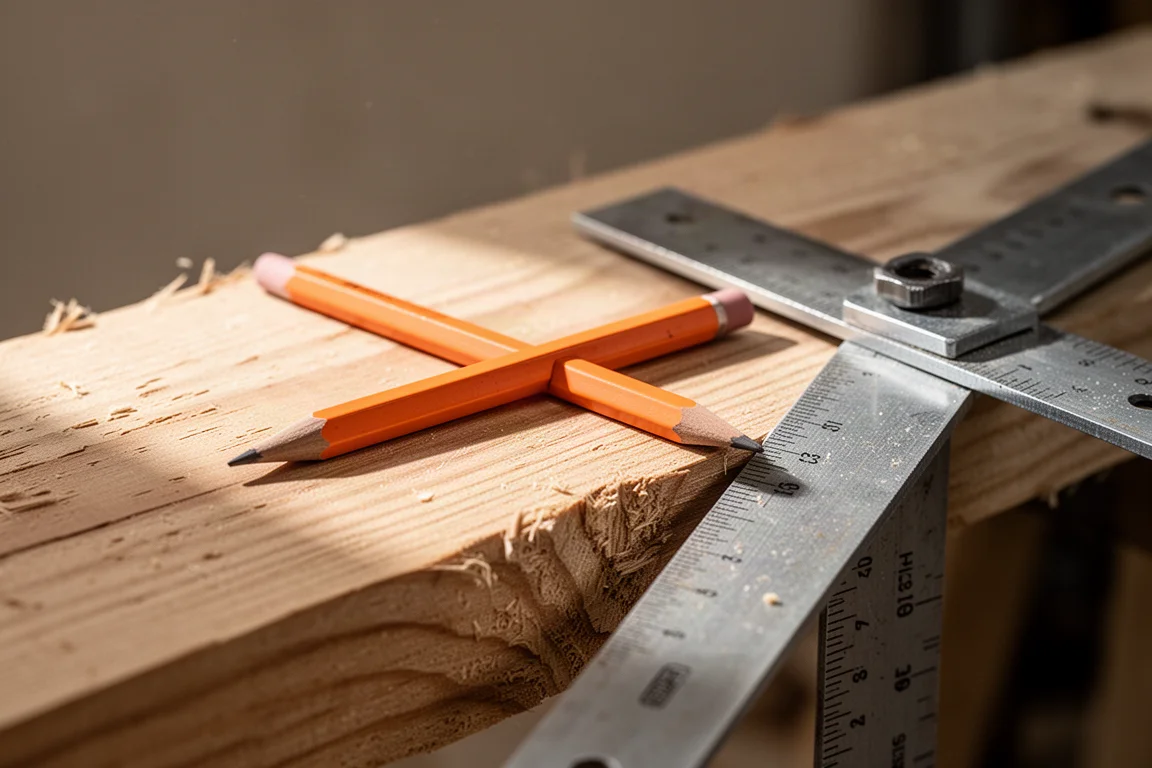
The core appeal is the thicker lead. It holds up to rough surfaces, can be run all the way down to a nub, and, when ground to a fine wedge, produces marks precise enough to replace a traditional round pencil in many situations.
Sharpening: Knife Skills and Sandpaper
Most people sharpen carpentry pencils with a knife, and the technique matters. Avoid big, sweeping cuts. Use small, fine strokes so you do not snap the exposed lead, which is easy to do when too much graphite is sticking out. Dedicated carpentry pencil sharpeners also exist and produce very nice tips.
For a genuinely precise tool, take the pencil to a disc sander or band saw and grind a fine wedge. Grinding on the quarter-inch side or the half-inch side gives you thin or thick marks on demand. Some people grind both sides so they can keep working through a stack of fence boards without stopping to resharpen. A touch of sandpaper finishes the tip for a clean line.
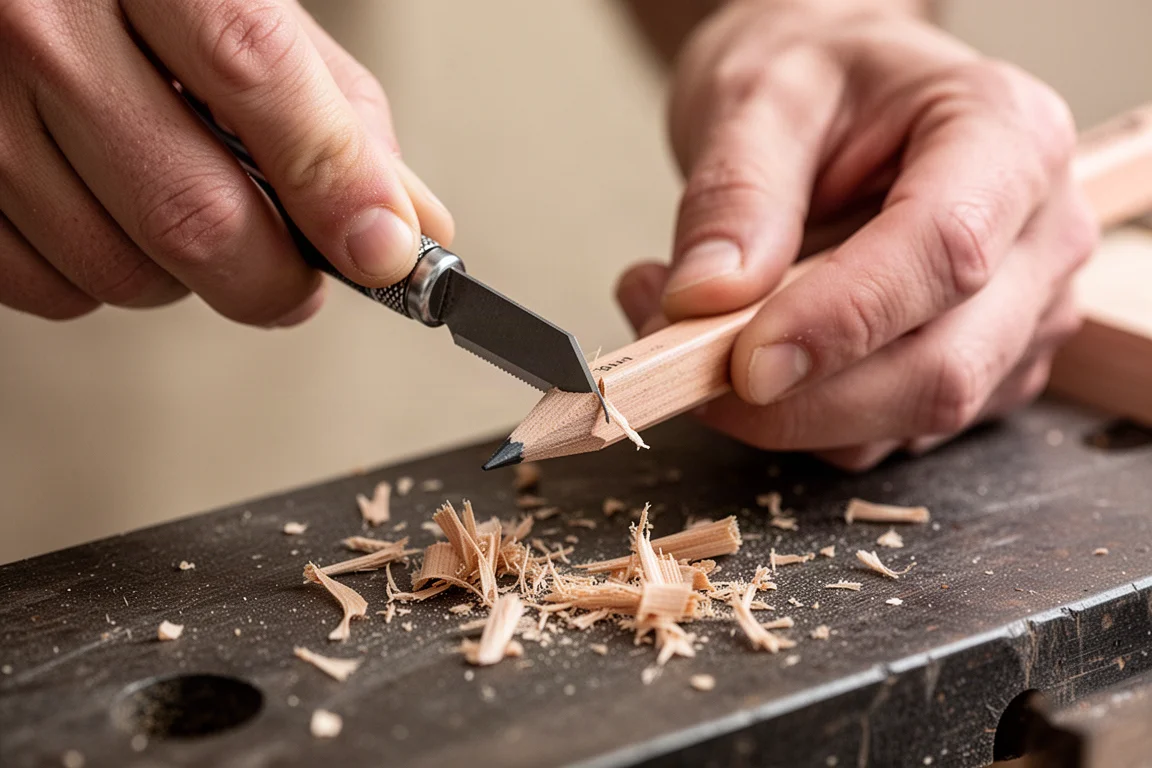
There is something quietly satisfying about knife-sharpening a pencil on the job. It is also a legitimate excuse to pause and think through the next cut.
The Orange Pencil Trick: Survival Kits and Visibility
The Dixon pencils get used in survival kits for several reasons. First, visibility: orange is far easier to find than black or dark blue, which vanish instantly when dropped in grass. Second, the pencil doubles as a source of dry wood. Shave curls off the body with a pocket knife and you have instant kindling for fire starting. Third, the sheer strength of the thing, a solid chunk of hardwood-cored wood, means some people even carry it as an improvised defensive tool.
A note on materials matters here. Genuine wood pencils, like the Dixon ones, which are made in the USA from 100 percent wood, behave predictably. Some cheaper small pencils are made from an artificial material that feels wrong, and when heated, those pencils start to bend. For anything involving fire or hard use, real wood is worth insisting on.
Dixon vs Home Depot Carpenter Pencils
The Dixon pencils are the standout of the pair. They are real wood, made in the USA, available in high-visibility colors, and consistent in quality. No meaningful difference in graphite quality was noticed across the various flavors, aside from the occasional pencil whose lead kept breaking, likely from being dropped hard at some point.
Home Depot’s carpenter pencils are quite good too and are often given away, which makes building a collection effortless. Their weakness is dimensional accuracy: the examples measured were noticeably off on both thickness and length. For free pencils used purely for marking, that is a minor complaint.
Buying Advice
Grab whichever is easiest to get. If buying, the Dixon pencils are the safer choice for material quality and visibility. Keep a few sharpened to fine wedges for precision marking, leave the rest in rough form for general layout work, and stash one in every toolbox, including the ones used for mechanical work rather than carpentry. They are that useful.
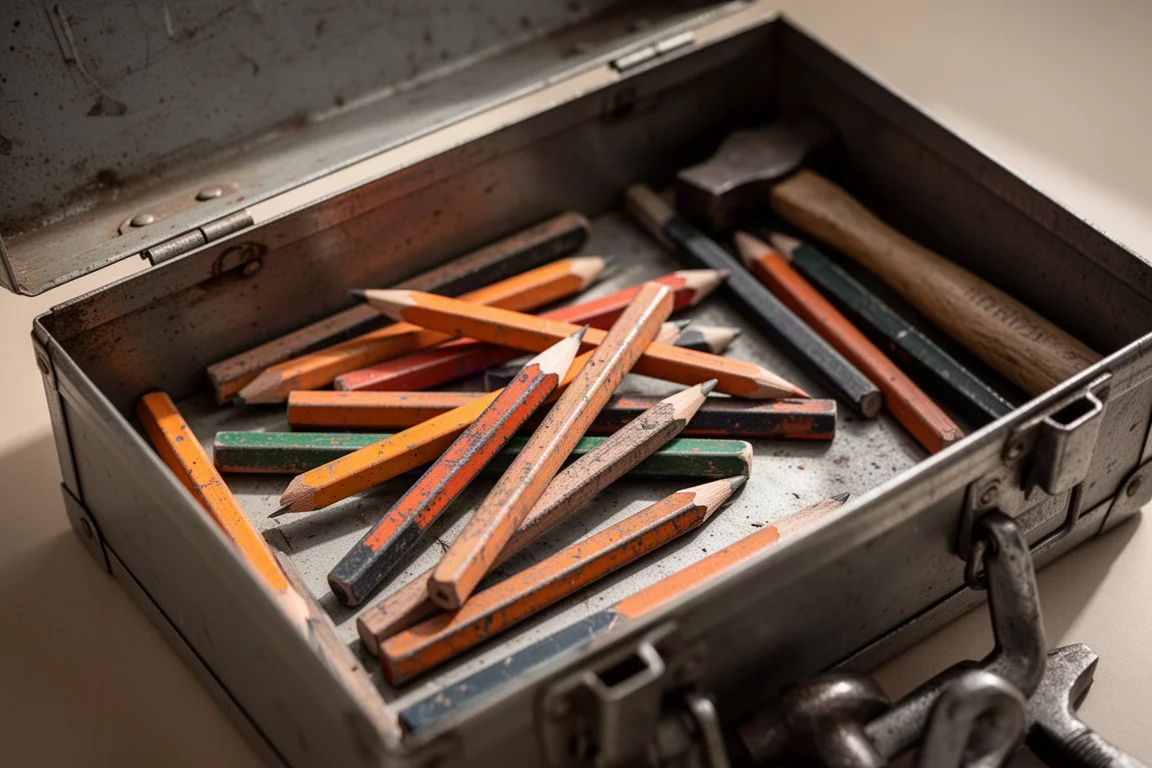
And a final tip: keep a pocket knife or utility knife handy, because a carpentry pencil will always eventually need a little blade work.
Conclusion
Carpentry pencils are one of the cheapest, most reliable tools in any workshop. The Dixon pencils stand out for their 100 percent wood construction, USA manufacturing, and high-visibility orange option, while the Home Depot versions are perfectly serviceable freebies with looser dimensions. Neither will measure anything accurately, and that is fine. Their job is marking, and they do it brilliantly, from full-length new pencil down to the last little nub.
Product link
View more details for Dixon Carpentry Pencils
This product is mentioned in the review. Check the specifications, options, and compatibility before buying.
View more details for Dixon Carpentry PencilsFurther reading
Related Reviews
Hand Tools
Best Diagonal Cutters 2026: 16 Pliers Tested for Cutting Power and Durability
We put 16 diagonal cutters through nail, screw, drill bit, and hex key tests to find the best value picks for your toolbox.
Hand Tools
Best Hex L Key Sets 2026: Nine Sets Tested for Real-World Torque
Nine hex L key sets from budget to premium, tested for torque, fit, and durability. See which sets deliver real performance and which ones to skip.
Hand Tools
Best Locking Pliers 2026: Top Picks Tested for Grip and Durability
We tested 18 brands of 10-inch locking pliers for grip strength, jaw bite, build quality, and ease of release to find the best options for tough jobs.