Workshop Tools
DeWalt Stealth Sonic Wet/Dry Vacuums: 9-Gallon vs 12-Gallon Compared
Two quiet, affordable 8 Amp wet/dry vacuums from DeWalt. Here is how the 9-gallon and 12-gallon models differ and which one fits your workshop or car.
Introduction
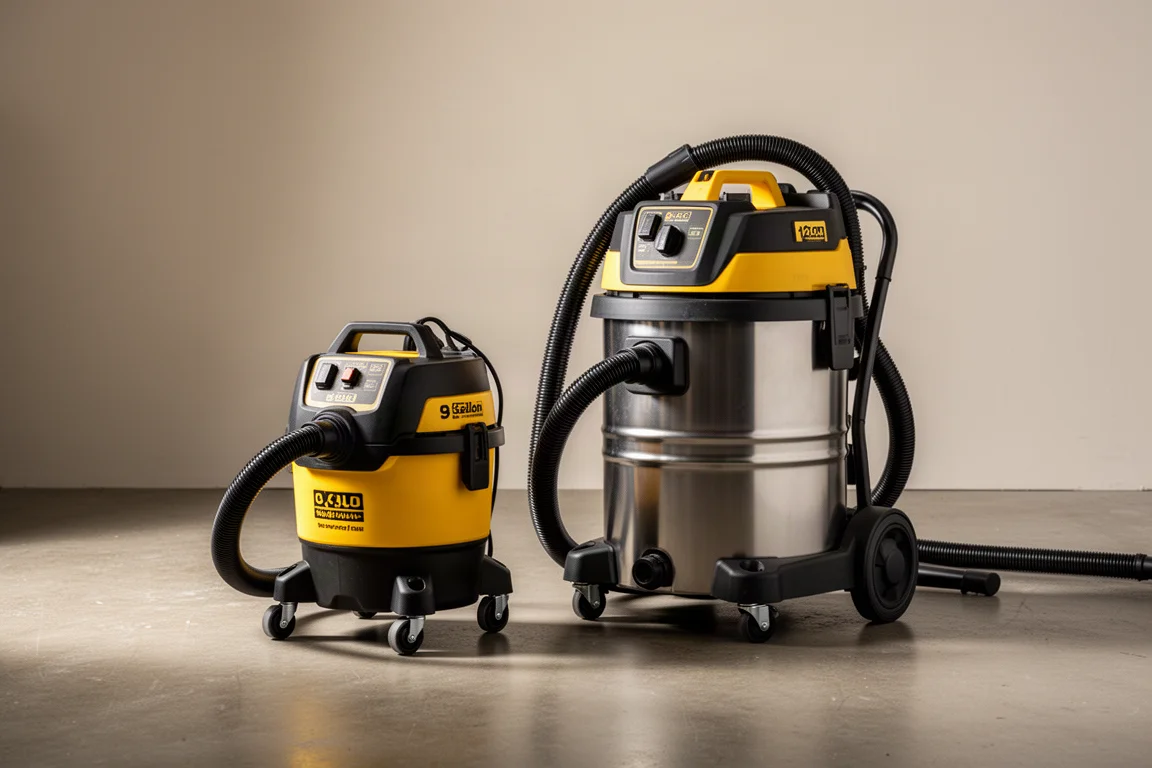
Most wet/dry vacuums ask you to trade power for noise. The DeWalt Stealth Sonic line is interesting because it refuses that trade: both the 9-gallon and 12-gallon models run an 8 Amp motor, do genuinely useful work, and stay quiet enough that you can hold a normal conversation while they run. The 12-gallon has been a long-time favorite for exactly that reason, and the smaller 9-gallon model was worth testing to see if going down in size gives up anything that matters.
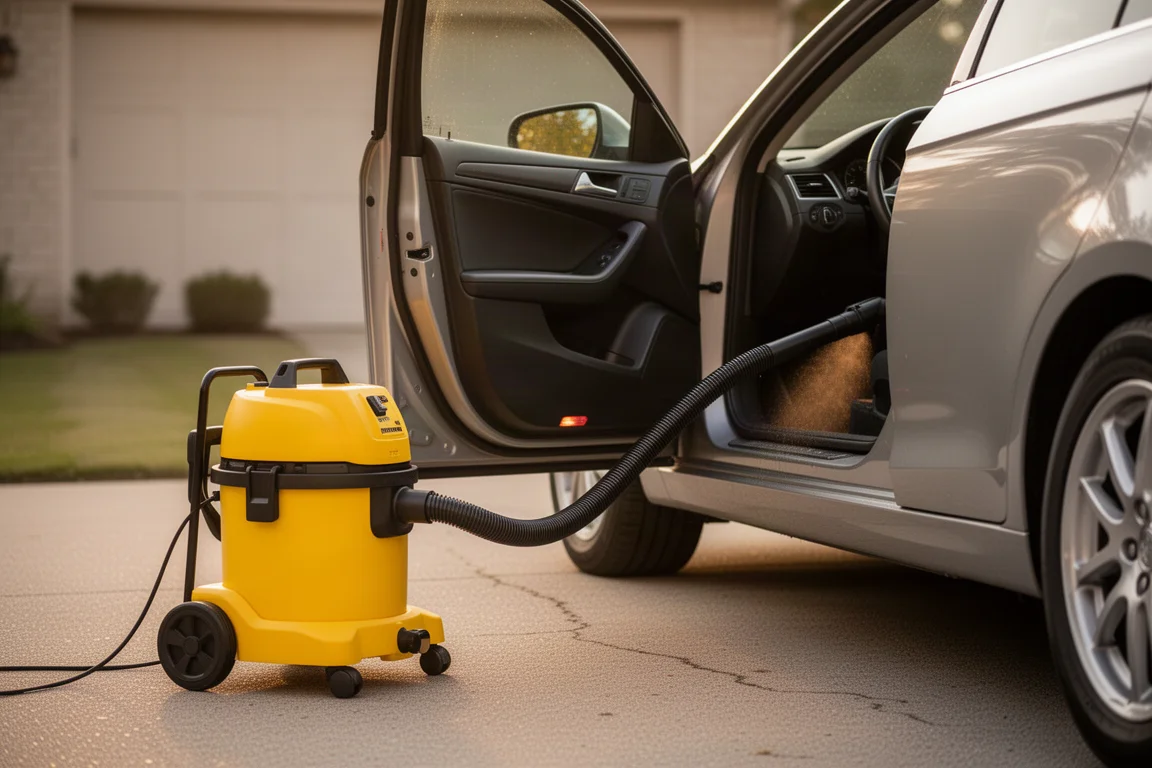
The two machines are nearly identical apart from tub capacity and hose diameter: the 12-gallon uses a 2 1/4-inch hose, while the 9-gallon drops to a narrower hose that fits into smaller spaces, like the interior of a car. The 12-gallon sells for around $139 at Lowe’s, and the 9-gallon comes in at roughly $119, so neither is a big financial commitment.
Why Quiet Matters in a Shop Vacuum
The headline feature of both models is how little noise they produce. A smaller vacuum usually gets louder, but the 9-gallon only goes up slightly compared to the 12-gallon, and part of that sound comes from the hose inlet itself rather than the motor.
That quietness is practical, not just pleasant. Around the home or on a job site, you can still hear what is going on around you, and you can comfortably hook the vacuum up to a tool without shouting over it. It is also worth remembering that your hearing matters: with many louder vacuums, you should be wearing earplugs, and few people bother to do that when vacuuming the car.
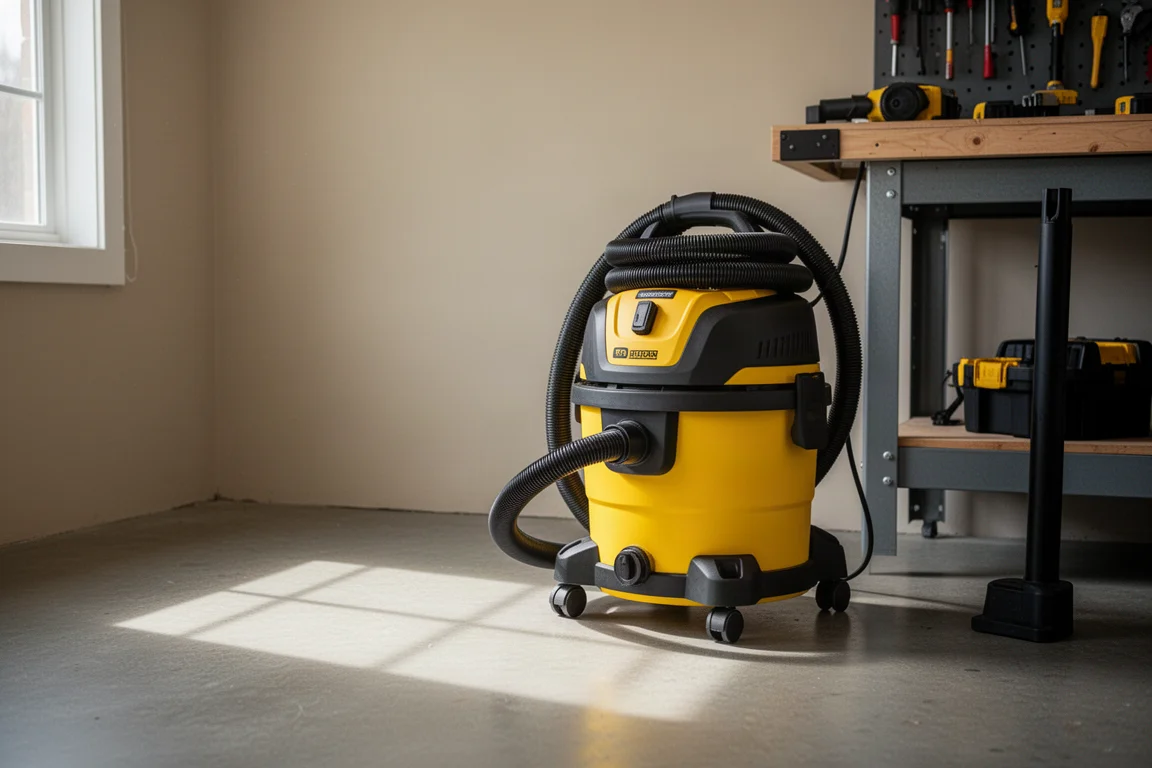
At around 65 dB wherever you are, the 9-gallon stays in safe territory for hearing, which is one of the main reasons to pick it up even if you already own a larger machine.
Sound Test: How the Two Models Compare
Using a phone sound meter app, with both vacuums set up identically, the readings were close but not identical. The 9-gallon measured in the range of 64 to 67 dB up close, peaking around 68, and dropped to about 60 dB from roughly four feet away. The 12-gallon read lower, around 61 to 62 dB nearby and 55 to 56 dB from the camera position.
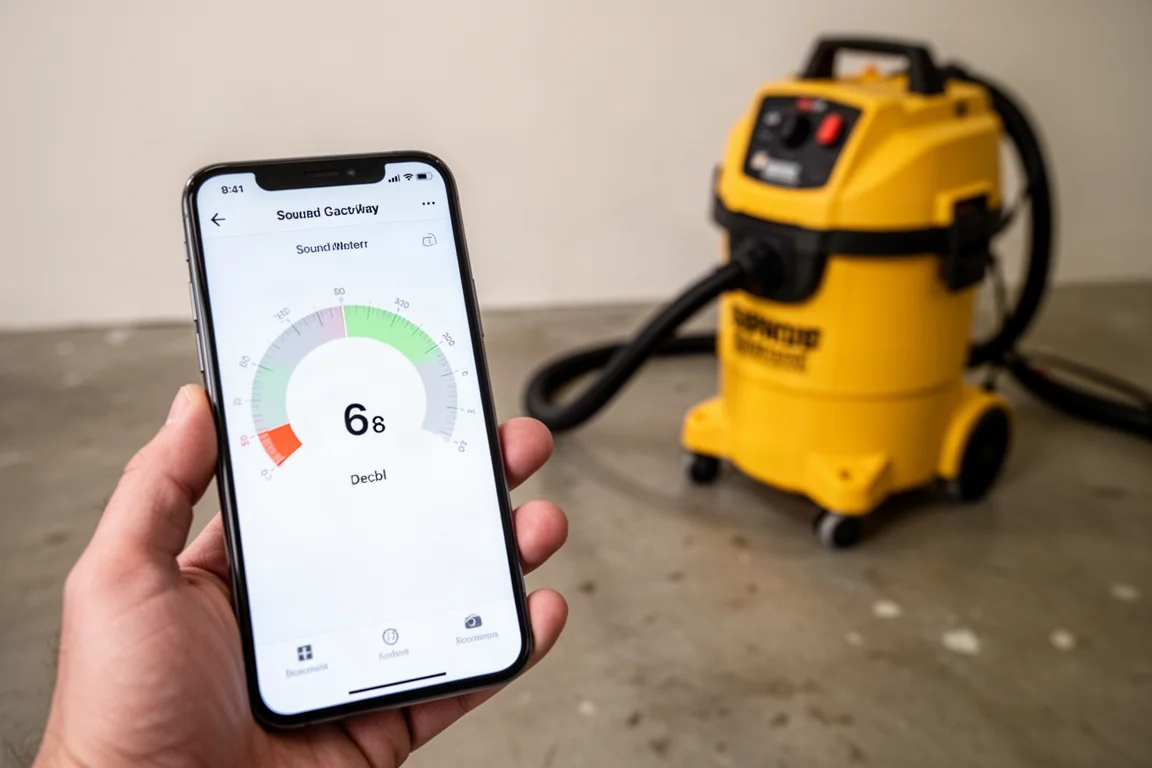
In a normal working situation, the difference is probably not something you would notice, since whatever you are sucking up makes noise anyway. Both machines remain quiet enough for easy conversation without raising your voice, which is rare in this category.
Water Pickup Test: Does Hose Size Matter?
For wet work, the filter twists out easily with a quarter-turn lock and a friction fit, and the 9-gallon keeps the same drain port on the bottom as the 12-gallon, so the two are interchangeable in how you empty them. A foam cover is recommended over the filter when you are working with a lot of water.
To see what the smaller hose actually costs you, both machines were run against two full buckets of water: the 12-gallon with its 2 1/4-inch hose and the 9-gallon with the same 8 Amp motor but the narrower hose. The larger 12-gallon was significantly faster and opened a clear lead right away, partly because it started pulling air sooner at the bottom of the bucket.
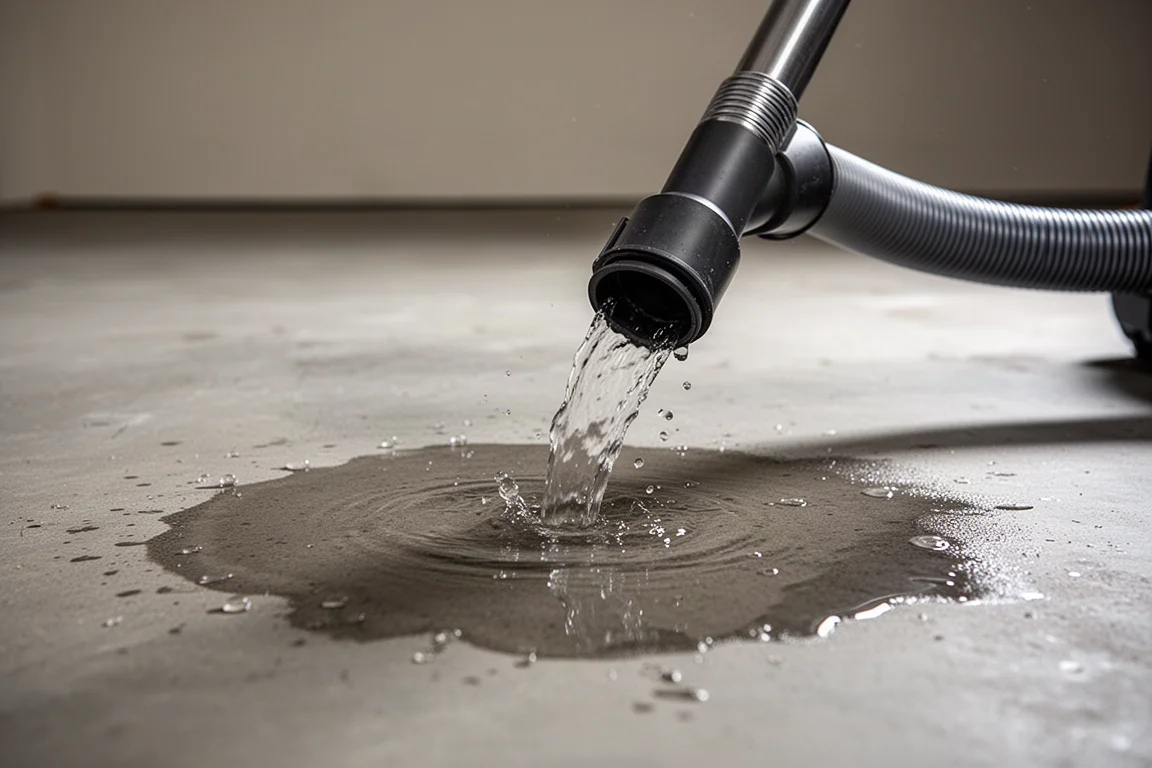
If you are downgrading mainly for water pickup, expect a real difference. For general dry debris and tight spaces, the narrower hose of the 9-gallon is the whole point: it reaches places the bigger hose simply cannot.
Filters and Long-Term Use
Filters for these vacuums are fairly specific, using a locking end to seat in place. They are not expensive, though: a two-pack of HEPA filters runs about $32 online, an alternative two-pack sits in the same ballpark around $35, and a single high-efficiency filter is around $28. Notably, the filters included with the vacuums are not HEPA, so upgrading is an easy choice if you want it.
One caveat: these are not dust extractors. If you are in woodworking and want continuous dust collection, do not run them for hours on end, because like any vacuum they have a duty cycle and will get hot, shortening their life.
A few honest complaints. The hose is easy on and off but moves around a bit when connected, so it does not feel as premium as some more expensive units, though you can absolutely drag the machine around by the hose. And when dumping either model, the rear accessory caddy adds an extra step: you can lift it off to empty the tub, but everything inside tends to get dirty in the process.
Which One Should You Buy?
The 12-gallon at $139 is hard to beat if you want the ultimate in quiet, the fastest water pickup, the larger 2 1/4-inch hose for big debris, and a longer power cord. The 9-gallon at $119 makes sense for cars and other smaller areas, where the narrow hose genuinely improves the experience.
Prices vary a lot depending on where you shop. These DeWalt vacuums are sold at Lowe’s and Home Depot (though Home Depot was out of stock at the time of testing), and some online retailers list them at higher prices, so it can be worth checking around or buying in store. Filters are easiest to find online. Compared to cheap $60 vacuums that are loud, or battery models running $400 to $600, these occupy a sweet spot: capable, affordable, and genuinely quiet.
Conclusion
Both Stealth Sonic models do their job with remarkably little noise, and neither is a risky purchase. Choose the 12-gallon for maximum capacity and versatility, or the 9-gallon if cars and tight spaces are your main use case. Either way, you get an 8 Amp motor, a quiet running experience, and cheap, widely available filters.
Product link
View more details for DeWalt Stealth Sonic 9-Gallon Wet/Dry Vacuum
This product is mentioned in the review. Check the specifications, options, and compatibility before buying.
View more details for DeWalt Stealth Sonic 9-Gallon Wet/Dry VacuumFurther reading
Related Reviews

Workshop Tools
Best Drill Tap Sets 2026: Top Picks Tested for Speed and Strength
We tested 17 drill tap sets to find the fastest drilling, strongest threading, and most durable options for your workshop.

Workshop Tools
Cool Shop Tools 2026: Five Clever Upgrades Worth a Closer Look
A practical look at five workshop tools that solve real problems, from smarter drill bits to a safer table saw guard.

Workshop Tools
Cool Tools for the Workshop: Five Smart Upgrades Worth Trying
A practical look at five workshop tools that make measuring, drilling, marking, and sawing easier, from a clever square to a top-tier bandsaw fence.