Power Tools
DeWalt Power Stack vs DCB203: Is the New Battery Worth the Extra Money?
We compare DeWalt's compact Power Stack battery against the standard 2Ah DCB203 in impact driver, hammer drill, reciprocating saw, blower, and cold-weather tests.
Introduction
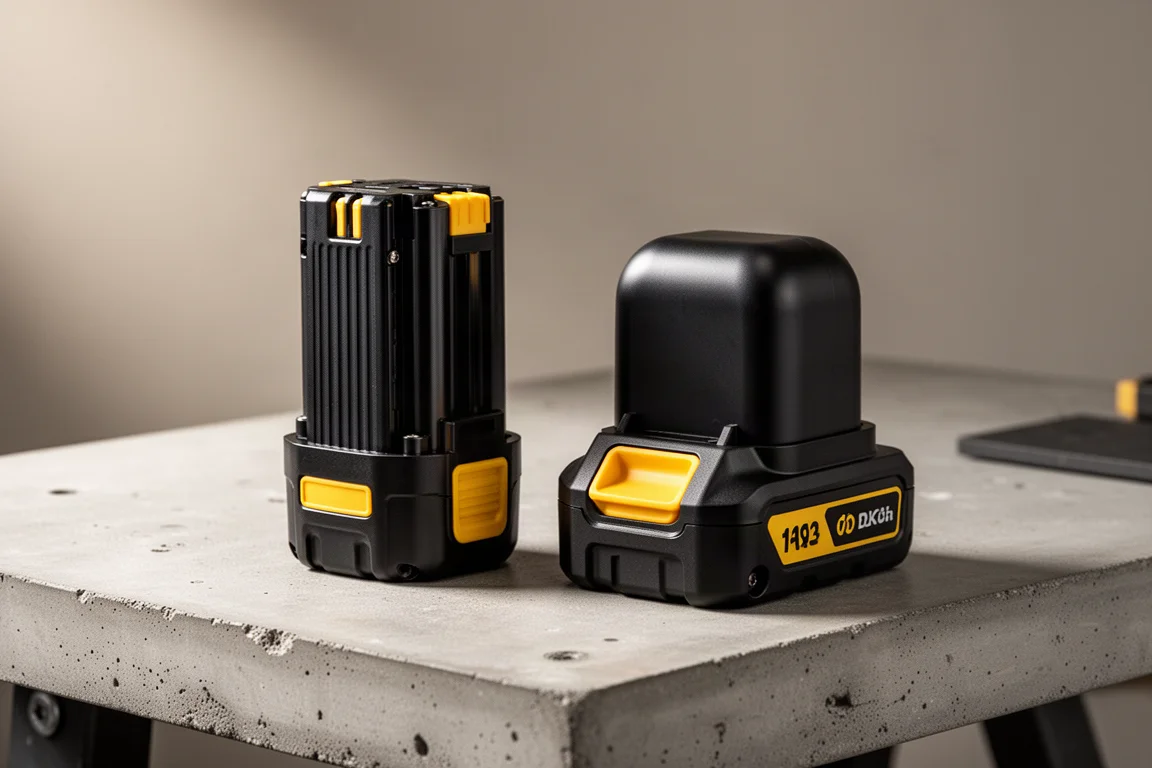
DeWalt’s Power Stack battery makes two bold claims: 50% more power and a pack that is 25% smaller than the standard option. On paper that is a compelling combination, but compact batteries live or die on real-world performance. To find out whether the Power Stack justifies its considerably higher price, we ran it head to head against the widely used 2Ah DCB203, with a 5Ah DeWalt battery included as a high-capacity reference point.
The testing covered impact driver torque, lag bolt driving, hammer drill output, reciprocating saw cuts, air blower runtime, cold-weather behavior, and a controlled discharge test, finishing with a look inside both packs.
Impact Driver Torque and Lag Bolt Tests
Impact drivers use relatively little energy, which makes them a natural fit for smaller batteries like the DCB203 and the Power Stack. Using a DeWalt DCF887 impact driver and a hydraulic ram torque setup, the DCB203 reached 1,725 PSI in a 15-second max torque test. The Power Stack pushed to 1,950 PSI, roughly 11.5% more torque, and it felt noticeably harder hitting and faster in use.
The interesting twist came from the 5Ah battery: it matched the Power Stack at 1,950 PSI. Both delivered more than enough energy to hit the impact driver’s maximum, while the DCB203 simply could not keep up at the top end.
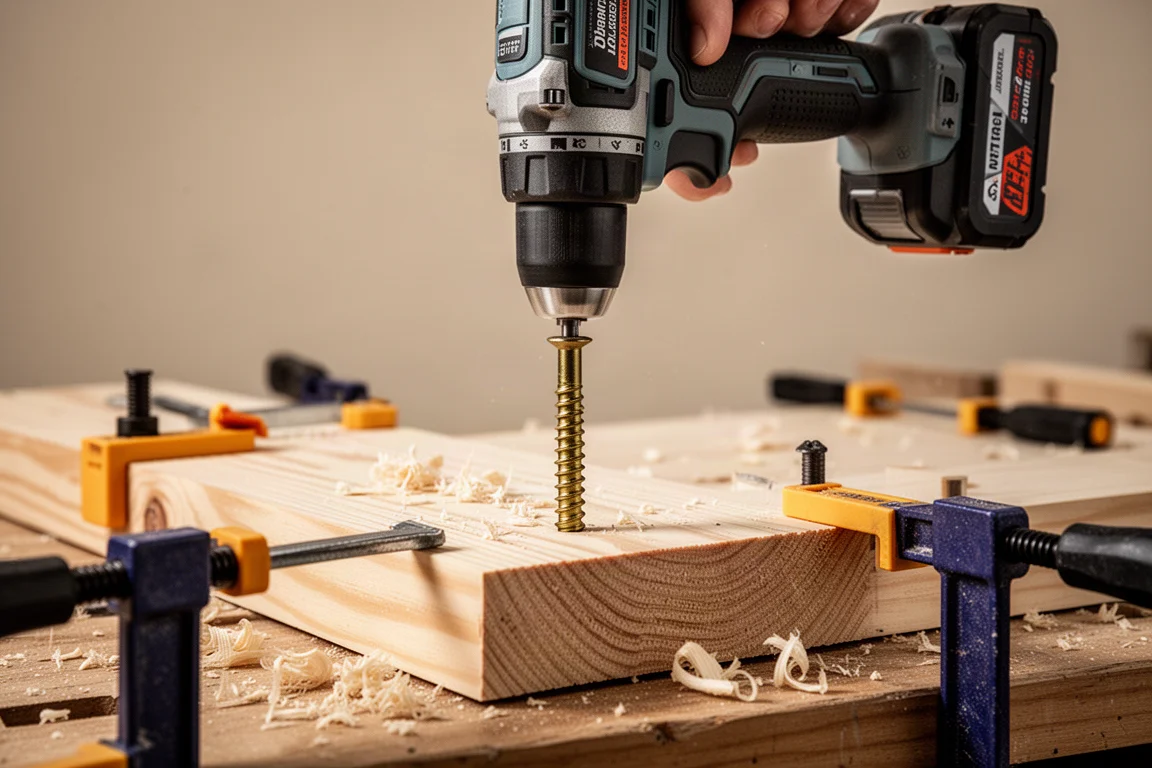
In the five 5-inch lag bolt test, the DCB203 averaged 8.16 seconds per bolt. The Power Stack averaged 7.22 seconds, more than a second faster, and held its pace consistently across all five bolts. The 5Ah battery led the field at 5.98 seconds, benefiting from its extra capacity. After discarding one outlier per battery caused by knots in the wood, the ranking held: 5Ah fastest, Power Stack in the middle, DCB203 trailing.
Hammer Drill and Reciprocating Saw Performance
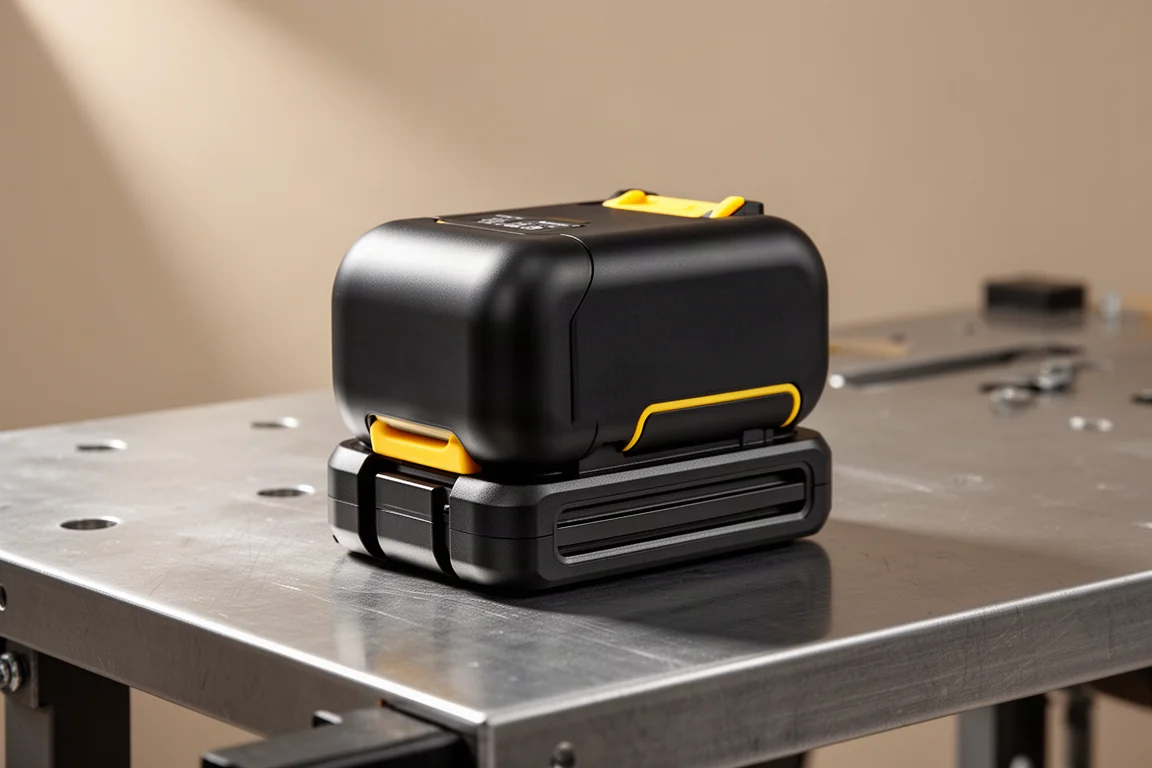
A hammer drill demands far more energy than an impact driver, so we tested the batteries in a DeWalt hammer drill driving a 12-inch lag bolt with an inline torque adapter. The DCB203 struggled badly, losing RPM almost immediately and giving up at 6.38 seconds with just 311 in-lbs of torque. The Power Stack held on for 10.5 seconds and reached 366 in-lbs, about 15% more torque. The 5Ah battery topped the test at 376 in-lbs.
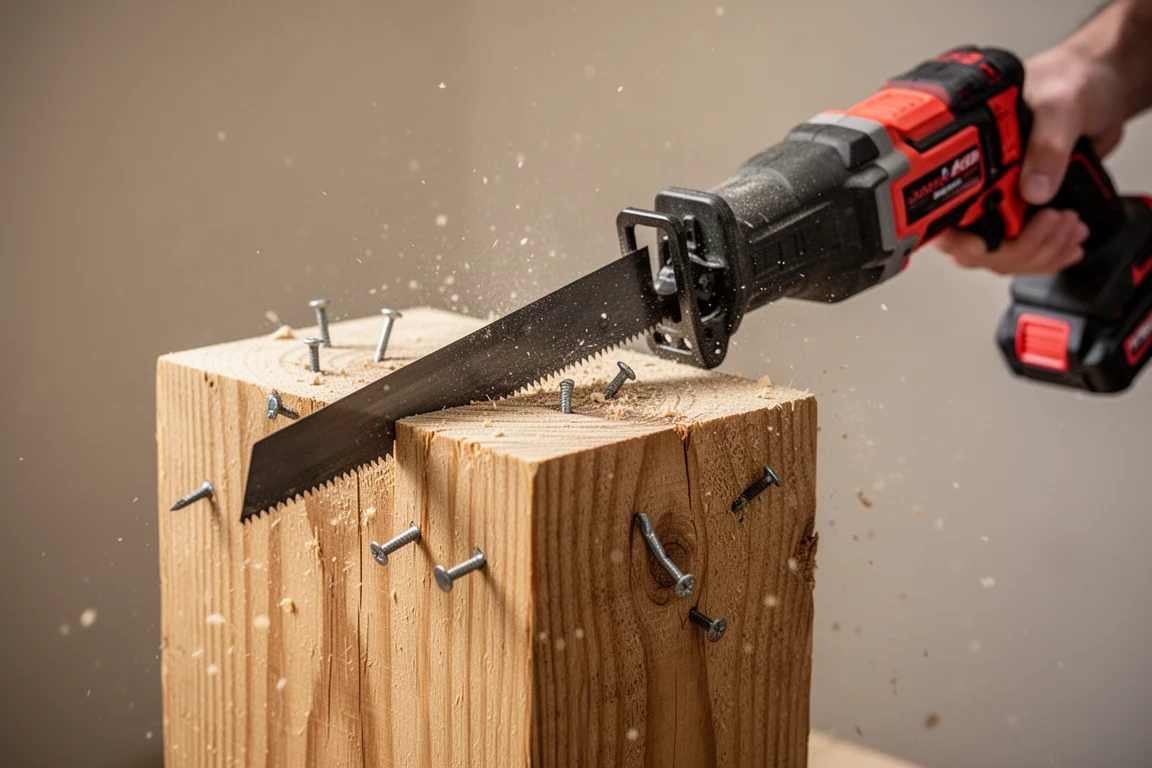
The reciprocating saw, fitted with a rescue blade and cutting through 4x4s containing four 16-penny nails, with 10 lbs of added weight, separated the batteries further. The DCB203 could not keep blade speed up and averaged 15.4 seconds per cut, slowing noticeably on each pass as the pack drained. The Power Stack averaged 10.0 seconds with consistent cuts, and the 5Ah battery came in at 10.1 seconds. The Power Stack edged out the larger pack by a fraction of a second, and both thoroughly outperformed the standard 2Ah battery.
Air Blower Runtime Test
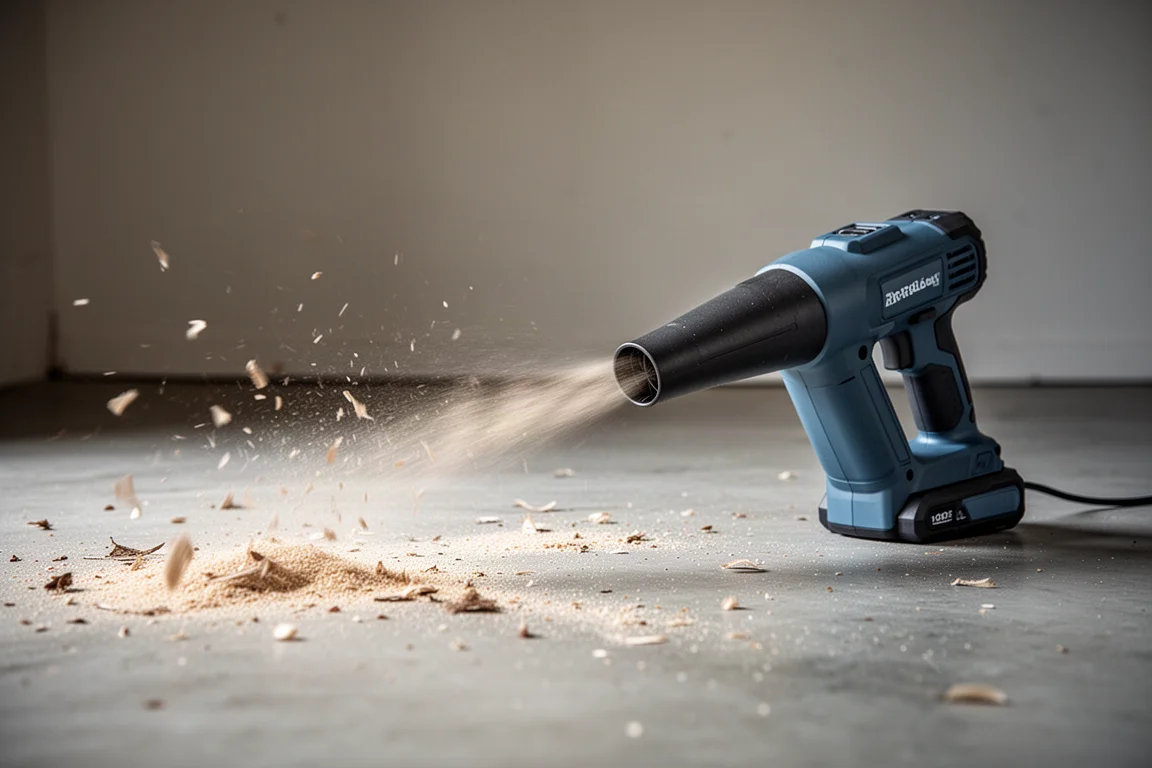
The air blower is the most demanding tool in this comparison, and smaller batteries will be drained in about five minutes or less. The DCB203 started strong at around 68 mph but lost air speed quickly, dropping to 56.6 mph by the four-minute mark and running dry just before the five-minute test ended.
The Power Stack also started at 68 mph and held air speed much better early on, sitting at 67 mph at the one-minute mark. But because the pack can give up its energy faster, it ran out about a minute sooner than the DCB203. The 5Ah battery held up considerably better throughout, still at 61 mph at four minutes and comfortably finishing the full five-minute test at 58 mph.
Cold Weather Behavior
Power tools often get used in the cold, so the batteries spent about 12 hours in a freezer set close to 0 degrees Fahrenheit before a repeat lag bolt test. The DCB203 struggled the most, averaging 9.7 seconds per bolt in the cold versus 8.01 seconds at ambient temperature, nearly two seconds slower per bolt.
The Power Stack was remarkably unbothered. It averaged 6.4 seconds per lag bolt when cold, actually slightly faster than its ambient-temperature average of 6.88 seconds. The 5Ah battery slowed by about a second, averaging 6.79 seconds versus 5.81 seconds warm. If you work outdoors in winter, the Power Stack’s cold-weather resilience is a genuine advantage.
Controlled Discharge Test
With all batteries thawed and fully charged, each was drained at a 5-amp draw. The Power Stack started at 19.63 volts, held higher voltage than the DCB203 for the first ten minutes, then dropped off sharply and was completely drained at 17 minutes 36 seconds, delivering 1.43 amp hours or 24.7 watt hours.
The DCB203 outlasted it, running 22 minutes 5 seconds for 1.8 amp hours or 30.5 watt hours. The 5Ah battery significantly outperformed both smaller packs throughout the test. The takeaway: the Power Stack prioritizes high discharge rate over total capacity, which is exactly what the runtime tests showed.
Inside the Batteries: How They Are Built
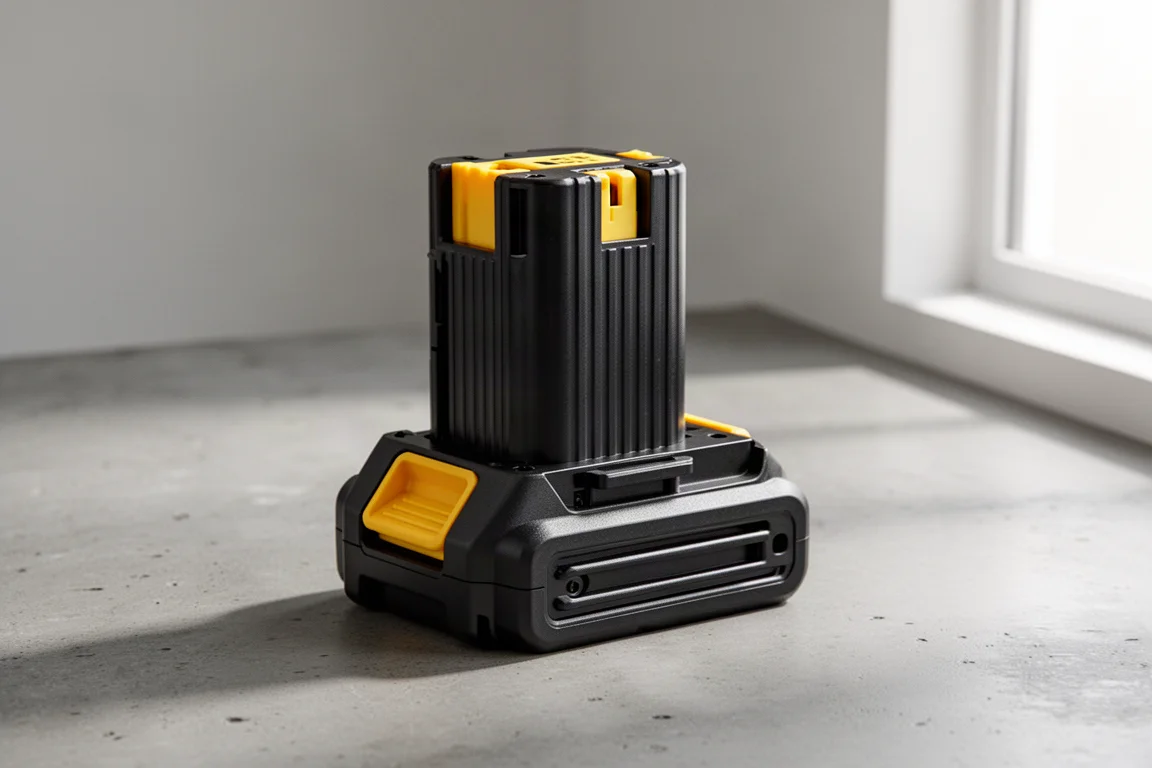
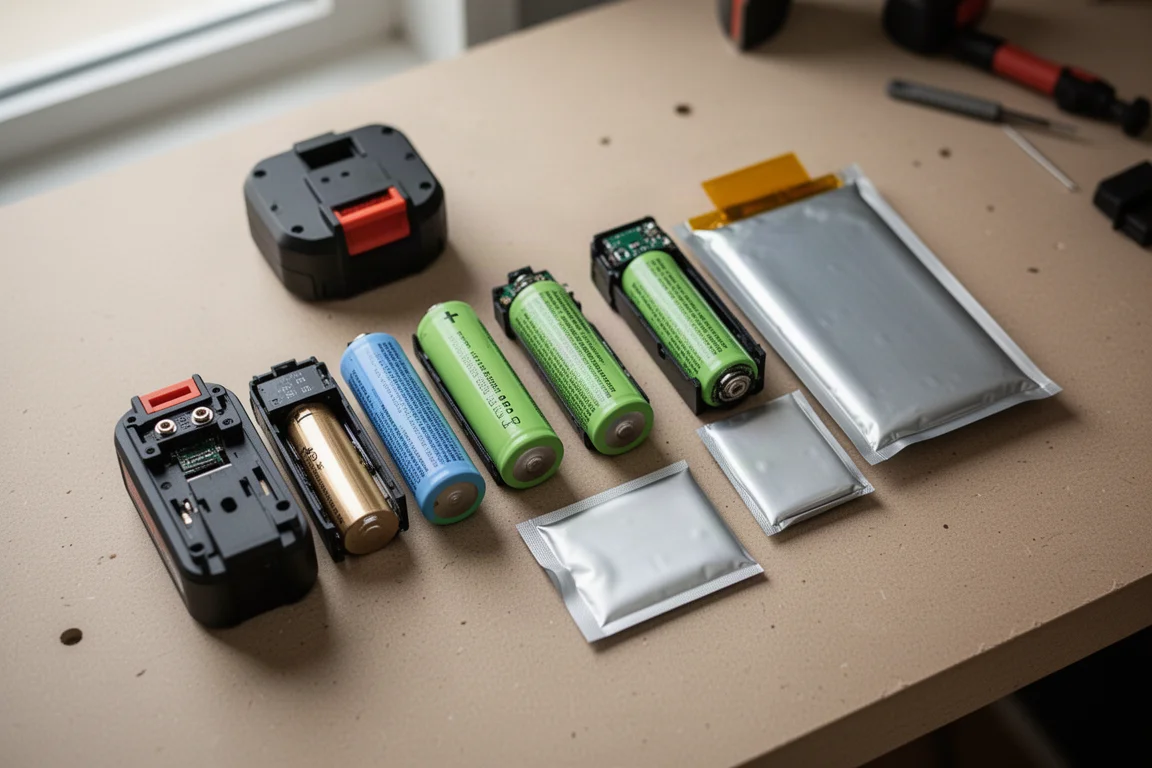
The DCB203 is a conventional design containing six cylindrical 18650 lithium-ion cells, with cells made in Korea and the pack assembled in Mexico. It weighs 362 g and a fully charged pack sits right at 20.57 volts.
The Power Stack takes a very different approach: instead of cylindrical cells, it uses five stacks of soft, flexible lithium-ion polymer pouches, with cells and pack both made in China. That pouch construction is what allows the pack to be so compact and to discharge energy so quickly. The Power Stack weighs just 312 g, 14.5% lighter than the DCB203, with a fully charged voltage of 20.67 volts.
Which One Should You Buy?
The Power Stack genuinely delivers on its compact-and-powerful promise. It produced about 11.5% more torque than the DCB203 in an impact driver, 15% more in a hammer drill, kept pace with the 5Ah battery in the reciprocating saw, and shrugged off extreme cold. Its weakness is endurance: it drains faster than the standard 2Ah pack under heavy load and has less total capacity, and at roughly $119 to $120 it costs more than twice as much as the roughly $50 DCB203.
The DCB203 remains a solid, affordable general-purpose battery. It is a good match for lighter-duty tools like impact drivers, where its energy demands are modest. Where it fell short was under sustained heavy load, in the hammer drill, reciprocating saw, and blower tests, and in cold weather.
If you need maximum sustained runtime, the 5Ah battery still makes the most sense for demanding tools. If you want a small, light battery that punches well above its size and performs in the cold, the Power Stack is impressive technology, though a lower price and higher capacity would make it an easy recommendation for everyone.
Conclusion
The Power Stack is a genuine step forward in battery technology, trading some runtime and a lot of money for a smaller, lighter, more powerful pack that thrives under high demand and in cold conditions. The DCB203 is still the sensible budget choice for light-duty use. The right pick depends on what your tools actually ask of a battery.
Further reading
Related Reviews
Power Tools
Best 1-Inch Pistol Impact Wrenches: Three Heavy-Duty Options Compared
We compare three 1-inch pistol impact wrenches, from a budget-friendly Harbor Freight model to a premium Caterpillar unit, to help you choose the right one.
Power Tools
Best 3/4-Inch Impact Wrenches 2026: Five Contenders Compared
We compare five 3/4-inch impact wrenches across price and performance, from a budget Amazon option to Snap-on's most powerful model yet.
Power Tools
Best Budget Cordless Tools 2026: Walmart Finds That Punch Above Their Price
We tested five cordless tools from Walmart, including a high-torque impact wrench that trades blows with Milwaukee and a $35 duster that outperforms its price class.