Workshop Tools
DeWalt DXAM2260 Air Mover Review: A Quiet, Efficient Way to Move Serious Air
A 600 CFM corded air mover that runs quietly, sips power, and daisy-chains up to five units. Here is what to know before buying.
Introduction
Fans and air movers are one of those workshop purchases that seem trivial until you actually need one. Good airflow keeps garages dry, prevents stored equipment from rusting, and makes it easy to push cool air off the floor in spring or pull hot air down from the ceiling in winter. The trick is finding a unit that moves a meaningful amount of air without screaming about it or running up your power bill.
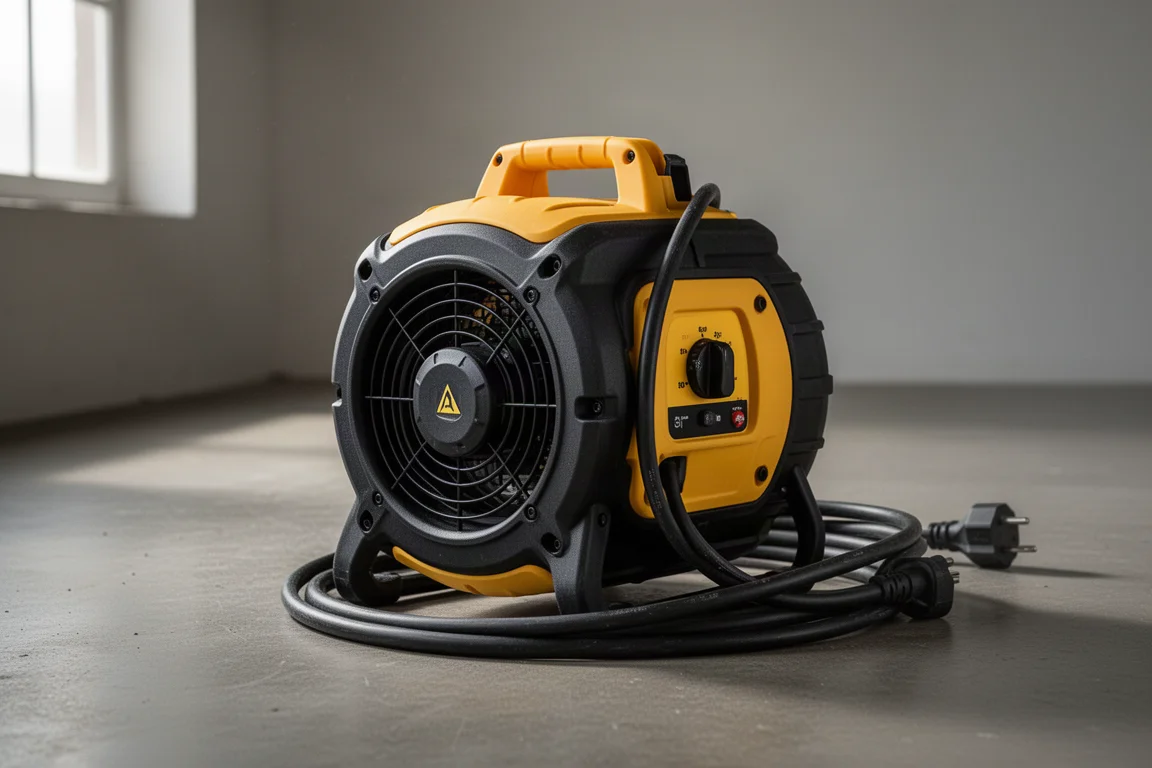
The DeWalt DXAM2260, a 600 CFM air mover, hits that balance better than most. Compared with a typical household fan, it pushes dramatically more air, draws less electricity, and can be aimed precisely at the spot that needs drying or cooling. Here is how it holds up.
What the DXAM2260 Is Built For
A lot of people treat air movers as floor dryers and nothing else, and contractors certainly use them that way. But in a shop setting they do much more: circulate air to manage moisture, keep tools and machinery from rusting, and even out temperature across the space. One practical trick is to sit a 2x4 or 4x4 under the front of the unit to angle it upward, which works well if you want the airflow thrown up toward the ceiling.
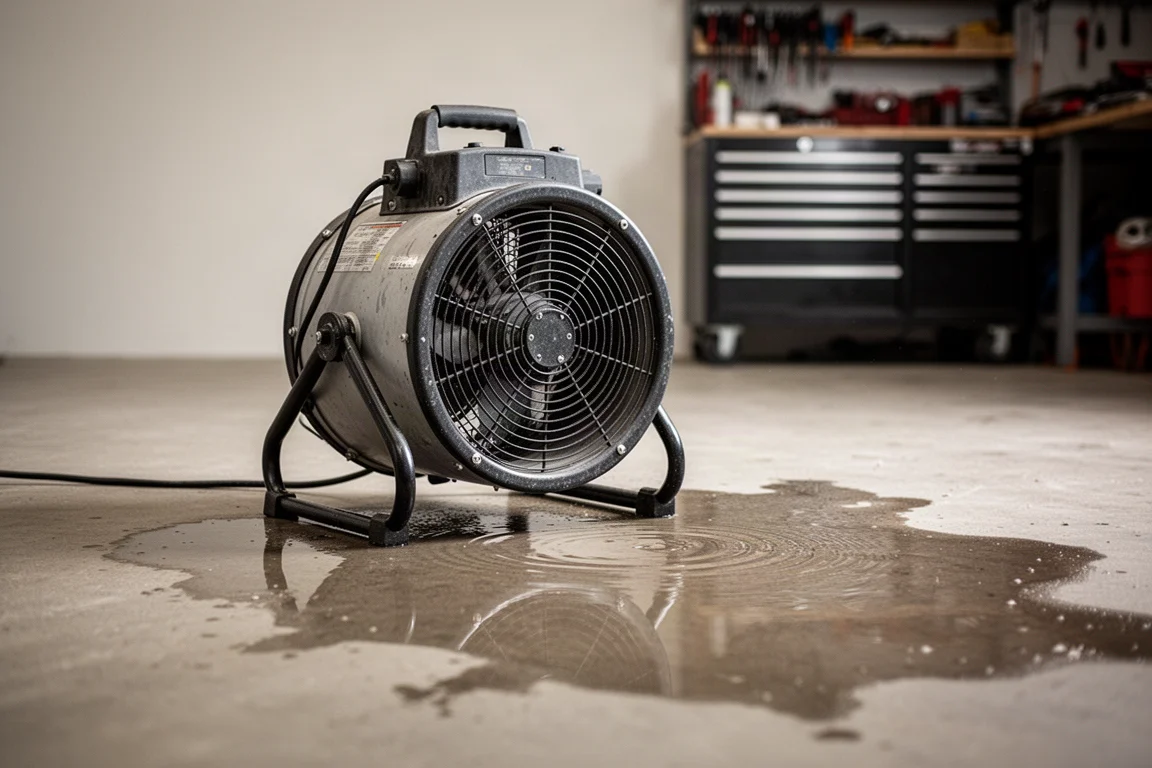
The small DeWalt has three speeds and a set-and-forget simplicity that suits the homeowner shop owner. It is not something most people will run every day, but when there is water coming in from a plow truck, a car wash, or a wet floor to deal with, having it ready is a genuine relief.
Noise and Power Draw
Measured at close range, the DXAM2260 registers around 71 dB on high, which sounds alarming on paper but in practice reads as the sound of moving air rather than mechanical noise. It is easy to talk over. On medium and low there is a slight hum that some may find mildly annoying, but stepping away from the unit the level drops into the 60s and even the 50s, which is quieter than most fans of comparable output.
Power draw is where it really earns its keep. Measured consumption came in at roughly 162 watts on high, 153 watts on medium, and 146 watts on low, translating to about 1.22 to 1.35 amps depending on speed. The difference between high and low is so small that there is little reason to run it on anything other than high. The hum on the lower speeds, combined with only marginal power savings, makes high the sensible default.
Build and Daisy-Chain Design
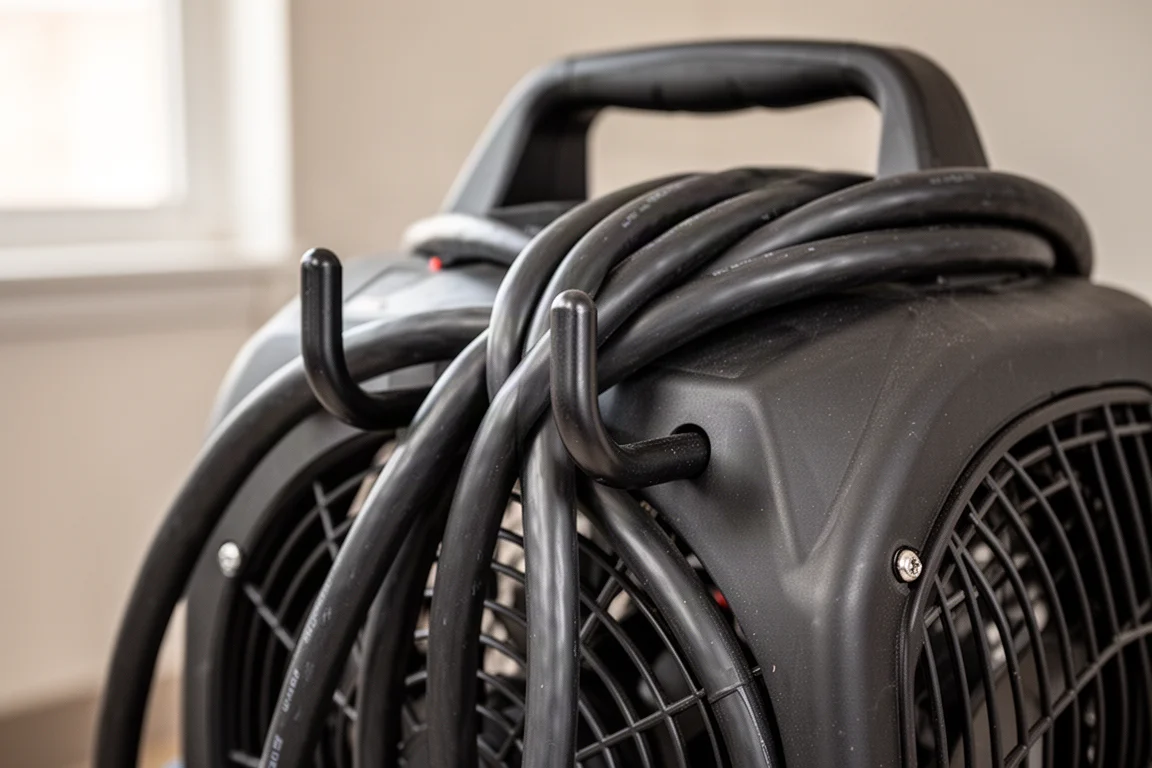
The unit runs a 1/5 horsepower motor and comes with a 14 gauge, 9 ft power cord. That cable is unusually thick for a reason: it is designed so you can link up to five of these units together on a single circuit, covering a much larger drying or circulating area. As a bonus, you can also plug another device into the outlet as long as it stays under 10 amps.

Construction is solid throughout, and the instructions include an exploded parts list with part numbers for every internal piece, which suggests repairs are possible rather than the whole unit being disposable.
Things to Consider Before Buying
The hum on medium and low is the main gripe, though as noted it rarely matters because high is the setting you should be on anyway. At $119, it costs more than the small box fans most people buy, but the trade is real: more airflow, less electricity, and better directional control than an oscillating fan offers. For context, a ceiling-mounted shop fan at around $250 moved nowhere near this much air and could not be redirected to where it was needed.
If your space is very large, a single 600 CFM unit may not be enough, and there is a bigger DeWalt sibling at $329 that pushes around 1,000 CFM and is built like a tank, though at a significantly higher power draw of 580 to 694 watts. A third option, a competitor model around $236, sits between the two in size but is not built as well and moves less air.
Buying Advice
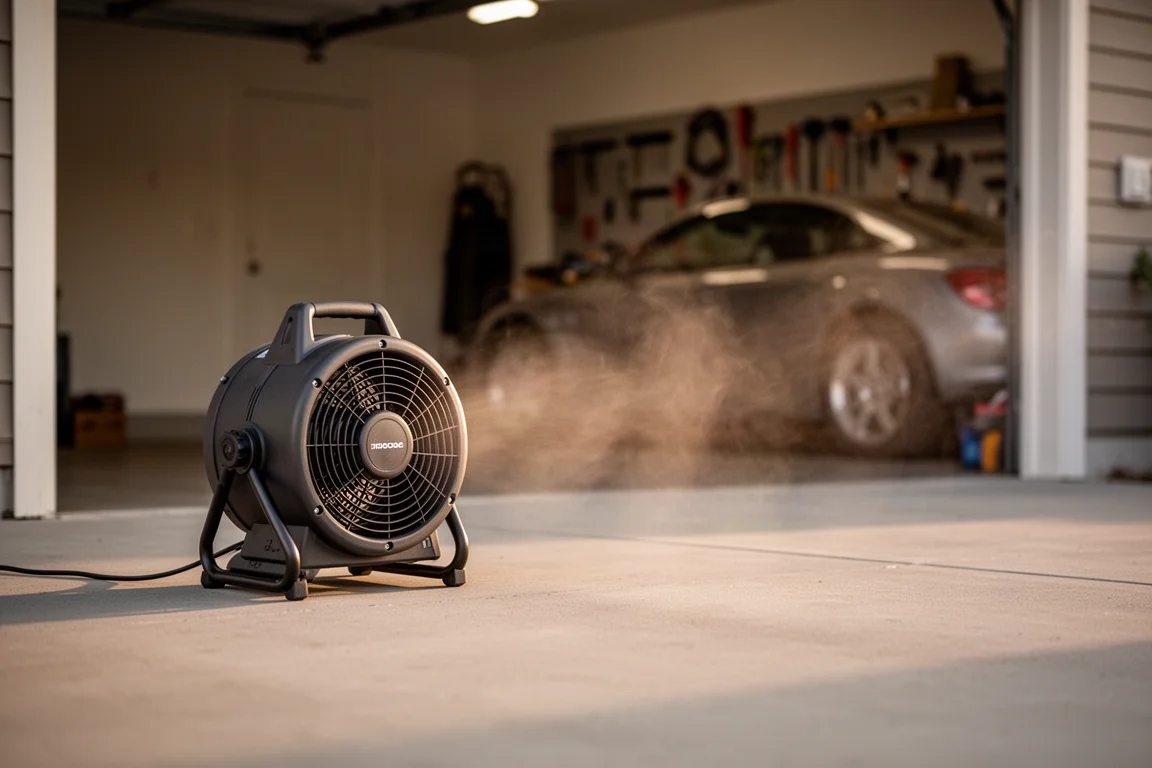
For the DIY homeowner or small shop owner trying to move air, keep things dry, or dry out the floor after a wet day, the small DeWalt is well worth it. Low power consumption and low noise on high make it easy to live with, and the ability to aim it exactly at a problem spot beats anything a ceiling fan or cheap box fan can do.
One alternative worth thinking about: at roughly $119 each, buying two or three of these smaller units and daisy-chaining them can approach the coverage of one large commercial unit, with more flexibility in placement.
Conclusion
The DXAM2260 does not pretend to be more than it is: a well-built, efficient, surprisingly quiet air mover that puts a serious amount of directed airflow wherever you point it. If your shop deals with moisture, wet floors, or uneven temperatures, it is one of the most sensible upgrades you can make.
Product link
View more details for DeWalt DXAM2260
This product is mentioned in the review. Check the specifications, options, and compatibility before buying.
View more details for DeWalt DXAM2260Further reading
Related Reviews

Workshop Tools
Best Drill Tap Sets 2026: Top Picks Tested for Speed and Strength
We tested 17 drill tap sets to find the fastest drilling, strongest threading, and most durable options for your workshop.

Workshop Tools
Cool Shop Tools 2026: Five Clever Upgrades Worth a Closer Look
A practical look at five workshop tools that solve real problems, from smarter drill bits to a safer table saw guard.

Workshop Tools
Cool Tools for the Workshop: Five Smart Upgrades Worth Trying
A practical look at five workshop tools that make measuring, drilling, marking, and sawing easier, from a clever square to a top-tier bandsaw fence.