Power Tools
DeWalt DCS781 vs DHS790: Is the New 60V Slider Worth the Switch?
A side-by-side look at DeWalt's new 12-inch 60V slider and the dual-battery 120V saw it replaces, covering power, run time, capacity, and build details.
Introduction
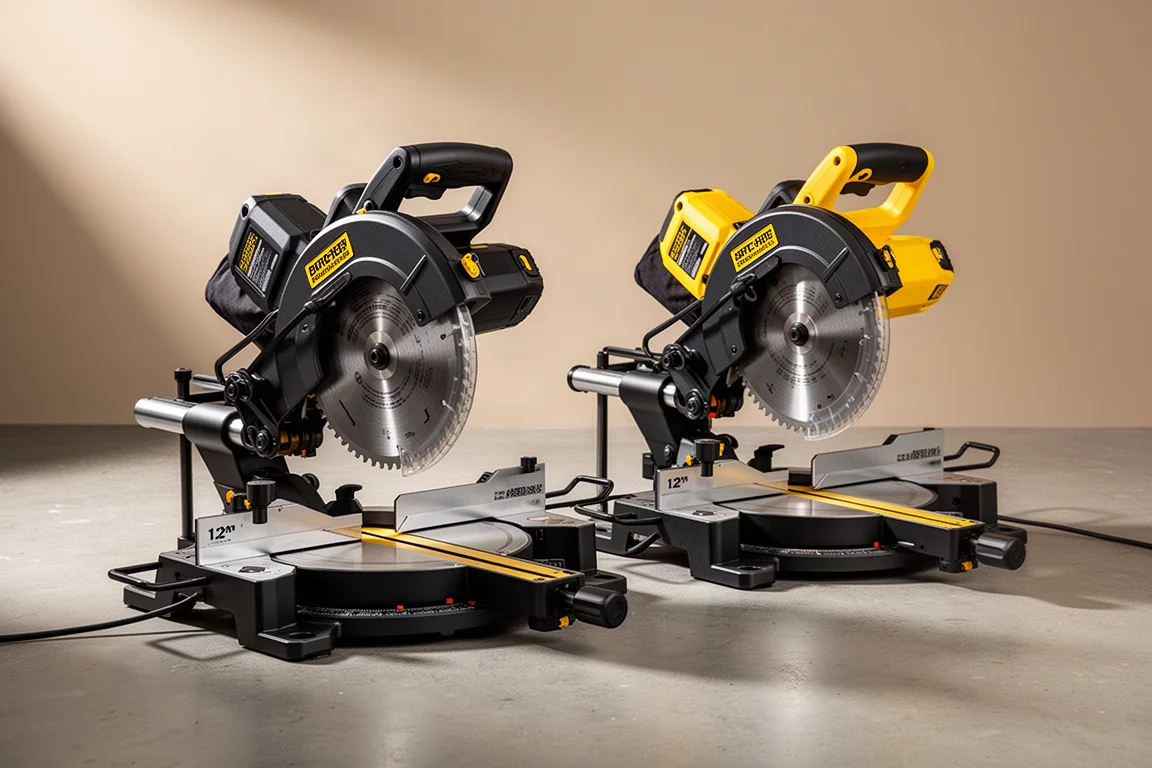
DeWalt’s new DCS781 is a 12-inch sliding miter saw running on a single 60V battery, and it steps in to replace the DHS790, the older dual-battery 120V saw. On paper that sounds like a downgrade, but the comparison is more interesting than that. The new saw is lighter, has better dust collection hardware, and claims significantly more cuts per charge on a large battery. The old saw, meanwhile, still holds real advantages in cutting capacity and, in some situations, sustained power.
Power and Cutting Feel
Cutting through doubled-up material, the dual-battery DHS790 clearly has more power, especially on bevel cuts. On multiple-pass cuts that difference on bevels persists, though for straight vertical cuts the two saws feel pretty equal. If your work involves a lot of heavy bevel work in thick stock, the older saw still has an edge.
Run time is where things get surprising. DeWalt claims the DCS781 can get up to 675 cuts through 3-1/4-inch baseboard on a 9Ah battery, while the DHS790 specs 289 cuts through the same material on two 6Ah batteries. The 781 throws recharge back into the battery when the blade breaks, and cutting thin trim allows the battery to stay cool enough for that recharge to keep it running longer than the dual-battery saw. Running the 781 on a 6Ah battery through a full day of trim cutting, the battery never became a concern, even if it may not have started fully charged.
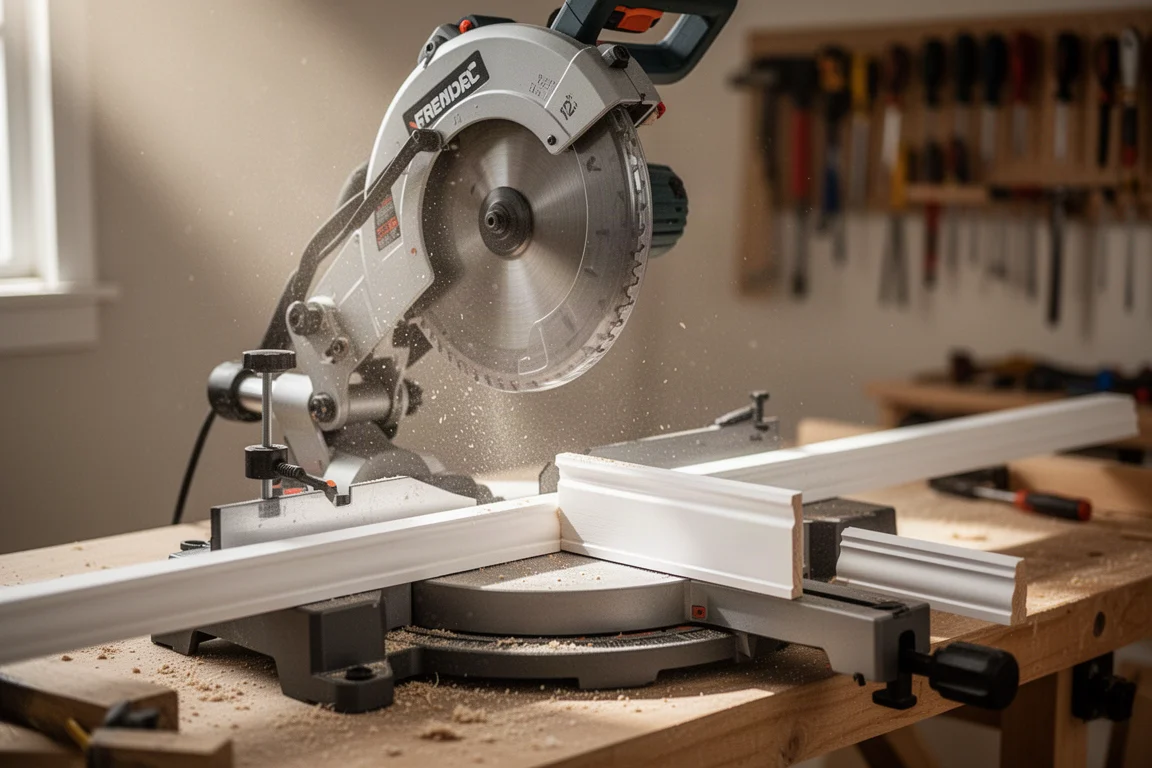
In a more controlled comparison, both saws ran the same cuts on freshly charged 9Ah batteries, and the DHS790 finished cooler with more charge remaining. The takeaway: expect better real-world run time from the 781 on lighter trim work, but the dual-battery saw holds up better under sustained heavy cutting.
Cutting Capacity Compared
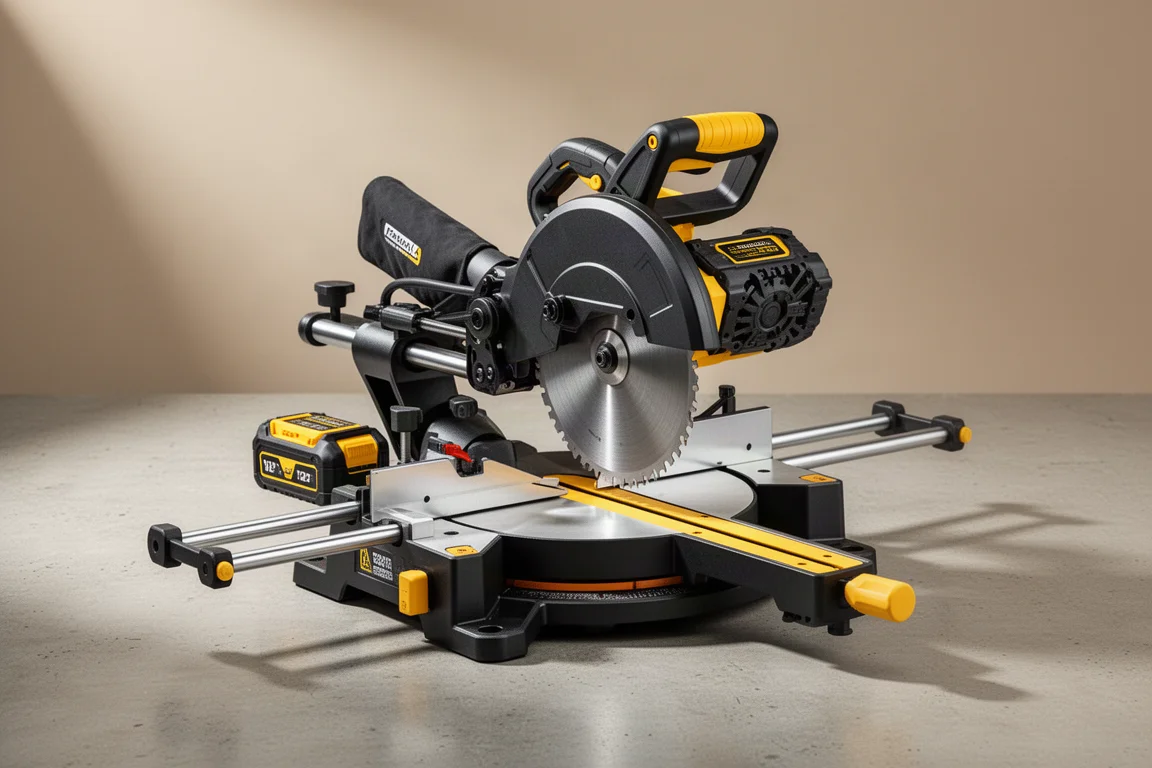
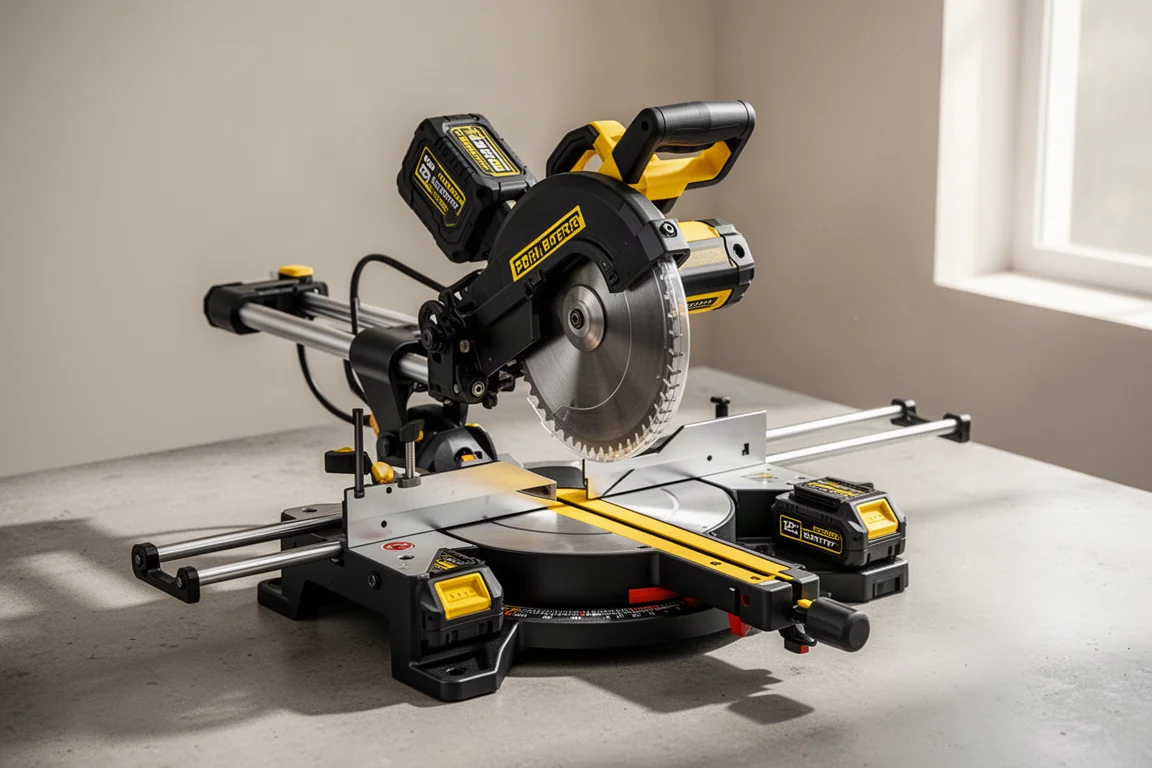
Both saws can cut 6-1/2-inch crown nested and 6-1/2-inch tall baseboard against the fence, though the DHS790 actually specs for 6-3/4 inches. Using the rear fence on the 790, you can get 16-3/16 out of a two-by, while the 781 manages 14-1/8 when you pull the wood up into the blade, and 12-1/2 on a straight cut.
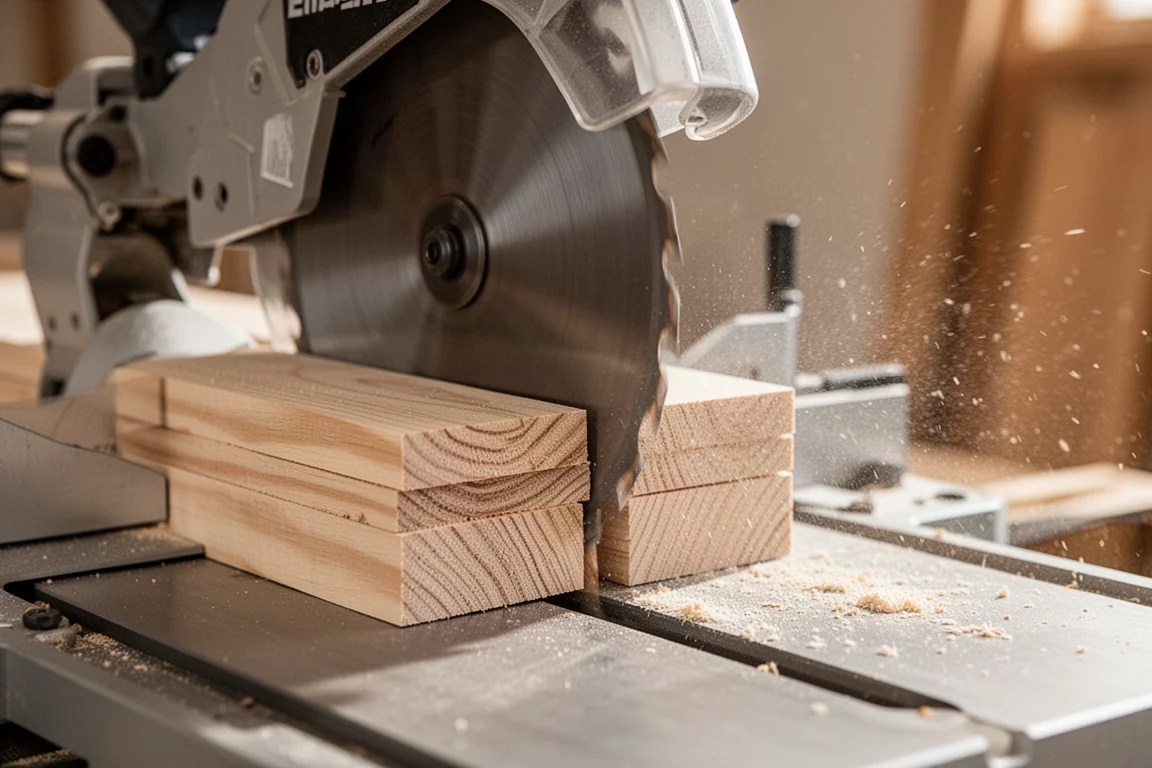
Both saws can crosscut a 2x12 at 90 degrees, but only the DHS790 can bevel-cut a 2x12 at 45 degrees by using its rear fence, a feature that has been eliminated on the 781. If angled wide cuts are part of your regular work, that is a meaningful difference.
Both saws swing the same miter range, 50 degrees left to 60 degrees right, and both bevel 49 degrees left or right. The bevel stops are the same too, including the 22.5-degree stop and the lower bevel stop for cutting crown. On the 790 the stops are engraved, while the 781’s lower bevel stop is not engraved, which is less refined but functionally identical. Both also allow you to bypass the 45-degree bevel stop: the 781 uses screws you loosen with the included wrench, while the 790 has dedicated levers.
Design and Build Changes
Several physical changes define the new saw. The DCS781 now uses a bevel gear drive instead of a belt drive, and the dust port has been relocated from the rear to the top, which saves space. The included vacuum adapter is a two-in-one friction-fit design that accepts a 1-7/8-inch or 2-1/2-inch vacuum hose and keeps things short and tidy. The 790’s thin dust board tends to suction closed under vacuum and needs to be flipped up, while the 781’s thicker rubber boot lets you just connect and go. Chopping trim indoors collects dust reasonably well on both, but neither saw is great at dust collection when sliding back and forth.
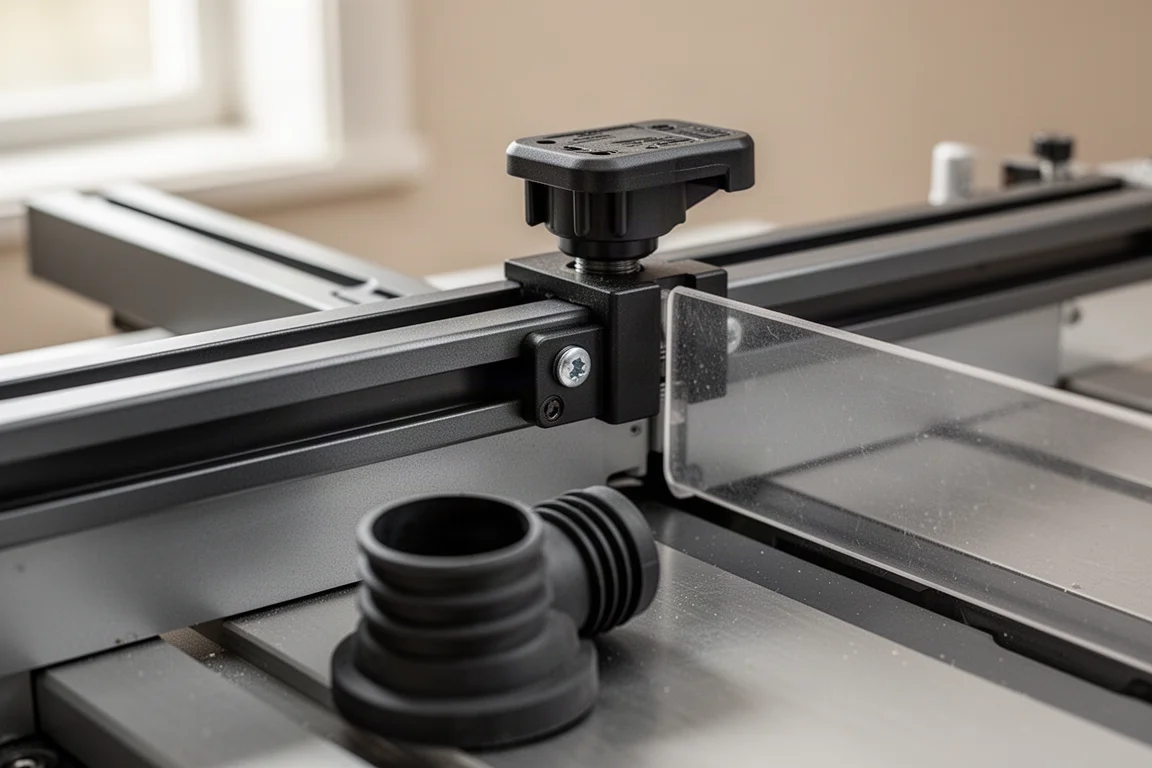
Accuracy was good out of the box on both saws, and everything is adjustable so you can dial it in as needed. The 781 has two quirks worth knowing: there is noticeable play in the guard arm, something seen across multiple units at retail, and the material clamp has no way to lock itself into its slot, so it pulls out as you push down. The 790 has a small groove that keeps its clamp seated. The 781 also moved the depth stop to the left side, a nicer arrangement than the 790’s right-side placement, useful for setting depth for non-through cuts. The 781’s slide lock works more reliably than the 790’s, which can catch sometimes, and both have a rail adjustment screw for fine-tuning slide feel. The 781 uses two one-inch rails, while the 790 pairs a one-inch rail with a three-quarter-inch rail; both slide well.
One regional note: the DCS781 has launched in the US, Canada, and the UK. In the UK it supports Tool Control, letting the saw trigger a compatible vacuum on and off automatically. That feature has not arrived in the US yet, so US buyers would need a flexible shop vacuum with a remote control strapped to the saw handle, or a momentary foot pedal.
Weight and Portability
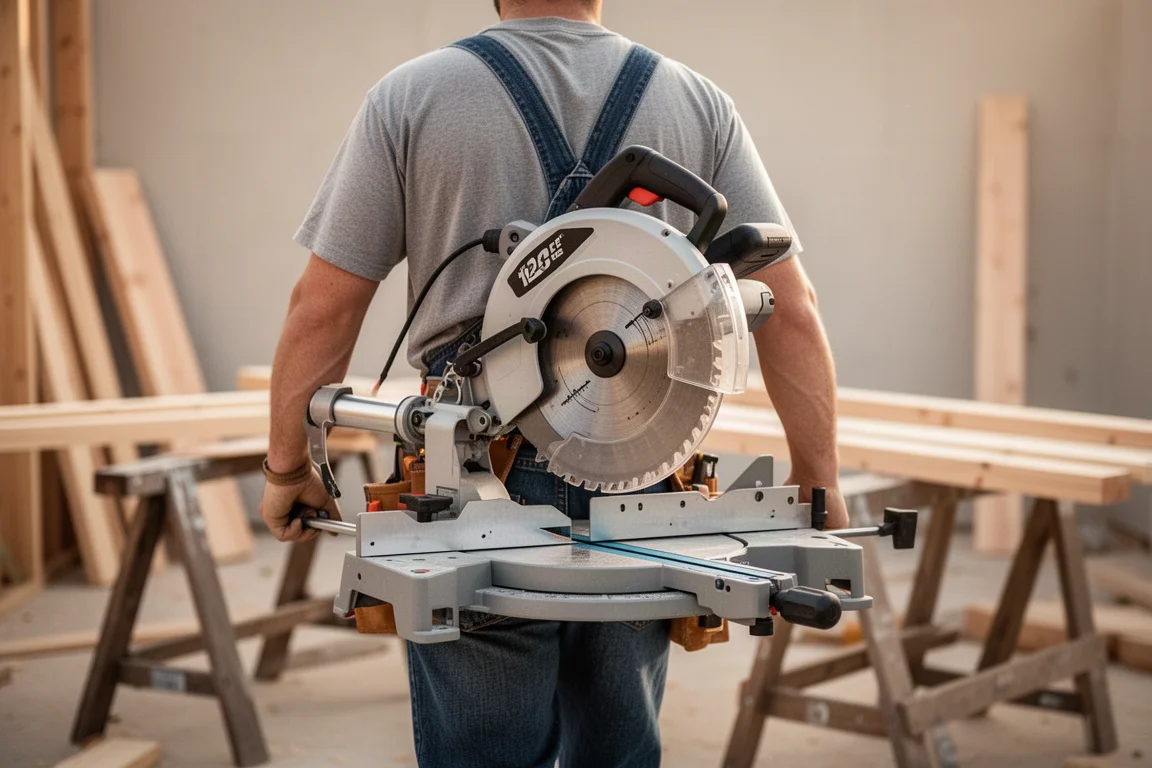
The DCS781 weighs 51 pounds, five pounds lighter than the DHS790, and the difference is genuinely noticeable when lifting. The new saw also comes with side handles to help with carrying, though many people find it easier to carry without them so their hands can sit closer together.
Buying Advice
The DCS781 makes sense for trim carpenters and anyone cutting lighter material all day, where its recharge-based run time, lighter body, top dust port, and more reliable slide lock are daily conveniences. The DHS790 remains the better pick if you regularly cut wide bevels, need the rear fence for maximum capacity like that 45-degree 2x12 cut, or want the cooler, more sustained performance under heavy repeated cuts. Both are adjustable, accurate, and share the same miter and bevel ranges, so the choice comes down mostly to your material and how much portability matters.
Conclusion
The DCS781 is a thoughtful refresh rather than a straight downgrade: lighter, cleaner dust routing, better clamp-free trimming performance on run time, and a more reliable slide lock. But the DHS790 still earns its keep for heavy bevel work and larger cutting capacity thanks to its rear fence. Match the saw to your typical cut list and either one will serve you well.
Further reading
Related Reviews
Power Tools
Best 1-Inch Pistol Impact Wrenches: Three Heavy-Duty Options Compared
We compare three 1-inch pistol impact wrenches, from a budget-friendly Harbor Freight model to a premium Caterpillar unit, to help you choose the right one.
Power Tools
Best 3/4-Inch Impact Wrenches 2026: Five Contenders Compared
We compare five 3/4-inch impact wrenches across price and performance, from a budget Amazon option to Snap-on's most powerful model yet.
Power Tools
Best Budget Cordless Tools 2026: Walmart Finds That Punch Above Their Price
We tested five cordless tools from Walmart, including a high-torque impact wrench that trades blows with Milwaukee and a $35 duster that outperforms its price class.