Power Tools
DeWalt DCS714B 10-Inch XR Miter Saw Review: Battery Power That Cuts Like a Corded Saw
A closer look at DeWalt's new 10-inch XR cordless miter saw, including its shadow-based cutline system, positive stops, battery flexibility, and real cutting performance.
Introduction
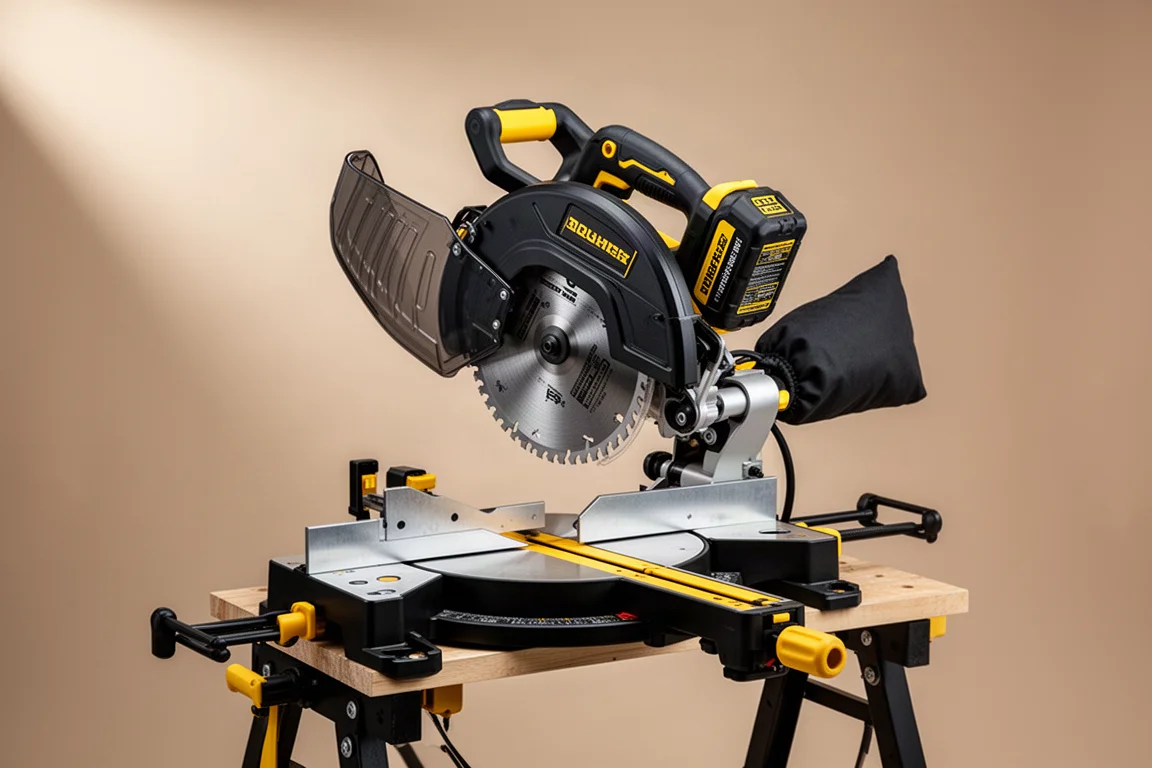
DeWalt has built a long-standing reputation for large, dependable miter saws, and the new DCS714B 10-inch XR extends that lineage to a battery-powered platform. This is the DCS714B, part of the XR system, which means it runs entirely on batteries with no cord to manage on site.
The saw ships with the tool itself, onboard storage for parts and pieces, and a dust bag with a hose connection so you can hook it up to a DeWalt shop vac. Note that the battery and charger are sold separately, so plan for that if you are not already on the XR platform.
Who This Saw Is For
First impressions matter, and the DCS714B feels noticeably lighter than big 12-inch corded units, which makes it easier to move between job sites or lift onto a stand. Finish carpenters, remodelers, and anyone working in retail spaces, offices, or doctor’s offices without power available yet are the clearest beneficiaries of a battery-powered saw of this size.
The tool is also Tag ready, which helps with tracking and inventory across multiple job sites, a detail that matters more than it sounds when crews rotate equipment between locations.
Standout Feature: The Integrated Cutline System
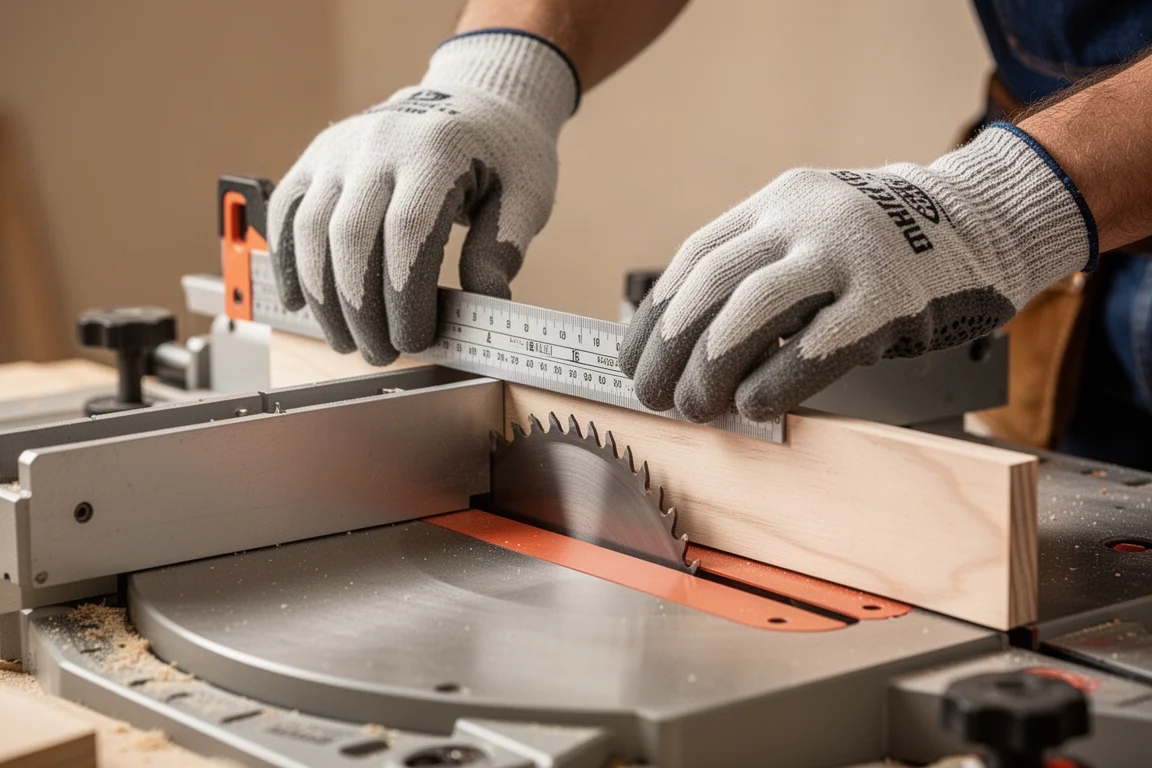
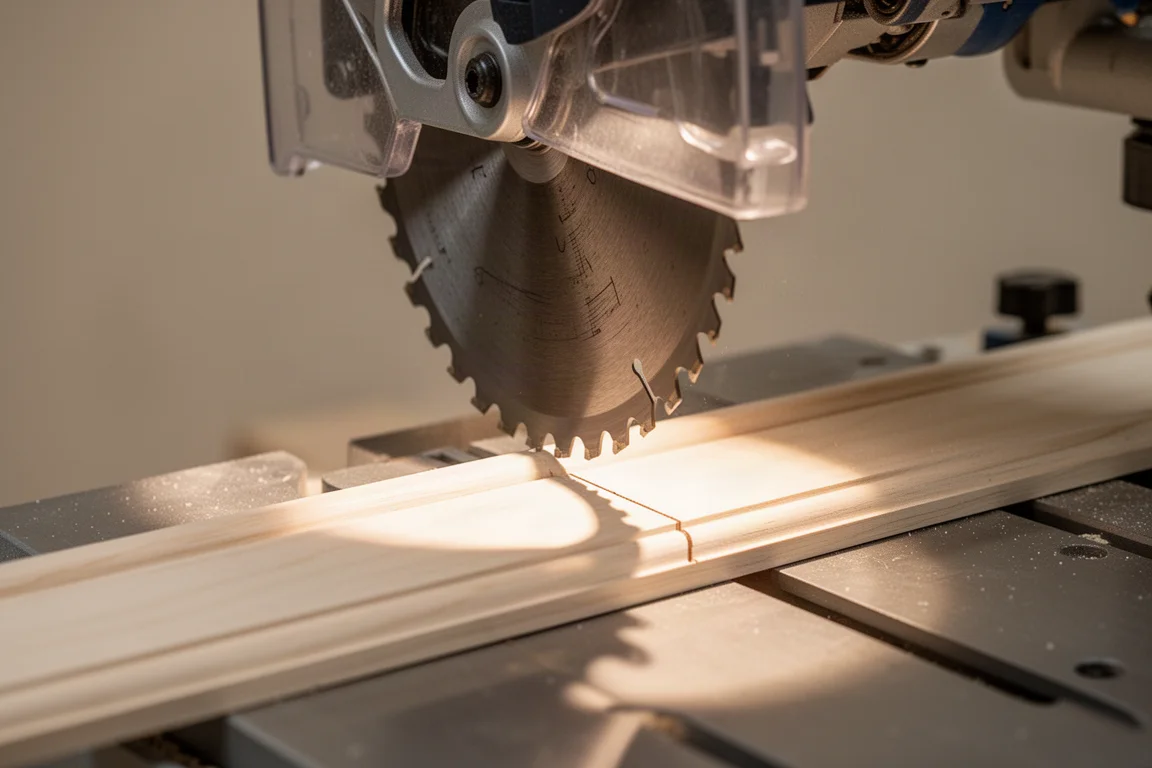
The integrated cutline blade positioning system is arguably the most impressive part of this saw. Instead of a laser, an onboard light projects a shadow of the blade directly onto the workpiece. Shadow-based alignment tends to be more accurate than lasers, requires no calibration, and needs no adjustments over time. It just works.
You can engage the light with a button on top of the saw without turning the tool on, letting you preview your cut line before committing battery power.
Setup, Locks, and Positive Stops
The locking mechanism differs from older DeWalt saws. Rather than a single button, you push down and pull the pin out to release the head. To operate the tool freely, the pin rotates into a horizontal position; to lock it back down, rotate it vertical and push the head down.
Bevel adjustment uses a similar system with positive stops at 22.5, 33.9, and 45 degrees, operated by sliding blocks at the back of the saw. Getting past 45 degrees requires the onboard tool to loosen a fastener and slide a bracket aside, unlocking the range down to 49 degrees.
One thoughtful touch for finish work: a bypass lever on the side of the tool lets you move freely between odd angles without depressing the positive-stop button. For carpenters making repeated off-angle cuts throughout the day, sliding back and forth between stops and custom angles is a genuine time-saver.
Calibration Out of the Box
Factory setup is typically close, but it is always worth checking. The test procedure is simple: remove the battery, bring the head down, press a square against the back fence, and check where the blade contacts the carbide tips. On this unit, both left and right sides checked square, which bodes well for quality control.
If your particular saw needs adjustment, three screws on the miter scale can be loosened with the onboard tool, letting you shift the scale and zero it properly.
Battery Flexibility Across the XR Platform
Testing with an 8 amp hour power pack showed performance that felt just like the larger plug-in 12-inch DeWalt saws. The good news for households with mixed XR batteries is that the saw handles them all: Power Stack batteries ran with no discernible difference, and FlexVolt batteries delivered enough endurance for cutting all day.
Cutting Performance With a Small Battery
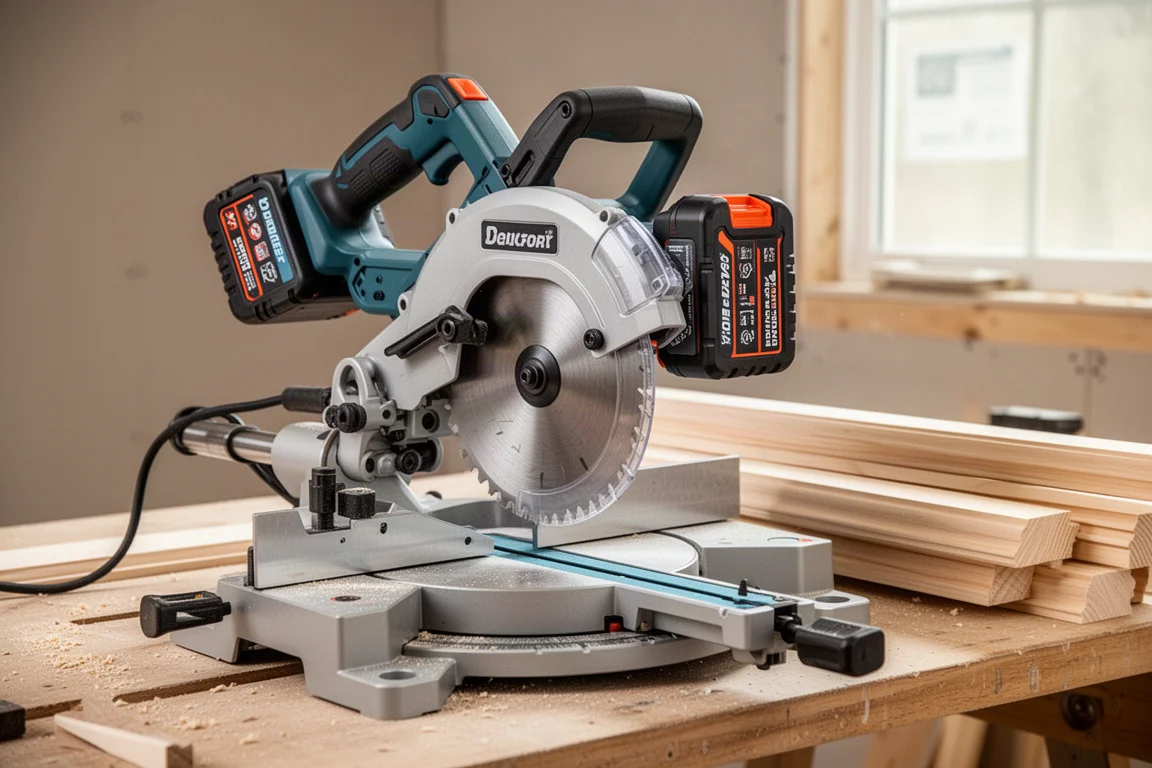
To stress-test the saw, a small 1.7 amp hour Power Stack battery was fitted, essentially an emergency scenario where a crew only had small hand-tool batteries on hand. The saw still made clean cuts, including a series of 45-degree miter cuts through PVC with a general purpose blade that produced a tight miter, which also confirms the factory calibration.
Even cutting straight through a knot, the saw showed no stalling, no chattering, and no burning. Over the course of the test, roughly 25 to 30 cuts through 2x4 lumber came off a single 1.7 amp hour battery, a figure that would have been unheard of for a saw of this size just a few years ago.
One caution: when the battery gets low, the saw blinks a warning light. An underpowered saw can chatter the blade and produce inaccurate cuts, or cause kickback risk, so heed that flashing indicator and swap batteries.
Things to Consider Before Buying
The most important logistical detail is that the battery and charger are sold separately. If you already own DeWalt XR batteries, that is effectively a non-issue, but newcomers should budget for a battery kit on top of the bare tool. Small batteries like the 1.7 amp hour Power Stack will get the job done in a pinch, but on a large saw, low power can lead to blade chatter and less accurate results, so the 8 amp hour power pack is the more comfortable daily choice.
Buying Advice
If you are already invested in the XR battery platform, this saw is an easy recommendation, especially for finish carpenters who value the shadow cutline system and the angle bypass lever. If you are loyal to another brand, the combination of battery power, clean cuts, and solid out-of-box calibration gives you a genuine reason to consider switching.
Conclusion
The DeWalt DCS714B 10-inch XR miter saw brings corded-class cutting performance to a battery platform, with thoughtful details like the shadow-based cutline system, flexible angle bypass, and Tag readiness. Provided you pair it with an appropriately sized battery, it handles real finish work with confidence.
Product link
View more details for DeWalt DCS714B 10-Inch XR Miter Saw
This product is mentioned in the review. Check the specifications, options, and compatibility before buying.
View more details for DeWalt DCS714B 10-Inch XR Miter SawFurther reading
Related Reviews
Power Tools
Best 1-Inch Pistol Impact Wrenches: Three Heavy-Duty Options Compared
We compare three 1-inch pistol impact wrenches, from a budget-friendly Harbor Freight model to a premium Caterpillar unit, to help you choose the right one.
Power Tools
Best 3/4-Inch Impact Wrenches 2026: Five Contenders Compared
We compare five 3/4-inch impact wrenches across price and performance, from a budget Amazon option to Snap-on's most powerful model yet.
Power Tools
Best Budget Cordless Tools 2026: Walmart Finds That Punch Above Their Price
We tested five cordless tools from Walmart, including a high-torque impact wrench that trades blows with Milwaukee and a $35 duster that outperforms its price class.