Power Tools
DeWalt DCS391 vs DCS565: Two 6.5-Inch Cordless Circular Saws Compared
DeWalt's brushed DCS391 and brushless DCS565 share the same magnesium shoe and cutting specs, but differ in power, run time, and convenience details.
Introduction
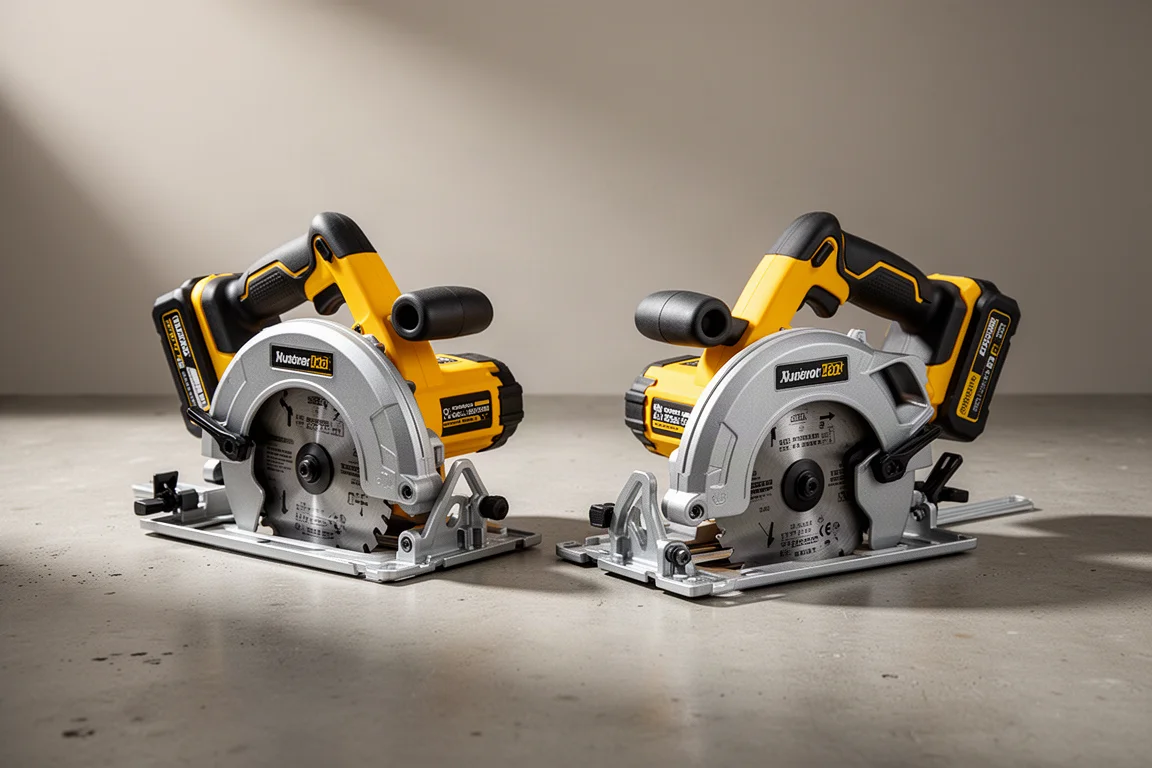
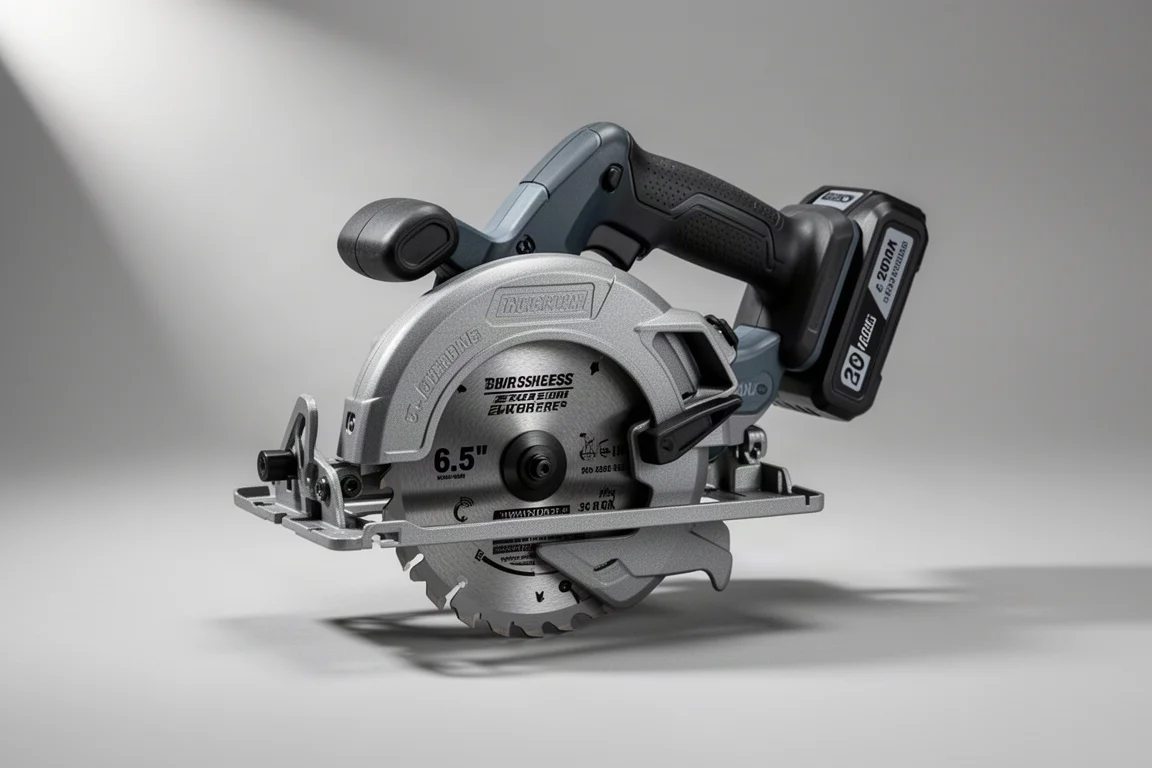
DeWalt sells two 6.5-inch blade-left cordless circular saws that look deceptively similar: the current brushed DCS391 and the newer brushless DCS565. Both are compact, well-balanced saws aimed at framing, rip cuts, and general jobsite use, and both share the same cutting capacity. The differences show up in motor efficiency, run time, and a few small convenience details that matter over a long workday.
Shared Design and Cutting Specs
The two saws are nearly identical in size, and both use the same magnesium shoe with a front slot for a rip fence. Depth of cut is 2-1/8 inches at 90 degrees and 1-5/8 inches at 45 degrees, and both offer a 0 to 50 degree bevel. Neither saw has a 45-degree hard stop, and the silver-on-silver angle rulers are not the easiest to read.
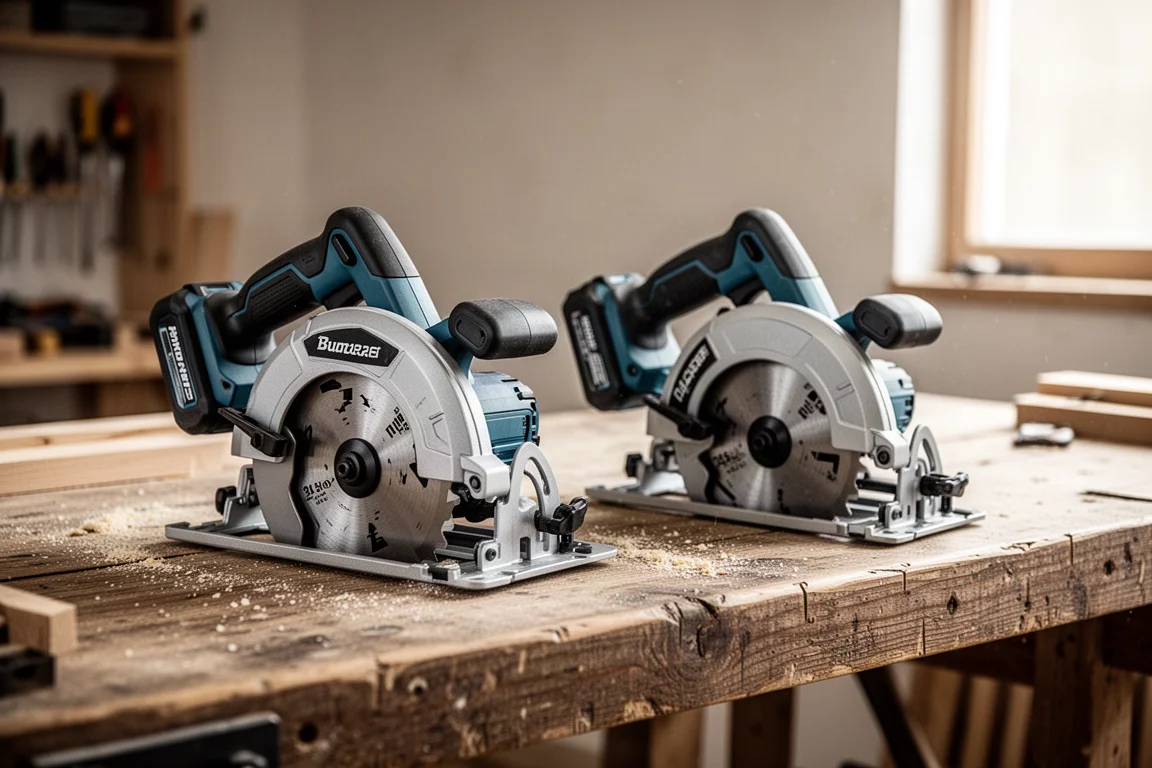
The handles on both models are comfortable and measure the same diameter, but the front handle on the brushless model sits a little higher, which feels slightly better in use. Both have plastic lower guards that have proven reasonably tough over time. Weights are close: with a 5Ah battery and blade on board, the brushed saw comes in at 7.6 pounds, while the brushless model is actually slightly heavier at 7.7 pounds.
Cut Speed and Motor Details
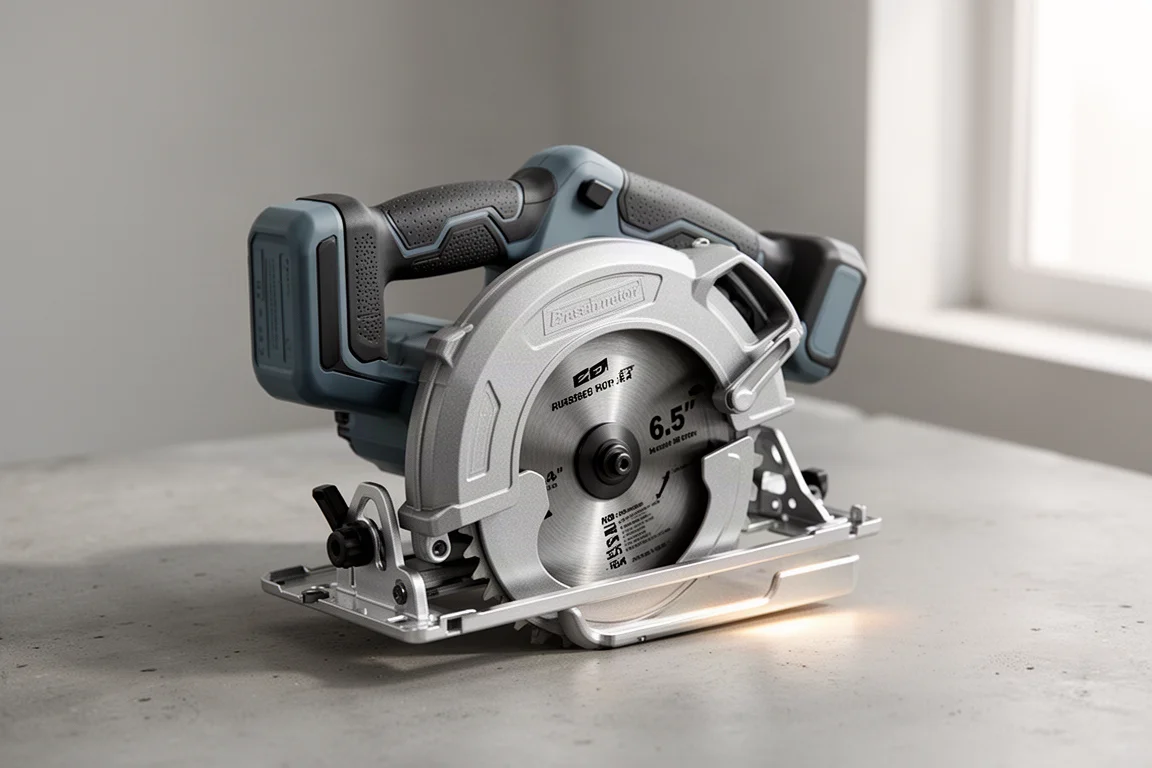
The brushless motor housing is more compact than the already small brushed unit, which makes the saw easier to carry in a tool bag. The brushless model also adds a rafter hook, placed out of the way so it does not interfere with the handle.
Cutting Performance and Run Time
In back-to-back cutting tests using new, fully charged 5Ah batteries and test blades with equal wear, the two saws were equally fast on cross cuts, but the brushed DCS391 was a little faster overall and could be felt powering through 45-degree bevels and rip cuts slightly quicker.
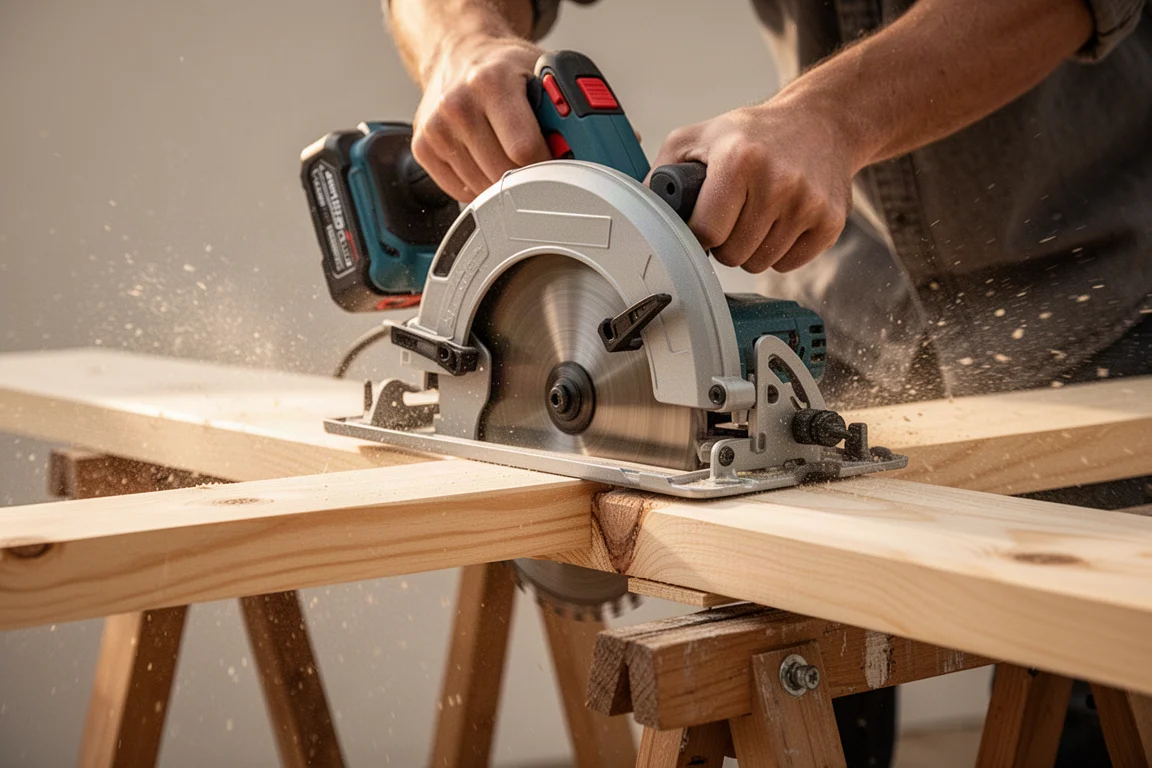
The brushless DCS565, however, delivered better run time and felt a little smoother in the cut. The results were consistent across two full test sets, with batteries swapped between saws to even things out.
Brushless Advantages: DCS565
The DCS565 runs at 4,950 RPM, while the DCS391 runs at 5,150 RPM. Note that DeWalt offers a lesser-quality brushed kitsaw, the DCS393, alongside the DCS391, and both brushed models were upgraded to 5,150 RPM at some point while keeping the same model numbers.
Long-Term Update: How the DCS565 Has Held Up
After roughly a year and a half of regular use, the DCS565 has worked out really well. Its biggest advantage has been run time, especially when running 5Ah XR batteries on handheld tools. It is common to carry an impact driver with a 5Ah pack and swap it over to the saw during the day for a few cross cuts, rips, or plywood cuts, and the brushless saw makes that shared battery last noticeably longer than the brushed unit.
The rafter hook has proven genuinely useful, the dust port works well even if it is not used constantly, and the saw’s low-battery LED flashing when the pack starts to slow down is a helpful extra indicator, since running lithium-ion batteries past that slowdown point reduces their rechargeable lifespan. Notably, the DCS391 is still sold and actually holds a better rating than the DCS565 at major retailers.
Which One Should You Buy?
Both saws are good, and you cannot really go wrong with either. If raw cut speed matters most, the brushed DCS391 is a touch more powerful. If longer run time per charge and smoother cutting matter more, the DCS565 earns its place, particularly for users who rotate one battery pack across several tools during the day.
Conclusion
The DeWalt DCS391 and DCS565 share the same shoe, cutting capacity, and overall size, so the decision comes down to priorities. Choose the DCS391 for slightly faster cutting and a strong retail reputation, or the DCS565 for better run time, a more compact motor, a rafter hook, and a low-battery LED indicator that helps protect battery life.
Further reading
Related Reviews
Power Tools
Best 1-Inch Pistol Impact Wrenches: Three Heavy-Duty Options Compared
We compare three 1-inch pistol impact wrenches, from a budget-friendly Harbor Freight model to a premium Caterpillar unit, to help you choose the right one.
Power Tools
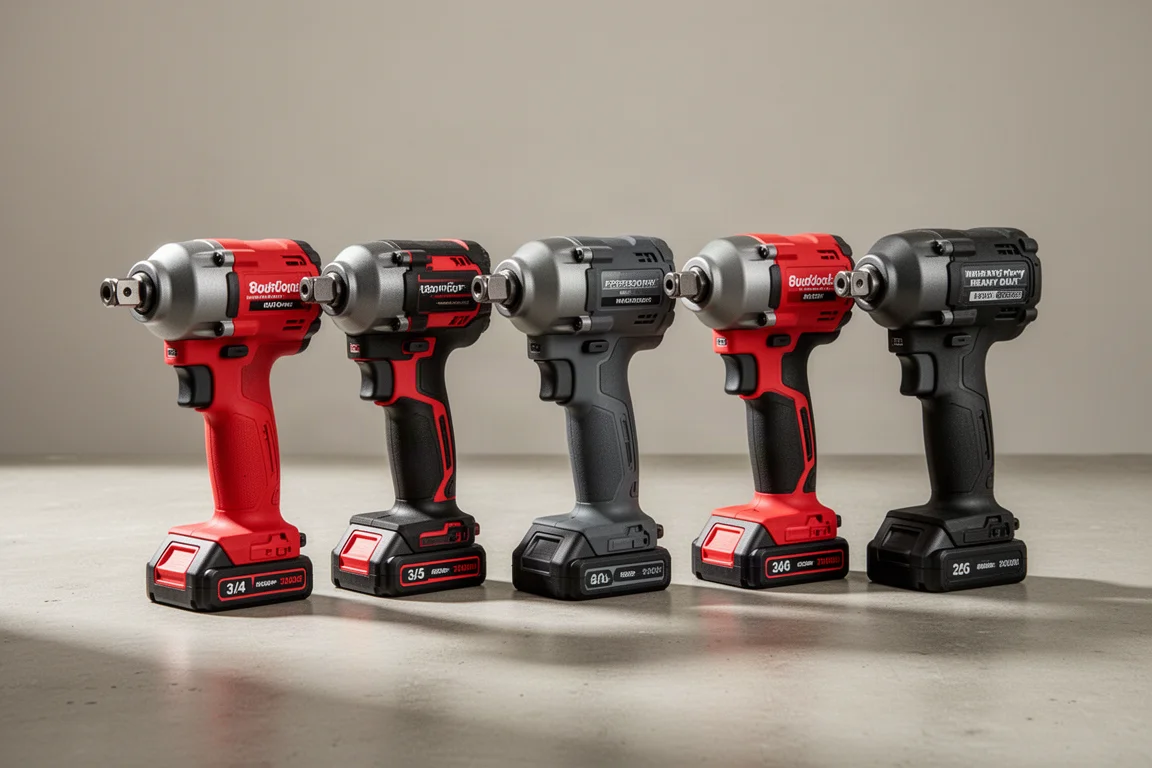
Best 3/4-Inch Impact Wrenches 2026: Five Contenders Compared
We compare five 3/4-inch impact wrenches across price and performance, from a budget Amazon option to Snap-on's most powerful model yet.
Power Tools
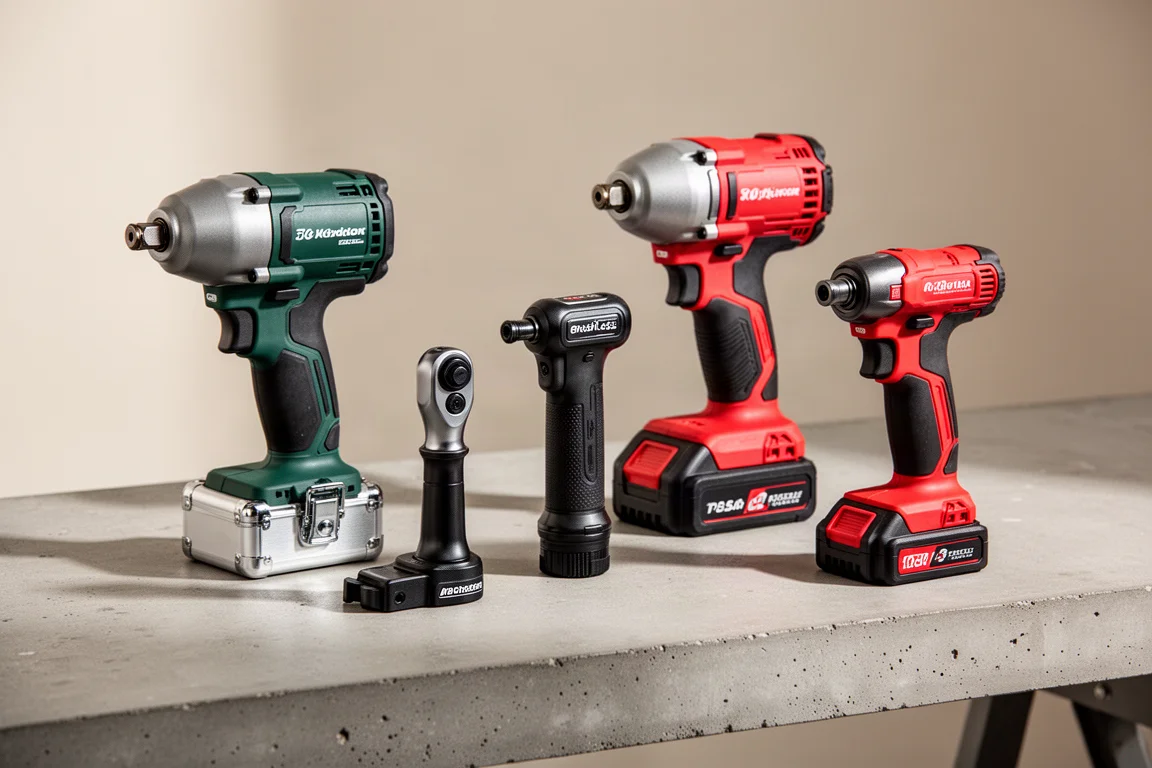
Best Budget Cordless Tools 2026: Walmart Finds That Punch Above Their Price
We tested five cordless tools from Walmart, including a high-torque impact wrench that trades blows with Milwaukee and a $35 duster that outperforms its price class.