Power Tools
DeWalt DCF887 vs Flex FX1371: Impact Driver Head-to-Head
Two top-of-the-line 20V-class impact drivers go spec-for-spec and through three hands-on performance tests. Here's how the numbers and real-world results stack up.
Introduction
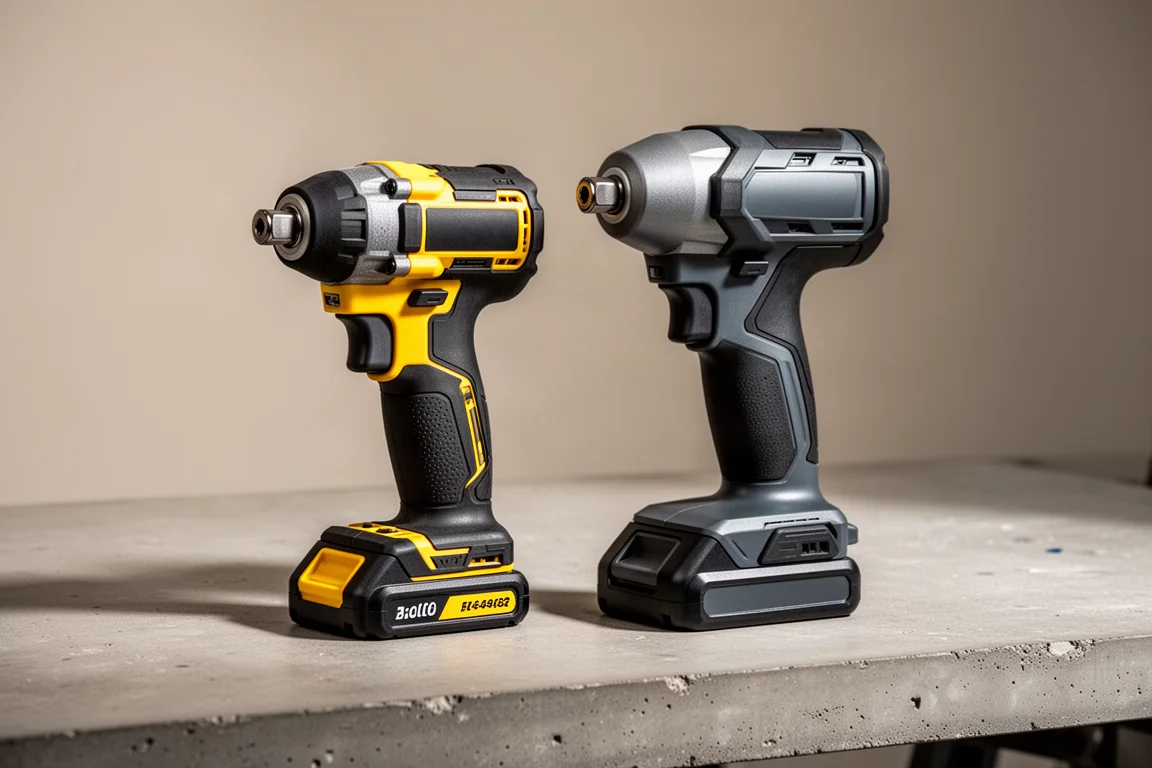
Two top-of-the-line impact drivers went head to head: the DeWalt DCF887 and the Flex FX1371. Specs, features, and three hands-on performance tests with standard 5 Ah batteries on each tool were used to score a point per test, with results tallied at the end. If you are choosing between these two, this breakdown covers everything that matters before you spend your money.
How the Specs Stack Up
Measured from tip to tail with a digital caliper, the Flex FX1371 has a noticeably shorter head length at 4.6 inches, while the DeWalt DCF887 comes in a bit longer at 5.3 inches. That compactness earns Flex a point for size, which matters in tight spaces and overhead work.
Weight tells a different story. Flex is one of the heavier models in its class at a hefty 4.93 pounds, while the DeWalt posts a working weight of just 3.4 pounds, easily taking the point here. The trade-off between compact heads and lighter bodies is exactly the kind of thing worth weighing against how you actually work.
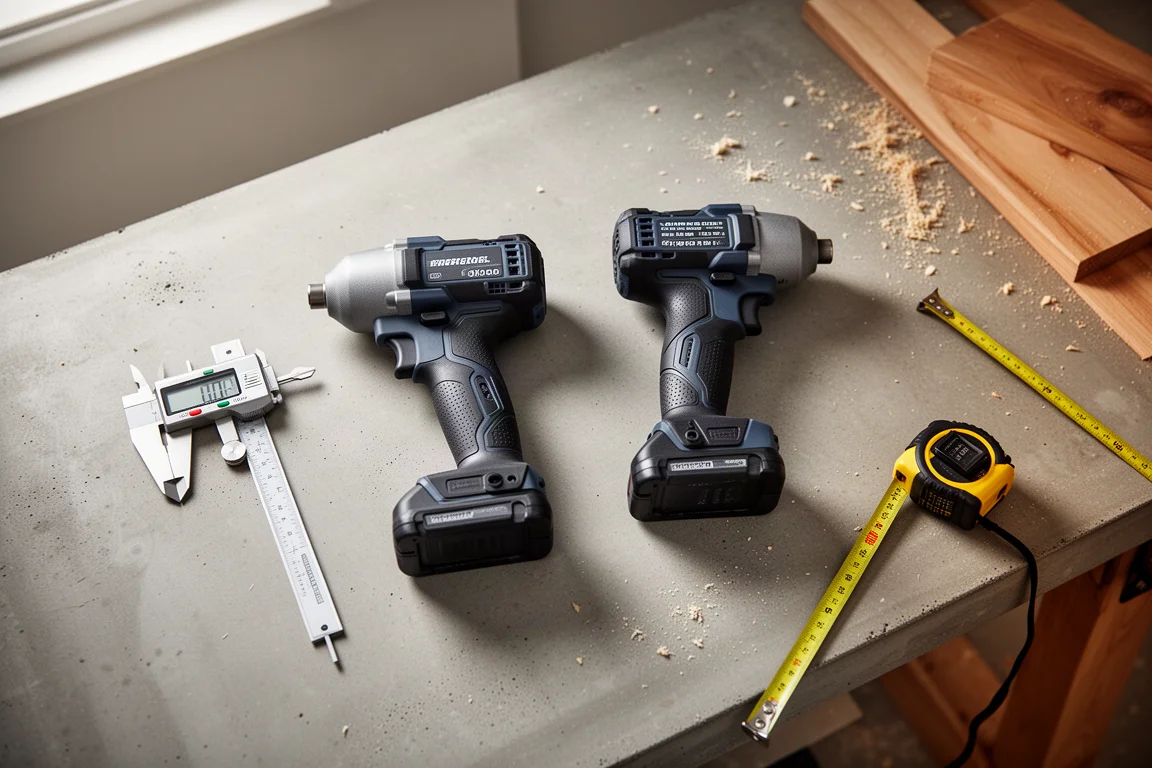
On paper, performance favors Flex. Using a tachometer, the FX1371 ran around 3,915 RPM no-load, more than 600 RPM faster than the DeWalt’s roughly 3,285 RPM. Manufacturer-claimed max torque also favors Flex at 2,500 inch-pounds versus 1,825 for the DeWalt, a large margin on the spec sheet. After the spec comparison, Flex led 3 to 1.
Medium Load Test: Structural Screws
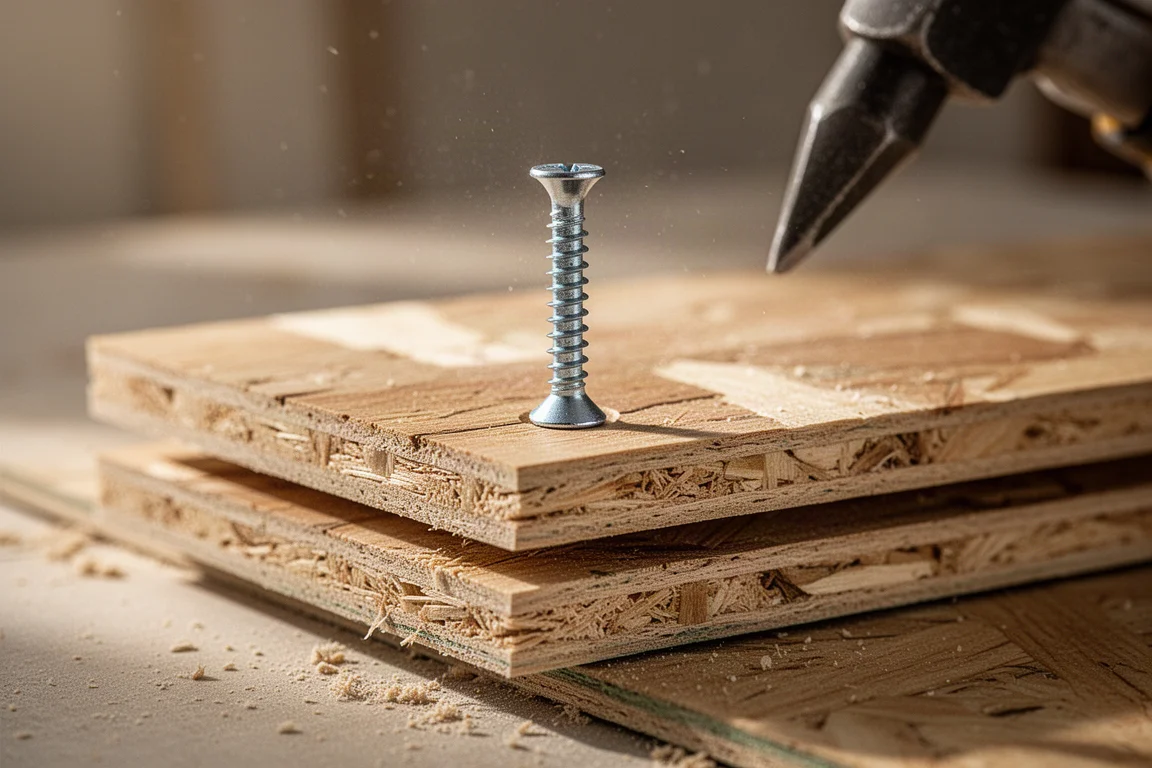
The first hands-on test drove a 6-inch by quarter-inch GRK RSS screw into stacked OSB subfloor, with results averaged across three runs using a standard battery on each tool.
Flex finished all three screws in under 10 seconds, averaging 8.7 seconds per drive. The DeWalt landed on the other side of that 10-second mark every time, averaging 12.6 seconds. Flex took the point, and comfortably so.
Lag Bolt Test: Raw Power
The second test gave each driver 30 seconds of trigger time to sink a 10-inch by half-inch lag screw into the same stacked OSB material. The deepest drive, measured by the fewest inches of exposed bolt remaining, won the point.
Flex left only 2.88 inches of lag bolt exposed, proving its superior power, while the DeWalt showed 3.44 inches remaining. Another point to Flex.
Bolt Breaker Test: Real-World Torque
The final performance test measured how long each driver took to break loose five lug nuts set to 150 foot-pounds (1,800 inch-pounds). That simulates the kind of real-world torque you would encounter breaking off lug nuts on a larger truck. An impact wrench is the right tool for that job, but it remains a good way to test practical torque output.
Flex dominated, breaking all five bolts in a total of just 3.19 seconds, less than half the DeWalt’s final time of 6.64 seconds. The FX1371 swept all three hands-on tests.
Price and Warranty
The Flex FX1371 is available at Acme Tools and Lowe’s, priced at $159 as a bare tool, or $249 as a kit that includes a 5 Ah battery plus a lighter 2.5 Ah compact battery pack. The DeWalt DCF887, also found at Acme Tools and Lowe’s, is actually $10 cheaper as a bare tool at $149, and its kit is significantly cheaper at $199, bundling the driver with two 2 Ah batteries. Even without a 5 Ah battery in the kit, DeWalt takes the point on price.
Warranty flips the momentum back. DeWalt offers a three-year limited warranty, while Flex offered a lifetime warranty on all of its tools, batteries, and chargers for purchases through the end of 2023, provided you register within 30 days of purchase. That is a big win for Flex in this category.
Final Verdict
With a final tally of 7 to 2, Flex clearly wins this impact driver head-to-head challenge. The FX1371 delivered a more compact head, faster no-load speed, higher claimed torque, and swept all three performance tests, while DeWalt countered with a lighter working weight and better kit pricing.
If raw performance and a lifetime-registered warranty matter most, the Flex FX1371 is the stronger pick. If you want the lighter tool and the cheapest way into a kit with batteries, the DeWalt DCF887 remains a solid value choice.
Conclusion
Both drivers are capable premium tools, but the test results were decisive: Flex won the size, speed, torque, and all three hands-on performance categories, finishing 7 to 2. Choose the FX1371 for power and compactness, or the DCF887 if a lighter body and lower kit price fit your needs better.
Product link
View more details for DeWalt DCF887
This product is mentioned in the review. Check the specifications, options, and compatibility before buying.
View more details for DeWalt DCF887Further reading
Related Reviews
Power Tools
Best 1-Inch Pistol Impact Wrenches: Three Heavy-Duty Options Compared
We compare three 1-inch pistol impact wrenches, from a budget-friendly Harbor Freight model to a premium Caterpillar unit, to help you choose the right one.
Power Tools
Best 3/4-Inch Impact Wrenches 2026: Five Contenders Compared
We compare five 3/4-inch impact wrenches across price and performance, from a budget Amazon option to Snap-on's most powerful model yet.
Power Tools
Best Budget Cordless Tools 2026: Walmart Finds That Punch Above Their Price
We tested five cordless tools from Walmart, including a high-torque impact wrench that trades blows with Milwaukee and a $35 duster that outperforms its price class.