Power Tools
DeWalt DCF860 Impact Driver: A Teardown That Breaks the Rules
We opened up DeWalt's new DCF860 impact driver and measured impact rates that seem to defy what current cordless tech should allow. Here is what we found inside, and what it means for buyers.
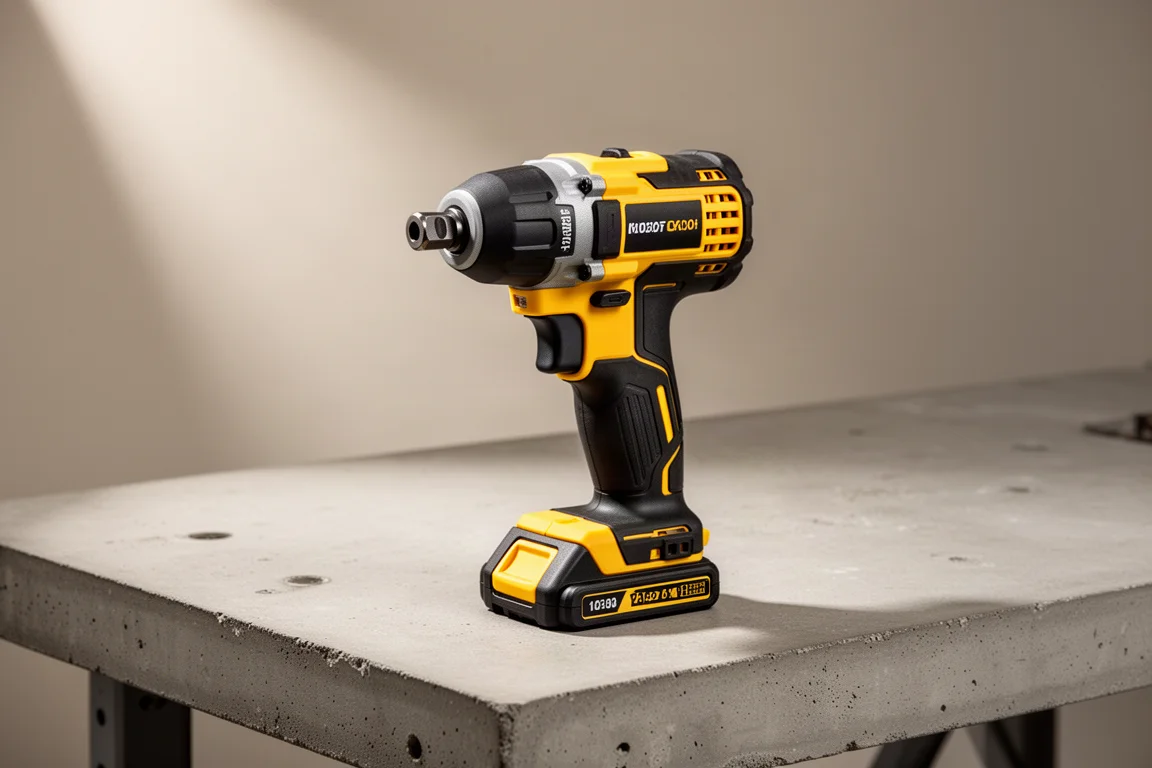
Introduction
Some tools arrive quietly. The DeWalt DCF860 is not one of them. This new impact driver behaves so differently between forward and reverse that we initially assumed the difference had to come from electronic programming. It did not. After putting the tool under the knife and filming its mechanism at 10,000 frames per second, the explanation turned out to be entirely mechanical, and frankly stranger than we expected.
Whether by accident or by design, this tool seems to break physics at times, posting impact rate figures we believed were technically impossible with current cordless technology. That comes with a price, and we mean that in more ways than one.
Why We Opened It Up
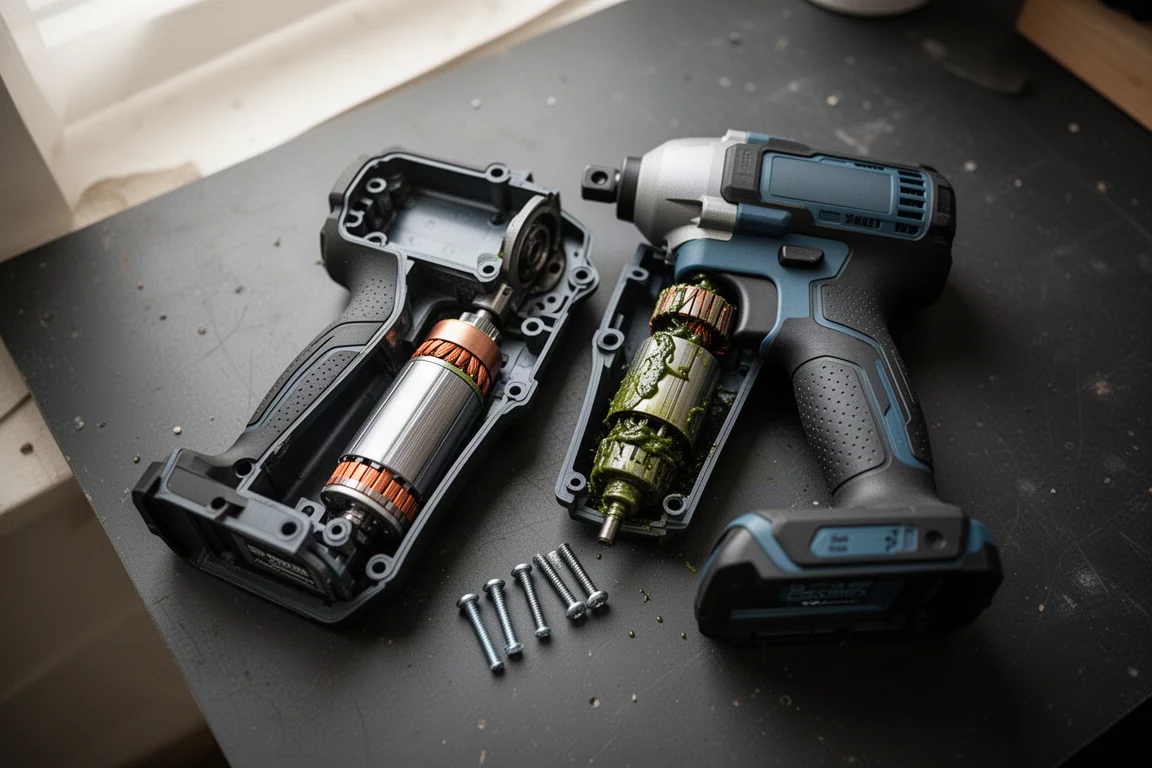
The DCF860’s forward and reverse behavior is visibly and measurably different, and the numbers simply did not add up on paper. Based on the motor size, the measured RPM of 3,840 in either direction, and only two dogs on the anvil and hammer, the impact rates we captured in reverse should be impossible. So we took it apart.
Disassembly is straightforward: a few screws, all quite loose with no Loctite. A fair amount of grease pushes out of the head, which turned out not to be heat damage but simply the result of an absolutely packed impact mechanism. We have never seen this much grease in a driver.
Inside the Impact Mechanism
Like most modern impact drivers, the head is dominated by the impact mechanism with a thin brushless motor behind it, possibly pushing an 80/20 relationship here. The hammer itself is about average, maybe slightly under average in size, with a squared-off shape that is rare these days.
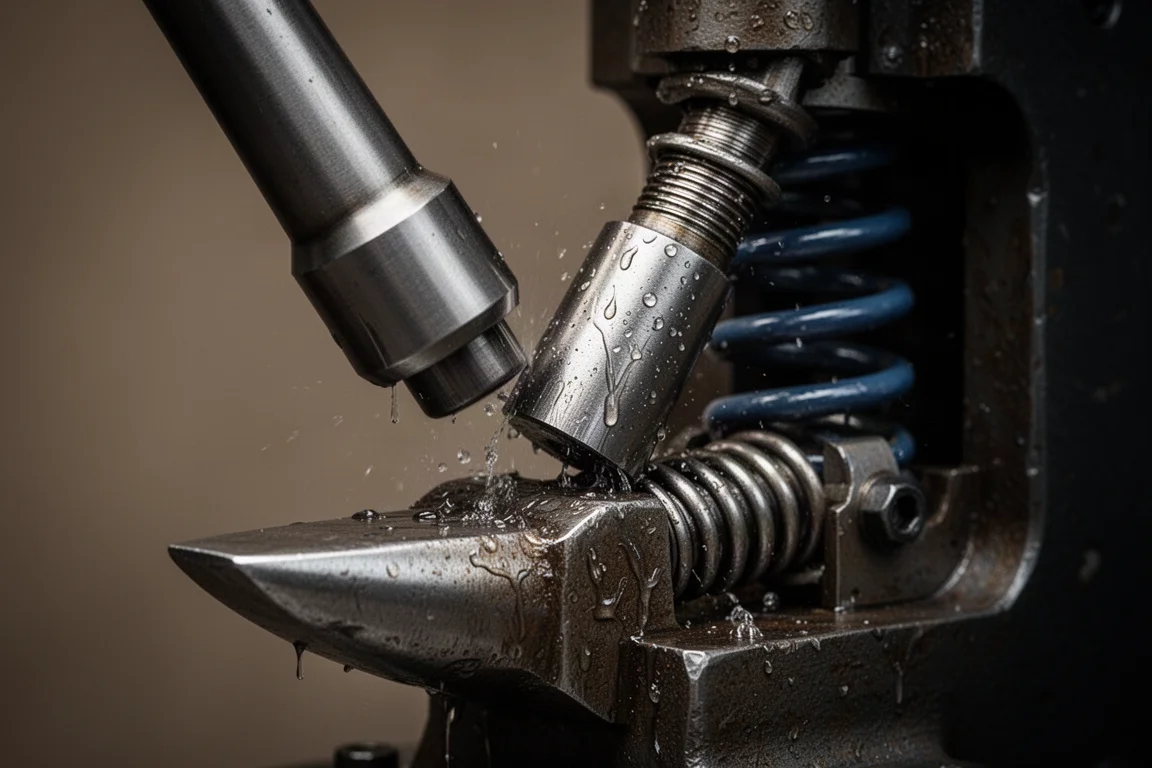
The standout part is the hammer reset spring. It is unusually thick for an impact driver, affords much more travel than most, and is painted, which we have never seen before. It looks like a high-performance aftermarket spring, and DeWalt gives most of the space in the large hammer housing to the spring rather than the hammer. That unusual layout is the likely key to the numbers this tool produces.
The Numbers: Forward vs Reverse
In forward, the DCF860 hits around 4,500 impacts per minute, matching DeWalt’s advertised figure, with measurements landing between roughly 4,200 and 4,600 IPM. That is the highest we have ever measured, with a hammer hit every 0.013 seconds. It is also violent: lots of half-hits and jitters slamming on the bit, which is not usually part of an impact driver’s recipe.
Reverse is where things get surreal. The back-and-forth action becomes more like pulling back than slamming forward, and the numbers jump. We measured hammering every 0.0118 seconds, then every 0.01 seconds flat, with 5,500 to 5,700 IPM sustained through a shot. Competitors have crept from 4,000 to 4,400 IPM with early leaks suggesting 4,600 for this tool. Sustained figures over 5,500 from a 4,500-class driver felt like a stretch until the footage was measured again and again with the same result.
What the High-Speed Footage Revealed
With the tool modified to run while open, the real behavior became visible. About one to two seconds into a trigger pull, forward driving measures around 4,800 IPM and looks beautiful. Six or seven seconds into a run, things get wild: every second hit or so, the mechanism bounces and rebounds off the back of the gear assembly, something we have never seen on any cordless tool.
The inner helical section maxes out its travel and slams back, causing a pinball-like stutter step in forward. In reverse, the same rebounding happens but far more gracefully, like a bouncing basketball, one rebound per hit. Those brief rebounding hits are accelerated so hard they represent 6,900 IPM worth of mechanism if sustained every hit.
With a regular 5Ah battery, reverse runs a consistent 5,000 to 5,300 IPM. With a high-performance 6Ah XR battery, the tool crosses a barrier from smooth hitting into rebounding hits, pushing from an early smooth 5,100 IPM up to 5,700 to 5,900 IPM. For a marketed 4,500 IPM tool competing against 4,000 to 4,400 IPM rivals, that is remarkable.
What It Feels Like to Use
The hammer housing’s aluminum case is not through-hole screwed or pinned like some designs; it is simply clocked into position by the inner shape of the nylon body, producing a fair amount of whiplash between body and hammer case. The stutter-step rebounding adds back-and-forth jitter that feels strange in the hand, particularly in forward where the behavior is more random.
On massive lags, use an impact wrench instead. On smaller and normal fasteners, this hitting speed is genuinely impressive. The downside: the uncoordinated ballet in forward can make the tool feel punishing and harder to keep on the head of a fastener. In brief use this week, that was noticeable. The upside is that far more hits land in the same period of time compared to competitors, which is one legitimate way to reach higher torque in the same amount of time. In a way, the tool does as promised, maybe accidentally, maybe by design.
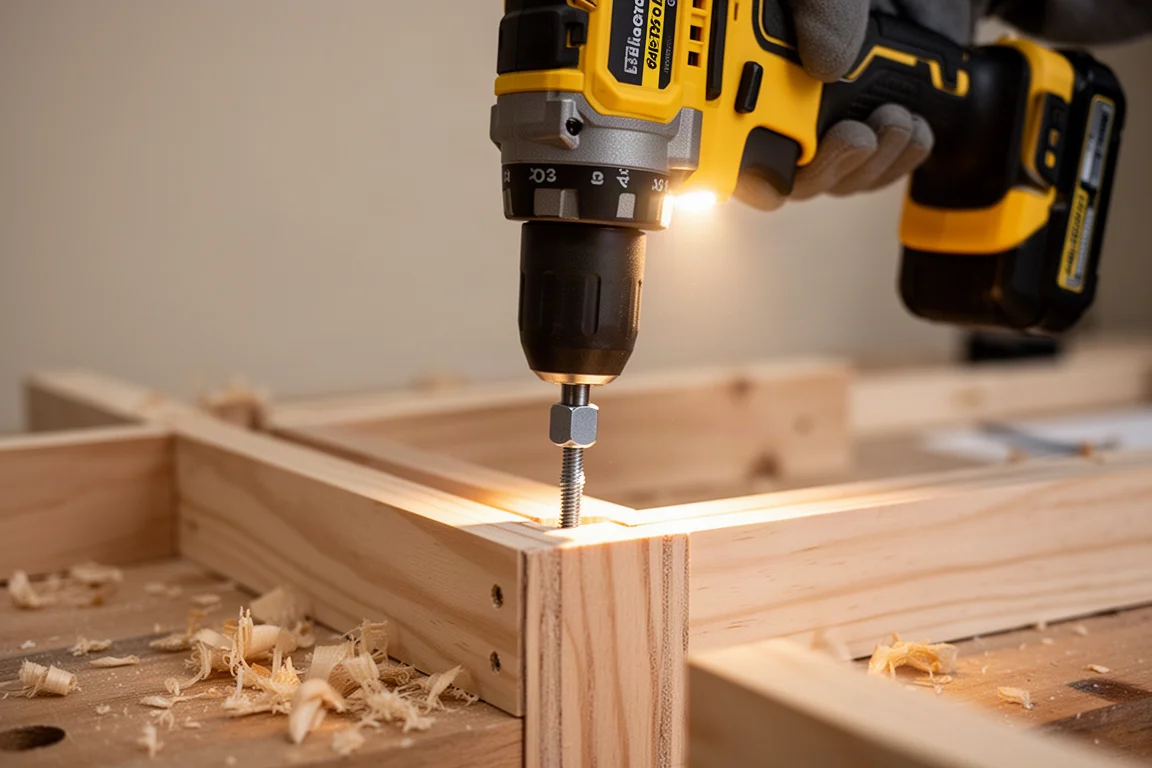
There are also some genuinely clever touches beyond the mechanism. The tri-LED work lights sit on a separate assembly that half-turns on and off, connected by a simple connector, making replacement easy and meaning fewer tools thrown away over chewed-up front covers. A full-size needle roller bearing out front, half-inch by 5/8-inch thick, is a feature even half-inch impacts no longer commonly get. Three planetary gears keep a somewhat traditional layout while some brands move to two, which we do not feel saves much.
Things to Consider Before Buying
- The rebounding, jittery behavior in forward can make driving feel harsh and less controlled.
- Impact rates in reverse far exceed the advertised spec, but forward behavior is inconsistent.
- The packed grease and unique spring design are unproven for long-term durability.
- For heavy lag work, an impact wrench remains the better tool.
Buying Advice
The DCF860 suits buyers who want the fastest hammering available in an impact driver and are comfortable with an unusual, sometimes unruly feel in forward. Sustained rates approaching 6,000 IPM are the sort of thing we may not see again for another ten years, if fasteners can even take it. If you value smooth, predictable driving behavior above raw impact rate, competing drivers with more conventional mechanisms may suit you better.
Conclusion
The DeWalt DCF860 is the most fascinating impact driver we have taken apart. A smallish hammer paired with an extraordinary high-performance spring produces impact rates that seemingly bend the rules of current cordless design, with the trade-off of a jittery, punishing character in forward. It does what it promises, one way or another, and for fastener-driving enthusiasts, that alone makes it worth a close look.
Product link
View more details for DeWalt DCF860 20V XR Impact Driver
This product is mentioned in the review. Check the specifications, options, and compatibility before buying.
View more details for DeWalt DCF860 20V XR Impact DriverFurther reading
Related Reviews

Power Tools
Best 1-Inch Pistol Impact Wrenches: Three Heavy-Duty Options Compared
We compare three 1-inch pistol impact wrenches, from a budget-friendly Harbor Freight model to a premium Caterpillar unit, to help you choose the right one.

Power Tools
Best 3/4-Inch Impact Wrenches 2026: Five Contenders Compared
We compare five 3/4-inch impact wrenches across price and performance, from a budget Amazon option to Snap-on's most powerful model yet.

Power Tools
Best Budget Cordless Tools 2026: Walmart Finds That Punch Above Their Price
We tested five cordless tools from Walmart, including a high-torque impact wrench that trades blows with Milwaukee and a $35 duster that outperforms its price class.