Power Tools
DeWalt DCF850 Impact Driver Meets the PowerStack Battery: What Side-by-Side Testing Showed
We put DeWalt's compact DCF850 impact driver head to head with the new PowerStack battery and larger cylindrical packs to see if the smaller battery really keeps up.
Introduction
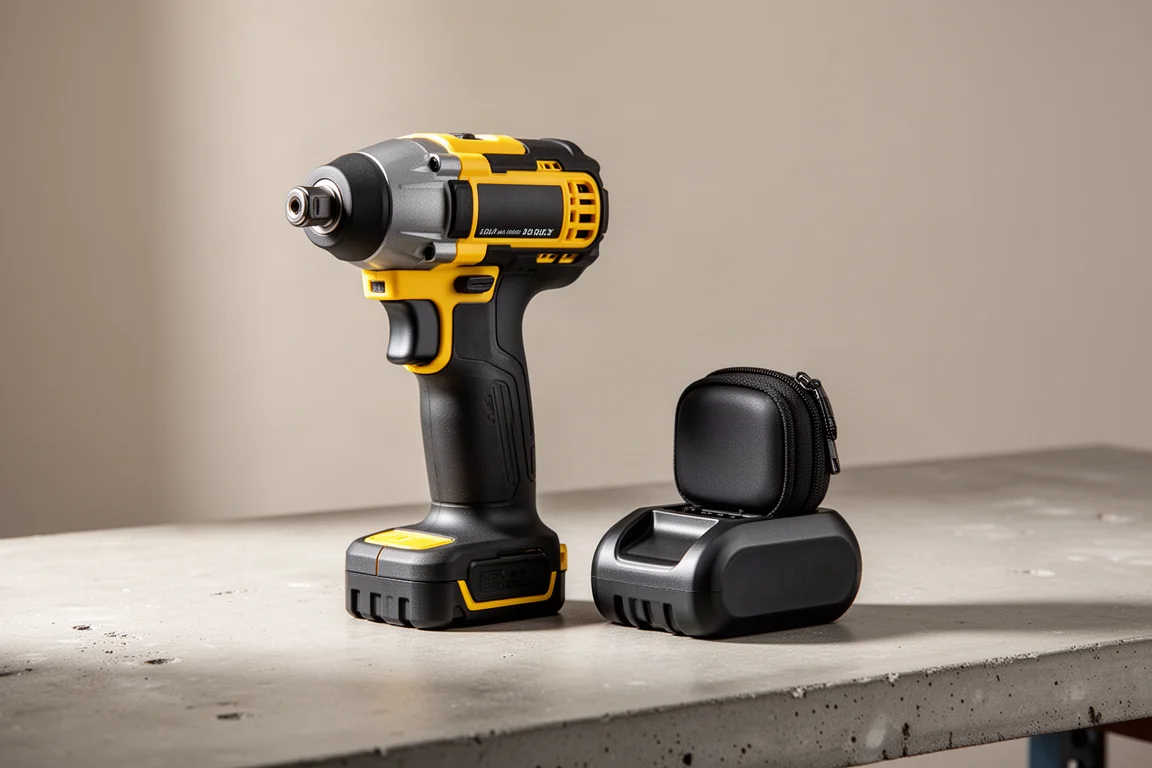
DeWalt’s newest compact impact driver and its new PowerStack battery technology have generated plenty of excitement, yet the two are rarely tested together. That combination matters, because the PowerStack pack is physically smaller than a traditional cylindrical-cell battery, which should change how a compact tool feels in the hand. In this side-by-side test, the DCF850 ran with the PowerStack against the same tool running DeWalt’s standard 20V Max cylindrical packs, stepping up from 2Ah through 4Ah, 6Ah, and finally 8Ah to find out where the smaller pack actually earns its keep.
The Test Setup
Two brand-new units of the DCF850 were used so both batteries ran on identical tools. The baseline comparison paired the PowerStack against the standard 20V Max 2Ah cylindrical pack, then the cylindrical pack was bumped up incrementally to 4Ah, 6Ah, and 8Ah to see how far the PowerStack could hang with much larger packs. One small surprise before testing even started: the newer standard 2Ah pack keeps its fuel gauge light on longer when pressed, an unnoticed upgrade over older packs.
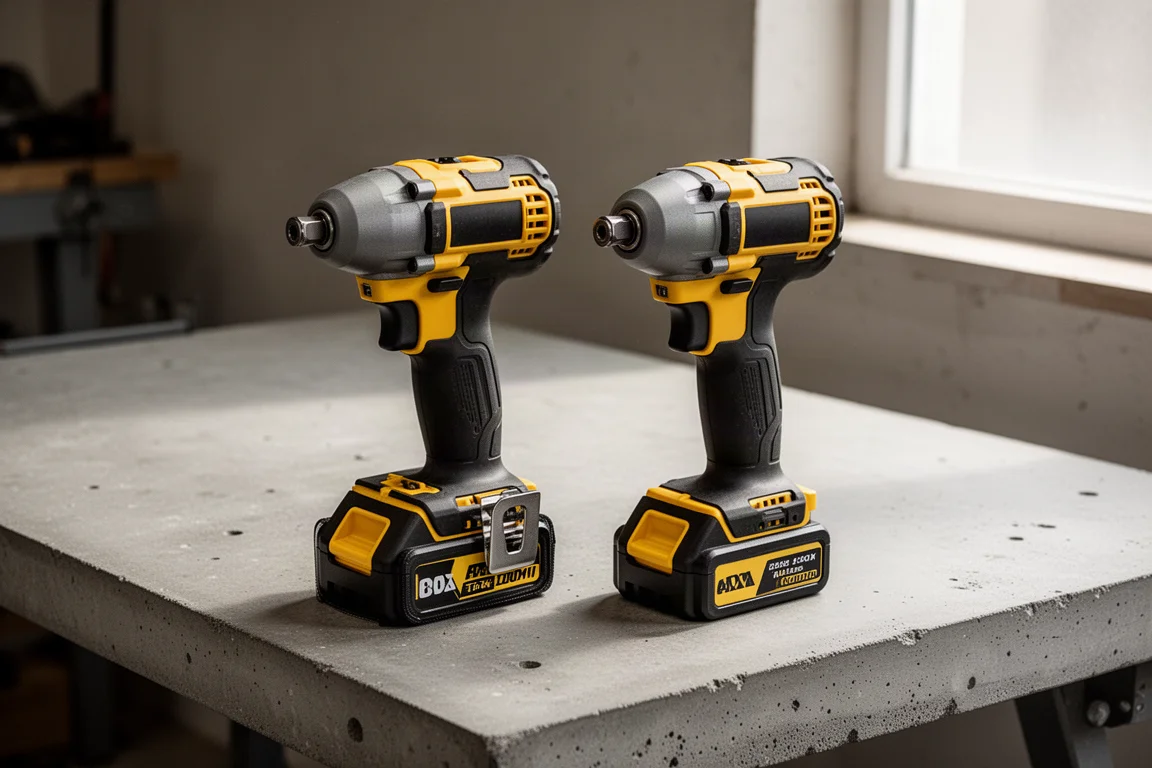
The tester was a DeWalt tool veteran who liked the DCF850’s form factor immediately, praising the shorter head and compact size. The big question was whether the smaller PowerStack, which does not stick out as far, would change the tool’s balance or even deliver more power than the standard pack.
Driving Performance: Drywall and Wood Fasteners
The first round used number-two driver bits and 1-5/8-inch drywall fasteners, starting on speed one. Results were nearly a tie, with high-speed footage needed to separate them. On speed three with the same fasteners, the PowerStack side drove deeper more consistently, and the DCF850’s built-in technology clearly helped avoid overdriving fasteners. One quirk surfaced that seems increasingly common with newer DeWalt impact drivers: occasionally the trigger was fully depressed and the tool simply did not respond until it was released and pulled again.
Next came 3-inch drywall fasteners, a genuinely demanding test since driving a fastener through three inches of wood takes serious torque and exposes any battery sag. On speed two the result was a photo finish, and speed three was again too close to call without slow-motion review.
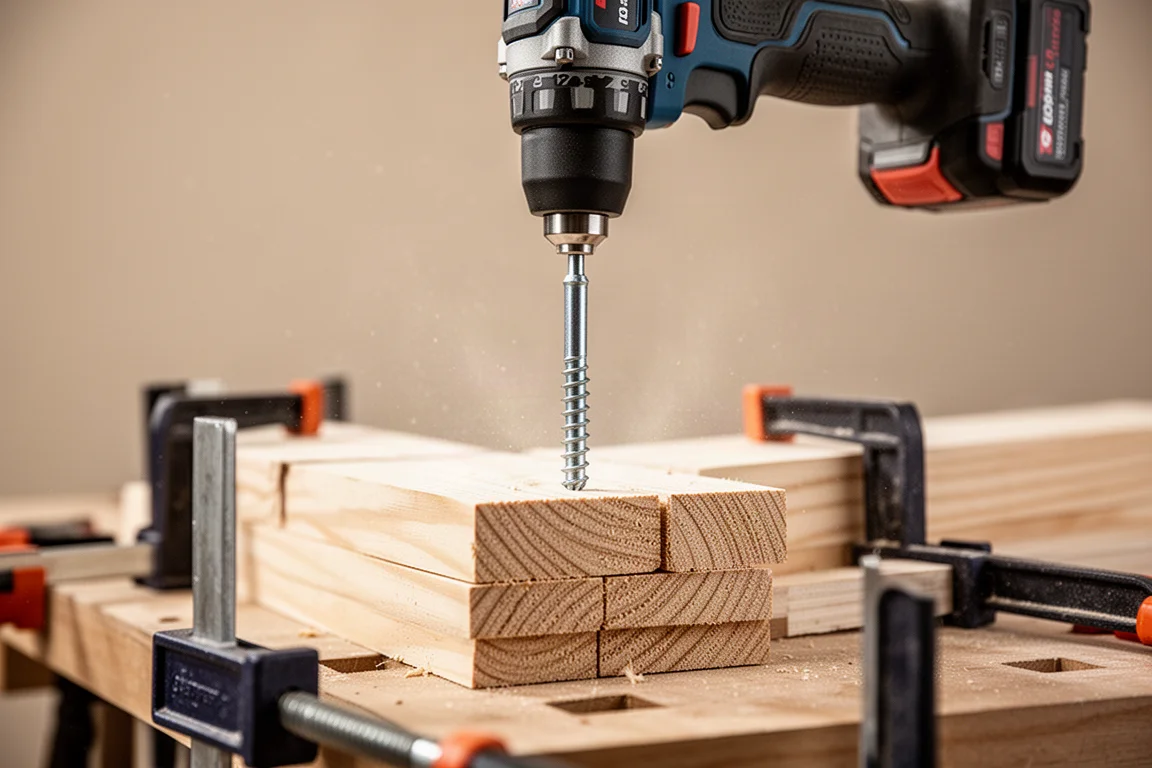
With 3-inch structural wood fasteners on speed one, the standard battery pulled the fastener head in first, but the PowerStack setup recovered and drove with noticeably more depth. On speed two and speed three the runs stayed extremely close, with the advantage shifting run to run.
Moving up to 1/4-inch by 6-inch structural lag fasteners on speed two, results were inconclusive, and on speed three the standard pack actually drove faster in one round, edging the PowerStack by split seconds. On even larger lag fasteners, the impact driver paused mid-drive before restarting on a second pull, though there was little doubt it would fully drive the fastener given time.
Drilling Tests and Battery Sag
The clearest pattern emerged with drilling rather than driving. Using 1-inch Diablo self-feeding paddle bits through stacked 2x4s, the compact tool proved to be a strong hole driller. The DCF850 simply does a better job drilling larger holes than driving the biggest fasteners.
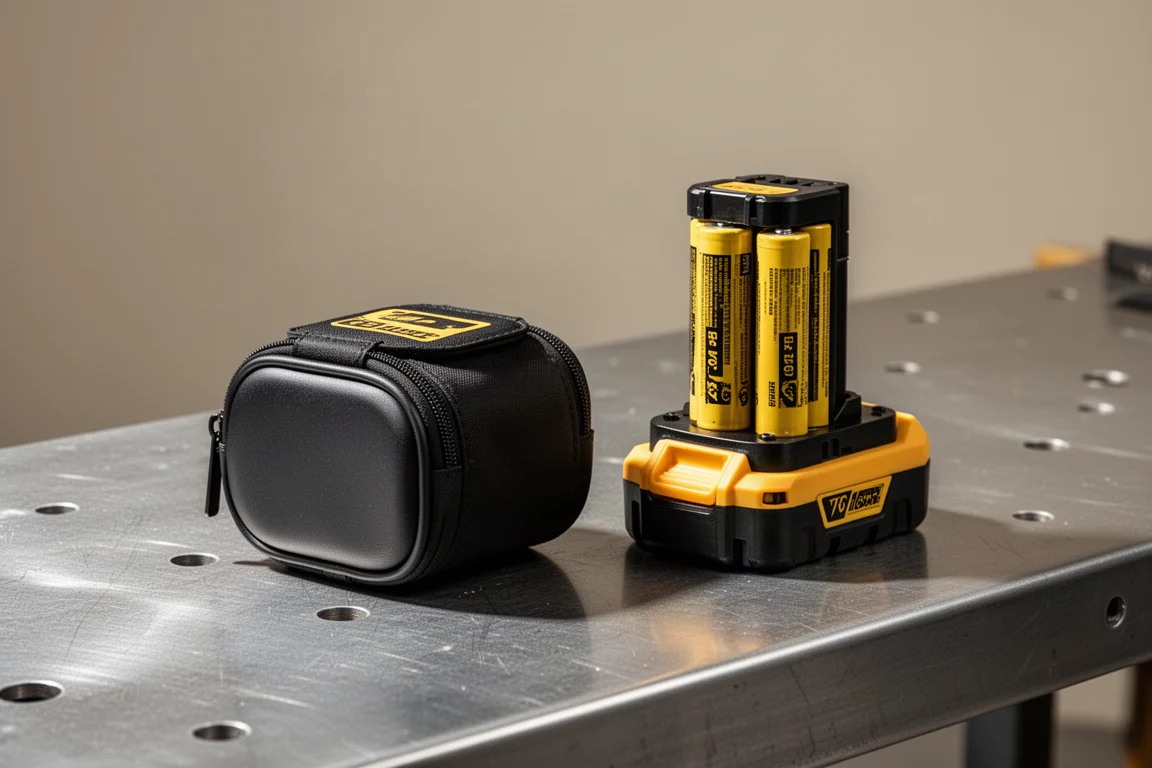
Battery sag became visible here. During drilling, the standard 2Ah pack dropped to two fuel bars, rebounded back to full bars, and sagged again, while the PowerStack held steadier. When the cylindrical pack was topped off and swapped to a 4Ah pack built with 21700 cells, the difference in size against the PowerStack was striking, and results split: two rounds to the PowerStack, one to the 4Ah pack. With 6Ah and then 8Ah cylindrical packs, results were effectively no different from the smaller cylindrical pack, and the PowerStack kept matching or beating batteries many times its size.
Heat and Handling
Temperature readings told an interesting story. One tool ran around 137 to 139 degrees up in the gear case and about 125 near the trigger housing, while the other ran roughly 20 degrees cooler in both spots, around 122 up top and in the low 80s near the trigger. Both batteries stayed cool, bouncing in the low 70s to low 80s, even though one tool had been running far longer.
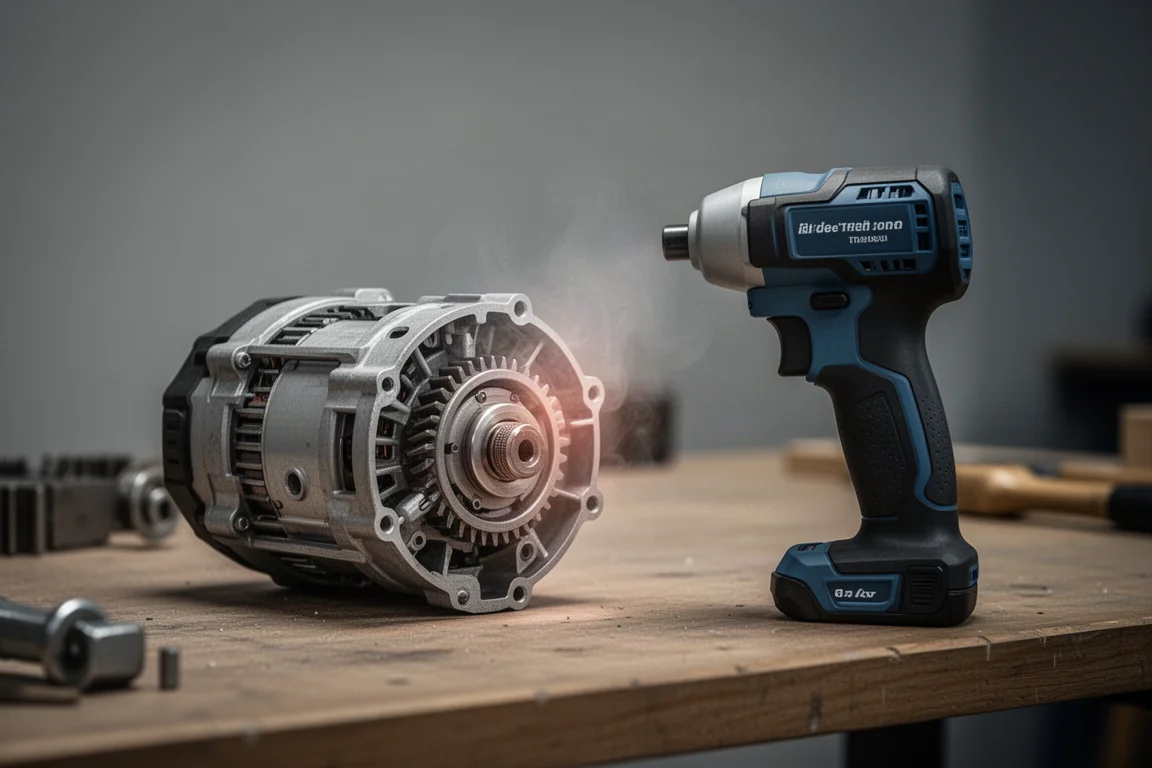
The practical takeaway for anyone working overhead, out all day, or just handling the tool constantly: the smaller, lighter combination is the one most people would want in hand all day. For drilling through studs to route wire or conduit, the compact setup is a no-brainer.
Buying Advice
The headline finding is that the PowerStack hangs and bangs with much larger amp-hour batteries despite being a fraction of the size. If you already own the DCF850, the PowerStack is the pack that preserves the tool’s compact balance while delivering performance comparable to 4Ah-class cylindrical packs. If you mostly drive large structural fasteners, expect the results to be close either way, with occasional trigger hesitation noted on the newer impact drivers. For drilling, the compact driver with the small pouch pack is genuinely impressive.
Conclusion
Neither product is a clear loser in this matchup. The DCF850 is a compact, well-balanced impact driver with strong drilling performance and technology that limits overdriven fasteners, and the PowerStack battery repeatedly matched far larger cylindrical packs in speed and held its charge more steadily under load. For anyone weighing whether the new battery is worth pairing with DeWalt’s latest compact impact driver, the side-by-side numbers make a convincing case.
Product link
View more details for DeWalt DCF850
This product is mentioned in the review. Check the specifications, options, and compatibility before buying.
View more details for DeWalt DCF850Further reading
Related Reviews
Power Tools
Best 1-Inch Pistol Impact Wrenches: Three Heavy-Duty Options Compared
We compare three 1-inch pistol impact wrenches, from a budget-friendly Harbor Freight model to a premium Caterpillar unit, to help you choose the right one.
Power Tools
Best 3/4-Inch Impact Wrenches 2026: Five Contenders Compared
We compare five 3/4-inch impact wrenches across price and performance, from a budget Amazon option to Snap-on's most powerful model yet.
Power Tools
Best Budget Cordless Tools 2026: Walmart Finds That Punch Above Their Price
We tested five cordless tools from Walmart, including a high-torque impact wrench that trades blows with Milwaukee and a $35 duster that outperforms its price class.