Power Tools
DeWalt DCD999 vs Milwaukee M18 Fuel Gen 4: Which Hammer Drill Wins?
Two top-tier 20V hammer drills face off across torque, drilling speed, concrete performance, size, and price to help you pick the right one.
Introduction
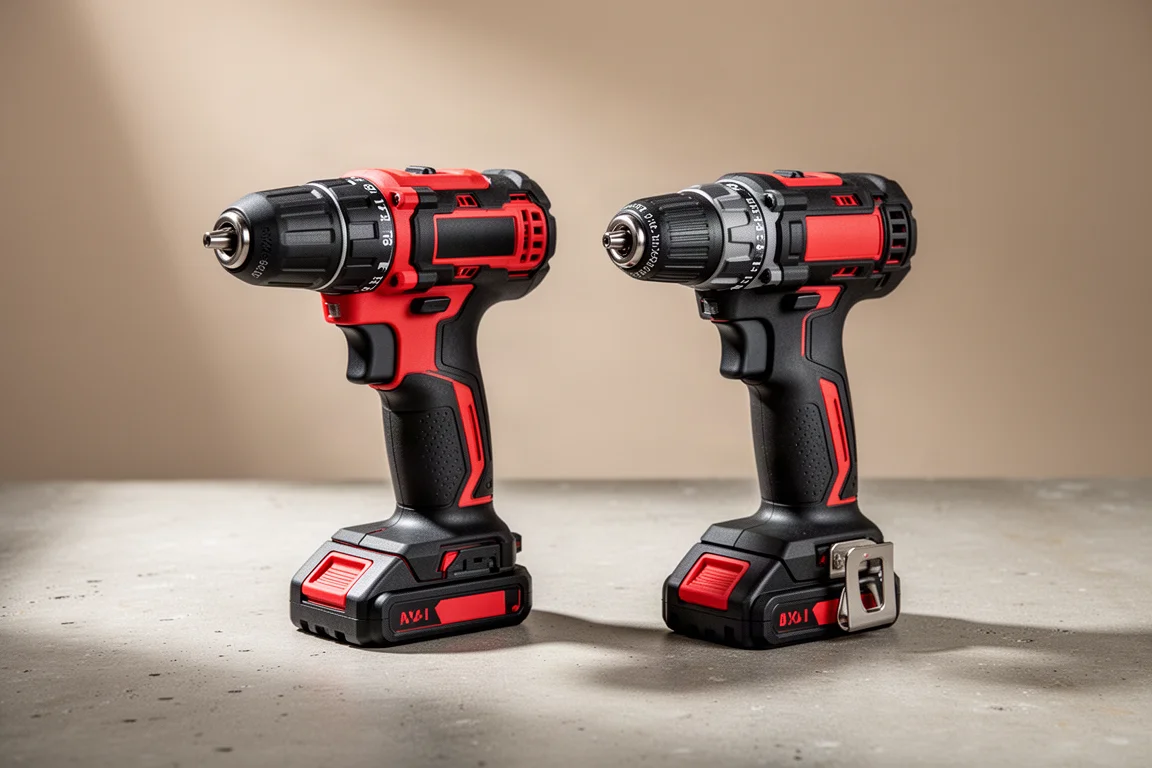
When it comes to premium cordless hammer drills, two names dominate the conversation: DeWalt and Milwaukee. Both of these tools earned top marks in a head-to-head test of more than 10 hammer drills, and both represent the peak of what their respective platforms currently offer. This comparison breaks down how they performed across four standardized tests, plus size, weight, features, and price.
The DeWalt DCD999 20V Max FlexVolt Advantage hammer drill runs on standard 20V Max batteries for solid everyday performance, but inserting a FlexVolt battery unlocks a meaningful jump in output. The Milwaukee M18 Fuel Gen 4 hammer drill carries upgraded performance and features over its third-generation predecessor. Choosing between them comes down to which trade-offs matter most for your work.
How We Tested
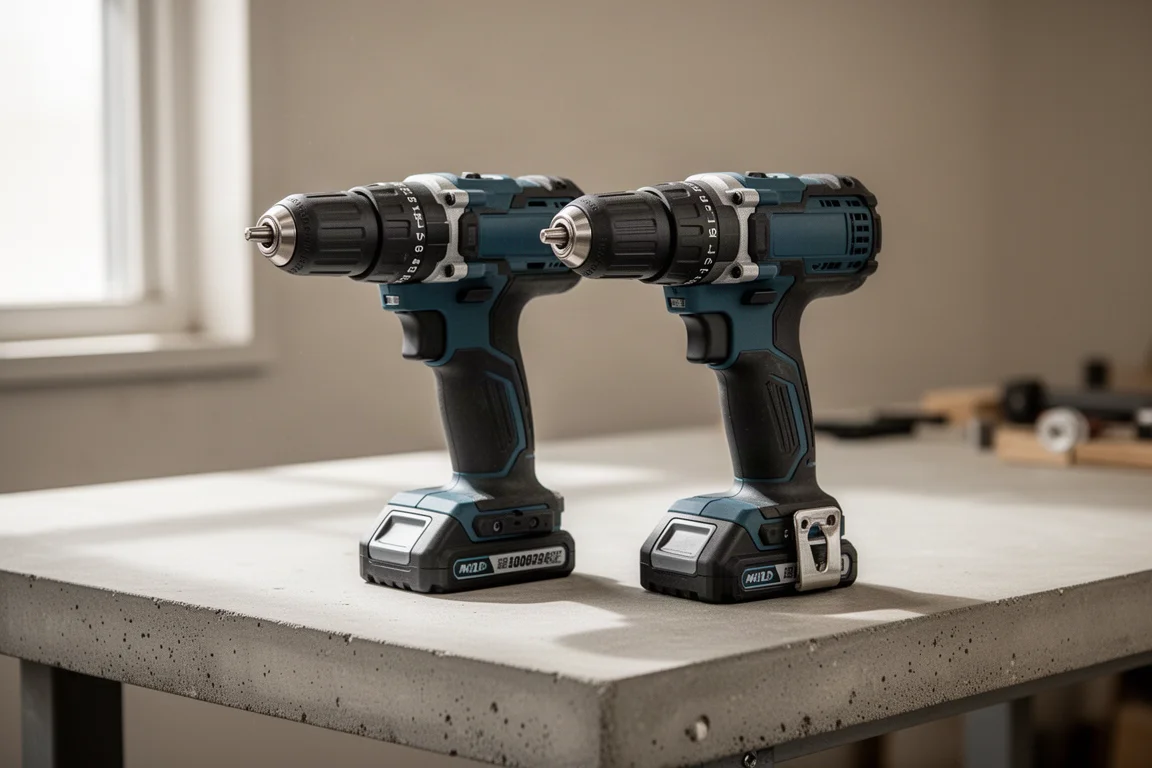
Each drill completed four performance tests: a maximum soft torque measurement using a 10.5-inch lag bolt in stacked OSB at low speed with an inline torque meter, a spade bit drilling speed test through stacked OSB averaged over three runs, a self-feed bit test through a 2x4 pine stud at the highest possible speed averaged over three holes, and a concrete drilling test using a 3/8-inch concrete bit to drill three-inch holes in cured 4,000 PSI concrete across three averaged runs. Beyond raw performance, we also weighed size, weight, features, and price.
Performance Tests
Torque
With a 5Ah standard battery pack, Milwaukee produced 539 in-lbs of soft torque in the lag bolt test, while DeWalt’s pack posted 380 in-lbs. Switching to the larger 6Ah-equivalent power packs narrowed the story: Milwaukee reached a max read of 591 in-lbs, and DeWalt jumped from 380 to 468 in-lbs with the 6Ah FlexVolt battery. Milwaukee holds the torque edge in both configurations.
Drilling Speed
Things tightened up considerably in the spade bit test. Milwaukee’s three-hole average with the 5Ah battery was 3.4 seconds, and DeWalt matched that exactly at 3.4 seconds. With the high-output battery, Milwaukee dropped to 2.6 seconds, while DeWalt’s FlexVolt pack produced a 2.7 second average, finishing just a hair behind.

Self-Feed Drilling
In the self-feed test through a pine stud, Milwaukee averaged 2.6 seconds with the 5Ah M18 battery, and the DCD999 managed 3.6 seconds with its 5Ah 20V Max pack. Both improved with upgraded batteries: Milwaukee cut its time to 2.2 seconds, while DeWalt showed the bigger gain, going from 3.6 to 2.3 seconds with the FlexVolt battery, a 36% speed increase between the 20V Max and FlexVolt packs.
Concrete Drilling
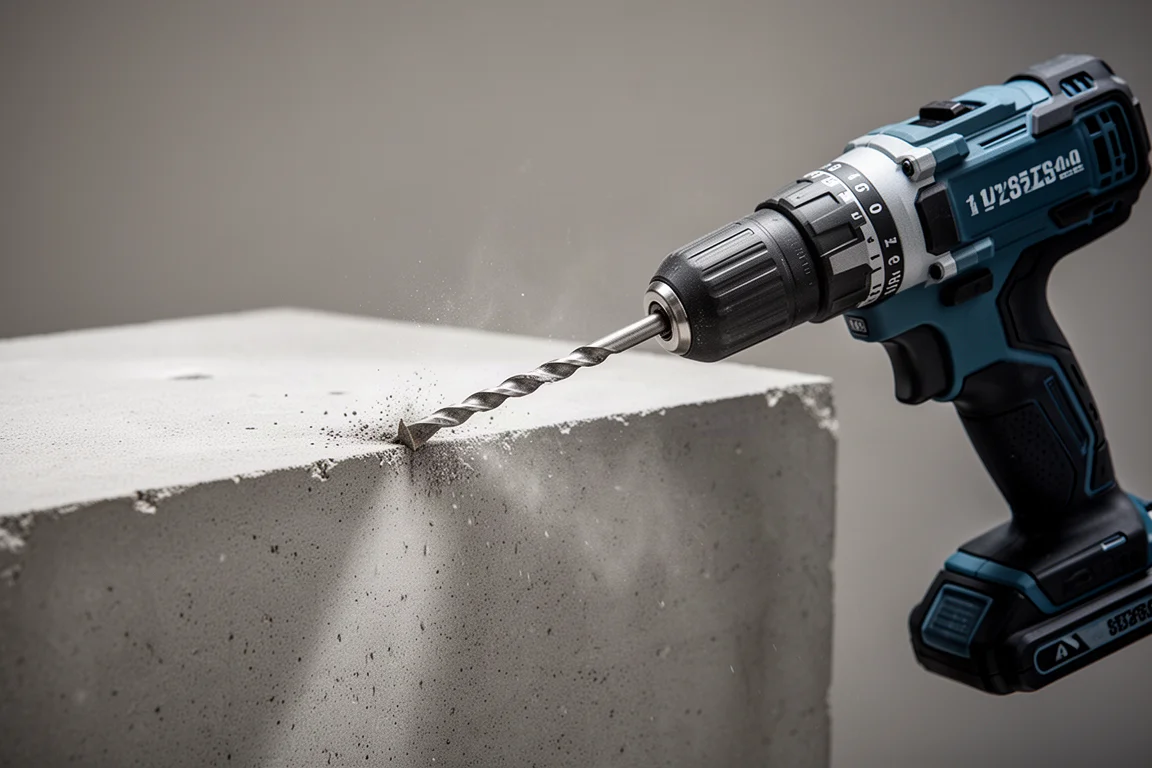
With a standard 5Ah battery, Milwaukee completed the concrete holes in 3.7 seconds on average, with DeWalt close behind at 4.2 seconds. The high-output battery brought Milwaukee down to 3.4 seconds, but the FlexVolt Advantage made a far bigger difference here, cutting DeWalt’s time from 4.2 to 2.9 seconds, now a half second faster than Milwaukee.
Size, Weight, and Specs
Milwaukee’s maximum speed is 2,100 RPM in hammer drilling mode, while DeWalt claims 2,250 RPM. On torque specs, Milwaukee supplies 1,400 inch-pounds of hard torque, while DeWalt lists 1,219 unit watts out. These two figures are not directly comparable, so treat them as manufacturer claims rather than a head-to-head metric.
The maximum hammer rate is 33,000 blows per minute for Milwaukee and 38,250 BPM for DeWalt, which may correlate with DeWalt edging out Milwaukee in the concrete test when using a FlexVolt battery. Milwaukee is significantly shorter at the head, measuring 6.9 inches against DeWalt’s 8.4 inches, an inch and a half difference. Milwaukee weighs 3.3 pounds without a battery versus DeWalt’s 3.6 pounds, and the DeWalt ends up heavier in most comparable battery combinations.
Price and Availability
Both drills sit at the top tier of the industry, and while they are more expensive than most of the market, that does not make them a bad value. Milwaukee’s bare tool is available for $199, with a kit including the drill and two 5Ah batteries at $299, and a Gen 4 drill and impact driver combo kit with two 5Ah M18 batteries for $379. A ONE-KEY version is available at an upcharge.
DeWalt’s DCD999 bare tool runs $239, with a basic kit including a 6Ah FlexVolt battery for $329. It also comes in a combo kit with DeWalt’s DCF887 impact driver, the 6Ah FlexVolt battery, and a 2Ah 20V battery for $399. Both are available through Acme Tools and other authorized dealers.
Buying Advice
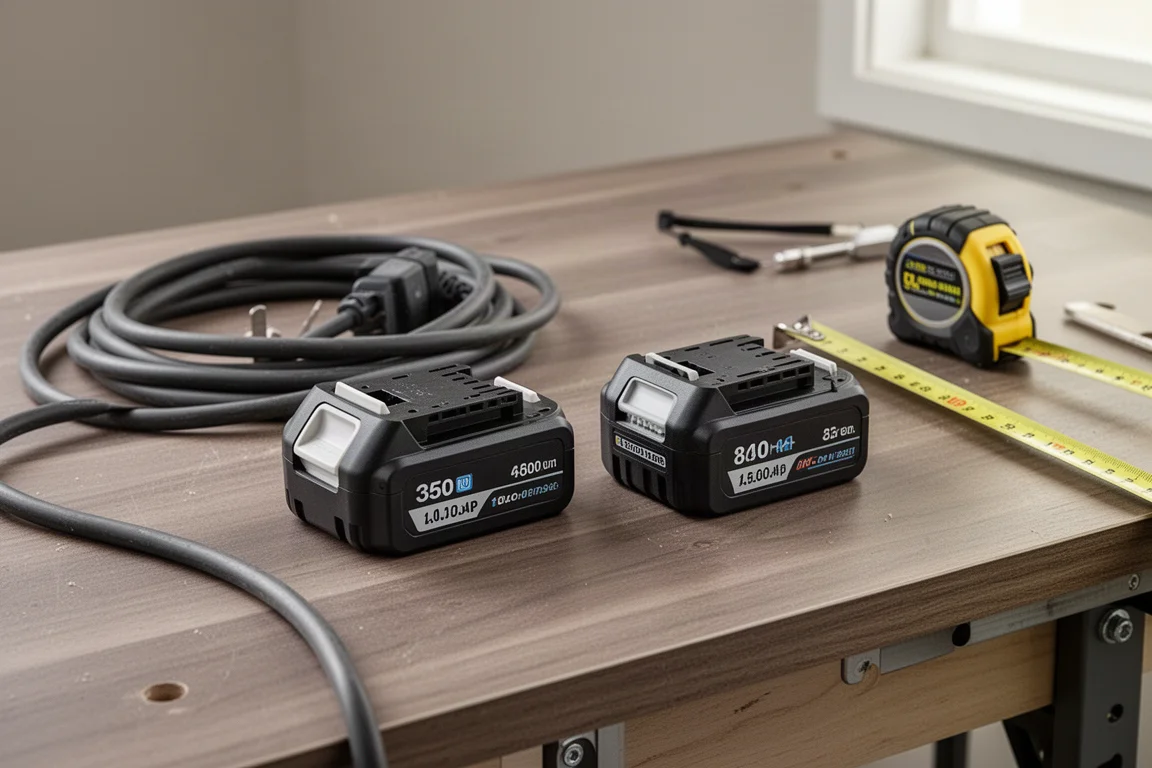
If raw power with a standard battery matters most, Milwaukee’s higher torque and slightly faster drilling speed with its 5Ah pack make it the natural pick, and its shorter head length is a real advantage in tight spaces. If you already own FlexVolt batteries or plan to use the 6Ah pack regularly, the DCD999’s dramatic performance uplift, especially the 36% speed gain in self-feed drilling and the concrete test win, makes a compelling case for DeWalt.
Conclusion
Milwaukee wins on torque, compactness, and weight, while DeWalt counters with a higher hammer rate, a faster top speed claim, and a FlexVolt battery system that transforms its performance when paired with the 6Ah pack. Both are excellent additions to a professional tool bag; the right choice depends on which battery ecosystem you are already invested in and how you plan to use the extra power.
Product link
View more details for DeWalt DCD999
This product is mentioned in the review. Check the specifications, options, and compatibility before buying.
View more details for DeWalt DCD999Further reading
Related Reviews
Power Tools
Best 1-Inch Pistol Impact Wrenches: Three Heavy-Duty Options Compared
We compare three 1-inch pistol impact wrenches, from a budget-friendly Harbor Freight model to a premium Caterpillar unit, to help you choose the right one.
Power Tools
Best 3/4-Inch Impact Wrenches 2026: Five Contenders Compared
We compare five 3/4-inch impact wrenches across price and performance, from a budget Amazon option to Snap-on's most powerful model yet.
Power Tools
Best Budget Cordless Tools 2026: Walmart Finds That Punch Above Their Price
We tested five cordless tools from Walmart, including a high-torque impact wrench that trades blows with Milwaukee and a $35 duster that outperforms its price class.