Power Tools
DeWalt DCD999 vs Milwaukee 2804: Hammer Drills Put on a Dyno
Two flagship hammer drills measured with a brake dyno and watt meter to settle advertised torque, real working power, and battery choice once and for all.

Introduction
Advertiser torque numbers for cordless drills have gotten so inflated that comparing brands from the spec sheet is nearly pointless. DeWalt quotes Unit Watts Out, Milwaukee quotes inch-pounds, and the two figures are impossible to line up directly. To settle it, we ran two flagship hammer drills through a homemade brake dyno and a watt measurement setup.
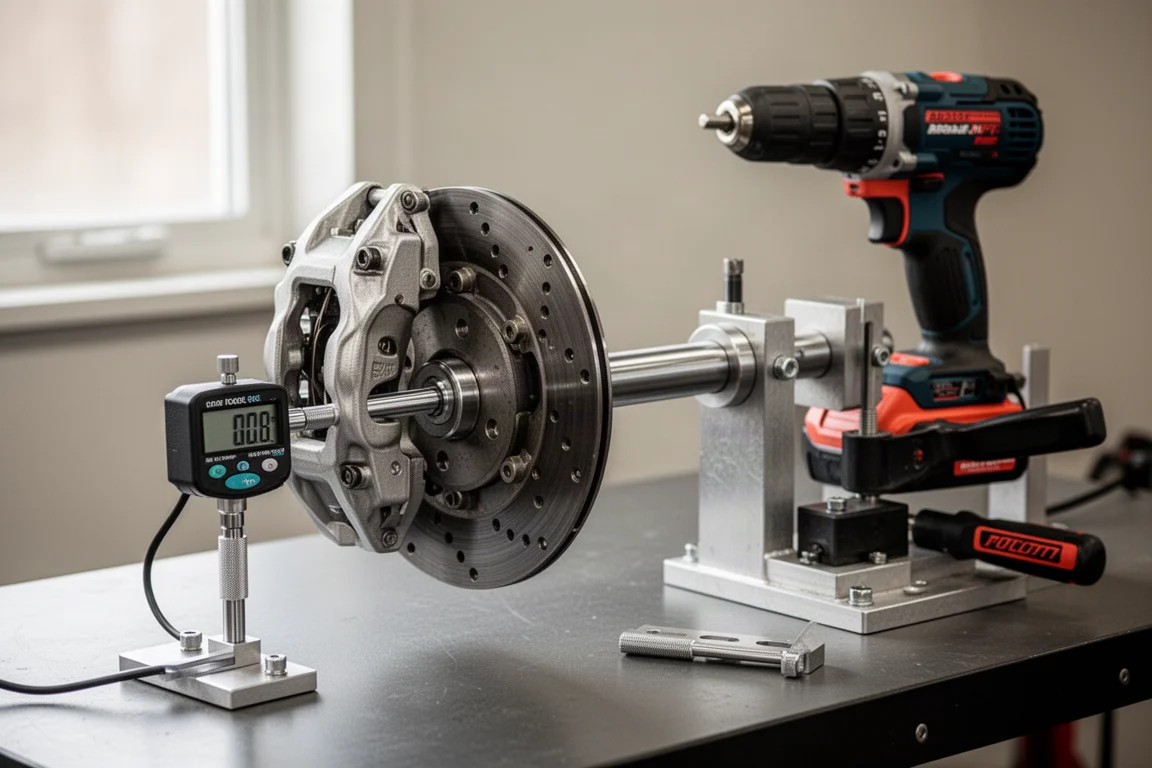
The setup is refreshingly old school: a motorcycle brake caliper and disc mounted on a precision ground shaft, with a force gauge positioned exactly 12 inches from the center axis so one pound of force equals one foot-pound. Brake pad condition and pressure turned out to be irrelevant to the reading, which made the rig repeatable to a remarkable degree. We tested both drills as they come in kits, ran multiple battery options on each, and measured working output in watts at both high and low gear.
The Spec Race Problem
Milwaukee’s 2804 is rated at 1,200 inch-pounds. That is 100 foot-pounds, or 136 newton meters, applied linearly all at once. Hold the tool four inches from the chuck axis, as your hand naturally does, and that becomes roughly 300 pounds working against your wrist. Most of us have stalled one of these drills with bare hands, and nobody was producing 300 pounds of elbow force when it happened. The dyno tells a very different story.
With the kit’s XC 5.0 battery in high gear, the Milwaukee managed 13.8 foot-pounds, or 167 inch-pounds. Swapping to an XC 6.0 High Output raised that to 17.55 foot-pounds, or 211 inch-pounds. In low gear, where the gearing favors torque, it reached 28.9 foot-pounds on the kit battery and a median of about 45.9 foot-pounds with the 6.0 High Output. That is 551 inch-pounds, still well short of the advertised 1,200, though undeniably a very powerful drill.
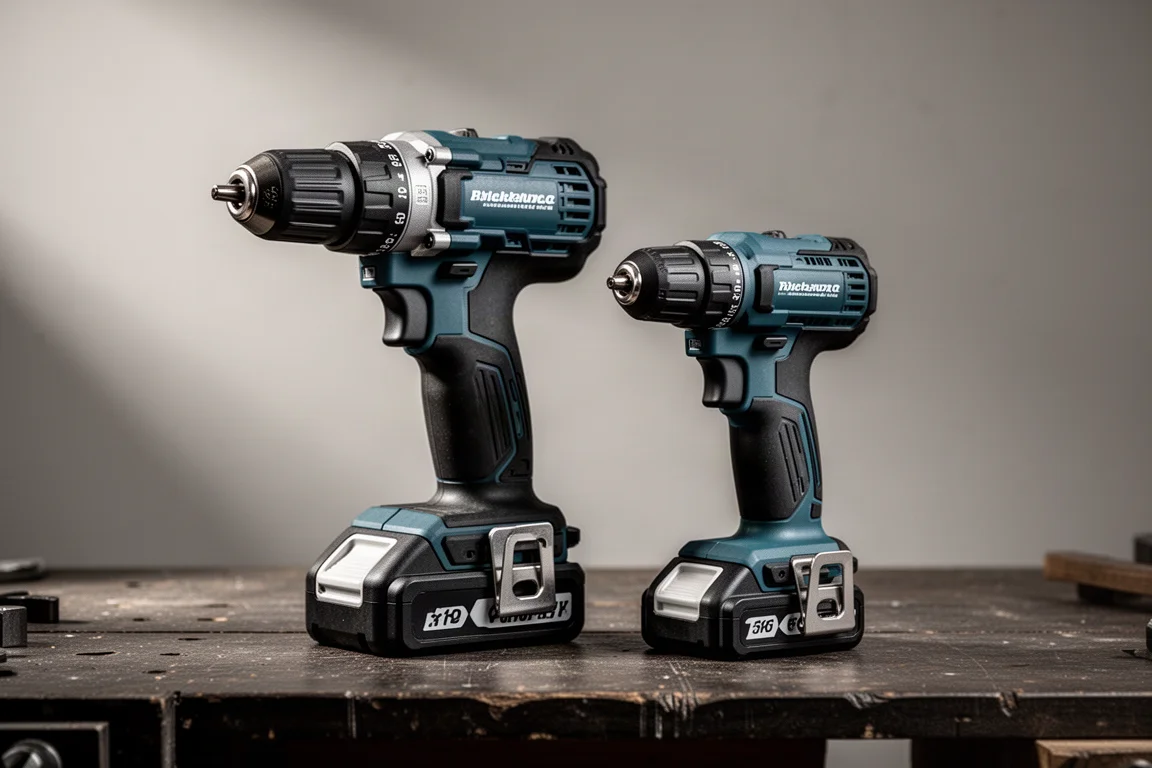
The DeWalt DCD999 FlexVolt Advantage is rated at 1,219 Unit Watts Out, DeWalt’s highest figure. It is a longer, heavier tool: 5 pounds 14.5 ounces as kitted versus 4 pounds 12 ounces for the Milwaukee. It also currently costs about 80 to 90 dollars more than the Milwaukee kit.
DeWalt DCD999 FlexVolt Advantage
The DCD999 lives up to its name in consistency but not always in the way the branding suggests. In high gear with the kit’s 6 amp hour FlexVolt battery it made 17.6 foot-pounds, just edging the Milwaukee’s kit figure. With a standard 5 amp hour XR battery it made 16.55, with the 5 amp hour PowerStack 17.1, and with a 6 amp hour XR a full 18.55 foot-pounds, slightly better than the FlexVolt pack it ships with. It is one of the few tools we have seen that is not fussy about battery type at all.
In low gear the kit battery produced 36 foot-pounds, the 6 amp hour XR 38.2, the 9 amp hour FlexVolt 38.1, and the PowerStack 37.75. Every configuration made more than the Milwaukee did from a longer, larger tool, and the DeWalt held its edge over the Milwaukee when both ran comparable 5 amp hour batteries.
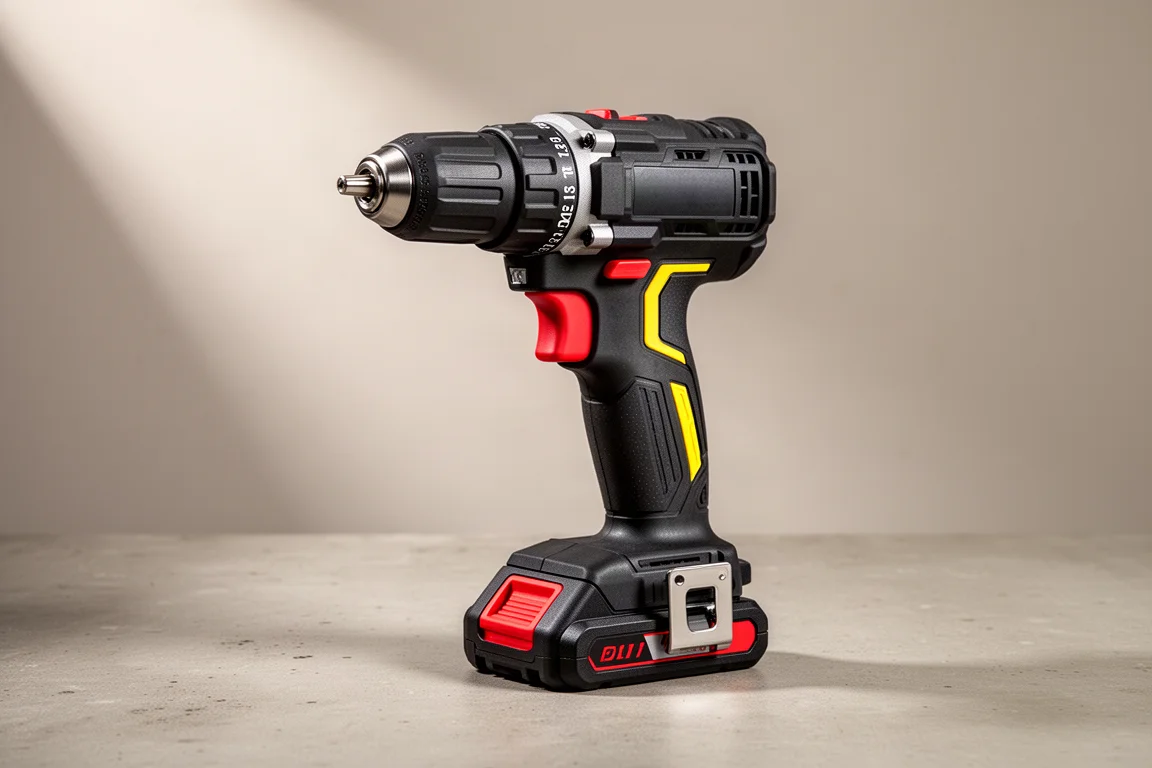
Milwaukee 2804 M18
Where the Milwaukee shines is low-RPM grunt, especially once you feed it High Output batteries it does not ship with. Its 45.9 foot-pounds peak with the 6.0 High Output beat everything the DeWalt produced, and it does this from a shorter tool. Scoring torque as a function of tool length, the Milwaukee scored 153.9 against the DeWalt’s 133.
In watts, the picture splits by gear. In low with a 5 amp hour battery both tools made essentially the same power, around 330 to 345 watts. With the 6 amp hour High Output the Milwaukee woke up dramatically, sustaining stable output in the 470 to 480 watt range and cutting out at 490 watts, while the DeWalt hovered around 460 to 470 with its best packs and reached 510 to 520 only with the 9 amp hour FlexVolt.
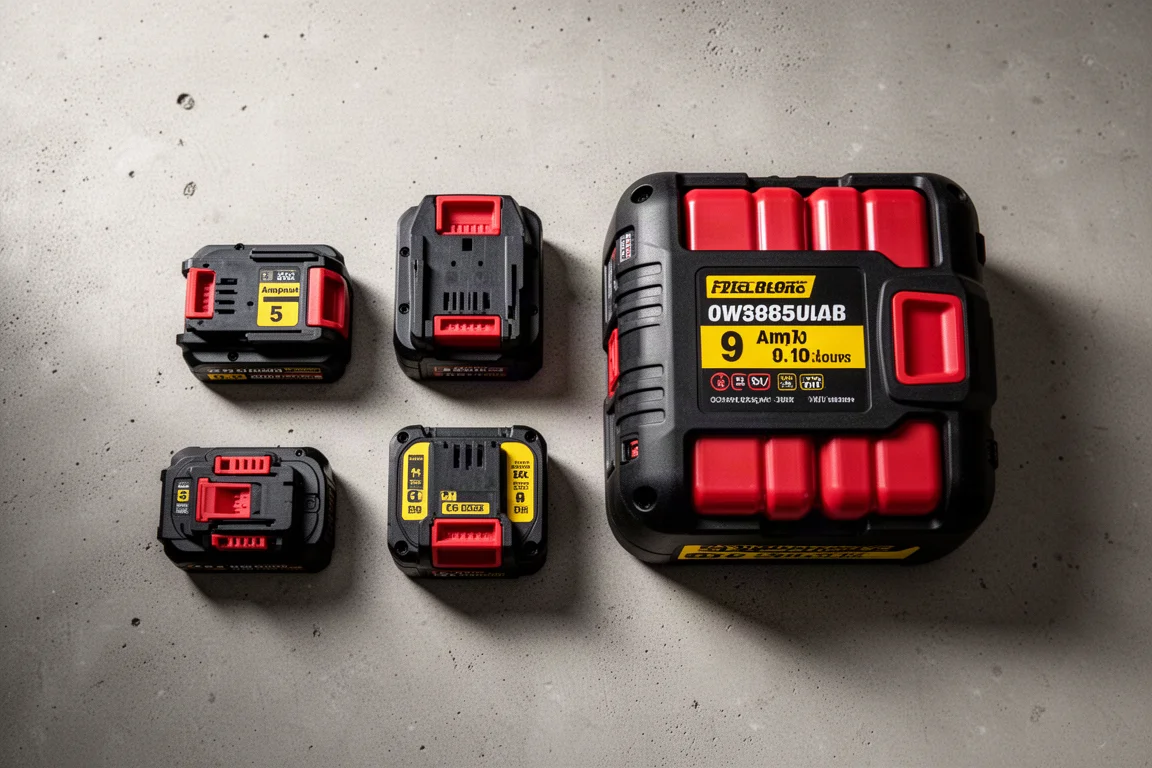
In high gear, the DeWalt’s home turf, it made 670 watts with the kit battery, 680 to 690 with a standard 6 amp hour XR, and a very comfortable 700 with the PowerStack. The Milwaukee managed 440 watts with the 5.0 and 640 with the 6.0 High Output. Scoring for performance and price, the Milwaukee’s cheaper kit helped it to 654.4 total points against 645.1 for the DeWalt.
Overall Buying Advice
The two drills are close enough that a sale on the DeWalt would likely flip the standings. In practical use, the Milwaukee tends to cut out more at high speed when drilling steel above 3/8 or 1/2 inch, which is where the DeWalt’s higher gearing and watt output earn their keep. For huge lag bolts and hole saws in low gear, especially with High Output batteries, the Milwaukee is the better pick.

One clear takeaway on batteries: the DeWalt’s results with a 6 amp hour XR essentially matched its 9 amp hour FlexVolt, so paying for FlexVolt branding on this particular tool buys less than the name implies. The Milwaukee, meanwhile, genuinely transforms with High Output packs, so budget for at least one even if the kit does not include it.
Conclusion
The Milwaukee 2804 takes the overall win on torque-to-size and value, while the DeWalt DCD999 dominates high-speed working power and delivers more consistent performance across battery types. Neither reaches its advertised torque figure, which is the real lesson: measure what a drill actually does, not what the box says.
Further reading
Related Reviews

Power Tools
Best 1-Inch Pistol Impact Wrenches: Three Heavy-Duty Options Compared
We compare three 1-inch pistol impact wrenches, from a budget-friendly Harbor Freight model to a premium Caterpillar unit, to help you choose the right one.

Power Tools
Best 3/4-Inch Impact Wrenches 2026: Five Contenders Compared
We compare five 3/4-inch impact wrenches across price and performance, from a budget Amazon option to Snap-on's most powerful model yet.

Power Tools
Best Budget Cordless Tools 2026: Walmart Finds That Punch Above Their Price
We tested five cordless tools from Walmart, including a high-torque impact wrench that trades blows with Milwaukee and a $35 duster that outperforms its price class.