Power Tools
DeWalt DCD1007 vs DCD999: Which Heavy-Duty Hammer Drill Deserves Your Money?
DeWalt's new DCD1007 brings anti-rotation safety, bigger airflow, and serious power gains over the DCD999, but only with the right battery. Here is how the two compare.
Introduction
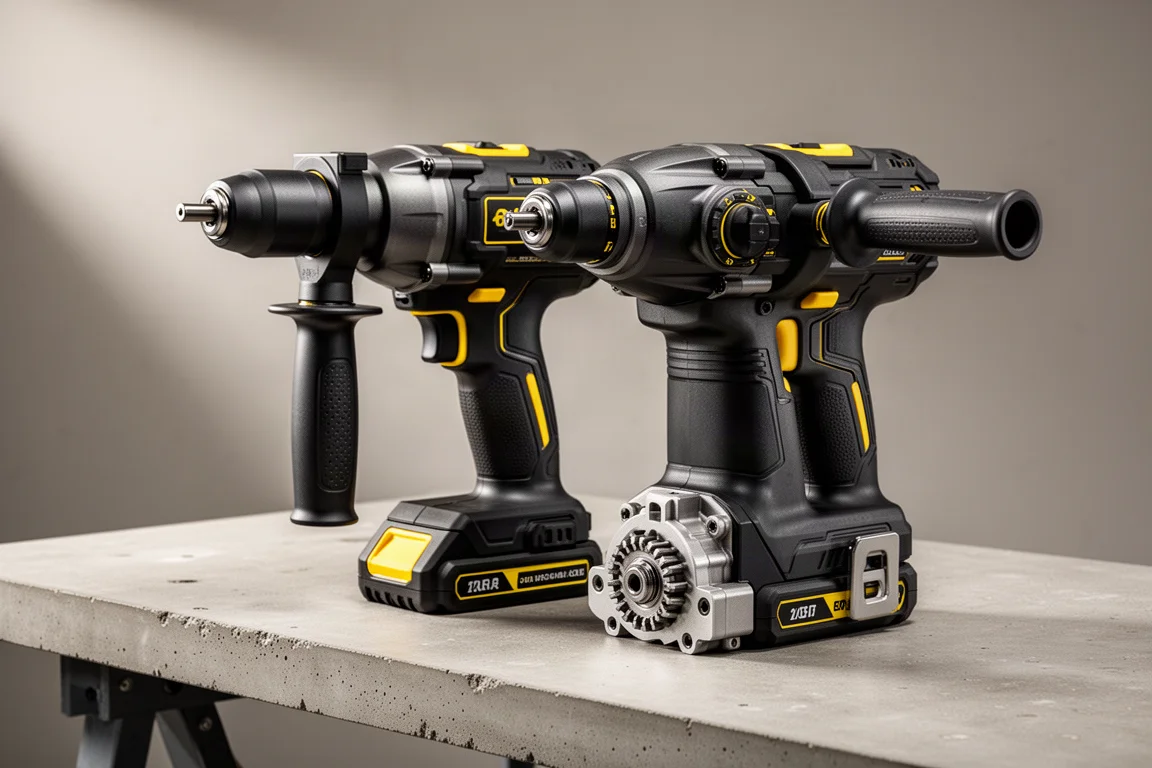
DeWalt’s DCD1007 and DCD999 are two heavy-duty 20V hammer drills that look remarkably similar at a glance, yet they are built for noticeably different levels of work. The newer DCD1007 positions itself as DeWalt’s most powerful battery-operated drill, while the DCD999 remains the established favorite for serious drilling tasks.
This comparison walks through the real differences: size and motor, drilling power with different batteries, safety features, clutch behavior, and heat management, so you can decide which drill fits your work.
DeWalt DCD1007: Bigger Body, Bigger Motor
At first glance the two drills look nearly identical, but the DCD1007 is much wider. It carries a significantly larger motor and metal gearbox in front, and it is beefier and thicker all the way around. Even the auxiliary handle is longer, and DeWalt regulates that handle length by power level, so a bigger handle hints at more output.
Both drills share familiar control layouts: hammer drill mode, normal drill mode, and clutch settings. Where the DCD1007 separates itself is in output. It adjusts its wattage depending on the battery, delivering up to 900 max watts out with a 5Ah battery and 1,530 watts with the 8Ah Power Pack battery. That difference is significant in real use, as the drilling tests below show.
DeWalt DCD999: The Proven Performer
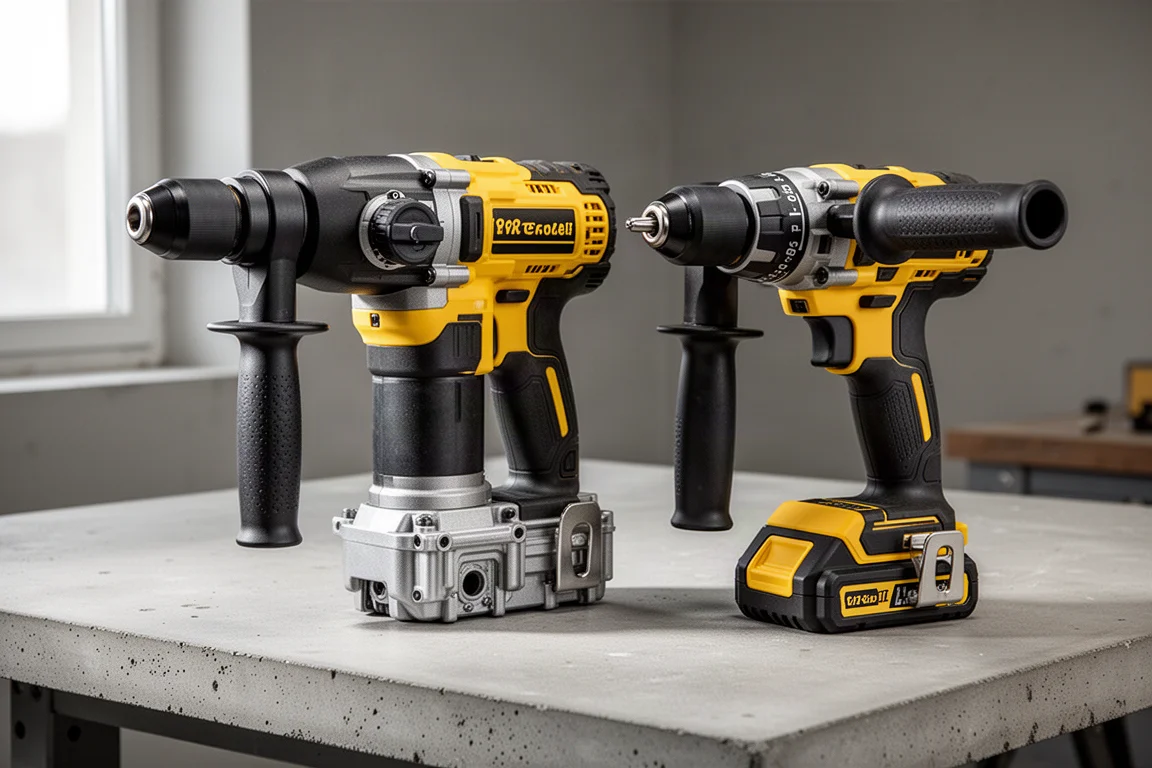
The DCD999 earned its reputation as an outrageous drill for heavy work, and it still holds up. In drilling tests with a 3-5/8 inch self-feed bit and the 8Ah Power Pack, it drove straight into the wood impressively before stopping between the boards, and it handled large holes without issue even at lower speed levels.
Its main gap against the newer model is power delivery with smaller batteries and the absence of the anti-rotation safety system. It also runs warm when pushed hard, though generous rear airflow helps manage the heat.
Drilling Power Test: Self-Feed Bits Through Lumber
Testing used a 2-9/16 inch self-feed bit through two screwed-together pieces of 2x6 dimensional lumber. With the 8Ah Power Pack on level three, the DCD1007 punched clean holes through both boards repeatedly, even pushing past knots. Switching to a 5Ah battery on the same level three produced a clear and significant power drop, and levels two and one showed the same pattern.
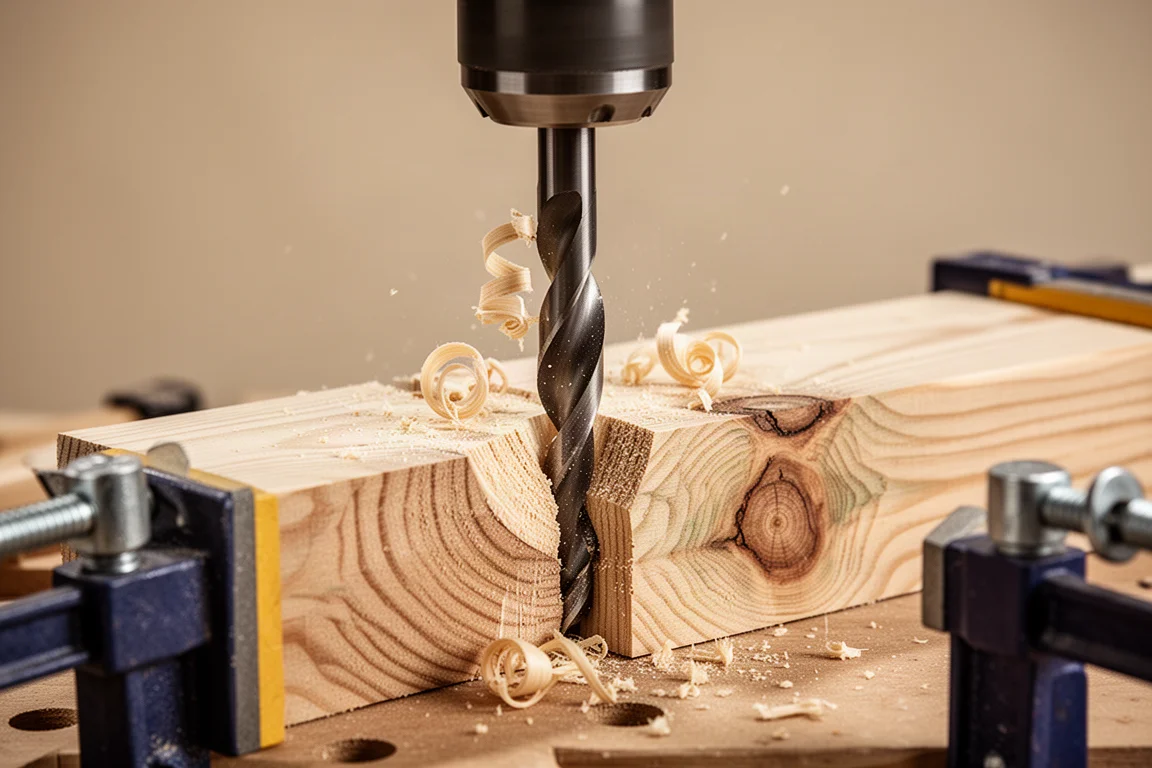
The DCD999 with the same 8Ah Power Pack on level three drove the bit impressively but did not finish the hole through both boards, even after dropping down levels. On the 3-5/8 inch bit, the DCD1007 completed the full hole, something even the newer drill could not always do against knotty, sappy wood.
The takeaway: battery choice matters enormously on these new drills. A 5Ah battery on a drill this size leaves a lot of power on the table.
Anti-Rotation Safety: The Feature That Changes the Job
The DCD1007 adds an anti-rotation mechanism, essentially a safety system that watches for the drill body twisting. If the bit grabs and the tool starts to rotate in a way that could send that force into your wrist, red indicator lights come on and the drill shuts off. To restart, you simply release the trigger and pull it again.
In testing, the system activated when it should, and it never triggered annoyingly during normal use with large bits. For anyone running big self-feed bits, or for contractors managing crews on job sites, this shutdown protection is a genuinely meaningful advantage over the DCD999.
Heat, Airflow, and Hammer Mode
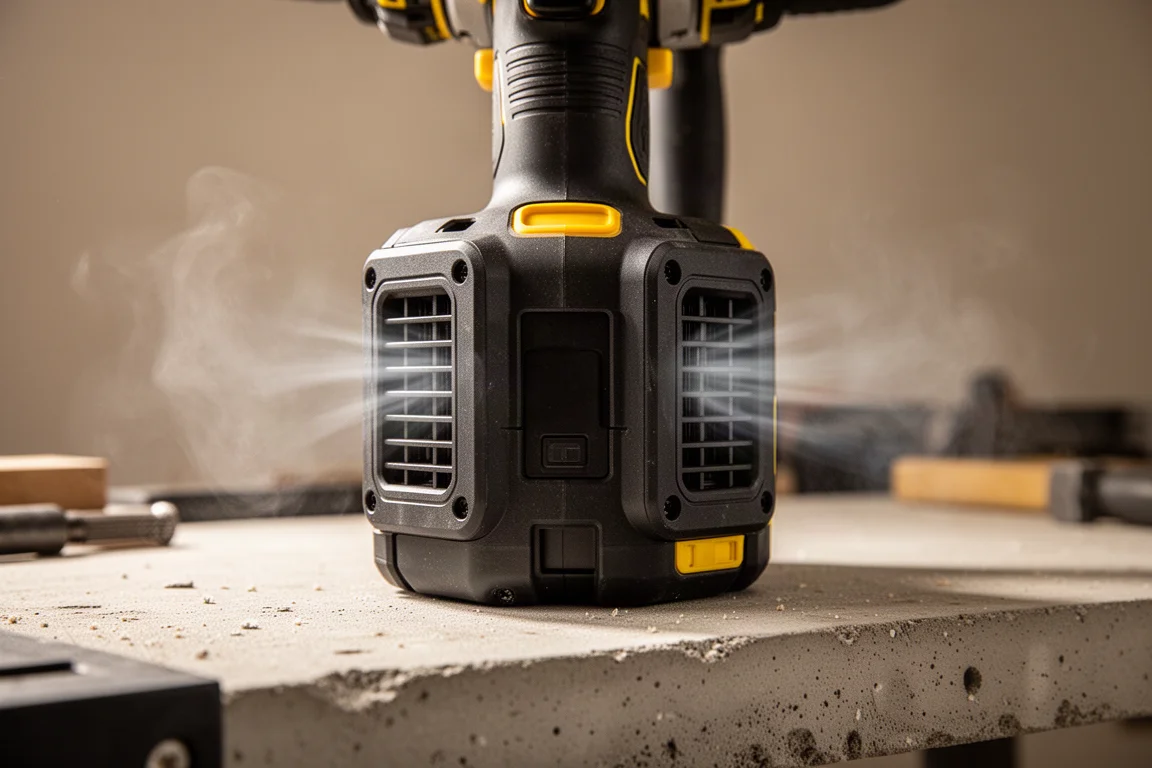
More power generates more heat, and the DCD999 already runs warm when pushed hard, with substantial airflow exiting the rear. DeWalt enlarged the airflow vents on each side of the DCD1007 to help keep it cool under sustained load.
In hammer mode with a 3/8 inch masonry bit and the 8Ah Power Pack on level three, the DCD1007 runs at 38,250 BPM. It is quick, does good work, and carries the characteristic noise level of other DeWalt hammer drills.
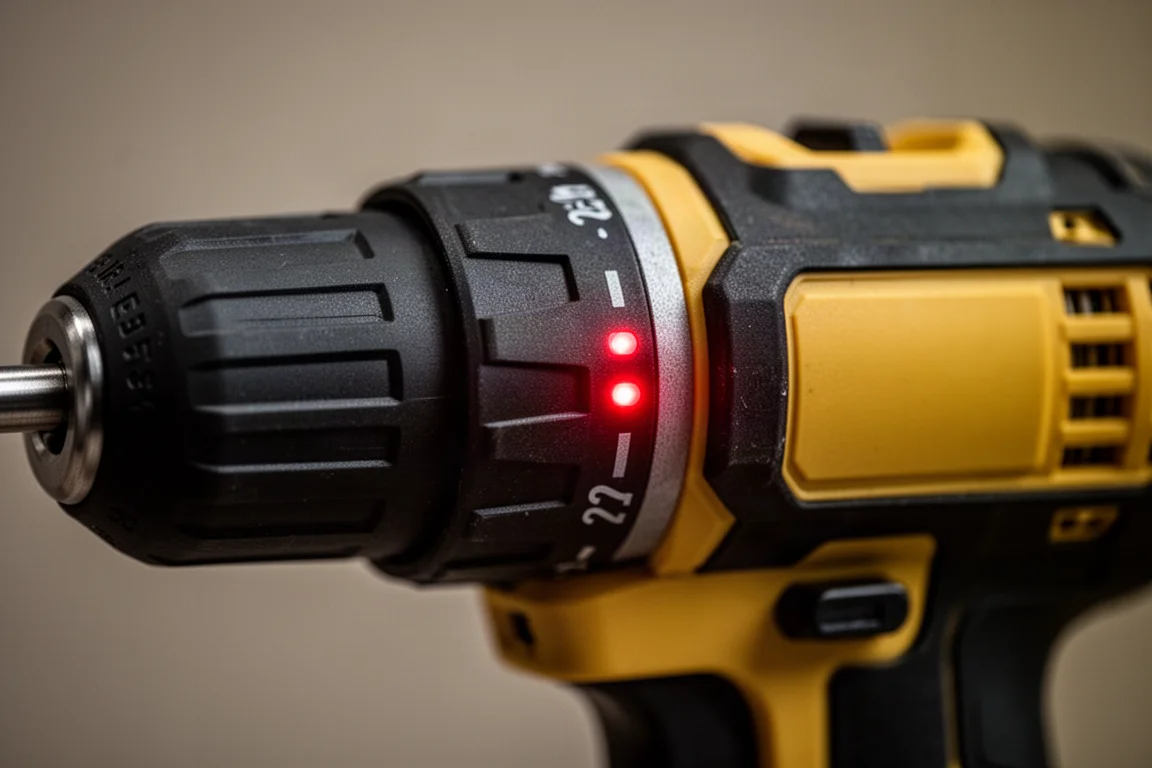
The DCD1007’s electronic clutch is also worth a look. It gives a distinct click at each setting, increments about a sixteenth of a turn per trigger pull at mid levels, and ramps up smoothly from a slow start at level one. If you prefer fully mechanical tools it may take some adjusting, but for a drill this large it is an interesting, controllable system.
Which One Should You Buy?
If you need maximum drilling power, the DCD1007 is the clear pick. DeWalt claims it is the most powerful battery-operated drill in their arsenal, and it ranks near the very top of all battery-powered drills available today. Buy it bundled with the 8Ah Power Pack battery (the WW1 kit), because the drill’s performance depends heavily on that battery. If you already own FlexVolt batteries, the 9Ah and 12Ah FlexVolt packs delivered similar power in prior testing, just in a heavier and larger package.
If you do not need the extra torque, or you are wary of the larger, rounder body, the DCD999 remains a very impressive drill at a lower entry cost. But if you run big bits, value the anti-rotation safety, or want headroom for the toughest holes, the DCD1007 is well worth the upgrade.
Conclusion
The DCD1007 is a genuine step forward: more power, better cooling, a smarter clutch, and a safety system that protects your wrist when bits bind. The DCD999 is still excellent, but bigger motors and more powerful batteries are taking over, and that technology costs more. Match the drill to the battery you will actually use, and either choice will serve you well.
Further reading
Related Reviews
Power Tools
Best 1-Inch Pistol Impact Wrenches: Three Heavy-Duty Options Compared
We compare three 1-inch pistol impact wrenches, from a budget-friendly Harbor Freight model to a premium Caterpillar unit, to help you choose the right one.
Power Tools
Best 3/4-Inch Impact Wrenches 2026: Five Contenders Compared
We compare five 3/4-inch impact wrenches across price and performance, from a budget Amazon option to Snap-on's most powerful model yet.
Power Tools
Best Budget Cordless Tools 2026: Walmart Finds That Punch Above Their Price
We tested five cordless tools from Walmart, including a high-torque impact wrench that trades blows with Milwaukee and a $35 duster that outperforms its price class.