Power Tools
DeWalt DCB615 Review: A 15Ah Battery Behemoth for High-Drain Tools
The DCB615 is the largest handheld tool battery you can buy right now. We look at what its 15 amp hours of runtime mean for demanding tools, and where it falls short.
Introduction
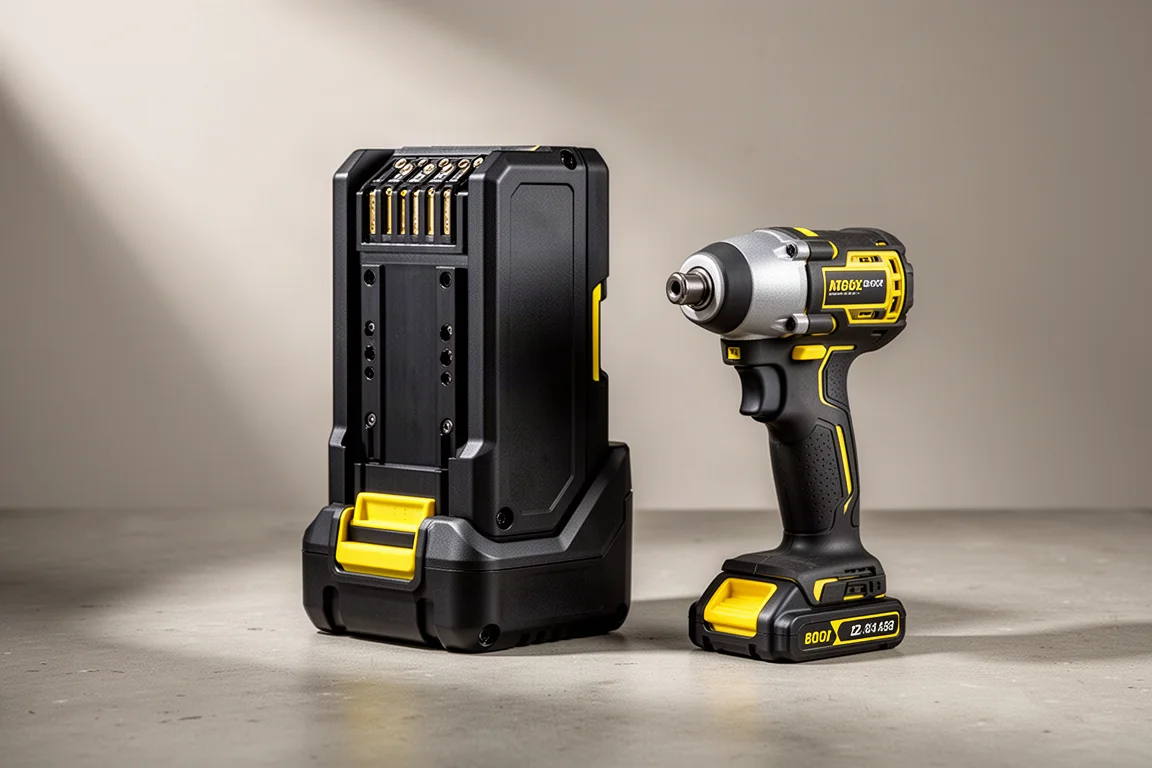
Big battery capacity has quietly become the new battleground for major tool brands, and DeWalt’s latest entry in that fight is the DCB615. At 15 amp hours and 270 watt hours, it is the largest capacity handheld tool battery on the market right now, and it carries a price to match. The obvious question is whether strapping a battery this big to everyday tools makes any sense at all, or whether it only earns its keep on the brand’s 60 volt and 120 volt machines.
What the DCB615 Is
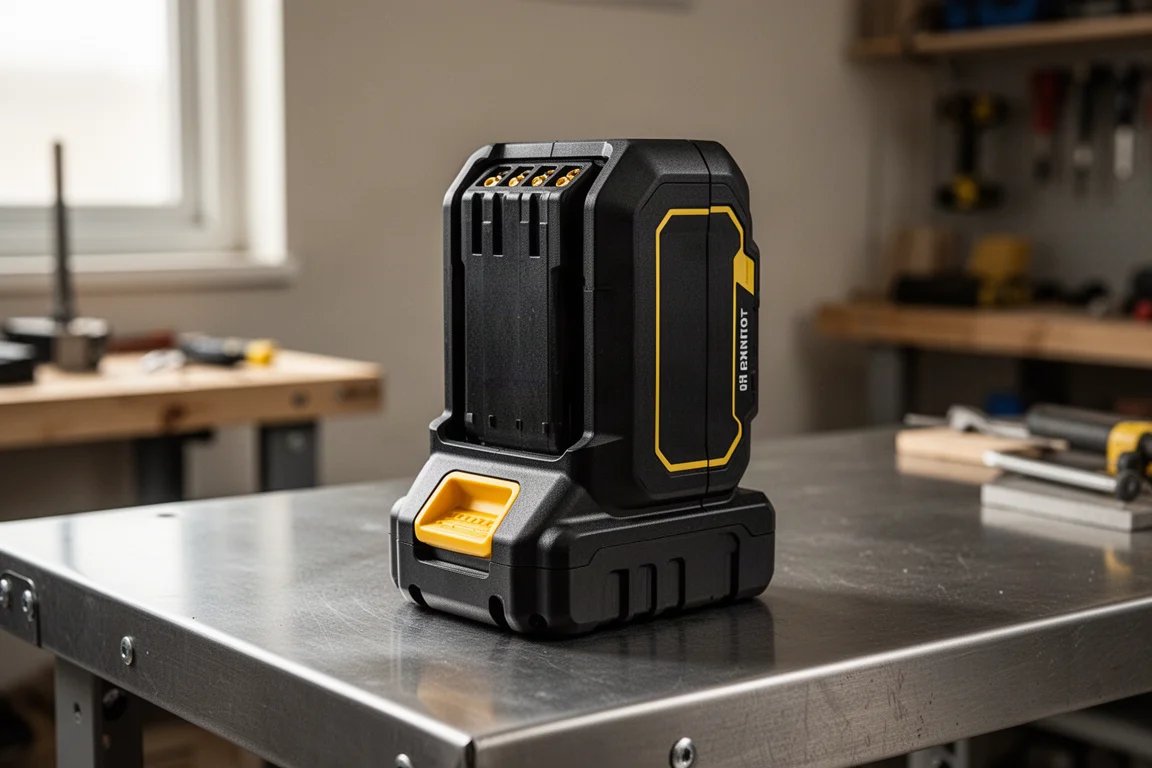
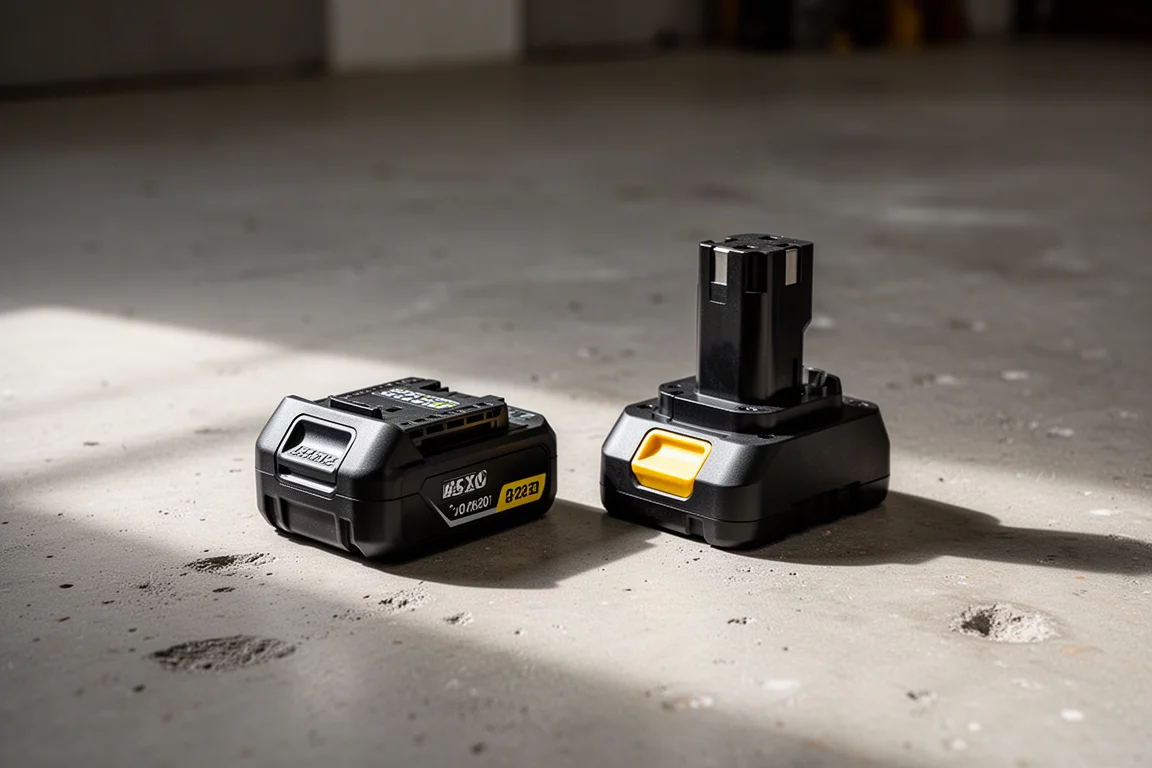
The DCB615 is a 15 amp hour, 270 watt hour battery that DeWalt recently started shipping, listed at $350. That is a serious amount of money, more than many bare tools cost, but the pack is not aimed at small drills and drivers. DeWalt’s 60 volt and 120 volt tool lines benefit enormously from increased runtime in this category, assuming the pack fits the storage compartments of the tools in question. Runtime is clearly the focus here.
Compared with other high-capacity packs, the DCB615 is noticeably larger than Milwaukee’s HD 12.0. It will only soon be edged out slightly by Makita’s new XGT 8.0, which works out to roughly 288 watt hours at 36 or 40 volts max. And when used in tandem, as on an 80 volt tool, the combined capacity actually exceeds what Milwaukee’s MX battery line offers. This is, quite literally, the biggest battery of its type you can buy today.
What’s Inside the Pack
Opening the DCB615 requires T10 tamper-proof Torx bits and a long screwdriver. Inside, the pack is essentially an ocean of cells: 30 of them, all standard 18650 size. That is a mild disappointment given the price. DeWalt’s 9 amp hour FlexVolt pack uses larger 21700 cells with higher discharge rates, and the DCB615 does not follow suit.
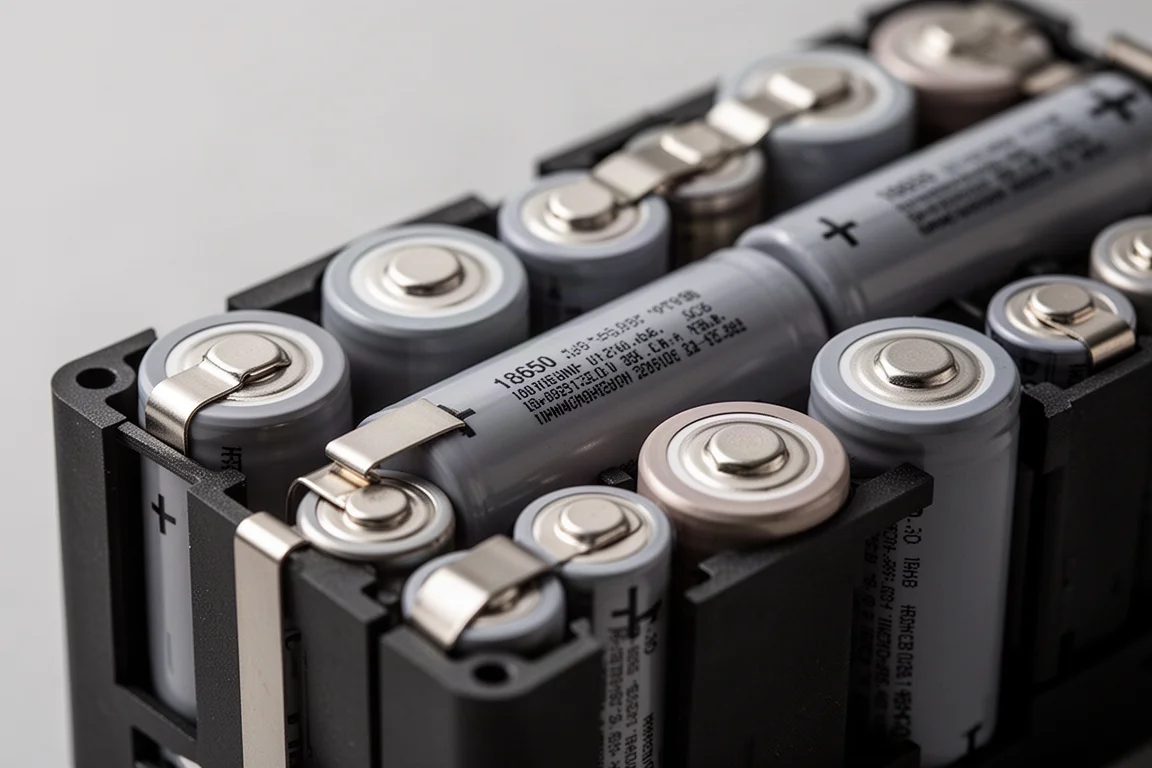
That said, extra rows of 18650s in configurations like 2P instead of 3P can sometimes make up for lower individual cell discharge. More cells in series versus parallel means less voltage sag during a high-draw run, and that turns out to matter more than you might expect.
How It Performs Under Load
To see what the extra capacity actually delivers, the DCB615 was strapped to a range of impact wrenches, starting with a compact 9/16 impact that produced impressive results even on a 5 amp hour pack. The 15 amp hour pack added some gains, but that tool probably never asks for more current than a 5 amp hour pack can deliver anyway, so the improvement was surprising rather than revelatory.
The more interesting test came with a high torque impact wrench. On a 5 amp hour pack, it peaked at 629 foot pounds. A competitor’s 6 amp hour 21700-cell pack pushed the same class of tool to 662 and 696 foot pounds, setting a tough bar. The DCB615, despite carrying more than double the capacity with smaller cells, reached 742 foot pounds. That is a meaningful gain, and the likely reason is voltage maintenance: with such a massive army of 18650s on board, the pack resists the voltage drop you would normally see when things get really tight. Discharge rate does not appear to be the bottleneck for a tool like this; holding voltage may be the bigger benefit.
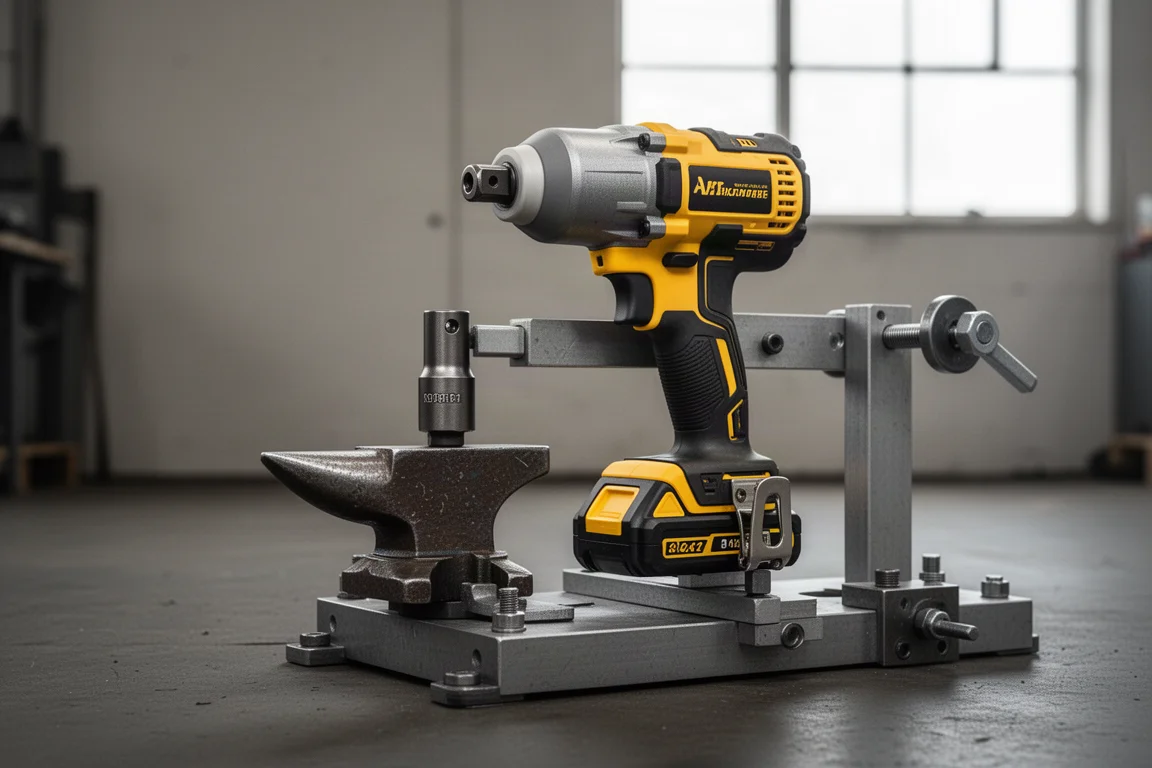
One caveat: results with this pack were somewhat erratic run to run, hitting as low as 716 foot pounds at times, and repeating the 742 figure was not consistently possible. Between 716 and 742 is probably the realistic range for this configuration. Notably, the gain was larger than what a 12 amp hour high output pack delivered on a competing high torque wrench.
Things to Consider Before Buying
The first trade-off is weight and balance. With a battery this large, high torque tools become more of a handful. A wrench that previously earned a wrist-breaking score of 6.0 climbs to a solid 7.5 with the DCB615 attached, though for different reasons: the pack creates pushback on the user, similar to a Makita half-inch impact. Contrary to what you might assume, the heavier battery does not dampen recoil; if anything, it adds a new imbalance that makes things worse.
On compact tools, the story is even less flattering. On a miniature impact, the pack is so heavy relative to the tool and so long out front that you are more likely to bump the battery into the workpiece before reaching it with a socket. Deep sockets help, but the ergonomics are undeniably awkward.
Buying Advice
Buy the DCB615 if your work genuinely involves DeWalt’s 60 volt or 120 volt tool lineup and runtime is the pain point, or if you want maximum sustained output from high-torque tools where voltage sag is the limiting factor. Skip it if you mostly run compact impacts and drivers: the price, the weight, and the front-heavy bulk buy you little on tools that never demand that much current. As a complement to an existing DeWalt battery collection, it is a legitimate advantage over brands with thinner battery offerings; as a casual upgrade, it is hard to justify at $350.
Conclusion
The DCB615 is an impressive, slightly absurd piece of engineering: the largest handheld tool battery on the market, built from familiar 18650 cells but arranged to hold voltage under punishing loads. It rewards owners of DeWalt’s big-platform tools with real runtime and measurable power gains, and it punishes anyone hoping to bolt it onto compact tools for a quick boost. If your tool lineup already runs yellow and leans toward the heavy end, it is a worthwhile brick. Everyone else can happily wait.
Product link
View more details for DeWalt DCB615
This product is mentioned in the review. Check the specifications, options, and compatibility before buying.
View more details for DeWalt DCB615Further reading
Related Reviews
Power Tools
Best 1-Inch Pistol Impact Wrenches: Three Heavy-Duty Options Compared
We compare three 1-inch pistol impact wrenches, from a budget-friendly Harbor Freight model to a premium Caterpillar unit, to help you choose the right one.
Power Tools
Best 3/4-Inch Impact Wrenches 2026: Five Contenders Compared
We compare five 3/4-inch impact wrenches across price and performance, from a budget Amazon option to Snap-on's most powerful model yet.
Power Tools
Best Budget Cordless Tools 2026: Walmart Finds That Punch Above Their Price
We tested five cordless tools from Walmart, including a high-torque impact wrench that trades blows with Milwaukee and a $35 duster that outperforms its price class.