Power Tools
DeWalt Compact Table Saws Compared: FlexVolt 60V Cordless vs 15-Amp Corded
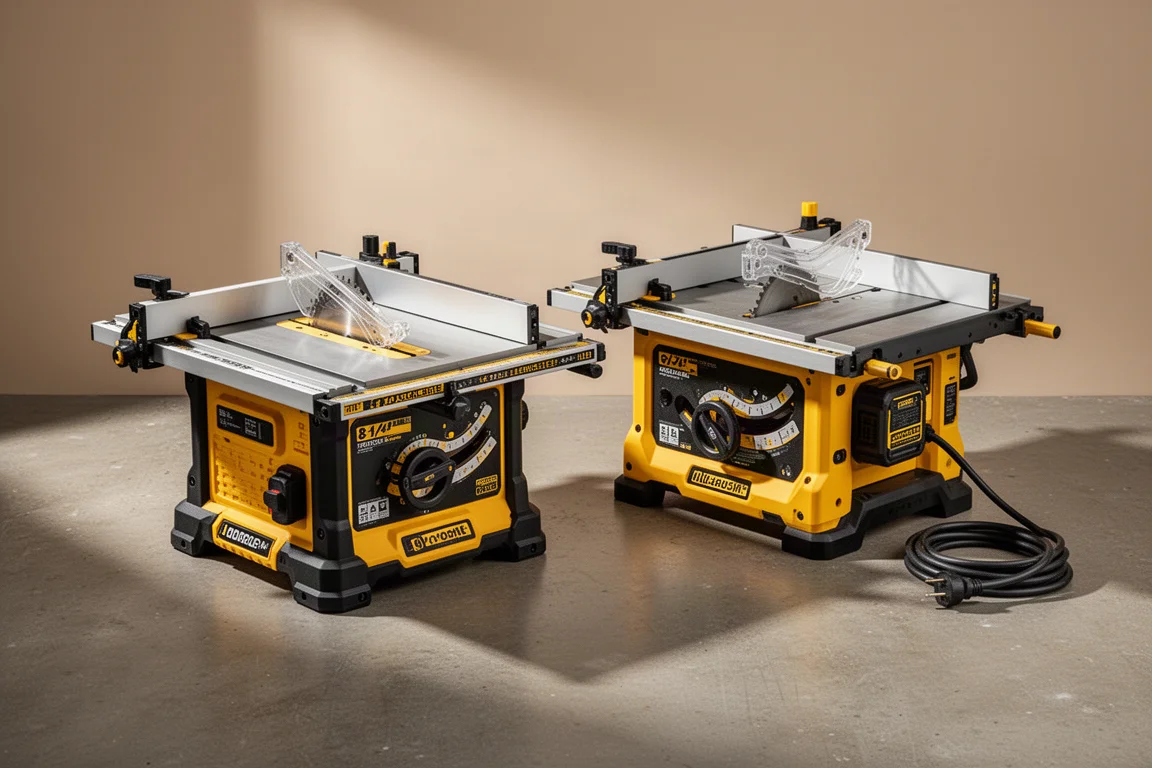
Two DeWalt 8-1/4 inch compact table saws share the same table, rip capacity, and accessories. Here is how the cordless FlexVolt and corded models differ in real use.
Introduction
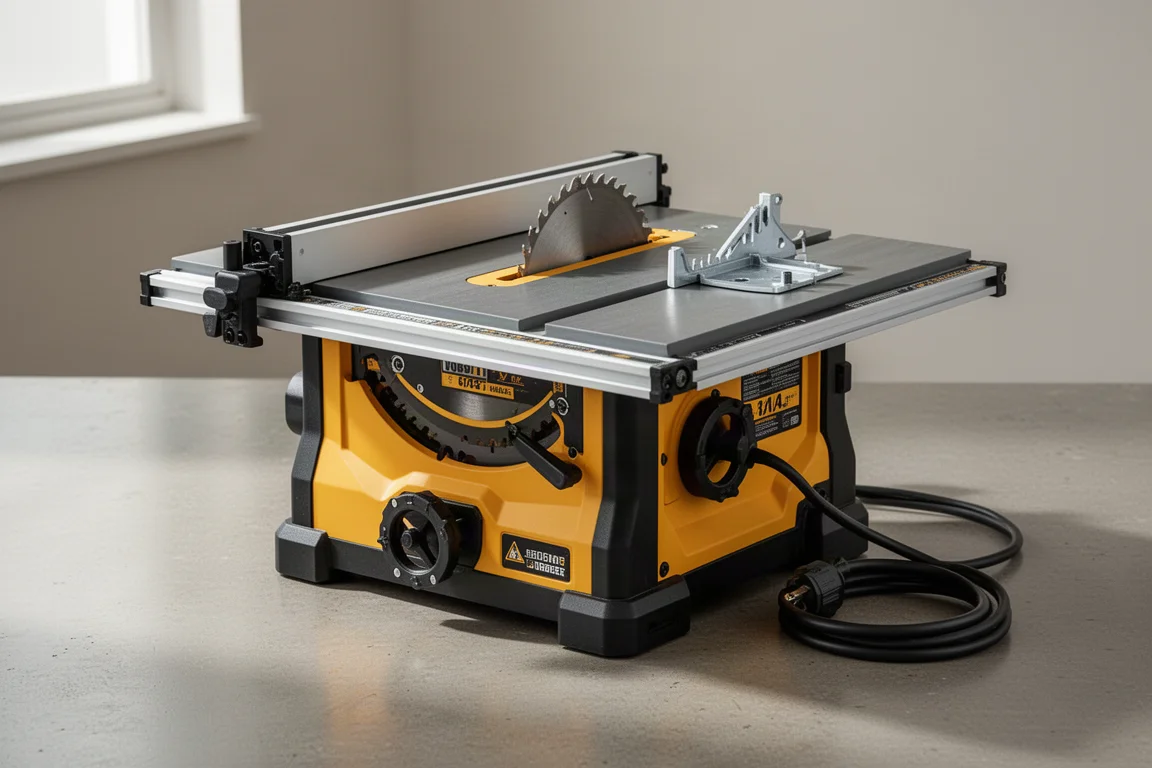
DeWalt’s compact 8-1/4 inch table saws come in two flavors: the FlexVolt 60V cordless DCS7485 and the 15-amp corded DWE745. Both are aimed at the same buyer: someone who wants accurate, straight cuts on a jobsite or in a small shop without dedicating the floor space a full-size cabinet saw demands.
These two saws are more alike than different, so the real question is not which one cuts better, but whether you value the freedom of a battery or the unlimited runtime of a cord.
Shared Design: What Both Saws Have in Common
Both saws use an 8-1/4 inch blade spinning at a no-load speed of 5,800 RPM. The FlexVolt model is brushless while the corded is not, and they share identical table and frame dimensions, a 24-inch rip capacity, and the same included accessories.

In the box you get a rip fence with an onboard push stick, a miter gauge, blade change wrenches, and a pair of anti-kickback pawls that attach to the blade guard assembly, which stores on the side of the saw. The blade guard has its own dust port that can be used in addition to the 2-1/2 inch dust port at the rear.
Bevel range runs from -2 to +48 degrees on both saws. Maximum straight cut depth is 2-1/2 inches, dropping to 1-3/4 inches at 45 degrees. Both use a 5/8 inch arbor that is too short for a dado stack, so cutting dados, rabbets, and grooves takes more work on either machine. Each ships with a 24-tooth thin kerf carbide blade and a riving knife pre-installed, and swapping the riving knife for the blade guard is a simple push-and-spin lock knob operation.
One caveat worth knowing: an example of the corded saw arrived with the 90-degree stop off by about a degree, fixed easily with the 90-degree adjustment screw. There is a 45-degree adjustment screw as well, and an adjustable bracket under the table realigns the blade with the miter slot.
Weight and Build Differences
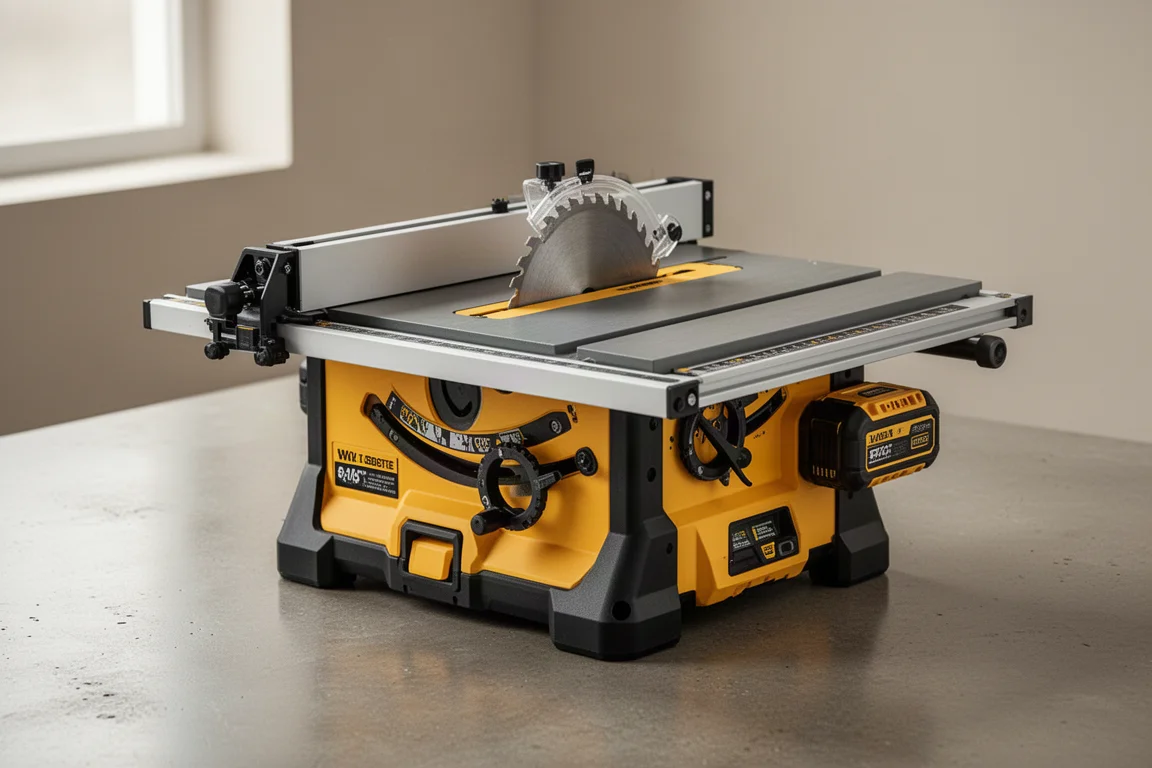
With the blade and all accessories on board, the cordless weighs 46.2 pounds without a battery, while the corded weighs 48 pounds. Under the table, the corded motor is noticeably larger than the FlexVolt motor, and the 6-foot cord adds a bit more bulk.
Another small difference sits in the miter gauge. The corded model includes a metal miter gauge that is half a pound heavier than the plastic one on the cordless. The metal gauge is easier to read and has through-holes for attaching a miter fence, which the plastic version does not. The cordless, meanwhile, benefits from DeWalt’s brushless motor design.
The Rip Fence and Adjustments
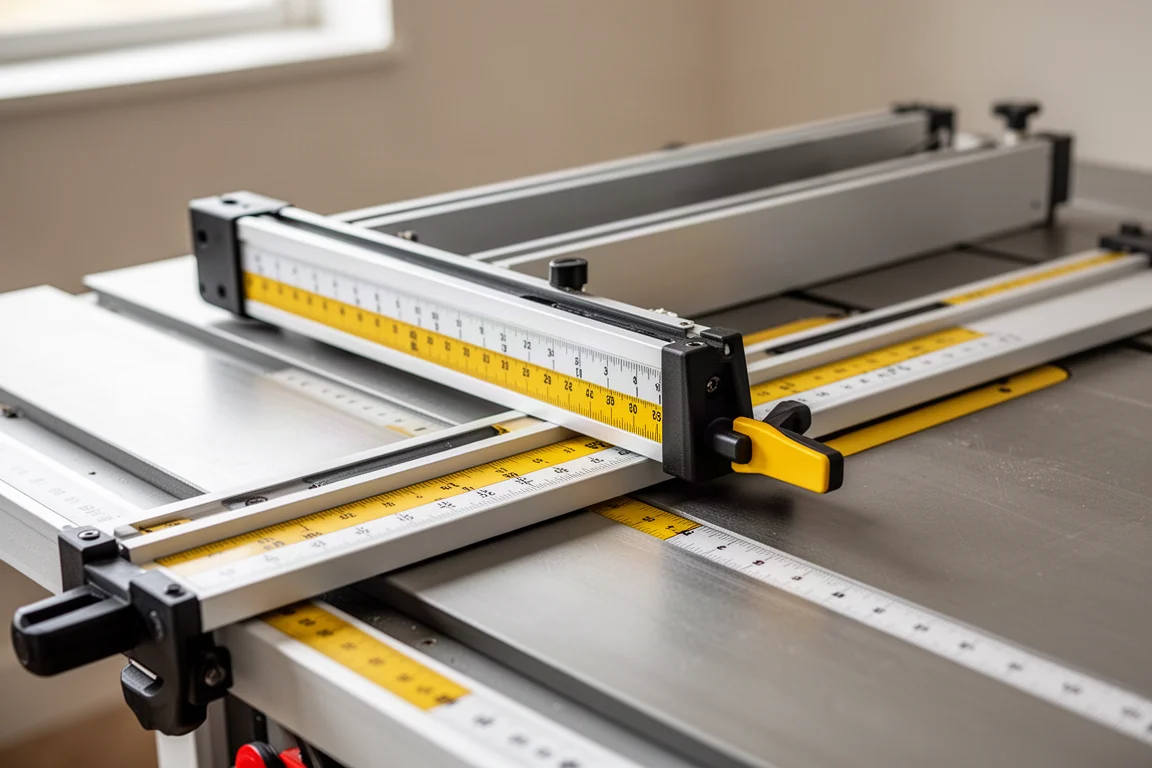
The sliding rip fence offers two pin settings. Undo the rail lock, and the front pin setting brings the fence close in to the blade, corresponding to the yellow ruler. The rear pin setting extends out to the full 24-inch capacity on the white ruler. There is also a lower deck setting for work extension and an upper deck setting that positions the fence close in for use with the blade guard assembly.
A fine adjustment knob lets you dial in the final measurement. Both saws also include a riving knife with its own adjustment screws, and long-term ownership of the cordless model showed it held its factory adjustment for three years with only the riving knife needing a touch-up.
Stand Options: Rolling vs Scissor
DeWalt offers a couple of good stand options for these saws. The rolling stand (model DW7440RS) is nice but bulky, which can be a problem if you need to fit it in a truck cab alongside other tools.
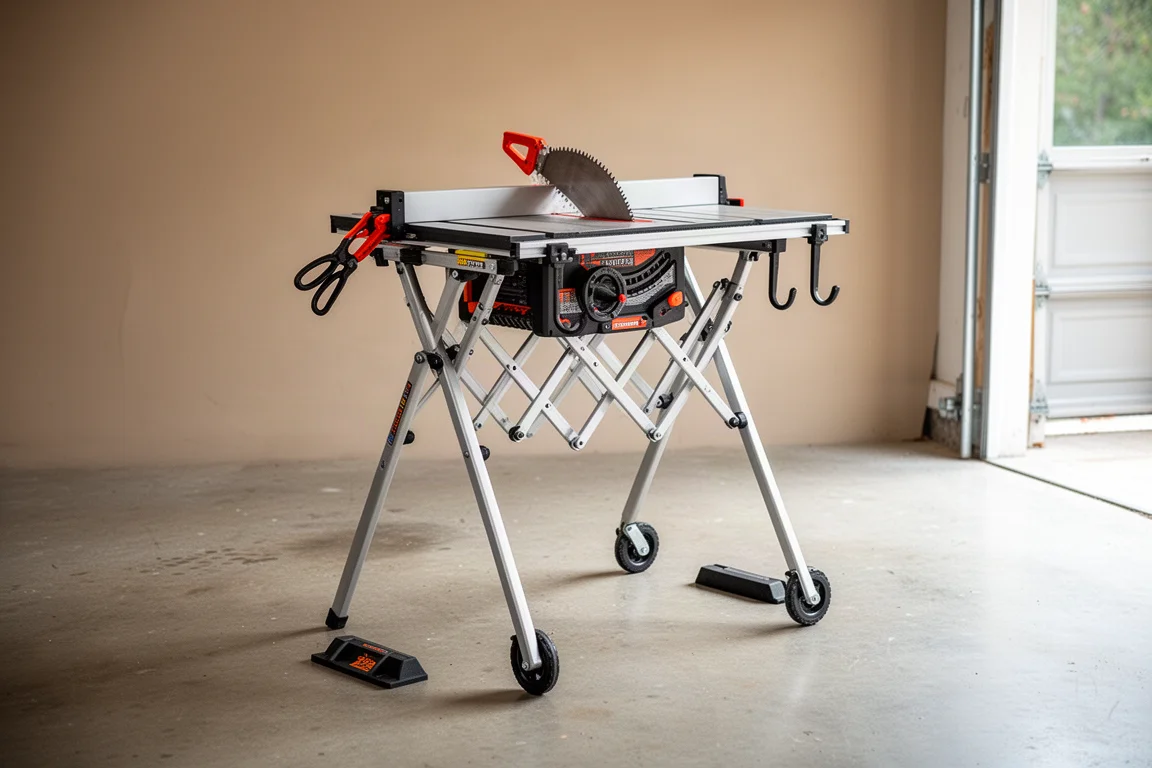
The scissor stand (model DW7451) is the more compact choice, and it is stable thanks to longer front legs that keep the stand from tilting forward. A hook keeps the saw from pushing forward and a ramp keeps it from pulling back, while stops keep the feet from sliding. If that is not enough, it includes nuts, bolts, and mounting holes so you can bolt the whole assembly together.
Cutting Performance and Battery Life
After making several cuts with each saw, the power output feels pretty even between the two. The more interesting number is runtime: with a fully charged 9Ah battery, the FlexVolt delivered 14 rips through a 2x4 by 8-foot piece of Douglas fir before the saw slowed down. A second fully charged 9Ah battery managed 12 rips before the same slowdown point.
DeWalt recommends not pushing these batteries past the slowdown point in order to extend rechargeable lifespan, so the practical runtime is right around those figures. For cordless users, that makes the DCS7485 a fully capable frame-to-finish saw.
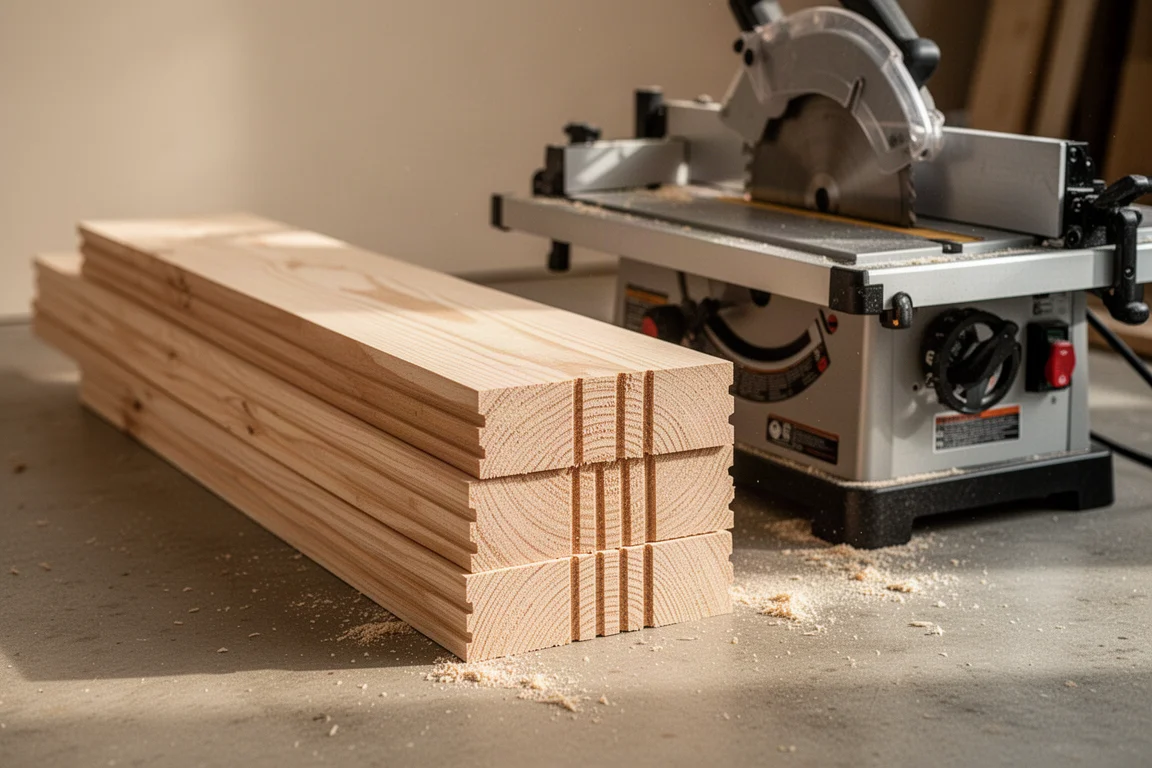
The smaller corded motor is a lot more compact under the table, but neither saw left anything to want in straight, accurate cutting. With a small table and fence, both still produce clean, precise results.
Buying Advice
Choose the FlexVolt DCS7485 if you already run DeWalt FlexVolt batteries, work where power is inconvenient, or simply value portability, knowing you will get roughly a dozen rips per 9Ah charge. Choose the DWE745 if unlimited runtime matters more than battery freedom, and take advantage of the heavier metal miter gauge with its miter-fence mounting holes.
One practical tip that applies to either model: check that the rip fence slides smoothly out of the box. A fence that binds could indicate a slightly longer fence beam, and exchanging the saw for one with a smooth-sliding fence is a reasonable move.
Conclusion
Both of these compact DeWalt saws deliver high build quality, easy adjustments, and straight accurate cuts in a genuinely portable package. The corded DWE745 edges ahead on runtime and includes the nicer miter gauge, while the cordless DCS7485 wins on freedom from outlets with fully capable battery life. Either one is a solid pick for a small shop or jobsite.
Further reading
Related Reviews
Power Tools
Best 1-Inch Pistol Impact Wrenches: Three Heavy-Duty Options Compared
We compare three 1-inch pistol impact wrenches, from a budget-friendly Harbor Freight model to a premium Caterpillar unit, to help you choose the right one.
Power Tools
Best 3/4-Inch Impact Wrenches 2026: Five Contenders Compared
We compare five 3/4-inch impact wrenches across price and performance, from a budget Amazon option to Snap-on's most powerful model yet.
Power Tools
Best Budget Cordless Tools 2026: Walmart Finds That Punch Above Their Price
We tested five cordless tools from Walmart, including a high-torque impact wrench that trades blows with Milwaukee and a $35 duster that outperforms its price class.