Power Tools
DeWalt Battery Test: Which Battery Holds Voltage Best Under Load
A large-hole drilling test from the 2Ah compact up to the FlexVolt 9Ah reveals how each DeWalt battery holds voltage under load, and which packs make the most sense for a drill.
Introduction
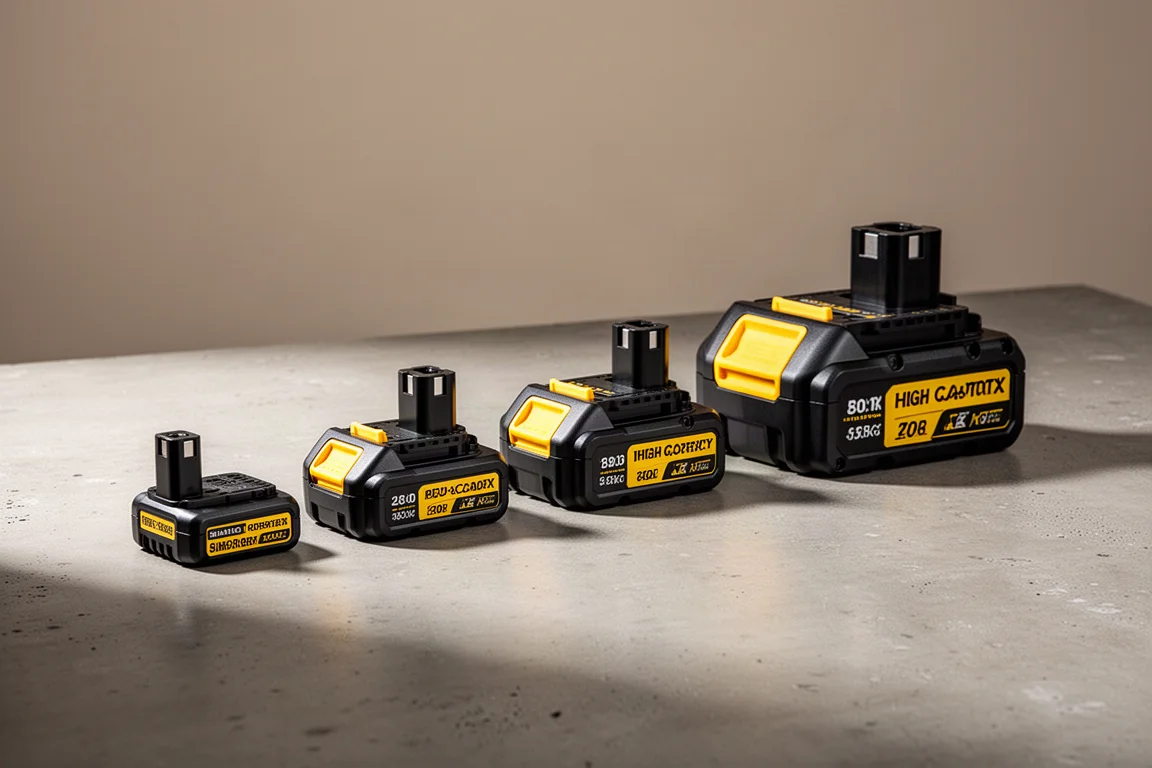
Battery choice matters more than most people think, especially when a drill is asked to push a large bit through dense wood. In this comparison, eight DeWalt battery packs, from the slim compact 2Ah all the way up to the FlexVolt 9Ah, were run through the same large-hole drilling test. The goal was not to see which one finished fastest, but to watch how far each pack’s voltage sagged under load and how well it recovered afterward.
Voltage sag is a good proxy for real-world feel. A pack that holds its voltage keeps torque consistent and the drill responsive, while one that dips hard can make the same drill feel gutless halfway through a hole.
How the Test Worked
The drill used was the DeWalt Power Detect DCD998, fitted with a large 3-5/8 inch bit, the kind of hole that stresses any battery. Voltage was monitored on the tool’s display throughout each run, tracking the starting voltage, the lowest point during drilling, and how quickly each pack rebounded once the hole was complete.
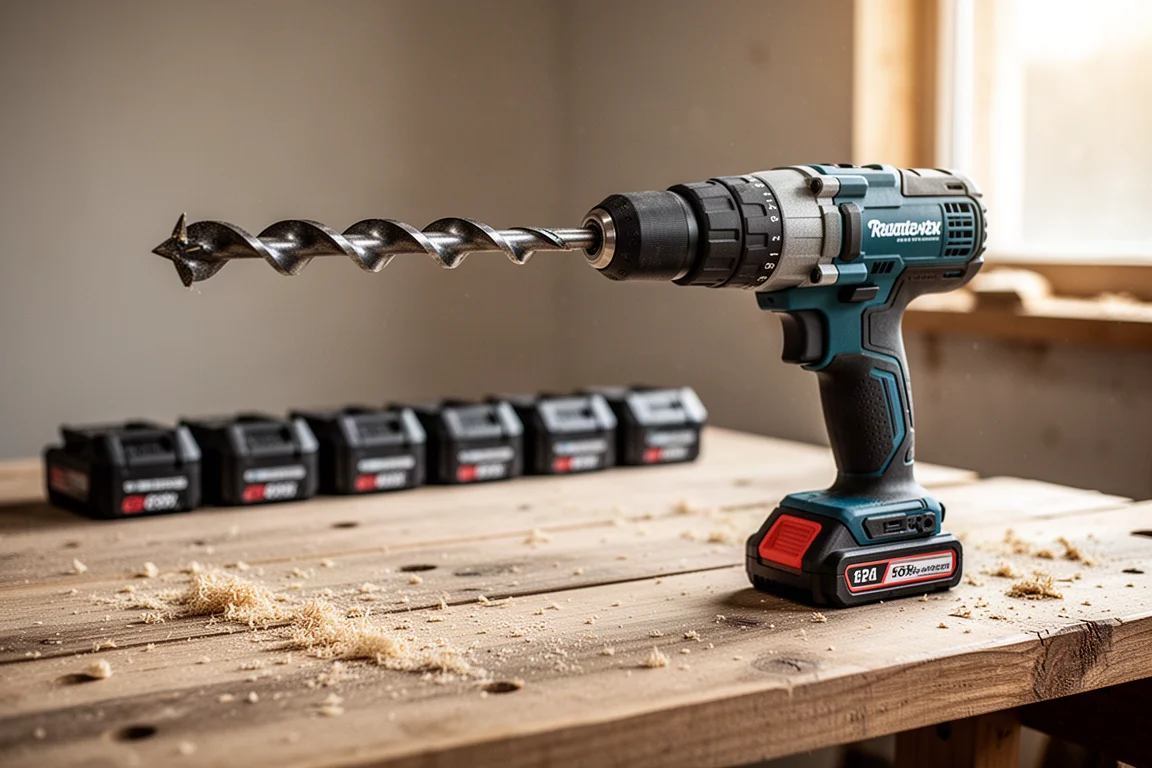
Most packs started at around 20.5V. The FlexVolt 9Ah started slightly lower at 20.11V, likely a charging quirk rather than a battery characteristic, so its results deserve a small caveat. Even so, the packs separated cleanly into performance groups.
The Results, Group by Group
The compact 2Ah sagged the deepest, dropping into the 12.85 to 12.95V range. That is low, and remarkably it still pushed the big bit all the way through, which had never happened before with this bit. Even so, its overall performance makes it a poor fit for this kind of work.
The middle group, spanning the PowerStack, both 4Ah packs and the 5Ah, all dipped into the 14.75 to 15.7V range. The PowerStack actually recorded the lowest sag of the entire group at 14.75V, with the compact 4Ah at 15.2V, the older 4Ah at 15.18V and the 5Ah at 15.7V. On recovery, the 5Ah came back the strongest while the PowerStack bounced back the least.
An interesting takeaway here is that the long-standing 5Ah XR held its ground remarkably well against the newer PowerStack. The PowerStack is far more compact, and it was powering a fairly large drill in this test, so some allowance is fair, but on raw voltage retention it came out worst of this group.
The 6Ah, 8Ah and FlexVolt 9Ah Tier
This is where the test got genuinely interesting. The 6Ah and 8Ah packs only sagged to around 17.12V, leaving far more power in reserve under load, and both recovered rapidly back into the 20V range afterward.
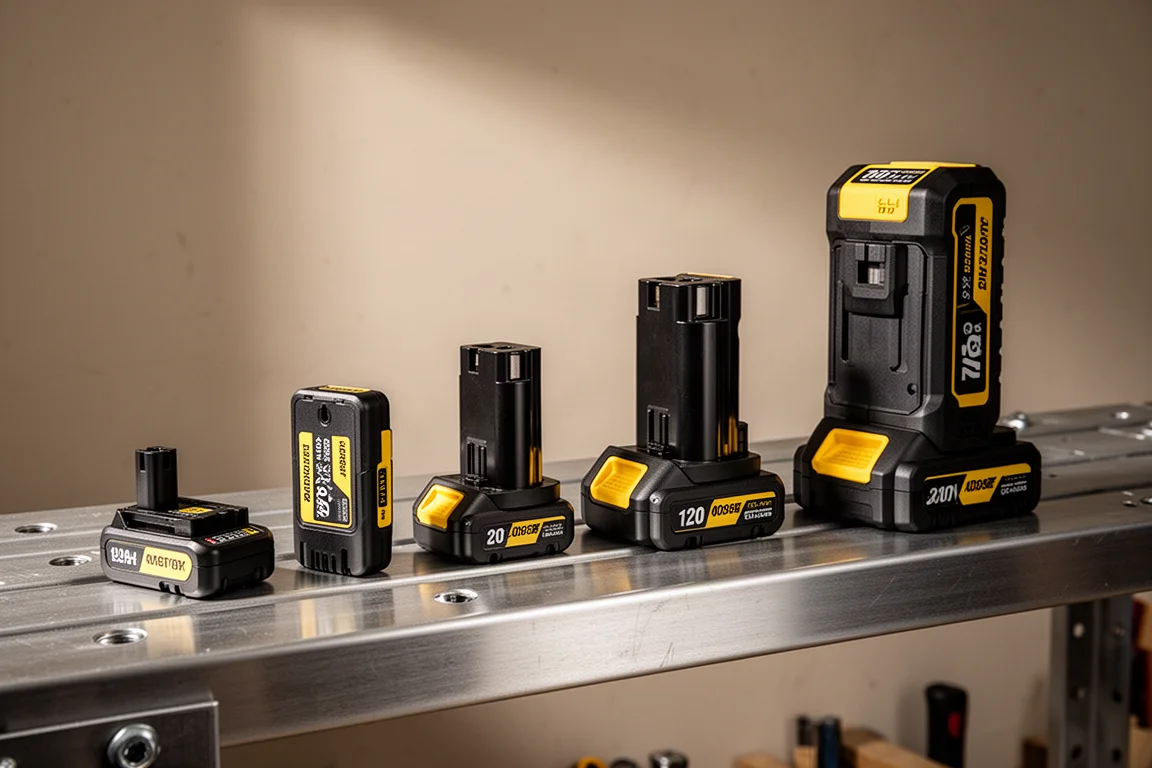
The FlexVolt 9Ah did even better, dipping only to 18.4V. Its 3P construction, three sets of five cells for 15 cells total versus 10 in the 6 and 8Ah packs and 5 in the compact packs, explains much of that resilience. Because it started from a lower charge state, it did not recover quite as high as it likely would have at a full 20.5V start, but the underlying performance is the strongest of the whole lineup. The trade-off is size: it is simply a large, heavy pack that many buyers will not want hanging off a drill.
Which Battery Should You Pick?
The FlexVolt 9Ah is technically the best performer here, holding voltage better than anything else, but its bulk makes it an easy skip for drill duty unless runtime is the priority. For most people drilling with a tool of this size, the 8Ah is the sweet spot: excellent voltage stability, fast recovery, and the longest runtime by amp-hour rating.

If you are choosing between the 5Ah and the PowerStack, the 5Ah XR’s long track record showed here, matching or beating the PowerStack on voltage sag and recovery. The PowerStack remains appealing for its compact size, but in this particular test on a larger drill it performed the worst of its group. As for the kit-included compact 2Ah, its sag numbers speak for themselves; the 4Ah packs are only slightly larger for a meaningful step up in performance.
Conclusion
Voltage sag testing strips away marketing labels and shows what a battery actually delivers when a drill is working hard. The high-capacity packs, especially the 8Ah and FlexVolt 9Ah, held their voltage with ease. The 5Ah XR remains a dependable all-rounder, the PowerStack trades some performance for compactness, and the compact 2Ah is best reserved for lighter tasks. Match the pack to the work you actually do, and the drill will feel noticeably better for it.
Product link
View more details for DeWalt DCB998 Power Detect Hammer Drill
This product is mentioned in the review. Check the specifications, options, and compatibility before buying.
View more details for DeWalt DCB998 Power Detect Hammer DrillFurther reading
Related Reviews
Power Tools
Best 1-Inch Pistol Impact Wrenches: Three Heavy-Duty Options Compared
We compare three 1-inch pistol impact wrenches, from a budget-friendly Harbor Freight model to a premium Caterpillar unit, to help you choose the right one.
Power Tools
Best 3/4-Inch Impact Wrenches 2026: Five Contenders Compared
We compare five 3/4-inch impact wrenches across price and performance, from a budget Amazon option to Snap-on's most powerful model yet.
Power Tools
Best Budget Cordless Tools 2026: Walmart Finds That Punch Above Their Price
We tested five cordless tools from Walmart, including a high-torque impact wrench that trades blows with Milwaukee and a $35 duster that outperforms its price class.