Power Tools
DeWalt Battery Lineup Tested on a Pruning Saw: Which Pack Holds Voltage Best
We ran DeWalt's PowerStack and XR battery range on a pruning saw, tracking voltage drop under load to see which packs actually hold up.
Introduction
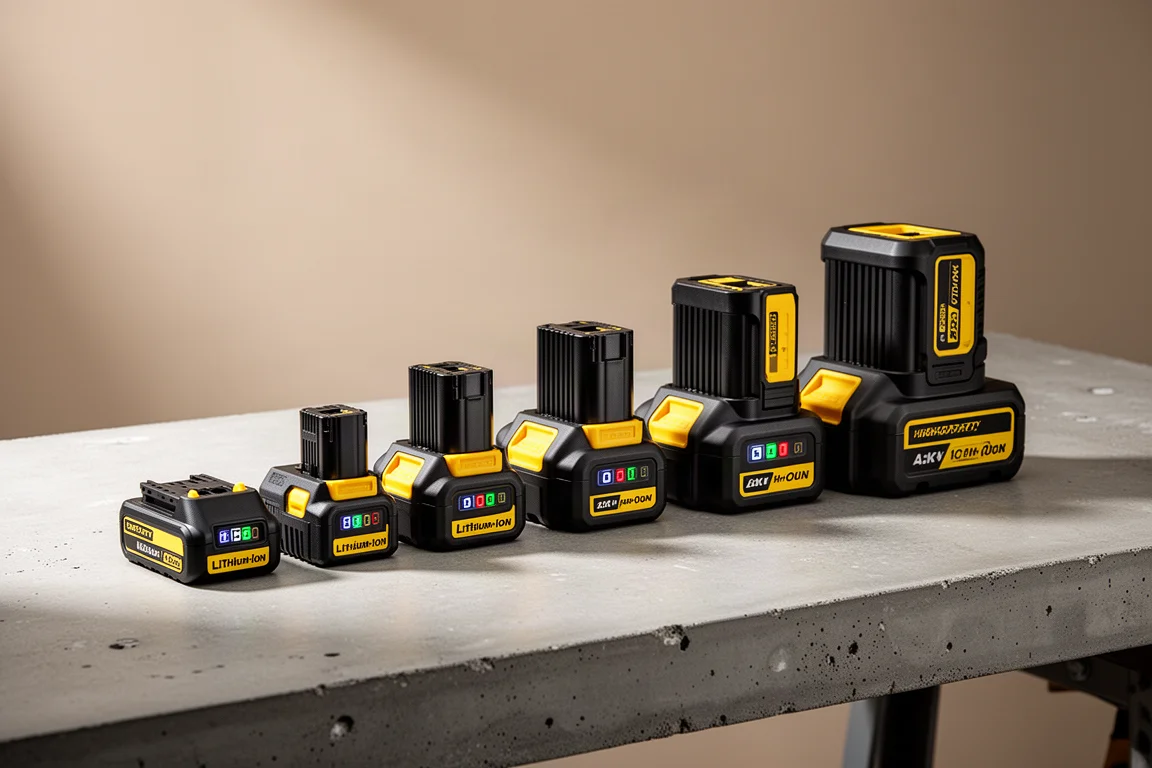
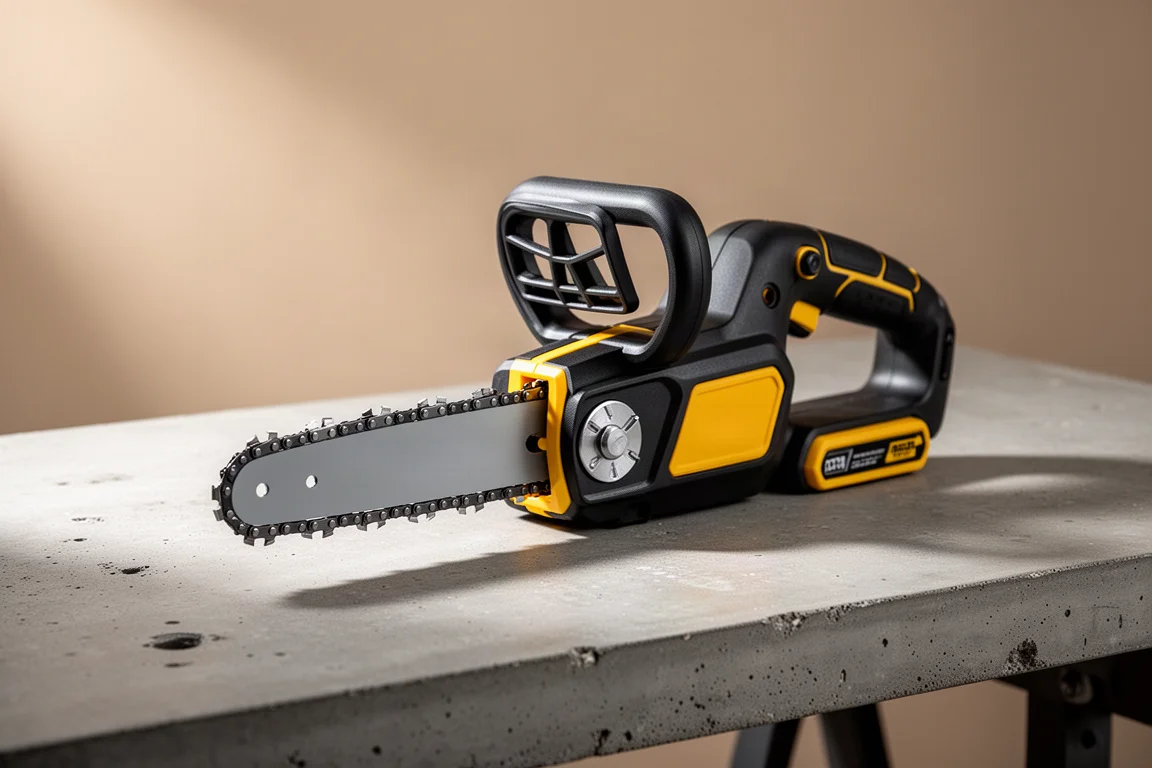
Battery marketing makes every pack look interchangeable, but voltage sag under load tells a very different story. To find out how DeWalt’s current battery range actually behaves, we ran the full lineup through a demanding real-world test: a pruning saw chewing through black locust, one of the harder woods you can throw at a small saw.
How the Voltage Drop Test Works
The method is simple. Probe wires read the voltage coming straight out of the battery while the pruning saw cuts. Voltage sag under load is a good proxy for how much output a pack can sustain: the less it drops, the harder the battery is working to keep up.
For each battery, we made one relaxed cut, then pushed harder on the second cut to force the pack to show what it could really deliver. That push is what separates the packs that coast from the ones that collapse.
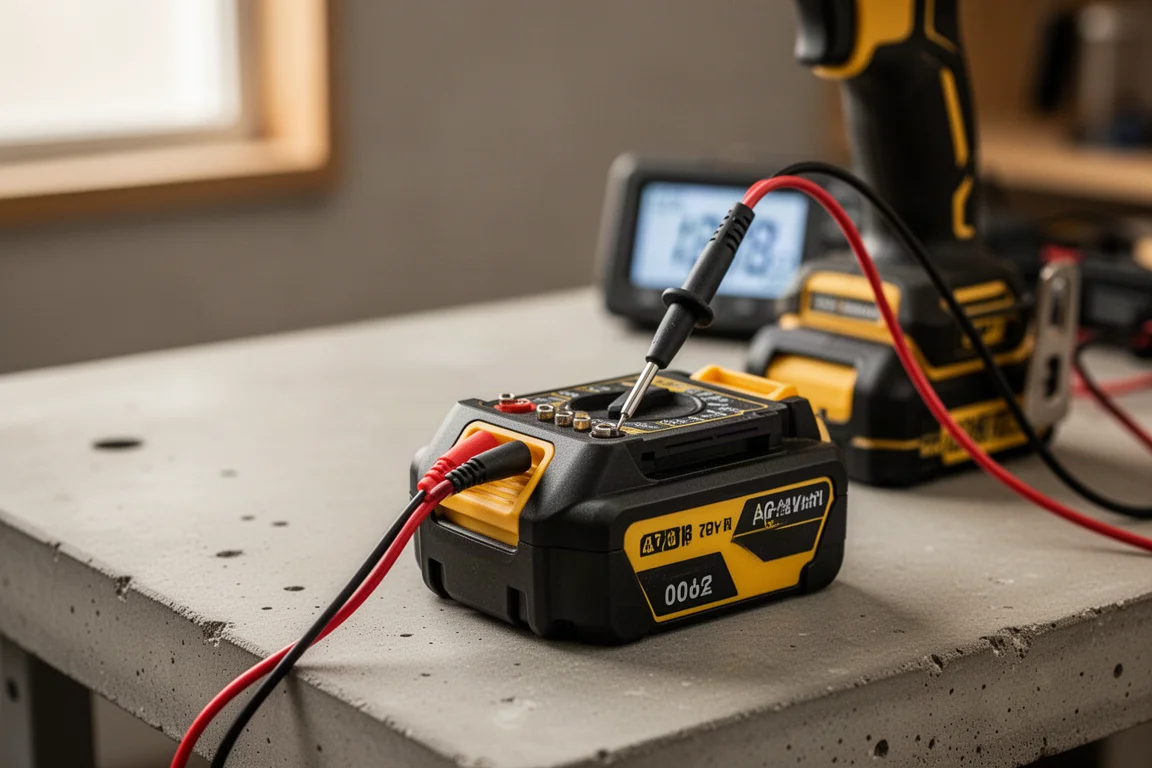
One important caveat surfaced early: this pruning saw trips its own cutouts. When the chain binds in hard wood, the tool shuts off, regardless of voltage. That means some cutouts are the saw protecting itself, not the battery giving up.
Small Packs: PowerStack 1.7Ah and 3Ah
The tiny PowerStack 1.7Ah surprised us. On relaxed cuts it sat in the 16-volt range, and even when pushed hard into the wood it cut out in the 16s rather than collapsing further. For a pack this small, that is a respectable showing, though the cutouts came quickly in dense hardwood.
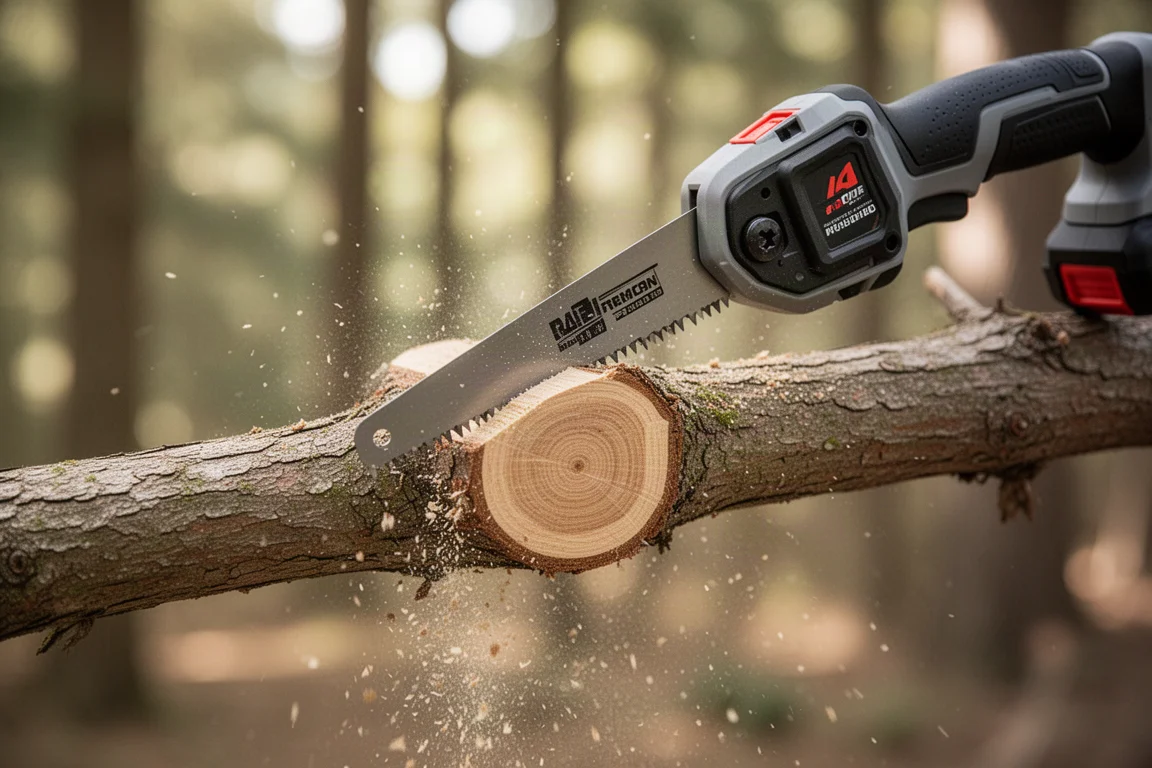
The 3Ah PowerStack, the pack that ships in the saw’s kit, behaved similarly. It reached the 16s at the end of its cuts and tripped another cutout in the 16s when we pushed harder. Both small packs are fine for light pruning, but dense hardwood exposes their limits fast.
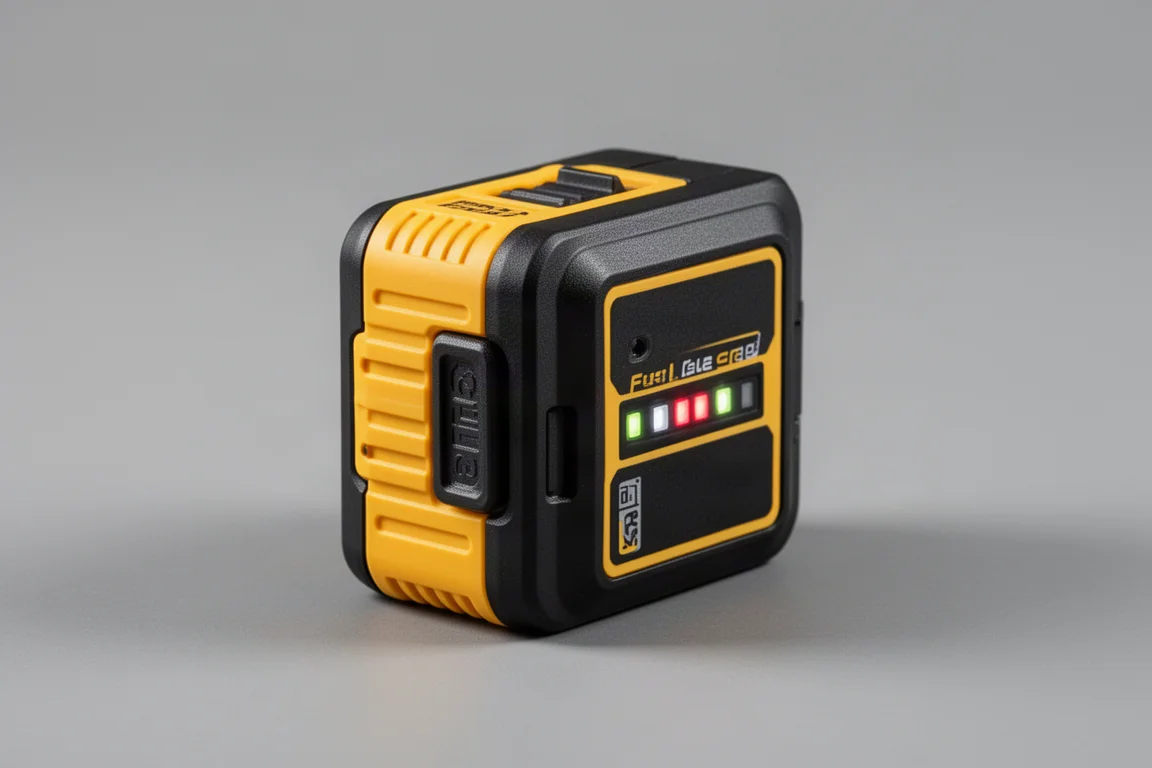
Mid-Range Packs: 4Ah Compact and 5Ah XR
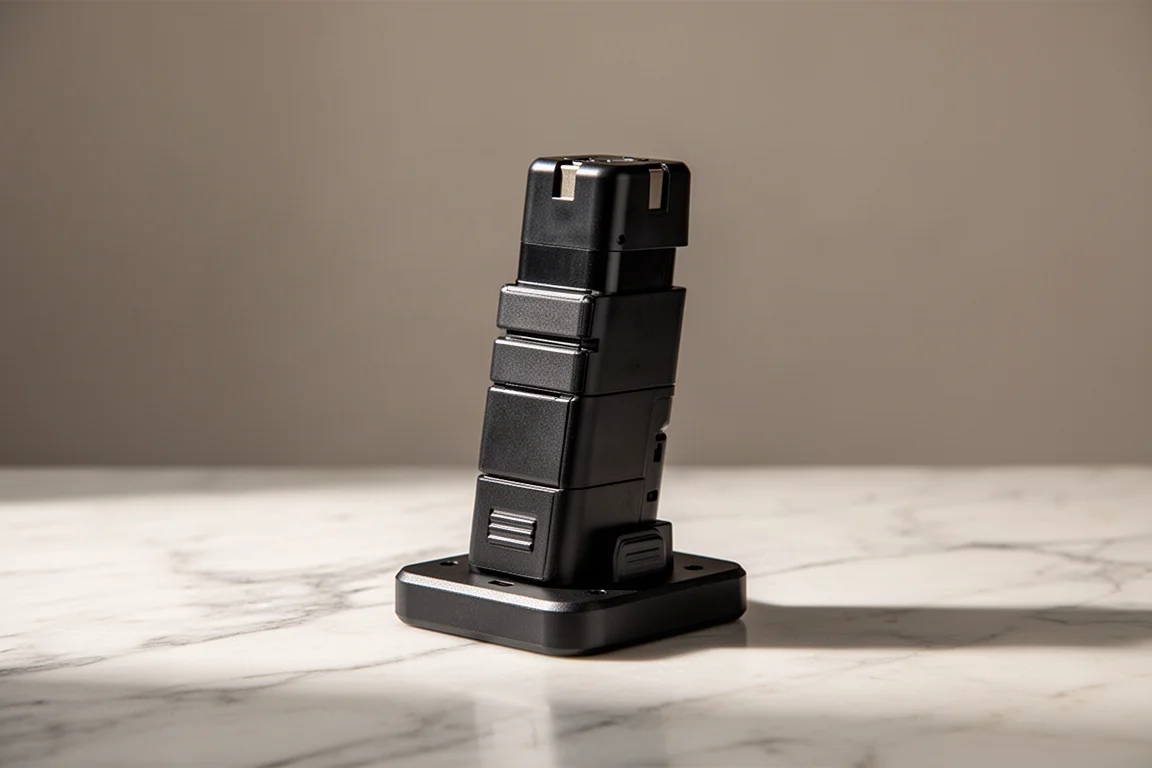
The 4Ah compact battery saw some high 16s on its first cut, and when pushed it dipped into the 15s before cutting out. That is the deepest sag we recorded in the whole test, which suggests this pack gives up a bit more under sustained load.
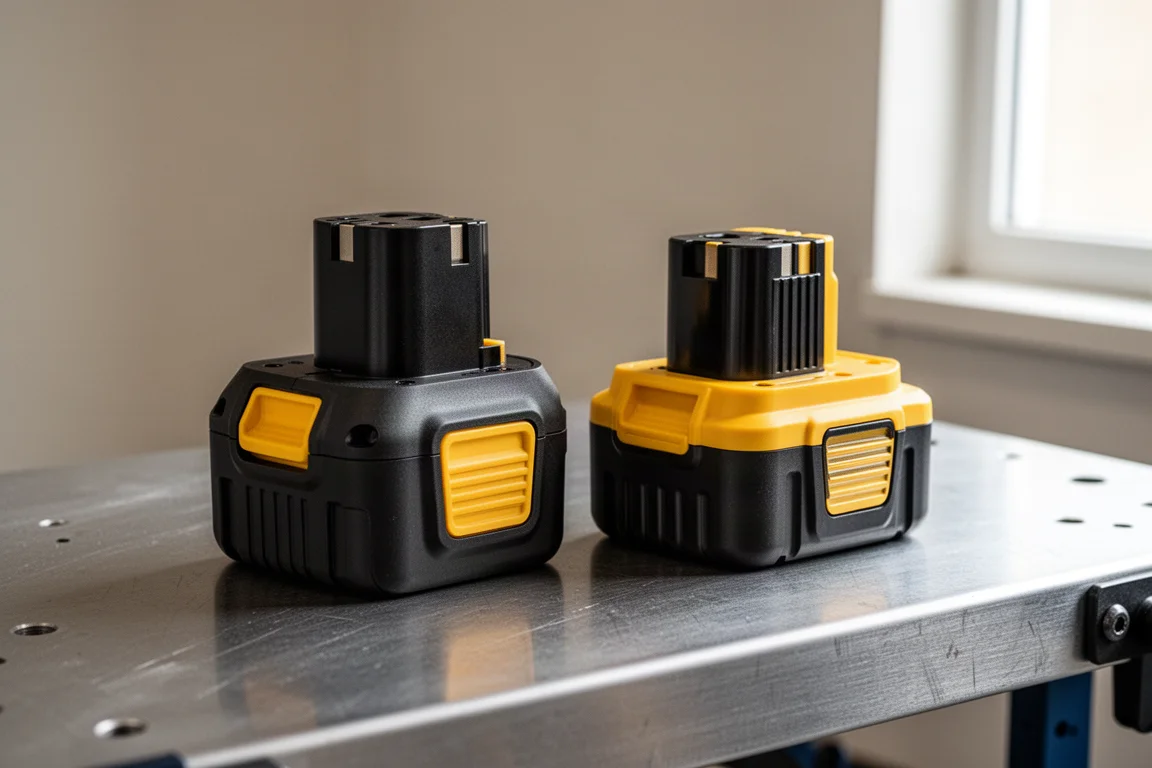
The 5Ah XR followed a similar pattern, working in the 16s and briefly touching 15 volts just before cutting out on a hard push. It is a dependable all-rounder, but on a demanding tool like this saw, it sits right on the borderline of what we would recommend.
The Standout: PowerStack 5.0Ah
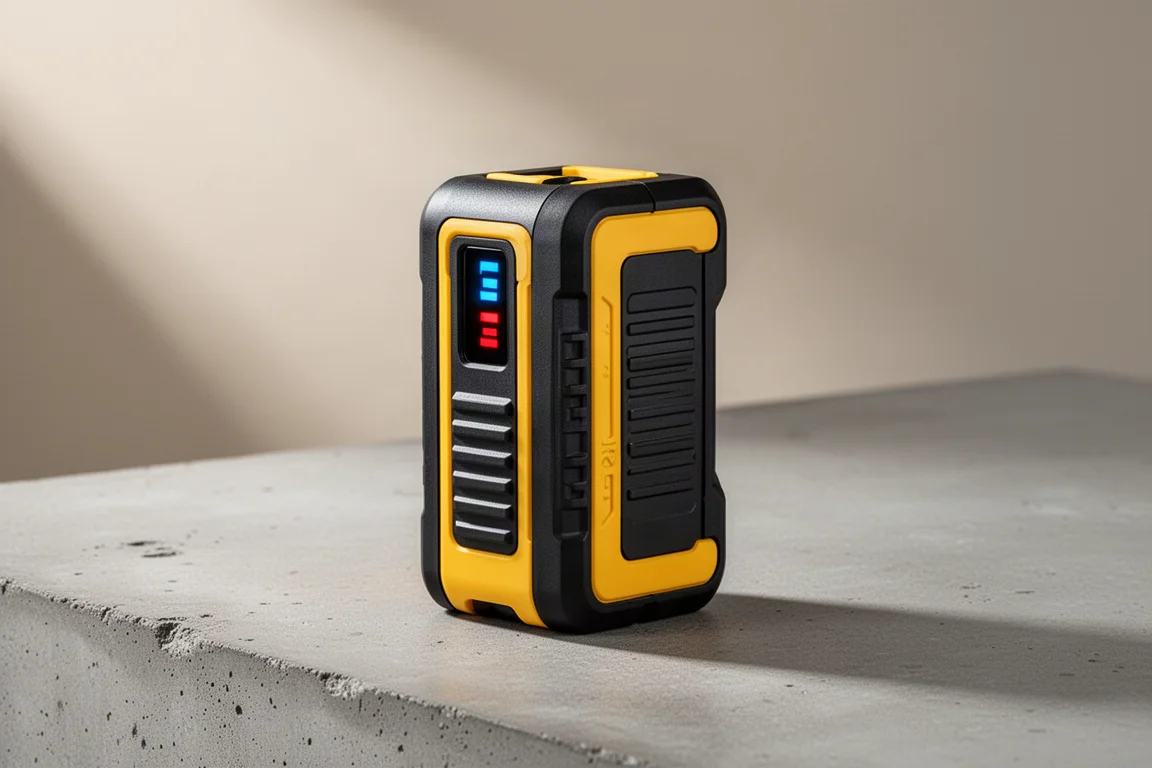
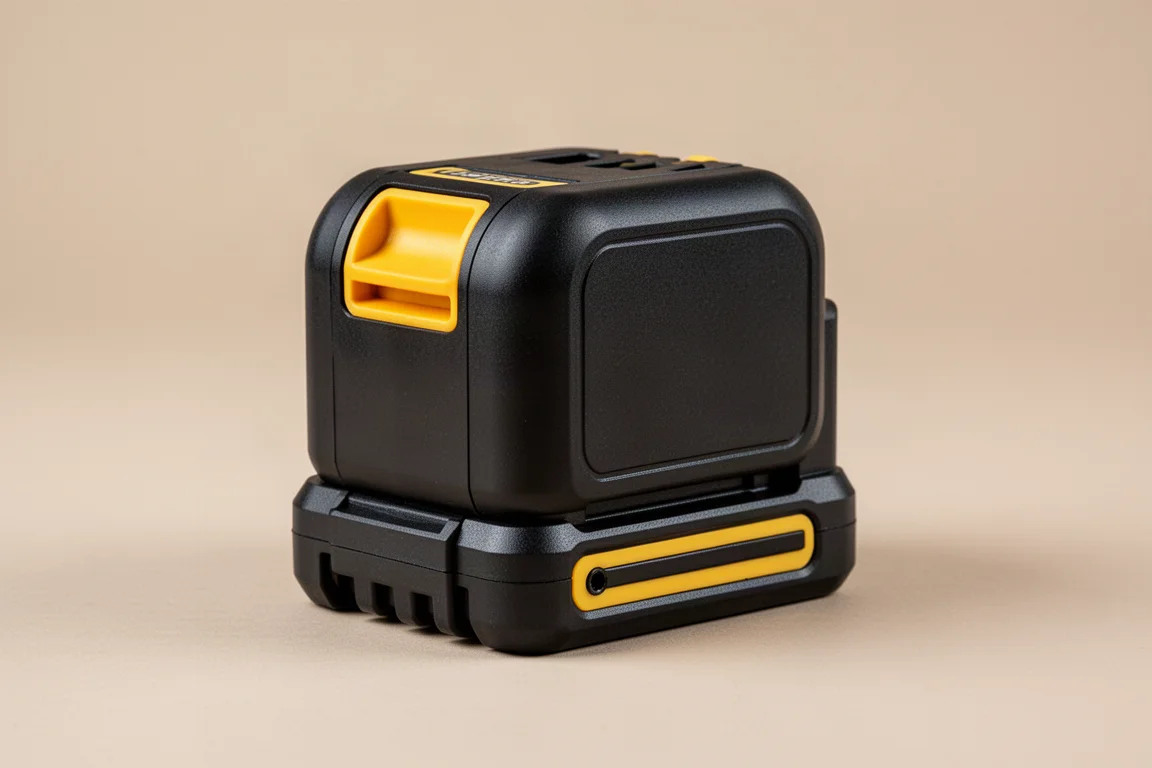
This is the pack that changed the shape of the test. The PowerStack 5.0Ah held in the 18s and even touched 19 volts, and its cutouts came in the 18s rather than the mid-teens. When it did trip, the cause looked like the saw pinching the kerf rather than the battery sagging.
Pushed repeatedly, it kept dragging back up into the 18s, even while we loaded it hard enough to slow the chain. One final cut read 18.3 volts. Across our testing, this is the pack that held noticeably higher voltage than everything below it.
Big Packs: FlexVolt 9Ah
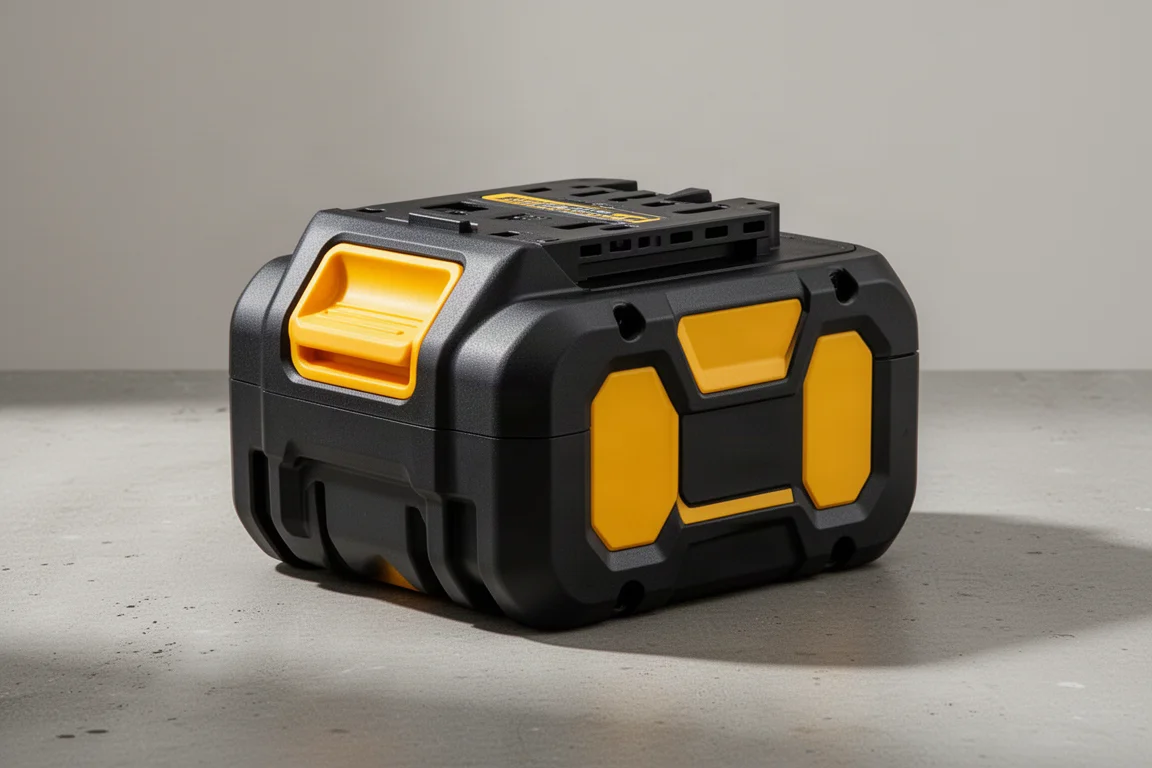
The 9Ah FlexVolt held 18s on relaxed cuts, which matches the strong showing we expected from a pack this size. Interestingly, one hard push produced a cutout as high as the 19-volt range, another reminder that the saw itself is triggering many of these shutdowns.
In our testing, the 8Ah pack has actually outperformed the 6Ah, which goes against what some people assume about capacity alone. Capacity matters for runtime, but the chemistry and build of the pack determine how well it holds voltage under load.
Buying Advice: Matching the Battery to the Tool
Here is the interesting takeaway. Across the entire range, cutouts happened anywhere from 16 volts up to 19 volts, and they followed the chain binding in black locust, not the battery reaching a floor. That tells us the saw is doing much of the shutting off through some internal safety or anti-kickback feature. It is a very different picture from a high-demand drill test, where we could drag packs down into the 13s and 14s and clearly see the power differences.
That has a practical consequence: this pruning saw does not need a huge battery to do its job, especially if you stay away from dense hardwoods and oversized branches. The PowerStack 5.0Ah held the highest and most consistent voltage of anything we tested, making it the pick if you want maximum performance from a saw like this. But if your cutting is light duty, the smaller packs will get the work done.
The general rule still applies: do not put a small battery on a high-demand tool. A 5Ah pack is about the borderline of what we would recommend for something like a circular saw, where you want both power and runtime. We will be running that next.
Conclusion
The PowerStack 5.0Ah is the clear voltage-holding champion in this test, keeping cuts in the 18-volt range even under hard pushing, while smaller packs sagged into the 15s and 16s. But the pruning saw’s own safety cutouts, tripping anywhere from 16 to 19 volts, mean the tool matters as much as the battery. Match the pack to the workload: small packs for light pruning, the PowerStack 5.0Ah when you want the most from a demanding cut, and large FlexVolt packs when runtime is the priority.
Further reading
Related Reviews
Power Tools
Best 1-Inch Pistol Impact Wrenches: Three Heavy-Duty Options Compared
We compare three 1-inch pistol impact wrenches, from a budget-friendly Harbor Freight model to a premium Caterpillar unit, to help you choose the right one.
Power Tools
Best 3/4-Inch Impact Wrenches 2026: Five Contenders Compared
We compare five 3/4-inch impact wrenches across price and performance, from a budget Amazon option to Snap-on's most powerful model yet.
Power Tools
Best Budget Cordless Tools 2026: Walmart Finds That Punch Above Their Price
We tested five cordless tools from Walmart, including a high-torque impact wrench that trades blows with Milwaukee and a $35 duster that outperforms its price class.