Power Tools
DeWalt 20V XR Band File DCM2000: A Cordless Band File That Earns Its Spot
DeWalt's brushless 20V XR band file is adjustable in nearly every way, runs up to 5,600 SFPM, and handles everything from deburring tubes to sharpening mower blades.
Introduction
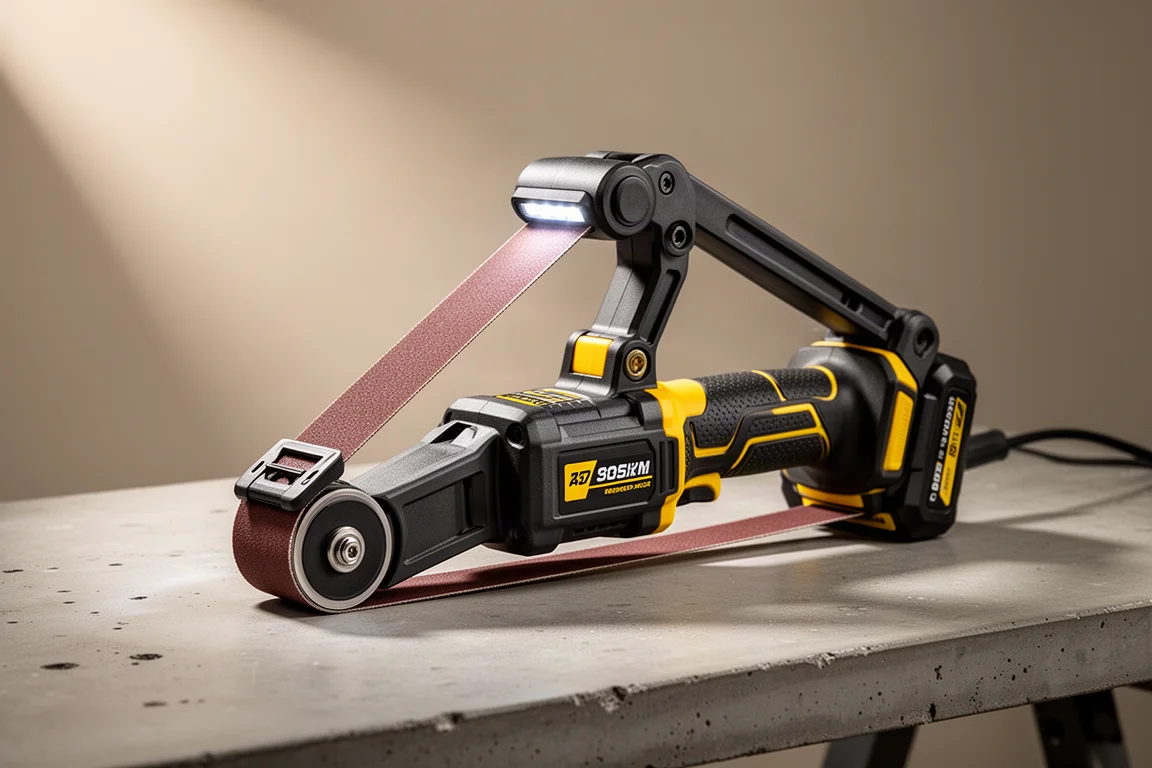
Band files used to be a niche oddity, mostly found corded and awkward in tight spots. DeWalt’s new 20V XR band file changes that math. It is brushless, compact, and adjustable in just about every way you could want, and it comes with the kind of tool-free ergonomics that make you actually reach for it instead of dreading the setup.
You can buy it as a bare tool or in a kit bundled with a PowerStack battery. The bare tool carries an MSRP of $279, while the kit with the tool, charger, and mini PowerStack battery runs $379. That is a serious amount of money for a band file, but for the right user it may well be worth every cent.
Adjustability Is the Headline Feature
The DCM2000 bends to fit your work rather than the other way around. The LED light locks into three different positions, letting you throw light wherever the job demands. The forward arm adjusts through roughly 73 degrees, and a tool-free lever locks it anywhere in that range. Want to pack it away? Press the trigger lock and the arm folds all the way down, securing the tool so it will not turn on inside a bag. Unlock the trigger, fold it back into place, and you are working again in seconds.
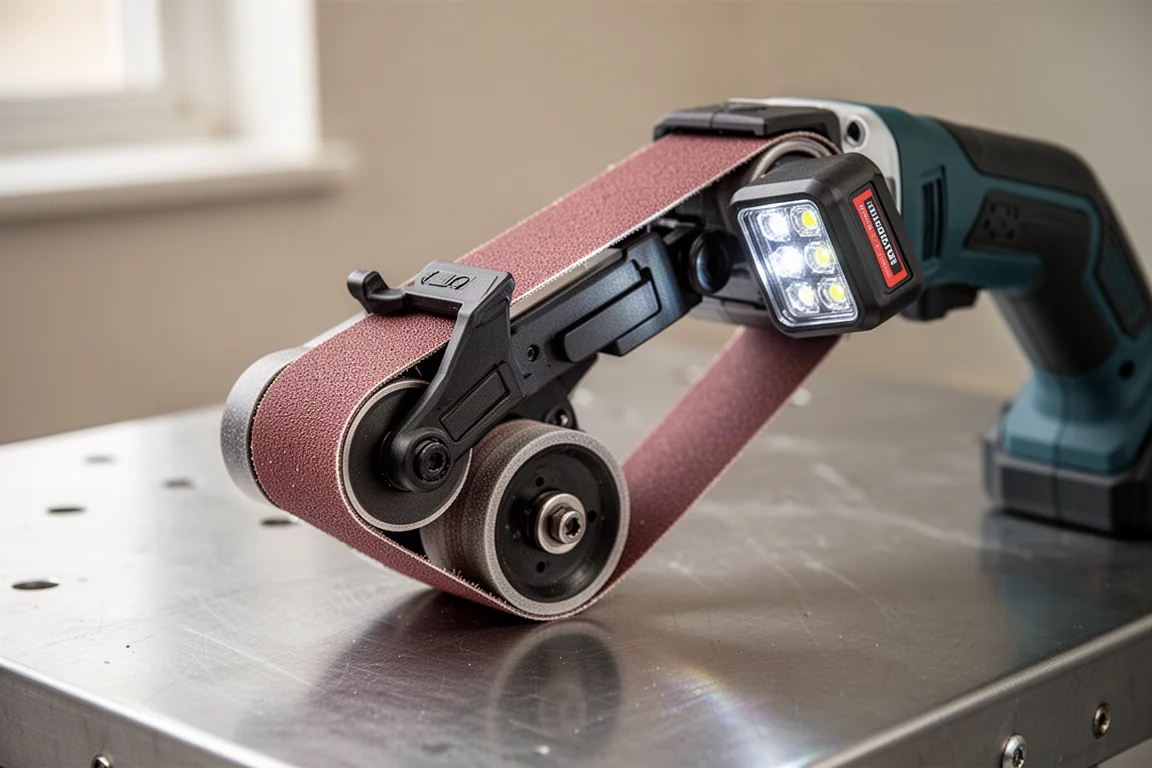
Speed runs from 1,900 to 5,600 square feet per minute, controlled by a variable speed trigger plus a dial for fine-tuning to the application. The grip carries DeWalt’s usual fit and finish, and the auxiliary handle removes just like it does on an angle grinder. Belt changes and tracking adjustments are equally tool-free: pull up on the lever to swap belts, and nudge tracking left or right with a simple adjustment. The tool ships with 280-grit belts, and replacement 18-inch belts are fairly affordable and available in different grits and qualities.
Real-World Uses: Metal, Wood, and Plastic
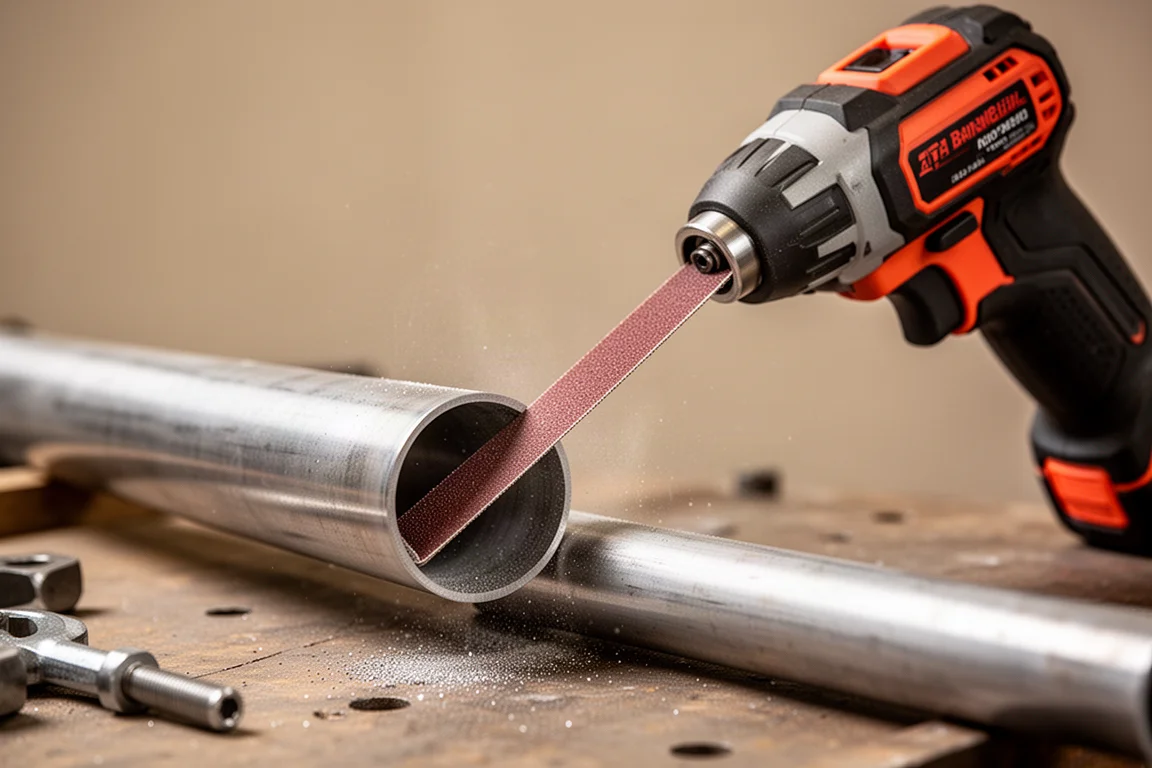
The most common use is inside tubing. Sliding the belt into a tube to knock down burrs takes seconds, and it works exactly as well as you would hope. That single capability justifies the tool for plenty of fabricators and metalworkers.
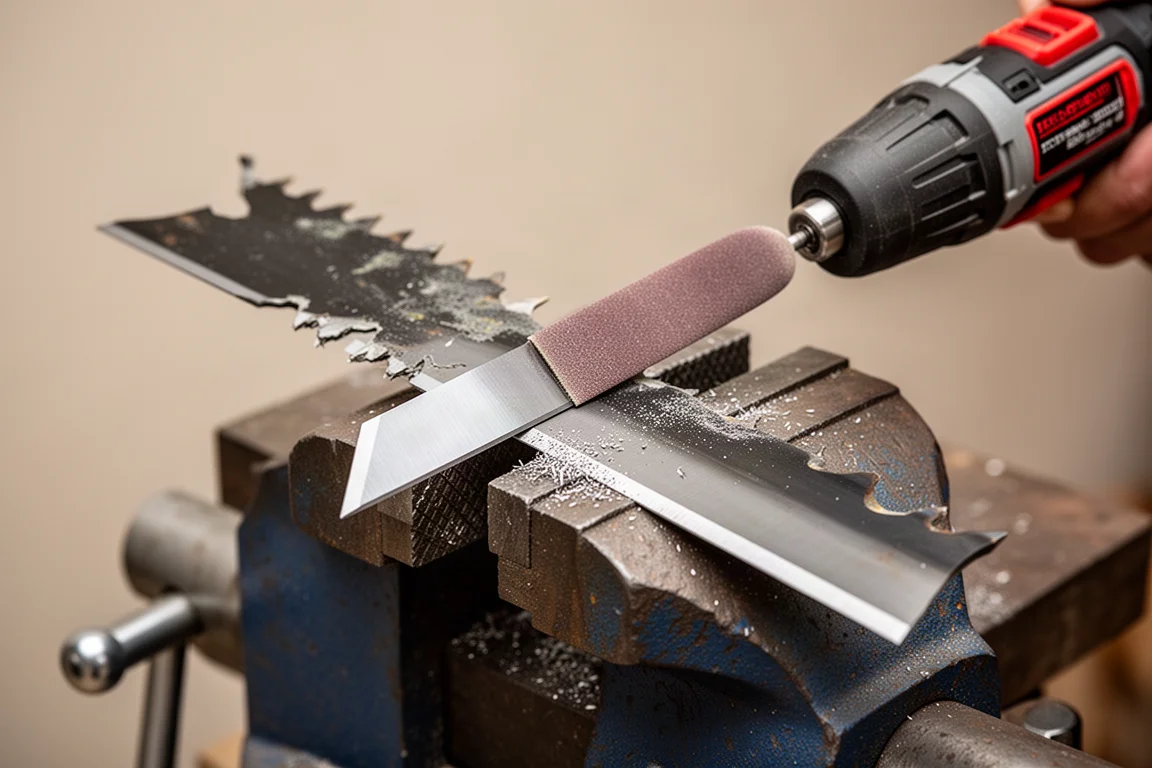
For general maintenance work, sharpening lawnmower blades is a standout application. A badly chipped blade can be brought back to a clean, straight edge while holding the factory angle. Because the belt runs flat against the two guides on the forward arm, one on top and one on the bottom, you can see exactly where you are lifting and correct as you go. It is not a full restoration tool for a blade that needs serious love, but for touching up and getting an edge sharp again it is excellent.
It is not limited to metal. Wood, plastic, and anything else that takes an abrasive are fair game. A mortise-and-tenon joint that needs an even amount taken off, a surface that needs leveling, or a spot where a flat file cannot quite reach are all in range. How fast it removes material depends mainly on the grit you load into it.
Standard Arm vs Offset Arm
The included forward arm has flat top and bottom guides, so pushing against it feels like using a file: rigid and flat. DeWalt also offers an offset arm, priced around $69, that angles the belt downward so it has some natural sag. That flex lets the belt conform to rounded surfaces, which is the better choice if you are working on curved material and want the abrasive to wrap rather than flatten. For working flat surfaces or the outside of round stock, the standard arm does the job fine.
You can mix materials freely with one tool, though many users will lean heavily toward either woodwork or metalwork. Either way, having both arms on hand covers nearly every shape you will encounter.
Things to Consider Before Buying
The price is the main hurdle. At $279 bare and $379 for the kit, this sits well above what most people expect to spend on a band file, and the $69 offset arm adds more. It is also worth noting that 80-grit can be aggressive for some tasks, and working blind inside a tube means you are trusting feel rather than sight.
None of that changes the core value proposition: one cordless tool that gets into different places and holds a straight edge on a wide range of items. If your work regularly involves deburring, sharpening, or shaping in awkward spots, the math works.
Buying Advice
The kit with the mini PowerStack battery is the sensible pick if you are not already invested in DeWalt batteries, since the small battery keeps the tool light and compact. Bare-tool buyers with an existing 20V XR collection can save the difference. Consider adding the offset arm only if rounded work is a regular part of your jobs.
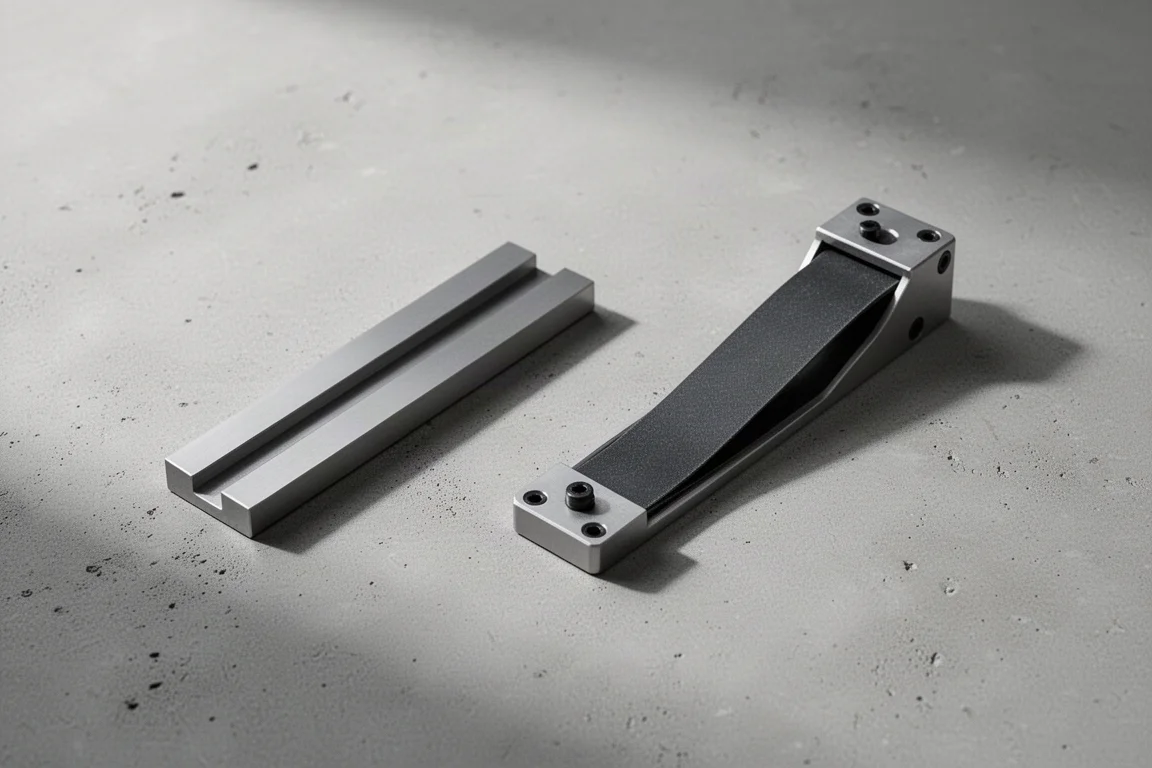
With all the power you could ask for and more speed than most applications will ever need, the DCM2000 is easy to recommend to the right buyer, even at its premium price.
Conclusion
The DeWalt 20V XR band file DCM2000 is simple to use, endlessly adjustable, and genuinely useful across metal, wood, and plastic. It is expensive, and the offset arm is not cheap either, but for anyone who regularly needs a straight edge in awkward places, it is one of those tools that pays for itself in saved time and frustration. For the right person, it is a priceless addition to the shop.
Product link
View more details for DeWalt 20V XR Band File DCM2000
This product is mentioned in the review. Check the specifications, options, and compatibility before buying.
View more details for DeWalt 20V XR Band File DCM2000Further reading
Related Reviews
Power Tools
Best 1-Inch Pistol Impact Wrenches: Three Heavy-Duty Options Compared
We compare three 1-inch pistol impact wrenches, from a budget-friendly Harbor Freight model to a premium Caterpillar unit, to help you choose the right one.
Power Tools
Best 3/4-Inch Impact Wrenches 2026: Five Contenders Compared
We compare five 3/4-inch impact wrenches across price and performance, from a budget Amazon option to Snap-on's most powerful model yet.
Power Tools
Best Budget Cordless Tools 2026: Walmart Finds That Punch Above Their Price
We tested five cordless tools from Walmart, including a high-torque impact wrench that trades blows with Milwaukee and a $35 duster that outperforms its price class.