Kitchen Knives
Deba vs Deba: Two Japanese Knives Put to the Test on Chicken Butchery
A 165mm Saji Deba and a 210mm Takayuki Shibata Shark Teeth Deba go head to head on a whole chicken, with surprising lessons about weight, precision, and single bevel edges.
Introduction
A deba is a fish butchery knife, so pitting one against a whole chicken sounds like a mismatch. Yet an earlier comparison showed that a deba can actually work well for chicken butchery, thanks to a razor-sharp single bevel edge and a thick, heavy spine that drives through protein. That discovery raised an obvious follow-up question: if one deba can handle chicken, what happens when you bring in a much larger, much heavier one?
This head to head puts the 165mm Saji Deba against the 210mm Takayuki Shibata Shark Teeth Deba, both working on the same task. It is not a rigorous scientific test, but it answers a practical curiosity: how do two knives from the same tradition compare when pushed outside their usual role?
The Two Contenders
Both knives are deba, and both makers come from the same region in Japan, which makes this a genuinely interesting comparison of size and intent.
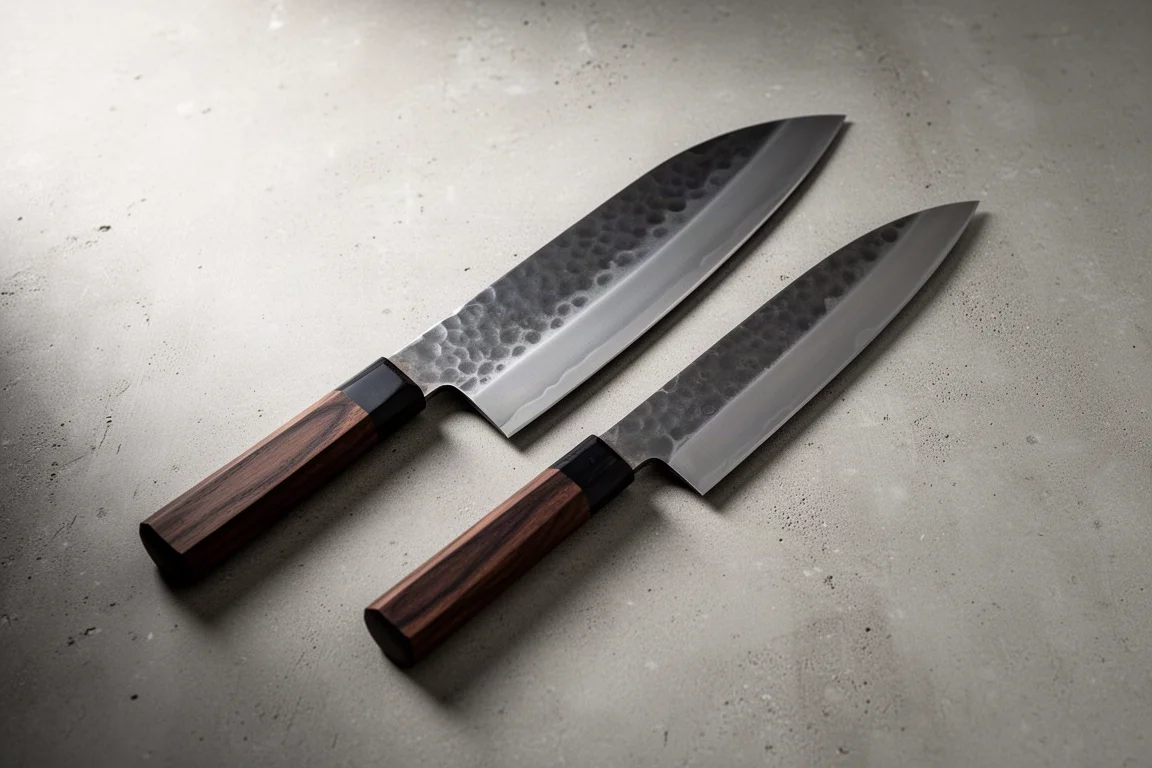
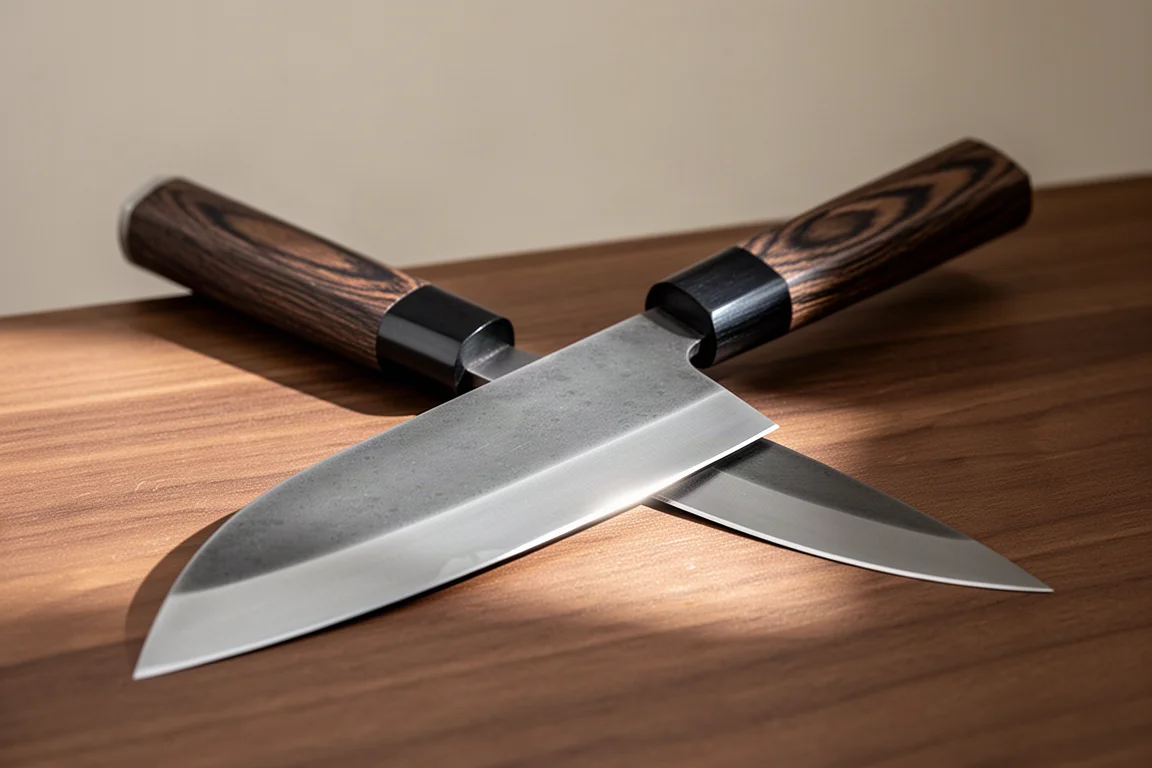
The Saji Deba 165mm is made from jenko steel with a handle of aged oak combined with buffalo horn detailing. It weighs 292 grams, has a belly height of 50mm at the heel, and a spine thickness of 7mm.
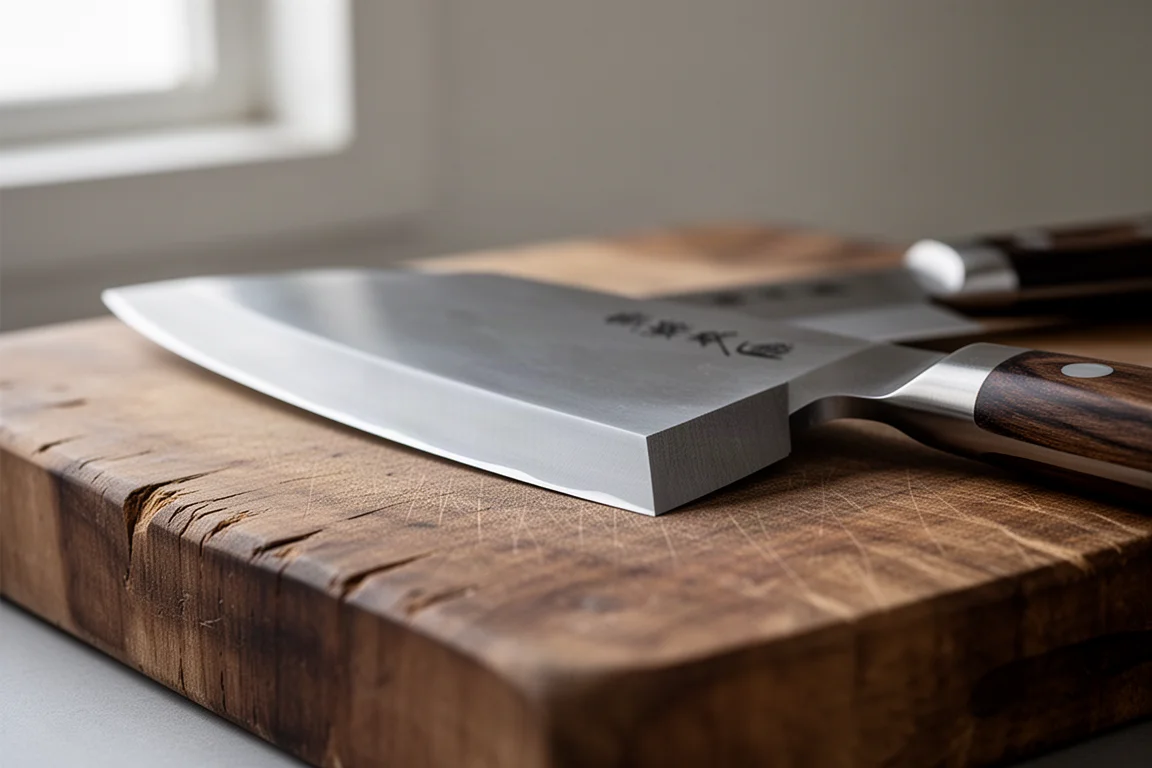
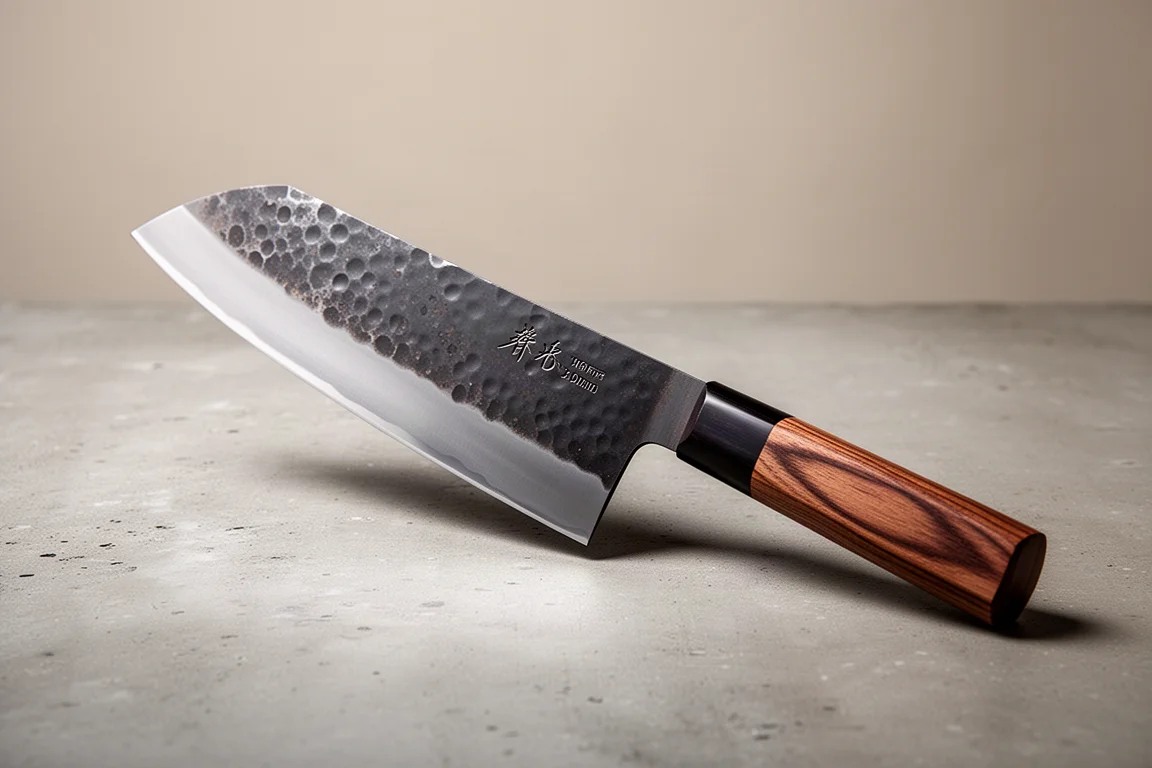
The Takayuki Shibata Shark Teeth 210mm Deba is a different beast entirely. The blade is made by Yoshihiro Yamai, an excellent single bevel knife smith, with Takayuki Shibata handling sharpening. It uses aogami super carbon steel with a tsuchime pattern and kurouchi finish, a rosewood handle, and a pakka wood ferrule. It weighs an astonishing 457 grams, with a belly height of 63mm at the heel and a spine thickness of 9.5mm.
That 2.5mm difference in spine thickness is remarkable on its own, and the larger knife weighs one and a half times as much as the smaller one.
Why a Deba on Chicken at All?
A deba brings two real advantages to chicken butchery. First, a single bevel knife is extremely sharp. Second, that super thick spine adds weight that helps drive the blade through the protein. Those qualities matter when working through joints and cartilage.
The trade-offs show up too. A large deba can feel a little unwieldy and less precise than a dedicated poultry knife, and the same weight that helps power through cuts can feel heavy when the work turns delicate.
How They Handled the Task
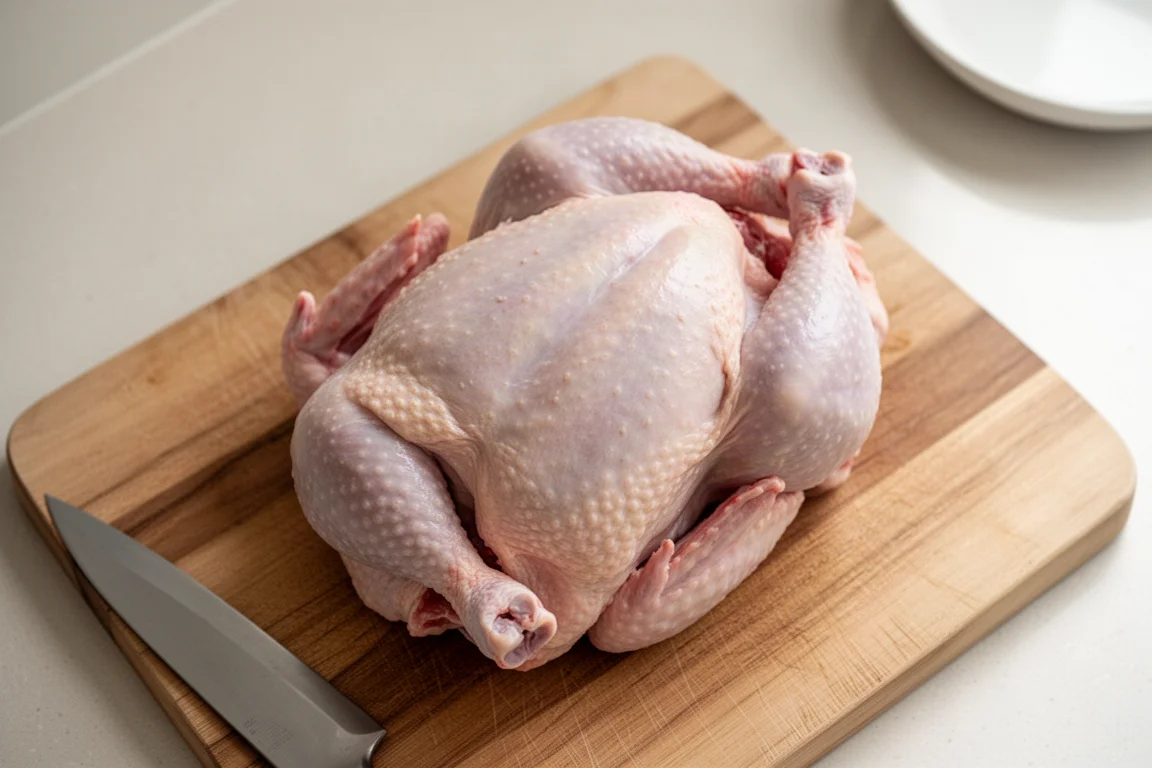
The smaller Saji Deba proved its earlier promise. Its single bevel edge is super sharp and precise, which cuts both ways: when the edge is on cartilage, it slices cleanly, but if you are even a millimeter off, it bites into bone instantly. That is actually useful feedback, because it tells you not to push through, back up, and realign your cut. It did not win in every respect against a dedicated poultry knife, but it held its own remarkably well.
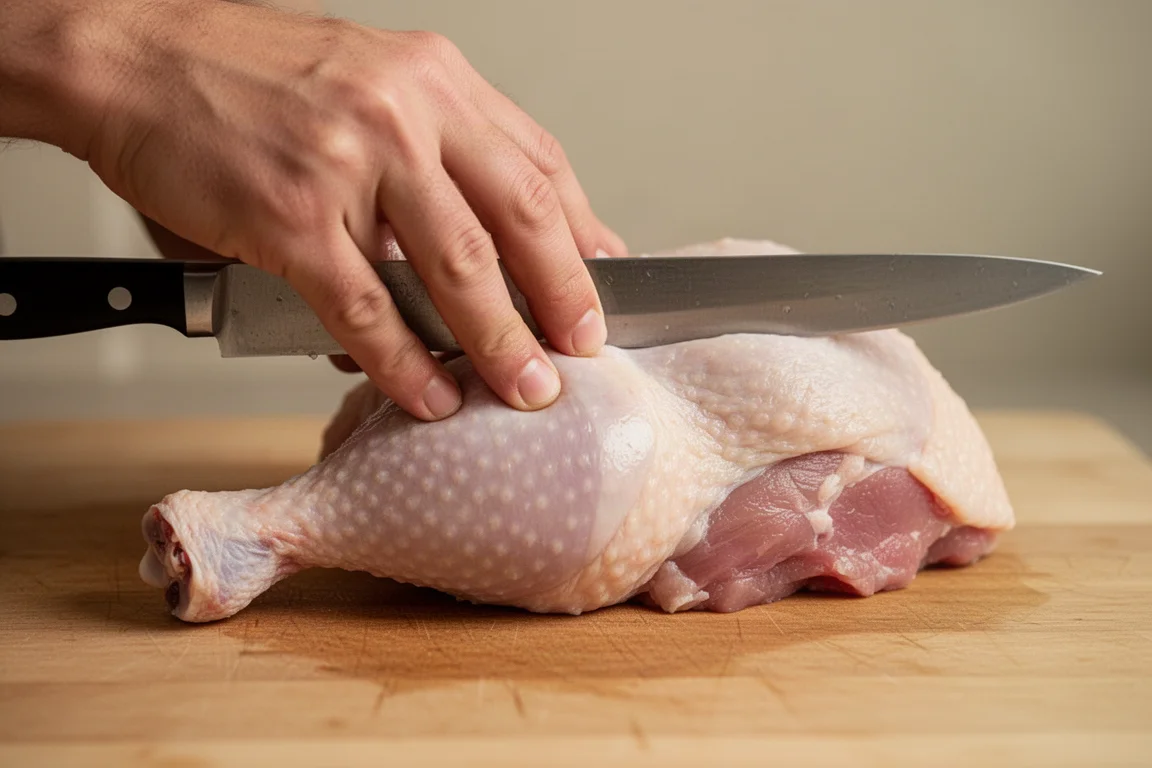
The Shark Teeth 210mm was a different story. It is unforgivably sharp and unforgivably heavy, and it is not nimble. Because the extra weight drives the blade through everything faster, the moment you drift off the cartilage, the edge digs in almost shockingly, and the impact on the arm is jarring. At 457 grams, trying to place a finger on the spine for delicate cuts stopped feeling delicate at all. The knife approaches cleaver territory when working through a chicken, and while some butchers may master that, it did not work out here. One genuinely enjoyable element was the k-tip, which is fitting, since a k-tip is one of the three important features of a honesuki, the dedicated poultry knife.
Which One Makes Sense for You
The honest takeaway is that the smaller Saji Deba could potentially even rival a dedicated honesuki for chicken work, though the honesuki remains extremely comfortable and easier to use for long sessions. The larger Shark Teeth Deba is more of an expert tool: powerful, beautiful, and best reserved for fish butchery or for hands that can manage its weight and height.
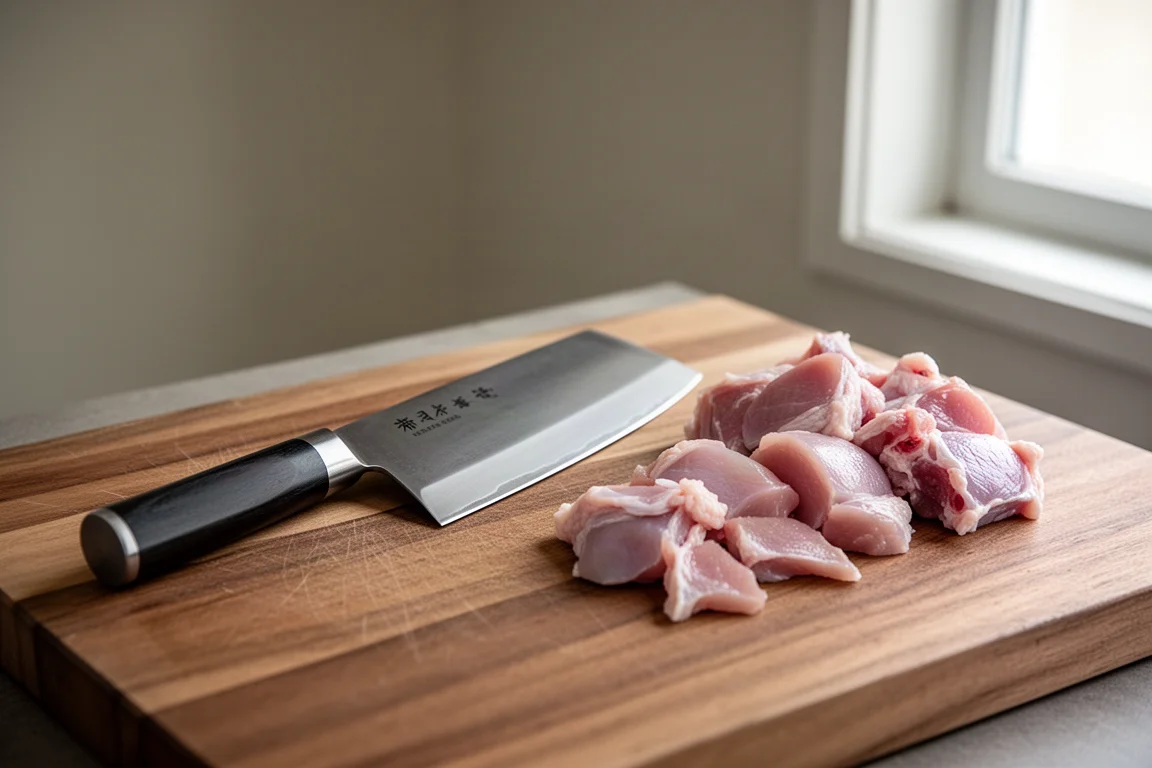
If your interest is chicken butchery specifically, the 165mm is the more sensible choice. If you want a statement blade for fish work and appreciate craftsmanship, the 210mm delivers that in spades.
Conclusion
Testing a knife outside its intended role is how you learn what its geometry is really good for. The Saji Deba showed that a well-made 165mm deba can genuinely hold its own on chicken. The Shark Teeth 210mm proved that more size and weight is not automatically better, and that a blade this substantial asks for a very specific kind of skill. Neither result would have been known without putting them both to work.
Further reading
Related Reviews

Kitchen Knives
Best Chef's Knives 2026: 27 Popular Options Tested and Ranked
A comprehensive review of 27 chef's knives ranging from $18 to $380, with honest assessments of handle comfort, blade balance, and real-world performance.

Kitchen Knives
Best Chef's Knives Under $75: Two Tested Recommendations
Two practical 8-inch chef's knives that balance sharpness, comfort, and durability without premium pricing.

Kitchen Knives
Best Chef's Knives 2026: 27 Options Tested and Ranked
A comprehensive review of 27 chef's knives ranging from $18 to $380, with honest assessments of handle design, balance, blade profile, and real-world performance.