EDC Wallets
Dango AirTag Wallets Compared: M1, Dapper D01, and Dapper D03
Three aluminum AirTag wallets from Dango, tested for how well the AirTag integrates and how much it gets in the way of everyday use.
Introduction
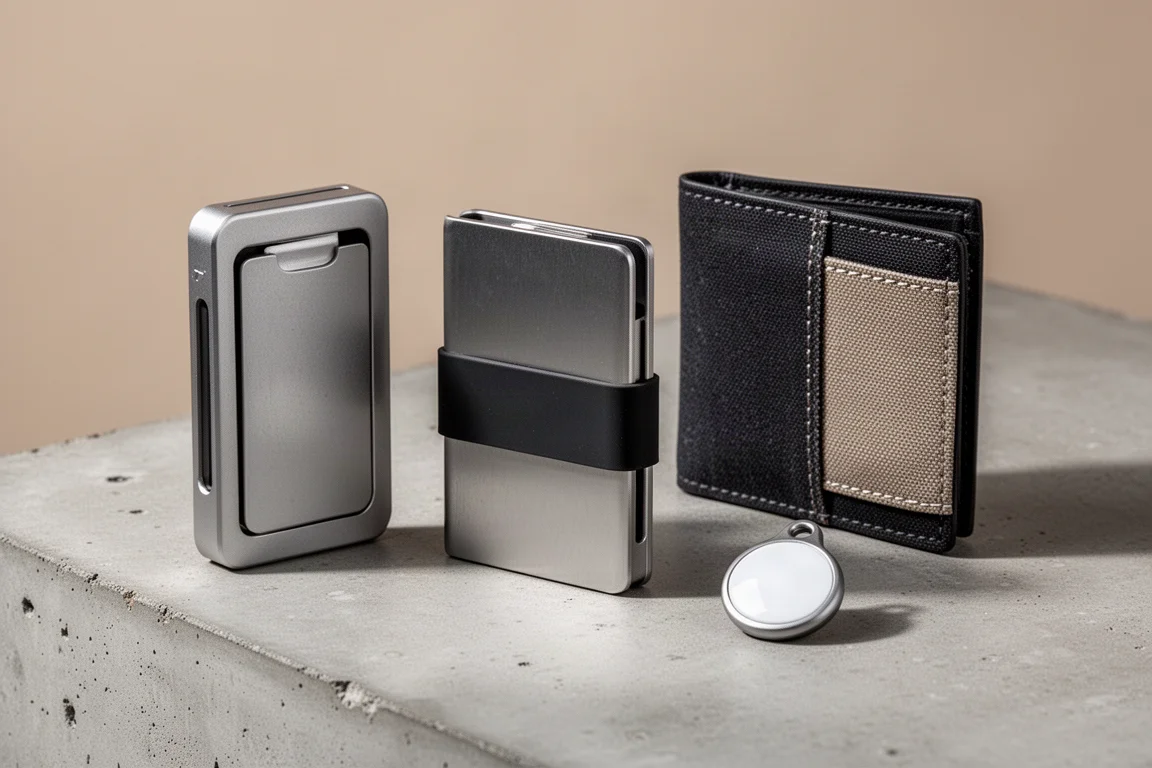
Dango now offers three AirTag-compatible wallets: the M1 AirTag wallet, the Dapper D01 AirTag wallet, and the Dapper D03 AirTag wallet. This comparison focuses less on a full feature review of each wallet and more on the question that actually matters once you add a tracker to your everyday carry: how well does the AirTag integrate, and does it get in the way of the wallet’s core job?
The short version: all three hold the AirTag securely, all three keep your cards usable, and each has one quirk worth knowing before you buy. The AirTag itself is not included with any of these wallets, so budget for that separately.
What All Three Wallets Have in Common
Every wallet in this trio is CNC-machined from 6061 aluminum and anodized for a durable finish. The card pockets are made from Dango’s water-resistant Detex material, and the AirTag in each one is held in place with a silicone band. All three are made in the USA and ship with a lifetime warranty against manufacturing defects, plus a paracord lanyard in the box.
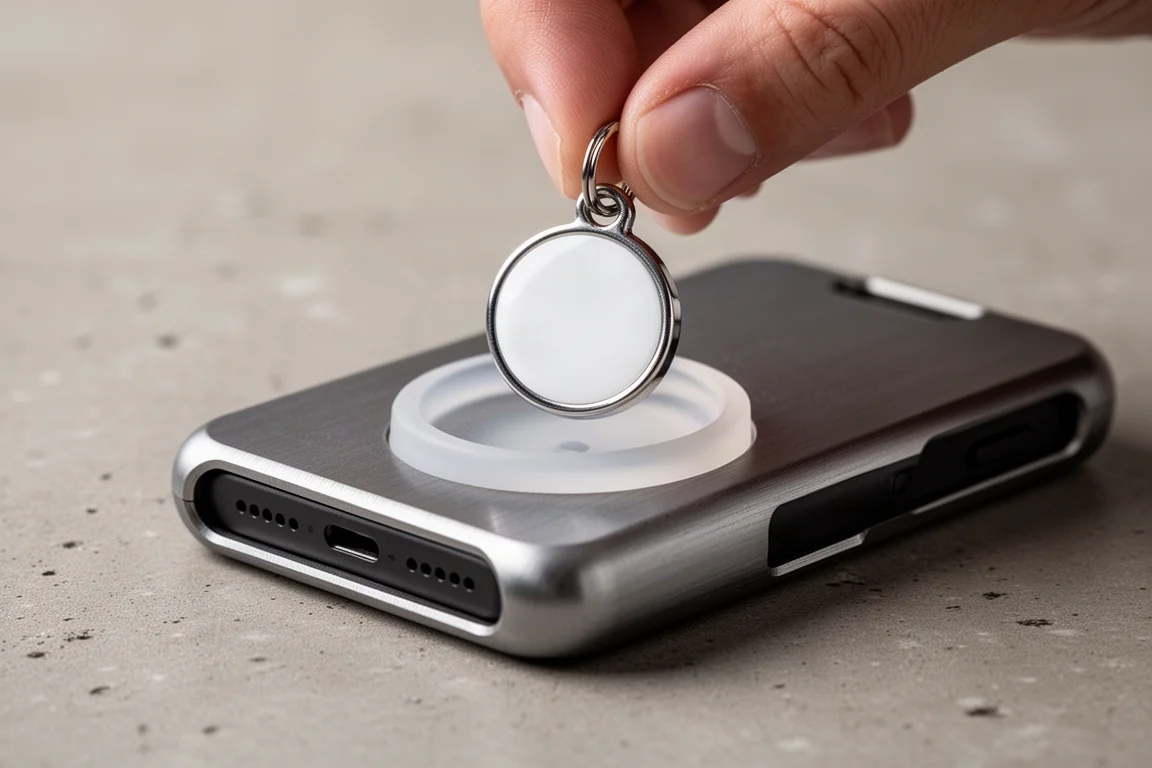
One pleasant surprise applies across the board: the silicone-and-AirTag combination looks slippery on paper, but the tags seat firmly and pass a shake test without shifting. Removing them is also easy, which is rare in this category. Many AirTag wallets bury the tag under screwed-in plates or tuck it so tightly under leather that extraction becomes a chore. Dango’s silicone reservoirs pop the tag out with a push.
Dapper D01 AirTag Wallet
The D01 is one of Dango’s long-standing designs, and the AirTag version adds a silicone reservoir on the back of the wallet. It holds up to 10 cards secured by a front plate and silicone band, and it includes a bottle opener built into the frame.
The AirTag sits directly above the single rear pocket, so a natural concern was whether cards would still fit properly with the tag in place. They do. The card slides in cleanly and never makes contact with the AirTag, because the silicone wraps around the back of the tag rather than letting it protrude into the pocket. Day-to-day functionality is essentially unchanged.
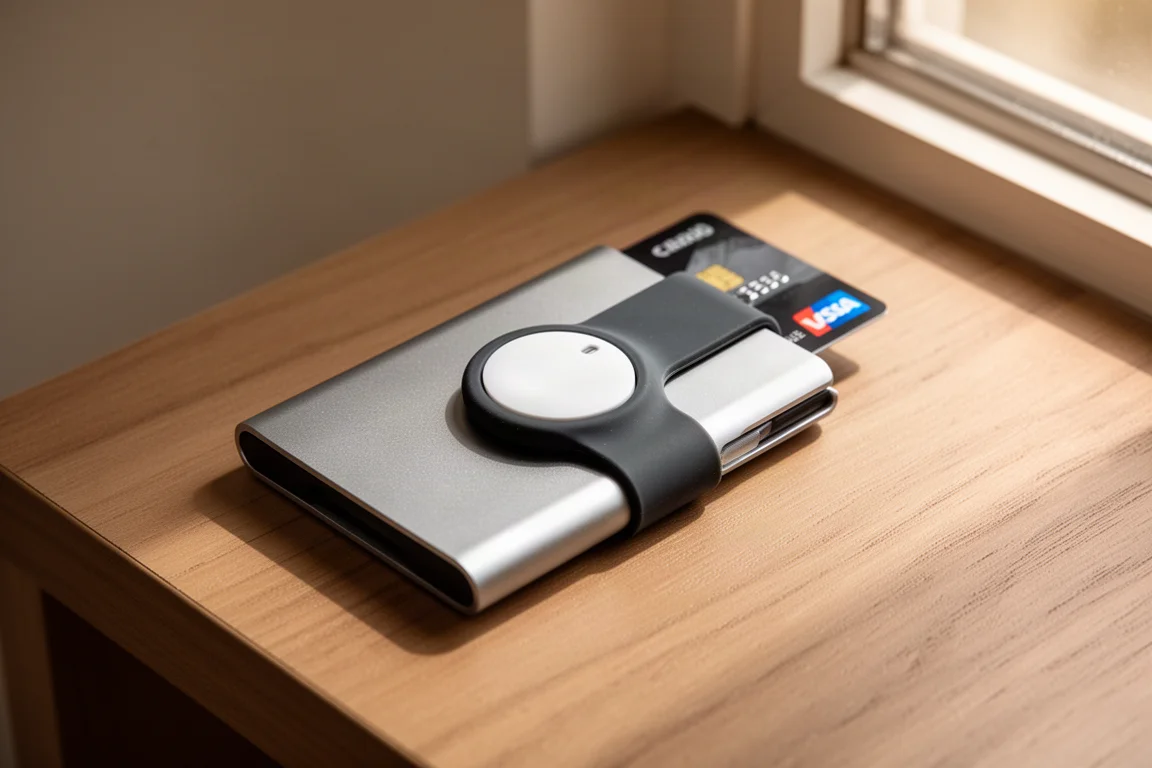
If you want a slim wallet where the tracker feels like a native part of the design rather than an afterthought, the D01 makes a strong case.
Dapper D03 AirTag Wallet
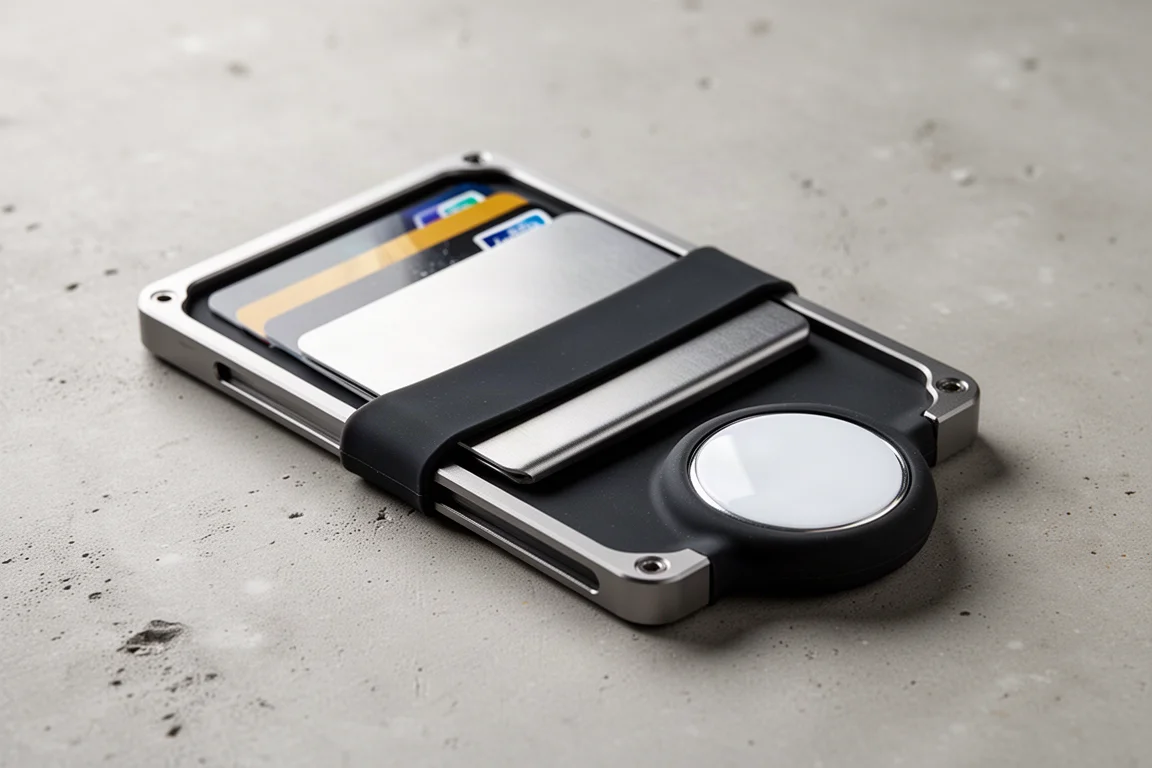
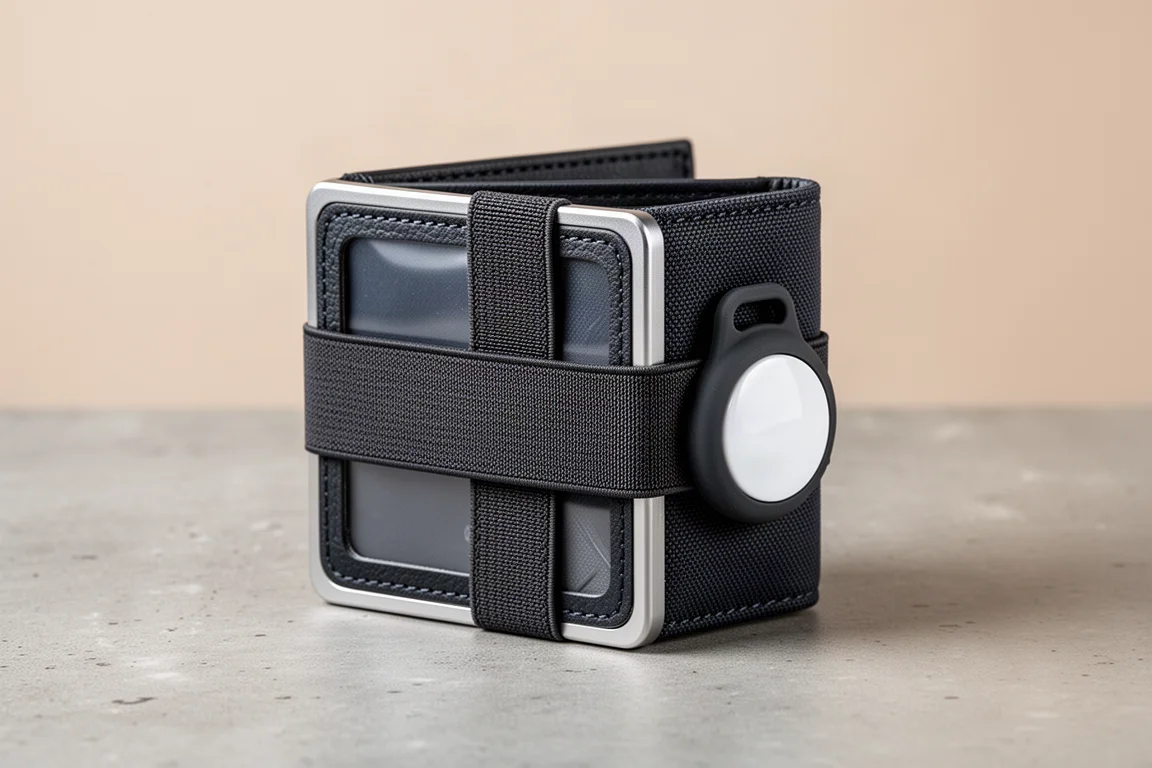
The D03 AirTag version is currently available only as a bifold. The AirTag mounts in a silicone holder on the back, and as with the D01, cards placed in the rear single pocket still fit without interference.
The D03 bifold has a signature elastic strap that can be configured in several ways: worn on the outside to hold extra cards or cash, flipped to the inside, or wrapped completely around the wallet. On the non-AirTag version, wrapping the elastic around the outside turns the interior into a center cache compartment for cash and cards. With the AirTag wallet, you can still do that, but the elastic ends up wrapped directly over the tag. It technically works, though it is an aesthetic gripe if you dislike the look. Leaving the elastic on the outside keeps the ID window usable and everything else works as expected.
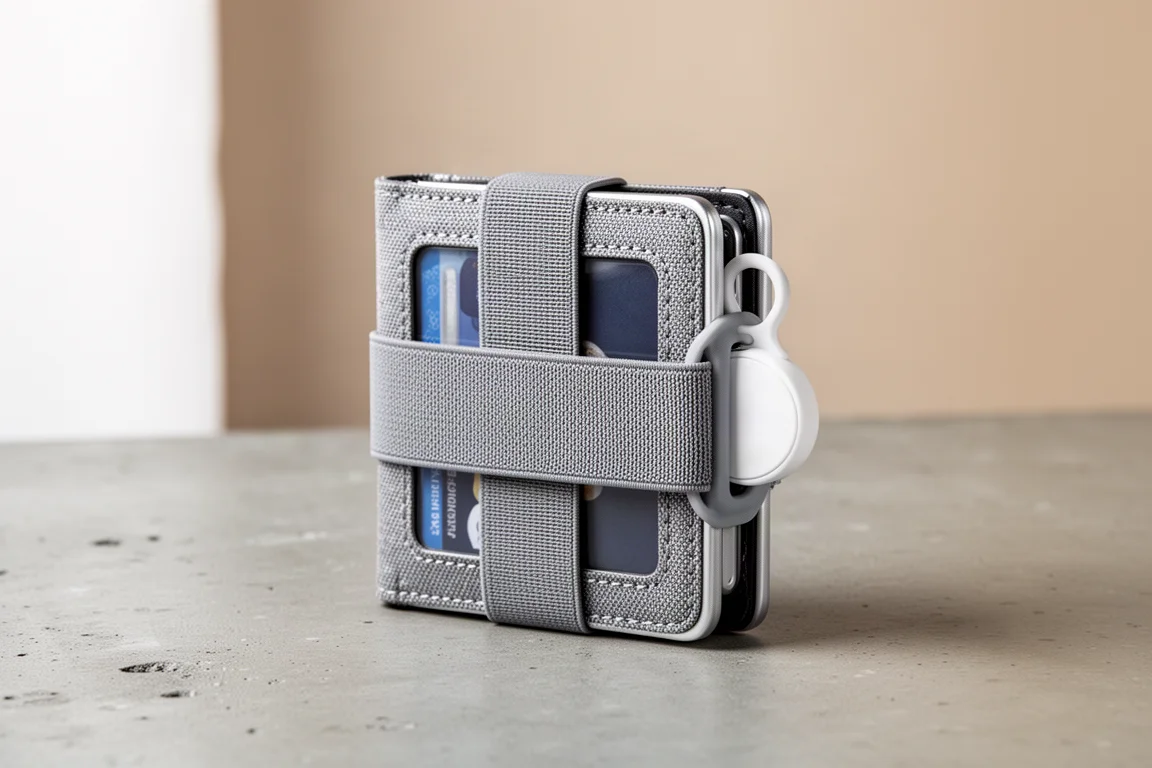
For anyone who already likes the D03 bifold’s flexible elastic system, the AirTag version preserves that versatility with one small cosmetic trade-off.
M1 AirTag Wallet
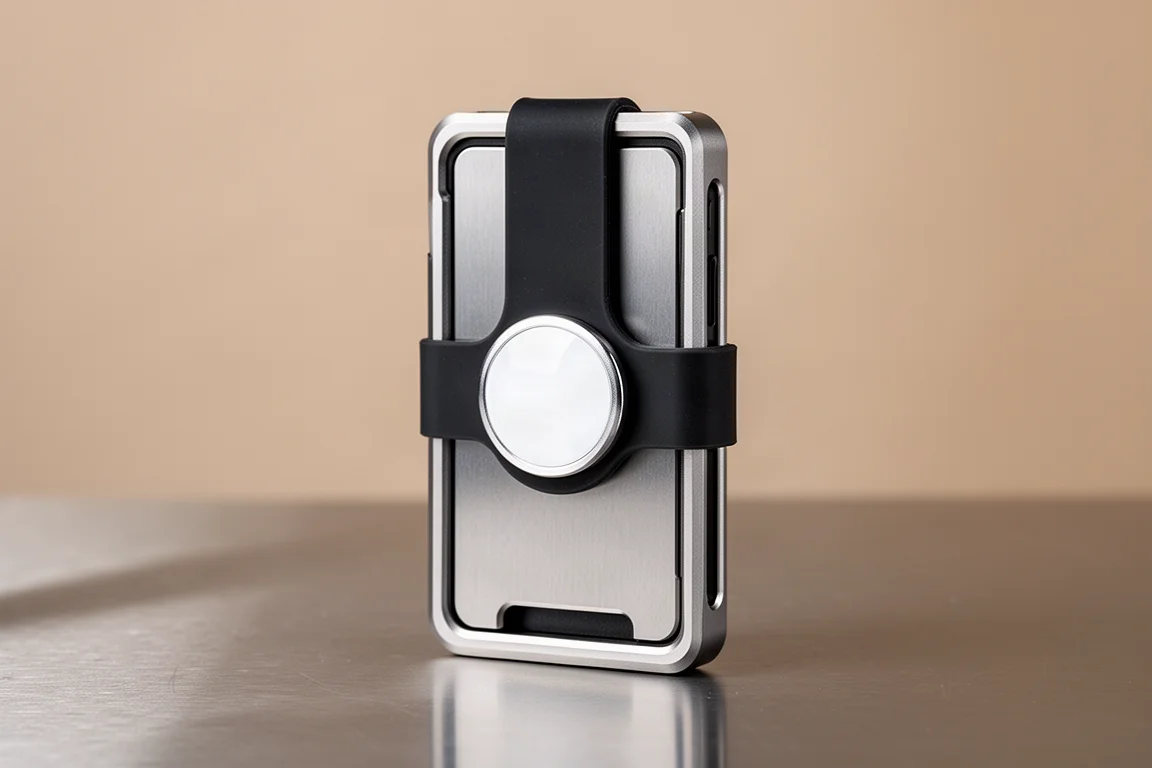
The M1 Maverick rail wallet is the vertical minimalist option of the group, and it is arguably the most interesting AirTag implementation of the three because of its sliding front plate. The obvious worry was that the silicone band holding the AirTag on the front would block the plate from sliding open. With no cards loaded, it does not make contact at all, so the plate still opens with a wrist flick without a problem.
The M1 holds up to eight cards: six on the main chassis and up to two under the single rear pocket. With six flat cards loaded, the silicone band does touch the front plate, but at that point you no longer need the flick anyway. The thumb slot on the bottom lets you push cards up, fan them out, and grab exactly the one you need.
As a bonus, the silicone band can still hold cash even with the AirTag installed. The one caveat: pushing a thick stack of cash under the band can cause the AirTag to start popping out slightly, so heavy cash carriers may want to keep that in mind.
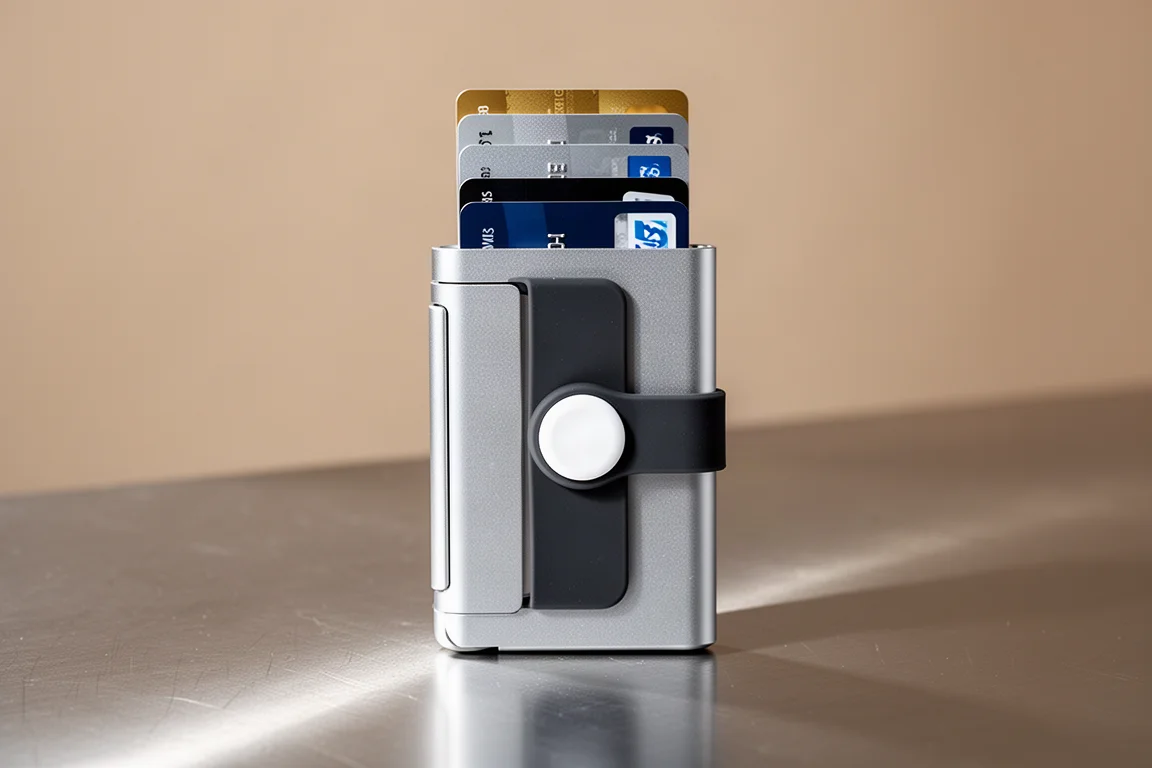
Of the three, this is the one to pick if you want the most engaging everyday interaction. The sliding plate, the thumb slot, and the front-mounted tracker make it feel like a cohesive design rather than a retrofit, and it remains genuinely minimalist despite the chunkier metal frame.
Which One Should You Buy
If you carry a lot of cards and want a slim profile, the D01 with its 10-card capacity is the safe, practical pick. If you prefer a bifold with an ID window and flexible elastic storage, the D03 fits that role, with the minor caveat about the wrap-around elastic configuration. If you want the most refined AirTag integration and a wallet that is fun to use every day, the M1 is the standout of the lineup.
Since no AirTag is included with any of these wallets, factor that purchase into your total. Dango has also offered a discount code CT10 for 10 percent off an order, so check for current offers before you buy.
Conclusion
Dango’s AirTag wallets share the same strong fundamentals: CNC-machined 6061 aluminum, water-resistant Detex pockets, US manufacturing, a lifetime warranty, and an AirTag holder that is both secure and easy to access. The differences come down to format and interaction. The D01 is the capacity play, the D03 is the bifold with flexible storage, and the M1 is the design pick with the most satisfying everyday use. Any of the three makes tracking your wallet simple; the right one depends on how you carry your cards and cash.
Further reading
Related Reviews
EDC Wallets
Dango M1 Lite Wallet Review: A Slimmer Take on Two Fan Favorites
Dango combines the M1 Spec Ops and M1 Rail into one slimmer aluminum wallet with a rail system, a multi-tool clasp, and plenty of expansion options.
EDC Wallets
Dango S2 Stealth Bifold Review: A Compact Everyday Wallet With Real Capacity
Dango's S2 Stealth Bifold trades the brand's usual overbuilt bulk for a minimalist design that still swallows 10 cards and 20 bills.
EDC Wallets
Opense Leather Topsider Bifold LT Review: A New Favorite Minimalist Wallet
The Topsider Bifold LT combines the best features of previous Opense Leather designs into a slim, USA-made full grain leather wallet at $79.