Cycling Tech
Cycling Tech Roundup: Ridley Essential Frames, Wahoo Powerlink Pedals and More
A practical look at this month's notable cycling releases, from Ridley's Essential framesets and Wahoo's new pedals and rollers to a titanium gravel build with a two-speed hub.
Introduction
This month brought a wide spread of new cycling equipment, from two more accessible Ridley framesets to a power meter pedal that borrows a familiar Speedplay shape, a roller with smart trainer ambitions and a titanium gravel build using a two-speed electronic hub.
These products sit at very different price points and solve very different problems, so this roundup looks at each one on its own terms: what it is, who it suits and what to weigh up before buying.
What We Looked At This Month
Each product here is assessed on the things that matter once the launch gloss wears off: how straightforward it is to live with, how clearly the manufacturer states its performance claims, and whether the price makes sense for the rider it is aimed at.
Weight figures, accuracy claims and prices are reported as stated by the manufacturer or as listed at the time of writing. Where a product has not yet been fully detailed, that is noted rather than guessed at.
Because these products span very different disciplines and price points, the advice below focuses on matching each item to a genuine riding need rather than ranking them against one another.
What Else Stood Out This Month
Two equipment stories generated more discussion than the launches themselves.
The first concerns a WorldTour rider who has been racing with modified handlebars, with two raised sections visible underneath the bar tape. The modification appears to provide extra cushioning for a narrow, forward hand position while still allowing the rider to hold the brake levers, which is what the current position rules require.
The second is the publication of a report into a handlebar failure at the Tokyo Olympics. The report concluded that the national track programme had provided an inadequate specification for its custom-built handlebars and had failed to carry out adequate fatigue testing. The base bar itself was produced by a specialist supplier using 3D printing.
That failure has prompted a broader question about one-off, 3D-printed parts at the highest level of the sport. Large brands are used to the approval process and to the cost of opening a mould, so they tend to complete every required check. One-off printed parts involve far less upfront investment, which can mean lighter procedures. The more reasonable reading is that 3D printing is not a problem in itself: with a correct specification, specialists can build parts that withstand the loads involved.
Ridley Helium Essential: A Climbing Frameset Under a Kilo
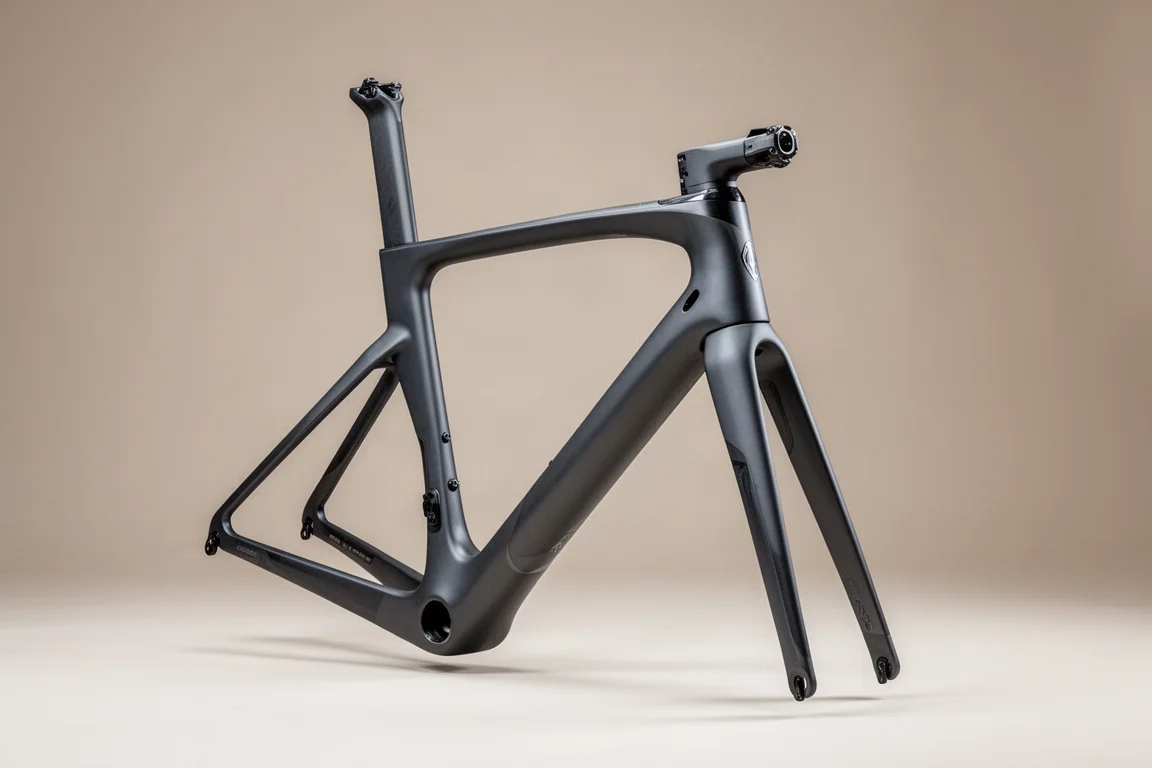
Ridley has added an Essential series to two of its best-known road platforms. The idea is straightforward: use a different grade of carbon, accept a little more weight, and bring the price of a premium frame down.
The Helium is the climbing model, and even in Essential form the frame stays under a kilo. Against the lighter SLX version at 780 g, the difference is roughly 200 g, which is a reasonable trade for the lower price. The Helium Essential is listed at £2,909.
Ridley Noah Essential: Aero Speed at a Lower Entry Price
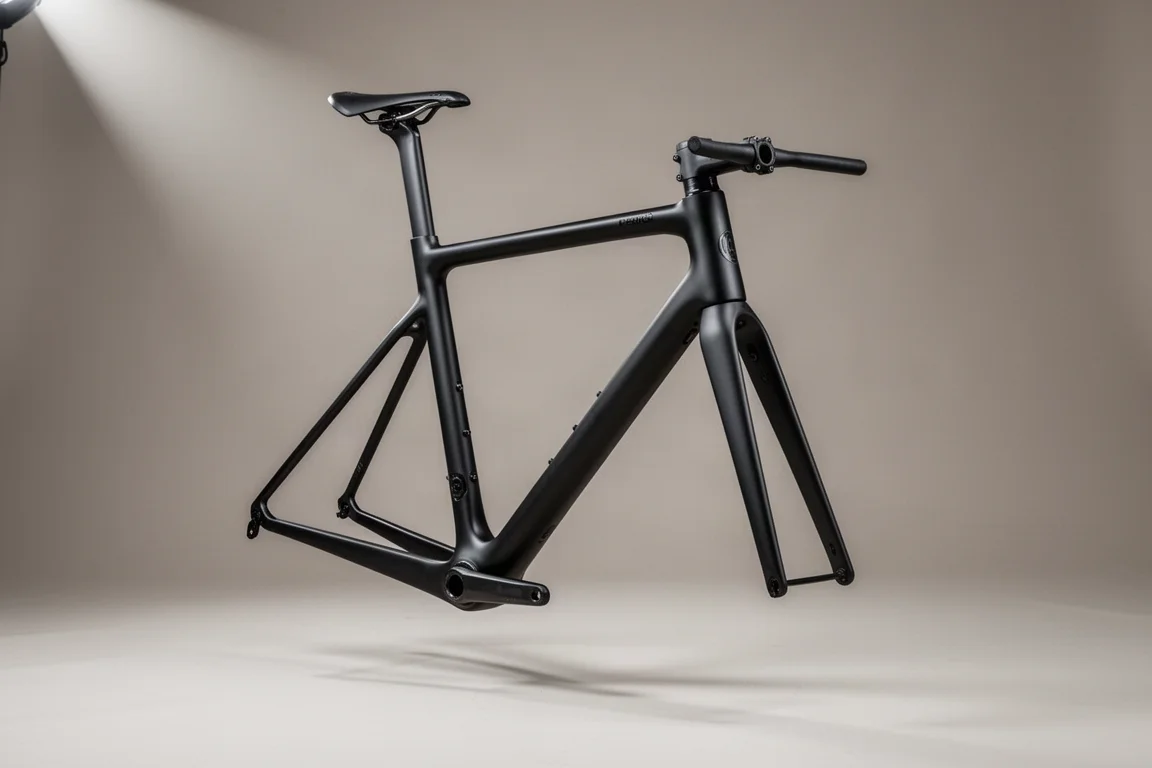
The Noah is the aero side of the same story, and the Essential version follows the same formula of a heavier carbon layup at a lower price. It is listed at £3,369.
For riders who want the aero silhouette and the associated tube shapes without paying flagship money, this is the more attainable route into the platform. The extra weight is the main compromise to accept.
Both Essential models are aimed at the same buyer: someone who wants a proven race platform and is willing to give up a small amount of weight to get there.
Shimano S-Phyre: Small Refinements to a Flagship Shoe
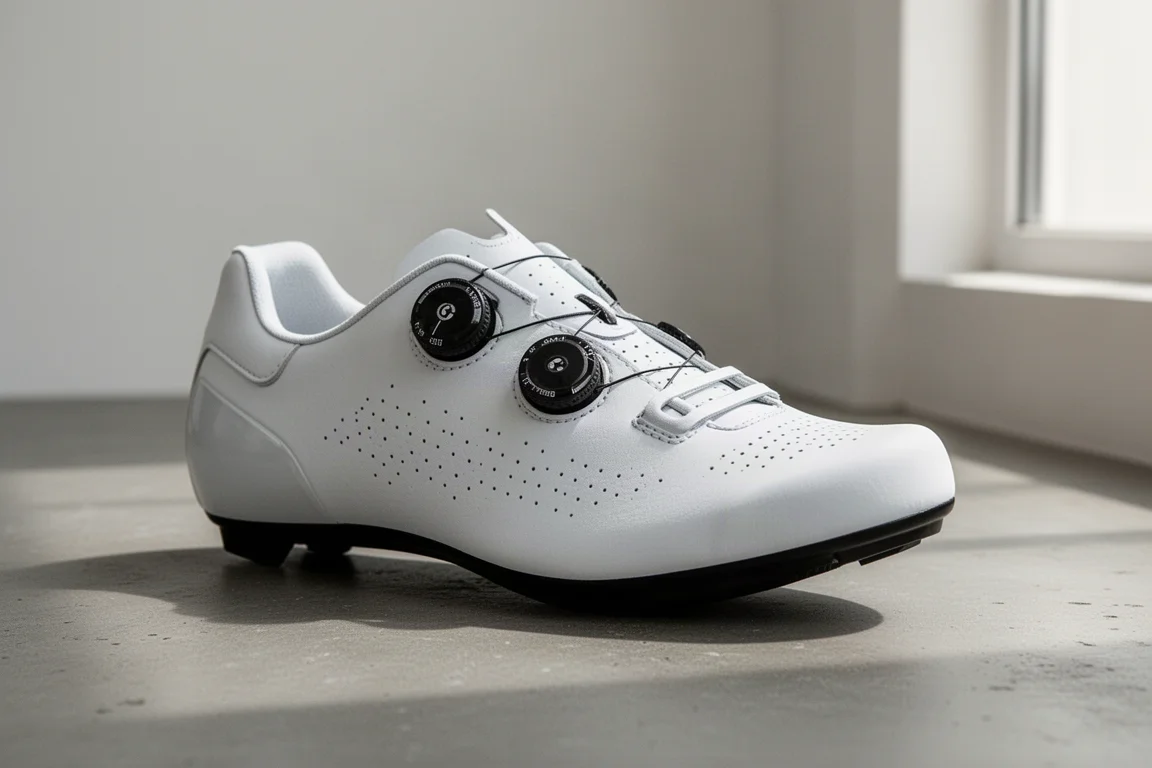
A new flagship S-Phyre road shoe appears to be on the way, with examples appearing on riders’ feet at early-season races. It is expected to succeed the current RC902.
The changes are subtle. The shoe keeps two Boa dials, but adds a second pair of lace loops across the toe box underneath, and the heel cup is now white rather than silver. Visually it reads as a cleaner design.
The added toe-box retention follows a wider trend towards a more locked-in fit for hard efforts and sprinting, while keeping the comfort the S-Phyre line is known for. Full details and pricing have not been confirmed.
Wahoo Powerlink Pedals: Power in a Speedplay Format
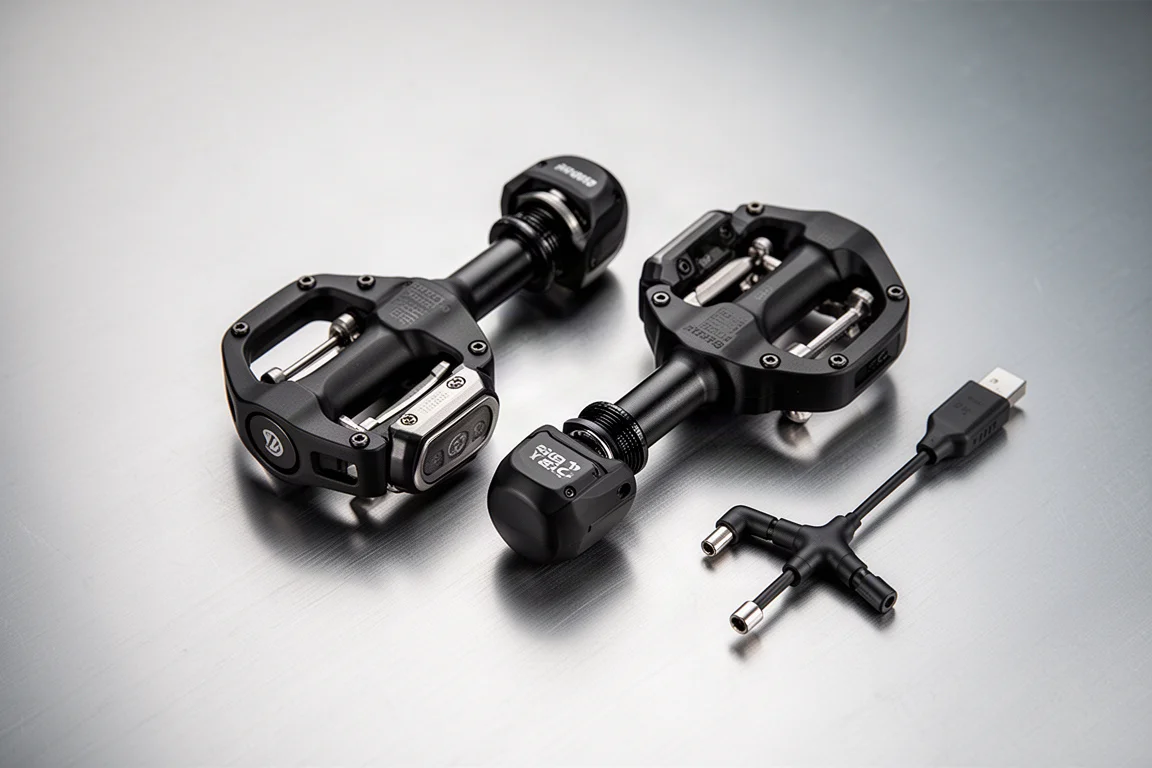
Wahoo has released a power meter version of its Speedplay-style pedal. Because the design needs a small pod at the end of the spindle, a few dimensions have changed: stack height is up by 1.5 mm and axle length has grown by around 2 mm so the cleat clears the pod when clipping in and out.
In use, the pedals feel like the standard version. Charging is handled by a Y-shaped cable that clips onto both pedals at once, and there are no battery doors to open, which removes a common route for water and grit to get in. Status LEDs show green while charging, blue when pairing and red when power is low, and they are easy to read from above.
The pair weighs under 300 g, lighter than the Favero Assioma and the Garmin Rally, though part of that is because the cleat sits on the shoe rather than the pedal.
On accuracy, early rides read low until the pedals were properly calibrated through the companion app and the required sprint efforts were completed. After that, a ten-minute effort at 220 W matched a known-accurate smart bike exactly. Sprints showed a small discrepancy, with the pedals reading slightly lower, but that reflects a single session and further testing is needed before drawing firm conclusions.
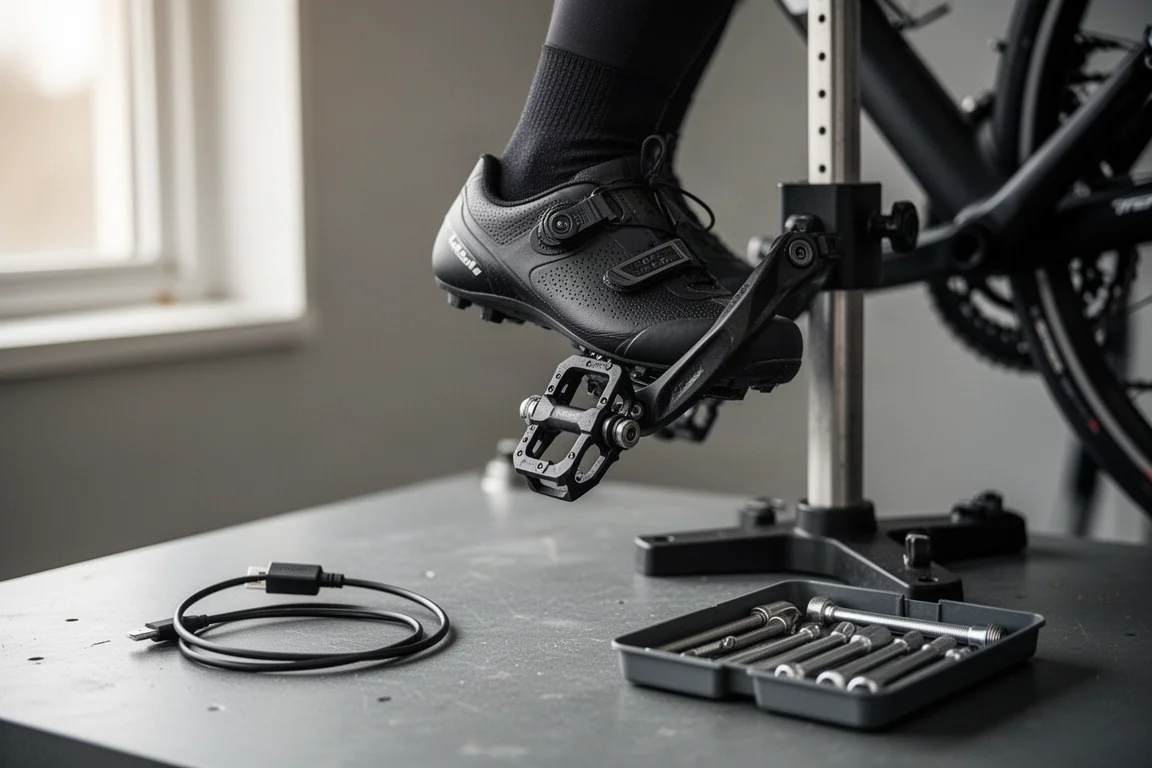
Charging and setup are the highlights here: there is nothing to replace, nothing to seal, and once the app is accessible the calibration routine is quick.
Wahoo Rollr: Rollers With Smart Trainer Ambitions
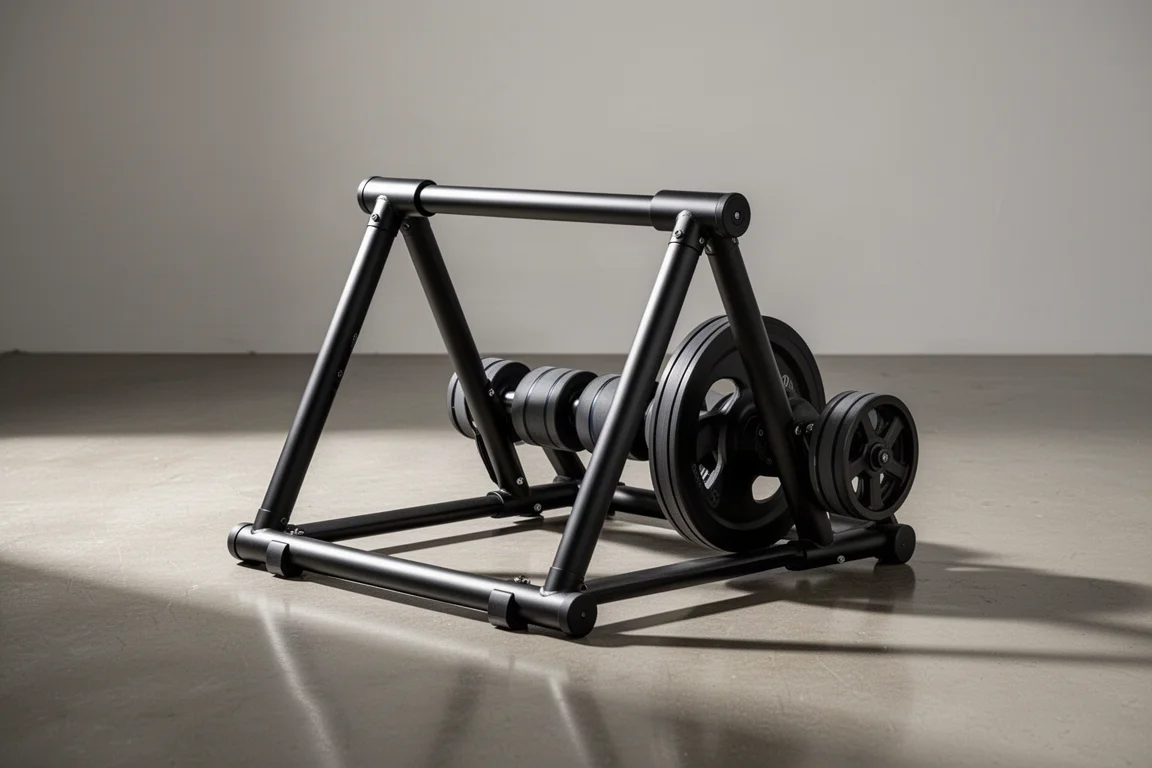
The Rollr is a roller rather than a conventional trainer, and it turned out to be far easier to assemble than expected: the parts slide together, a couple of screws secure them, and setting the wheelbase takes moments. Tightening the wheel is straightforward too, and pushing the A-frame as close to the head tube as possible makes the whole unit noticeably more stable.
Ride feel is the reason to consider it. There is a gentle sway at the rear wheel that makes the experience feel much more natural than being locked into a fixed trainer, and the whole thing runs smoothly.
It pairs with any ANT+ or Bluetooth power meter, and that is when the smart features come into play. Two resistance levels are available without a power meter, but they are not especially obvious to find, and the stock resistance is adequate if you still have gears to work with. The honest assessment is that without a power meter, the Rollr behaves like a set of very heavy dumb rollers.
Weight is the main drawback. The unit is 22.6 kg in total, with a 10.5 kg flywheel, and while the A-frame folds flat, it is not something you can tuck into a cupboard. It can be split into two parts and laid flat in a car boot, which makes warming up at a race possible in theory, but it is bulky and awkward enough that few riders are likely to bother.
Pearson Summon The Blood: Titanium Gravel With a Two-Speed Hub
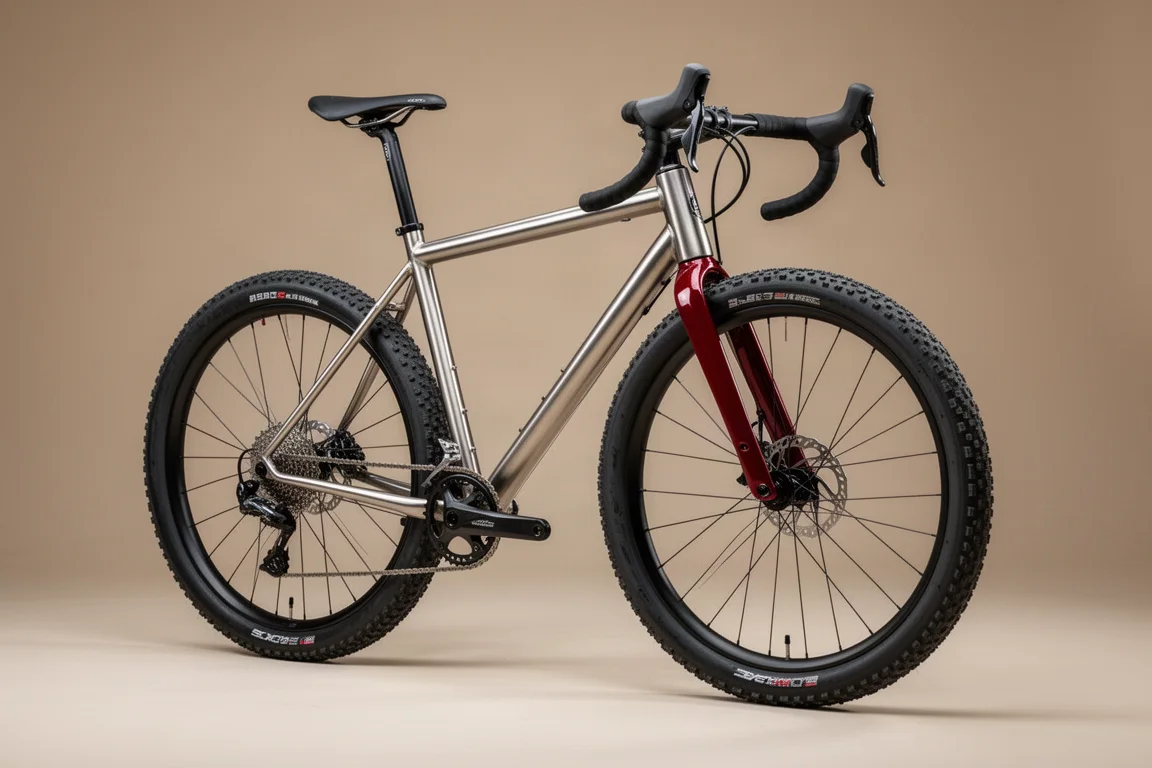
The Summon The Blood is a titanium gravel bike with an unusual finish: the frame is painted rather than left raw, giving it a striking half-painted, half-bare look. The tubing is 3Al/2.5V butted titanium, which should translate into a comfortable ride, and the straight tubes keep the classic titanium silhouette.
Tyre clearance is 45 mm, so it can take on genuinely rough gravel. The rest of the build uses a GRX Di2 groupset.
The headline feature is the Classified two-speed electronic hub, and it works well in practice. It is not yet offered as a standard production build by Pearson, so this is a special model. The main limitation is availability: Classified currently offers the system only as complete wheelsets, and selling it as a hub on its own would be the obvious route to a much wider market.
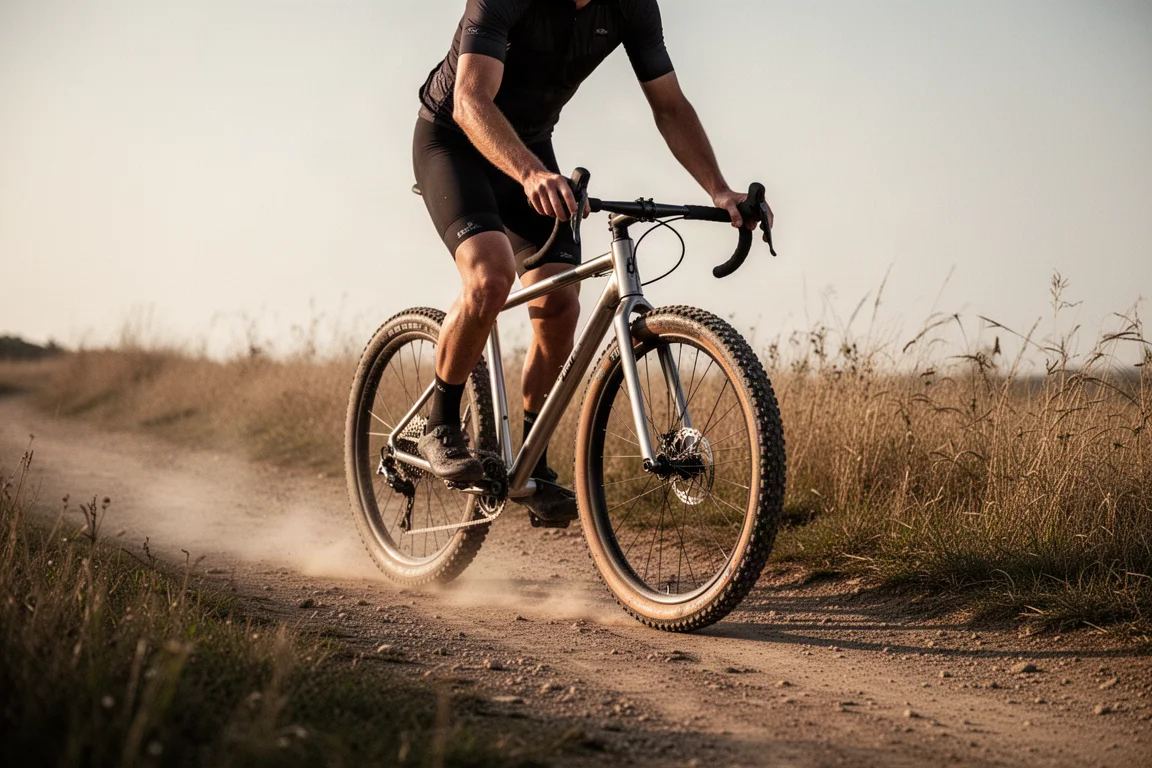
For riders who want one bike that handles fast gravel and rough tracks with a wide effective gear range, the combination of titanium and a two-speed hub is genuinely appealing.
Overall Buying Advice
Match the purchase to the problem you actually have.
If you want a lighter climbing bike and already own a good groupset, the Helium Essential is the more affordable way into a proven frame, and the Noah Essential does the same for riders who prioritise aero shapes. Accept the roughly 200 g penalty and the value case is clear.
The S-Phyre update is worth waiting for if you are due a new pair of race shoes, particularly if you want more toe-box security, but the changes are incremental and there is no confirmed pricing yet.
For power, the Powerlink pedals are the lightest option here and the charging design is genuinely convenient. Plan on a proper calibration session before trusting the numbers, and expect to keep testing before forming a firm view on sprint accuracy.
The Rollr makes most sense for riders who already own a power meter and want a more natural indoor feel. Without that power meter, the value proposition weakens considerably.
Finally, the Summon The Blood suits riders who want a single versatile titanium bike and are comfortable with the Classified system’s current wheel-only availability.
Conclusion
This month’s releases split into two broad groups. Ridley has made two proven race platforms more attainable by changing the carbon layup, and Shimano’s next flagship shoe looks like a careful refinement rather than a redesign. On the other side, Wahoo is reworking familiar formats with a power meter pedal and a roller that leans on an existing power meter, while the Pearson Summon The Blood pairs titanium with a two-speed electronic hub. Pick the product that matches the riding you actually do and the upgrade will feel worthwhile.
Further reading
Related Reviews
Cycling Tech
Best Cycling Tech: Nine Standout Products Worth Considering
Nine pieces of cycling kit that earned their place through long-term use, from a keenly priced World Tour race bike to a multi-tool that has survived two years of hard riding.
Cycling Tech
Best Pro Peloton Bikes and Components 2023: 8 Standout Upgrades
A roundup of the most technically interesting pro peloton bikes and components for 2023, from the Cannondale SuperSix EVO to Shimano Dura-Ace and Continental GP5000 S TR tires.
Cycling Tech
Bike Tech Roundup: Five Standout Upgrades Worth a Closer Look
A four-season tubeless tire, a featherweight climbing wheelset, a hangar-free drivetrain and two pairs of gravel shoes, assessed on the details that matter.